Nemrut, Cilicia and the ancient coast
From Cappadocia to the colossal heads of Nemrut, then the castles of Cilicia, Aspendos and Termessos, ending at Ephesus: Turkey's ruins from east to west.
- Istanbul
- Cappadocia
- Ihlara Valley
- Nemrut Dağı
- Tarso
- Kızkalesi
- Anamur
- Aspendos
- Termessos
- Ephesus
Day by day
- Day 1
Arrival in Istanbul and the imperial mosques
This trip crosses the Turkey of ruins from east to west: Istanbul, Cappadocia and the Ihlara valley, the colossal heads of Nemrut Dağı, the castles and ancient cities of Cilicia, the theatre of Aspendos and Termessos among the mountains, the Lycian coast, Pamukkale and finally Ephesus or Aphrodisias. You travel by high-speed train and by minibus or car, with some very long days on the road.
Before you go: Italian citizens can enter Turkey with an electronic identity card or a passport. Other nationalities should check their own rules. The US government rates Turkey at level 2, with level 4 only within ten kilometres of the borders with Syria and Iraq, an area this trip does not touch: Nemrut and Adana are more than a hundred kilometres from the border. The UK also advises against travel only to that strip along Syria.
You land at Istanbul airport, about an hour from the centre, and settle into the old city or near the Galata Bridge.
In the afternoon, go up to the Süleymaniye Mosque, the greatest work of the architect Sinan, on the hill above the Golden Horn, with its courtyard, its great dome and the garden with the tombs of the sultan and his wife Roxelana. Then walk down to the small Rüstem Pasha Mosque, covered inside with İznik tiles with blue and red flowers.
At sunset, walk across the Galata Bridge, among the fishermen and the ferries.
In the evening, have dinner with meze and fish.
Overnight in Istanbul, for two nights.
Practical tip: enter mosques outside prayer times, take off your shoes and cover your shoulders and legs; women must also cover their hair.
- Day 2
Hagia Sophia, Topkapı and the Grand Bazaar
Today you see the most famous monuments of Istanbul.
Early in the morning, go into Hagia Sophia, Justinian's great sixth-century church, later an Ottoman mosque, a museum and now a mosque again. Foreign visitors go up to the upper gallery, with the Byzantine mosaics and the view under the dome: check prices and times.
Opposite, visit the Blue Mosque, from the seventeenth century, with its six minarets and thousands of İznik tiles. Then go down into the Basilica Cistern, the great underground hall with columns standing in water and the two Medusa heads. Check prices and times.
At midday, have lunch with a fish sandwich on the Golden Horn or a plate of köfte.
In the afternoon, visit Topkapı Palace, where the Ottoman sultans lived: the tree-lined courtyards, the kitchens, the Baghdad Kiosk, the treasury and the harem, with a separate ticket. Check prices, times and closing days.
Then walk to the Grand Bazaar, the great covered market with thousands of shops selling carpets, lamps, ceramics, jewellery and spices, and from there to the Spice Bazaar, near the port of Eminönü.
In the evening, take a ferry to the Asian shore and have dinner in Kadıköy, in the market district.
Overnight in Istanbul.
Practical tip: pack your bags tonight, because tomorrow the train to Ankara leaves early and the station is far from the centre.
- Day 3
By train to Ankara and Lake Tuz
Today you cross Anatolia by train and car, all the way to Cappadocia.
In the morning, take the high-speed train to Ankara from the station on the Asian shore: the journey takes about four and a half hours, through the hills around the Sea of Marmara and then across the plateau. Book your seats in advance and check prices and times on the Turkish railways website.
In Ankara, if you have time, visit the Museum of Anatolian Civilisations, with finds from the Neolithic to the Hittites, or the mausoleum of Atatürk, the founder of the republic. Check prices and times.
In the afternoon, continue by minibus or car south-east across the wheat-growing plateau. Stop at Lake Tuz, a large, shallow salt lake, the second in Turkey by area. In summer you can walk for a stretch on the white crust of salt, which reflects the sky like a mirror.
Continue via Aksaray and reach Göreme in the evening, after about four hours on the road from Ankara. In the dark you will see the lights of the houses carved into the cones of tuff.
In the evening, have dinner with a Cappadocian dish, such as testi kebab, cooked in a sealed clay pot that is broken open at the table.
Overnight in Göreme, for four nights.
Practical tip: on the high-speed train seats are assigned and trains fill up at weekends; buy your ticket a few days ahead on the official website.
- Day 4
The balloon flight and the Göreme Open Air Museum
Today you see Cappadocia from above and visit its most beautiful churches.
At dawn, if you wish, take a hot-air balloon flight over the Göreme valleys: hundreds of balloons rise together in the pink morning light. Flights depend on the wind and in winter are cancelled more often. Book with licensed operators and check prices and times. If you do not fly, climb a hill above the village to watch the sight.
After breakfast, visit the Göreme Open Air Museum, a UNESCO World Heritage Site, an ancient complex of monasteries carved into the rock, with churches decorated with Byzantine frescoes. The Dark Church, Karanlık Kilise, has very vivid colours because it stayed almost in darkness for centuries; it has a separate ticket. Outside the main enclosure, do not miss the Buckle Church, Tokalı Kilise, with its blue walls. Check prices and times.
In the afternoon, walk through the Red Valley and the Rose Valley, among coloured rocks, rock churches and the farmers' small orchards. The path is easy and takes two or three hours.
At sunset, stay at one of the viewpoints above the Red Valley, when the rocks turn pink and orange.
In the evening, have dinner in Göreme with local dishes, such as manti or lentil soup.
Overnight in Göreme.
Practical tip: at the Open Air Museum, arrive at opening time or in the late afternoon; in the middle of the day the small churches fill up with groups.
- Day 5
Zelve, Paşabağ and Avanos
Today you visit the valleys of the fairy chimneys and an ancient town of potters.
In the morning, go to Zelve, a few kilometres from Göreme, a rock village carved into three valleys, inhabited until the mid twentieth century and then abandoned because the rock was collapsing. Walk among the houses, churches and a small mosque carved into the rock, climbing up and down with care. Check prices and times.
Just after comes Paşabağ, the valley of the monks, with the most famous fairy chimneys in the region, cones of tuff with a cap of harder rock on top, sometimes with two or three tips. According to tradition, a hermit lived in one of them. Then stop at Devrent, the valley of imagination, where the rocks take the shapes of animals.
In the afternoon, go down to Avanos, on the Kızılırmak river, a town of potters since ancient times. Step into a workshop to see how the red clay of the river is worked, and walk through the centre and across the bridge over the water.
On the way back, pass through Love Valley, with its tall columns of rock, and, if you have the energy, walk a stretch at sunset.
In the evening, have a relaxed dinner in Göreme and taste a Cappadocian wine, from a land where vines have been grown for thousands of years.
Overnight in Göreme.
Practical tip: at Zelve the tunnels and stairs are steep and dark; bring a torch or use your phone light, and wear hiking shoes.
- Day 6
Ihlara, Derinkuyu and Uçhisar
Today you walk in a canyon, go down into an underground city and climb a rock castle.
In the morning, drive to the Ihlara valley, about an hour and a half away, a deep canyon carved by the Melendiz river. Go down the stairway near the entrance and walk along the river among poplars and willows. In the walls there are dozens of Byzantine rock churches with frescoes, such as the Ağaçaltı church and the Snake Church. The path to Belisırma takes about an hour and a half. Check prices and times.
In Belisırma, have lunch by the river with a grilled trout.
In the afternoon, visit Derinkuyu, the deepest underground city in Cappadocia, carved on many levels beneath the village. Go down narrow corridors to the lowest rooms, past stables, cellars, kitchens, a chapel, air shafts and great millstone-shaped stone doors that were closed from inside. Thousands of people could shelter here during attacks. Check prices and times.
Towards sunset, climb Uçhisar castle, the highest point in the area, a huge spur of tuff full of carved rooms. From the top you see the whole of Cappadocia, as far as the Erciyes volcano, often snow-capped. Check prices and times.
In the evening, have your last dinner in Cappadocia.
Overnight in Göreme.
Practical tip: at Derinkuyu some passages are very low and narrow; anyone with claustrophobia or back pain can stop at the first levels.
- Day 7
The long journey east and Nemrut at sunset
Today you cross Anatolia eastwards to the mountain of the kings of Commagene.
Early in the morning, leave Göreme towards Kayseri and Malatya, across the plateau, among mountains, pastures and large reservoirs. The journey to the area of Kahta and the village of Karadut, at the foot of Nemrut, takes about seven or eight hours with stops. Take regular breaks and have lunch along the way.
This region, between Malatya and Adıyaman, was struck by the great earthquake of February 2023: you will still see building sites and new districts under construction. Respect the places and always ask before photographing people.
If you arrive in time and the weather is good, in the late afternoon go up to the summit of Nemrut Dağı, at more than 2,100 metres, for sunset. From the car park an uphill path of about half an hour leads to the west terrace, where the great stone heads of the gods watch the sun go down. Check prices and times and the state of the road.
At the top it is cold even in summer and often windy: bring a heavy jacket, a hat and gloves.
In the evening, go down to Karadut or Kahta for dinner.
Overnight in the Nemrut area, for two nights.
Practical tip: from November to April the road to the summit can be closed by snow; before setting off, ask your guide or hotel whether the climb is possible.
- Day 8
Sunrise on Nemrut, Arsameia and the Cendere bridge
Today you see the sunrise on the colossal heads and visit the sites of Commagene.
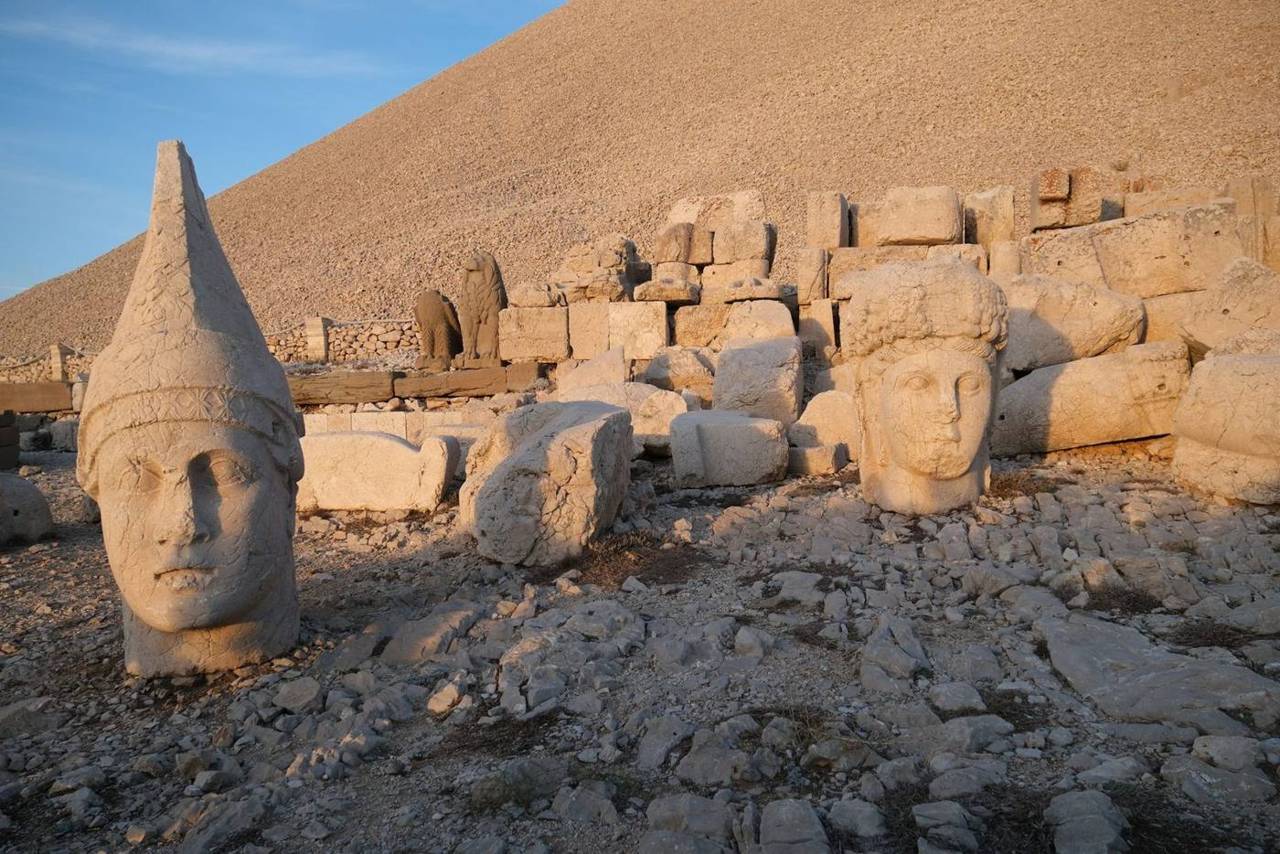
Before dawn, go up to the summit of Nemrut Dağı again, a UNESCO World Heritage Site, and head to the east terrace. Here Antiochus I, king of Commagene in the first century BC, had a great mound of rubble built, like a mountain on top of the mountain, surrounded by colossal statues of himself and the gods, with Greek and Persian features. Over time the heads fell, and today they stand lined up in front of the seated bodies. As the sun rises it lights them one after another.
Go down for breakfast and then visit Arsameia, the ancient summer capital of the kings, on a hill, with a large stone relief showing King Mithridates shaking hands with Heracles and a long tunnel carved into the rock. Check prices and times.
A little further down the valley, cross the Roman bridge of Cendere, a single-arch bridge built around the year 200 in honour of the Emperor Septimius Severus and his family, with its columns still standing at the sides.
Then stop at the Karakuş tumulus, where the women of the royal family were buried, with one of its columns topped by an eagle.
In the afternoon, rest or go down to the Atatürk reservoir, the great lake on the Euphrates.
In the evening, have dinner with dishes of the east, such as spicy raw köfte and kebabs.
Overnight in the Nemrut area.
Practical tip: at dawn it is cold at the top even in high summer; dress in layers and bring a hot drink in a flask.
- Day 9
Towards Cilicia: Adana
Today you leave the mountains of the east and go down towards the plain of Cilicia and the Mediterranean.
In the morning, head west to Adana, about five hours by road, dropping from the plateau among hills planted with pistachios and olives. Along the way you can stop in Gaziantep, famous throughout Turkey for its pistachio baklava and for the Zeugma Mosaic Museum, one of the largest collections of Roman mosaics in the world. Check prices and times.
In the afternoon you reach Adana, one of the largest cities in Turkey, at the heart of the Cilician plain, one of the richest farming areas in the country, with cotton, citrus fruit and wheat.
Walk to the Taşköprü, the stone bridge over the Seyhan river, built in Roman times and still used by pedestrians, one of the oldest bridges in the world still in use. Then look from outside at the great Sabancı Mosque, with its six minarets, on the riverbank, and visit the Ulu Cami, the old sixteenth-century mosque, with its black and white stone. Check times.
In the evening, have dinner with Adana kebab, minced meat with chilli cooked on a flat skewer over the embers, served with thin bread, onions and sumac. Finish with şalgam, a drink of fermented purple carrots, typical of the city.
Overnight in Adana.
Practical tip: in summer the Adana plain is very hot and humid; do your outdoor visits early in the morning or after sunset.
- Day 10
Tarsus and the sea castle of Kızkalesi
Today you visit the city of Saint Paul and reach the coast of castles.
In the morning, drive for about half an hour to Tarsus, an ancient city on the Cydnus river. Here Saint Paul was born, according to the Acts of the Apostles, and here, according to tradition, Cleopatra met Mark Antony. Visit Saint Paul's Well, in the courtyard of an old house, the Church of Saint Paul, a stretch of paved Roman road found in the centre and Cleopatra's Gate. Check prices and times.
Then continue west along the coast, via Mersin and the riviera, to Kızkalesi, about an hour and a half.
Kızkalesi means maiden's castle: the medieval castle stands on a small island a few hundred metres from the beach, opposite the great land castle of Korykos. According to legend, a king shut his daughter away there to protect her from a prophecy. Visit the land castle and, if the sea is calm, reach the island by boat or by swimming. Check prices and times.
In the afternoon, go to the chasms of Heaven and Hell, Cennet and Cehennem, near Narlıkuyu: great sinkholes in the limestone, one with a small Byzantine church at the bottom. Check prices and times.
In the evening, have a fish dinner on the beach at Kızkalesi and watch the castle lit up on the water.
Overnight in Kızkalesi.
Practical tip: there are many uneven steps down into Heaven; go down slowly and save your energy for the climb back up.
- Day 11
The Cilician coast and Mamure fortress
Today you follow one of the most beautiful and least known coast roads in Turkey.
In the morning, head west and stop at Silifke, ancient Seleucia, with its medieval castle on the hill and its bridge over the Göksu river. Just outside town is the sanctuary of Saint Thecla, with the cave that, according to tradition, was the refuge of Saint Paul's disciple. Check times.
Then the road leaves the plain and climbs onto the cliffs, with endless bends among pine woods, small bays and banana greenhouses. The stretch to Anamur is slow, about three and a half hours, but very beautiful: take breaks at the viewpoints above the sea.
In the afternoon you reach Anamur, near the southernmost point of Anatolia, with its banana plantations and the beaches where sea turtles lay their eggs.
Visit Mamure fortress, one of the best-preserved castles in Turkey, right on the beach, with its crenellated walls, thirty-nine towers and courtyards. It was built on the remains of a Roman fort and later enlarged in the Middle Ages by various dynasties. Check prices and times.
At sunset, walk along the beach in front of the castle.
In the evening, have a fish dinner and taste the small Anamur bananas, sweeter than imported ones.
Overnight in Anamur.
Practical tip: on the road between Silifke and Anamur the bends are tight and there are slow lorries; drive calmly and do not overtake before bends.
- Day 12
Anemurium and the road to Side
Today you visit an abandoned Byzantine city by the sea and reach Side.
In the morning, go to Anemurium, a few kilometres from Anamur, an ancient city facing the sea, inhabited in Roman and Byzantine times and abandoned in the seventh century. Walk among the baths with the remains of their mosaics, the small theatre, the odeon, the aqueducts and the great necropolis with hundreds of tombs shaped like small houses, on the hill above the beach. There are very few visitors and the silence is complete. Check prices and times.
Then take the coast road west again, which continues through bends and cliffs to Alanya, about two and a half hours. In Alanya, if there is time, look from a distance at the great Seljuk fortress on the headland and the Red Tower on the harbour.
Continue to Side, about an hour and a half.
Side was an ancient port on a small peninsula. Today the modern village has grown up among the ruins: you walk among columns, the city gate and the great Roman theatre. At sunset, go to the Temple of Apollo, with its white columns by the sea, one of the most photographed places on the coast.
In the evening, have dinner in the village and stroll around the harbour.
Overnight in Side.
Practical tip: in summer Side has many tourists from the beach resorts; visit the Temple of Apollo at dawn or sunset, when the light is best and there are fewer people.
- Day 13
Aspendos, Perge and Termessos
Today you see three of the most important ancient cities of Pamphylia and Pisidia.
In the morning, drive for about half an hour to Aspendos, which has the best-preserved Roman theatre in the world, built in the second century AD, in the time of the Emperor Marcus Aurelius. The stage building, the seating for thousands of people and the gallery at the top are almost intact, and the acoustics are still perfect. Nearby you can also see the remains of a long aqueduct. Check prices and times.
Then go to Perge, near Antalya, a great Greek and Roman city on the plain. Enter through the Hellenistic gate with its two round towers and walk along the colonnaded street with the water channel in the middle, to the agora and the baths. Check prices and times.
In the early afternoon, climb to Termessos, at more than a thousand metres, in a national park among the mountains north-west of Antalya. The city was so well defended that, according to ancient historians, not even Alexander the Great managed to take it. From the car park, walk up through the woods to the theatre, hanging on the edge of a valley, and to the hundreds of sarcophagi of the necropolis. Check prices and times.
In the late afternoon, drive down to the Lycian coast to Çıralı, about an hour and a half. After dinner, go up to the Chimaera, the mountainside where small natural flames have burst from the rock for thousands of years.
Overnight in Çıralı.
Practical tip: at Termessos the path is steep and stony with little shade; bring water and hiking shoes, and do not climb in the hottest hours.
- Day 14
Myra, Kekova and Patara beach
Today you see the Lycian coast in brief: rock tombs, a sunken city and a vast beach.
In the morning, drive west to Demre, about an hour and a half. This was Myra, one of the great cities of Lycia: on the rock face above the Roman theatre there are dozens of tombs carved like the facades of temples and wooden houses. Then visit the Church of Saint Nicholas, the fourth-century bishop of Myra who inspired the figure of Father Christmas, with its frescoes and marble floors. Check prices and times.
Around midday, take a boat at Üçağız to Kekova island, where under the clear water you can see the remains of an ancient city sunk by earthquakes: stairs, walls and the bases of houses. Then land at Kaleköy, ancient Simena, with its castle above the village and a Lycian tomb in the water. Check prices and times.
In the afternoon, continue to Patara, about an hour and a half, one of the longest beaches in Turkey, with sand dunes and the ruins of a great Lycian city behind it. The beach is protected because sea turtles lay their eggs there: follow the rules and leave it in the evening. At sunset the light on the dunes is superb.
In the evening, have a fish dinner in a nearby village.
Overnight in the Patara or Kaş area.
Practical tip: on the Kekova boat, bring sun cream, a hat and a swimsuit; you can swim in some places, but diving over the sunken city is forbidden.
- Day 15
Dalyan and Pamukkale
Today you move from the coast into the heart of the Aegean region, to the white terraces of Pamukkale.
In the morning, set off for Dalyan, about two hours, a small town on the river between the lagoon and the sea. Take a boat along the river, through the reed beds, to see close up the rock tombs of Kaunos, carved into the cliff like the facades of Greek temples above the water. If you have time, also visit the ruins of Kaunos, with the theatre and the ancient harbour. Check prices and times.
Then drive inland to Pamukkale, about three and a half hours, through the mountains and farmed valleys.
Pamukkale means cotton castle: it is a hill covered in white travertine terraces, formed by warm, lime-rich water flowing down from the spring. You walk barefoot on the terraces, in the lukewarm water of the pools. At the top lies Hierapolis, a great Roman city, a UNESCO World Heritage Site together with the terraces, with its theatre, its vast necropolis and its main street. You can also bathe in the ancient pool, among fallen columns, with a separate ticket. Check prices and times.
Stay until sunset, when the terraces turn pink and orange above the valley.
In the evening, have dinner in the village.
Overnight in Pamukkale.
Practical tip: shoes are not allowed on the terraces; bring a bag to carry them and take care, because the travertine is slippery in places.
- Day 16
Ephesus or Aphrodisias and flight from Izmir
Today you end the trip with one of the great ancient cities of the Aegean.
In the morning, choose according to your flight time. If you have more time, go to Ephesus, about three hours, one of the largest cities of the Roman Empire, a UNESCO World Heritage Site. Entry to Ephesus costs 40 euros until 31 March 2027: check for any changes. Walk along Curetes Street to the Library of Celsus and the great theatre. If you have less time, visit Aphrodisias, about an hour and a half away, the city of the goddess Aphrodite, with one of the best-preserved ancient stadiums, the Tetrapylon and the Sebasteion with its reliefs. Check prices and times.
In the afternoon, continue to Izmir airport and take your flight home, often with a connection in Istanbul.
In these sixteen days you have seen the Turkey of ruins from east to west: the mosques and palaces of Istanbul, the valleys and underground cities of Cappadocia, the colossal heads of Nemrut at dawn, Tarsus and the sea castles of Cilicia, Anemurium, the theatre of Aspendos, Termessos among the mountains, the Lycian coast, Pamukkale and Ephesus or Aphrodisias. The pace is fast and the last part is a quick overview, but few trips bring together so many great sites.
When to go: the trip can be done all year round, but Nemrut is at its best from May to October. From December to March the summit can be snowbound or closed: always ask before booking. In summer the coast and the Adana plain are very hot.
Practical tip: before you leave, buy something to take home: pistachios and baklava from Gaziantep, spices, lokum or painted ceramics.
In Turkey tipping is customary in restaurants, usually around ten per cent, and for guides and drivers too.
For archaeology lovers who want Nemrut and the great southern sites on one trip, including Aspendos and Termessos, which short tours skip. The pace is intense and the last part, from Lycia to Ephesus, is a quick sweep rather than a proper visit. Mind the dates: scheduled departures fall between December and March, when the Nemrut summit can be snowbound or closed, so check with the coordinator before booking.
Before you go
- Documents and visa
- Passport, or for some EU citizens a national identity card; no visa for tourism up to 90 days in 180 for most EU nationalities.
- Health and vaccines
- No compulsory vaccines. Drink bottled water. Emergencies: 112.
- Money and payments
- Turkish lira. Cards work almost everywhere; state site tickets are set in euros but paid in lira at the day's rate.
- Power sockets
- Types C and F, 230 volts: the same round-pin sockets as much of Europe.
- Time zone
- UTC+3 all year: Turkey does not use daylight saving time.
- Safety
- The United States rates Turkey level 2, with level 4 within 10 km of the Syrian and Iraqi borders. Tourist areas are busy and calm. Official advice: GOV.UK.
Information checked in November 2026 for Italian and EU citizens. Rules change: always check before you travel.
Variations
In 11 days: Istanbul, Cappadocia and Nemrut, with the return flight from Adıyaman or Malatya via Istanbul, without the coast.
In 19 days: add more time on the Lycian coast, with Kaş, Fethiye and the Ölüdeniz lagoon, and Ephesus and Aphrodisias on two separate days.
Frequently asked questions
What document do I need for Turkey?
Italian citizens can enter with an electronic identity card or a passport. Other nationalities should check their own rules.
Can you climb Nemrut in winter?
Not always. From November to April the road to the summit, at more than 2,100 metres, can be closed or covered in snow, and the cold is intense. The best period is from May to October: if you travel in winter, ask your guide beforehand whether the climb is possible.
Does the trip go near the Syrian border?
No. The United States and the UK advise against travel only to the ten-kilometre strip along the border with Syria, and the United States also along the border with Iraq. Nemrut, Adana and the Cilician coast are much further away. Always check the latest advice before leaving.
Indicative itinerary written by World Atlas. Before booking, check timetables, seasonal openings, documents and safety.
 4 daysEasy
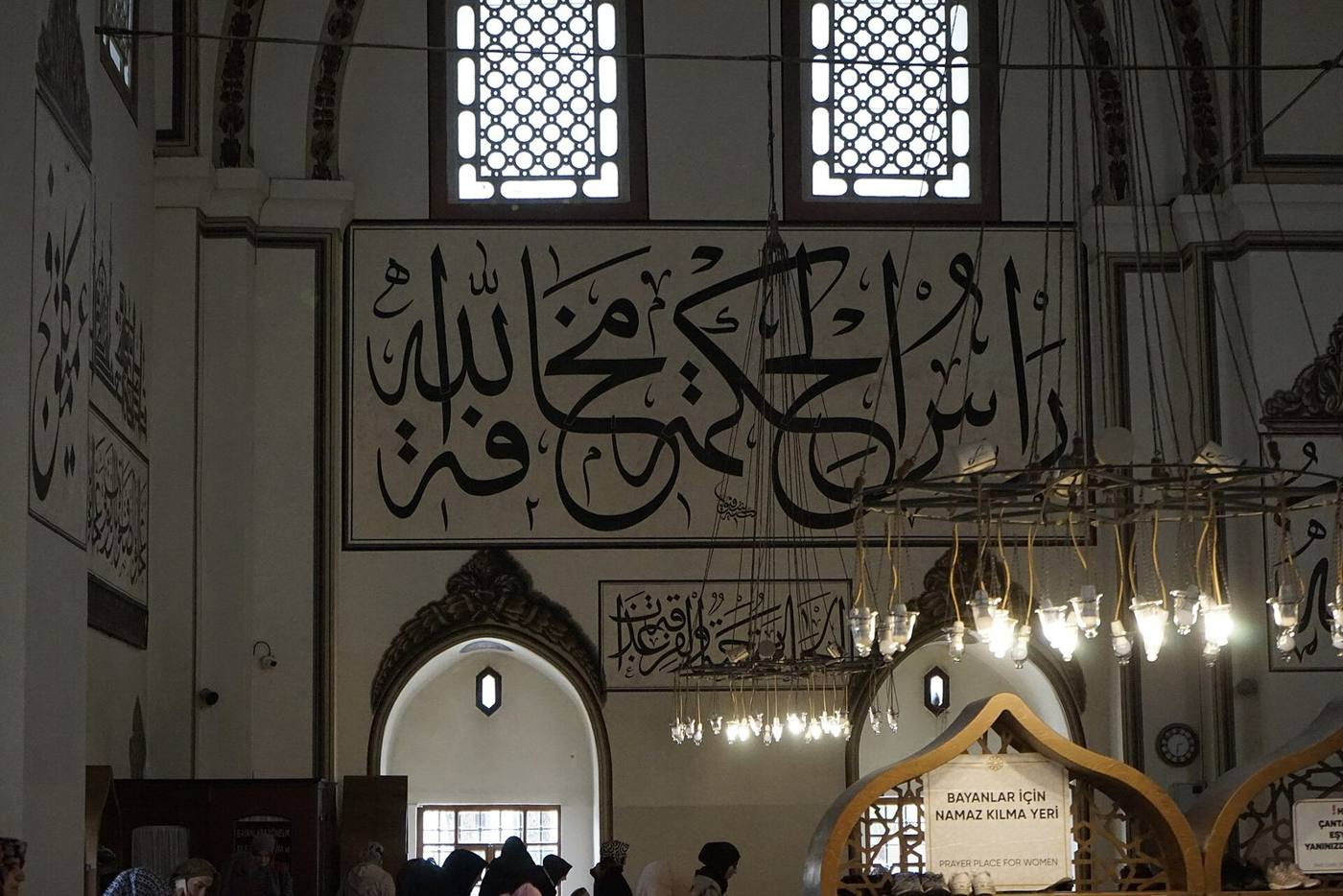
Bursa, İznik and Mount Uludağ
The first Ottoman capital, two hours from Istanbul: the mosques and tombs of Bursa, a UNESCO World Heritage site, the silk caravanserais, the İskender kebab born here, the cable car up Mount Uludağ, the village of Cumalıkızık and İznik, ancient Nicaea of ceramics and the Council.
 4 daysEasy
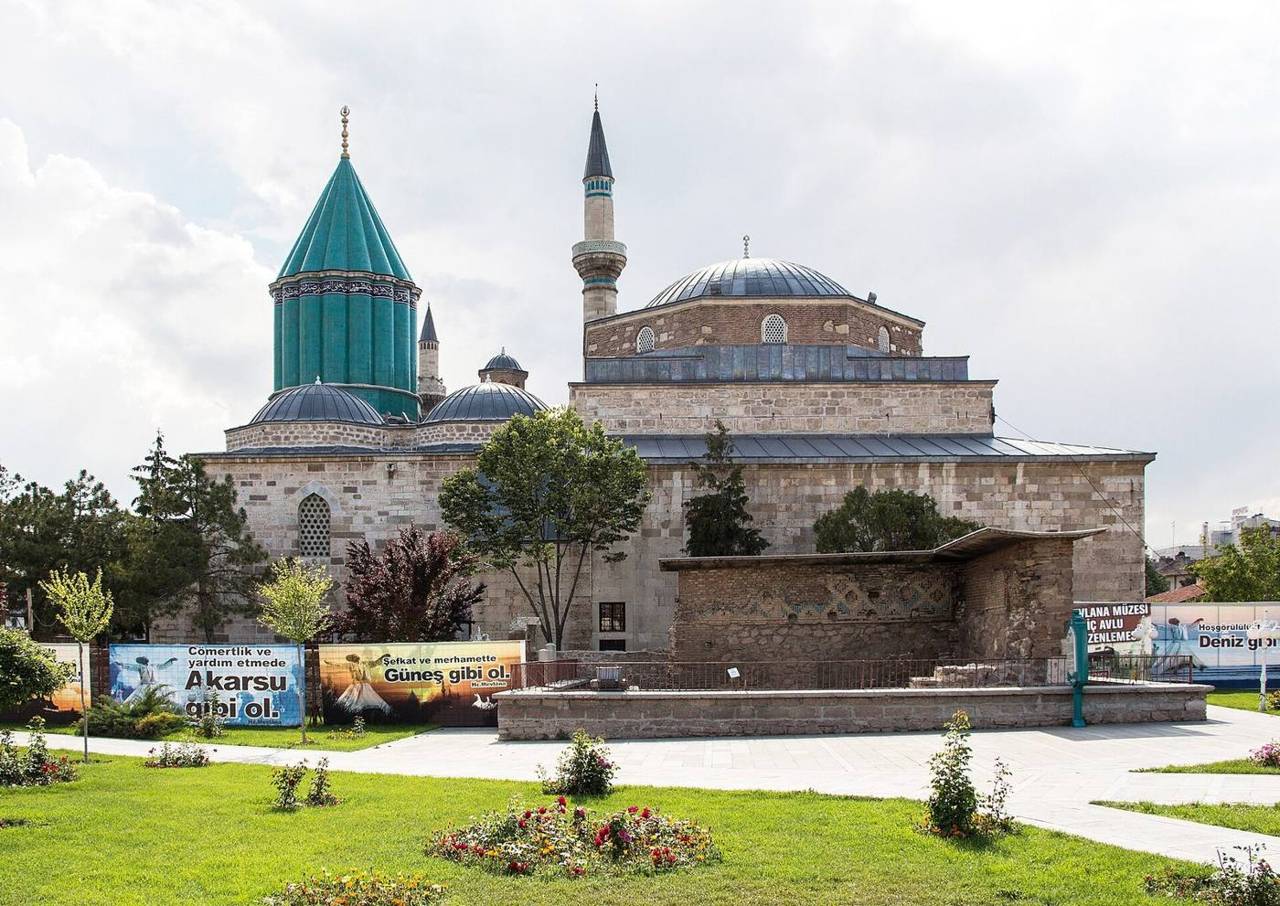
Konya, Çatalhöyük and Lake Beyşehir
Anatolia's spiritual heart: Rumi's mausoleum and the whirling dervishes of Konya, the Seljuk madrasas, the Neolithic town of Çatalhöyük, a UNESCO World Heritage site, and the wooden Eşrefoğlu Mosque on Lake Beyşehir, also UNESCO-listed.
 7 daysChallenging
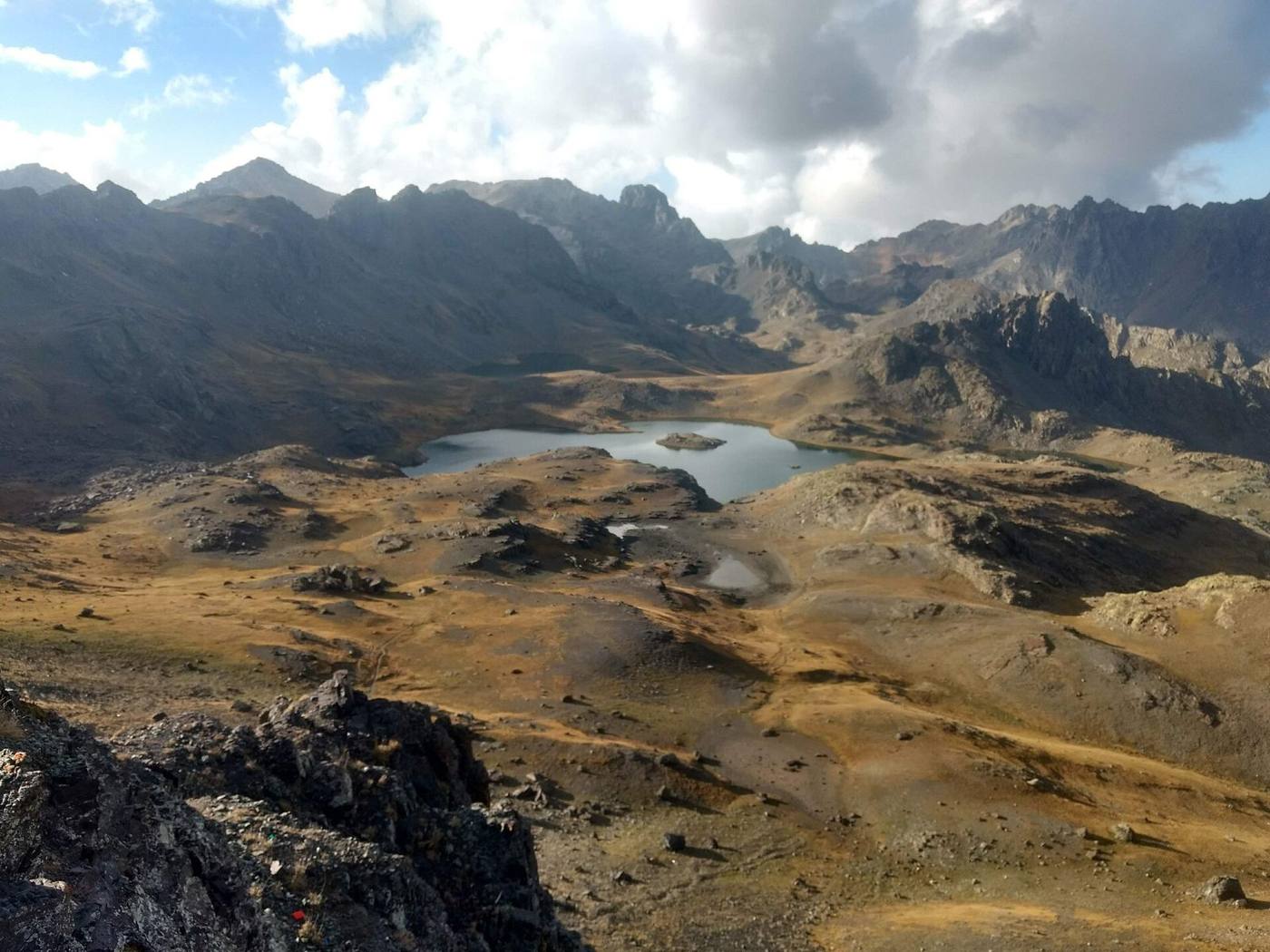
Trekking in the Kaçkar Mountains
The green mountains above the Black Sea: Rize's tea plantations, wooden villages, the shepherds' summer pastures (yayla) of Ayder, glacial lakes and the climb to Kaçkar summit, almost 4,000 metres, with Sumela Monastery on the way back.