Istanbul and Cappadocia
The city on the Bosphorus and the fairy chimneys seen from a balloon: essential Turkey in a week.
- Istanbul
- Göreme
- Uçhisar
- Kaymaklı
Day by day
- Day 1
Arrival in Istanbul and Sultanahmet at sunset
Italian citizens enter Turkey without a visa for tourist stays of up to 90 days in any 180, with a passport or an identity card valid for travel; most EU citizens also need no visa, so check your own nationality. Istanbul has two airports: the huge Istanbul Airport on the European side and Sabiha Gökçen on the Asian side. From the first, the metro and shuttle buses reach the centre in about an hour; a taxi is only worth it with the meter running or through an app.
For getting around buy an Istanbulkart, the top-up card valid on trams, metro, funiculars and ferries. The most convenient areas to stay are Sultanahmet, the historic heart within walking distance of the great monuments, or Karaköy and Galata, livelier at night and linked by tram.
In the late afternoon walk to Sultanahmet Square, the old Byzantine hippodrome, where the Egyptian obelisk of Theodosius and the Serpent Column brought from Delphi still stand. From here you see Hagia Sophia and the Blue Mosque together, their minarets lighting up at sunset. When the muezzins call to prayer, the mosques answer each other from hill to hill: it is Istanbul's welcome.
In the evening try Turkish cooking: meze, kebabs from every region, simit, the sesame ring, and tea served in tulip-shaped glasses. Practical tip: beware of anyone too friendly who wants to take you to a carpet shop; decline with a smile and walk on.
- Day 2
Hagia Sophia, the Blue Mosque, the Cistern and Topkapı
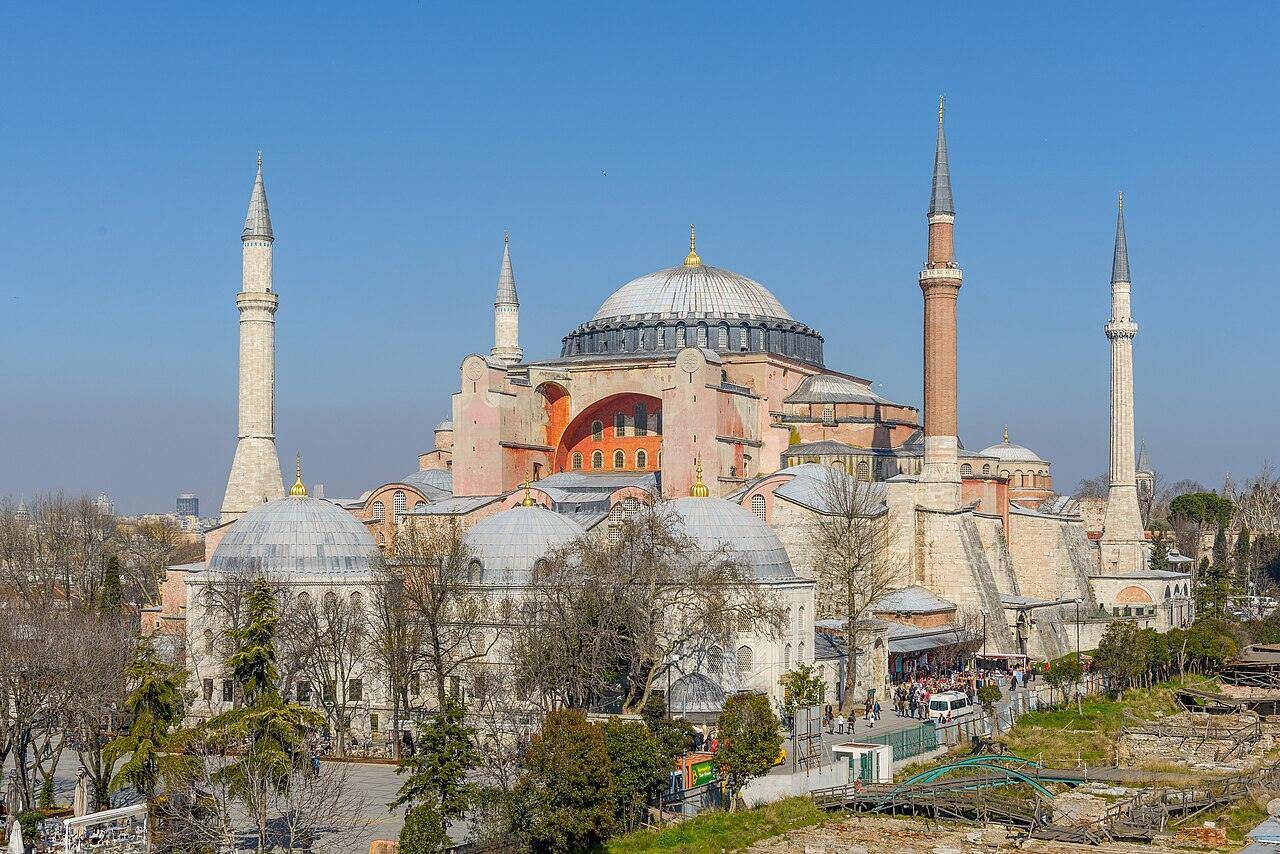
Early in the morning enter Hagia Sophia, built by Emperor Justinian in the sixth century, for almost a thousand years the largest church in Christendom, then a mosque, a museum and again a mosque since 2020. Foreign visitors use a dedicated entrance and go up to the upper gallery to see the Byzantine mosaics; the ticket costs 25 euros. The ground floor is reserved for prayer. Shoulders and knees must be covered and women need a headscarf.
Opposite, the seventeenth-century Blue Mosque takes its name from the thousands of İznik tiles inside. Entry is at no cost but closed during prayers; you go in without shoes.
Nearby, descend into the Basilica Cistern, a huge sixth-century underground hall with 336 columns reflected in the water and two Medusa heads used as bases.
In the afternoon visit Topkapı Palace, residence of the Ottoman sultans for almost four centuries: courtyards, tiled pavilions, imperial kitchens, the treasury with the Topkapı dagger, and the harem, with the rooms of the sultan's women and children. From the terrace you see the Bosphorus, the Golden Horn and the Sea of Marmara meet. The palace closes on Tuesdays. Practical tip: buy tickets online to avoid queues and allow at least three hours for Topkapı, including the harem, which is the most interesting part.
- Day 3
The Grand Bazaar, the Spice Bazaar and the Bosphorus
In the morning enter the Grand Bazaar, one of the largest and oldest covered markets in the world, with dozens of streets and thousands of shops under painted vaults: carpets, lamps, ceramics, jewellery, leather and textiles. Bargaining is part of the game: ask the price, calmly offer less and do not buy unless you are sure. The bazaar closes on Sundays.
Then walk down towards the Golden Horn through crowded merchants' streets to the mosque of Suleiman the Magnificent, the Süleymaniye, masterpiece of the architect Sinan, with views over the city. Further down is the Spice Bazaar, or Egyptian Bazaar, where stalls sell spices, dried fruit, tea and lokum, Turkish delight.
In the afternoon take a boat on the Bosphorus, the strait separating Europe from Asia. From the Eminönü pier both cheap public ferries and tourist cruises depart. You sail past Ottoman palaces on the water, the wooden villas called yalı, the Rumeli Hisarı fortress and the great suspension bridges. A good idea is to cross to Kadıköy or Üsküdar on the Asian side and stroll among the fish markets and busy streets.
At sunset head back to Galata and climb the Galata Tower, or enjoy the view from the Galata Bridge, lined with anglers. Practical tip: on public ferries you pay with the Istanbulkart; they are the cheapest way to see the Bosphorus.
- Day 4
The flight to Cappadocia and the Göreme valleys
In the morning take a domestic flight to Cappadocia, about an hour and a quarter, to Kayseri or Nevşehir airport. Many places to stay arrange the transfer to Göreme, about an hour from Kayseri and half an hour from Nevşehir. Alternatively, overnight buses from Istanbul are cheaper but long.
Cappadocia, a UNESCO World Heritage site, is a landscape unique in the world: millions of years ago volcanic eruptions covered the region in ash, which wind and water have carved into valleys, pinnacles and fairy chimneys. For centuries people dug houses, churches and whole towns into the soft rock. Göreme is the most convenient base; Uçhisar, Ürgüp and Ortahisar are quieter. Many lodgings are built into caves.
In the afternoon take a first walk in the valleys around Göreme: Love Valley, with its towering pinnacles, Sword Valley or Red Valley, which turns pink and orange at sunset. Trails are simply marked, but download an offline map on your phone.
At sunset climb one of the viewpoints above Göreme to watch the light on the rocks. Practical tip: Cappadocia has a continental climate, with hot summers and cold, snowy winters; even in summer evenings and dawns are cool, so bring a jacket and a warm layer for the early starts.
- Day 5
A hot-air balloon at dawn, the open-air museum and Pigeon Valley
The alarm goes off before dawn for the hot-air balloon flight, Cappadocia's most famous experience. Dozens of balloons rise together over the valleys as the sun comes up, with fairy chimneys beneath your feet. The flight lasts about an hour. Book with a licensed operator with good recent reviews; the authorities cancel flights in strong wind, even at the last minute, so keep another morning in reserve.
After breakfast visit the Göreme Open-Air Museum, a complex of monasteries and rock churches carved between the tenth and twelfth centuries, with Byzantine frescoes still in vivid colour. The Dark Church, with the best-preserved frescoes, needs an extra ticket. Arrive early to avoid the crowds.
In the afternoon walk through Pigeon Valley between Göreme and Uçhisar: an easy trail of three or four kilometres, among fruit trees and rock walls full of small holes carved for pigeons, whose droppings were once used to fertilise the fields.
In the evening you can watch a whirling dervish ceremony in a caravanserai, the mystical ritual of the Sufi order founded by Rumi in Konya. Practical tip: if you do not want to fly, go up to the viewpoints above Göreme at dawn to watch the balloons from below; the spectacle is almost as beautiful.
- Day 6
The underground city of Kaymaklı, Uçhisar and the Ihlara Valley
Today is a longer day, best by car or on an organised tour. In the morning descend into the underground city of Kaymaklı, one of dozens carved into Cappadocia's volcanic rock, used since antiquity as a refuge during invasions. You go down several levels through rooms, stables, kitchens, cellars, ventilation shafts and great round stone doors that closed from inside. Passages are narrow and low: not suitable for anyone with claustrophobia. Nearby, Derinkuyu is even deeper.
Continue south-west to the Ihlara Valley, about an hour and a half away, a canyon about a hundred metres deep carved by the Melendiz river. A path along the river, shaded by poplars, passes dozens of rock churches with frescoes. The busiest stretch, between Ihlara and Belisırma, is about seven kilometres long; at Belisırma there are small places to eat by the river. A little further on, Selime monastery is carved into a cliff with fairy chimneys.
On the way back stop at Uçhisar Castle, a huge rock pinnacle full of carved rooms, the highest point in the area: from the top you see all of Cappadocia, with the Erciyes volcano on the horizon. Sunset here is splendid.
Practical tip: the underground city is cool all year round; bring an extra layer and comfortable shoes.
- Day 7
Back via Istanbul and departure
The last day depends on your flight time. If the flight to Istanbul leaves in the afternoon, you still have the morning in Cappadocia. You can visit Avanos, the town on the Kızılırmak, Turkey's longest river, famous for centuries for pottery made from the river's red clay, with workshops where you watch potters at the wheel. Or stroll through Ürgüp and Mustafapaşa, with old Greek stone houses, inhabited until the population exchange of 1923.
The region is also wine country: vines have been grown here for thousands of years in the volcanic soil, and some wineries offer tastings. Near Ürgüp, the fairy chimneys of Paşabağı, with their multiple caps, are among the most photographed.
The domestic flight takes you back to Istanbul, and from there you fly home. If you have a few hours in Istanbul before your flight, a walk along the Bosphorus at Ortaköy, with its small baroque mosque beneath the bridge, is a good way to say goodbye.
Things to take home: lokum and dried fruit from the Spice Bazaar, Turkish tea, İznik or Avanos ceramics, carpets and kilims only from reputable shops with a certificate, and cotton towels called peştemal. Practical tip: exporting antiques requires permits; do not buy anything that looks old without a receipt and papers. Reach Istanbul Airport at least three hours before international flights.
Turkey's essentials in one week, with the domestic flight saving ten hours on the road. The Cappadocia balloon flight is expensive but worth it, and two spare mornings for the weather are wise. In Istanbul, see Hagia Sophia and Topkapı early in the day.
Before you go
- Documents and visa
- Passport, or for some EU citizens a national identity card; no visa for tourism up to 90 days in 180 for most EU nationalities.
- Health and vaccines
- No compulsory vaccines. Drink bottled water. Emergencies: 112.
- Money and payments
- Turkish lira. Cards work almost everywhere; state site tickets are set in euros but paid in lira at the day's rate.
- Power sockets
- Types C and F, 230 volts: the same round-pin sockets as much of Europe.
- Time zone
- UTC+3 all year: Turkey does not use daylight saving time.
- Safety
- The United States rates Turkey level 2, with level 4 within 10 km of the Syrian and Iraqi borders. Tourist areas are busy and calm. Official advice: GOV.UK.
Information checked in November 2026 for Italian and EU citizens. Rules change: always check before you travel.
Variations
In 5 days: two days in Istanbul with Hagia Sophia, Topkapı, the bazaars and the Bosphorus, then three days in Cappadocia with the balloon and Kaymaklı, skipping Ihlara.
In 11 days: add the Aegean coast with Ephesus and Pamukkale, linked to Cappadocia by a flight to Izmir or a long bus transfer.
Frequently asked questions
Do I need a visa for Turkey?
Italian and most EU citizens need no visa for tourist stays of up to 90 days in 180; Italians can travel with a passport or an identity card valid for travel. Check the rule for your nationality.
How much is Hagia Sophia?
Foreign visitors pay 25 euros for the upper gallery route with the mosaics. The ground floor is reserved for prayer and no-cost for worshippers.
Is the hot-air balloon flight safe?
With a licensed operator with good recent reviews, yes. The authorities cancel flights in strong wind, even at the last minute: keep a second morning no-cost.
Indicative itinerary written by World Atlas. Before booking, check timetables, seasonal openings, documents and safety.
 10 daysModerate
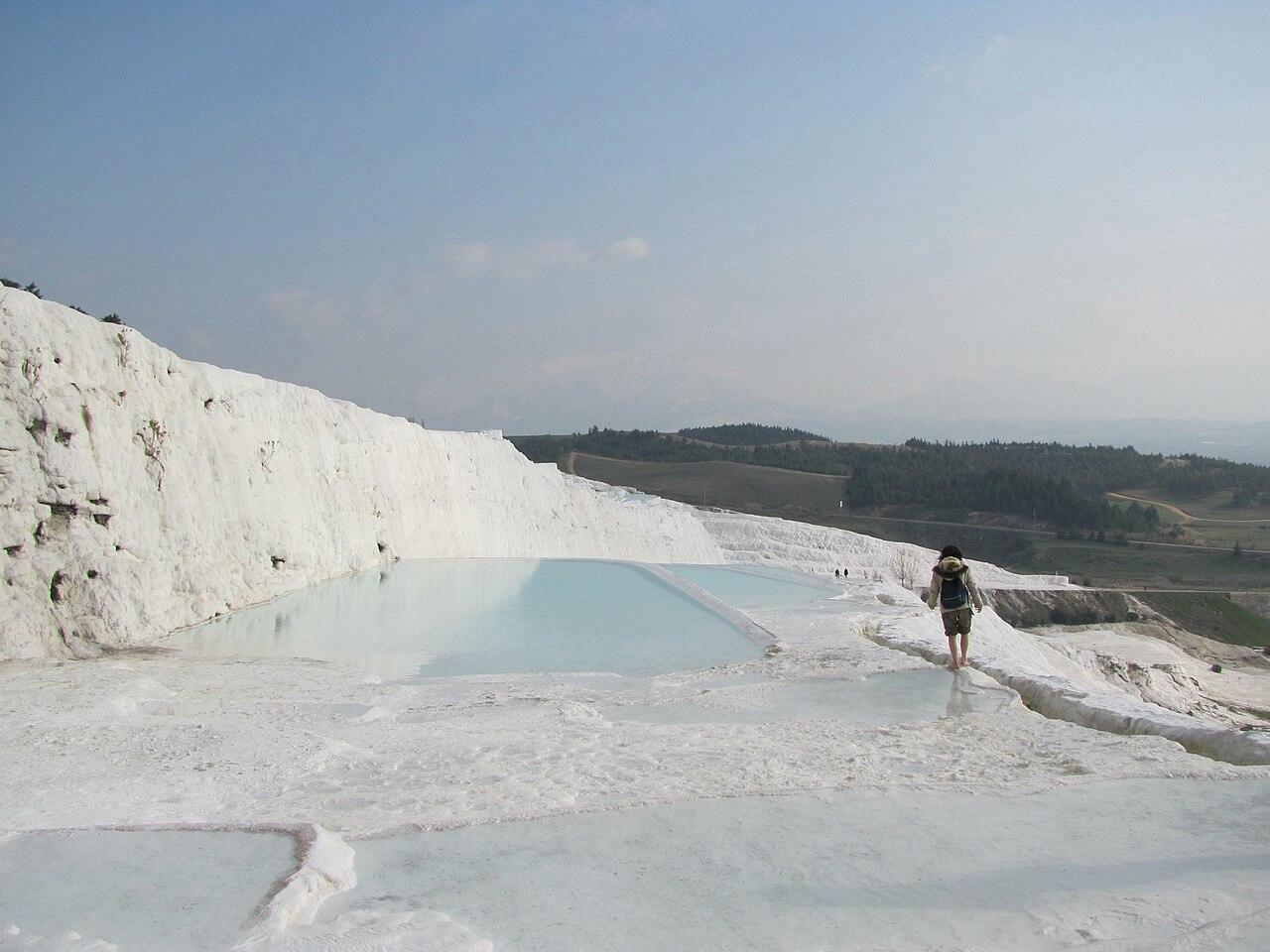
The Aegean and Lycian coast: Ephesus, Pamukkale and the sea
Greek and Roman ruins, the white terraces of Pamukkale and the turquoise bays between Fethiye and Kaş.
 15 daysModerate
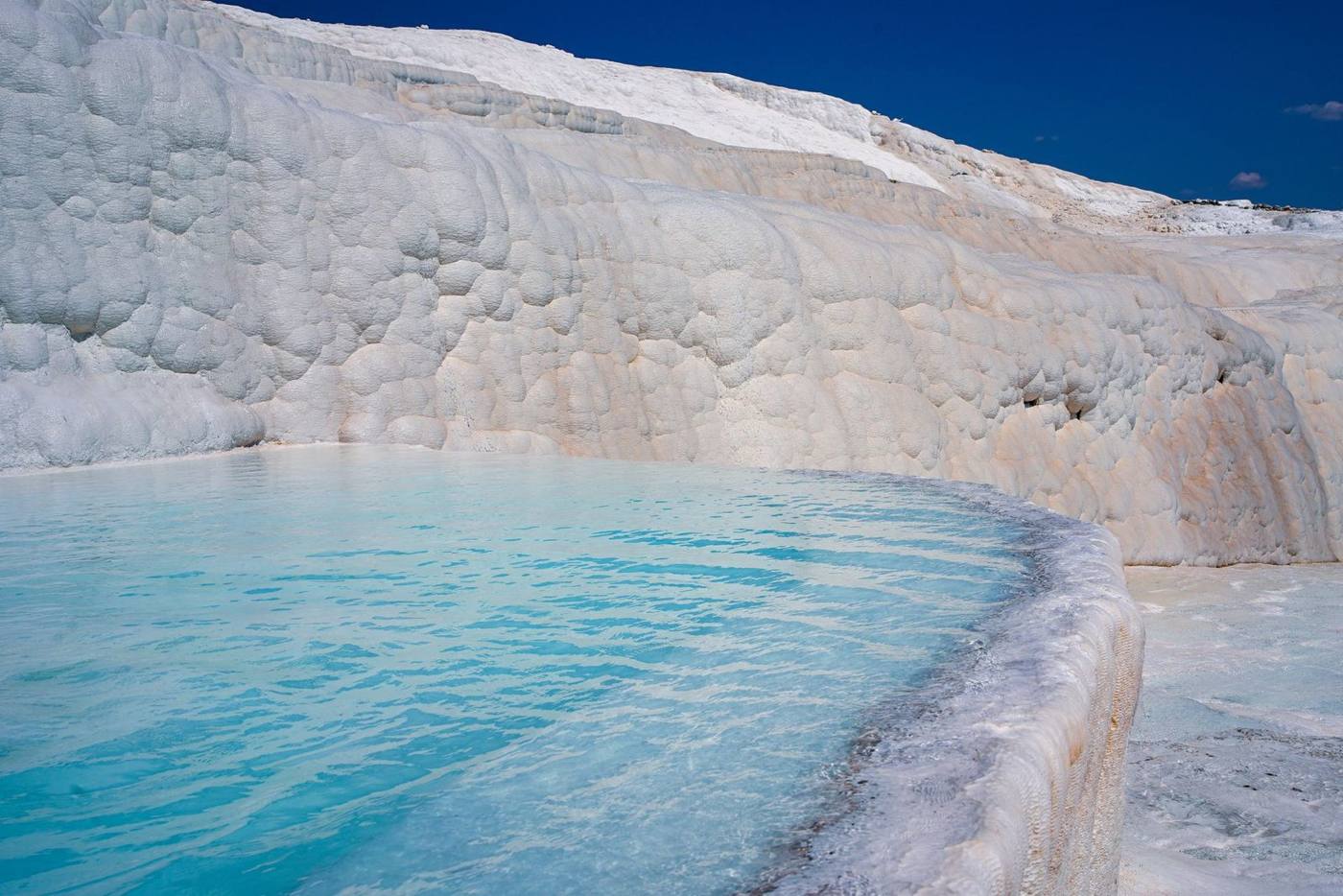
Grand tour of Turkey
Istanbul, Cappadocia, Konya, the Lycian coast, Pamukkale and Ephesus: the very best in two weeks.
 7 daysModerate
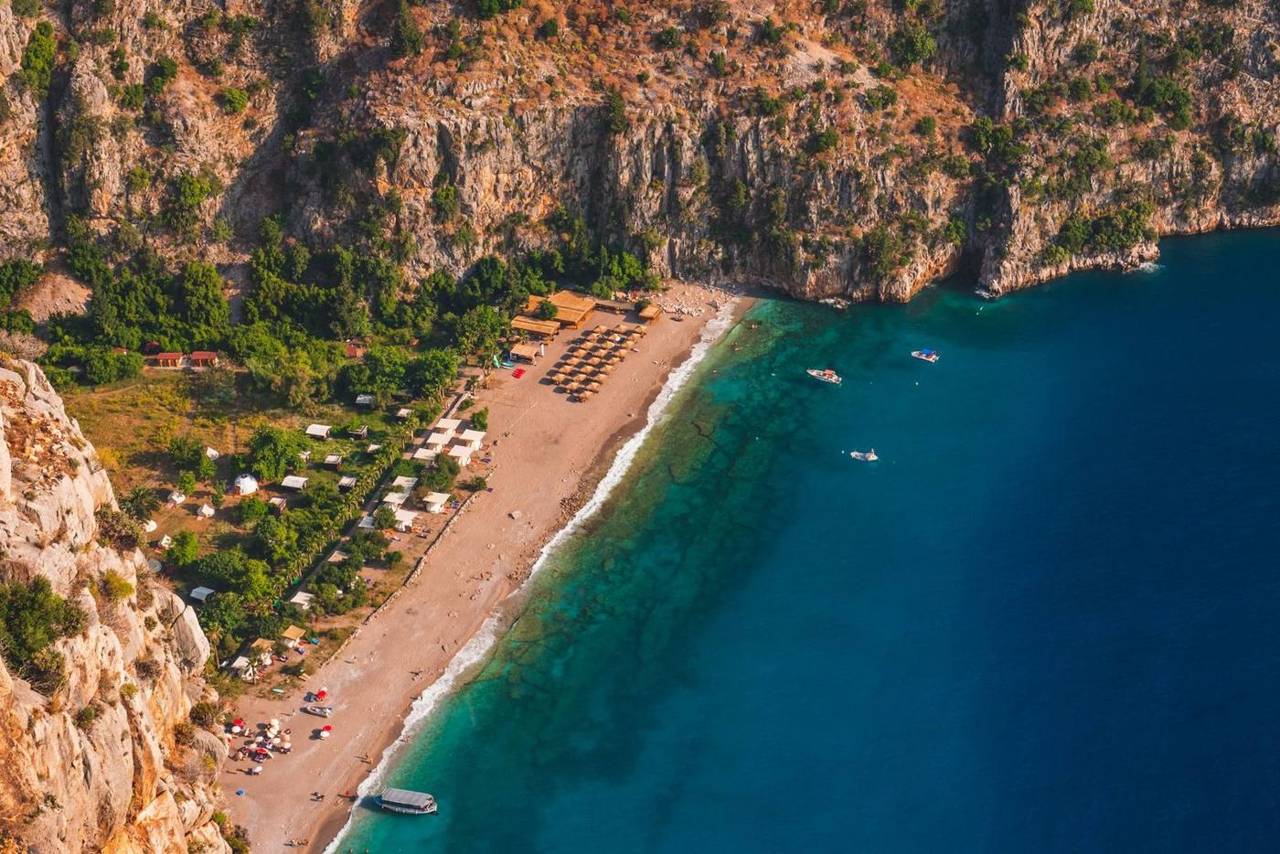
Walking the Lycian Way
Turkey's finest trail: selected stretches between Fethiye and Kaş, with nights in villages and swims in small coves.