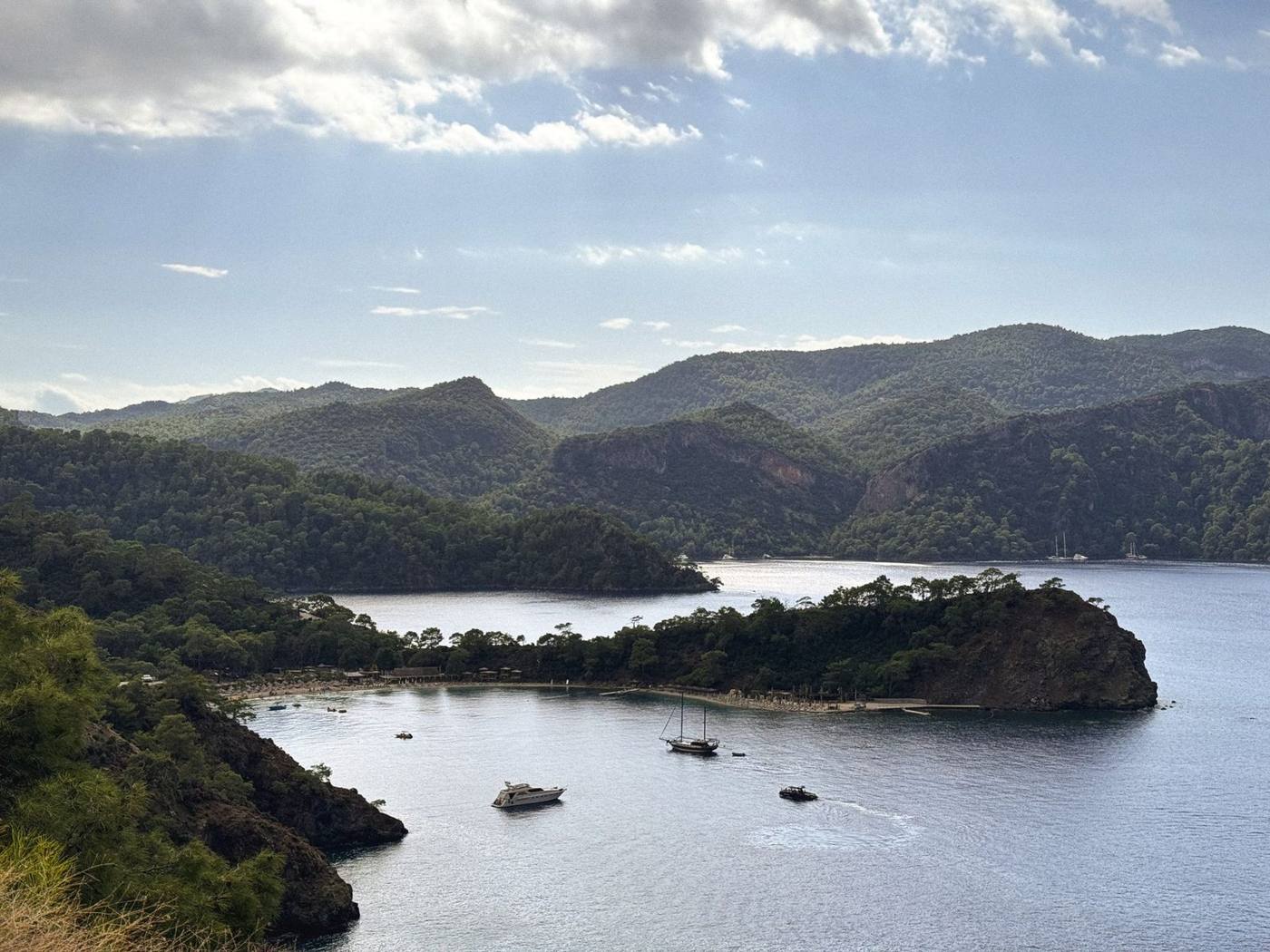
A week aboard a gulet from Fethiye to Marmaris
Seven nights on board among the coves of the Gulf of Fethiye and the Carian coast, with a boat trip up the Dalyan river to the tombs of Kaunos.
- Dalaman
- Fethiye
- Sarsala Koyu
- Terme di Cleopatra
- Domuz Adası
- Ekincik
- Dalyan
- Kaunos
- Kadırga
- Marmaris
Day by day
- Day 1
Flight to Dalaman and boarding at Fethiye
This trip is a week on a gulet, the traditional two masted wooden Turkish boat, along the south western coast of Turkey between Fethiye and Marmaris. It is the coast of bays ringed by pine forests, turquoise water, ancient ruins of Lycia and Caria, fishing villages and rock cut tombs. You sleep on board in small cabins, eat on deck and swim several times a day.
To enter Turkey, Italian citizens can use a passport or a valid electronic identity card; other nationalities should check their own requirements. The US government rates Turkey at level 2 of 4; the south western coast is not among the areas advised against, but check current advice.
You fly into Dalaman, usually via Istanbul or on seasonal direct flights, then drive to Fethiye, about an hour away.
In the afternoon, on arrival in Fethiye, a town at the head of a gulf dotted with islands, stroll along the seafront and look at the tombs of the Lycian kings cut into the cliff above the town, such as the fourth century BC tomb of Amyntas, with a facade shaped like a Greek temple.
Then board the gulet, meet the captain and crew, settle into your cabin and explore the boat. The gulet has a large aft deck with cushions and awnings for shade, a table for meals and a foredeck for sunbathing.
In the evening have a first dinner on board in the harbour, with meze, salads, fish and fruit.
Spend the night on board in Fethiye harbour.
Practical tip: the best time is May to June and September to October. Bring a soft bag: hard suitcases do not fit in the cabins.
- Day 2
Kapı Creek and Sarsala Koyu
Today the gulet leaves Fethiye and sails north west across the gulf, among islands, headlands and bays.
In the morning, after breakfast on deck with bread, cheeses, olives, tomatoes, cucumbers, honey and tea, the gulet crosses the Gulf of Fethiye and stops in a bay for the first swim. The water is clear and warm, and you can see the bottom several metres down.
The route leads towards Kapı Creek, also called Kapukargın, a narrow, deep inlet between pine clad hills, and then Sarsala Koyu, a bay enclosed by pine forest, with green, clear water, where you drop anchor for the night.
In the afternoon snorkel around the rocks, swim ashore or walk the paths among the pines. Wild goats are sometimes seen on the rocks and, rarely, sea turtles.
At sunset sky and sea turn orange as the crew prepares dinner. Evenings on board are quiet, with the lights of a few other boats and the stars.
Meals are prepared by the cook on board with fresh produce bought in the harbours: vegetables in olive oil, grains, pulses, fish, grilled meat, fruit and Turkish sweets.
Spend the night on board at anchor.
Practical tip: in summer the cabins are hot: many people sleep on deck on mattresses under the stars. Use reef safe sun cream and bring a hat.
- Day 3
Cleopatra's Baths and the bay of Emine'nin Yeri
Today visit Cleopatra's Baths in the Bay of Göcek, one of the most famous stops on the coast.
In the morning the gulet stops in a bay where, on the shore and under water, lie the ruins of an ancient bath complex and Byzantine buildings. Legend has it that Cleopatra, Queen of Egypt, bathed here with Mark Antony, who is said to have given her this coast. In reality the visible ruins are mostly Byzantine, but part of the buildings has sunk below sea level as the coast subsided, and you swim over the ancient walls in the clear water.
Then explore Gemiler Island, also called Saint Nicholas Island, if the route includes it, with the ruins of Byzantine churches and a covered walkway climbing to the top.
In the afternoon the gulet moves to the bay of Emine'nin Yeri in the Göcek area, a quiet bay among wooded hills, where you anchor for the night. Swim, take a kayak or simply read on the aft deck.
Göcek, the nearby village, is a marina full of yachts: if the programme allows, you can make a short stop for a walk and some shopping.
In the evening have dinner on board in the bay.
Spend the night on board at anchor.
Practical tip: in some bays and islands a small entry ticket or fee is charged: check with the captain. Do not touch or remove anything from the underwater ruins.
- Day 4
Martı Koyu and Domuz Island, kayaking and snorkelling
Today is a day of slow sailing and rest in the Gulf of Göcek, among the twelve islands and dozens of bays in this area.
In the morning the gulet heads for Martı Koyu, the bay of gulls, and the islet of Domuz Adası, Pig Island, covered in pines, with enclosed bays and emerald water. According to one tradition the name comes from the wild boar that lived on the island.
Today you have spare time to do what you like: swim, snorkel among rocks and sea urchins, take a kayak to explore the inlets, read in the shade on the aft deck, doze on the cushions or watch the scenery.
For lunch the cook often makes gözleme, a thin flatbread filled with cheese, spinach or potato, cooked on a griddle, or stuffed aubergines, typical dishes of Turkish cuisine. Sometimes a boat of local vendors comes alongside selling ice cream, fresh bread, fruit or pancakes.
In the afternoon, if there is wind, the captain may raise the sails for a short stretch, although the gulet mostly travels under engine.
At sunset the gulet anchors in a quiet bay, tied with a line to a tree on the shore, as is the custom on this coast.
Spend the night on board at anchor.
Practical tip: bring water shoes to protect yourself from sea urchins. If you suffer from seasickness, ask the captain where to sit: you feel the motion less in the middle of the boat.
- Day 5
Ekincik, the Dalyan river, Kaunos and the rock tombs
Today leave the Gulf of Göcek and sail west to the bay of Ekincik, starting point for the most famous excursion on the coast: the Dalyan river.
In the morning, in Ekincik bay, leave the gulet and board a small local boat that travels up the Dalyan river, a calm river winding through tall reed beds, lagoons and marshes rich in birds such as herons, kingfishers and cormorants.
Along the river you see the area's most famous view: the rock tombs of the kings of Kaunos, cut in the fourth century BC into the cliff above the river, with facades shaped like Greek temples, columns and pediments.
Then visit the ruins of the ancient city of Kaunos, a city of Caria, once a rich seaport and later abandoned when the river silted up the harbour. You see the Greco Roman theatre, the baths, walls, acropolis and a view over the lagoon and the sea.
In the afternoon you reach Dalyan village on the river, with shops, cafés and restaurants. Then, if there is time, go down to İztuzu beach, a long spit of sand between the river and the sea where loggerhead turtles nest.
In the evening return to the gulet at Ekincik.
Spend the night on board at anchor.
Practical tip: the Kaunos site charges entry and the river boat is paid separately: check. On İztuzu beach, during the nesting season, there are protected zones and hours: respect them.
- Day 6
West to the bay of Kadırga
Today the gulet sails west along the coast of Caria towards Marmaris.
In the morning the boat follows the coast, with cliffs, headlands and small empty bays, passing sea caves and pebble beaches reachable only from the sea. The landscape is wilder, with pine covered mountains running down to the water.
At midday the gulet stops for a swim in a bay along the way, with deep, clear water.
In the afternoon it reaches the bay of Kadırga, one of the last quiet bays before Marmaris, with calm water and wooded hills. Kadırga means galley, and according to tradition warships sheltered here.
Have a last long swim, snorkel or kayak, then enjoy the last sunset in the bay.
In the evening the last night on board is often celebrated with a special dinner, sometimes with grilled fish, raki, the Turkish aniseed spirit that turns white with water, and music. It is the moment to thank the captain and crew.
Spend the night on board at anchor.
Practical tip: tipping the crew is a common custom at the end of the cruise: ask the organiser about the usual amount. Pack your bag in the evening, as tomorrow you arrive in port.
- Day 7
Marmaris: castle, bazaar and seafront
Today you arrive in Marmaris, at the head of a large bay surrounded by pine covered mountains.
In the morning the gulet enters the harbour of Marmaris, a resort town with a large marina full of yachts and boats. Leave the boat or keep it as a base, depending on the arrangements.
Visit Marmaris castle, a small sixteenth century Ottoman fortress built by Sultan Suleiman the Magnificent during the campaign against the Knights of Rhodes, now a museum with archaeological finds and a view over the harbour and the bay.
Then walk through the lanes of the old town below the castle, with white houses, flowers and small shops, and through the covered bazaar, with spices, tea, fabrics, ceramics, lokum and leather goods.
In the afternoon stroll along the seafront, several kilometres long, with beaches, cafés and restaurants. If you like, have a last swim from the beach or drive out to the Bozburun peninsula or Selimiye, a quieter fishing village.
In the evening have a last dinner in town, with fish, meze and baklava.
Spend the night in Marmaris or on board, depending on the arrangements.
Practical tip: Marmaris castle charges entry: check times and prices. Ferries leave Marmaris for the Greek island of Rhodes: if you plan to go, bring the documents needed to enter Greece.
- Day 8
Transfer to Dalaman airport and home
On the last morning leave Marmaris for Dalaman airport, about an hour and a half by road, through pine covered hills and the fields around Köyceğiz.
If your flight is in the afternoon, you can stop at Köyceğiz, a small town on a large lake linked to the Dalyan river, with a quiet lakefront and olive groves. Or stop at the thermal springs and mud baths near Dalyan, where you cover yourself in mud and then wash it off in the warm waters.
Before leaving buy some souvenirs: spices, Turkish tea, lokum, pine honey, olive oil, olive oil soap, textiles or ceramics.
From Dalaman airport there are flights to Istanbul, with connections to many European cities, and in summer direct flights to some European cities.
If you have a few more days, you can add time on land: the Lycian Way on foot, Saklıkent canyon near Fethiye, the Ölüdeniz lagoon, or the ruins of Xanthos and Letoon, a UNESCO World Heritage Site, with the inscriptions and temples of the ancient Lycian capital.
Practical tip: allow plenty of time for the airport transfer, especially on Saturdays, when many groups change over in summer. Check baggage rules, as some domestic flights have lower weight limits.
This is the most restful trip Turkey offers: a new bay every day without ever repacking, and the visit to Kaunos adds some historical substance. The limit is space: small cabins, tight bathrooms and a group living together on a few metres of deck, so it helps to know your companions or be very easygoing. In July and August the best-known bays fill with other gulets; May and September have warm water and fewer boats.
Before you go
- Documents and visa
- Passport, or for some EU citizens a national identity card; no visa for tourism up to 90 days in 180 for most EU nationalities.
- Health and vaccines
- No compulsory vaccines. Drink bottled water. Emergencies: 112.
- Money and payments
- Turkish lira. Cards work almost everywhere; state site tickets are set in euros but paid in lira at the day's rate.
- Power sockets
- Types C and F, 230 volts: the same round-pin sockets as much of Europe.
- Time zone
- UTC+3 all year: Turkey does not use daylight saving time.
- Safety
- The United States rates Turkey level 2, with level 4 within 10 km of the Syrian and Iraqi borders. Tourist areas are busy and calm. Official advice: GOV.UK.
Information checked in November 2026 for Italian and EU citizens. Rules change: always check before you travel.
Variations
In 5 days: a short cruise in the Gulfs of Fethiye and Göcek, returning to Fethiye.
In 11 days: add Istanbul at the start or a few days walking the Lycian Way.
Frequently asked questions
What documents do I need?
Italian citizens can use a passport or a valid electronic identity card. Other nationalities should check their own requirements.
Will I get seasick?
The gulet mostly sails in sheltered waters and stops in calm bays. With wind the sea can be choppy: ask the captain where to sit.
When is the best time to go?
May to June and September to October. July and August are very hot and the bays are busier.
Indicative itinerary written by World Atlas. Before booking, check timetables, seasonal openings, documents and safety.
 8 daysEasy
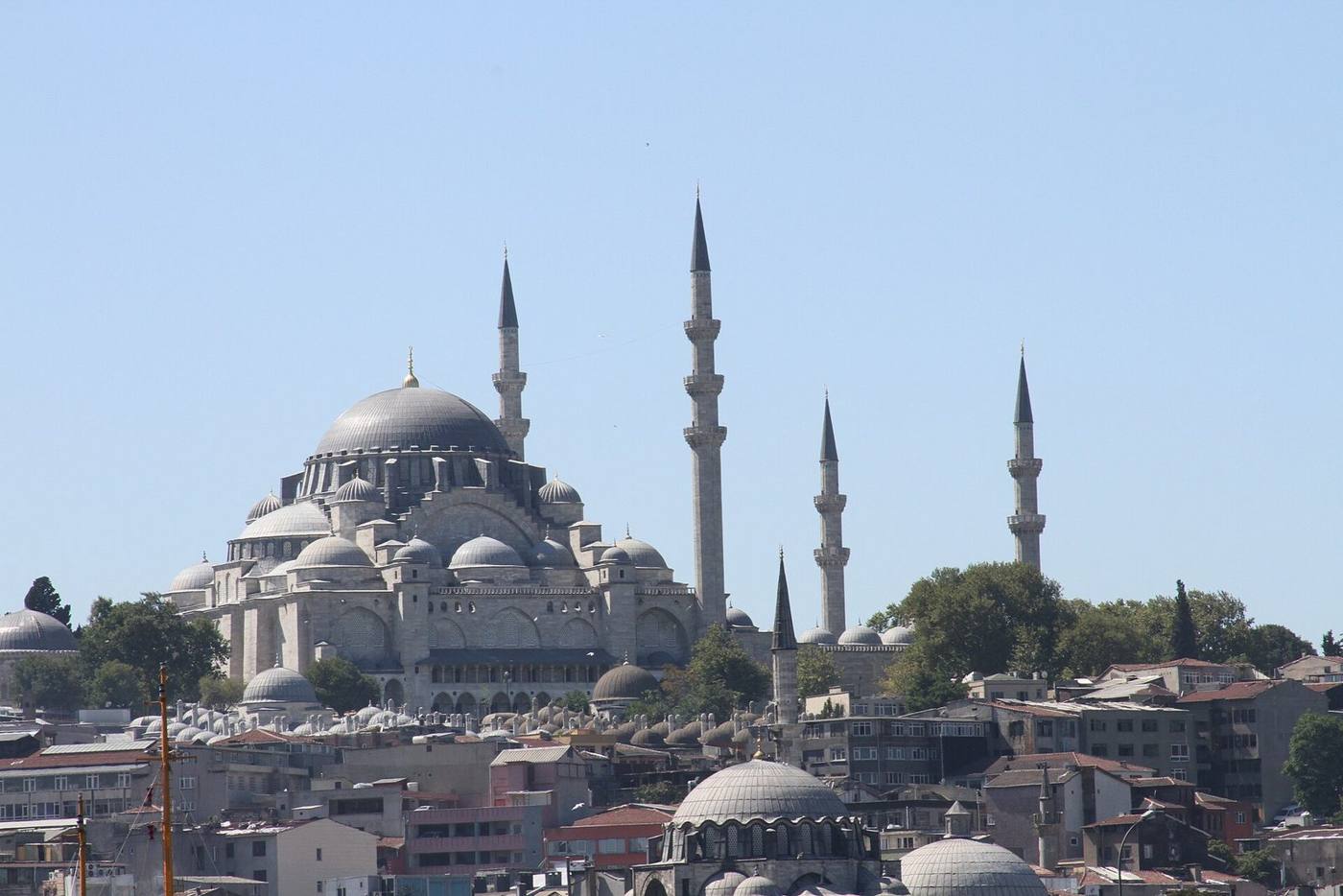
Istanbul at an easy pace and the Dardanelles
Four full days in Istanbul, Asian side included, then Iznik, Bursa, Troy and the Gallipoli battlefields.
 9 daysEasy
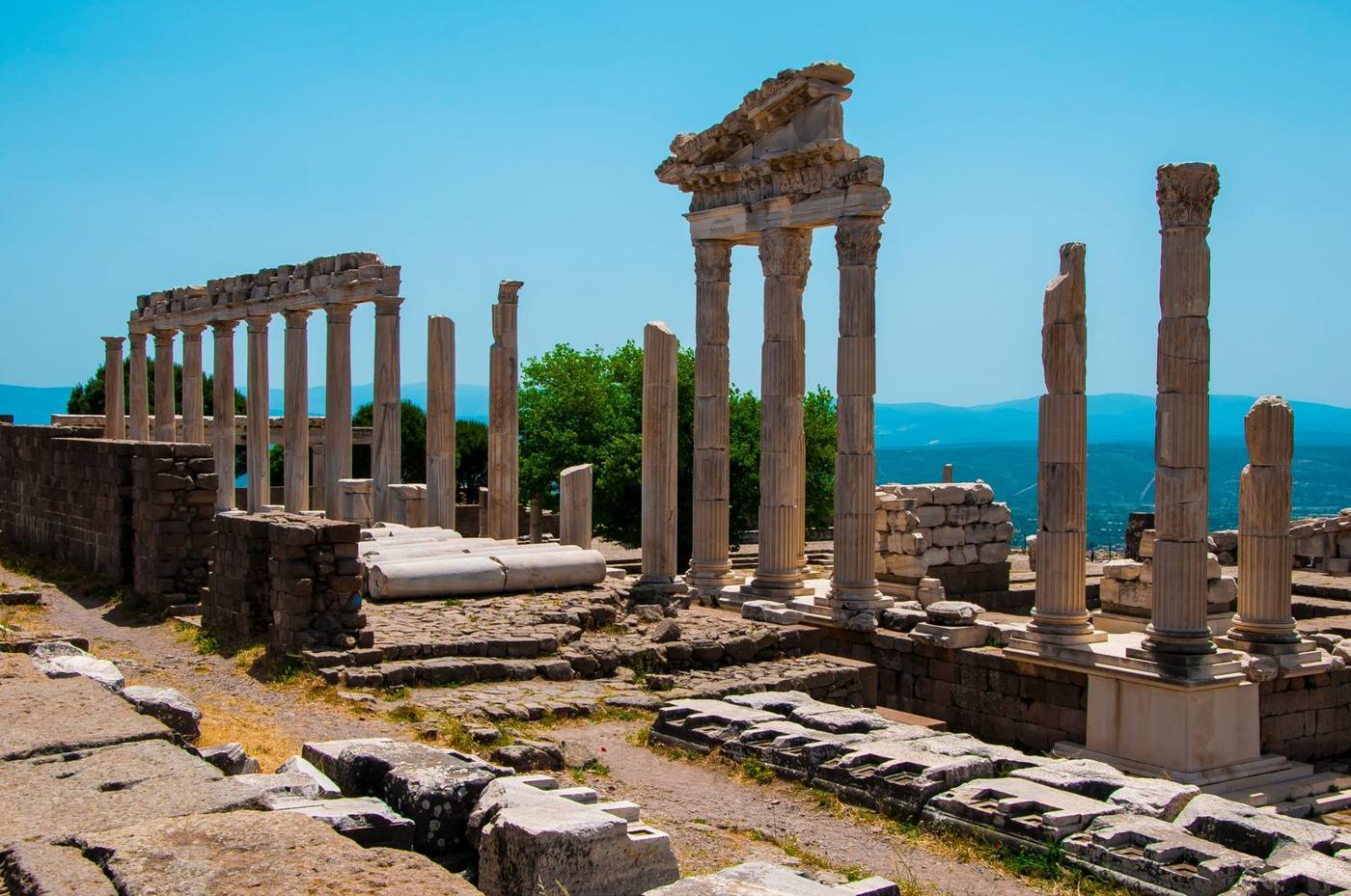
From Istanbul to Izmir along the northern Aegean
The less trodden side of the Aegean coast: Assos above the sea, Pergamon and its Asclepieion, the islands off Ayvalık and finally Ephesus.
 10 daysChallenging
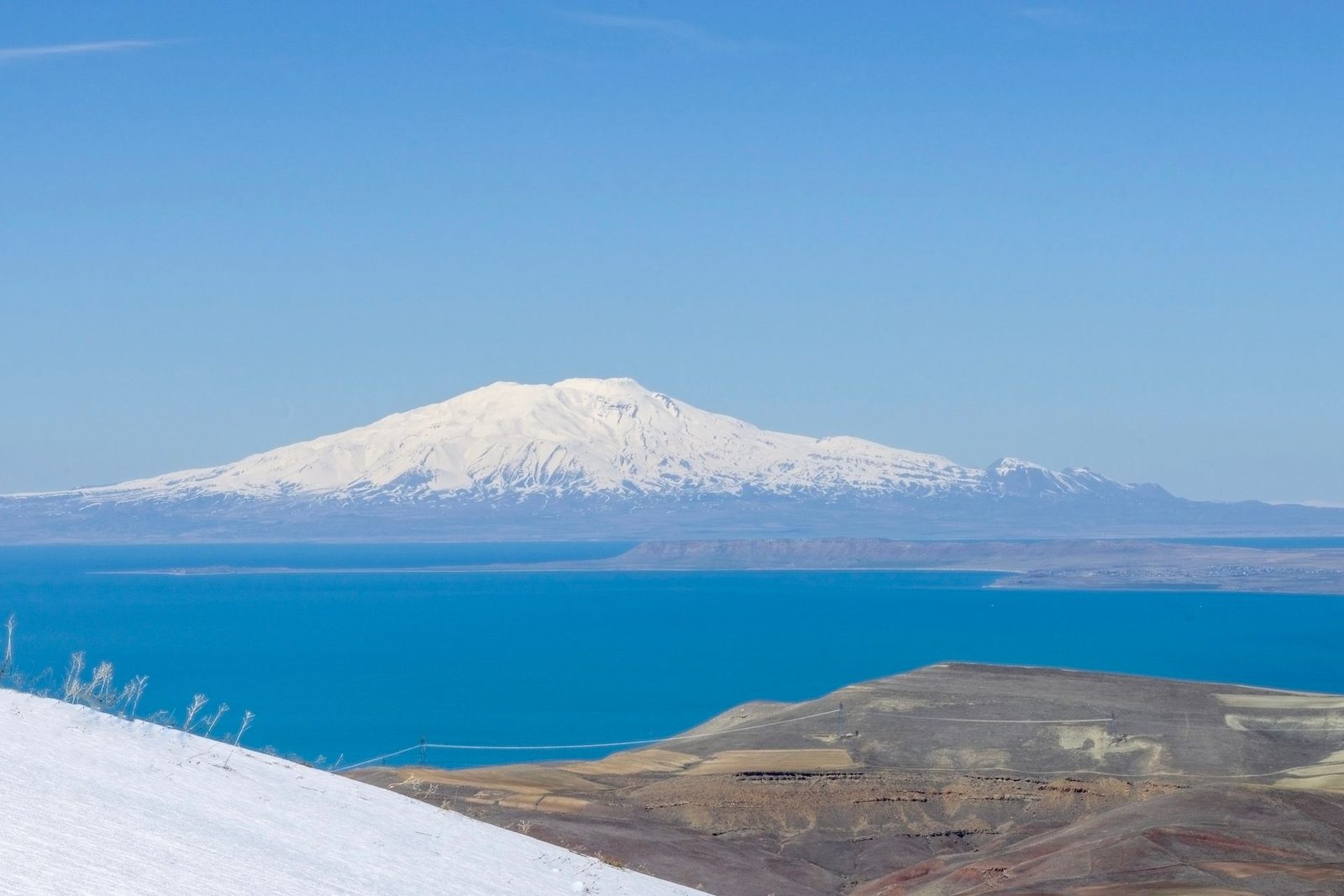
Ararat: the climb and Armenian Anatolia
Turkey's highest summit, above 5,100 metres, preceded by Erzurum, Kars and the ruined churches of Ani on the Armenian border.