Udon Thani, Ban Chiang and the lotus lake
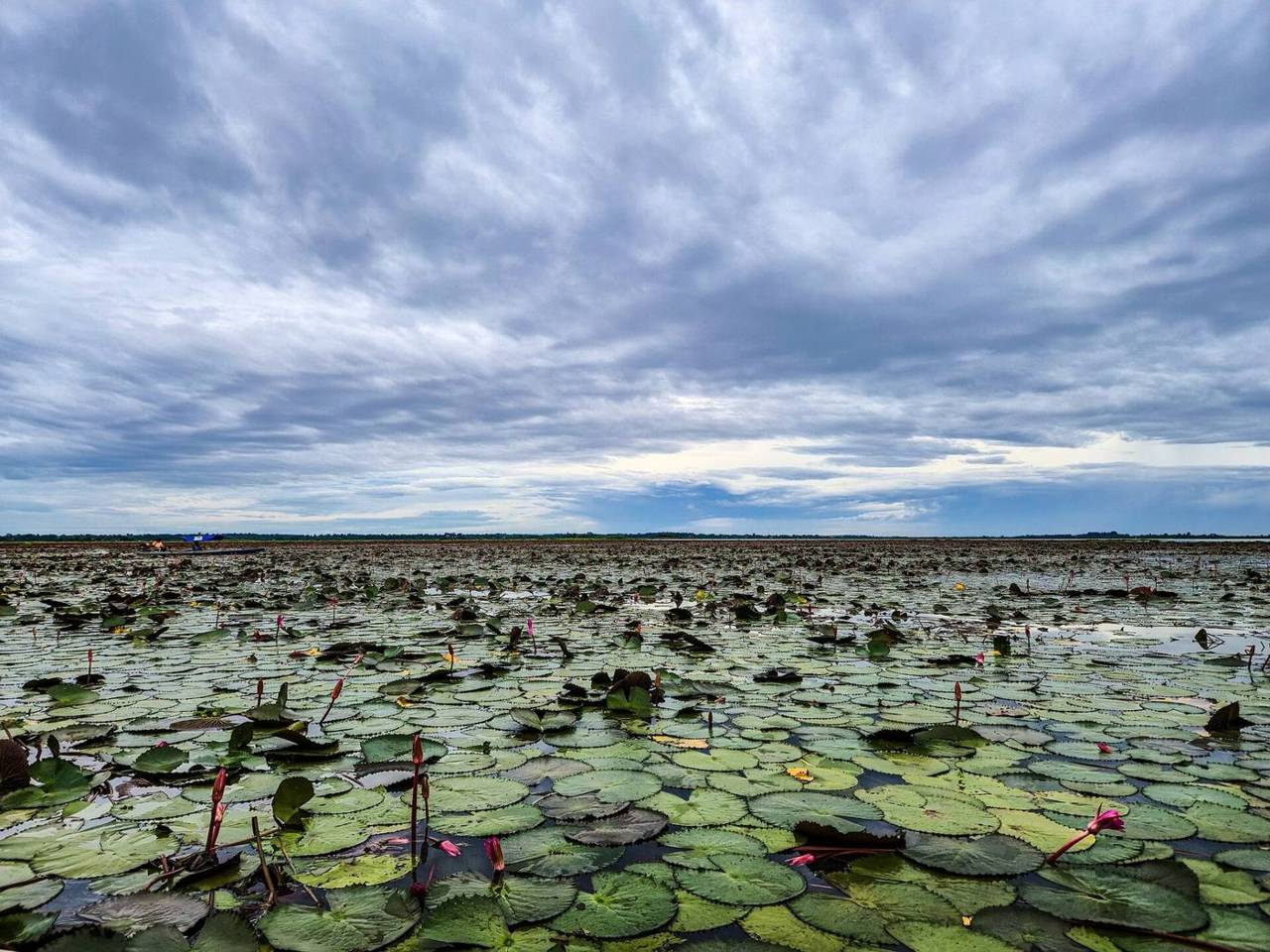
Northeastern Isan: Nong Han Kumphawapi lake covered in pink lotus flowers in winter, the prehistoric site of Ban Chiang, a UNESCO World Heritage site, with its painted pottery, and Phu Phrabat park with mushroom-shaped rocks and rock paintings.
- Udon Thani
- Talay Bua Daeng
- Ban Chiang
- Phu Phrabat
Day by day
- Day 1
Udon Thani and the market
Isan, the great plateau of north-eastern Thailand, is the region least visited by foreign tourists and one of the most authentic in the country: rice fields as far as the eye can see, wooden villages, temples, spicy and flavourful cooking and a culture close to that of Laos, just across the Mekong river. In four days you discover Udon Thani, the red lotus lake, the prehistoric site of Ban Chiang and the Phu Phrabat historical park.
From Bangkok you reach Udon Thani by plane in about an hour, or by night train or bus in about nine or ten hours. Udon Thani is a lively provincial city that began as an American base during the Vietnam War and is now the region's commercial centre and a gateway to Laos.
In the afternoon walk around Nong Prajak park, a large lake in the city with paths, gardens and cycle tracks, where local people jog, cycle and exercise at sunset.
In the evening go to the night market in the centre, near the station, to taste Isan cooking: som tam, the spicy green papaya salad pounded in a mortar, larb, a salad of minced meat with herbs, mint and toasted rice, gai yang, grilled chicken, and sticky rice, eaten by hand in small balls. Food here is spicier than in the rest of Thailand: if you are not used to it, ask for less chilli.
Practical tip: Italian citizens can stay in Thailand for up to 30 days without a visa and must complete the TDAC digital arrival card in the three days before travelling.
- Day 2
The red lotus lake by boat at dawn
Today the alarm goes off very early, around five, to go to the red lotus lake, one of Thailand's most beautiful natural sights. Nong Han Kumphawapi lake is about forty or fifty minutes south-east of Udon Thani: it is best to go with a car and driver or a taxi booked the evening before.
Between December and February, in the cool dry season, the surface of the lake is covered with millions of pink and red lotus flowers, which open early in the morning and close towards midday in the heat. This is why the lake is called Talay Bua Daeng in Thai, the sea of red lotuses. At the pier you board one of the small motorboats steered by local fishermen, who take you for about an hour along channels opened through the sea of flowers, with the sun rising and a light mist on the water. Herons, kingfishers and other water birds also live on the lake. The finest flowering is usually in January.
Return to Udon Thani for breakfast and rest for a few hours.
In the afternoon visit one of the city's Buddhist temples, or the city museum, in an old colonial-era building, which tells the history of Udon Thani and the region.
In the evening try another night market or a river fish restaurant. Practical tip: outside the flowering season, from March to November, there are few or no lotus flowers; if the lake is the main reason for your trip, go between December and February and ask for up-to-date news on the flowering.
- Day 3
Ban Chiang: the museum and the excavations
In the morning go to Ban Chiang, a village about an hour east of Udon Thani and one of the most important prehistoric sites in South-East Asia, a UNESCO World Heritage site. In 1966 an American student tripped over a fragment of pottery sticking out of the ground on a village road: the excavations that followed revealed a settlement inhabited for thousands of years, from prehistory until about two thousand years ago, with graves, pottery and bronze objects. The site showed that bronze was worked very early in South-East Asia, changing ideas about the region's history.
Start at the Ban Chiang National Museum, modern and well organised, which tells of the life of the ancient inhabitants: rice farming, livestock, bronze and then iron working, burial rites. The most famous part is the pottery painted with red swirling and wave patterns on a pale background, which has become the symbol of the site.
Then walk to Wat Pho Si Nai in the village, where a covered pavilion protects an excavation pit left open: you see skeletons and pots in the position where they were found, at different depths, like a page of history open in the ground.
In the afternoon stroll around the village, where families still make pottery inspired by the ancient pieces and traditional textiles. Return to Udon Thani towards evening.
Practical tip: the museum is usually closed on Mondays and Tuesdays, like many Thai national museums; check the hours before you go.
- Day 4
Phu Phrabat historical park and the journey back
On the last morning go to Phu Phrabat historical park, about an hour north-west of Udon Thani, in the Phu Phan hills. In 2024 it was added to the UNESCO World Heritage list for its evidence of the Buddhist tradition of the Dvaravati period, between the seventh and eleventh centuries.
The park is a wooded hill area with strange sandstone formations, sculpted by erosion into mushrooms, tables, arches and shelters, which local people linked to legends of princes and princesses. Many of these rocks were turned into small shrines: around some you can still see sema, the boundary stones that marked the sacred space of Dvaravati-era Buddhist temples. Under some shelters there are much older rock paintings, with figures of people and animals painted in red.
Follow the loop trail of about three or four kilometres linking the most famous rocks, such as the Nang Usa tower, a large mushroom-shaped rock, and the Hor Nang Usa shelter. The route is easy and shaded by trees, but bring water and comfortable shoes.
In the early afternoon return to Udon Thani for your flight to Bangkok, or continue to Nong Khai on the Mekong, about an hour away, where the Friendship Bridge leads to Vientiane, the capital of Laos.
Practical tip: in the rainy season, from May to October, Phu Phrabat's trails can be slippery; from March to May it is very hot, so visit the park early in the morning.
A rural, authentic Thailand, easy to combine with Laos and Vientiane. The lotuses open in the early morning and the best bloom is between December and February. Few foreign tourists: a few words of Thai help. Since 15 September 2026 Italians can enter without a visa for tourism for up to 30 days (previously 60), and the Thailand Digital Arrival Card (TDAC) must be completed online before every arrival.
Before you go
- Documents and visa
- Passport valid for at least six months. Since 15 September 2026 many nationalities, including most EU citizens, enter without a visa for tourism for up to 30 days. Before each entry, within the three days beforehand, the no-cost Thailand Digital Arrival Card (TDAC) must be completed online on the official website.
- Health and vaccines
- No vaccines required arriving from Europe; ask your doctor about hepatitis A and typhoid. Dengue is present: use repellent. Do not drink tap water. Health insurance recommended. Emergencies: 191 police, 1669 ambulance, 1155 tourist police.
- Money and payments
- Baht. Cards accepted in cities and hotels; markets and small places need cash. ATMs charge a flat fee for withdrawals with foreign cards.
- Power sockets
- Types A, B, C and O, 220 volts: bring a universal adapter.
- Time zone
- UTC+7, no daylight saving time.
- Safety
- A safe country for travellers. Avoid the southernmost provinces near Malaysia and the border strip with Cambodia. Beware of tuk-tuk and gem scams, and of scooter traffic. Official advice: GOV.UK.
Information checked in November 2026 for Italian and EU citizens. Rules change: always check before you travel.
Variations
In 3 days: the lotus lake at dawn and Ban Chiang on day two, Phu Phrabat on day three, based in Udon Thani.
In 7 days: continue to Nong Khai and the Mekong, then along the river to Chiang Khan and Loei, with the Phu Kradueng mountains.
Frequently asked questions
When is the best time to go?
From December to February, in the cool dry season, when the red lotus lake is in bloom. From March to May it is very hot; from May to October it rains often.
Do I need a car?
In the city you get around by tuk tuk and taxi; for the lotus lake, Ban Chiang and Phu Phrabat a car with driver is best, because public transport is slow and infrequent.
Is the region safe?
Yes: the United States has Thailand at level 1, with level 2 only for the deep south provinces and the Cambodian border, far from Udon Thani.
Indicative itinerary written by World Atlas. Before booking, check timetables, seasonal openings, documents and safety.
 12 daysEasy
Bangkok and the Gulf of Thailand Islands
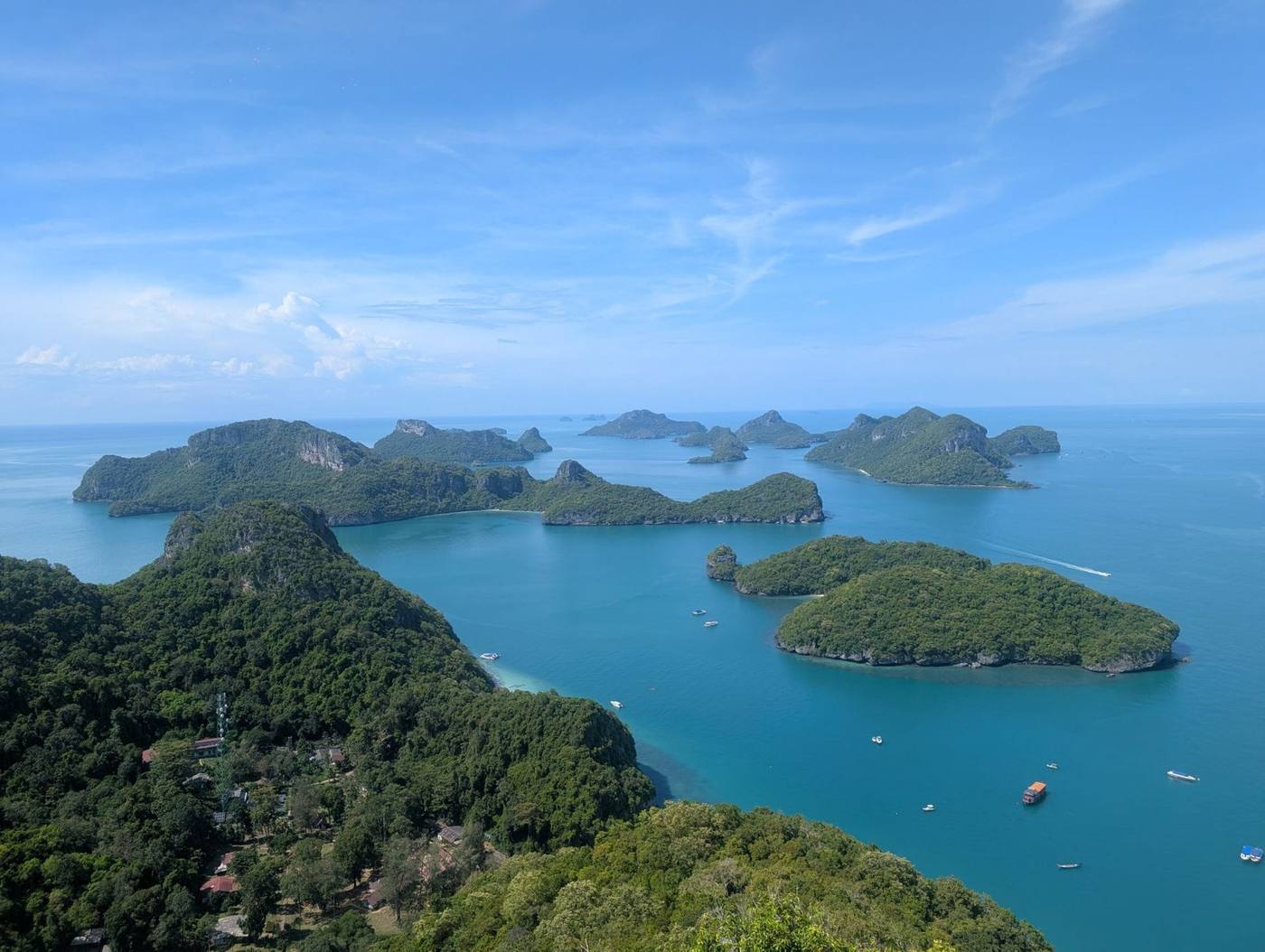
Three days in the capital, then Ko Samui, Ang Thong Marine Park, Koh Phangan and the reefs of Koh Tao, on the side of Thailand that copes best with summer.
 17 daysModerate
Thailand and Laos: from the Golden Triangle down the Mekong
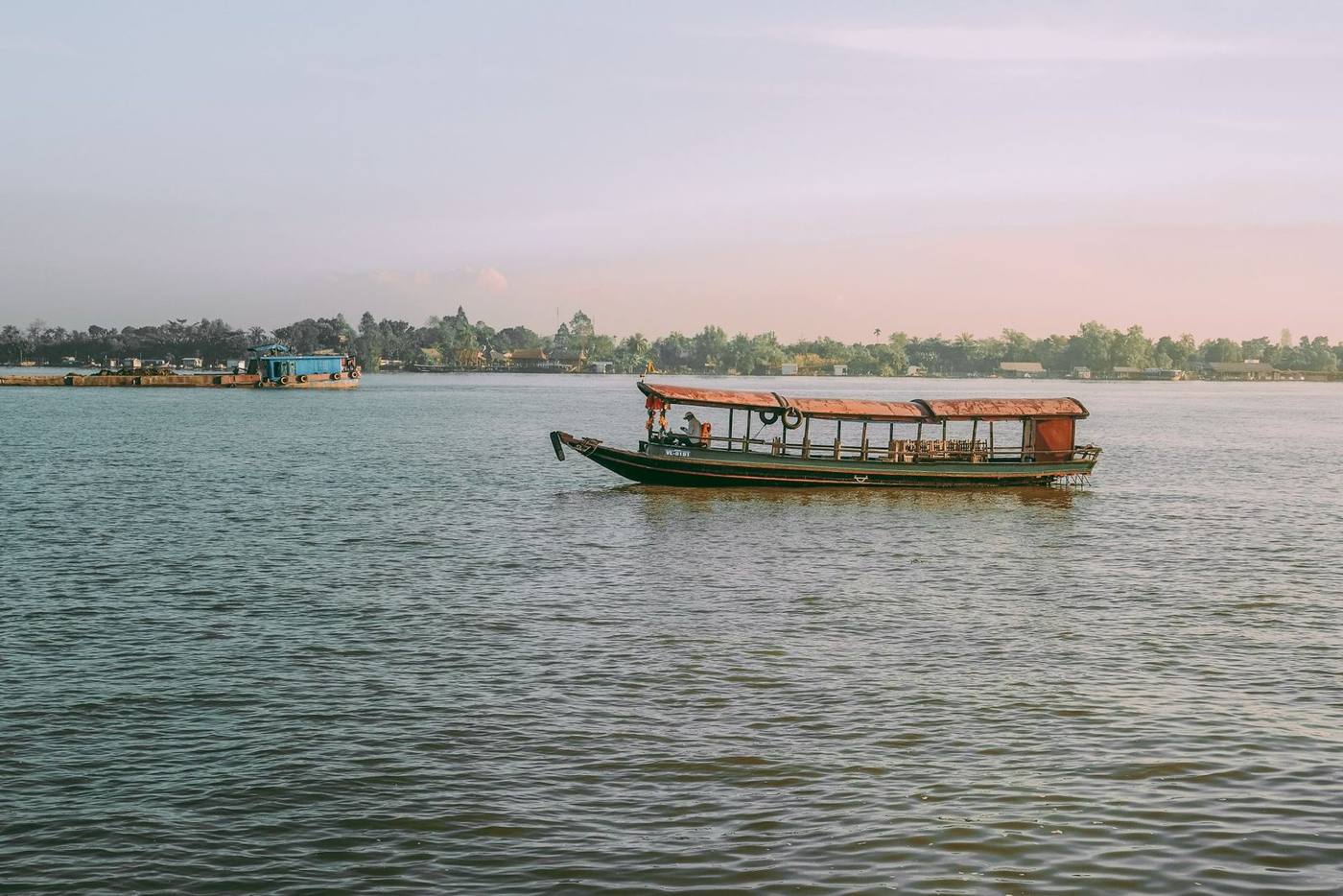
From northern Thailand you cross the Mekong at Huay Xai, take two days of slow boat to Luang Prabang, then Vang Vieng and Vientiane, and finish with three beach days on Ko Samet.
 17 daysModerate
Thailand and Cambodia: from Sukhothai to Angkor
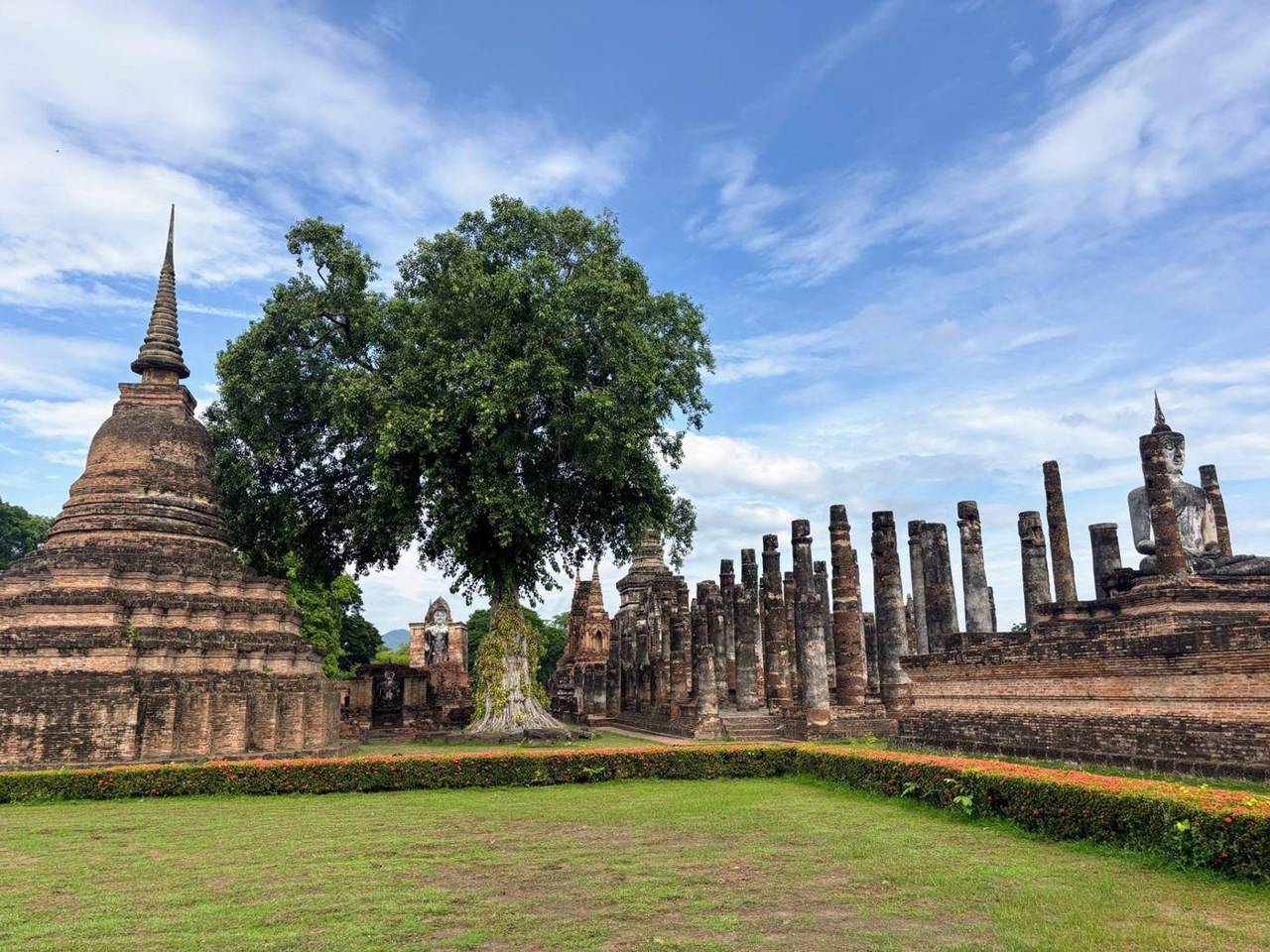
Trekking among northern hill villages, the old capitals of Siam, then the temples of Angkor, Tonle Sap lake and Phnom Penh with its Khmer Rouge memorial sites.