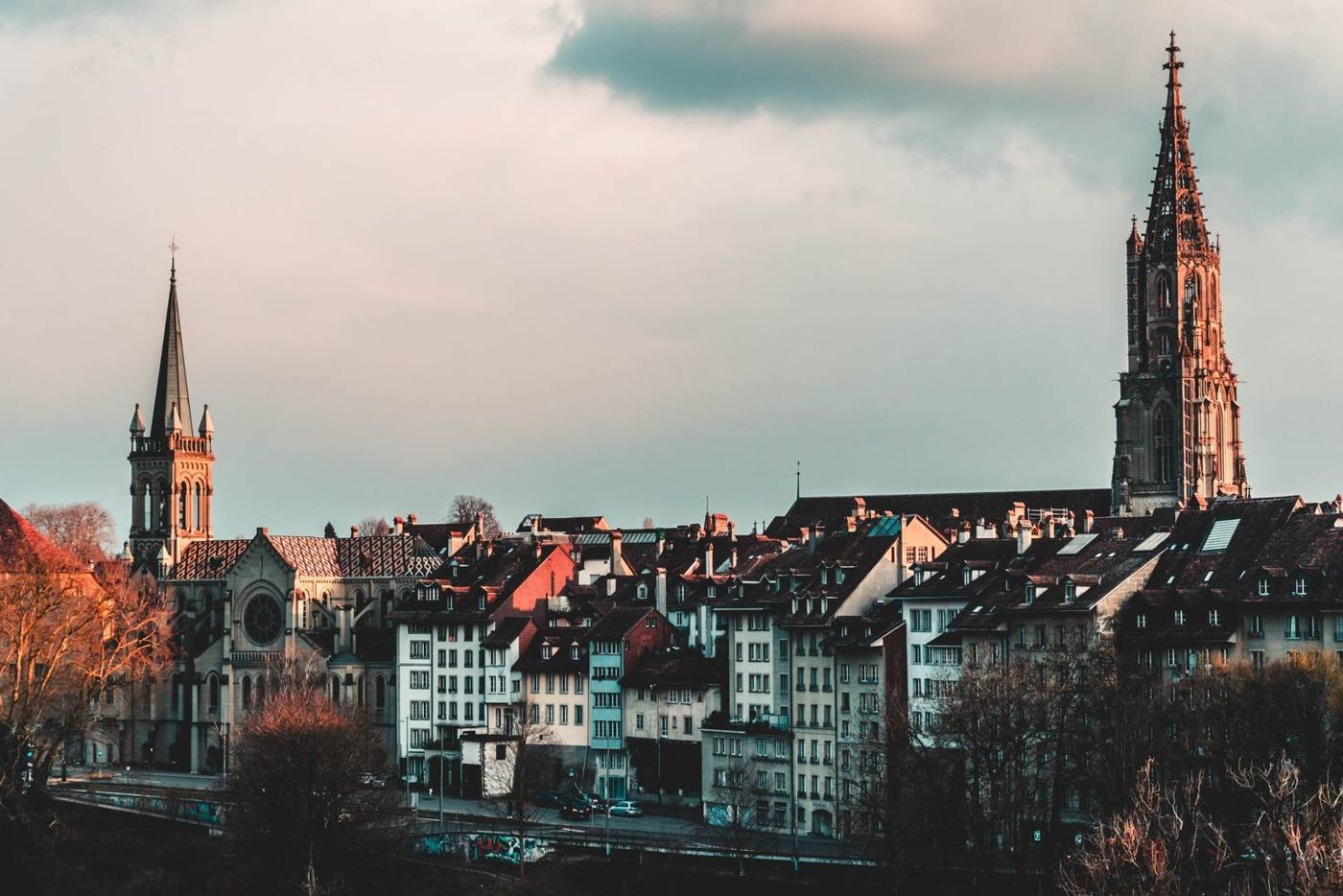
Bern, Zurich and Basel
Switzerland's cities: medieval Bern with its arcades and the Aare, Zurich and its districts, Basel and its great art museums, with a swim in the Rhine.
- Bern
- Zürich
- Basel
Day by day
- Day 1
Bern, the old town and the Zytglogge
This trip crosses the three great cities of German-speaking Switzerland in five days: Bern, the medieval capital on a bend of the Aare, Zurich with its lake and new districts, and Basel with its art museums and the Rhine. The cities are close together and you always travel by train, in about an hour.
Before you go: Italian citizens only need an electronic identity card valid for travel abroad or a passport, with no visa. Switzerland is not in the European Union but is in the Schengen area; you pay in Swiss francs, and driving on motorways requires the vignette. Other nationalities should check their own rules. The country is very safe; healthcare is excellent but expensive, so travel with health insurance.
You arrive at Bern station and within minutes you are in the old town, a UNESCO World Heritage Site since 1983. Walk along Marktgasse and Kramgasse under the arcades, which cover about six kilometres of streets and let you stroll even in the rain. Look at the colourful 16th-century fountains, with statues of characters and allegorical figures.
Stop in front of the Zytglogge, the clock tower with its animated chimes: a few minutes before the hour the figures start to move, including a cockerel and a parade of bears. Then walk to the cathedral, the Münster, with its great carved portal of the Last Judgement; if your legs allow, climb the bell tower to see the rooftops and, on clear days, the Alps. Check prices and times.
In the evening have a traditional Bernese dish for dinner, such as the Berner Platte, meat and sausages with sauerkraut and potatoes.
Practical tip: buy train tickets with the Swiss railways app; if you are staying several days in the country, consider a pass for a set number of days, and check prices and times.
- Day 2
Einstein, the bears and a swim in the Aare
Today you stay in Bern and see it up close: the house where Einstein wrote his theories, the bear park and, in summer, a swim in the river the way the locals do it.
In the morning visit Einstein's house at number 49 Kramgasse: the young physicist lived here from 1903 to 1905 and worked on the special theory of relativity while employed at the patent office. It is a small second-floor flat. To learn more there is the Einstein Museum inside the Bern Historical Museum, across the river, with many rooms on his life and on physics. Check prices and times.
At midday cross the Nydegg bridge and walk down to the BärenPark, the bear park on the bank of the Aare: bears are the symbol of the city. Then climb up to the Rosengarten, the rose garden, for the best view over the old town and the bend in the river.
In the afternoon, from June to August, try the Aareschwumm: people in Bern walk upstream along the river, get into the water and let the current carry them down to the Marzili, below the Federal Palace. The water is cold and fast: get in and out only at the points with steps and handrails, and do not do it unless you are a strong swimmer. If you do not swim, watch from the bank or visit the Federal Palace, with guided tours when Parliament is not sitting.
Practical tip: for a swim in the Aare put your clothes and phone in a waterproof bag that you take into the water with you, as the locals do.
- Day 3
Zurich, the old town and Zurich West
Today you take the train to Zurich, in about an hour, and discover the country's largest city, between the historic centre, the lake and the old industrial districts that have been transformed.
In the morning walk from the main station along Bahnhofstrasse, the street of banks and elegant shops, down to the lake. Climb the Lindenhof, a small tree-covered hill on the site of an ancient Roman fort, with views over the Limmat and the church towers. Go into the Fraumünster for Marc Chagall's stained-glass windows in the choir, then cross the river to the twin-towered Grossmünster, where the reformer Zwingli preached in the 16th century. Check prices and times.
At midday sit on the lakeside and watch the boats; in summer the lake baths, the Badi, are a city institution.
In the afternoon visit the Kunsthaus, one of the most important art museums in Switzerland, extended in 2021 with a new building by David Chipperfield. The collections run from the Middle Ages to modern art, with Munch, Monet, Giacometti and many Swiss artists. Check prices and times.
In the evening take the tram to Zurich West, the former industrial area: under the arches of the railway viaduct there are workshops and bars, and around them old factories turned into cultural spaces. Try Zürcher Geschnetzeltes, sliced veal in a cream sauce with rösti.
Sleep in Zurich or continue by train to Basel.
Practical tip: in Zurich the water from public fountains is drinkable and very good: carry a bottle and save on bottled water, which is expensive in Switzerland.
- Day 4
Basel, the Fondation Beyeler and the Kunstmuseum
Today you are in Basel, the city of art, where Switzerland, France and Germany meet on the Rhine.
In the morning take the tram to Riehen and visit the Fondation Beyeler, in a bright building designed by Renzo Piano in the middle of a park. The collection covers modern art, from Monet and Cézanne to Picasso, Giacometti and Rothko, and its temporary exhibitions are among the most popular in Europe: book a timed ticket. Check prices and times.
At midday go back to the centre and walk around the market square, the Marktplatz, in front of the red town hall with frescoes on the façade and a painted courtyard.
In the afternoon visit the Kunstmuseum: the collection began in 1661, when the city bought the Amerbach collection, and it is considered the oldest public art collection in Europe. There are works by Holbein, a large section on the art of the German Renaissance and, in the new building, 20th-century art. Check prices and times.
Towards evening climb up to the terrace of the cathedral, the red sandstone Münster, with views over the Rhine and Kleinbasel, the north bank. Cross the river on one of the small current ferries, the Fähri, which move with no engine, pushed only by the water and attached to a cable.
Practical tip: anyone staying overnight in Basel usually receives a guest card valid on the city's public transport: ask for it at check-in and use it for the tram to Riehen.
- Day 5
Floating down the Rhine and departure
Your last day in Basel is devoted to the river: in summer the people of Basel let the current of the Rhine carry them through the city.
In the morning, if the weather is warm, try Rheinschwimmen: you get into the water on the Kleinbasel bank, near the Tinguely museum, and let yourself drift for a couple of kilometres to the steps near the Johanniter bridge. Keep your clothes in a fish-shaped waterproof bag that floats, sold in the city. The Rhine is wide, fast and used by boats: swim close to the bank, keep away from bridge piers and do not do it after a storm. If you do not swim, walk along the bank, where the scene is a pleasure to watch.
Mid-morning visit the Tinguely museum, on the riverbank, devoted to the moving machines of the Swiss artist Jean Tinguely: many sculptures start up when you press a button. Check prices and times. Then take a last walk around the old town and the Spalenvorstadt, up to the medieval Spalentor gate.
In the afternoon you leave: Basel has an airport shared with France and direct train links to Zurich, Germany and Alsace.
In five days you have seen three faces of urban Switzerland: the arcades and river of Bern, the museums and districts of Zurich, and the art and the Rhine of Basel. It is an easy trip, all by train, with no driving at all.
When to go: from May to September, when the Aare and the Rhine are warm enough for swimming, usually in July and August. The rest of the year the museums are enough to fill your days.
Practical tip: before getting into the Rhine check the water temperature and the warning flags published by the city.
Urban Switzerland, with excellent museums and the tradition of swimming in rivers in the city centre. The rivers are cold and fast: enter only at marked points. The three cities are an hour apart by train. Basel is also handy from Luxembourg and Alsace.
Before you go
- Documents and visa
- Switzerland is not in the EU but is in the Schengen area. British visitors can stay up to 90 days in any 180 days without a visa, and the EU Entry/Exit System applies. Motorways need the vignette, as a sticker or an e-vignette from the official website.
- Health and vaccines
- No vaccines required. Healthcare is excellent but very expensive: take travel insurance that covers repatriation and mountain rescue, because helicopter rescue costs a great deal. Watch out for ticks in woods. Emergencies: 112, police 117, fire 118, ambulance 144, Rega air rescue 1414.
- Money and payments
- Swiss franc. Cards are accepted almost everywhere, even for small amounts; euros are taken in many places, but change comes in francs at a poor rate.
- Power sockets
- Swiss type J, 230 volts: you need an adapter for British plugs.
- Time zone
- Central European Time (UTC+1, summer UTC+2).
- Safety
- A very safe country. In the mountains carry the right gear, check the MeteoSwiss forecast and, in winter, the avalanche bulletin. Traffic fines are severe, especially for speeding. Official advice: GOV.UK.
Information checked in November 2026 for Italian and EU citizens. Rules change: always check before you travel.
Variations
Shorter: three days, with one day each in Bern, Zurich and Basel.
Longer: add Lucerne and Lake Lucerne, an hour from Zurich.
Frequently asked questions
Can you really swim in the rivers in town?
Yes, in summer it is a tradition in Bern and Basel. The water is cold and the current strong: get in only at the marked points and only if you swim well.
How long does the train take between the three cities?
About an hour between Bern and Zurich and about an hour between Zurich and Basel, with frequent trains all day.
Is a transport pass worth it?
For five days in cities, single tickets and the hotel guest cards are often enough. Compare the options on the Swiss railways website.
Indicative itinerary written by World Atlas. Before booking, check timetables, seasonal openings, documents and safety.
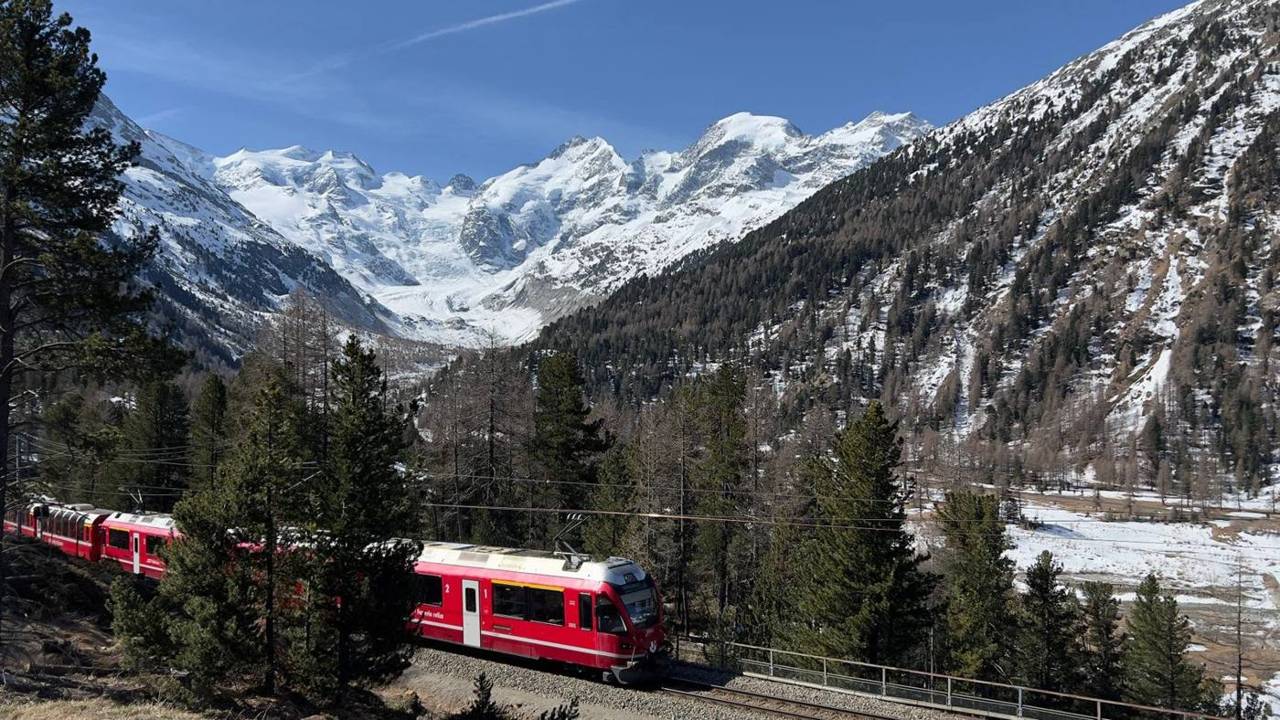 10 daysEasy
The Grand Train Tour
Switzerland by panoramic train: Zurich, Lucerne, the GoldenPass to Montreux, Zermatt with the Glacier Express and the Bernina Express to Tirano.
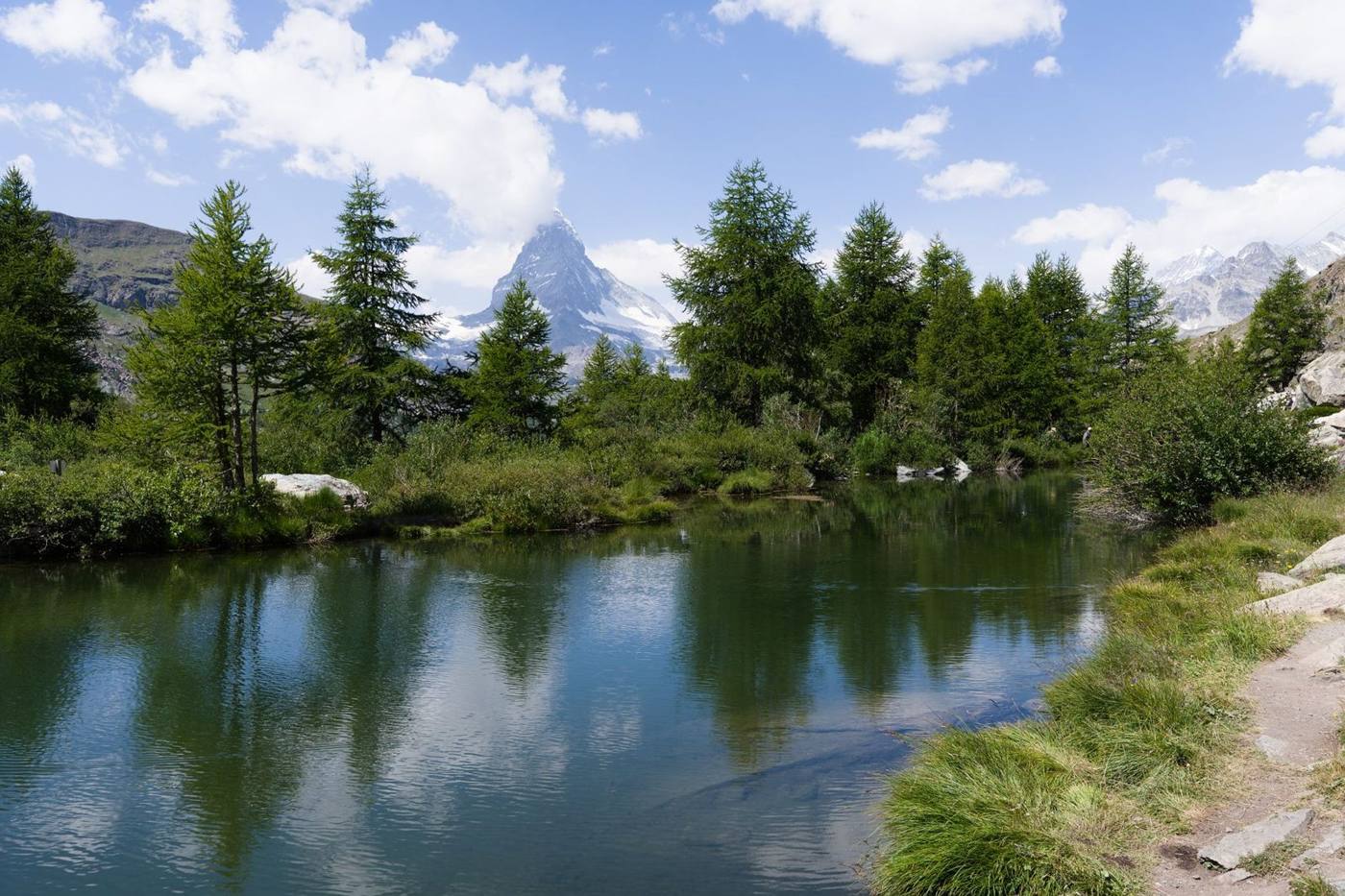 5 daysModerate
Zermatt and the Matterhorn
The village closed to cars below the Matterhorn, the Gornergrat, the Five Lakes Walk, the Matterhorn Glacier Paradise and the Hörnli hut.
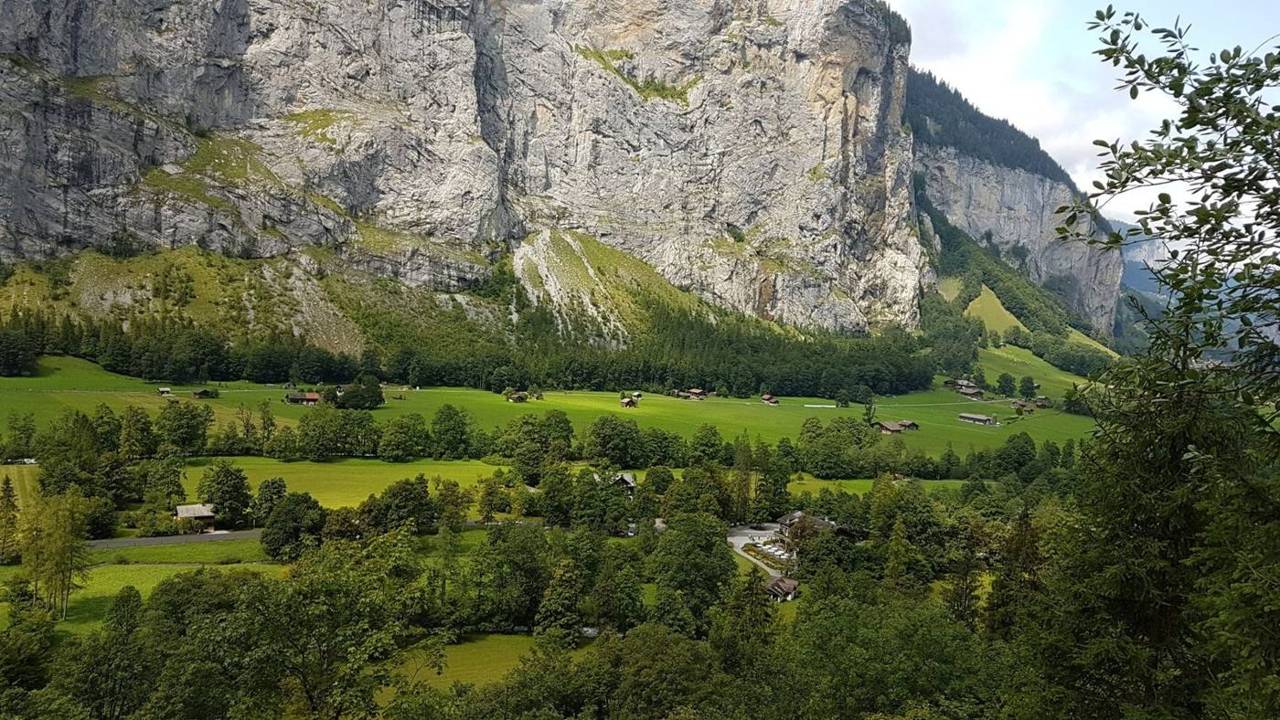 6 daysModerate
The Jungfrau and Lauterbrunnen
The valley of 72 waterfalls, the villages closed to cars of Wengen and Mürren, the Schilthorn, First with the Bachalpsee and the Jungfraujoch.