Gothenburg and the west coast
Gothenburg and its archipelago closed to cars, then the Bohuslän coast: Marstrand, Smögen, Fjällbacka and the oysters and langoustines of Grebbestad.
- Göteborg
- Styrsö
- Marstrand
- Smögen
- Fjällbacka
- Grebbestad
- Tanum
Day by day
- Day 1
Gothenburg: Haga, Feskekôrka and Slottsskogen
This trip takes you to the west coast of Sweden. You start in Gothenburg, the country's second city, visit the car-less islands of its southern archipelago, then head up the Bohuslän coast to Marstrand, Smögen, Fjällbacka, Grebbestad and the rock carvings of Tanum.
Before you go: Italian citizens can enter Sweden with a valid electronic identity card or passport, without a visa. Other nationalities should check their own rules. Sweden has reintroduced border checks: always carry your document, on trains and ferries too. In Sweden you pay almost only by card, even on public transport. In the cities, watch out for pickpockets on crowded transport and avoid unfamiliar suburbs in the evening.
Start in Haga, the oldest district outside the old walls, with nineteenth-century wooden and stone houses and a pedestrian street lined with cafés. Here the afternoon coffee break, fika, is almost a ritual: try a cinnamon bun.
Then walk along the canal to Feskekôrka, the fish market opened in 1874 in a building that looks like a Gothic church. Look at the stalls of prawns, langoustines and herring.
In the afternoon, go up to Slottsskogen, the city's large park, with lawns, ponds and enclosures with Nordic animals. At sunset, very late in summer, climb the hill of Skansen Kronan, a seventeenth-century defence tower with views over the rooftops.
Practical tip: download the regional public transport app and buy your tickets for trams, buses and ferries there; you often cannot buy them on board.
- Day 2
The southern islands: Styrsö and Vrångö
Today you explore the southern archipelago of Gothenburg, a group of islands without cars linked to the city by public ferries. Take the tram to the terminus at Saltholmen, by the sea, and board the ferry there. The tickets are the same as for city transport, so the trip is cheap.
The first stop is Styrsö, an island of small wooden houses, paths between the rocks and little harbours. People get around on foot or by bike, and residents use small electric carts instead of cars. Follow the paths to the smooth rocks on the west side, where you can swim in cold, clear water.
Then continue to Vrångö, the southernmost inhabited island of the archipelago. It has a nature reserve with heathland, granite rocks and small, sheltered beaches. A path loops around the island in a couple of hours, with views of the open sea and the lighthouses.
Have lunch with a prawn sandwich, the classic dish of the coast, and find a spot on the rocks to watch the sailing boats. In the late afternoon, return to the city on the last convenient ferry.
In the evening, take a walk along the Göta river, in the harbour area, where the old shipyards have become modern districts with squares on the water and plenty of places to eat.
Practical tip: check the time of the last ferry before you set off; outside summer there are fewer sailings and services on the smaller islands are limited, so bring water and something to eat.
- Day 3
Marstrand and Carlsten Fortress
Today you leave Gothenburg and head north along the coast. Pick up a hire car, useful for the next few days, and in under an hour you reach Koön. From here a small ferry crosses the strait in a few minutes to Marstrand, a car-less island with a little town of white and yellow wooden houses.
Marstrand is famous for sailing: in summer the harbour fills with boats and in some weeks it hosts international regattas. Walk through the steep lanes, the merchants' houses and the square with the church.
At the top of the island stands Carlsten Fortress, built from the second half of the seventeenth century, after the region passed from Denmark-Norway to Sweden. Visit the ramparts, the tower and the prisons, where convicts sentenced to hard labour were held for centuries. Check prices and times, because in summer there are guided tours, some with actors.
In the afternoon, walk around the island. The path takes about an hour and a half and crosses smooth rocks, small bays and viewpoints over the Kattegat. Bring your swimsuit: there are ladders down into the water among the rocks.
In the evening, return to the mainland and continue north along the Bohuslän coast, a region of pink granite, fjords and fishing villages.
Practical tip: leave the car in the car parks at Koön, because you cannot take it onto the island; the ferry is frequent in summer, but check the last sailing in the evening.
- Day 4
Smögen and a kayak trip
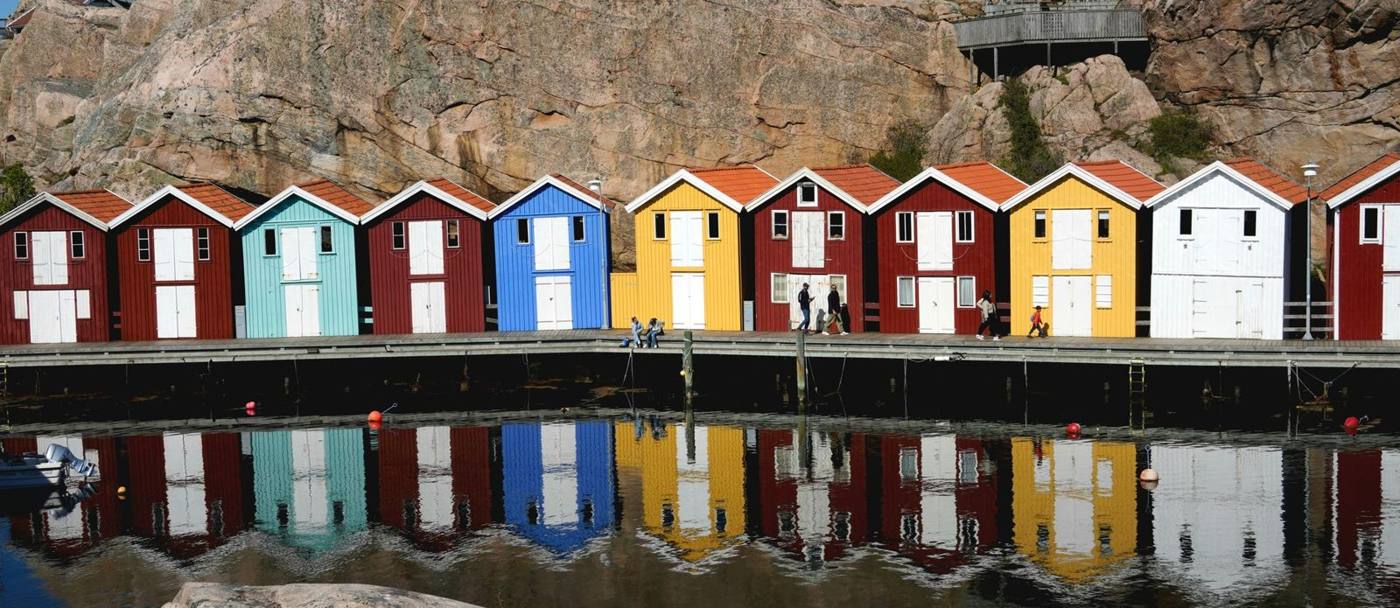
Today you are in Smögen, one of the best-known fishing villages on the coast. Its symbol is Smögenbryggan, a long wooden boardwalk along the harbour with colourful fishermen's huts, now turned into shops and cafés. Early morning is the best time to see it quiet, before the visitors arrive.
Then visit the fishing harbour, where the night's prawns are still sold. Bohuslän prawns are famous all over Sweden and are eaten simply, with bread, butter and mayonnaise.
Late in the morning, go kayaking among the rocks. You can hire a kayak locally or join a guided half-day trip. You will paddle between pink granite islets smoothed by glaciers, small bays and colonies of seabirds. With a calm sea it is suitable for beginners too.
In the afternoon, walk over the rocks behind the village towards the tip of Smögen, to the viewpoint over the open sea. Here the rock steps down into the water and it is the classic place where Swedes go swimming.
In the evening, in summer, the boardwalk comes alive with music and people until late. If you prefer peace, find a corner on the rocks to watch the sunset, which in July comes after ten o'clock.
Practical tip: book the kayak trip in advance in high season, listen to the safety briefing and always wear the buoyancy aid, because the water is cold even in summer.
- Day 5
Fjällbacka, Grebbestad and the Tanum carvings
Today is a full day in northern Bohuslän. Start in Fjällbacka, a village of white houses below a great rock face. Climb the hill of Vetteberget through Kungsklyftan, a narrow gorge between high walls with a huge boulder wedged above it. From the top you can see the whole archipelago.
In the square there is a statue of the actress Ingrid Bergman, who spent her summers here. The village is also known for the crime novels of the writer Camilla Läckberg, set in Fjällbacka itself.
Then drive to Grebbestad, Sweden's oyster capital. Oysters and mussels are farmed and gathered in this area, and at certain times there are boat trips to watch the harvest and taste them. Try the langoustines too, caught in the cold, deep waters of the fjord.
In the afternoon, reach Tanum for the rock carvings, a UNESCO World Heritage Site. Thousands of Bronze Age figures are carved into the smooth rocks: ships, warriors, animals, carts and hunting scenes. Many are painted red to make them visible. The most famous rock is at Vitlycke, near the museum. Check the museum's prices and times.
The carvings are easiest to see in the low light of morning or evening, or after rain, when the rock is wet.
Practical tip: oysters are best in the cold months, from September to April; in summer focus on prawns and langoustines, and always ask what is fresh that day.
- Day 6
Back to Gothenburg
On the last day you head back south. The road from Tanum to Gothenburg takes about an hour and a half without stops. If you have time, stop in Uddevalla or make a detour to the island of Tjörn, linked by bridges, with small harbours and rocks by the sea.
In Gothenburg, before you leave, visit the Linné district or the Avenyn boulevard, which leads to Götaplatsen square, with the Poseidon fountain and the art museum. Check prices and times.
If you still have a few hours, walk along the canal between Gustaf Adolf square and the harbour, or take a boat trip on the canals, which passes under very low bridges.
In these six days you have seen Haga, Feskekôrka and Slottsskogen park in Gothenburg, the car-less islands of Styrsö and Vrångö, Carlsten Fortress in Marstrand, the colourful boardwalk of Smögen and the rocks by kayak, the gorge above Fjällbacka, the oysters of Grebbestad and the rock carvings of Tanum.
When to go: from June to August for the sea, the long days and frequent ferries. July is the warmest and busiest month, with villages full of Swedish and Norwegian holidaymakers. From September to April the coast is quiet and the seafood is at its best, but many seasonal services close and the days are short.
Practical tip: return the car with some time to spare, and remember that in Sweden headlights must stay on during the day and the drink-drive limit is very low.
Sweden's seaside, with pink granite rocks and excellent seafood. In July the coastal villages fill with Swedish and Norwegian holidaymakers. The water is cold, but jumping off the rocks is a tradition.
Before you go
- Documents and visa
- EU citizens need a valid identity card or passport: Sweden is in the EU and the Schengen area. Sweden has reintroduced border checks, so carry your document on trains and ferries too. Other nationalities should check the Schengen rules and the Entry/Exit System.
- Health and vaccines
- Excellent healthcare. EU citizens should bring their EHIC, plus insurance covering medical costs and repatriation. In summer, meadows and woods may have ticks that carry Lyme disease and tick-borne encephalitis, especially around Stockholm, the archipelago and Lake Mälaren: ask your doctor about the vaccine. In summer in the north, bring mosquito repellent. Emergencies: 112.
- Money and payments
- Swedish krona. Cards are accepted almost everywhere, even for tiny amounts, and many shops, buses and public toilets do not take cash. Sweden is expensive, especially in the cities and the mountains.
- Power sockets
- Types C and F, 230 volts.
- Time zone
- Central European Time (UTC+1, summer UTC+2).
- Safety
- The national terrorism threat level is raised. Some suburbs of Stockholm, Malmö and Gothenburg are affected by organised crime; in Stockholm theft is common in bars and on public transport. Bags may be banned at large concerts, festivals and sports events. The drink-drive limit is very low and headlights must be on during the day. Official advice: GOV.UK.
Information checked in November 2026 for Italian and EU citizens. Rules change: always check before you travel.
Variations
In 3 days: Gothenburg, the southern islands and a day in Marstrand.
In 9 days: continue to Strömstad and the Koster Islands, Sweden's first marine national park.
Frequently asked questions
Do I need a car?
Not for Gothenburg and its islands: trams, buses and ferries are enough. For the Bohuslän coast a car is much more convenient, because buses between the villages are few, especially out of season.
Can I swim?
Yes, but the water is cool even in summer. Swedes jump in from rocks with ladders and jetties. Sandy beaches are few; the coast is mostly smooth granite rock.
When is the seafood best?
Prawns and langoustines are available all year. Oysters and mussels are best in the cold months, from September to April, when special boat trips are run around Grebbestad.
Indicative itinerary written by World Atlas. Before booking, check timetables, seasonal openings, documents and safety.
 8 daysChallenging
The Kungsleden
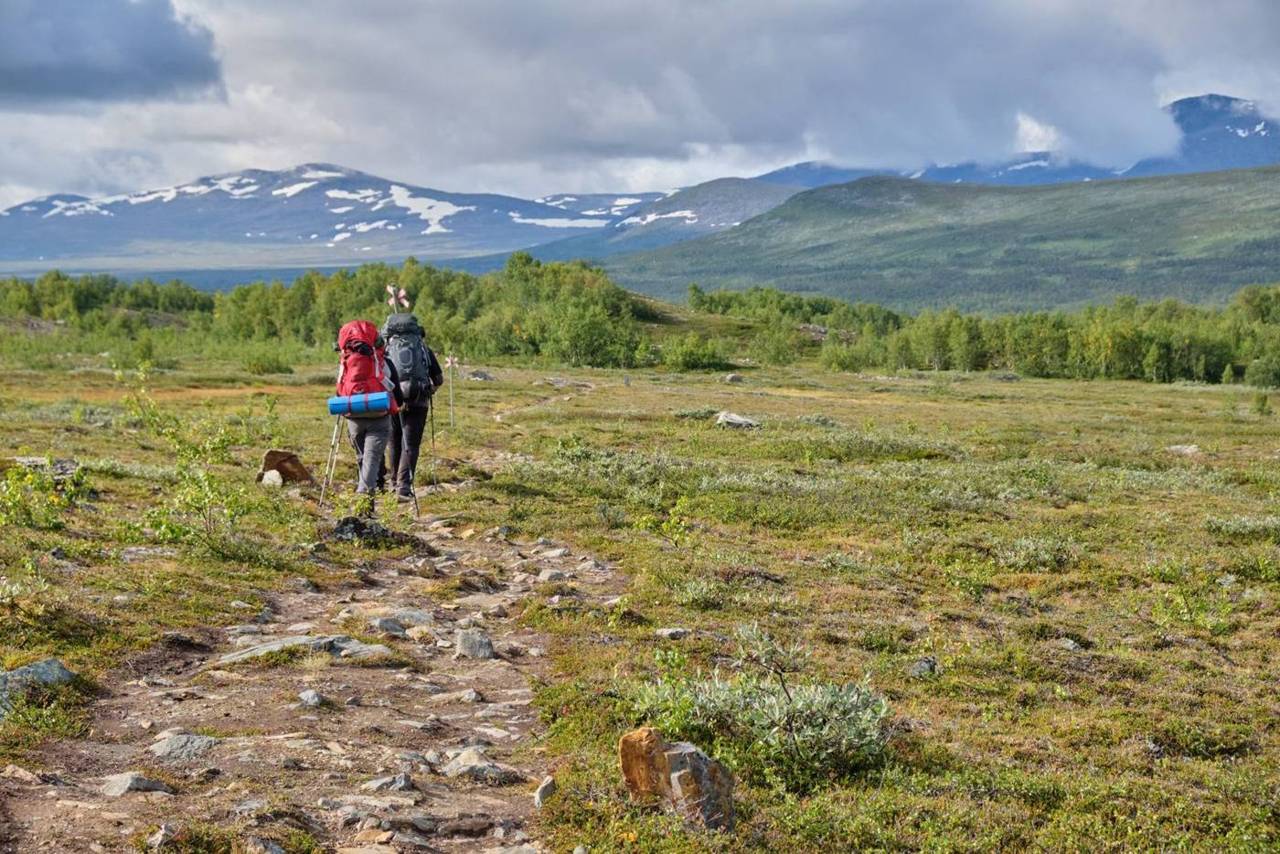
The 'King's Trail' from Abisko to Nikkaluokta, with staffed huts, midnight sun, the Tjäktja valley and the side trip to Kebnekaise, Sweden's highest peak.
 5 daysEasy
Gotland and Visby
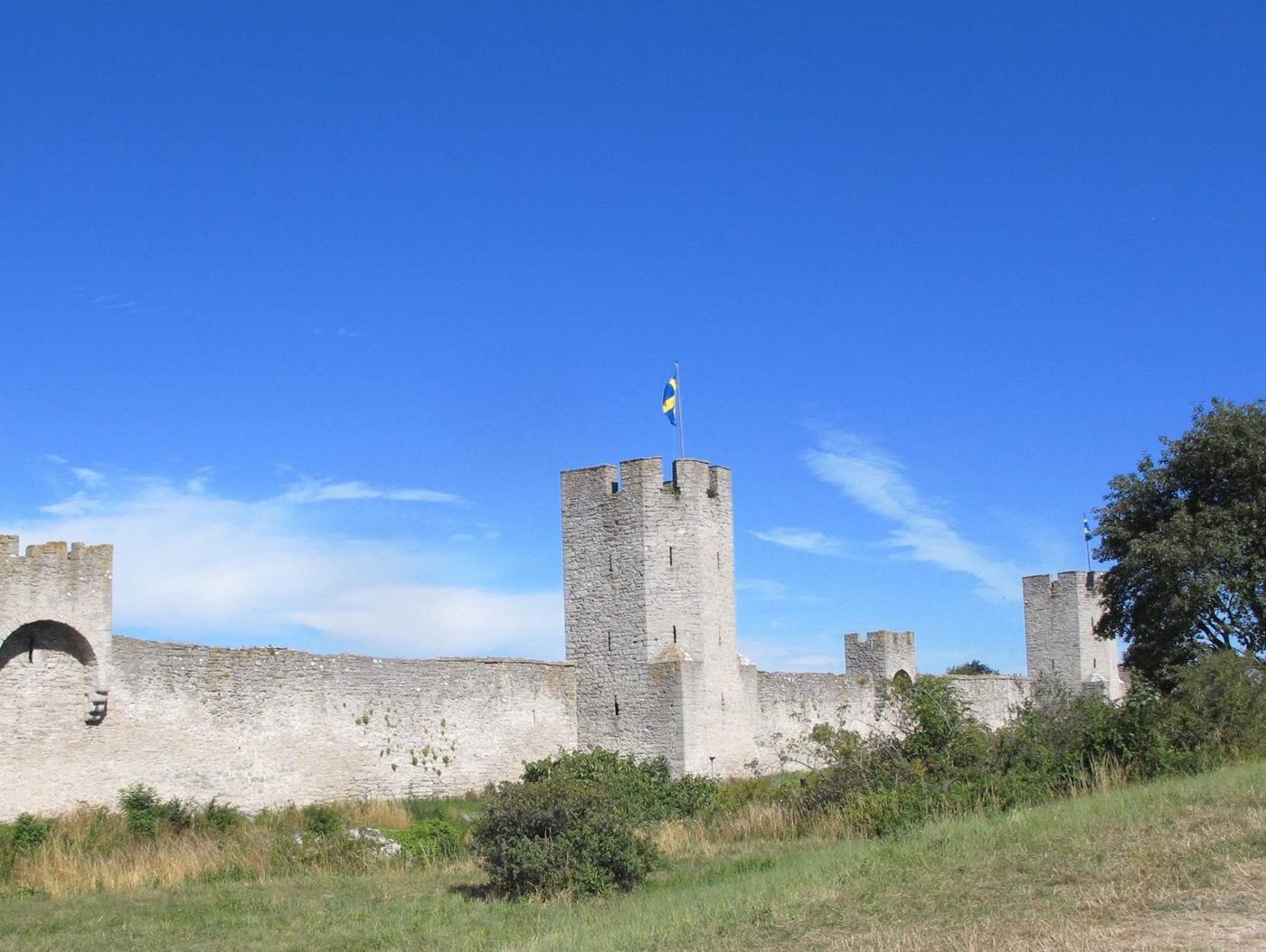
The Hanseatic town of Visby with its UNESCO walls, the island's medieval churches, the rauk sea stacks of Fårö and Baltic beaches.
 5 daysEasy
Dalarna and Lake Siljan
Sweden's folk heart: the wooden horses of Nusnäs, painter Carl Larsson's home, the UNESCO Falun mine and Midsummer on Lake Siljan.