Riyadh and Diriyah
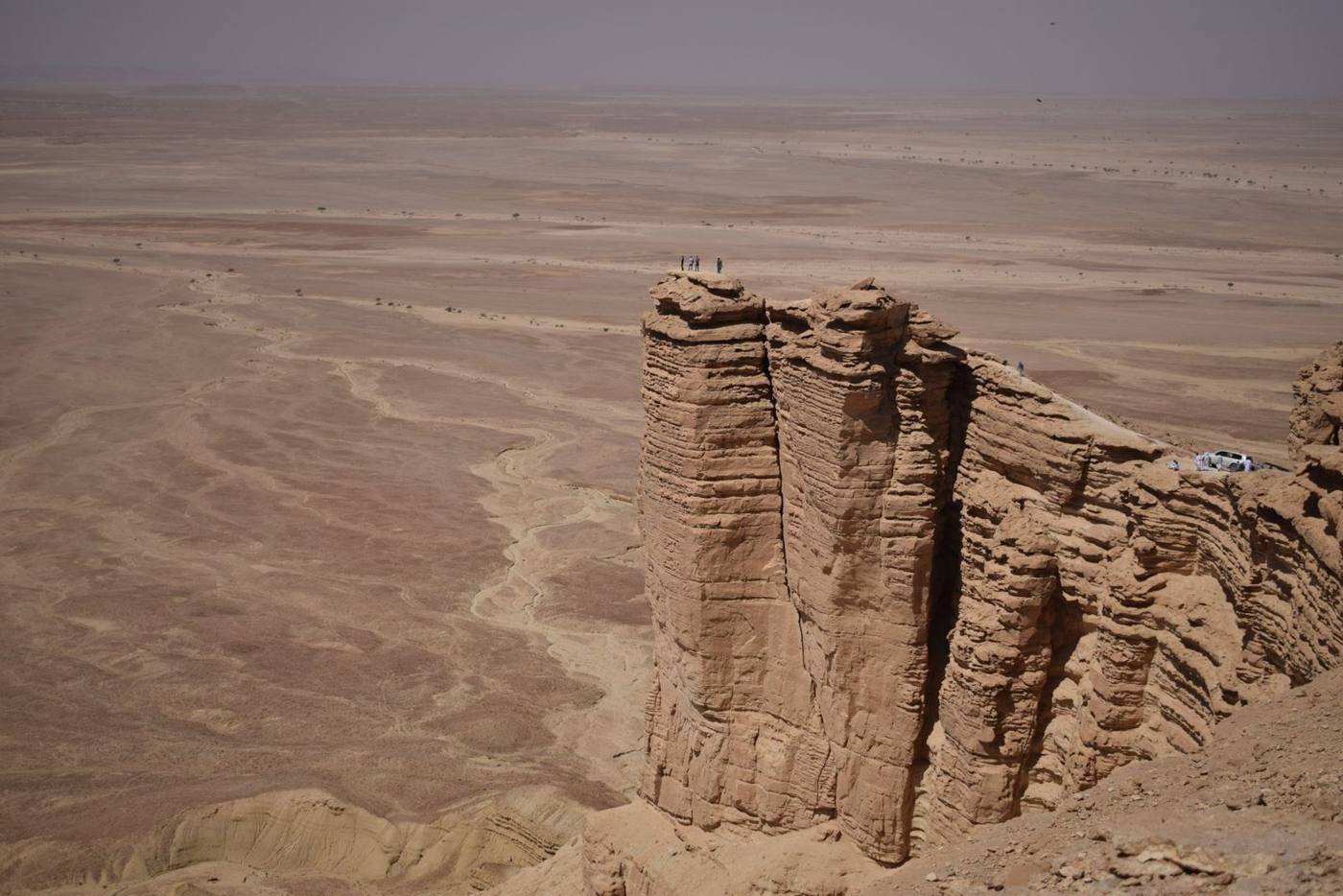
The capital with Masmak fort and the National Museum, the UNESCO mud-brick city of At-Turaif in Diriyah and the Edge of the World escarpment.
- Riyadh
- Masmak
- Diriyah
- At-Turaif
- Edge of the World
Day by day
- Day 1
Masmak fort, Souq Al Zal and the National Museum
This four-day trip takes you to Riyadh, the capital of Saudi Arabia, a huge, fast-growing city in the heart of the Najd, the desert plateau at the centre of the peninsula. You will see the fort where the kingdom began, the mud city of Diriyah and the cliffs of the Edge of the World.
Before you go: Italian citizens need a passport valid for at least six months from arrival and a tourist e-visa, applied for only on the official website visa.visitsaudi.com, or on arrival at international airports. The visa is valid for a year, with multiple entries and up to 90 days in total, and includes basic health insurance. Other nationalities should check their own rules.
Some areas on this trip are close to borders or places where the situation changes often: check your government's travel advice before booking and again before you leave.
Start with Masmak fort, a mud-brick building with round towers in the historic centre. In 1902 the young Abdulaziz Al Saud captured it with a handful of men, the first step towards the Saudi kingdom. Look at the old wooden door and the rooms with historic photographs. Check prices and times.
Next door is Souq Al Zal, the city's oldest market: carpets, daggers, frankincense, cloaks and antiques.
In the afternoon visit the National Museum, with galleries on prehistory, the ancient kingdoms, the incense routes and the history of Islam. Check prices and times.
Practical tip: distances in Riyadh are enormous, so use the metro or app taxis rather than walking between sights.
- Day 2
Diriyah, At-Turaif and Bujairi
Today you go to Diriyah, on the north-western edge of Riyadh, along the valley of Wadi Hanifa. In the eighteenth century the first Saudi state was born here, and here you find one of the finest sites in the country.
The At-Turaif district, a UNESCO World Heritage Site, is a mud-brick city built on a rise above the wadi. It is a fine example of the Najdi style: thick sand-coloured walls, towers, triangular battlements, inner courtyards and small windows that keep the heat out. After years of restoration the houses and palaces can be visited along a marked route, with museums on daily life, architecture, military history and Arabian horses. Salwa Palace is the heart of the site. Check prices and times.
Visit At-Turaif in the late afternoon, when the low light colours the walls and it is cooler. At sunset the walls are lit up.
Then cross the bridge and go down to Bujairi, the district opposite, restored in the same style. Along the terraces there are restaurants and cafés overlooking the ruins. It is the right place for dinner and to watch At-Turaif lit up at night.
Earlier in the day, in the morning, you can walk in the park along Wadi Hanifa, among palms and paths.
Practical tip: buy your ticket for At-Turaif online in advance, especially at weekends, when many families come.
- Day 3
The Edge of the World
Today you leave Riyadh to see one of the most spectacular landscapes in central Arabia: the Edge of the World.
It is a section of the Tuwaiq escarpment, a long chain of cliffs crossing the Najd. At the rim the plateau ends suddenly and below lies a vast plain, where caravans once passed. On clear days the view reaches a very long way.
The journey takes a couple of hours. The last stretch is a dirt track of sand and stones: you need a four-wheel drive, ideally with a local guide who knows the way and whether the site is open. Access is sometimes closed, because of bad weather or works: check before you set off.
Once at the top, walk along the edge with great care. There are no barriers, the ground can crumble and the wind blows hard. Do not get too close for photos. You can go down a steep path to a lower viewpoint, but only in hiking boots.
The sunset from here is beautiful, but plan to be back on tarmac before dark. In the desert do not drive at night and always travel with another vehicle.
Bring food, plenty of water and a hat: there are no facilities on site, and shade is hard to find.
Practical tip: in winter it is cold at the top in the evening and the wind is strong: bring a jacket.
- Day 4
Leaving Riyadh
Today is your travel day home.
If your flight is in the afternoon, spend the morning at Murabba Palace, next to the National Museum, a mud-built royal residence with courtyards and furnished rooms. Check prices and times. Or go up to the sky bridge of the Kingdom Centre tower to see the whole city from above, with the desert around it. The airport is north of the centre: with the traffic, leave in good time.
Trip summary: in four days you have seen the historic heart of the Saudi kingdom. At Masmak fort you learned the story of the capture of Riyadh, in Souq Al Zal you browsed among daggers, carpets and frankincense, at the National Museum you traced the history of the peninsula, in Diriyah you walked among the mud houses of At-Turaif and had dinner in Bujairi with the walls lit up, and at the Edge of the World you looked out over the Tuwaiq escarpment.
When to go: from November to February the climate is at its most pleasant, with mild days and cool, sometimes cold, nights. March and October are already hot. From May to September temperatures often go above 45 degrees and desert trips are not advisable.
Remember the country's rules: modest clothes covering elbows and knees, no alcohol, and no photos of government or military buildings or royal palaces.
Practical tip: pay any traffic fines before leaving, because they are linked to your passport and can hold you up at the airport.
The Saudi capital is changing fast and Diriyah is its showpiece. The Edge of the World needs a 4x4 and guide; the site is sometimes closed. Women are no longer required to wear the abaya, but modest dress is expected.
Before you go
- Documents and visa
- Passport valid for at least six months from arrival and a tourist e-visa, applied for only on the official website visa.visitsaudi.com before leaving, or on arrival at international airports. The visa is valid for a year, with multiple entries and up to 90 days in total, and includes basic health insurance. If you enter overland, check first that your visa is valid for that crossing. Always carry a copy of your passport and visa.
- Health and vaccines
- No compulsory vaccinations for tourism, except a yellow fever certificate if you arrive from a country at risk. The heat is strong for much of the year: drink plenty of water and protect yourself from the sun. Some medicines need approval: carry your prescription. The visa insurance covers little, so take an extra policy with medical costs and repatriation. Emergencies: 911.
- Money and payments
- Saudi riyal. Cards and phone payments are accepted almost everywhere, even in small shops; keep a little cash for markets.
- Power sockets
- Type G, sometimes also A and B, 230 volts: bring a universal adapter.
- Time zone
- UTC+3 all year.
- Safety
- Laws and customs: men and women wear loose clothes covering elbows and knees; women do not have to wear an abaya or cover their hair. Alcohol is banned: do not bring it in or arrive drunk. There is zero tolerance for drugs, with very heavy penalties. Public demonstrations are illegal and political comments on social media can also have consequences. Do not photograph government or military buildings and royal palaces, or people without consent. Mecca and central Medina are reserved for Muslims. During Ramadan do not eat, drink or smoke in public in daylight. Roads are fast and accidents are common: drive by day and travel in convoy in the desert. The situation in the region can change quickly, with sudden airspace closures. Official advice: GOV.UK.
Information checked in November 2026 for Italian and EU citizens. Rules change: always check before you travel.
Variations
Shorter version: in two days see Masmak fort, the National Museum and Diriyah, without the Edge of the World.
Longer version: add a flight to AlUla and three days among the tombs of Hegra and the desert canyons.
Frequently asked questions
Can you go to the Edge of the World on your own?
Only with a four-wheel drive and plenty of experience. It is better with a local guide, who knows the track and whether the site is open.
Do women have to wear an abaya in Riyadh?
No, it is no longer compulsory, nor is a headscarf for female tourists. Modest clothing is expected, with loose clothes covering elbows and knees.
When should you visit At-Turaif?
In the late afternoon, when it is cooler and the light is lovely, staying into the evening to see the walls lit up from Bujairi.
Indicative itinerary written by World Atlas. Before booking, check timetables, seasonal openings, documents and safety.
 4 daysEasy
Jeddah and the Red Sea
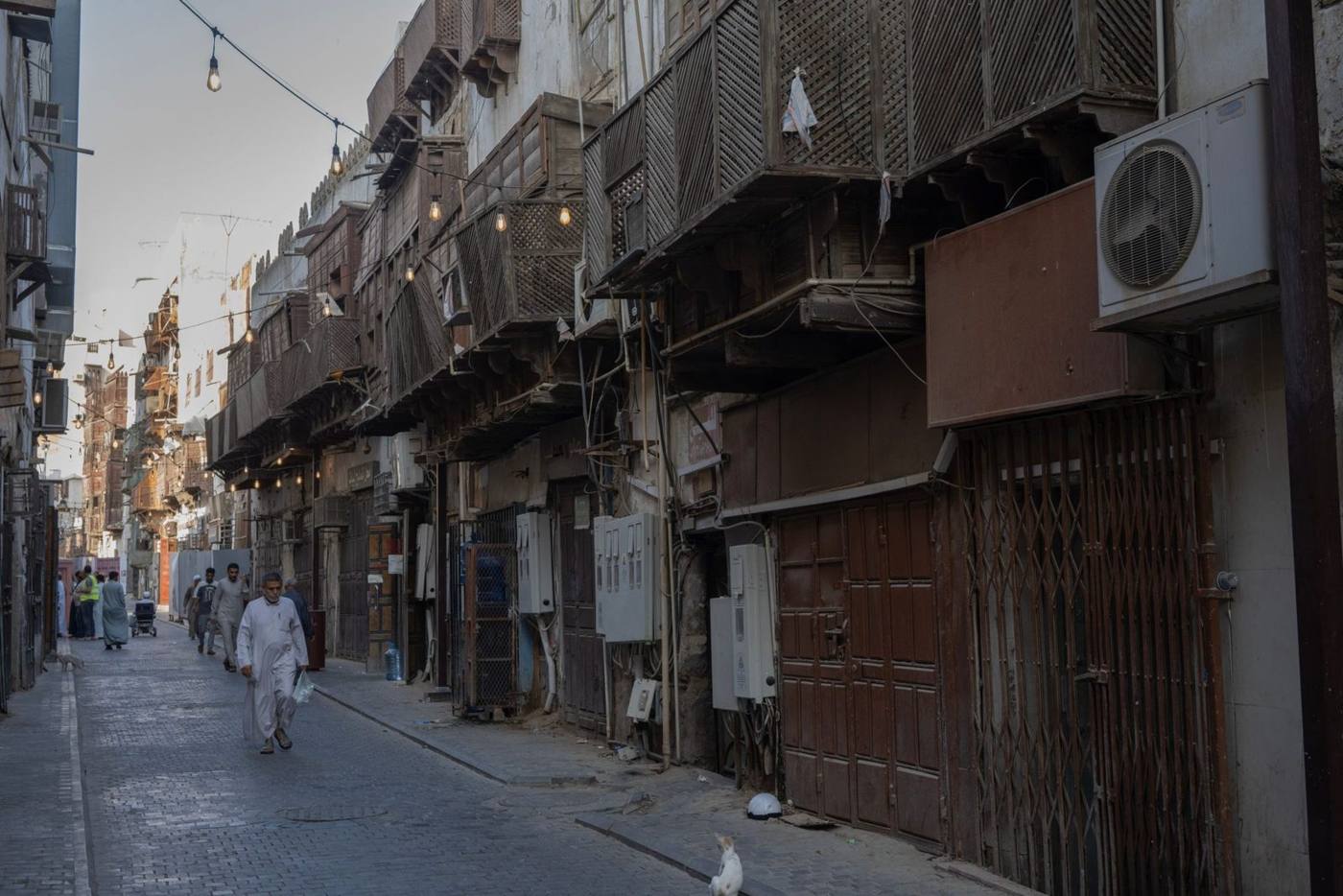
The UNESCO district of Al-Balad with its coral-stone houses and wooden balconies, the Corniche and the reefs of the Saudi Red Sea.
 5 daysEasy
AlUla and Hegra
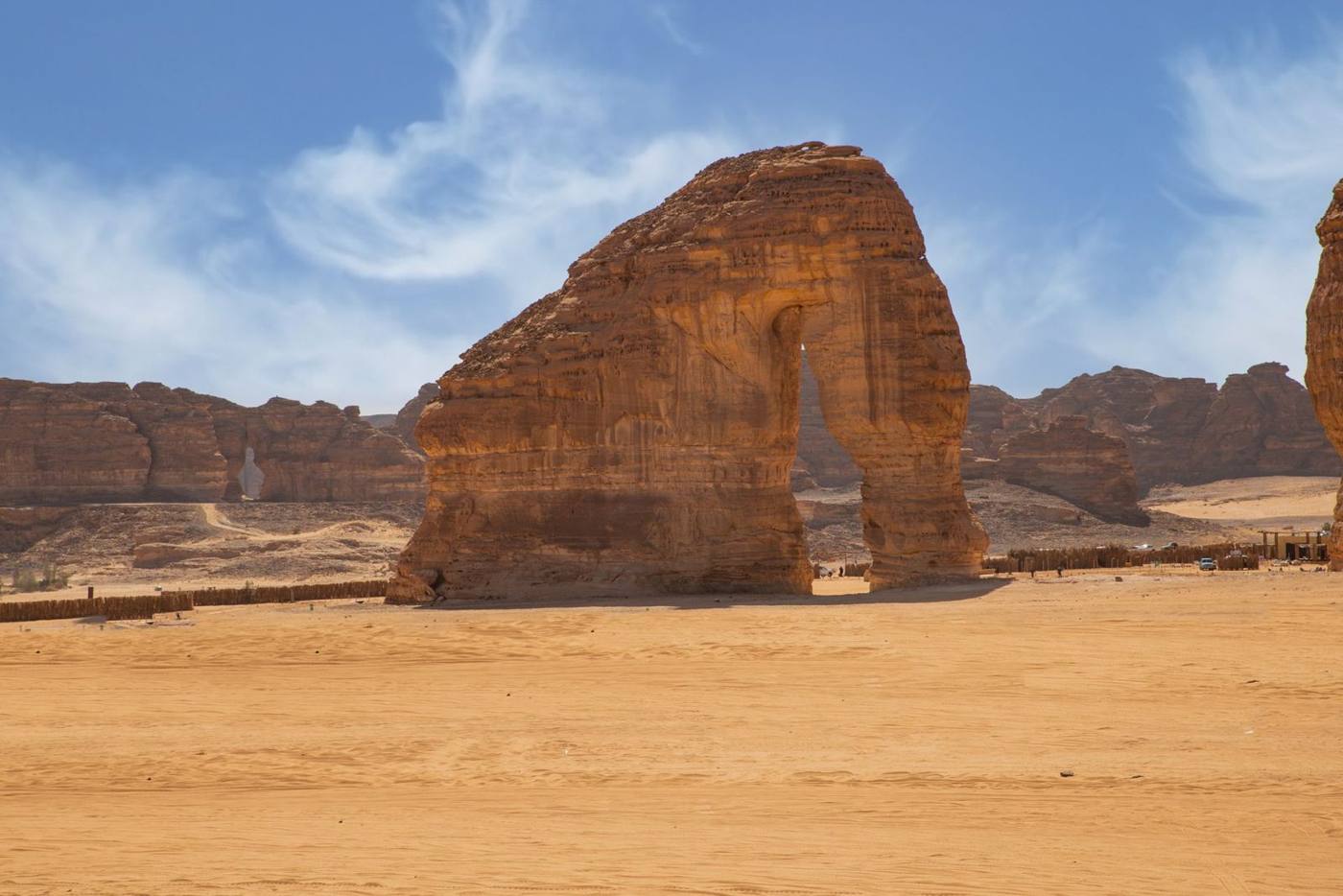
The Nabataean tombs of Hegra, the country's first UNESCO site, AlUla old town, Elephant Rock, Dadan and the Maraya mirror building in the desert.