Jeddah and the Red Sea
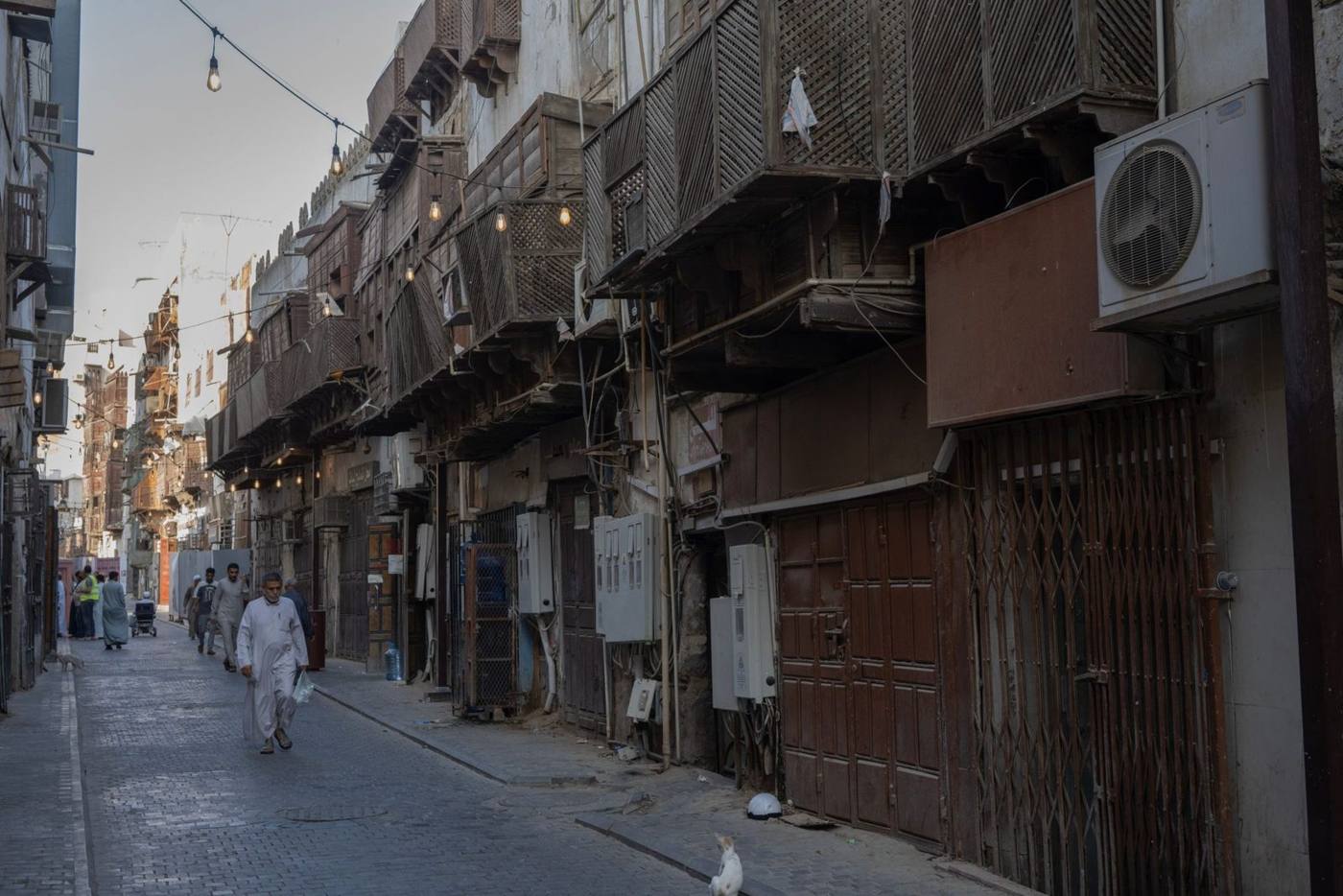
The UNESCO district of Al-Balad with its coral-stone houses and wooden balconies, the Corniche and the reefs of the Saudi Red Sea.
- Jeddah
- Al-Balad
- Corniche
- Floating mosque
- Jeddah reefs
Day by day
- Day 1
Al-Balad, Beit Nassif and the souks
This four-day trip takes you to Jeddah, Saudi Arabia's great port city on the Red Sea. For centuries it was the gateway for pilgrims heading to Mecca and for merchants of the Indian Ocean. You will see the historic quarter of Al-Balad, the Corniche and the coral reefs off the coast.
Before you go: Italian citizens need a passport valid for at least six months from arrival and a tourist e-visa, applied for only on the official website visa.visitsaudi.com, or on arrival at international airports. The visa is valid for a year, with multiple entries and up to 90 days in total, and includes basic health insurance. Other nationalities should check their own rules.
Some areas on this trip are close to borders or places where the situation changes often: check your government's travel advice before booking and again before you leave.
In the late afternoon, when the heat eases, go to Al-Balad, the old town, a UNESCO World Heritage Site. The tall houses are built of coral stone blocks and have rawashin, large enclosed balconies of carved wood that let the air through and keep out the sun. Go into Beit Nassif, one of the most famous houses, where distinguished guests once stayed. Check prices and times.
Then lose yourself in the souks around Bab Makkah: spices, perfumes, fabrics, gold and dates. In the evening the quarter fills with families out for a walk, and the lanes are lit by lanterns.
Practical tip: wear loose clothes that cover elbows and knees, and always carry a copy of your passport and visa.
- Day 2
The Corniche, the floating mosque and the fountain
Today you discover modern Jeddah, along the sea.
In the morning, before the heat, visit one of the city's museums or go back to Al-Balad to see the lanes in daylight and the houses being restored. Look at how the coral blocks are bound with wooden beams: it is an old technique, suited to the humid coastal climate.
In the afternoon head to the Corniche, the seafront that stretches for kilometres north of the centre. There are lawns, paths for walking and cycling, open-air sculptures and public beaches. This is where Jeddah's families spend their evenings.
At sunset go to the Al-Rahma Mosque, known as the floating mosque because it is built on piles above the water: at high tide it seems to rest on the sea. Non-Muslims can look at it from outside; to go in, ask first and respect prayer times.
When it gets dark watch King Fahd's Fountain, one of the tallest in the world, which sends a very high jet of water up off the coast and is lit up in the evening. You can see it from many points along the Corniche.
For dinner try grilled Red Sea fish and saleeg, rice cooked in milk with chicken.
Practical tip: to get around the city use app taxis, which are convenient and show the price in advance.
- Day 3
By boat to the Red Sea reefs
Today you spend the day at sea, on the coral reefs off Jeddah.
Trips usually leave from the small harbours north of the city. In under an hour by boat you reach the reefs, where the water is clear and warm for most of the year. The corals are in good condition and see few visitors: you will see clownfish, butterflyfish, rays and sometimes turtles.
For snorkelling you only need a mask, snorkel and fins. If you are certified, you can do one or two dives with a dive centre, choosing between walls, coral gardens and wrecks. Always ask to see the guide's certification and check the equipment before setting off.
Do not touch the corals or walk on the reef: they break easily and some fish, such as the stonefish, are venomous. Use reef-safe sun cream and a T-shirt for protection.
On the boat swimwear is fine, but cover your shoulders and legs on the way to and from the harbour.
You return in the afternoon. In the evening go back to the seafront, or have dinner in one of the modern districts in the north, where places stay open late.
Remember that the sun on the sea burns far more than in town: drink often and rest in the shade between swims.
Practical tip: do not dive in the twenty-four hours before your flight home.
- Day 4
Leaving Jeddah
Today is your travel day home.
If your flight is in the afternoon, take a last walk around Al-Balad in the morning, when the souks open and there are few people. Buy dates, Arabic coffee with cardamom or an oud essence, the fragrant wood used all over Arabia. The airport is north of the city: with the traffic, allow plenty of time.
Remember that Mecca is close to Jeddah but entry is forbidden to non-Muslims. On the motorways there are signs marking the reserved exits: if you drive, follow them carefully.
Trip summary: in four days you have seen Saudi Arabia's most open city. In Al-Balad you walked among coral houses with wooden balconies and the souks around Bab Makkah, at Beit Nassif you saw an old merchant house, on the Corniche you strolled with local families, you saw the floating mosque at sunset and King Fahd's Fountain lit up, and by boat you discovered the coral reefs of the Red Sea.
When to go: from November to March the climate is most pleasant, warm but bearable, with the sea still mild. From May to October the heat is very strong and the coastal humidity makes it heavy. During Ramadan and the pilgrimage season the city is full and prices rise.
Practical tip: check the pilgrimage dates before booking, because flights and accommodation are in high demand at that time.
Saudi Arabia's most open city, whose merchant history shows in Al-Balad. The reefs are in excellent condition and little visited. Mecca is nearby but closed to non-Muslims.
Before you go
- Documents and visa
- Passport valid for at least six months from arrival and a tourist e-visa, applied for only on the official website visa.visitsaudi.com before leaving, or on arrival at international airports. The visa is valid for a year, with multiple entries and up to 90 days in total, and includes basic health insurance. If you enter overland, check first that your visa is valid for that crossing. Always carry a copy of your passport and visa.
- Health and vaccines
- No compulsory vaccinations for tourism, except a yellow fever certificate if you arrive from a country at risk. The heat is strong for much of the year: drink plenty of water and protect yourself from the sun. Some medicines need approval: carry your prescription. The visa insurance covers little, so take an extra policy with medical costs and repatriation. Emergencies: 911.
- Money and payments
- Saudi riyal. Cards and phone payments are accepted almost everywhere, even in small shops; keep a little cash for markets.
- Power sockets
- Type G, sometimes also A and B, 230 volts: bring a universal adapter.
- Time zone
- UTC+3 all year.
- Safety
- Laws and customs: men and women wear loose clothes covering elbows and knees; women do not have to wear an abaya or cover their hair. Alcohol is banned: do not bring it in or arrive drunk. There is zero tolerance for drugs, with very heavy penalties. Public demonstrations are illegal and political comments on social media can also have consequences. Do not photograph government or military buildings and royal palaces, or people without consent. Mecca and central Medina are reserved for Muslims. During Ramadan do not eat, drink or smoke in public in daylight. Roads are fast and accidents are common: drive by day and travel in convoy in the desert. The situation in the region can change quickly, with sudden airspace closures. Official advice: GOV.UK.
Information checked in November 2026 for Italian and EU citizens. Rules change: always check before you travel.
Variations
Shorter version: in two days see Al-Balad and the Corniche, without the boat trip.
Longer version: add two days on the coast north of Jeddah for more dives on the reefs.
Frequently asked questions
Can you swim in Jeddah?
Yes, at the public beaches on the Corniche and above all by boat on the reefs. On the beach dress modestly; on the boat swimwear is accepted.
Can you visit Mecca from Jeddah?
No, unless you are Muslim. Entry to the city is forbidden to non-Muslims and the motorways have reserved exits.
Do you need a diving licence to see the corals?
No. With a mask and snorkel you already see a lot. For scuba diving you need certification, or a try-dive with an instructor.
Indicative itinerary written by World Atlas. Before booking, check timetables, seasonal openings, documents and safety.
 5 daysEasy
AlUla and Hegra
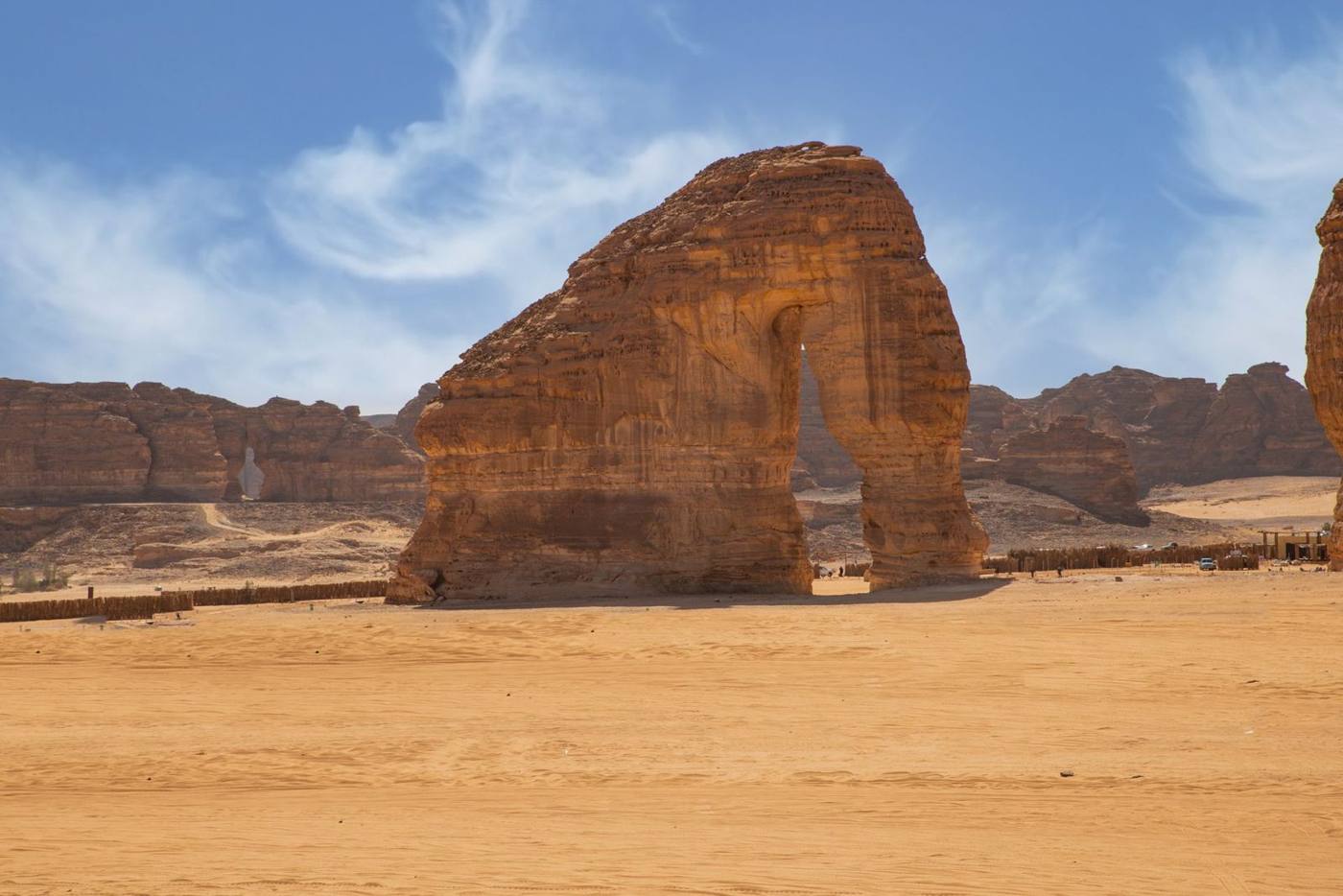
The Nabataean tombs of Hegra, the country's first UNESCO site, AlUla old town, Elephant Rock, Dadan and the Maraya mirror building in the desert.
 4 daysEasy
Riyadh and Diriyah
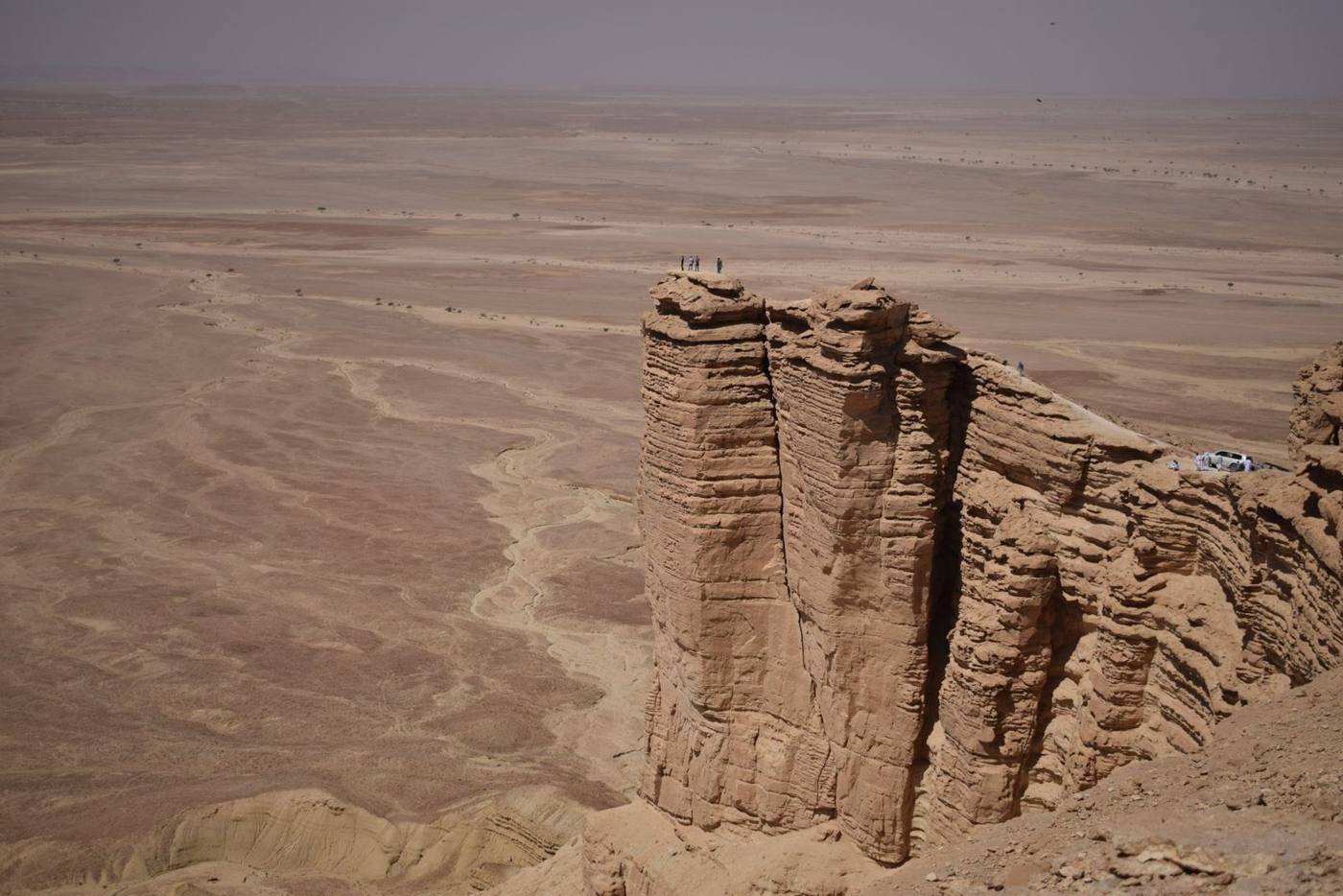
The capital with Masmak fort and the National Museum, the UNESCO mud-brick city of At-Turaif in Diriyah and the Edge of the World escarpment.