AlUla and Hegra
The Nabataean tombs of Hegra, the country's first UNESCO site, AlUla old town, Elephant Rock, Dadan and the Maraya mirror building in the desert.
- AlUla
- Hegra
- Dadan
- Jabal Ikmah
- Elephant Rock
- Maraya
Day by day
- Day 1
Arriving in AlUla and the old town
This five-day trip takes you to AlUla, in north-west Saudi Arabia, a valley of oases and sandstone rocks where ancient kingdoms, caravans and pilgrims followed one another. You will see the Nabataean tombs of Hegra, the capital of Dadan, the inscriptions of Jabal Ikmah and the mud-brick old town. You get around by hire car or by local shuttles.
Before you go: Italian citizens need a passport valid for at least six months from arrival and a tourist e-visa, applied for only on the official website visa.visitsaudi.com, or on arrival at international airports. The visa is valid for a year, with multiple entries and up to 90 days in total, and includes basic health insurance. Other nationalities should check their own rules.
Some areas on this trip are close to borders or places where the situation changes often: check your government's travel advice before booking and again before you leave.
You land at AlUla airport on a domestic flight from Riyadh or Jeddah. In the afternoon, when the light turns warm, go to the old town, a maze of mud-brick and stone houses lived in for centuries and left by its inhabitants in the twentieth century. Walk through the narrow lanes, climb up to the castle on the hill and look down over the rooftops and the palm grove. The restored main street has small shops and cafés.
At sunset the walls turn orange.
Practical tip: book the timed visits to Hegra and Dadan online straight away, on the official AlUla website, because places are limited.
- Day 2
Hegra and the Nabataean tombs
Today is the most important day of the trip: Hegra, the Nabataean city that was the first site in Saudi Arabia added to the UNESCO World Heritage list.
Hegra can only be visited on official timed tours booked online: you cannot drive in with your own car. The simplest tour leaves by coach from the meeting point shown on your ticket and stops at the main sites, with a local storyteller, the rawi, who tells the history. There are also private visits by four-wheel drive with a driver.
The site has more than a hundred tombs carved into the rock, with facades decorated with steps, pediments and eagles. They belonged to important families of the same civilisation that built Petra. The most famous is the tomb of Lihyan son of Kuza, called Qasr al-Farid, the lonely castle: it is carved into a large isolated boulder and its lower part was left unfinished, so you can see how the sculptors worked from the top down.
You will also see the Diwan, a hall cut into the rock where ritual banquets may have been held, and a narrow gorge between the cliffs.
Stay on the marked paths and look at the tombs from outside: the rules are there to protect the site.
Practical tip: choose the early morning or late afternoon tour, with less heat and better light for photos.
- Day 3
Dadan and the inscriptions of Jabal Ikmah
Today you discover the kingdoms that lived in AlUla before the Nabataeans.
In the morning visit Dadan, the ancient capital of the kingdoms of Dadan and Lihyan. Along a red rock face are carved the Lion Tombs, funerary niches decorated with figures of lions, a symbol of power. At the foot of the cliff archaeologists are still excavating the city, with the remains of temples and large basins. Here too visits are timed: check prices and times.
Then go to Jabal Ikmah, a canyon known as the open-air library. On the sandstone walls there are hundreds of inscriptions in ancient languages and early Arabic scripts, along with drawings of animals and people. They tell of offerings to the gods, laws and the names of travellers. The guide helps you recognise the different alphabets.
In the afternoon rest in the oasis, among palm groves and citrus fields. Many orchards can be visited: ask local growers about dates and honey.
In the evening go back to the old town or the market area for dinner: try kabsa, spiced rice with meat, and the local dates.
Always carry a copy of your passport and visa, because you may be asked for them at checkpoints.
Practical tip: bring small binoculars or use your phone's zoom, because many inscriptions are high up on the rock.
- Day 4
Elephant Rock, Ashar and Maraya
Today you explore the desert landscapes of AlUla.
In the morning go to the Ashar valley, a sandstone canyon with tall walls and pale sand. You can walk on marked trails, climb to a viewpoint or take a four-wheel-drive ride with a driver. The silence is total, and the rocks are shaped like towers, arches and mushrooms.
Along the road you will see Maraya, a building entirely covered in mirrors in the middle of the valley. It reflects the sky and the mountains, and from a distance it almost seems to disappear. It hosts concerts and events: access inside depends on the programme, so check first. Even from outside the view is spectacular.
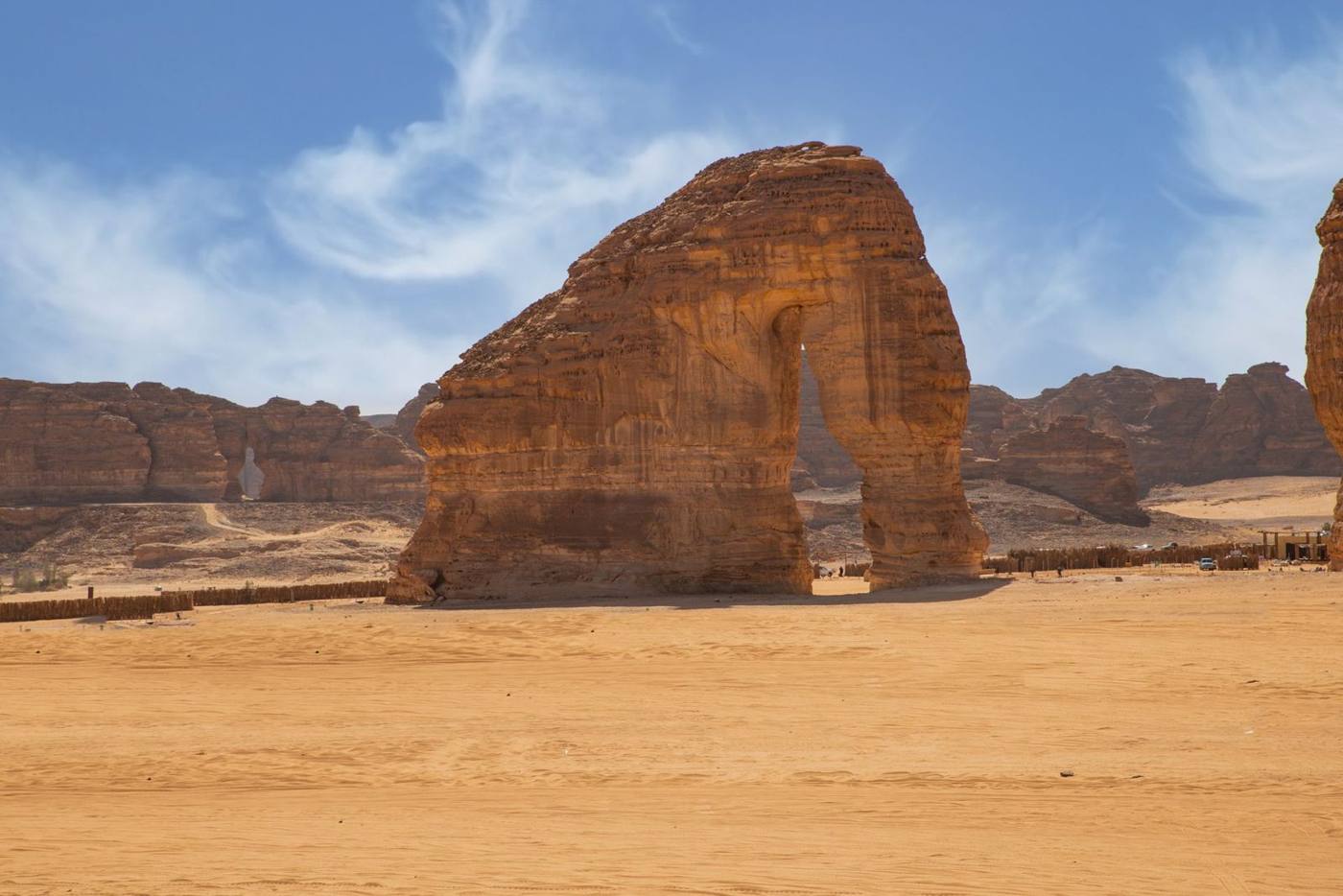
In the late afternoon head to Elephant Rock, a large sandstone formation that the wind has shaped with a trunk touching the ground. Around it there are low seats in the sand and small cafés: sit down and watch the sunset, when the rock turns red and then dark against the sky.
In the evening, if your dates are lucky, you can join a stargazing session in the desert, far from the lights.
Only drive by day on the roads between the valleys and do not leave the tarmac with an ordinary car.
Practical tip: evenings in the desert are cool, especially in winter: bring a warm top.
- Day 5
Leaving AlUla
Today is your travel day home.
If your flight is in the afternoon, spend the morning on a last walk through the palm grove along the oasis path, or climb one of the viewpoints above the old town. You can also buy dates, honey and crafts in the shops on the restored street. AlUla airport is outside town: allow time for the transfer.
Trip summary: in five days you have seen one of the most extraordinary archaeological places in Arabia. In the old town you walked among mud houses, at Hegra you saw the Nabataean tombs and the lonely castle of Qasr al-Farid, at Dadan the Lion Tombs, at Jabal Ikmah you read ancient inscriptions on the rock, in the Ashar valley you walked between sandstone walls, and you saw Maraya reflecting the desert and Elephant Rock at sunset.
When to go: October to March is the best season, with warm but pleasant days and cool, sometimes cold, nights. It is also the time of festivals and concerts. From May to September the heat is very strong and some visits change times or are reduced.
Remember the country's rules: loose clothes covering elbows and knees, no alcohol, and no photos of government or military buildings.
Practical tip: if you fly back to Europe with a connection in Riyadh or Jeddah, leave plenty of time between flights, because schedules can change at short notice.
Scenery and archaeology comparable to Petra, with very few visitors. Hegra can only be visited on timed tours booked online. The tourist e-visa is easy to obtain; social rules are more relaxed than a few years ago but it remains a conservative country.
Before you go
- Documents and visa
- Passport valid for at least six months from arrival and a tourist e-visa, applied for only on the official website visa.visitsaudi.com before leaving, or on arrival at international airports. The visa is valid for a year, with multiple entries and up to 90 days in total, and includes basic health insurance. If you enter overland, check first that your visa is valid for that crossing. Always carry a copy of your passport and visa.
- Health and vaccines
- No compulsory vaccinations for tourism, except a yellow fever certificate if you arrive from a country at risk. The heat is strong for much of the year: drink plenty of water and protect yourself from the sun. Some medicines need approval: carry your prescription. The visa insurance covers little, so take an extra policy with medical costs and repatriation. Emergencies: 911.
- Money and payments
- Saudi riyal. Cards and phone payments are accepted almost everywhere, even in small shops; keep a little cash for markets.
- Power sockets
- Type G, sometimes also A and B, 230 volts: bring a universal adapter.
- Time zone
- UTC+3 all year.
- Safety
- Laws and customs: men and women wear loose clothes covering elbows and knees; women do not have to wear an abaya or cover their hair. Alcohol is banned: do not bring it in or arrive drunk. There is zero tolerance for drugs, with very heavy penalties. Public demonstrations are illegal and political comments on social media can also have consequences. Do not photograph government or military buildings and royal palaces, or people without consent. Mecca and central Medina are reserved for Muslims. During Ramadan do not eat, drink or smoke in public in daylight. Roads are fast and accidents are common: drive by day and travel in convoy in the desert. The situation in the region can change quickly, with sudden airspace closures. Official advice: GOV.UK.
Information checked in November 2026 for Italian and EU citizens. Rules change: always check before you travel.
Variations
Shorter version: in three days see Hegra, Dadan and the old town, with Elephant Rock at sunset.
Longer version: add two days for hiking in the canyons and a night in a desert camp.
Frequently asked questions
Can you visit Hegra on your own?
No. Hegra can only be visited on official timed tours, booked online on the official AlUla website. You cannot drive in with your own car.
How should women dress in AlUla?
In loose clothes covering shoulders, elbows and knees. The abaya and headscarf are not compulsory for female tourists.
How many days do you need in AlUla?
At least three full days for Hegra, Dadan, Jabal Ikmah and the desert landscapes. Five days let you go at an easy pace.
Indicative itinerary written by World Atlas. Before booking, check timetables, seasonal openings, documents and safety.
 4 daysEasy
Riyadh and Diriyah
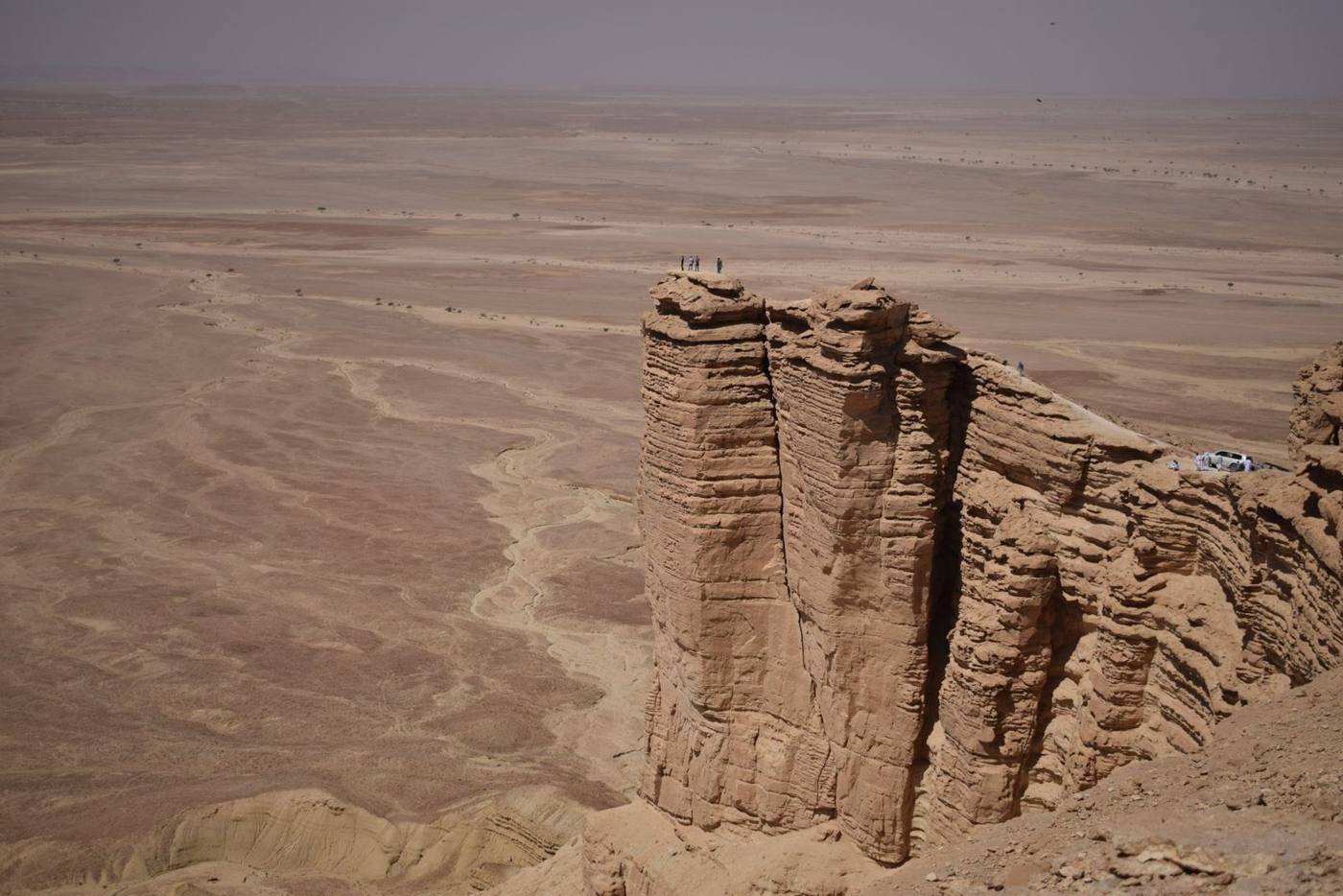
The capital with Masmak fort and the National Museum, the UNESCO mud-brick city of At-Turaif in Diriyah and the Edge of the World escarpment.
 4 daysEasy
Jeddah and the Red Sea
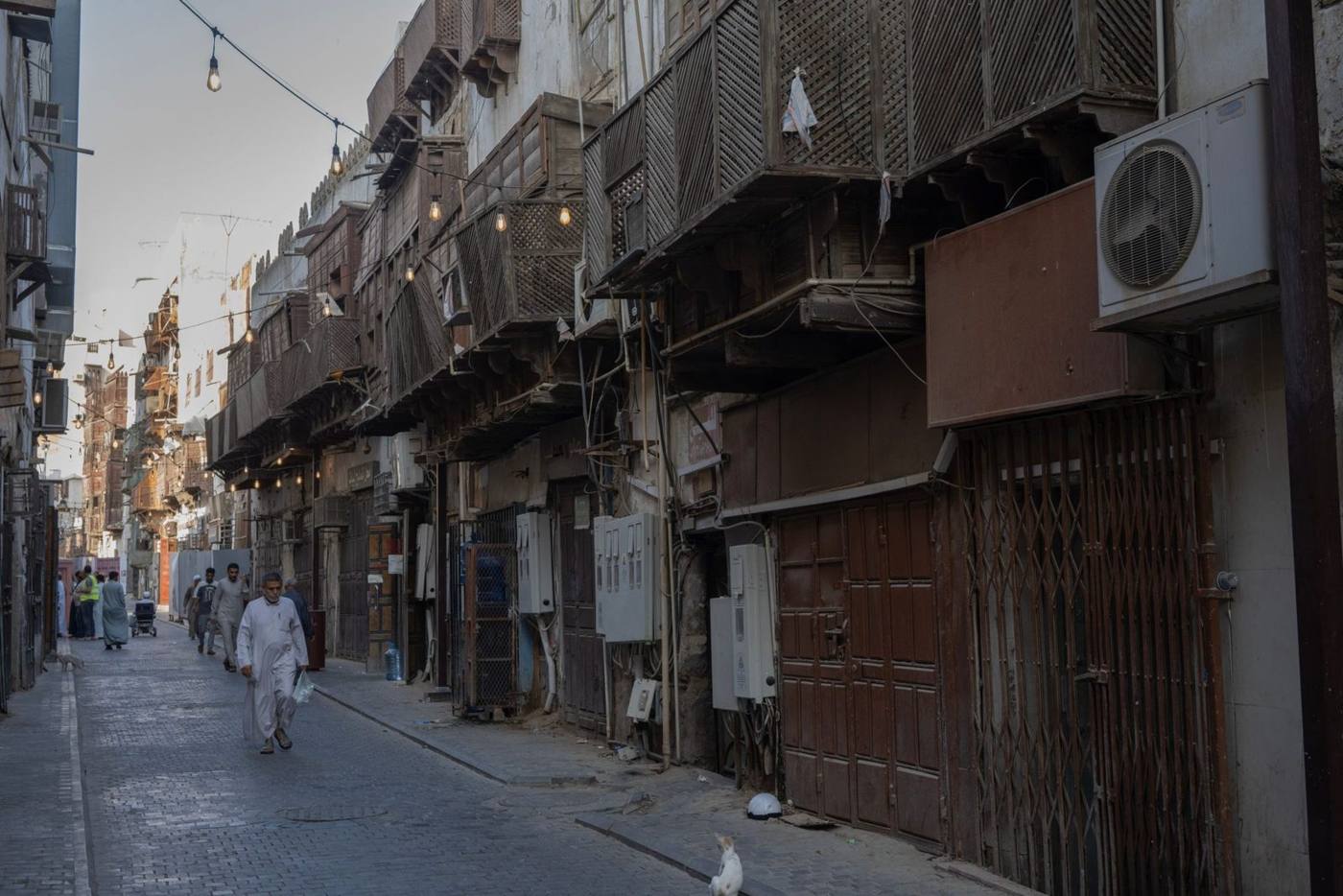
The UNESCO district of Al-Balad with its coral-stone houses and wooden balconies, the Corniche and the reefs of the Saudi Red Sea.