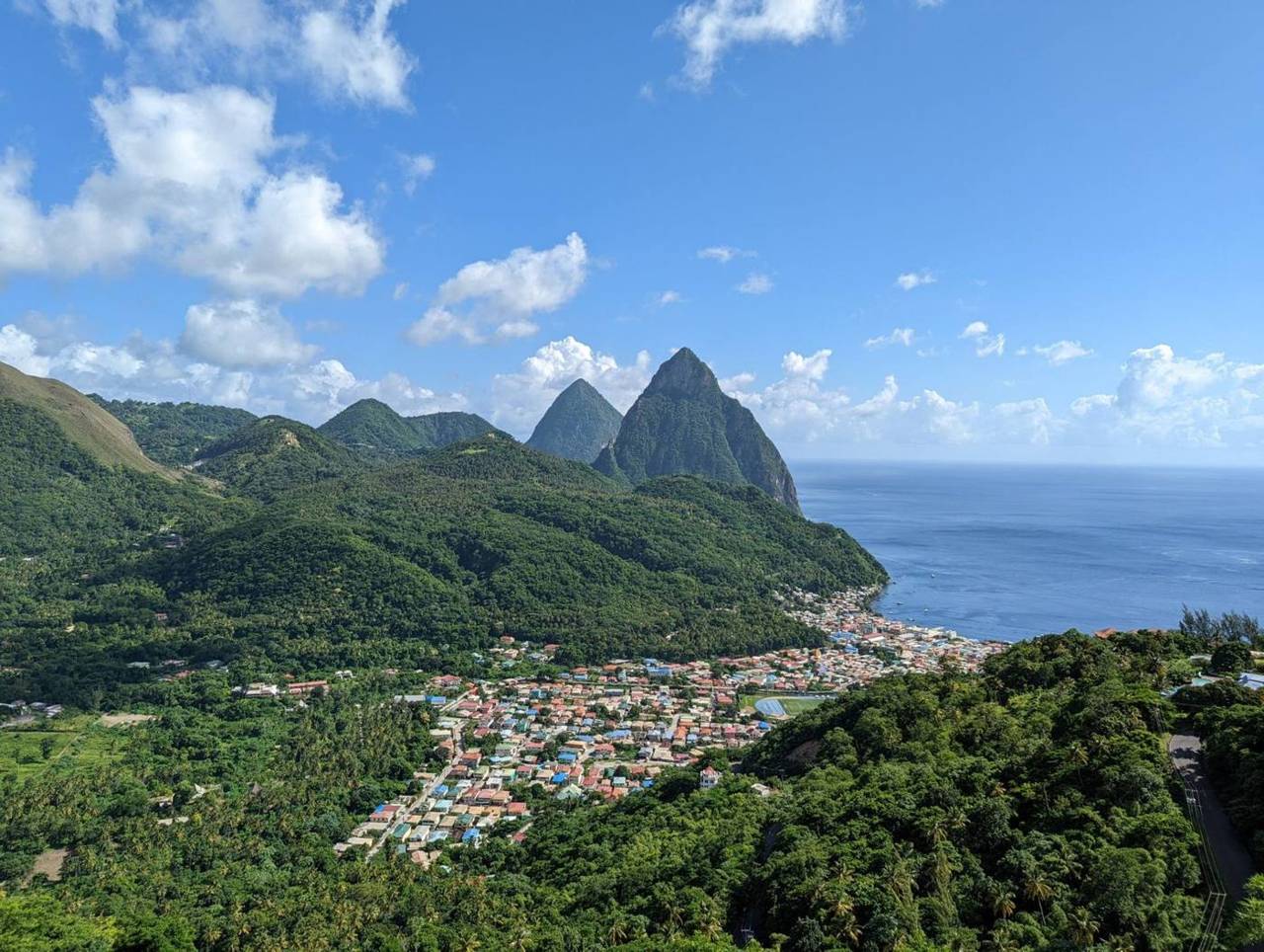
The Pitons and Soufrière
The two UNESCO peaks by the sea, the Gros Piton climb, the drive-in volcano with hot mud baths, Toraille waterfall and snorkelling at the foot of the Pitons.
- Castries
- Marigot Bay
- Soufrière
- Sulphur Springs
- Gros Piton
- Anse Chastanet
Day by day
- Day 1
Castries and Marigot Bay
This six-day trip takes you through the most spectacular landscape in St Lucia: the two Pitons, the UNESCO-listed volcanic peaks rising from the sea near Soufrière, with the climb up Gros Piton, the volcano with the hot mud of Sulphur Springs and snorkelling at the foot of the mountains. It starts in Castries and Marigot Bay.
Before you go: Italian citizens enter St Lucia with a passport valid for the whole stay and without a visa for stays of up to 90 days in any 180, under the agreement with the European Union. In the three days before arrival fill in the online immigration form on the official government website: you receive a QR code to show on arrival. Other nationalities should check their own rules. The United Kingdom does not advise against any area, but reports a serious risk of gang-related gun homicides, sometimes in public places, and robberies: do not walk alone away from main roads, avoid isolated beaches after dark and use only licensed taxis. Wearing camouflage clothing is illegal. Hurricane season runs from June to November.
In Castries call in at the covered market and Derek Walcott Square, then drive up Morne Fortune, the hill above the city, to see the harbour from above.
In the afternoon carry on south to Marigot Bay, a narrow, deep bay between forested hills, with sailing boats at anchor and a spit of sand with palm trees. Cross the bay on the little boat that shuttles between the two shores.
Sleep in Marigot Bay for one night.
Practical tip: if you land at Hewanorra, in the south, allow almost two hours by road to the north, so book your transfer in advance.
- Day 2
Soufrière and the mud of Sulphur Springs
Today you drive down the west coast to Soufrière, at the foot of the Pitons.
The road from Marigot Bay to Soufrière is winding and scenic: it climbs and dips through the hills, passes the fishing villages of Anse La Raye and Canaries, with colourful boats on the beach, and runs between banana plantations and woods. Just before Soufrière stop at the viewpoint where you first see the two Pitons above the bay.
Soufrière, the old French capital, is a town of colourful wooden houses around a square with a church, by the sea.
In the afternoon visit Sulphur Springs, the heart of an ancient caldera, where the road comes almost up to the vents. From a platform you look at grey pools bubbling and steam rising from the ground, with a strong smell of sulphur. Further down are the hot mud pools: spread the mud on your skin, let it dry and rinse off in the warm spring water. Check prices and times.
In the evening have a Creole dish for dinner, such as fish in sauce with green bananas and rice, and go to bed early: tomorrow you climb Gros Piton.
Sleep in Soufrière for four nights.
Practical tip: wear an old swimsuit for the mud, because the sulphur stains it.
- Day 3
The climb up Gros Piton
Today you climb the taller of the two mountains, the symbol of the island.
Set off at dawn for the village of Fond Gens Libre, south of Soufrière, where the trail begins. To climb you need a certified local guide, whom you find at the start of the path: the money helps the community. Check prices and times.
Gros Piton is 798 metres high. The route is about 4 kilometres there and back, but it is steep and takes four to six hours, in the heat and humidity of the forest. The trail climbs on stone and wooden steps, roots and rocky stretches where you also use your hands. The guide tells you the history of the village, shows you the plants and birds and decides when to rest. Halfway up there is a viewpoint with Petit Piton opposite, pointed and covered in green. At the top, through the trees, you look over the coast, Soufrière and the open sea.
The descent is hard on the knees: go slowly and place your feet carefully.
In the afternoon rest and, if you like, go back to the warm waters of Sulphur Springs to loosen your muscles.
Sleep in Soufrière.
Practical tip: bring at least two litres of water each, a salty snack and hiking boots with a good grip.
- Day 4
Snorkelling at Anse Chastanet
Today you rest from the mountain and discover the protected sea of Soufrière.
The waters between Soufrière and the Pitons are part of a marine area managed by the SMMA, divided into reserves, fishing areas and areas for boats. To snorkel or dive in the reserves you need a paid permit: check the rules and the amount on the official SMMA website.
Go to the beach at Anse Chastanet, north of town, in a sheltered bay with dark sand and green hills behind. Walk into the water from the shore with mask and fins: after a few metres the bottom drops away and you find corals, sponges and sea fans, with blue and green parrotfish, butterflyfish and small silver shoals. Swim calmly along the reef and never touch the coral.
If you are certified, you can dive with an authorised centre along the wall that drops into the blue. Remember that after a dive you should not climb mountains or fly for at least 24 hours.
In the afternoon stay on the beach, in the shade of the trees, and watch the fishing boats returning to Soufrière.
Sleep in Soufrière.
Practical tip: wear a swim shirt and reef-safe sun cream, because under water the sun burns your back without you noticing.
- Day 5
Sugar Beach, between the two Pitons
Today you spend the day at the most photographed spot on the island, on the beach between the two mountains.
In the morning go to Sugar Beach, the beach of pale sand in the bay between Gros Piton and Petit Piton, by taxi or by boat from Soufrière. Arriving from the sea you understand the shape of the Pitons: two very steep cones, covered in forest, dropping straight into the water.
Snorkel towards the base of Petit Piton, where the rock continues under water and the reef is rich in corals, sponges and colourful fish. Then lie on the sand and look up: the green walls of the mountains are right above you.
In the afternoon, if you want to see the coast from another angle, take a short boat trip south, beneath Gros Piton, or go back to Soufrière and walk along the seafront among the colourful houses and the market.
At sunset watch the sun go down into the Caribbean Sea, as the outline of the Pitons turns dark against the orange sky. The beach grows quiet and the fishermen head back to town. It is your last evening: celebrate with a plate of grilled fish and a passion fruit juice.
Sleep in Soufrière.
Practical tip: bring water and something to eat, because services on the beach can be expensive or limited.
- Day 6
Departure from Hewanorra
Today you leave Soufrière and the Pitons and head to the airport.
In the morning, if you have time, have one last swim or a walk around town. Then take a taxi to Hewanorra airport, at Vieux Fort, in the south of the island: from Soufrière the road runs through hills and villages and takes about an hour. Along the way you pass through Choiseul, a village known for its basketwork and pottery, and from above you see the small bays of the south coast, with fishing boats pulled up on the sand. If your flight leaves from the airport at Castries, in the north, allow more time, because the coast road is slow and full of bends.
In these six days you have seen one of the most spectacular landscapes in the Caribbean: Castries and the deep bay of Marigot, the fishing coast down to Soufrière, the hot mud of Sulphur Springs, the climb up Gros Piton with a guide from the village, the protected sea of Anse Chastanet and Sugar Beach between the two mountains.
When to go: from December to April, in the dry season, with a less muddy Gros Piton trail, a calm sea and good visibility under water. From June to November it rains often and it is hurricane season.
Practical tip: book the taxi to the airport the day before, agreeing the fare, and leave with plenty of margin before your flight.
One of the Caribbean's most spectacular landscapes. The Gros Piton climb is steep, 4-5 hours return, with a compulsory guide. The island's roads are winding: it takes almost two hours from Hewanorra airport to the north.
Before you go
- Documents and visa
- Passport valid for the whole stay; Italian and EU citizens can stay up to 90 days in any 180 without a visa, British citizens up to 6 weeks on entry. Up to three days before arrival fill in the online immigration form on the official site travelslu.govt.lc: you receive a QR code to show on arrival. Ask for your passport to be stamped on entry.
- Health and vaccines
- No compulsory vaccinations, except a yellow fever certificate if you arrive from a risk country. Protect yourself from mosquitoes, which can carry dengue. Get insurance with medical cover and repatriation. Emergencies: 911.
- Money and payments
- East Caribbean dollar, pegged to the US dollar, which is accepted almost everywhere. Cards work in accommodation and larger shops; taxis have no meters, so agree the fare first.
- Power sockets
- Type G, 230 volts: the same as British plugs.
- Time zone
- UTC-4 all year, four hours behind the UK in winter and five in summer.
- Safety
- No areas are advised against. There is a continuing serious risk of gang-related gun homicides, sometimes in public areas, as well as armed robbery and sexual assault: do not walk alone away from main roads, avoid isolated beaches after dark, take care at street parties and use only licensed taxis. Wearing camouflage clothing is illegal. Traffic drives on the left and you need a temporary permit; many accidents happen on the east coast road to Hewanorra airport. A certified local guide is required for Gros Piton. Hurricane season runs from June to November. Official advice: GOV.UK.
Information checked in November 2026 for Italian and EU citizens. Rules change: always check before you travel.
Variations
Shorter: four days, with arrival in Soufrière, Sulphur Springs, Gros Piton and a beach day before departure.
Longer: add a day for the Edmund forest or for a second dive in the Soufrière marine reserve.
Frequently asked questions
How long does the Gros Piton climb take?
Four to six hours there and back, for about 4 kilometres. It is steep, hot and humid, with rocky stretches: you need a certified local guide.
Where is it best to stay?
In Soufrière, at the centre of the Pitons area, for the four main nights. The first night in Marigot Bay breaks the journey from the north.
Do you pay to snorkel in the marine reserve?
Yes, in the Soufrière marine reserves you need a paid permit. Check the rules and the amount on the official SMMA website.
Indicative itinerary written by World Atlas. Before booking, check timetables, seasonal openings, documents and safety.
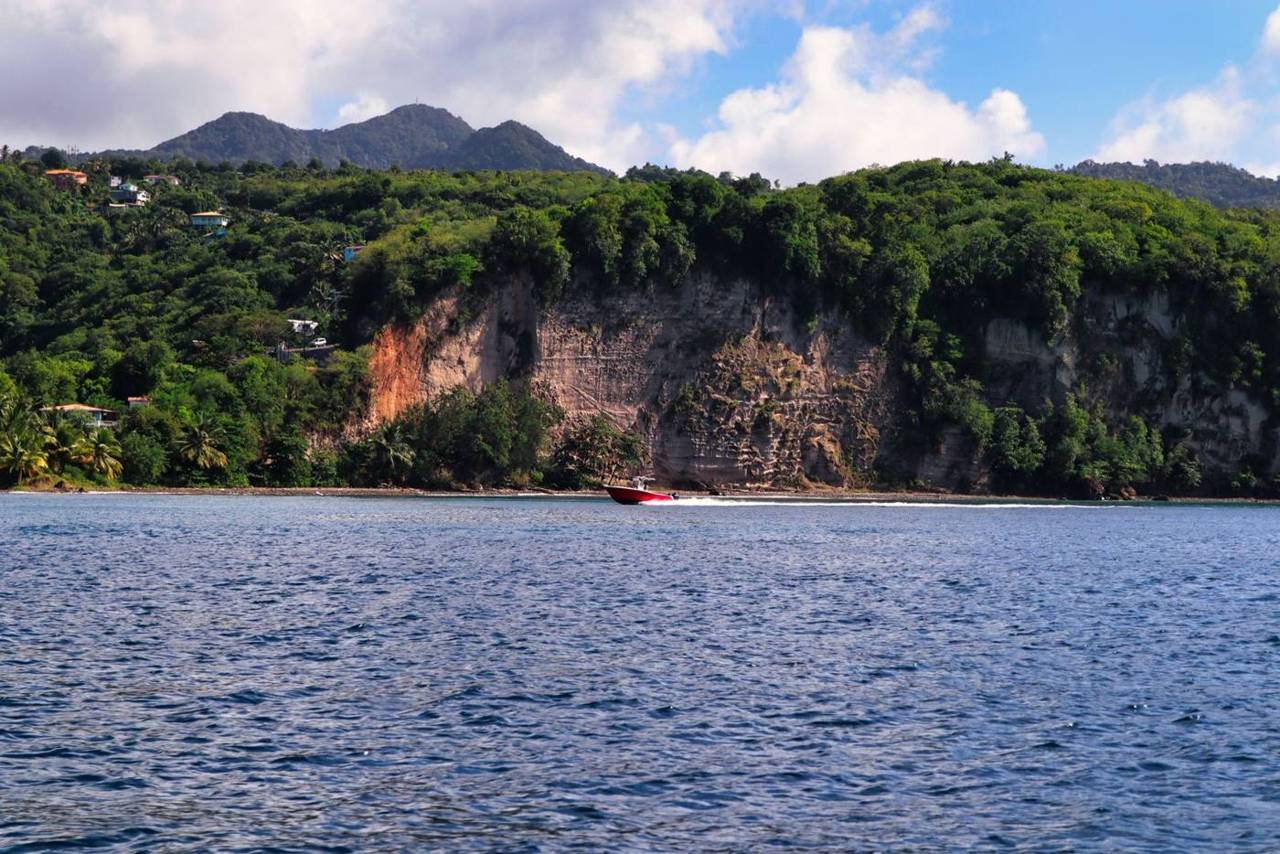 4 daysEasy
The north and Pigeon Island
Pigeon Island historic park, Rodney Bay, the Friday street party in Gros Islet and Cas en Bas beach.
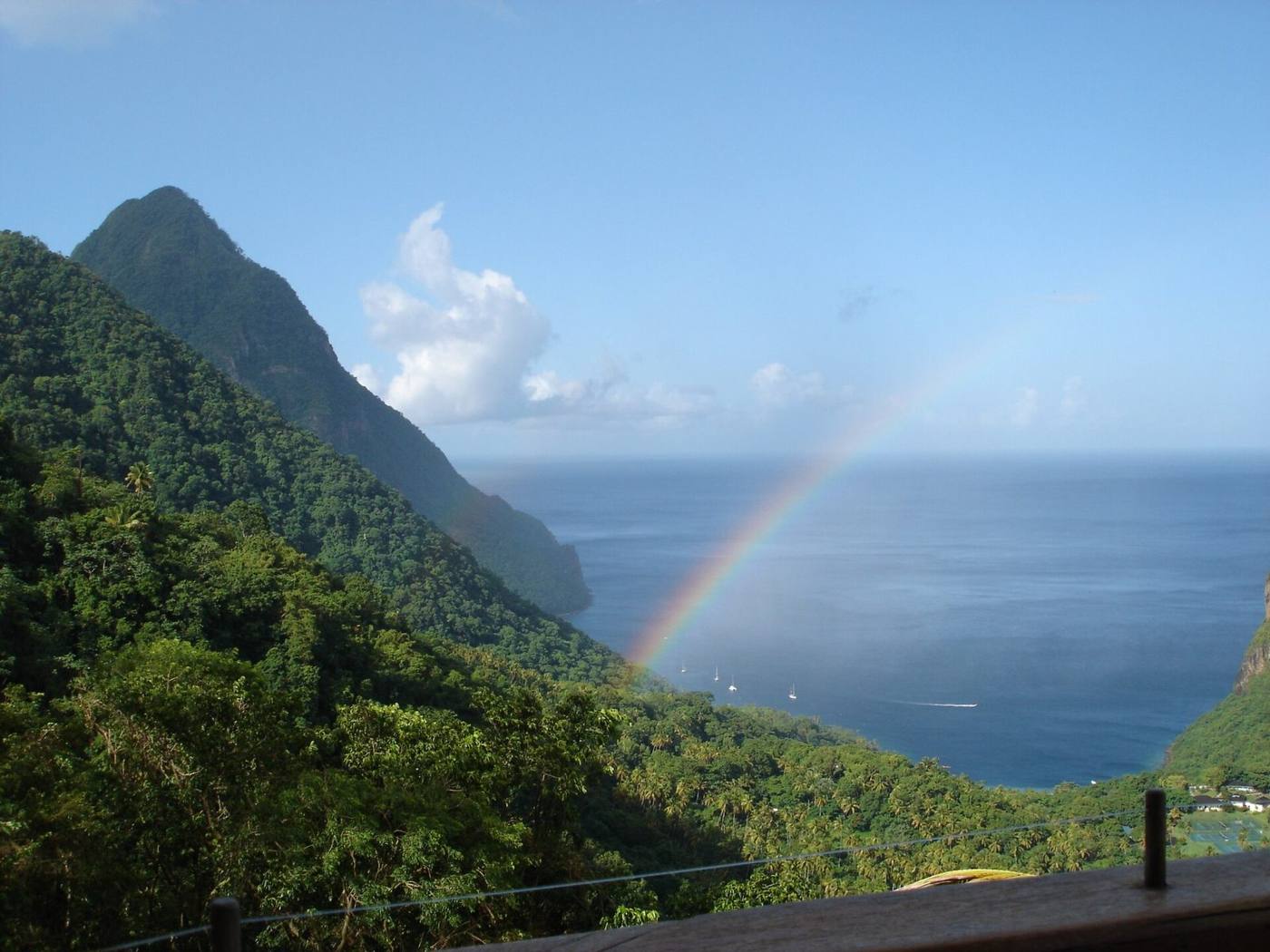 2 daysChallenging
The Gros Piton climb
The taller of the two Pitons, a UNESCO site: a steep forest trail from the village of Fond Gens Libre to the summit, with views over Soufrière and the Petit Piton.
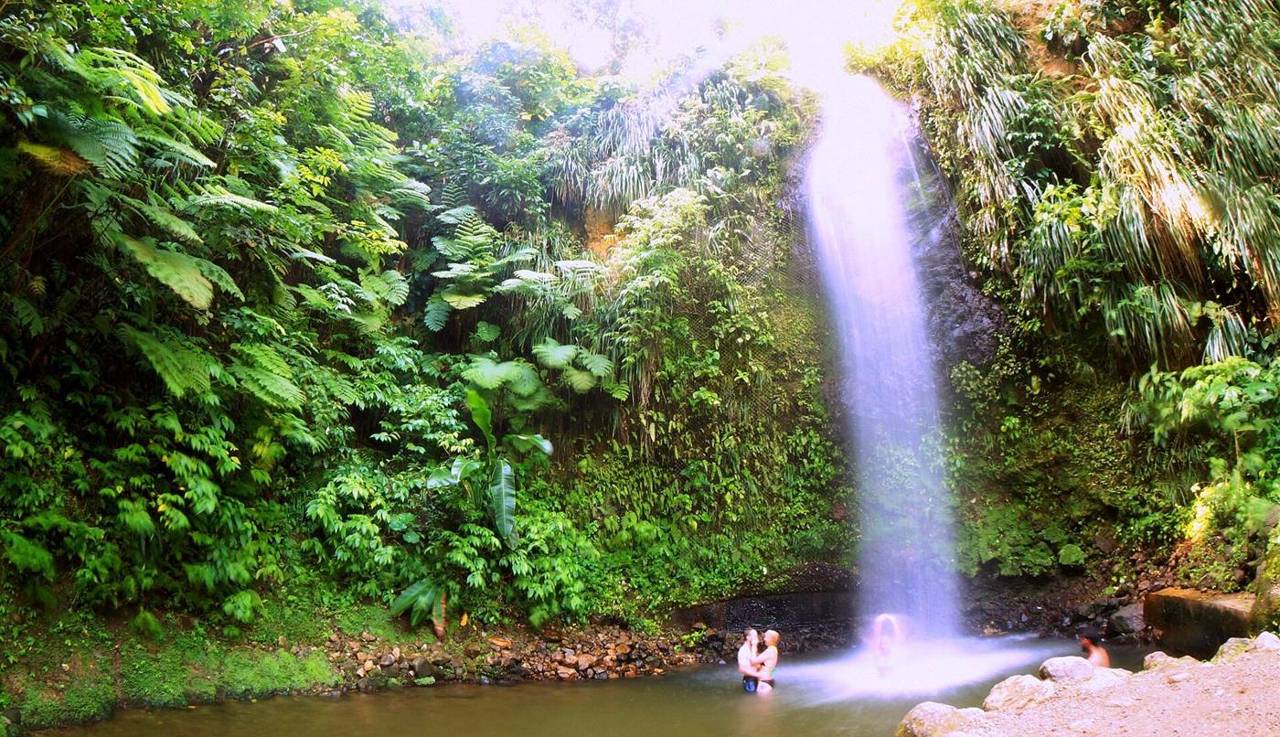 3 daysModerate
Forest and waterfalls
The island's green interior: the Edmund rainforest, the Tet Paul trail, the Toraille and Diamond waterfalls and the cocoa estates around Soufrière.