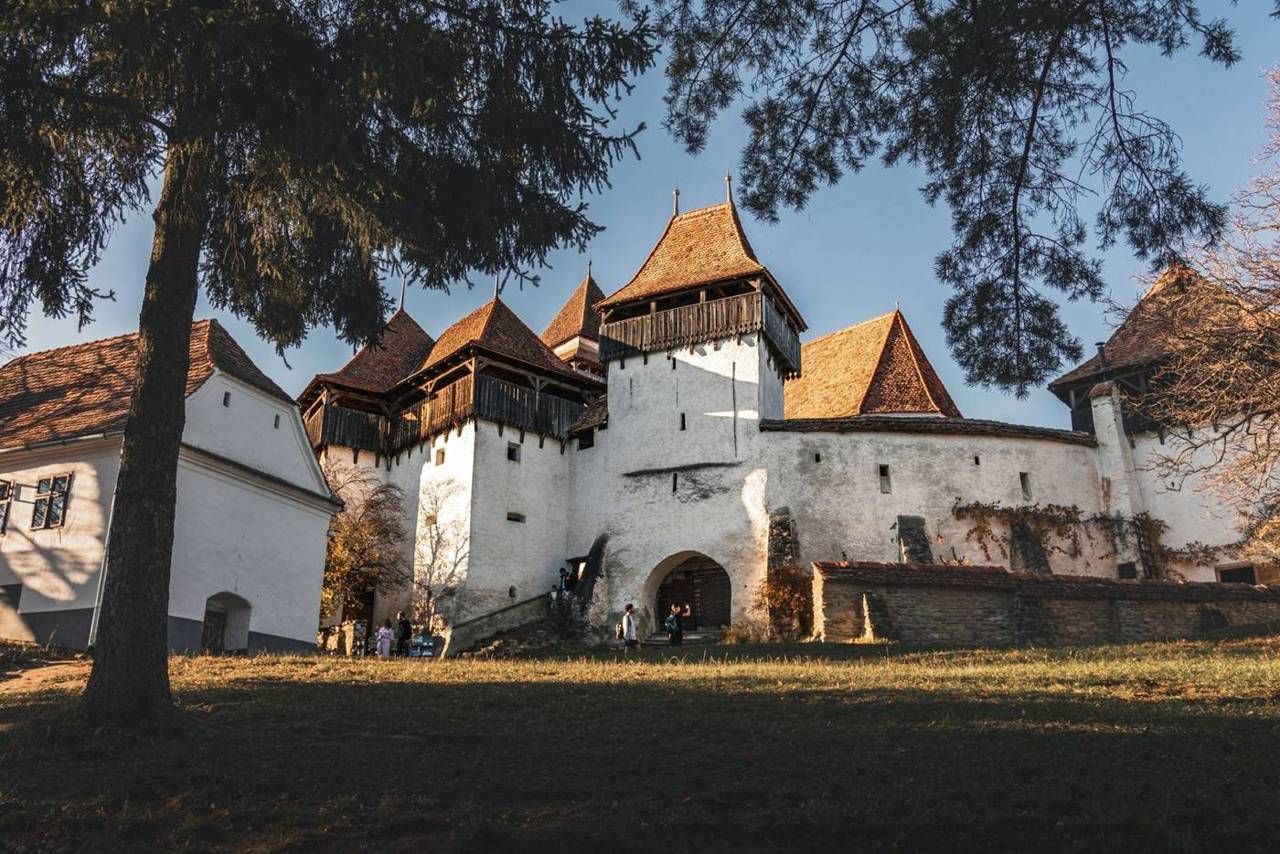
Sibiu and the Saxon villages
Sibiu with roofs whose windows seem to 'watch', the UNESCO fortified churches of Biertan and Viscri, Sighișoara and the country cooking of the Saxon villages.
- Sibiu
- Biertan
- Sighișoara
- Viscri
- Mălâncrav
Day by day
- Day 1
Sibiu: the Large Square and the Bridge of Lies
This five-day trip takes you to the slowest and most authentic Transylvania, the land of the Saxons: Sibiu and the Astra open-air museum, the villages of Biertan and Mălâncrav with their churches, the citadel of Sighișoara and Viscri, with a night in a farmhouse.
Before you go: Italian citizens can enter Romania with an electronic identity card or a passport; Romania has been in the Schengen area since 1 January 2025. Other nationalities should check their own rules. The currency is the Romanian leu, not the euro. In the city watch out for pickpockets on public transport and in crowded areas, and book taxis through an app to avoid inflated fares. If you drive, remember that the alcohol limit for drivers in Romania is zero.
Sibiu has a small airport with flights from several European cities. It was founded by the Saxons, German settlers who came to Transylvania in the Middle Ages, and in 2007 it was European Capital of Culture. Start from the Large Square, surrounded by colourful buildings. On the roofs you will notice small eye-shaped windows: this is why Sibiu is called the city with eyes. Climb the Council Tower to see the red roofs and, in the background, the Făgăraș Mountains. Check prices and times.
Then go into the Small Square across the Bridge of Lies, a nineteenth-century cast-iron bridge: legend says it creaks under anyone who lies. Walk down to the lower town, among narrow steps and craftsmen's houses.
In the evening have dinner in the centre and try Saxon and Romanian food, for example bean soup served in a loaf of bread.
Sleep in Sibiu, for two nights.
Practical tip: Sibiu's old town is almost entirely pedestrian; leave the car in a car park outside the walls and get around on foot.
- Day 2
The Brukenthal Museum, Astra and Cisnădioara
On the second day you combine a great art museum, the most famous open-air museum in Romania and a church on a hill.
In the morning visit the Brukenthal Museum, in the Baroque palace of Baron Samuel von Brukenthal, governor of Transylvania in the eighteenth century. It is one of the oldest museums in south-eastern Europe, with European painting, Romanian works and a rich library. Check prices and times. Then go into the Gothic Evangelical church, on Huet Square.
In the afternoon go to the Astra open-air museum, in the Dumbrava forest, a few kilometres from the centre. On a huge site, around a lake, hundreds of traditional buildings have been rebuilt: farmhouses, windmills and water mills, oil presses, wooden churches, potters' and blacksmiths' workshops, from every region of Romania. In summer there are often demonstrations of old crafts. Allow at least three hours. Check prices and times.
If you have time left, drive about twenty minutes to Cisnădioara, a Saxon village at the foot of the mountains. Above the village, on a hill, stands a small Romanesque basilica surrounded by walls, one of the oldest in the area. Walk up in a few minutes to see the village and the mountains. Check prices and times.
In the evening go back to Sibiu.
Practical tip: at Astra wear comfortable shoes and bring water: the distances are long and in summer some stretches have little shade.
- Day 3
Biertan and Mălâncrav
Today you leave Sibiu for the Saxon villages, among hills, vineyards and orchards. The roads to some villages are sometimes unpaved: drive slowly.
In the morning drive for about an hour and a half to Biertan. The village is dominated by a large fortified church, a UNESCO World Heritage Site, protected by three rings of walls and towers. For about three centuries it was the seat of the Lutheran bishop of Transylvania. Inside you see a painted multi-panel altarpiece and the sacristy door, with a complicated lock with many bolts. In one tower there was the room where, according to tradition, quarrelling couples were shut in, with one bed and one plate, until they made up. Check prices and times.
In the afternoon continue to Mălâncrav, a more isolated village, in a valley of orchards. Its church has one of the best preserved cycles of Gothic frescoes in Transylvania, from the fourteenth and fifteenth centuries, with scenes from the life of Christ and the saints, in colours that are still bright. If the door is closed, ask in the village who has the key. Check prices and times. In the village you also see the restored manor house of the Apafi, a noble Hungarian family.
In the evening sleep in a guesthouse in or near Biertan and taste the white wine of the hills.
Practical tip: in the Saxon villages there are few services; bring cash, water and something to eat, and fill up in Sibiu.
- Day 4
Sighișoara, the citadel on the hill
Today you drive about half an hour to Sighișoara, a medieval citadel still inhabited, a UNESCO World Heritage Site.
Leave the car in the car parks below the hill and walk up into the citadel. Its symbol is the Clock Tower, high above the main gate: inside is the history museum, and from the gallery at the top you see the colourful roofs, the towers and the lower town. On the clock, wooden figures represent the days of the week and change every day. Check prices and times.
Then walk through the squares and cobbled lanes, with pastel-coloured houses. In a house near the tower, according to tradition, Vlad the Impaler was born, the prince who inspired the Dracula myth: a plaque recalls it.
Climb the covered wooden staircase, from the seventeenth century, built so that students and worshippers could reach the school and the church even in winter. At the top stands the Gothic Church on the Hill, with frescoes, and behind it the silent Saxon cemetery, among the trees. Check prices and times.
In the afternoon walk around the walls and towers: each one bore the name of the craftsmen's guild that defended it, such as the tailors, shoemakers, blacksmiths and butchers.
In the evening, when the groups leave, the citadel becomes silent: it is the best time for a stroll.
Sleep in Sighișoara, for one night.
Practical tip: in the citadel the cobbles are uneven and the slopes steep; wear shoes with a good grip, especially if it rains.
- Day 5
Viscri and a night in a farmhouse
On the last day you go to Viscri, the most famous Saxon village, about an hour from Sighișoara, and sleep in a farmhouse.
Viscri has a long main street with colourful houses in a row, wooden gates and courtyards with barns. Early in the morning and at sunset the village cows walk along the street. On the hill stands the fortified church, a UNESCO World Heritage Site, surrounded by walls and towers where the villagers kept their food and took refuge during attacks. Climb the tower to see the village and the hills. Check prices and times.
In the afternoon stroll around the village, watch the blacksmith at work and the women working wool. In the evening sleep in a restored farmhouse: Viscri's guesthouses are few and full in summer, so book well in advance. Dinner is often made with produce from the garden and the village.
The next day you can leave from Sibiu airport or Târgu Mureș airport, or continue towards Brașov.
Trip summary: in five days you have seen Sibiu, with the Large Square, the Bridge of Lies, the Brukenthal Museum and the Astra museum; Cisnădioara; the fortified church of Biertan; the frescoes of Mălâncrav; the citadel of Sighișoara; and Viscri.
When to go: from May to October. In spring the hills are green and the orchards in blossom; in summer the villages are lively; in September and October there is the grape harvest and the forests change colour.
Practical tip: on country roads watch out for carts, stray dogs and animals, and do not drive at night.
Transylvania at its slowest and most authentic. Roads to the villages are sometimes unpaved. Viscri's guesthouses are few and full in summer.
Before you go
- Documents and visa
- EU citizens need a valid identity card or passport: Romania is in the EU and, since 1 January 2025, fully in the Schengen area, with no checks at internal borders. Check your document is intact and readable. Other nationalities should check the Schengen rules.
- Health and vaccines
- No vaccines required. EU citizens should bring their EHIC; take insurance covering medical costs, repatriation and, for hiking, mountain rescue. Emergencies: 112.
- Money and payments
- Romanian leu (RON); Romania does not use the euro. Cards work almost everywhere in towns, but carry cash in villages and mountain huts. Change money only at banks or authorised exchange offices. To drive on national roads outside towns you need the electronic rovinieta: buy it only on the official CNAIR portal (erovinieta.ro) or from authorised sellers, as some unofficial websites add fees. Check current prices.
- Power sockets
- Types C and F, 230 volts.
- Time zone
- Eastern European Time (UTC+2, summer UTC+3).
- Safety
- A generally safe country. Watch for pickpockets in large towns, especially Bucharest and on public transport, taxis that overcharge (taxi apps are more reliable) and drink spiking in bars and clubs. Romania has a very large number of brown bears, including near roads and town outskirts: keep your distance, do not stop to photograph them and never feed them, which is illegal. The country is in an earthquake zone. Drone debris can fall near the Ukrainian border: do not touch it and follow local authorities. Official advice: GOV.UK.
Information checked in November 2026 for Italian and EU citizens. Rules change: always check before you travel.
Variations
In 3 days: Sibiu and one day between Biertan and Sighișoara.
In 7 days: add Brașov and the Transfăgărășan.
Frequently asked questions
Do I need to book in Viscri?
Yes, the guesthouses and farmhouses in Viscri are few and fill up early in summer. Book well in advance.
Are the roads to the Saxon villages good?
The main roads are, but those to some villages are sometimes unpaved. Drive slowly, by day, and watch out for carts and animals.
How much time do I need for the Astra museum?
At least three hours: it is one of the largest open-air museums in Europe. Wear comfortable shoes. Check prices and times.
Indicative itinerary written by World Atlas. Before booking, check timetables, seasonal openings, documents and safety.
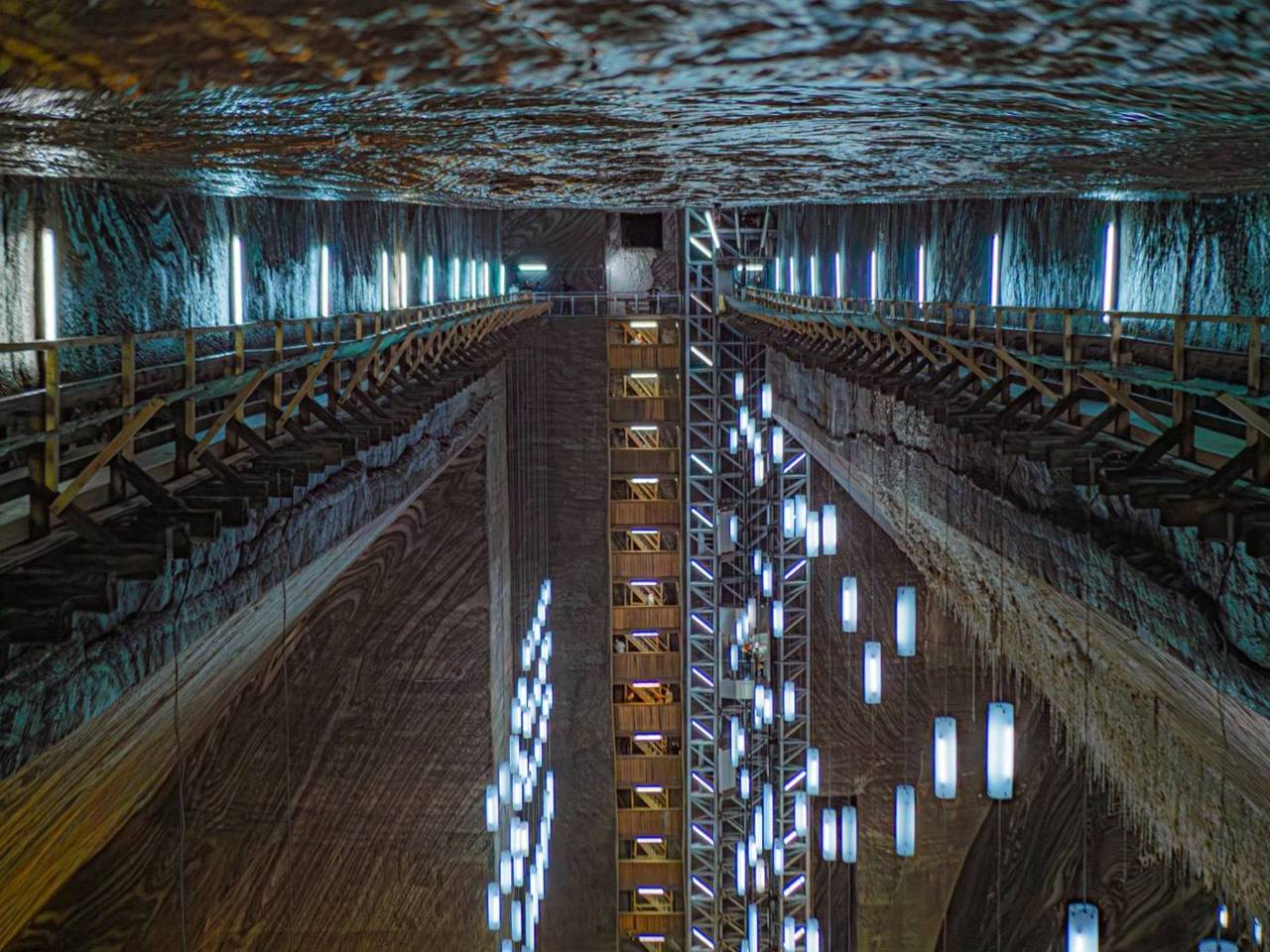 5 daysModerate
Cluj and the Apuseni
Cluj-Napoca, Transylvania's young city, the Turda salt mine, and the Apuseni mountains with Scărișoara ice cave, Răchițele waterfall and the high plateau villages.
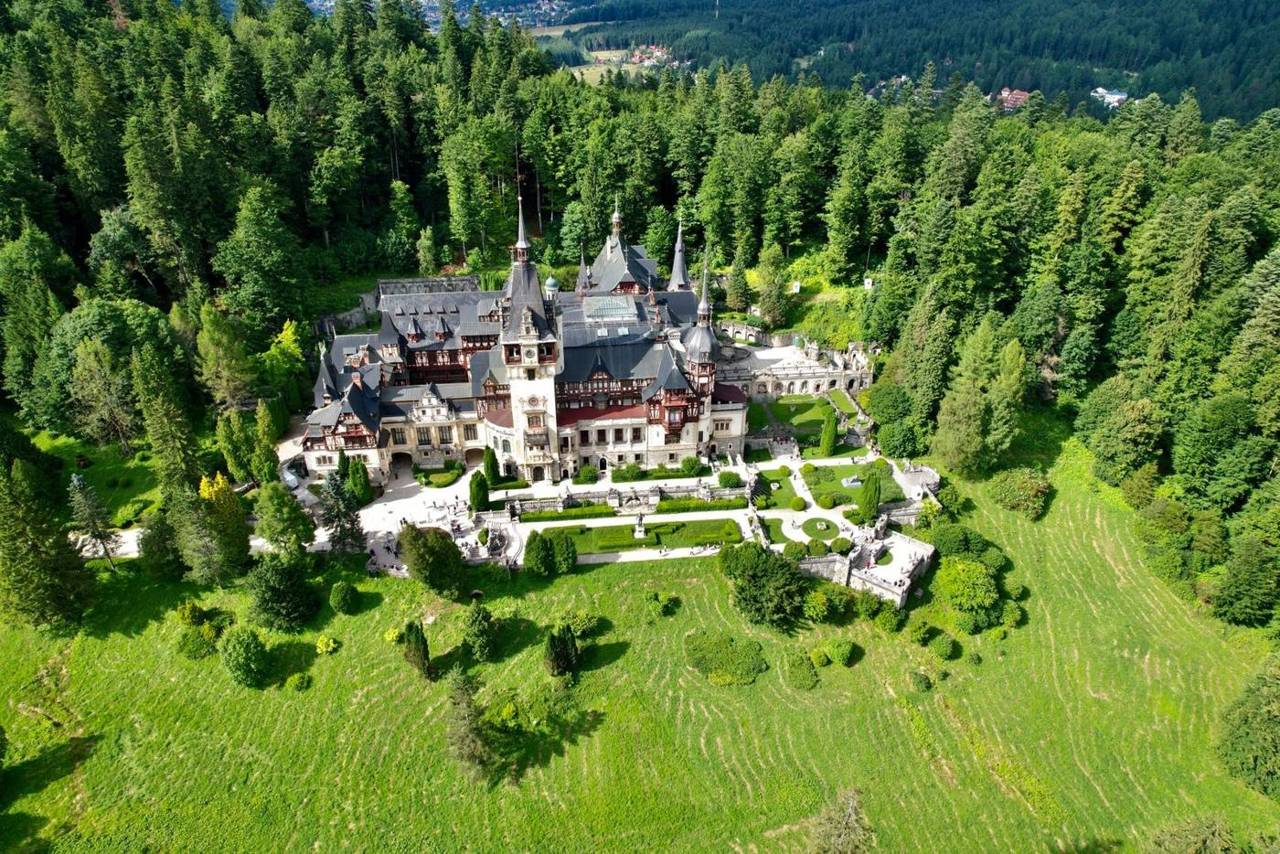 4 daysEasy
Brașov and the Carpathians
Brașov and the Black Church, Bran castle, Râșnov peasant fortress, Peleș castle at Sinaia and a walk in the Bucegi or Piatra Craiului mountains.
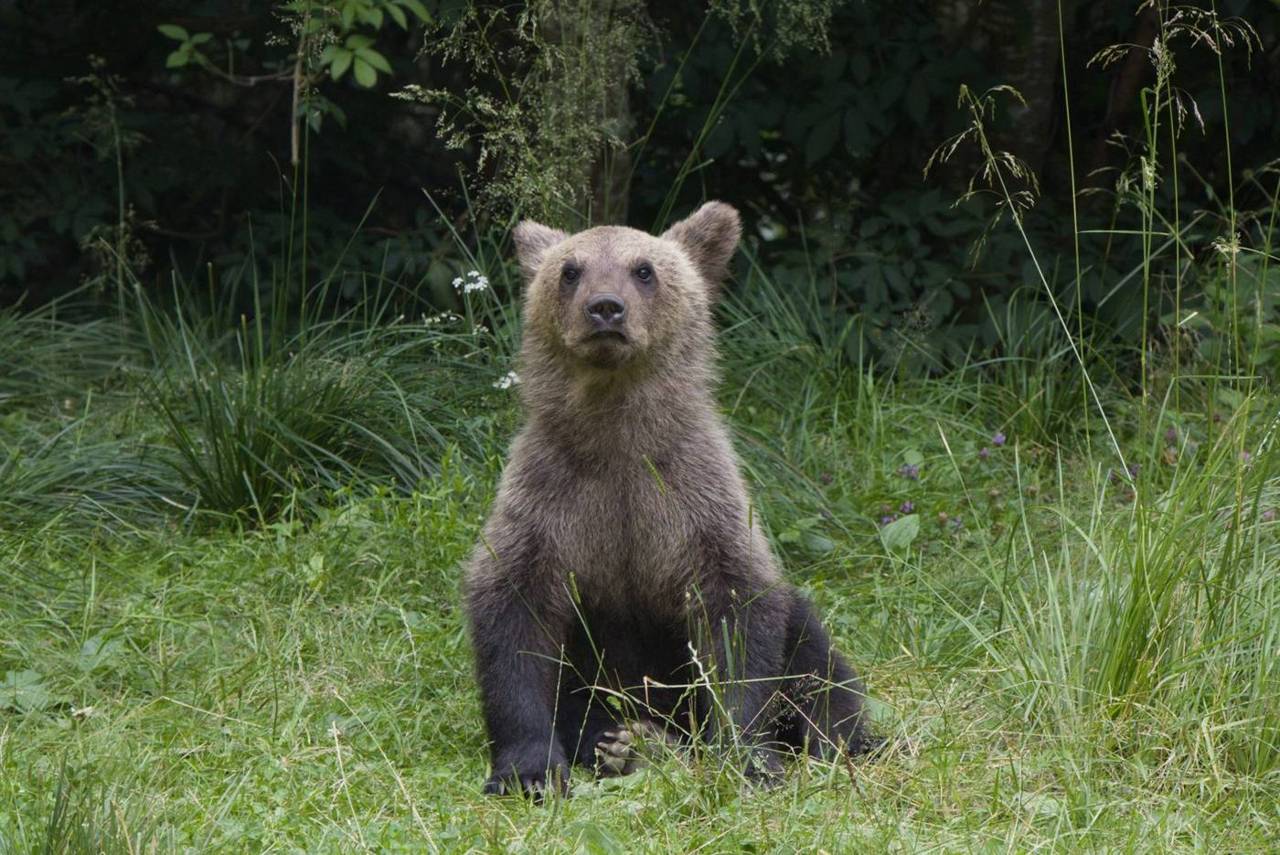 3 daysEasy
Bears of the Carpathians
Watching brown bears from licensed hides in the forests near Brașov, a walk tracking wolves and deer with a ranger and a night in a mountain guesthouse.