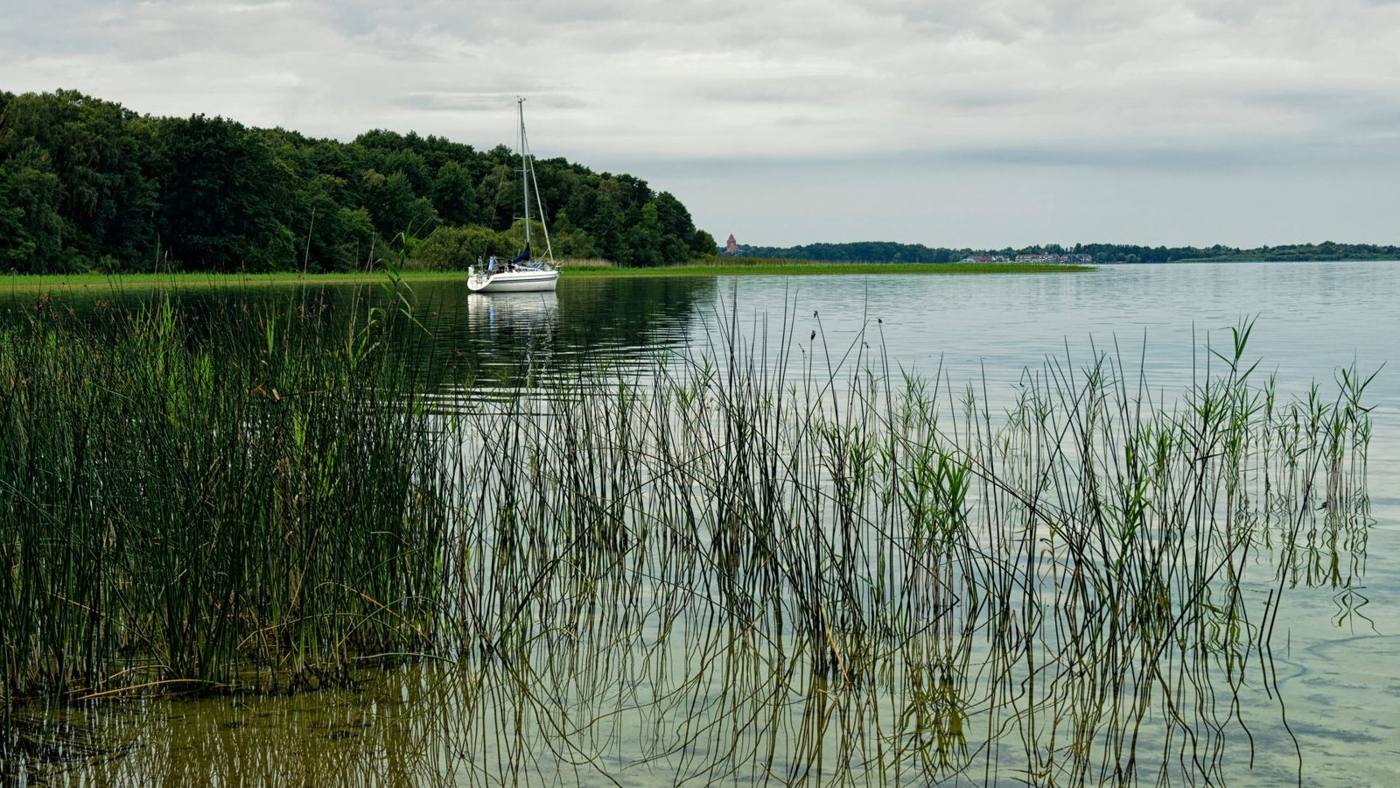
The Masurian Lakes
The land of a thousand lakes: kayaking on the Krutynia river, sailing on Lake Śniardwy, the Wolf's Lair and the baroque sanctuary of Święta Lipka.
- Olsztyn
- Mikołajki
- Krutynia
- Święta Lipka
- Gierłoż
- Giżycko
Day by day
- Day 1
Olsztyn and Copernicus's castle
This six-day trip takes you to Masuria, the land of a thousand lakes, in north-eastern Poland: Olsztyn and the castle where Copernicus lived, Mikołajki and sailing on the great lakes, kayaking on the river Krutynia, the Baroque shrine of Święta Lipka, the Wolf's Lair and Giżycko.
Before you go: Poland is part of the European Union and the Schengen area, but uses the złoty, not the euro. Italian citizens only need an electronic identity card valid for travel abroad or a passport; the paper identity card has not been valid for travel abroad since 3 August 2026. Other nationalities should check their own rules. Crime is low, but Italian travel advice warns of pickpockets at airports, stations and tourist sites and recommends using only official taxis. When you pay by card, always choose to pay in złoty. In the woods in summer watch out for ticks.
Olsztyn is about three hours by car or train from Warsaw. Start from the castle of the Warmian Chapter, in red brick, on the river Łyna. In the early sixteenth century Nicolaus Copernicus lived here for a few years, as administrator of the chapter's estates. On a wall of the cloister you can still see an astronomical table he drew to study the sun. The castle houses the Museum of Warmia and Masuria. Check prices and times.
Then walk around the old town: go in through the High Gate, cross the Market Square with its colourful houses and reach the Gothic Cathedral of St James. On a bench near the castle sits a statue of Copernicus: many people take a photo next to him.
Sleep in Olsztyn, for one night.
Practical tip: in Masuria you need a car; hire one in Warsaw or Olsztyn and check that good insurance cover is included.
- Day 2
Mikołajki, the sailing capital
Today you enter the heart of the Great Masurian Lakes, a network of lakes linked by canals and rivers, among forests and fields.
From Olsztyn drive east for about an hour and a half to Mikołajki, a small town on the lake of the same name, considered the sailing capital of Poland. In summer the harbour is full of sailing boats, the piers are lively and in the evening the lakeside promenade fills with people. Cross the footbridge, watch the boats coming and going and walk up the church hill to see the lake from above.
In the afternoon take a boat trip: cruises on the lakes leave from the harbour, including towards Lake Śniardwy, the largest in Poland. Check prices and times, which change with the season.
If you prefer nature, go instead to Lake Łuknajno, a few kilometres from town, a UNESCO biosphere reserve famous for its mute swans, which live here in large groups. From an observation tower you see them on the water, together with herons and wild ducks. Bring binoculars.
In the evening try lake fish, such as whitefish or pike, grilled or smoked, and pierogi.
Sleep in Mikołajki, for three nights.
Practical tip: in Masuria there are huge numbers of mosquitoes in summer, especially at sunset near the water; always use repellent and bring long sleeves for the evening.
- Day 3
A day sailing on the great lakes
Today you spend the day on the water, as thousands of Poles do every summer.
In the morning hire a sailing boat in Mikołajki harbour. If you have no experience or no sailing licence, choose a boat with a skipper, who knows the routes, the winds and the rules of the lakes. With the skipper you can also learn your first manoeuvres. Check prices and times and book ahead in July and August.
Sail out onto Lake Mikołajskie and then towards Śniardwy, the largest lake in Poland, so wide that in places you cannot see the shores. The wind here can rise quickly and the lake becomes choppy, so always follow the skipper's instructions. Then go into one of the smaller, sheltered lakes, surrounded by reeds and forests, where you can drop anchor for lunch and swim in the fresh water.
In the afternoon sail slowly back to the harbour, when the light turns golden and the boats all return together.
If sailing does not interest you, you can hire a bike and follow the paths along the lakes and through the Piska Forest, south of Mikołajki.
In the evening rest: sailing is more tiring than it looks.
Practical tip: on the lakes always wear a life jacket, use high-factor sun cream even when the sky is hazy and check the wind forecast before going out.
- Day 4
Kayaking on the river Krutynia
Today you paddle down the river Krutynia, one of the most beautiful canoe routes in Poland.
The full route is about a hundred kilometres long and takes several days, but the most famous stretch starts from the village of Krutyń, about half an hour's drive from Mikołajki. From here the river flows slow and clear through a nature reserve, among very tall trees bending over the water, sandy beds and water plants. You can see kingfishers, herons and, with a little luck, traces of beavers. The stretch to Ukta takes a few hours at a gentle pace. In the villages you can hire kayaks and there is a service that takes you back to the start. Check prices and times.
If you do not want to paddle, in Krutyń you can get on a wooden boat pushed with a pole by a boatman, as people used to do.
In the afternoon visit Wojnowo, a nearby village where a few families of Old Believers still live, Russian Orthodox who arrived here in the nineteenth century. You see the old wooden monastery and their small church, called a molenna. Check prices and times.
In the evening go back to Mikołajki.
Practical tip: in the kayak put your phone and keys in a dry bag and wear sandals or shoes that can get wet: in some places the water is shallow and you have to get out.
- Day 5
Święta Lipka and the Wolf's Lair
Today you visit two very different places: a Baroque shrine and Hitler's headquarters.
In the morning drive about an hour north-west to Święta Lipka, one of the most important shrines in Poland. The yellow and white Baroque basilica is surrounded by a cloister with chapels and frescoes. Inside there are gilded altars and a large organ with figures that move when it plays: turning angels, stars and little bells. In season there are short concerts and demonstrations several times a day. Check prices and times.
In the afternoon go to Gierłoż, near Kętrzyn, for the Wolf's Lair, Hitler's headquarters on the Eastern Front. Between 1941 and 1944 Hitler and his generals lived and worked here, in concrete bunkers hidden in the forest. On 20 July 1944 Colonel von Stauffenberg set off a bomb during a meeting, but Hitler survived. In January 1945 the Germans blew up the bunkers: today huge broken blocks of concrete remain among the trees. It is a difficult historical site: it is better to visit with a guide who explains it well. Check prices and times. Do not climb on the ruins, which are dangerous.
Sleep in or near Giżycko, for one night.
Practical tip: at the Wolf's Lair bring repellent against mosquitoes and ticks, because the site is in the middle of a damp forest.
- Day 6
Giżycko and departure
On the last day you visit Giżycko, on Lake Niegocin, and then head back towards Warsaw.
In the morning visit Boyen Fortress, built by the Prussians in the mid nineteenth century, with star-shaped bastions, moats and barracks. You walk along the walls among the trees. Check prices and times. Then go to the canal linking two lakes, where there is a swing bridge from the late nineteenth century: even today it is turned by hand to let boats through.
Stroll along the lakeside and, if you have time, take a last short boat trip on Lake Niegocin.
In the afternoon drive back to Warsaw, about three or four hours away.
Trip summary: in six days you have seen Olsztyn with Copernicus's castle; Mikołajki and the great lakes; a day sailing on Śniardwy; the swans of Lake Łuknajno; kayaking on the river Krutynia and the Old Believers' village of Wojnowo; the shrine of Święta Lipka; the Wolf's Lair; and Giżycko with Boyen Fortress.
When to go: from June to September, when the water is warm enough for swimming and the harbours are full of life. July and August are the busiest months, with higher prices; June and September are quieter. Out of season many boat and kayak hire places close.
Practical tip: on the way back to Warsaw leave early on Sunday afternoon, because the roads out of Masuria fill with traffic at the end of summer weekends.
Poland's nature, perfect for sailing, kayaking and slow holidays. Mosquitoes are abundant in summer, so always carry repellent. The Wolf's Lair is a difficult historic site, best visited with a guide who gives proper context. A car is needed, and Warsaw is 3-4 hours away.
Before you go
- Documents and visa
- EU citizens need a valid identity card or passport: Poland is in the EU and the Schengen area. Carry a copy of your documents and keep the originals somewhere safe. Other nationalities should check the Schengen rules.
- Health and vaccines
- No compulsory vaccines. Healthcare is acceptable; Warsaw has clinics with English-speaking staff. EU citizens should bring their EHIC; take insurance covering medical costs and repatriation. Watch for ticks in the forests in summer and for ice in winter. Emergencies: 112.
- Money and payments
- Polish złoty (PLN), not the euro. Cards are accepted almost everywhere; when paying by card, choose to pay in złoty, not in your home currency.
- Power sockets
- Types C and E, 230 volts: you need an adapter for British plugs.
- Time zone
- Central European Time (UTC+1, summer UTC+2).
- Safety
- Crime is low, but watch out for pickpockets at airports, stations and tourist sites, for unofficial taxis and for scams in nightclubs. The areas near the borders with Belarus and Ukraine have restrictions and the situation changes often: do not go near the border and respect the no-entry signs. Official advice: GOV.UK.
Information checked in November 2026 for Italian and EU citizens. Rules change: always check before you travel.
Variations
In 4 days: Mikołajki, a day on a boat, kayaking on the Krutynia and the Wolf's Lair.
In 8 days: add the Białowieża Forest or a few more days of sailing.
Frequently asked questions
Do I need a licence to sail in Masuria?
The rules depend on the type of boat. If you have no experience or sailing licence, hire a boat with a skipper. Check prices and conditions before booking.
How hard is kayaking on the Krutynia?
The stretch from Krutyń to Ukta is suitable for beginners too: the current is slow and the river shallow. Allow a few hours.
Are there many mosquitoes?
Yes, in summer there are huge numbers, especially at sunset near the water. Bring a strong repellent and long sleeves for the evening.
Indicative itinerary written by World Atlas. Before booking, check timetables, seasonal openings, documents and safety.
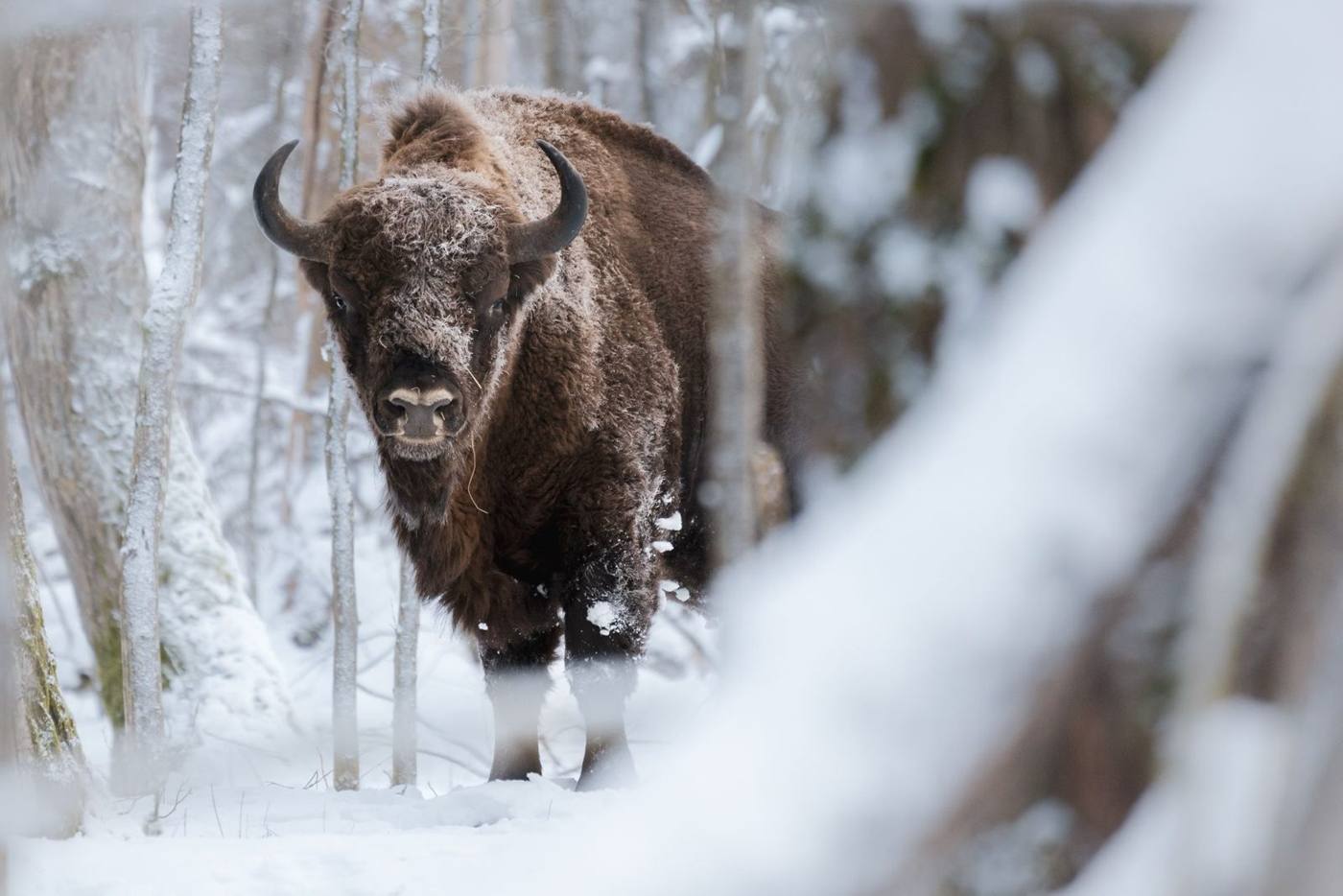 4 daysEasy
Białowieża and the bison
Europe's last primeval lowland forest, a UNESCO site, with European bison roaming wild, the strict reserve with a guide and the Biebrza marshes.
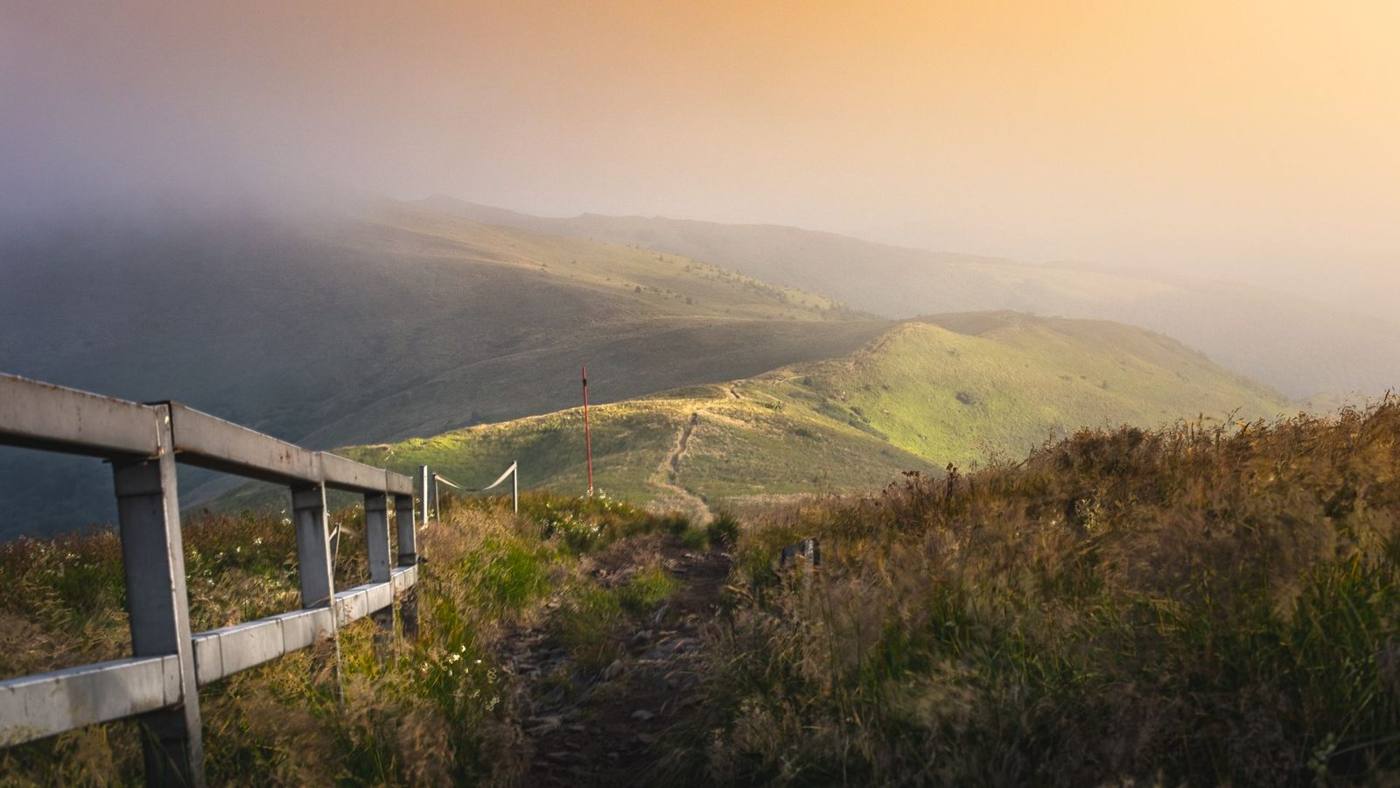 5 daysModerate
The Bieszczady Mountains
Poland's wildest corner: the high połoniny meadows, the UNESCO wooden churches, Lake Solina and the forest railway.
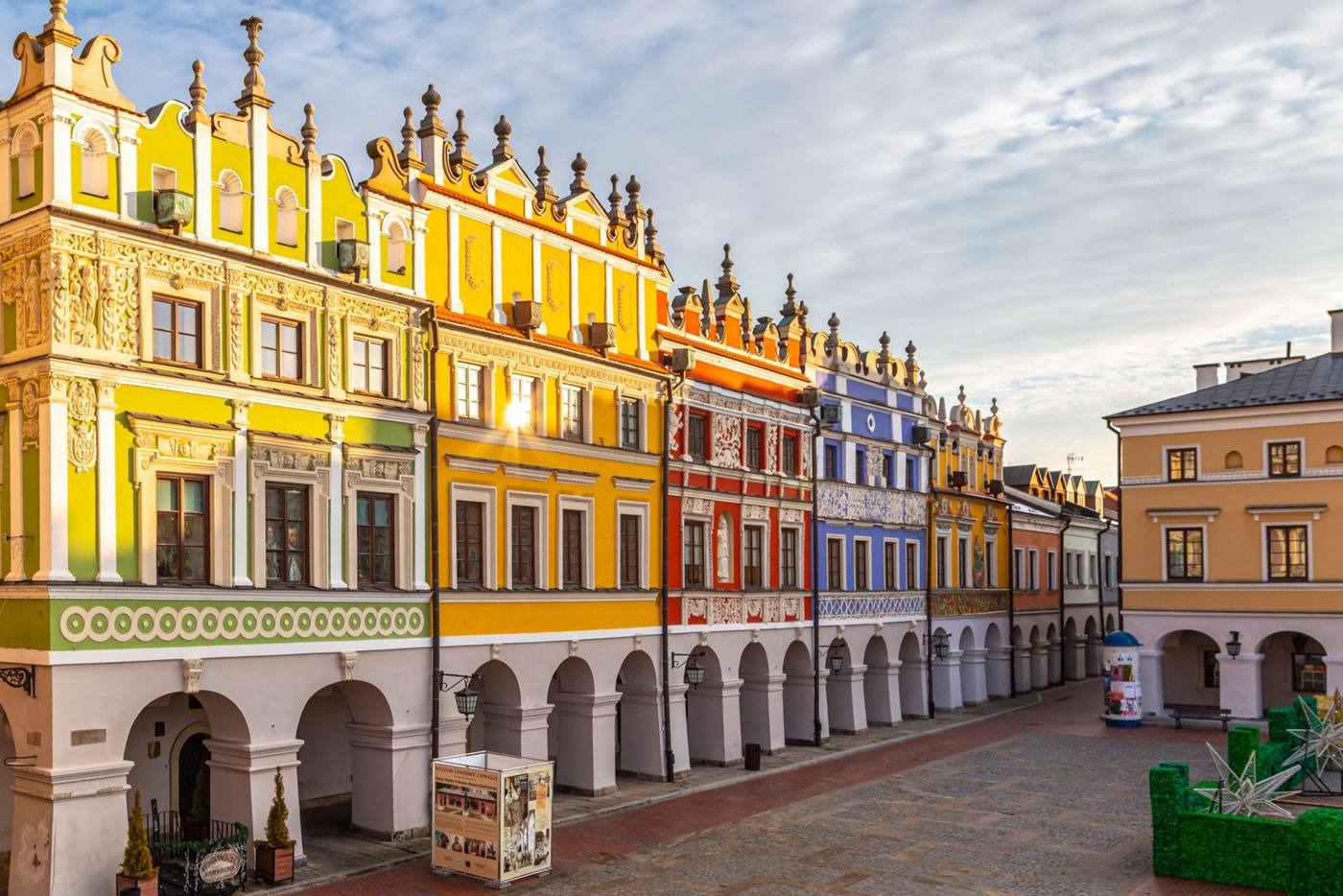 5 daysEasy
Lublin, Kazimierz Dolny and Zamość
Eastern Poland: the ideal Renaissance town of Zamość, Lublin and its Holy Trinity Chapel, the artists' village of Kazimierz Dolny on the Vistula and the Majdanek memorial.