Muscat, Nizwa and the desert
Muscat's Grand Mosque, Nizwa's fort and souk, the village of Misfat al Abriyeen, the Wahiba dunes and Wadi Shab and Wadi Bani Khalid.
- Muscat
- Nizwa
- Jebel Shams
- Misfat al Abriyeen
- Wahiba Sands
- Wadi Bani Khalid
- Sur
- Wadi Shab
Day by day
- Day 1
Muscat, the Grand Mosque and Muttrah
This eight-day trip is northern Oman in a single loop: Muscat, the forts of Nizwa, Bahla and Jabrin, the mountains of Jebel Shams, the Wahiba dunes, the turtles of Ras al Jinz and the green-water wadis. You travel by hire car; for the mountains and the dunes you need a four-wheel drive.
Before you go: Italian citizens need a passport valid for at least six months from arrival. For stays of up to 14 days you enter without a visa, showing a return ticket, an accommodation booking and travel health insurance; to stay longer you need an e-visa, applied for only on the official website evisa.rop.gov.om. Other nationalities should check their own rules.
Some areas on this trip are close to borders or places where the situation changes often: check your government's travel advice before booking and again before you leave.
In the morning go straight to the Sultan Qaboos Grand Mosque, which usually opens to non-Muslim visitors only in the morning and not on Fridays. Inside there is a huge hand-made Persian carpet and a gigantic crystal chandelier. Arms and legs covered for everyone, hair covered for women. Check prices and times.
In the afternoon go down to Muttrah: walk along the corniche, watch the boats in the harbour and lose yourself in the souk, among silver, frankincense, fabrics and lamps. From the top of the watchtower you can see the whole bay.
In the evening taste Omani halwa with a cardamom coffee.
Practical tip: arrive at the mosque when it opens, before the groups and the heat.
- Day 2
Nizwa, the fort and the souk
Today you leave the coast and climb inland, into the Hajar mountains. In under two hours on the motorway you reach Nizwa, the old capital of the interior, surrounded by palm groves.
If today is Friday, set off very early: the livestock market is held on Friday morning, usually from first light until mid-morning. Herders bring goats, sheep and cows and lead them round in a circle, while buyers shout their offers. It is a lively, noisy scene: watch from the edges and always ask before photographing people. If it is not Friday, you can arrange the trip so that one of your two days in Nizwa falls on a Friday.
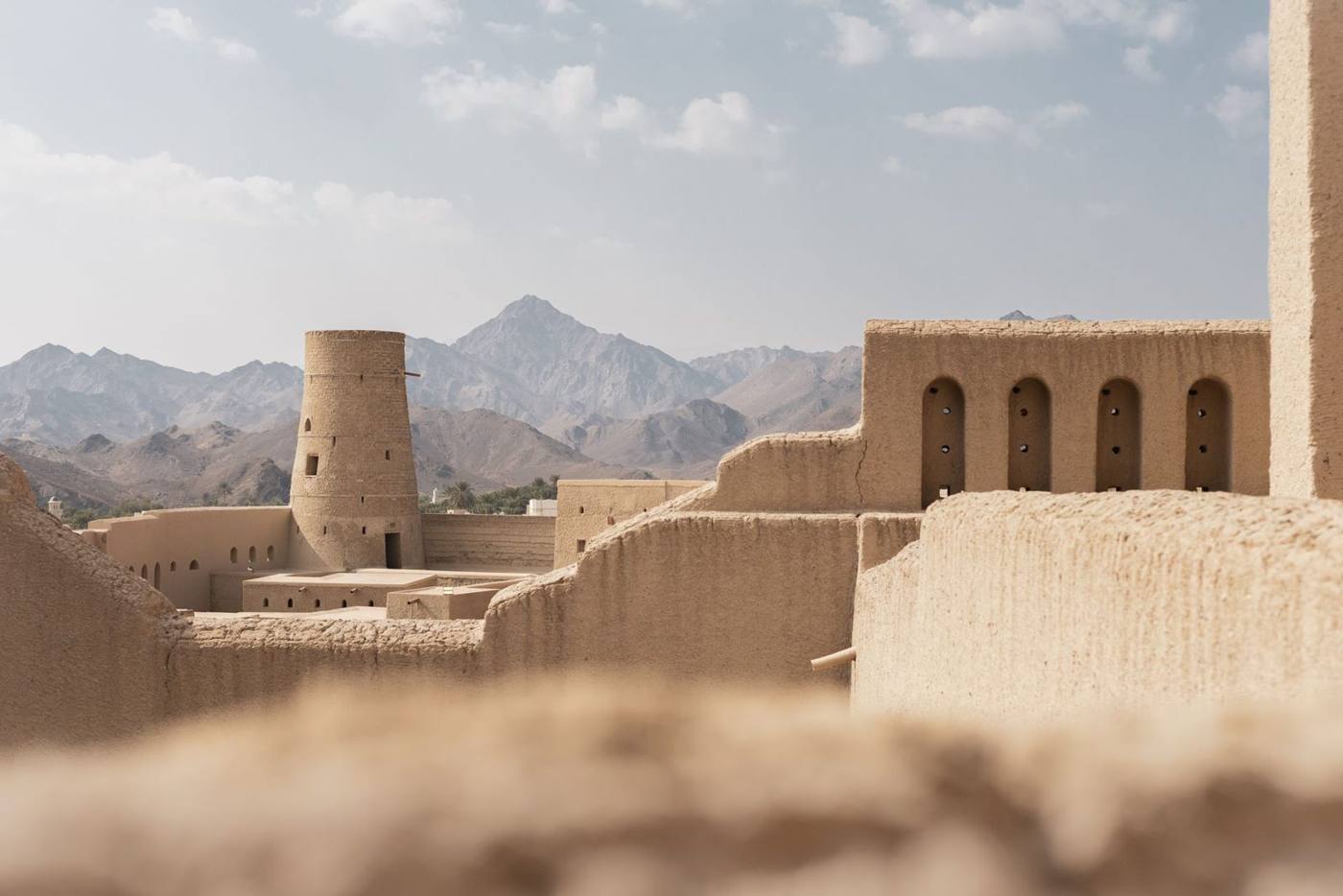
Then visit the seventeenth-century fort, with its great round tower. Climb the walls to see the palm grove and the mountains, and go into the rooms that tell of the life, defence and water of the town. Check prices and times.
Next to the fort is the souk, divided into sections: dates, spices, pottery, silver and the curved daggers, the khanjar, symbol of Oman. You can taste dates before you buy.
In the afternoon walk through the lanes of the old quarter and along the water channels that irrigate the palm groves.
Sleep in Nizwa for three nights.
Practical tip: in the souk bargain calmly and with a smile, never in a hurry.
- Day 3
Bahla fort and Jabrin castle
Today you stay around Nizwa and visit two of the finest fortresses in the country.
Bahla fort is half an hour away by road. It is a great mud-brick building, with towers and walls kilometres long that once surrounded the oasis. It was the first Omani site added to the UNESCO World Heritage list and has been carefully restored. Walk through the courtyards and climb the towers to look over the old town and the palm groves. Check prices and times.
Then continue for a few kilometres to Jabrin castle, built at the end of the seventeenth century as the residence of an imam. It is less a fortress and more a palace: look at the wooden ceilings painted with floral designs, the carved windows, the guest rooms and the narrow stairs leading up to the terraces. There is even a cool room where water once flowed.
In the afternoon return to Nizwa and rest, or visit the village of Tanuf, with its abandoned mud houses at the foot of the mountains.
If it is Friday, you can move the forts to tomorrow and go to the livestock market today.
Remember that outside the towns there are camels and goats on the road: avoid driving after sunset.
Practical tip: in the forts you climb steep stairs without handrails, so wear closed shoes with a good grip.
- Day 4
Jebel Shams and Misfat al Abriyeen
Today you climb the highest mountain in Oman, Jebel Shams, and visit a mountain village.
The road from Al Hamra climbs through many bends; the last stretch is unpaved and you need a four-wheel drive. At the top you reach the rim of Wadi Ghul, a deep canyon known as the Grand Canyon of Arabia. The wall drops vertically for hundreds of metres.
If your legs are good, take the Balcony Walk, trail W6, which follows a ledge along the canyon rim to the abandoned village of As Sab. It takes a few hours there and back: set off early, carry plenty of water and keep away from the edge. Up there it is cool even when it is hot on the plain, and in winter the nights are cold.
In the afternoon drive down to Misfat al Abriyeen, a village of stone and mud houses clinging to the rock. Walk through the lanes, along the falaj, the channel that carries water to the terraces of palms and banana trees. Oman's irrigation channels are a UNESCO World Heritage Site. It is a lived-in village: dress modestly, speak quietly and do not go into the houses.
On the way back stop in Al Hamra, with its old mud houses several storeys high.
Practical tip: coming down from Jebel Shams use low gears, so the brakes do not overheat.
- Day 5
Wadi Bani Khalid and the Wahiba dunes
Today you leave the mountains and head east, to the desert.
After about three hours on the road you reach Wadi Bani Khalid, a valley with water flowing all year round. From the car park you walk for a few minutes to a series of green pools among palms and smooth rocks. You can swim, but in a T-shirt and shorts, not swimwear: it is a place popular with local families. Further on, walking up the wadi for about twenty minutes, there are quieter pools and a small cave.
In the afternoon you reach the edge of the Wahiba Sands, also called the Sharqiya Sands, a sea of orange dunes. At the entrance to the desert the petrol stations let the air out of your tyres: this is essential for driving on sand. If you have no experience, leave the car and have a local driver take you to the camp.
At sunset climb a dune and watch the shadows grow longer. In the evening sleep in a desert camp, with dinner around the fire and a sky full of stars.
Do not leave the camp alone after dark and do not drive among the dunes at night.
In the wadis the water rises quickly after rain: if the sky is dark over the mountains or rain is forecast, do not go in.
Practical tip: bring a jacket, because in the desert the night is much cooler than the day.
- Day 6
Sur and the turtles of Ras al Jinz
In the morning you wake up in the desert: if you like, take a short camel ride or climb a dune for sunrise. Then pump your tyres back up and drive to the coast.
In about two hours you reach Sur, a town of sailors. Here dhows have been built for centuries, the wooden boats in which Omanis sailed as far as Africa and India. At the boatyard you can see hulls under construction, if the craftsmen allow it. Then cross the bridge over the lagoon to Ayjah, with its white houses and lighthouse.
In the afternoon carry on to Ras al Jinz, the easternmost point of the Arabian Peninsula. There is a protected reserve here where green turtles lay their eggs on the beach, mostly at night. Visits are only with the reserve's guides, in groups and at set times: book ahead. Check prices and times.
At night the guide leads you quietly across the sand. If you are lucky, you will see a turtle digging its nest or hatchlings running towards the sea. No flash, no torches, and always stay behind the guide.
Sleep near Ras al Jinz or Ras al Hadd.
Practical tip: the early morning visit, before dawn, is often less crowded than the evening one, and the light is lovely on the way back.
- Day 7
Wadi Shab and the coast to Muscat
Today you drive back up the coast towards Muscat, with the best stop of the whole trip.
In under an hour you reach Wadi Shab. From the car park a small boat takes you to the other bank, then you walk for about three quarters of an hour between rock walls, palms and water channels. The path crosses boulders and slippery sections: you need shoes that can get wet.
At the end of the path are the turquoise pools. Here you swim: you cross several pools to a narrow gap between the rocks, and beyond it lies a cave with a waterfall. Only swim if you are a confident swimmer, leave your bag somewhere dry and wear a T-shirt and shorts. Do not go in if it has rained or the sky is dark.
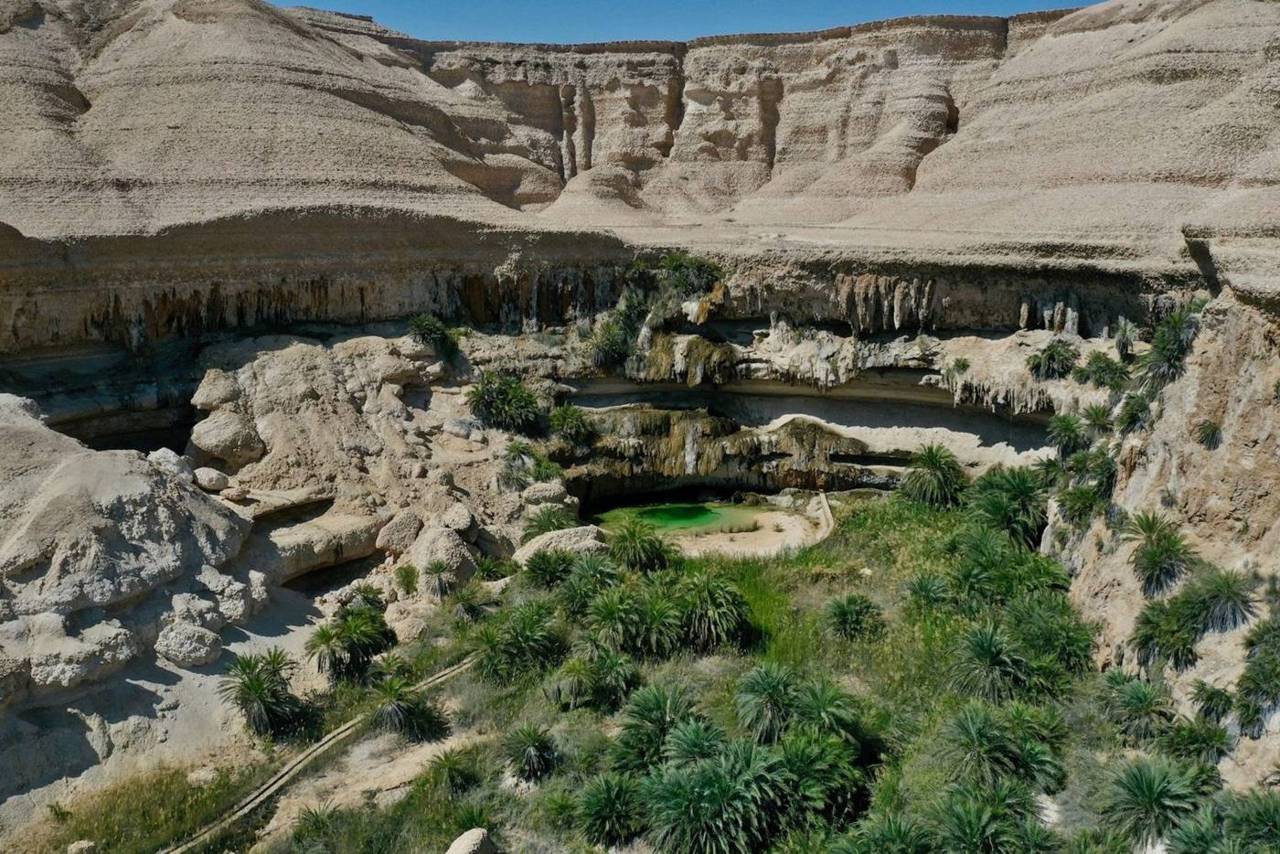
In the afternoon continue north on the coast road. Stop at the Bimmah sinkhole, a large hole in the ground full of green, salty water, which you reach down a staircase. Along the road you pass fishing villages and long beaches, with the sea on one side and dark mountains on the other. Then you reach Muscat for your last evening.
If you have time, walk around the old harbour of Muscat and look at the Portuguese forts on the rocks, lit up in the evening.
Practical tip: bring a waterproof pouch for your phone, because in Wadi Shab swimming is almost unavoidable.
- Day 8
Leaving Muscat
Today is your travel day home.
If your flight is in the afternoon, spend the morning at the National Museum of Oman, which tells the country's story from the earliest tombs to the present day, with weapons, jewellery, boats and manuscripts. Check prices and times. Or take a last walk through the Muttrah souk to buy frankincense, dates and cardamom coffee. The airport is about half an hour from the centre.
Trip summary: in eight days you have seen Oman at its most complete. In Muscat you visited the Grand Mosque and the Muttrah souk, in Nizwa you walked through the fort and the market, at Bahla and Jabrin you saw the great mud fortresses, on Jebel Shams you looked into the deepest canyon in Arabia, and at Misfat al Abriyeen you followed the water channels through the terraces. Then came the green pools of Wadi Bani Khalid, the night among the Wahiba dunes, the turtles of Ras al Jinz and the cave of Wadi Shab.
When to go: October to March is the best season, with warm days and cool nights, even cold in the mountains and the desert. From May to September the heat often goes above 40 degrees and the desert is almost impossible. For turtles, nesting is more frequent in summer, but you can also see them in the cooler months.
Practical tip: return the four-wheel drive with a full tank and clean of sand, because many rental companies charge for cleaning.
One of the Middle East's safest and most welcoming countries, perfect by rental car. Jebel Shams and the dunes need a 4x4. Modest dress in the wadis and mosques; the Grand Mosque opens to tourists only in the morning.
Before you go
- Documents and visa
- Passport valid for at least six months from arrival. Italian citizens can enter without a visa for stays of up to 14 days, showing a return or onward ticket, an accommodation booking and travel health insurance. For longer stays you need an e-visa, applied for only on the official Royal Oman Police website, evisa.rop.gov.om. Reaching Musandam overland from the Emirates means crossing a real border: you need your passport and, with a hire car, the rental company's written permission and insurance valid in Oman.
- Health and vaccines
- No compulsory vaccinations, except a yellow fever certificate if you arrive from a country at risk. Protect yourself from the sun and drink plenty of water. Some medicines common in Europe are banned: carry your prescription and check with the Omani Ministry of Health. You need insurance with medical costs and repatriation. Emergencies: 9999.
- Money and payments
- Omani rial. Cards work in cities and hotels; keep cash for villages, souks and desert trips.
- Power sockets
- Type G, 240 volts: British plugs fit, others need an adapter.
- Time zone
- UTC+4 all year.
- Safety
- Laws and customs: dress modestly in public, with shoulders and knees covered; swimwear is only for tourist beaches and pools. Alcohol is served only in licensed venues, never in public. Drug penalties are very severe, even for tiny amounts; e-cigarettes and vapes are banned. Do not photograph military or government buildings, or people without permission; drones need a licence. During Ramadan do not eat, drink or smoke in public in daylight. Wadis flood suddenly after rain and outside Muscat there are camels and goats on the roads: avoid driving at night. The situation in the Gulf can change quickly, with sudden airspace closures. Official advice: GOV.UK.
Information checked in November 2026 for Italian and EU citizens. Rules change: always check before you travel.
Variations
Shorter version: in five days do Muscat, Nizwa, Jebel Shams and a night in Wahiba, without the coast.
Longer version: add two days on Jebel Akhdar, with its rose villages and terraces.
Frequently asked questions
Can you swim in the wadis?
Yes, but in a T-shirt and shorts, not swimwear, because they are places popular with families. Never go in if it has rained or rain is forecast.
Do you really need a four-wheel drive?
Not for Muscat, Nizwa and the coast. For the last stretch of Jebel Shams and to get into the Wahiba dunes you do, or you leave the car and take a local driver.
When can you see turtles at Ras al Jinz?
All year, with more nesting in summer. Visits are only with the reserve's guides, at night or at dawn: book ahead.
Indicative itinerary written by World Atlas. Before booking, check timetables, seasonal openings, documents and safety.
 4 daysEasy
Musandam
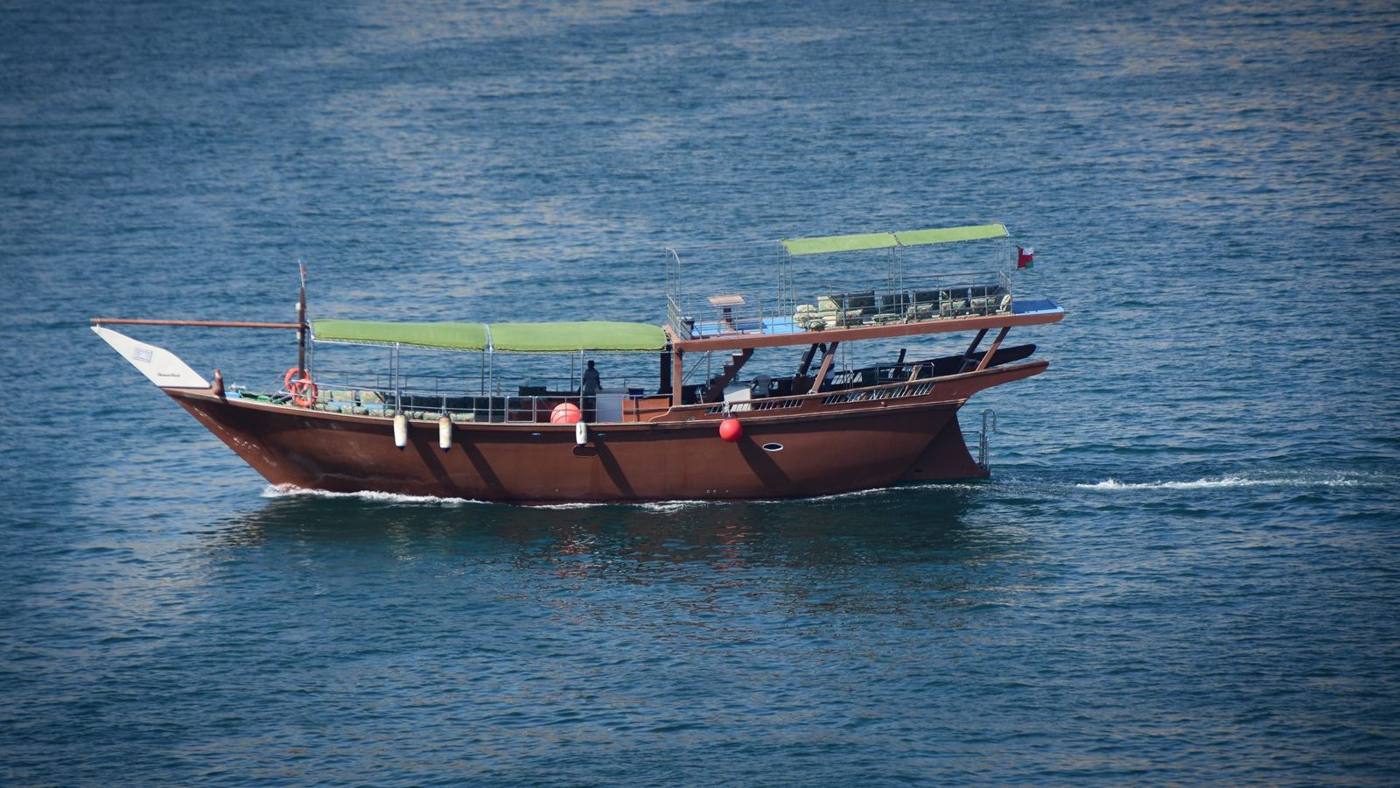
The fjords of Arabia: a dhow cruise among mountains plunging into the sea, dolphins, snorkelling and the Jebel Harim mountain road.
 5 daysEasy
Dhofar and Salalah
The land of frankincense: the UNESCO site of Al Baleed, the ancient port of Sumhuram, the frankincense trees of Wadi Dawkah and the beaches of Al Mughsail.