Namibia in lodges: the Namib, the Skeleton Coast and Etosha
The same wonders as the classic loop, but with comfortable lodges, a driver-guide and shorter stages.
- Windhoek
- Sossusvlei
- Swakopmund
- Spitzkoppe
- Damaraland
- Etosha
Day by day
- Day 1
Arrival in Windhoek
This thirteen-day trip takes you to the places of the classic Namibia loop, but at a comfortable pace: you sleep in lodges and travel with a driver-guide, without driving and without pitching a tent. You will see the dunes of Sossusvlei, Swakopmund and the lagoon of Walvis Bay, the southern stretch of the Skeleton Coast up to Cape Cross, the Spitzkoppe, Damaraland with its desert elephants and finally Etosha.
Before you go: since 1 April 2025 Italian citizens need a visa, also for tourism. You apply online before you leave on the official portal of the Namibian Ministry of Home Affairs, eservices.mhaiss.gov.na, or on arrival, paying a fee: check the amount. Your passport must be valid for at least six months from arrival, with at least three blank pages. The yellow fever certificate is required if you arrive from a country with risk of transmission. Other nationalities should check their own rules. The United States asks travellers to exercise increased caution, level 2, because of crime. The United Kingdom does not advise against any area, but reports bag snatching and muggings of tourists in Windhoek, even by day, and frequent accidents on gravel roads. Etosha is in a malaria area: ask your doctor about antimalarials.
At the international airport, about 45 kilometres from the city, your guide is waiting. In the afternoon take a short tour of central Windhoek: the Lutheran Christ Church, in stone with its pointed bell tower, and the Independence Memorial Museum, with its panoramic terrace over the city. Check prices and times.
In the evening go over the programme with your guide: the transfers are long but with many stops.
Practical tip: even in central Windhoek do not walk around with your camera on show and, after sunset, move only by car.
- Day 2
Towards the dunes of the Namib
Today you leave Windhoek and head south-west, towards the Namib Desert. The journey takes a good part of the day, but you are not driving: you can watch the landscape, ask your guide questions and stop whenever you like.
The first part is tarmac, then the gravel begins. The mountains become bare, the yellow plains widen and the sky becomes enormous. At one point the road drops off the plateau with tight bends and a very long view over the Namib plain. Ask for a photo stop.
Your guide knows the animals and plants: they point out oryx, ostriches, springbok and the huge nests of sociable weavers, as big as a haystack, hanging from trees and telegraph poles. Each nest is home to many pairs of birds.
Even with an experienced guide, speed on gravel stays low and you only travel by day. The distances are great and dust gets everywhere: keep your camera in a closed bag.
In the afternoon you reach the lodge on the edge of the dunes, near the entrance to the Namib-Naukluft park on the Sossusvlei side. Rest, have a swim in the pool if there is one and watch the sunset over the mountains, which turn red and purple.
In the evening the Namib sky fills with stars: it is one of the darkest on the planet.
Practical tip: drink often even if you are not thirsty; the dry desert air dehydrates you quickly, even sitting in the car.
- Day 3
Sossusvlei and Deadvlei
Today is the finest day of the trip. Leave before dawn with your guide and enter the park when the gate opens: check prices and times, which change with the seasons.
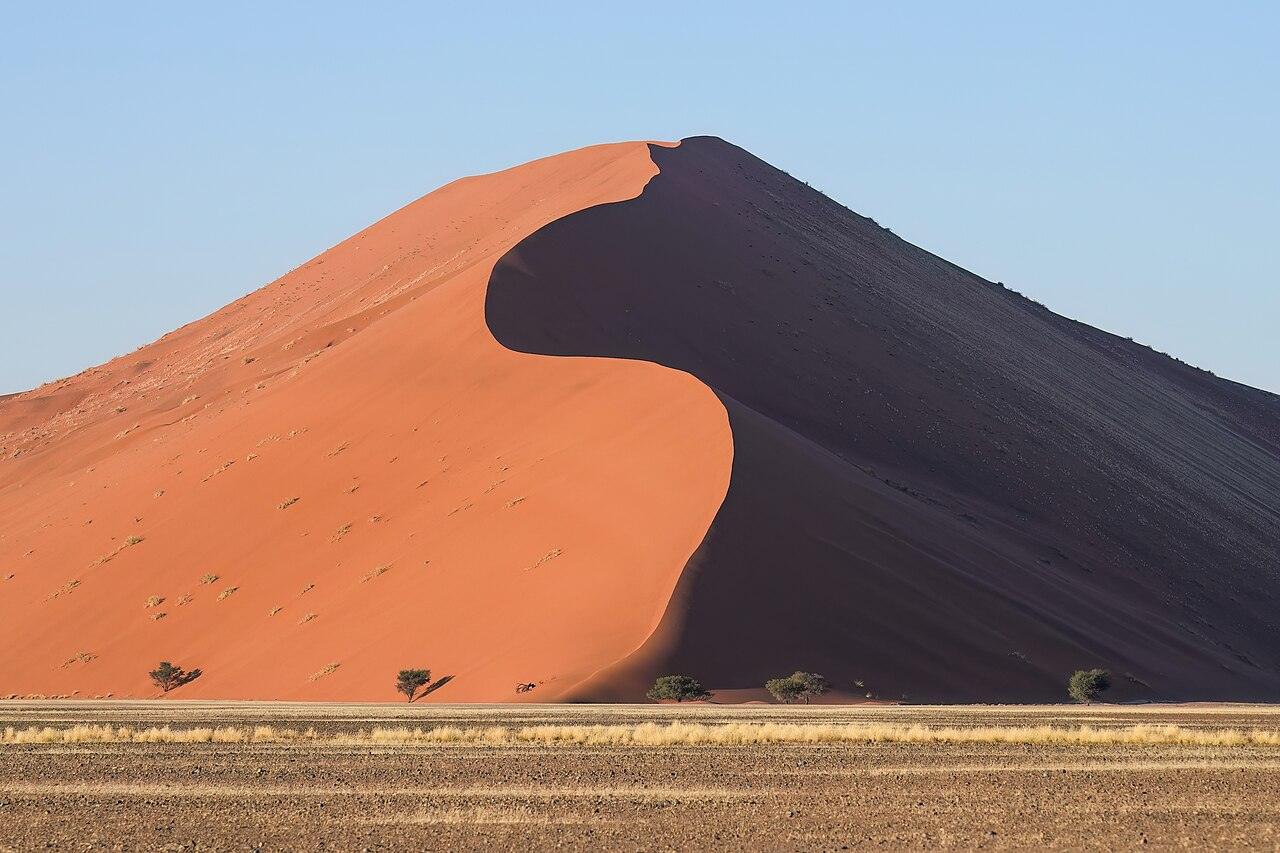
The tarmac road follows the valley of the Tsauchab river, almost always dry, between red and orange dunes considered among the highest in the world. At Dune 45, named after its distance from Sesriem, climb the crest as the sun rises. The light draws sharp shadows and the sand changes colour every minute. If you do not feel like climbing all the way, even halfway up gives a splendid view.
Then your guide drives the 4x4 over the last kilometres of deep sand, to Sossusvlei, the clay pan where the river ends, which fills with water only in rare rainy years.
From here walk to Deadvlei, about twenty minutes over the sand. It is a white clay pan surrounded by towering dunes, with the black skeletons of old acacias, dead for centuries and preserved by the dry air. Your guide explains how the dunes blocked the course of the river and left the trees to die.
Return to the lodge before the midday heat and rest in the shade. In the late afternoon you can take a walk near the lodge or a sunset outing.
Practical tip: even with a guide, always carry your own backpack with two litres of water, a hat and sunscreen; on the sand at midday the sun is very strong.
- Day 4
Sesriem Canyon and dinner under the stars
Today you stay in the dunes area and enjoy a slower day, one of the advantages of staying three nights.
Early in the morning visit Sesriem Canyon, a narrow gorge carved by the Tsauchab river into the rock. Go down to the bottom and walk between walls of conglomerate, pebbles and sand stuck together by time. The name comes from the six leather straps the first settlers had to tie together to lower their buckets to the water. Even in the hot hours the air is cooler down here.
If you want a special memory, ask your guide about a hot air balloon flight at dawn over the desert or a scenic flight over the dunes to the coast: they are booked well in advance and depend on the wind. Check prices and times.
In the afternoon rest at the lodge. Then go out with your guide for a walk in the nearby desert: you learn to recognise animal tracks in the sand, the plants that survive on the night's moisture and the small inhabitants of the dunes.
In the evening many lodges in the area organise dinner outdoors, under the stars, with a fire burning and tables on the sand. After dinner switch off your torch and look at the sky: the Milky Way crosses the whole sky and your guide helps you find the Southern Cross.
Practical tip: bring a warm jacket and a hat for the evening; in winter the night-time temperature in the desert drops close to zero.
- Day 5
The Kuiseb Pass to Swakopmund
Today you leave the dunes and head north-west to the Atlantic coast. It is a long transfer, but full of stops.
In the small settlement of Solitaire stop for a coffee and a slice of cake, a tradition for anyone passing through. Shortly afterwards the road crosses the Tropic of Capricorn, marked by a sign where everyone stops for a photo.
Then you reach the Gaub and Kuiseb passes, where the road drops and climbs through gorges of dark, folded rock. The Kuiseb river, almost always dry, marks the border between the dunes to the south and the gravel plains to the north. Your guide can tell you about the two German geologists who, during the Second World War, lived hidden in these canyons for more than two years to avoid internment.
In the afternoon the landscape becomes flat and grey and the temperature drops sharply: the cold Benguela current cools the air and creates the coastal fog. In Walvis Bay you pass the lagoon, where thousands of pink flamingos gather.
In the evening you reach Swakopmund, the town on the ocean with colourful German houses, turrets, the lighthouse and the long jetty. Settle into your hotel and walk along the seafront at sunset.
In the evening try Atlantic fish or the oysters of the coast, famous throughout the country.
Practical tip: on the coast it is cool even in summer and the fog is damp; keep a sweatshirt and a windproof jacket to hand.
- Day 6
Dolphins and seals in Walvis Bay
This morning is devoted to the sea. Go to the harbour in Walvis Bay and board a boat for a trip around the bay and the lagoon. Check prices and times.
As soon as you leave the harbour, Cape fur seals often come up to the boat and sometimes climb on board, used to people. Then the boat heads for the sand spit that closes the bay, home to a large seal colony: thousands of animals on the beach, with the noise and the smell reaching you on the water.
Dolphins also swim in the bay. The most common is the bottlenose, but the Heaviside's dolphin lives here too, small and dark, found only along this coast of southern Africa. With some luck, between July and November, you also see whales. Pelicans and cormorants fly over the boat.
Do not touch or feed the animals, even if they come very close: follow the skipper's instructions.
In the afternoon you return to Swakopmund and have time to yourself. Walk through the streets of the centre, visit the town museum, which tells the natural and colonial history of the country, or the small aquarium by the sea. Check prices and times. If you want to be active, you can take an outing on the dunes near the town.
In the evening enjoy a quiet dinner: tomorrow you head north again.
Practical tip: on the boat bring a windproof jacket and protect your phone and camera from salt water spray.
- Day 7
Cape Cross, the Skeleton Coast and the Spitzkoppe
Today you head north along the coast on the road that runs between the ocean and the desert. This is the southern stretch of the Skeleton Coast, the coast of shipwrecks: a flat, grey landscape, with morning fog, small fishing villages and, here and there, rusting wrecks on the beach.
The first stop is Cape Cross, home to one of the largest Cape fur seal colonies. Thousands of animals rest on the rocks and swim in the waves, with a constant noise and a very strong smell. A boardwalk lets you see them up close without disturbing them. Here there is also a copy of the stone cross left by the Portuguese navigator Diogo Cão in the fifteenth century. Check prices and times.
The Skeleton Coast National Park proper begins further north, at the Ugab river, with gates and fixed hours: this trip stops before it, but the landscape is already the same.
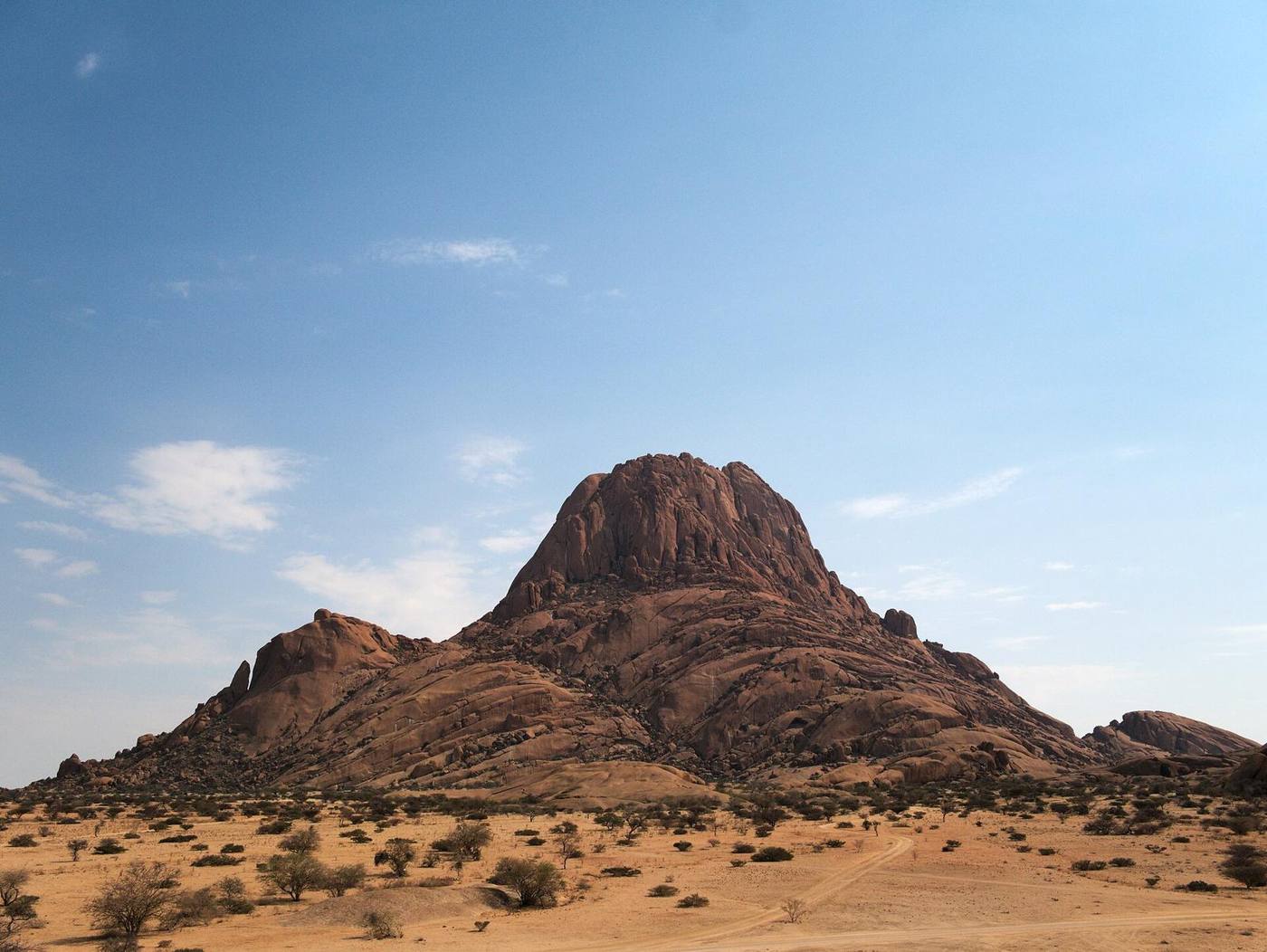
In the afternoon your guide turns inland and crosses an ever hotter plain to the Spitzkoppe, a group of granite mountains rising suddenly out of nowhere. The area is run by the local community: you pay the entry fee and a local guide can show you the rock arches and the ancient rock paintings of the San peoples. Never touch the paintings.
At sunset the granite turns orange and then fiery red. Sleep in a lodge in the area.
Practical tip: on the coast the morning is cold and foggy, inland the afternoon is hot; dress in layers and take them off one at a time.
- Day 8
Damaraland and the engravings of Twyfelfontein
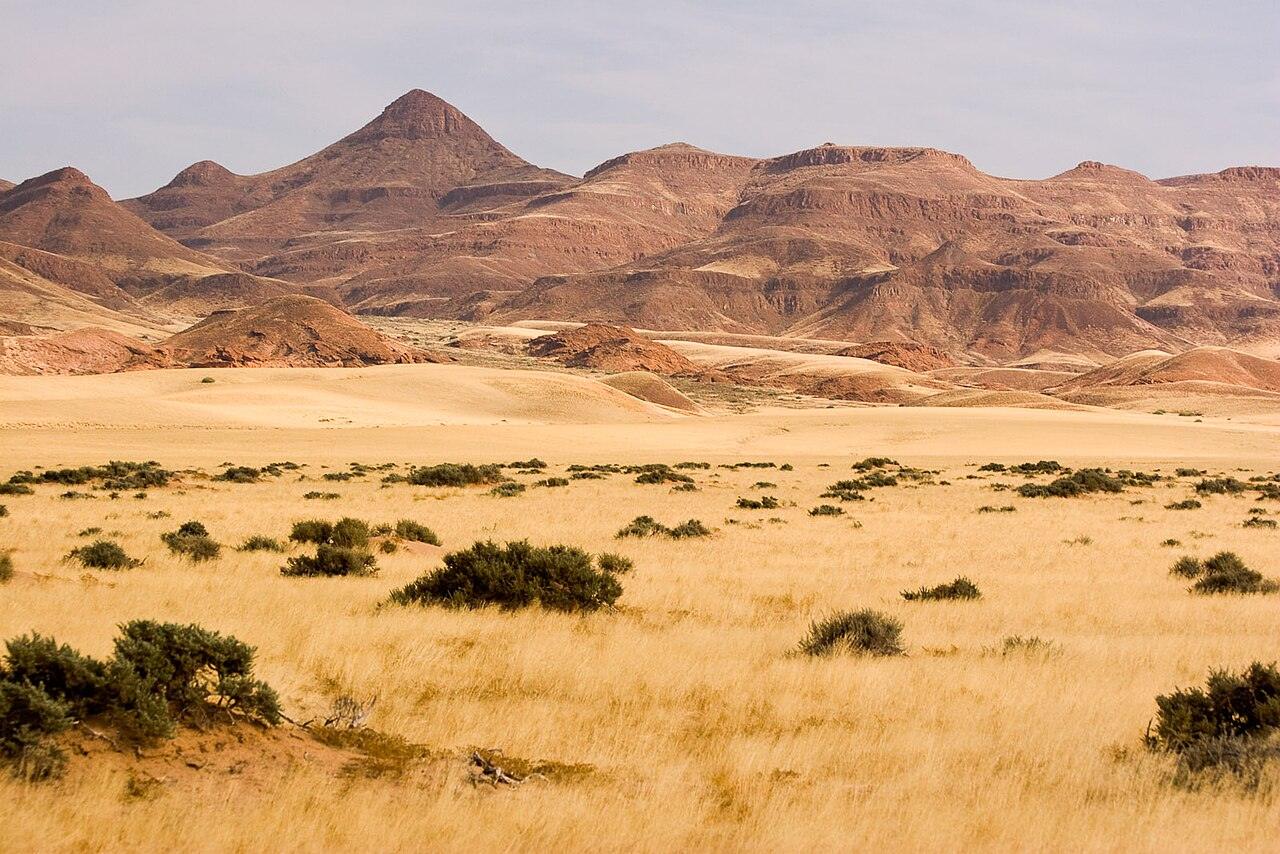
Today you enter Damaraland, one of the most spectacular regions of Namibia: flat-topped red mountains, stony valleys, dry rivers lined with green trees and wide empty spaces.
The main stop is Twyfelfontein, a UNESCO World Heritage Site. On a hill of red sandstone there are thousands of rock engravings, made by hunter-gatherers over thousands of years. You see giraffes, rhinos, elephants, oryx, animal tracks and even a lion with a long tail ending in a paw print. The visit is only possible with a site guide, along marked paths. Check prices and times.
Nearby there are two more curious places. The "Organ Pipes" are a wall of dark rock columns, formed as lava cooled. The "Burnt Mountain" is a hill of black and purple rocks which at sunset really does look burnt.
Walk slowly: the rocks are very hot in the middle of the day and the light is intense. Do not touch the engravings and do not climb on the engraved rocks.
In the afternoon you reach your lodge, often built among the rocks or along a dry river. In the evening listen to the silence and watch the starry sky.
Practical tip: at the engravings wear closed shoes with a good sole; the path is made of stones and rock slabs, sometimes slippery.
- Day 9
Desert elephants by jeep
Today you go out with an experienced guide in an open 4x4, along the dry riverbeds of Damaraland, to look for the desert elephants.
These elephants are the same species as those of the savannah, but they have adapted to a very harsh environment. They walk for kilometres between one water source and the next, know every hidden pool and eat the plants that grow along the dry rivers. The herds are small and move a lot: to find them, the guide reads tracks, dung and broken branches.
When you find them, the guide stops at a distance and switches off the engine. Stay seated, speak softly and do not stand up suddenly. Desert elephants are used to vehicles, but they remain wild animals, especially mothers with calves.
Along the way you also see giraffes, kudu, ostriches and sometimes oryx or springbok in the valleys. Your guide shows you desert plants such as the welwitschia, which lives for hundreds of years with only two leaves that keep growing throughout its life.
In the afternoon you return to the lodge and rest. Many lodges in the area work with local communities, who manage the land and protect the wildlife: ask your guide how this system works, because it is one of the reasons why the elephants are still here.
Practical tip: in an open jeep bring a scarf or a mask for the dust and sunglasses, and keep your camera in a closed bag.
- Day 10
Towards Etosha
Today you leave Damaraland and travel with your guide north-east, through Outjo, a small town where you stop for lunch. Then you enter Etosha National Park through the Andersson gate, in the south. At the gate the vehicle is registered and the fee paid: check prices and times.
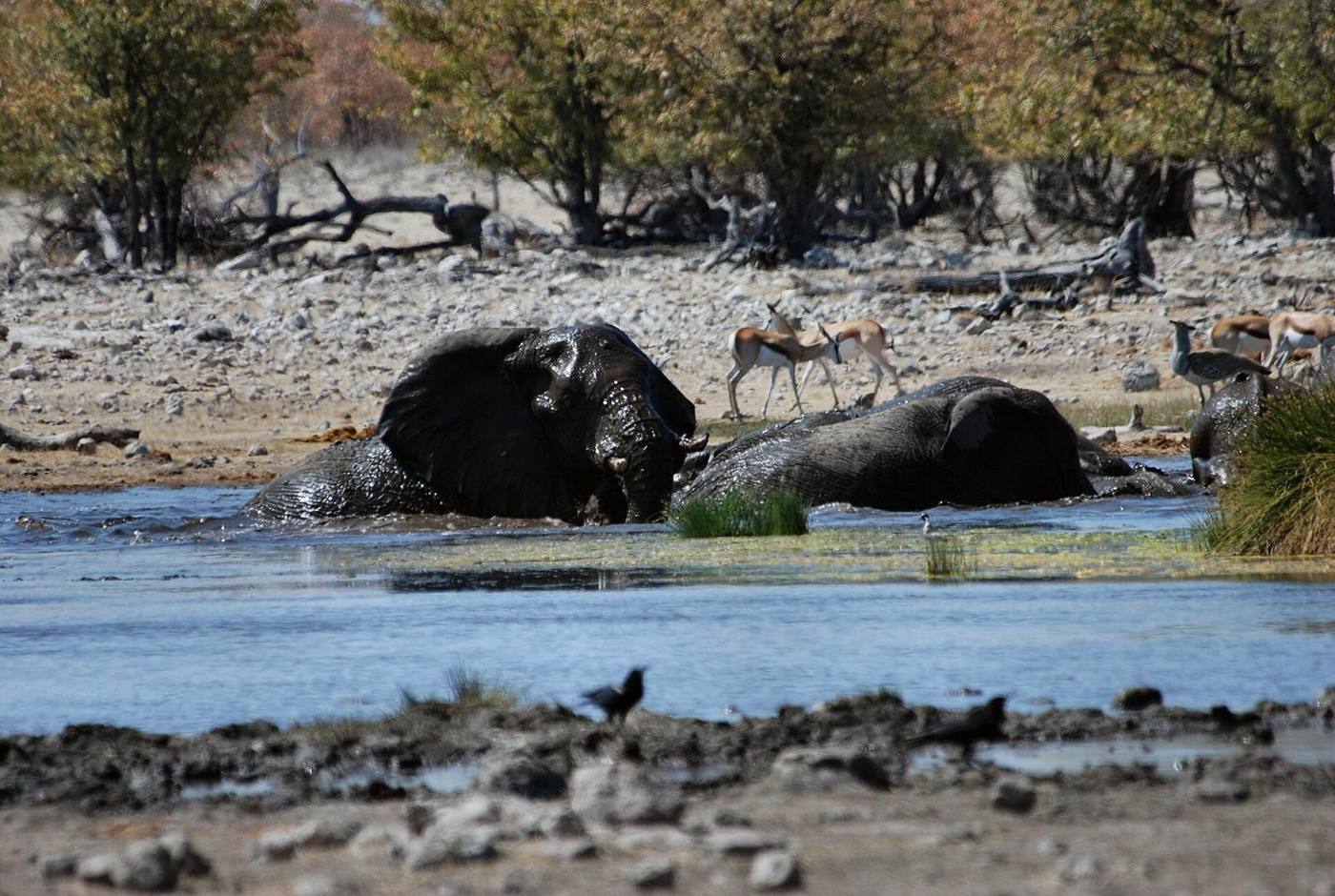
Etosha is built around an enormous white salt pan, the Pan, so large it can be seen from space. In the dry season the animals gather around the waterholes along its edges. Already on the road to Okaukuejo, the most famous camp in the park, you see zebra, springbok, wildebeest and giraffes.
The gates open at sunrise and close at sunset, and in the park you always stay in the vehicle, except in the fenced areas of the camps. Your guide knows these rules and organises the days to make the most of the best hours.
In the evening you reach the lodge, inside or just outside the park. The greatest advantage is the waterhole floodlit at night, a few metres from the terrace. After dinner sit and wait in silence: elephants, giraffes and jackals arrive and, with some luck, the black rhino, drinking calmly in the yellow light. You can watch them for hours, sitting comfortably.
Practical tip: at the floodlit waterhole speak softly and do not use the flash; the animals get scared and the other guests will thank you too.
- Day 11
A day of safari in Etosha
Today is a full day of safari with your guide. Set off when the gate opens, when the light is soft and the animals are most active.
Your guide chooses the waterholes according to the season and the sightings of the previous days. The method is simple: reach a waterhole, switch off the engine and wait. Sometimes nothing happens for half an hour; then, suddenly, a herd of zebra comes down to drink, followed by wildebeest, while a lioness watches from the grass.
The elephants of Etosha often look pale: they cover themselves in the white dust of the Pan to protect themselves from the sun. Along the edge of the Pan there are viewpoints from which you see the white expanse to the horizon, with the heat making the air shimmer.
With a 4x4 with a pop-up roof you see better and take photos more easily. Even so, stay inside the vehicle and do not lean out.
In the hot hours return to the lodge for lunch and a rest. In the afternoon set off again for a second drive until sunset.
If your lodge is in a private reserve next to the park, ask for a guided night drive: in the park private vehicles cannot move after closing time, but with an organised outing you can see the animals of the night, such as hyenas, jackals and sometimes leopards.
Practical tip: carry a pair of binoculars for each person; they help you identify distant animals without asking your guide to get too close.
- Day 12
Halali, Namutoni and the east of the park
Today you cross the park from west to east with your guide, a long day of safari between the waterholes, with a stop at the central camp of Halali.
The savannah changes along the way. In the west it is more open and dry, with large herds of springbok and oryx. Towards the east it becomes greener, with more trees: you see giraffes eating acacia leaves, kudu with spiral horns and, if you are lucky, the Damara dik-dik, a tiny antelope the size of a dog.
Look out for the black rhino by day too, among the bushes: it is rare, shy and hard to see, but your guide knows where to look.
In the afternoon you reach Namutoni, with its old white fort from the German colonial period, now part of the camp. Climb onto the walls and watch the sunset over the savannah.
In the evening sleep in a lodge near the eastern gate. It is the last night of the trip: take time to look back on everything you have seen, from the red dunes to the engravings of Damaraland.
It is also time to say goodbye to your guide. In Namibia tipping the driver-guide is a common custom: give it in cash, in an envelope, at the end of the trip, according to the service you received.
Practical tip: prepare the tip for your guide and the lodge staff this evening, in Namibian dollars or rand, because tomorrow you leave early.
- Day 13
Departure
Today is the last day. You leave Etosha through the Von Lindequist gate and your guide drives you south on tarmac, through Tsumeb, Otjiwarongo and Okahandja, to Windhoek and the airport. It is many hours on the road: you leave early and allow plenty of time for the flight.
Along the way the savannah grows drier and the farm landscape of the plateau returns. In Okahandja there is a large wood carving market, your last chance for a souvenir.
In thirteen days you have seen the same wonders as the classic camping loop, but in more comfort: the red dunes at dawn and the dead trees of Deadvlei, dinner under the Namib stars, the flamingos of Walvis Bay, the dolphins and seals of the bay, the shipwreck coast up to Cape Cross, the granite of the Spitzkoppe, the engravings of Twyfelfontein, the desert elephants and the waterholes of Etosha, with rhinos at night a few metres from the terrace.
It is a trip that costs more than the camping version, because lodges inside and near the parks are expensive, but it also suits those who do not want to drive on gravel or sleep in a tent.
When to go: from May to October, in the dry southern winter. The sky is clear, animals gather at the waterholes and the roads are in better condition. Desert nights are cold, especially from June to August. Book the lodges many months in advance: in high season the rooms inside and near the parks sell out quickly.
Practical tip: always keep your passport and entry permit in your hand luggage; you will need them at the exit check.
For anyone who wants Namibia without tents or driving. It costs almost double the camping version, as lodges in the parks are expensive. An Etosha lodge with a floodlit waterhole is worth every euro: rhinos and elephants a few metres away, from the bar.
Before you go
- Documents and visa
- Since 1 April 2025 Italian citizens need a visa, also for tourism: apply online before you leave on the official portal of the Namibian Ministry of Home Affairs (eservices.mhaiss.gov.na) or on arrival, paying a fee: check the amount. Your passport must be valid for at least six months from arrival, with at least three blank pages. A yellow fever vaccination certificate is required if you arrive from a country with a risk of transmission.
- Health and vaccines
- There is malaria in the north of the country: ask your doctor about antimalarials if you are going to Etosha, Kavango or the Zambezi region. The climate is hot and dry: always carry plenty of water. Medical facilities in Windhoek are good, but outside the cities they are far apart and limited: you need insurance covering medical costs and evacuation. Emergencies: 10111 or 112.
- Money and payments
- Namibian dollar, pegged one to one to the South African rand, which is accepted everywhere. Cards work in towns, lodges and many fuel stations; carry cash in remote areas.
- Power sockets
- Type D and M, 220 volts: you need an adapter for South African plugs.
- Time zone
- UTC+2 all year.
- Safety
- The United States asks travellers to exercise increased caution in Namibia, level 2, because of crime. The UK government does not advise against any area, but reports bag snatching and muggings targeting tourists in Windhoek, even by day, and thefts from cars and at fuel stations. Accidents on gravel roads are common: drive slowly on gravel, do not exceed 80 km/h in the rainy season, carry two spare tyres and do not drive outside towns at night. Official advice: GOV.UK.
Information checked in November 2026 for Italian and EU citizens. Rules change: always check before you travel.
Variations
In ten days: Sossusvlei, Swakopmund with the boat trip and Etosha, without the Spitzkoppe and Damaraland.
In sixteen days: add two nights in a private reserve next to Etosha and a scenic flight over the Skeleton Coast.
Frequently asked questions
Why choose a trip with a driver-guide?
You do not drive on gravel, you do not worry about distances and you always have someone who knows the animals, the roads and the park rules. For those with no experience of driving in Africa it is also the safest choice.
How much does a lodge trip in Namibia cost?
Much more than the camping version, because lodges inside and near the parks are expensive. Check prices and availability well in advance, especially for July to October.
Do I need antimalarials?
Etosha and the north of the country are malaria areas. Ask your doctor before you leave; the desert and the coast are considered very low risk.
Indicative itinerary written by World Atlas. Before booking, check timetables, seasonal openings, documents and safety.
 7 daysModerate
Sossusvlei and the Atlantic coast
The world's tallest red dunes, Deadvlei, Sesriem Canyon and the German-style town of Swakopmund on the ocean.
 15 daysModerate
Classic Namibia: desert, Damaraland and Etosha
A great 4x4 journey: dunes, coastline, desert elephants, the Himba people and the waterholes of Etosha.
 13 daysModerate
Namibia express: dunes, the Skeleton Coast and the Himba
The loop in under two weeks: Sossusvlei, Swakopmund, the Spitzkoppe, the Himba villages of Kaokoland and Etosha.