The Middle Atlas: Ifrane, Azrou and the lakes
Morocco's forests: Ifrane, an alpine-style town with steep roofs, the cedar forests of Ifrane National Park and their Barbary macaques, the lakes of Dayet Aoua and Aguelmam Azigza, the springs of the Oum Er-Rbia and walks across the shepherds' pastures.
- Fez
- Ifrane
- Dayet Aoua
- Azrou
- Aguelmam Azigza
- Oum Er-Rbia
Day by day
- Day 1
From Fès to Ifrane and Dayet Aoua lake
The Middle Atlas is the Morocco few expect: mountains covered in cedar and oak forests, lakes, meadows, Berber shepherds with their flocks and, in winter, snow. It lies south of Fès and Meknès, an hour's drive from the medinas, and is a cool escape for Moroccans in summer. In four days you discover Ifrane, the Azrou cedar forest with its monkeys, the high-altitude lakes and the springs of the Oum Er-Rbia river.
In the morning leave Fès in a hire car or with a car and driver, the most convenient way to do this route, and climb south. After about an hour you reach Ifrane, at more than 1,600 metres, a town very different from the rest of Morocco: it was built in the 1930s by the French as a mountain resort, with red-roofed chalets, neat gardens, tree-lined avenues and ponds. This is why it is called the little Switzerland of Morocco. The town also has a prestigious university where teaching is in English.
Stop by the stone lion statue, the town's symbol, recalling the Atlas lions that became extinct in the wild in the twentieth century. Then stroll in the Prairie park.
In the afternoon go to Dayet Aoua lake, about twenty minutes north, a natural lake surrounded by woods and meadows, with water birds and, in spring, many flowers. The water level varies a great deal with the rains: in some dry years the lake almost disappears.
In the evening sleep in Ifrane or in a country house in the area. Practical tip: in winter Ifrane can see snow and severe cold; check the roads and bring warm clothes.
- Day 2
The cedar forest and Barbary macaques near Azrou
In the morning drive south to Azrou, about half an hour away, a Berber town built at the foot of a large volcanic rock that gives it its name: azrou means rock in the Berber language. It is the centre of the region's cedar wood and carpet trade, and its weekly market is one of the liveliest in the Middle Atlas.
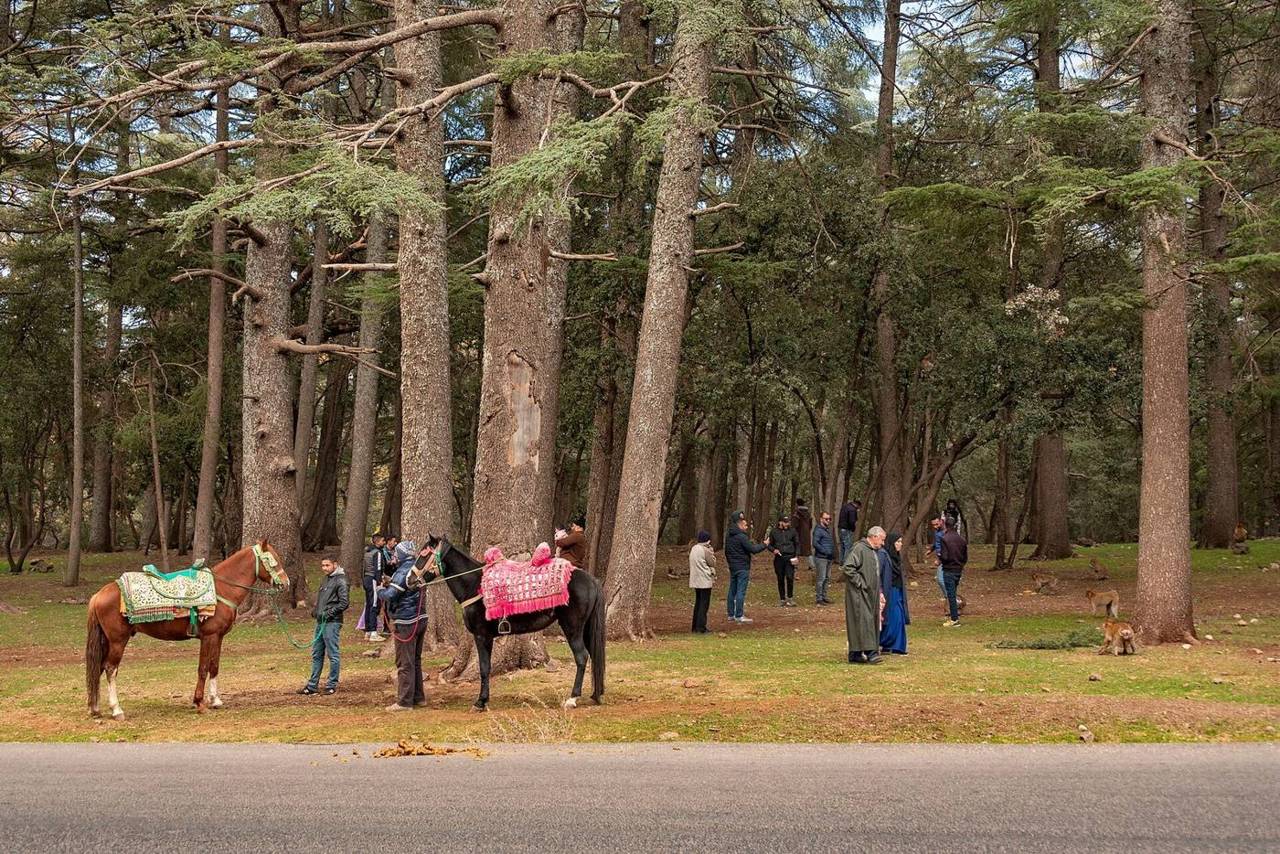
Then enter the great Atlas cedar forest, which covers the mountains around Azrou and is part of Ifrane National Park. Atlas cedars are majestic trees, with grey trunks and horizontal branches, that can live for several centuries. Some are more than thirty metres tall. Walk in the silent forest, with the scent of resin and a carpet of needles underfoot.
The forest is home to Barbary macaques, the Atlas monkeys, the only wild monkeys in North Africa and now an endangered species. At the busiest spots, such as the area of the old Gouraud cedar, a huge tree now dead but still standing, the monkeys come close to people. Do not feed them: tourists' food makes them ill and dependent on humans. Watch them from a few metres away.
If you have time, take a longer walk away from the roads, perhaps with a local guide, to see the forest without crowds and meet the nomadic shepherds who bring their flocks here in summer.
In the evening sleep in Azrou or return to Ifrane. Taste lamb tajine with prunes and bread baked in a clay oven. Practical tip: the cedars are threatened by illegal logging and drought; do not buy cedar wood objects sold by the roadside without guarantees.
- Day 3
Aguelmam Azigza lake and the springs of the Oum Er-Rbia
Today is a day of lakes and springs in the heart of the Middle Atlas. In the morning drive south-west through forest and plateaus towards Khénifra. The road passes meadows, pastures and Berber villages of earth and stone houses, where women gather firewood and children lead donkeys.
After about an hour and a half you reach Aguelmam Azigza, a lake of volcanic origin surrounded by cedar and oak forest, in Khénifra National Park. The water is a deep blue-green, and an easy path of a few kilometres runs around the lake among trees and meadows. It is a peaceful place, perfect for a picnic, visited mainly by Moroccan families at weekends.
In the afternoon continue to the springs of the Oum Er-Rbia, Morocco's second-longest river, about forty kilometres from Khénifra. Here dozens of springs flow out of the mountain rock, some fresh and some salty, forming small waterfalls and clear pools that join to form the river. A path with little bridges and steps follows the water among the rocks. Along the way there are small kiosks where you can drink mint tea beside the water.
In the evening sleep in Khénifra or head back towards Azrou. Practical tip: Middle Atlas roads are in good condition but narrow and winding; drive calmly and only by day, as there are often animals on the road.
- Day 4
Back to Fès
On the last morning, if the day is right, visit the weekly market in Azrou or another town in the area, where mountain farmers and shepherds sell sheep, vegetables, spices, tools and carpets. It is a spectacle of colours and voices, far from the tourist markets. If you are interested in Middle Atlas Berber carpets, often with red or white backgrounds and geometric designs, you can see and buy them here directly from the women's cooperatives that weave them.
Then take the road north again, through the forest and Ifrane, to Fès, about an hour and a half from Azrou. If you have time, stop on the way at Imouzzer Kandar, a mountain village with apple and cherry orchards and a viewpoint over the Saïss plain.
Once in Fès in the early afternoon, you can spend the rest of the day in the medina, the largest urban closed to cars area in the world and a UNESCO site, with its tanneries, medersas and souks. Alternatively continue to Meknès and Volubilis, or to Chefchaouen, the blue town of the Rif.
Practical tip: the United States has Morocco at level 2, increased caution, mainly because of the risk of terrorism; the Middle Atlas is a quiet area. The best periods are April to June, with green meadows and flowers, and September to October. In summer the mountains are cooler than the cities; in winter there is snow and frost, and some roads may be closed.
An easy add-on to Fez, by car. In winter it snows and Ifrane becomes a ski spot; in summer it is pleasantly cool. The macaques are a protected species and must not be fed. EU citizens enter without a visa for up to 90 days with a passport. The border with Algeria is closed: keep away from the border strip.
Before you go
- Documents and visa
- EU visitors need a passport valid for the whole stay; identity cards are not accepted. No visa is needed for tourist stays of up to 90 days.
- Health and vaccines
- No vaccines required. Drink bottled water and take out travel health insurance: public healthcare is limited and private clinics charge. Emergencies: 19 police, 15 ambulance.
- Money and payments
- Moroccan dirham, which cannot be exported beyond a small sum: change a little at a time and keep the receipts. Cash is needed everywhere in medinas and villages.
- Power sockets
- Types C and E, 220 volts.
- Time zone
- UTC+1 for most of the year; Morocco changes its clocks during Ramadan, so check before travelling.
- Safety
- The main risk named by governments is terrorism; avoid the 20 km strip along the closed Algerian border and the frontier areas of Western Sahara. Official advice: GOV.UK.
Information checked in November 2026 for Italian and EU citizens. Rules change: always check before you travel.
Variations
In 2 days: Ifrane and the Azrou cedar forest, returning to Fès on the evening of day two.
In 7 days: after the Middle Atlas head south to Midelt and the Ziz, across the High Atlas, to the dunes of Merzouga.
Frequently asked questions
When is the best time to go?
In spring, April to June, and autumn, September and October. In summer the mountains are cool and pleasant; in winter it snows and is cold.
Do I need a car?
Yes, or a driver: the lakes, forest and springs are far from the towns and public transport is limited.
Can I feed the monkeys?
No: food from tourists harms the Barbary macaques, an endangered species, and makes them aggressive and dependent on humans. Watch them from a distance.
Indicative itinerary written by World Atlas. Before booking, check timetables, seasonal openings, documents and safety.
 4 daysModerate
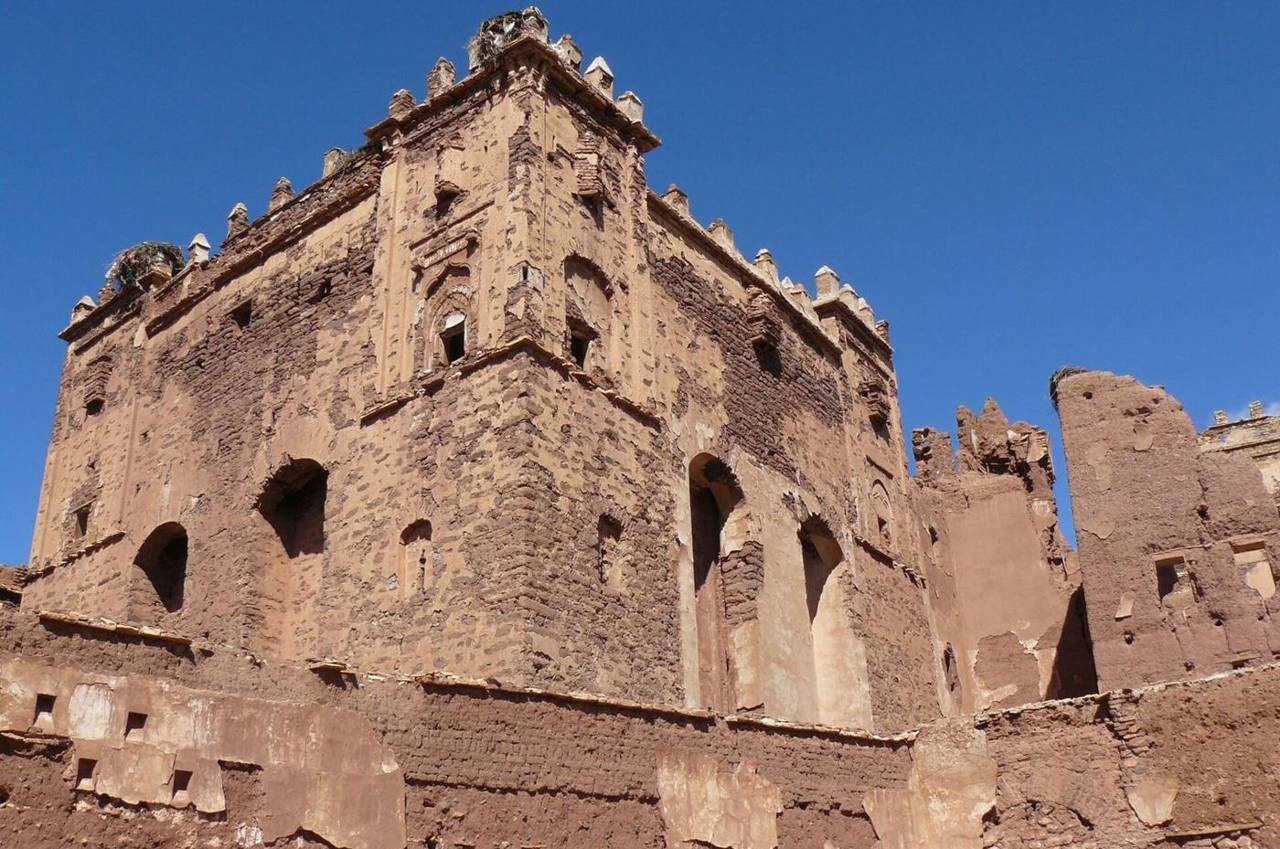
The Ounila valley: Telouet and Aït Ben Haddou on foot
The old caravan route over the Tizi n'Tichka pass: the Glaoui kasbah at Telouet with its decorated halls, the Ounila valley between earthen villages, palm groves and coloured rocks, walking to the ksar of Aït Ben Haddou, a UNESCO site.
 3 daysEasy
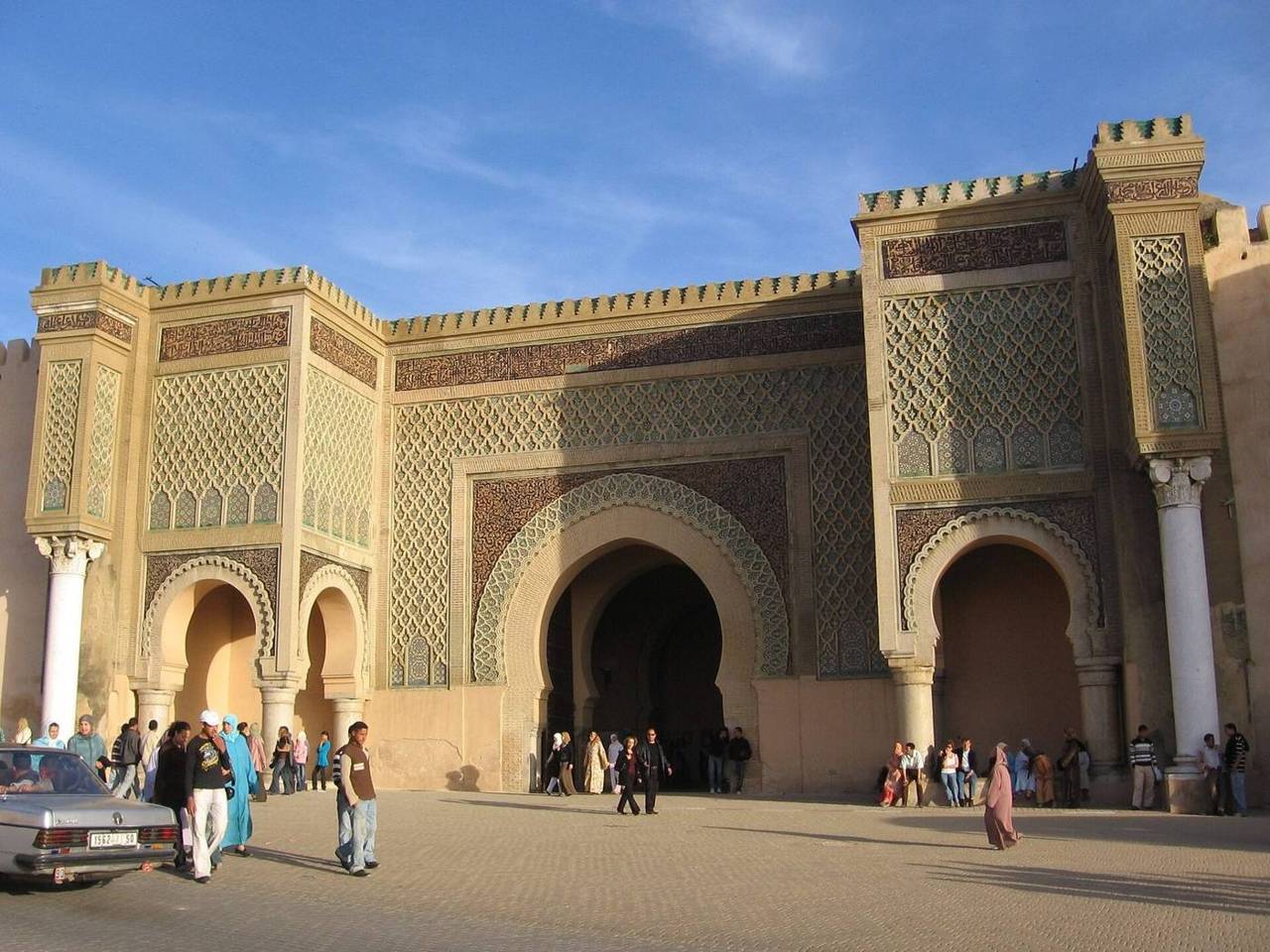
Meknes in depth and Moulay Idriss
Moulay Ismail's imperial city, a UNESCO site: the Bab Mansour gate, the granaries and stables of Heri es-Souani, the sultan's mausoleum, the medina and its souks, then the holy town of Moulay Idriss Zerhoun on its hill and the ruins of Volubilis at sunset.
 4 daysEasy
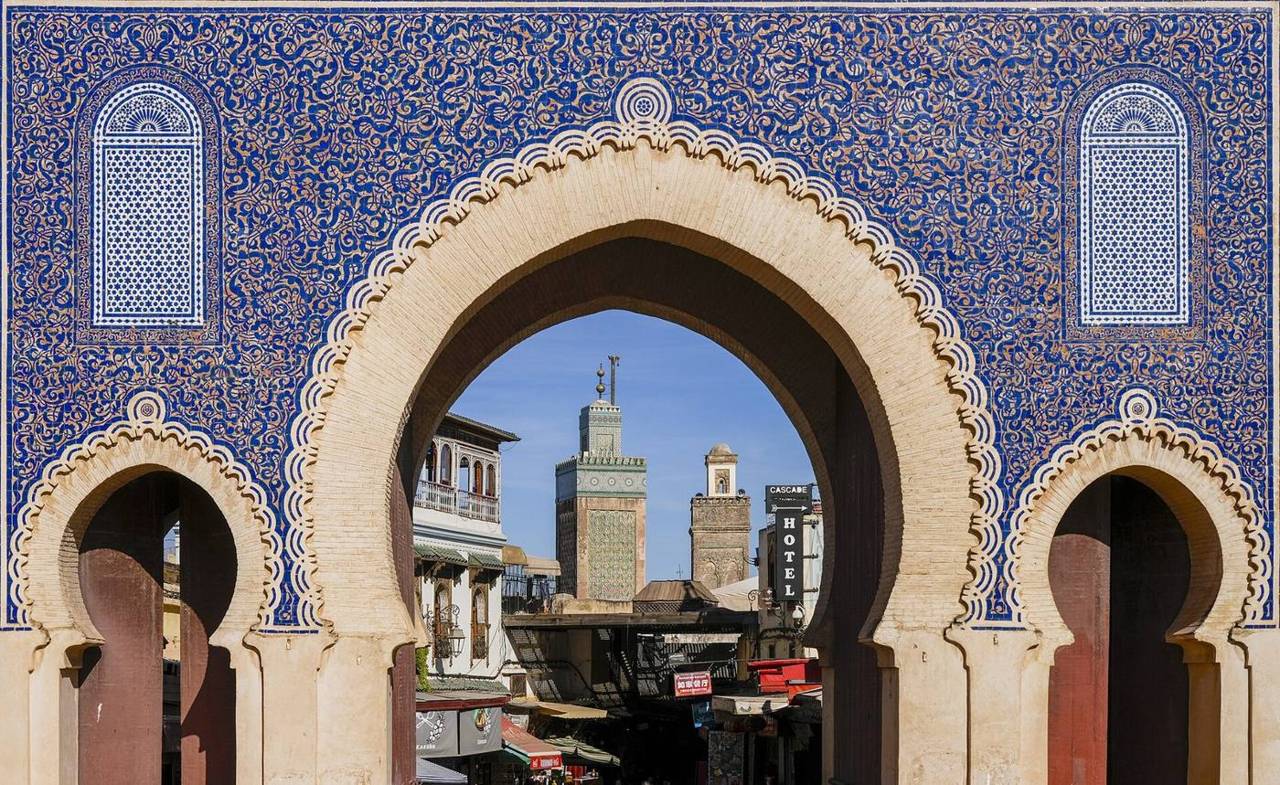
Fez in depth, Sefrou and Bhalil
The largest medieval medina in the Maghreb, at an easy pace: the Bou Inania and Al-Attarine madrasas, the Chouara tanneries, the artisans' quarters, the Mellah of Fès el-Jdid, the view from the Marinid tombs, then Sefrou with its old Jewish quarter and the cave houses of Bhalil.