Agadir, Souss-Massa and the southern coast
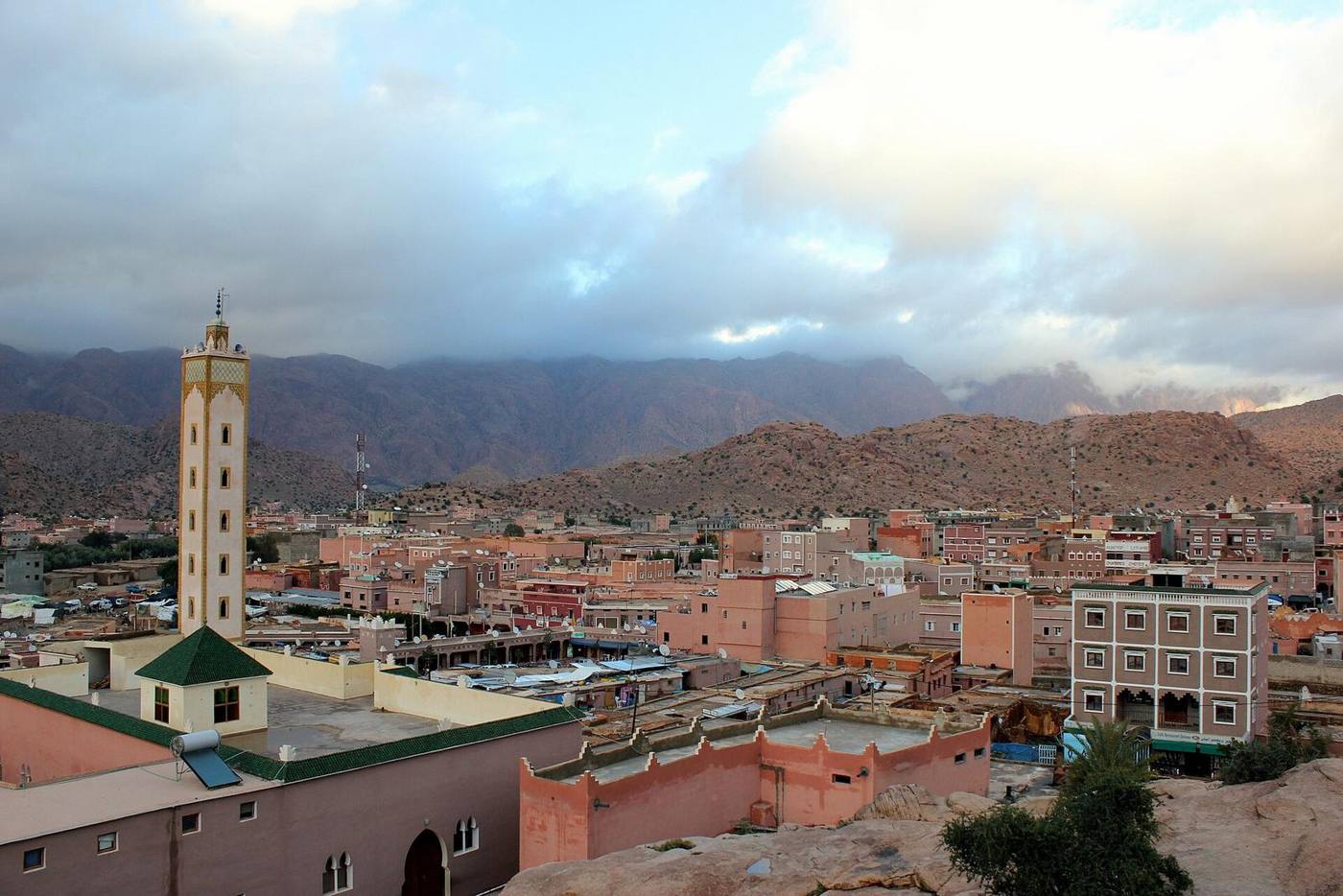
Winter sun, Souss-Massa park with its bald ibises, the painted rocks of Tafraoute and the Legzira arches on the ocean.
- Agadir
- Souss-Massa Park
- Tiznit
- Tafraoute
- Sidi Ifni
- Legzira
- Taghazout
Day by day
- Day 1
Arrival in Agadir
This trip goes to south western Morocco, between the Atlantic Ocean and the Anti Atlas mountains. It starts in Agadir, the great seaside city of the south, and takes in a national park with rare birds and dunes by the ocean, the Berber towns of Tiznit and Tafraoute, the almond valleys and palm oases of the Anti Atlas, the former Spanish town of Sidi Ifni and the cliffs of Legzira, and finally the surfing villages around Taghazout. It is a quiet Morocco, less touristy than Marrakech, with a mild climate all year.
Italian citizens do not need a visa to enter Morocco for tourist stays of up to 90 days: a passport is required. The US government rates Morocco at level 2 of 4: check current advice before leaving.
You fly into Agadir, with direct flights from several European cities, and pick up a hire car for the whole trip.
Agadir was destroyed by an earthquake in 1960 and rebuilt in a modern style, with wide avenues and a long sandy beach. On the first day walk along the corniche, the seafront promenade beside the beach.
At sunset climb the hill of the kasbah of Agadir Oufella, the remains of the old fortress destroyed by the earthquake, with a view over the whole bay, the port and the city. On the hillside the national motto of Morocco is written in large Arabic letters: God, the nation, the king.
In the evening have dinner with grilled fish at the fishing port, where you choose fish fresh off the boats.
Spend the night in Agadir.
Practical tip: the best time is October to May. In summer it is hot on the coast, but morning mist and the ocean breeze keep it cooler.
- Day 2
Souss Massa National Park: bald ibis, flamingos and dunes
Today go to Souss Massa National Park, south of Agadir, a long protected strip of coast between the mouths of the Souss and Massa rivers, with sand dunes, cliffs, steppe and lagoons.
The park is famous for the northern bald ibis, one of the rarest birds in the world, a black ibis with green and purple sheen, a bare red head and a long curved bill. It once lived throughout the Mediterranean and Europe, then almost disappeared: today one of the few wild colonies in the world lives on the cliffs of this coast, protected by the park, and feeds in the nearby steppes and fields.
In the morning, with a park guide, walk or drive along the mouth of the Oued Massa, a lagoon where flamingos, spoonbills, herons, cormorants and many migratory bird species stop, especially in winter and spring. With some luck you see bald ibises in flight or in the fields.
In the afternoon walk on the sand dunes running down to the ocean, on long empty beaches pounded by Atlantic waves, near the fishing village of Sidi Rbat.
The park also has reintroduced gazelles and ostriches in a fenced area.
In the evening return to Agadir or stay near the park.
Spend the night in Agadir or near Massa.
Practical tip: to see the bald ibis you need an experienced guide who knows where they are in each season. Keep your distance and do not disturb the birds, especially in the breeding season.
- Day 3
Tiznit, the city of silver, and the Anti Atlas road
Today go to Tiznit, about an hour and a half south of Agadir, a small town enclosed by red earth walls about five kilometres long, with gates and towers, built by the sultan at the end of the nineteenth century.
Tiznit is famous throughout Morocco for Berber silver jewellery. In the jewellers' souk near the main square dozens of shops sell necklaces, bracelets, fibulae, earrings and the southern cross, a Berber pendant shaped like a cross or star, all handmade with ancient designs, sometimes with coloured enamel and stones. You can watch the craftsmen at work. Much of the jewellery is inspired by that of the region's Berber women, who wore the family's wealth on their bodies.
Also visit the blue spring of Lalla Zninia, a pool of water inside the walls linked to the legend of the town's founding, and the great mosque with its minaret bristling with wooden poles.
In the afternoon take the road to Tafraoute, about two hours away, which climbs into the Anti Atlas with many bends, through arid hills, terraced barley fields, perched stone villages and small oases. The scenery grows ever more spectacular, with mountains of pink and red granite.
You reach Tafraoute in the evening.
Spend the night in Tafraoute.
Practical tip: in Tiznit silver is sold by weight: ask to see the hallmark and compare prices in several shops. Bargaining is part of the tradition, but always politely.
- Day 4
Tafraoute: the Ammeln valley, the painted rocks and the almond villages
Today discover Tafraoute and its surroundings, one of the most beautiful areas of the Anti Atlas. Tafraoute is a small town at about a thousand metres, in a basin surrounded by huge pink granite boulders rounded by erosion, which glow red and orange at sunset.
In the morning drive through the Ammeln valley, north of Tafraoute, at the foot of Jebel Lekst, a granite mountain. Along the valley are some twenty Berber villages of stone and earth clinging to the slopes, surrounded by palms, almond, argan and olive trees. In late January and February the almond trees blossom white and pink: it is the finest season, with an almond festival. Visit one of the villages, such as Oumesnat, with a traditional house turned into a small museum, showing how a Berber family lived.
In the afternoon go to the painted rocks, a few kilometres from Tafraoute: in 1984 a Belgian artist painted some large granite boulders in the desert blue, pink and purple. The colour has been repainted several times and it is a curious, much photographed spot.
Near Tafraoute there is also the lion's head, a rock shaped like a lion's head, and some prehistoric rock engravings of animals, such as the Tazekka gazelle.
In the evening, in Tafraoute, have dinner with a tagine and amlou, a spread of almonds, argan oil and honey.
Spend the night in Tafraoute.
Practical tip: Tafraoute is also famous for colourful handmade leather slippers. The mountain roads are narrow: drive slowly.
- Day 5
The Aït Mansour gorges and the palm oases
Today take a trip south to the Aït Mansour gorges, about forty minutes by road from Tafraoute, one of the most beautiful oases in the Anti Atlas.
The road descends from Tafraoute over a mountain pass and then enters a narrow, deep gorge between red and pink rock walls. At the bottom runs a small stream, along which grow thousands of date palms, banana plants, figs and oleanders, forming a long green oasis in the middle of the arid mountains.
Along the gorge are small Berber villages of earth, such as Aït Mansour and Afella Ighir, with houses seemingly hidden among the palms, irrigation channels and small gardens. You can stop and walk among the palms and along the channels, and drink tea with the families who live here.
The landscape changes at every bend: rock walls, cascades of palms, pools of water in the stream. Further south the gorge opens towards other oases and the desert.
In the afternoon return to Tafraoute, or continue to other oases in the area.
At sunset climb one of the granite hills around Tafraoute to watch the pink boulders glow red.
Spend the night in Tafraoute.
Practical tip: the road through the gorges is narrow and partly unpaved, with difficult sections after rain: ask before setting off. Respect the villagers' privacy and ask before photographing people.
- Day 6
Sidi Ifni, the former Spanish town, and the arches of Legzira
Today leave the mountains and return to the coast, to Sidi Ifni, about three hours from Tafraoute via Tiznit.
Sidi Ifni was a Spanish colony from 1934 until 1969, when it returned to Morocco. It still has Spanish art deco buildings painted white and blue: the main square, with the old church now a courthouse, the consulate, the lighthouse and some houses with geometric decoration. The town stands on a cliff above the ocean, with a long beach used by surfers and fishermen, and is often wrapped in morning mist, which gives it a melancholy air.
In the afternoon go to Legzira beach, about ten kilometres north of Sidi Ifni, famous for its natural red rock arches over the sea, carved by Atlantic waves. One of the two arches, the most famous, collapsed in 2016: today one remains, still very beautiful. At low tide you walk on the beach, under the arch and along the red cliffs.
At sunset the light turns the cliffs and arch red, and the sky is reflected on the wet sand.
In the evening, in Sidi Ifni, have dinner with fresh fish and seafood from the port.
Spend the night in Sidi Ifni or near Legzira.
Practical tip: at Legzira walk below the cliffs only at low tide and do not go too close to the walls: the rock is fragile and stones can fall. Check the tide times.
- Day 7
Taghazout and Paradise Valley
Today head back north past Agadir to Taghazout, about two and a half hours from Sidi Ifni.
In the morning, before reaching the coast, take a detour inland to Paradise Valley, about an hour north east of Agadir, in the Imouzzer valley. It is a gorge where a river forms natural pools of green water among smooth rocks, palms and oleanders. You walk along a path in the gorge, swim in the pools and jump from the rocks. The name dates from the 1960s, when hippies came here.
In the afternoon you reach Taghazout, a former fishing village about twenty kilometres north of Agadir, now one of Morocco's most famous surf spots, with long waves breaking over the rocky points along the coast. The village has colourful houses, small seafront cafés and surf schools. Even non surfers can take a lesson or simply watch the surfers from the terraces.
Along the nearby coast there are other surf spots and beaches, such as Tamraght and Aourir, the banana village.
At sunset sit on Taghazout beach with a mint tea as the sun sinks into the ocean.
Spend the night in Taghazout.
Practical tip: at Paradise Valley the water can be low in summer and the path slippery: wear suitable shoes. Do not jump in without knowing the depth of the pools.
- Day 8
Departure from Agadir
On the last day return to Agadir for your departure, about half an hour from Taghazout.
If your flight is in the afternoon, in the morning visit Agadir's Souk El Had, one of the largest markets in Morocco, enclosed by walls, with thousands of stalls selling fruit, vegetables, spices, olives, dates, crafts, textiles, ceramics and everyday goods. It is used mainly by locals and is an authentic way to see daily life.
Alternatively visit a women's cooperative producing argan oil near Agadir. The argan tree grows only in south western Morocco, in an area protected as a UNESCO biosphere reserve. Berber women crack the fruit stones by hand, toast the kernels and grind them to obtain the oil, used in cooking, with bread, and in cosmetics. The cooperatives provide work and income for village women.
Before leaving buy some southern produce: argan oil, amlou, spices, dates, Tiznit silver jewellery and Tafraoute slippers.
Agadir airport is about half an hour from the city. From here there are direct flights to several European cities.
Practical tip: buy argan oil from cooperatives or reliable shops: along the roads oil mixed with other oils is often sold. Ask for the production date and store it in the dark.
The best choice for a week of sunshine between December and March, with cheap flights to Agadir. Tafraoute in February, with the almond trees in bloom, is spectacular. Agadir itself is not pretty, rebuilt after the 1960 earthquake: use it only as a base.
Before you go
- Documents and visa
- EU visitors need a passport valid for the whole stay; identity cards are not accepted. No visa is needed for tourist stays of up to 90 days.
- Health and vaccines
- No vaccines required. Drink bottled water and take out travel health insurance: public healthcare is limited and private clinics charge. Emergencies: 19 police, 15 ambulance.
- Money and payments
- Moroccan dirham, which cannot be exported beyond a small sum: change a little at a time and keep the receipts. Cash is needed everywhere in medinas and villages.
- Power sockets
- Types C and E, 220 volts.
- Time zone
- UTC+1 for most of the year; Morocco changes its clocks during Ramadan, so check before travelling.
- Safety
- The main risk named by governments is terrorism; avoid the 20 km strip along the closed Algerian border and the frontier areas of Western Sahara. Official advice: GOV.UK.
Information checked in November 2026 for Italian and EU citizens. Rules change: always check before you travel.
Variations
In 5 days: Agadir, Souss Massa, Tiznit and Tafraoute.
In 11 days: add Essaouira and Marrakech, or a desert excursion to Guelmim.
Frequently asked questions
Do I need a visa?
No, Italian citizens can stay up to 90 days as tourists. A passport is required.
When is the best time to go?
October to May. In late January and February the almond trees blossom in the Ammeln valley.
Do I need a car?
Yes, to reach the Anti Atlas, the gorges and the villages. Mountain roads are narrow: drive carefully.
Indicative itinerary written by World Atlas. Before booking, check timetables, seasonal openings, documents and safety.
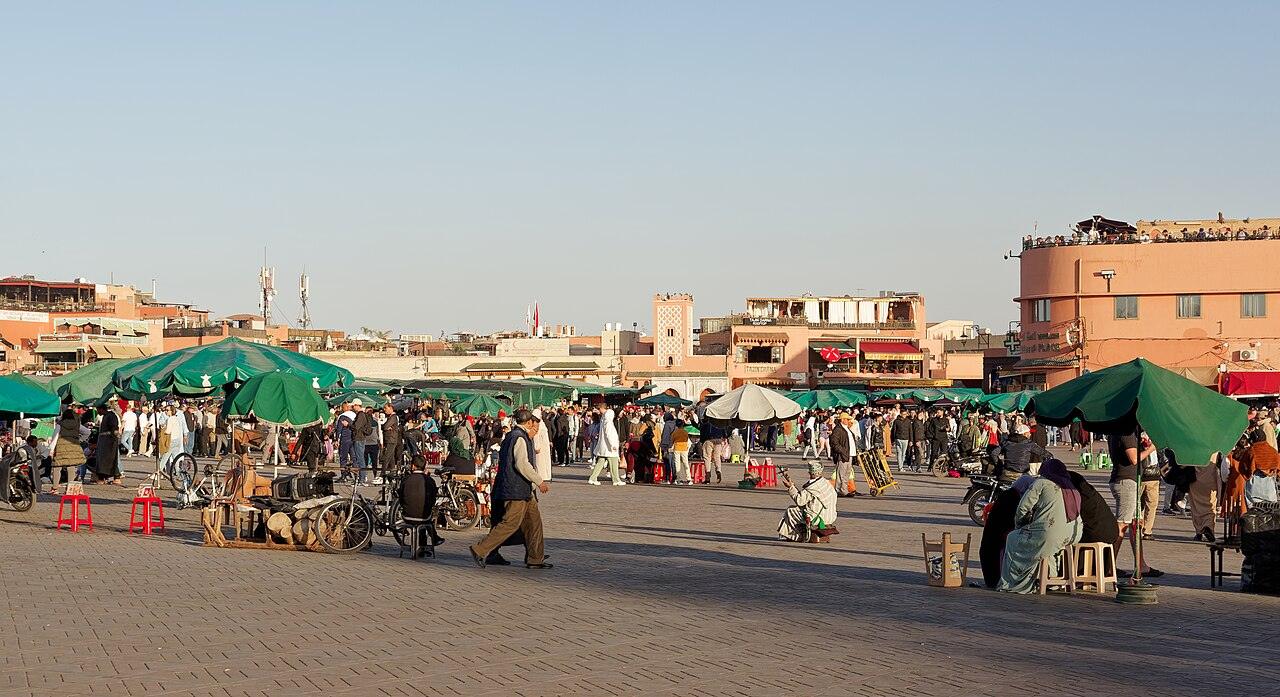 7 daysEasy
Marrakech and the Sahara
From Jemaa el-Fna square to the Erg Chebbi dunes, across the Atlas, past kasbahs and gorges.
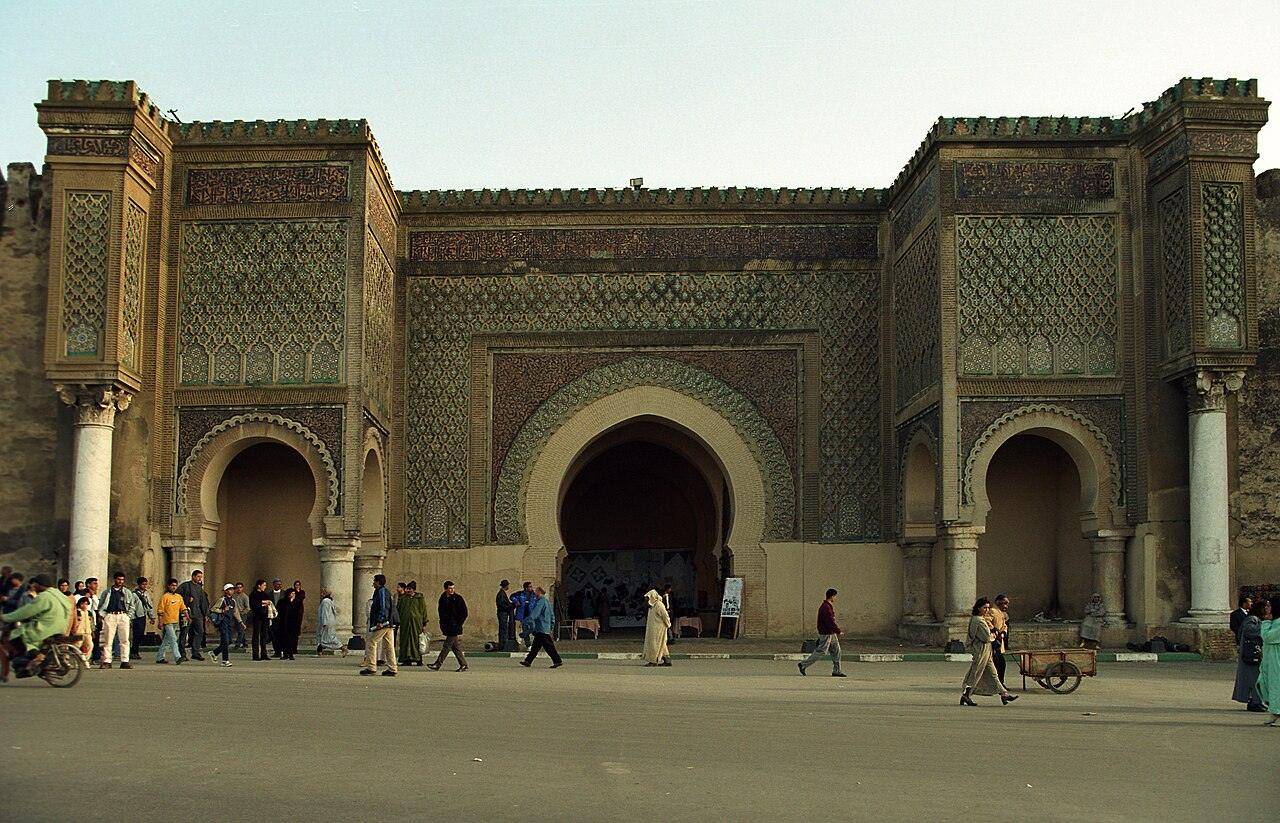 15 daysModerate
Imperial cities, Chefchaouen and the desert
The full circuit: Fez and Meknes, the blue town in the Rif, the Sahara, the gorges and a finale between Marrakech and Essaouira.
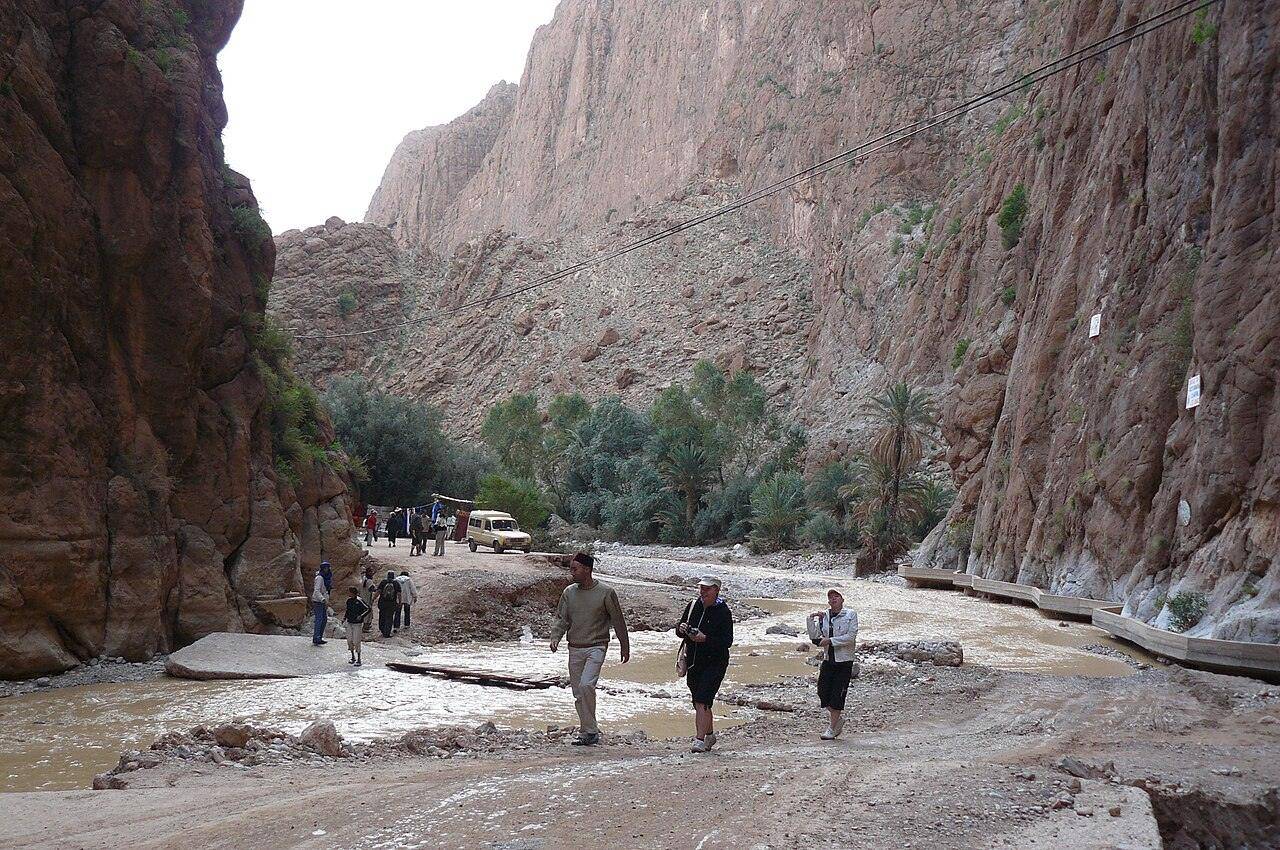 8 daysEasy
Marrakech to Fès by way of the Sahara
The classic crossing: the High Atlas, the kasbahs of Ouarzazate, the Dades gorges and a night in the Merzouga dunes, ending in the medina of Fès.