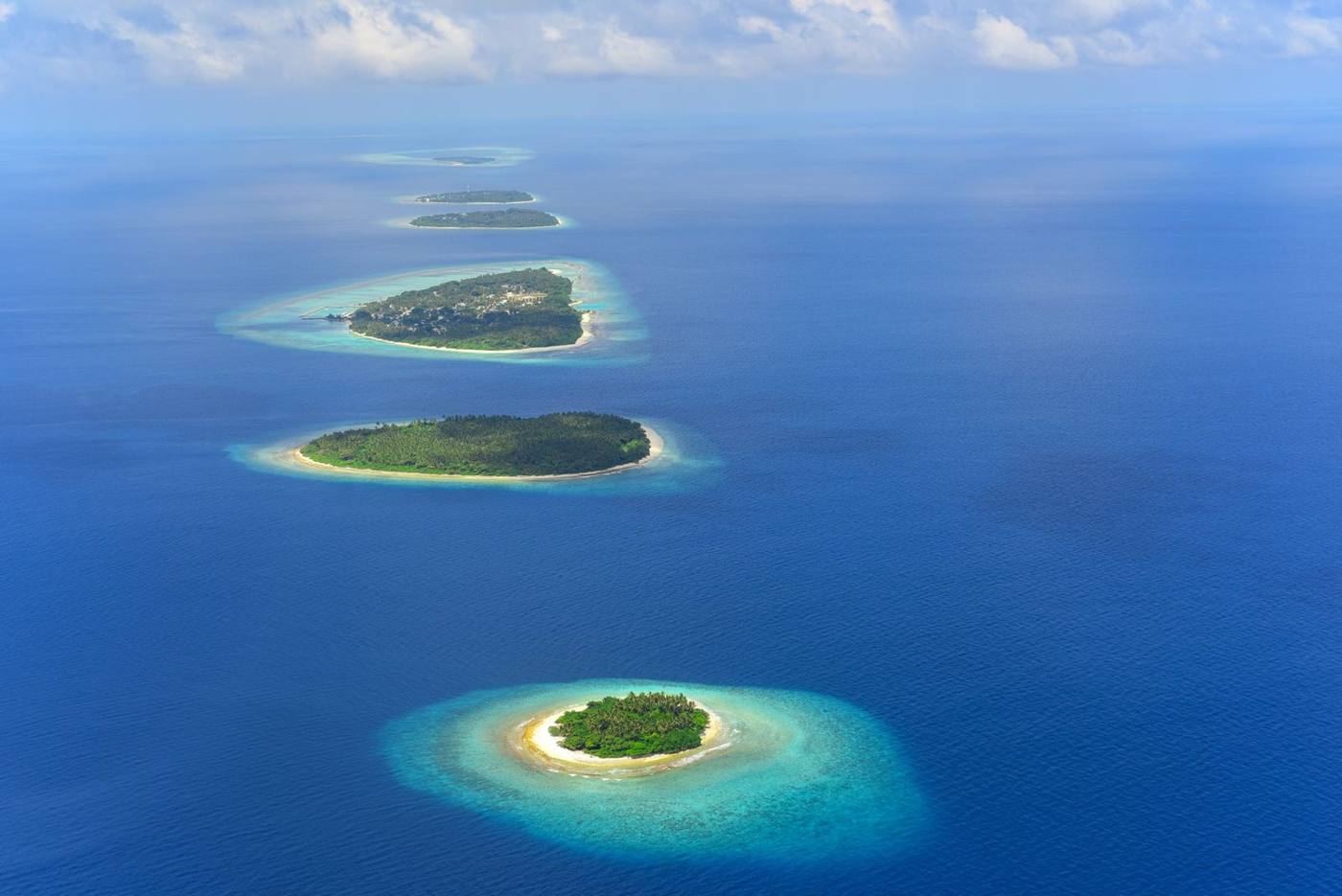
Local islands and snorkelling
The Maldives without luxury resorts: guesthouses on inhabited islands such as Maafushi, Thoddoo or Dhigurah, trips with manta rays and whale sharks.
- Malé
- Maafushi
- Ari Atoll
- Dhigurah
- Thoddoo
Day by day
- Day 1
Arrival in Malé and speedboat to Maafushi
This eight day trip shows you the Maldives without luxury resorts: you sleep in guesthouses on inhabited islands, Maafushi, Dhigurah and Thoddoo, snorkel from the shore and go out by boat to see mantas and whale sharks. It is the cheapest way to see this sea and to get to know the daily life of the Maldivians.
Before you go: for the Maldives Italian citizens receive a 30 day tourist visa on arrival. You need a valid electronic passport, with at least six months of validity recommended, and confirmed accommodation. Within the 96 hours before arrival fill in the IMUGA declaration online. Other nationalities should check their own rules. According to the MIRA tax authority, in guesthouses with up to 50 rooms on inhabited islands the green tax is 6 dollars a day; in resorts it is 12 dollars. The departure tax of 50 dollars in economy is collected by the airlines.
Rules and safety: on local islands alcohol is banned and cannot be brought into the country. In the village cover your shoulders and knees and swim in clothes away from the bikini beaches, the beaches set aside for tourists. In the water keep away from boat propellers.
You land in Malé and take a speedboat to Maafushi, in South Malé Atoll: the trip takes less than an hour. Check prices and times, because the boats run on a fixed timetable.
In the afternoon settle into your guesthouse, walk around the village and have your first swim at the bikini beach. In the evening watch the sunset from the jetty.
Practical tip: book the speedboat together with your accommodation and give your flight's arrival time, so that someone is waiting for you at the airport.
- Day 2
From Maafushi to Ari Atoll and Dhigurah
In the morning have a last snorkel at Maafushi or a walk along the seafront, then take the boat to Ari Atoll. Depending on the timetable you may find a direct speedboat or you may have to go via Malé: check prices and times a few days ahead, because boats do not run every day.
Your base for the next three days is Dhigurah, a long, thin island at the southern tip of Ari Atoll, covered in palms and with a long beach that ends in a sandbank in the lagoon. The island's name means long island.
South Ari is a marine protected area and one of the few places in the world where whale sharks can be seen all year round, along the outer reef. The animals that live here are mostly young males.
In the afternoon walk to the southern tip of the island, along the sandbank, and swim in the lagoon, where the water is shallow and clear. Head back towards the village for sunset, when children play on the beach and the fishermen come back with their tuna.
In the evening eat in one of the island's small cafés: try garudhiya, tuna broth with rice, lime and chilli, a basic dish of Maldivian cooking.
Sleep in Dhigurah for three nights.
Practical tip: bring cash in dollars or rufiyaa, because on the smaller islands not everyone takes cards and cash machines are rare.
- Day 3
The whale sharks of South Ari
Today is whale shark day. In the morning go out by boat with a local guide along the outer reef of the atoll. The boat moves slowly, while the crew watches the water looking for the big dark shape with white spots under the surface.
When the whale shark appears, you get into the water with mask and fins, in small groups. Stay at least a few metres away, do not touch it, do not get in front of its mouth and do not use flash. Swim slowly alongside it: even though it moves slowly, it is faster than it looks.
The British government reports fatal accidents caused by boat propellers in the South Ari area. In the water always stay close to the group and away from boats with their engines running, and follow every instruction from the guide. The most respectful trips have few people per boat and clear rules.
Remember that sightings are not guaranteed. Some days the shark does not show up, or there are too many boats and it is better to move away.
Back on land, ask the guide to tell you how individual sharks are recognised by their spots: many of the animals in South Ari have been photographed and catalogued by researchers over the years.
In the afternoon rest in the shade of the palms or snorkel from the shore, on the lagoon reef, where you see parrotfish, surgeonfish and small blacktip reef sharks.
Practical tip: choose trips with guides who explain the code of conduct before leaving and who limit the time in the water with the animals.
- Day 4
The mantas and the sandbank
Today you go out by boat to look for mantas. In Ari Atoll there are several cleaning stations, where mantas pause over the reef to have parasites removed by small cleaner fish. Depending on the season and the current, the guide chooses the best spot.
With mask and fins you stay at the surface and watch the mantas circling below you, slowly, with their big black wings and spotted white bellies. Do not dive towards them and do not chase them: if you stay calm, they often pass closer. Many trips combine the mantas with a stop on a reef with turtles.
In the afternoon go back to Dhigurah's long sandbank for a quiet afternoon. At low tide you can walk a long way in the shallow water, between the white sand and the turquoise lagoon. Bring water and a hat, because there is no shade.
Towards evening take a walk around the village: the school, the mosque, the football pitch where people play at sunset and the houses with sandy yards and breadfruit trees. Greet the people you meet: the islands are small and welcoming. If you are invited for tea, accept gladly and bring a small sweet with you.
Practical tip: buy reef friendly sun cream before the trips or bring it from home, because on small islands there are few shops.
- Day 5
From Dhigurah to Thoddoo
In the morning leave Dhigurah and travel to Thoddoo, a round, solitary island north of Ari Atoll, ringed by a single reef with no other islands nearby. By speedboat from Malé it takes about a couple of hours. The connection between the islands changes from day to day: sometimes there is a speedboat between them, at other times you have to go via Malé. Check prices and times in advance and leave some margin in your plans.
Thoddoo is different from the other islands: it is a farming island, famous for its watermelons and papayas, which the farmers grow in the fields inland and sell all over the country. The tourist beach is on the western side, with pale sand and a reef close to the shore.
In the afternoon settle into your guesthouse and walk to the tourist beach. The water is calm and the reef starts a few metres out: with mask and fins you immediately see coral, butterflyfish, triggerfish and, with a little luck, turtles.
Stay in the water for an hour at most at a time and rest in the shade between swims: the equatorial sun burns even when the sky is hazy.
In the evening have dinner with grilled fish and the island's fruit, and watch the sunset over the open sea.
Sleep in Thoddoo for three nights.
Practical tip: snorkel only in the marked areas and with a buddy, because beyond the reef the currents can be strong; ask your guesthouse where to get in safely.
- Day 6
Thoddoo: snorkelling from the shore and watermelon fields
Early in the morning, when the sea is calmest and the light is lovely, snorkel from the beach. Swim along the edge of the reef, where the sand gives way to coral and the bottom drops towards the blue. Here you can see schools of surgeonfish, moray eels in the cracks, rays on the sand and turtles grazing on algae.
Then go round the island by bicycle or on foot. The sandy roads run between palms, breadfruit trees and farmed fields, with rows of watermelons, papayas, chillies and bananas. If a farmer greets you, stop: they often show you the field and offer you some fruit. Always ask before entering the fields.
On the island there are also the remains of an ancient Buddhist site, from before the Maldives became Muslim in the twelfth century. Few traces are left today, but they recall the long history of the archipelago.
In the afternoon rest in the shade or go back to the beach for a second round of snorkelling. Life here is slow: there are few cars, many scooters and families who sit outside in the evening.
In the evening try a fresh watermelon juice or a papaya smoothie, then a simple dinner with rice, curry and fish.
Practical tip: hire a bicycle to get around the island and bring a reusable water bottle, to fill up at the guesthouse.
- Day 7
A boat trip from Thoddoo
Today take a boat trip from the island. Local guides offer snorkelling trips to nearby reefs, early morning dolphin searches or a stop on a sandbank in the open sea. Choose according to the weather: when the sea is rough it is better to stay close to the shore.
On the boat look out for dolphins swimming in groups and leaping near the bow. Do not ask the boatman to chase them: let them come to you. On the reef swim at the surface, without touching the coral and without standing on the bottom, because living coral breaks easily.
When you get back, have lunch at the guesthouse with rice, fish curry and a coconut sauce, and rest during the hottest hours. In the late afternoon go back to the beach for a last swim and the sunset.
Remember that on local islands life follows the rhythms of Islam: you hear the call to prayer five times a day and on Fridays many shops close at midday. During Ramadan do not eat or drink in public during the day outside your guesthouse.
In the evening pack your bag and pay the guesthouse, checking that the green tax is included in the bill.
Practical tip: book the next day's speedboat with plenty of time before your flight, because in bad weather boats can be delayed or cancelled.
- Day 8
Back to Malé and departure
In the morning take a last walk around the island, then catch the speedboat to Malé, which takes about a couple of hours. Check prices and times and get to the airport with a good margin.
If you have a few hours before your flight, visit Malé, the most compact capital in the world: the fish market, the old Friday mosque built of coral stone and Sultan Park, dressed modestly. You can also stroll along the seafront and watch the boats leaving for the atolls.
In these eight days you have seen the sea of the Maldives while living among the Maldivians: the village of Maafushi, the long sandbank of Dhigurah, the whale sharks and mantas of South Ari, snorkelling from the shore and the watermelon fields of Thoddoo, always with the rules and rhythms of the inhabited islands.
When to go: from December to April, in the dry season of the northeast monsoon, there is more sun, a calmer sea and clearer water for snorkelling. From May to November it rains more and the sea is rougher, but prices are lower and the guesthouses are quieter. The whale sharks of South Ari can be seen all year round, but sightings are never guaranteed.
Practical tip: if your international flight leaves early, sleep the last night in Hulhumalé, near the airport, instead of risking the morning speedboat.
The cheapest way to see the Maldivian sea. On local islands alcohol is banned and you dress modestly outside the 'bikini beaches'. Public ferry timetables are limited: speedboats cost more but save time.
Before you go
- Documents and visa
- Passport with an expiry date at least one month after arrival and confirmed accommodation: the 30 day tourist visa is issued on arrival. Within the 96 hours before arrival fill in the IMUGA traveller declaration online. Green tax, from the MIRA tax authority: 6 dollars a day in guesthouses and hotels with up to 50 rooms on inhabited islands, 12 dollars in resorts; departure tax of 50 dollars in economy, collected by the airlines.
- Health and vaccines
- Medical facilities are limited outside Malé; if you dive, check that your insurance covers the hyperbaric chamber and emergency transfer. Use repellent against dengue and chikungunya. Drink only bottled water. Emergencies: police 119, ambulance 102.
- Money and payments
- Maldivian rufiyaa. US dollars are widely used and resorts nearly always charge in dollars; Visa and Mastercard work in Malé and at tourist businesses.
- Power sockets
- Types D and G, 230 volts: British plugs fit type G sockets.
- Time zone
- UTC+5 all year.
- Safety
- An Islamic country: alcohol is sold and drunk only on resort islands and you cannot bring it in; in Malé and on inhabited islands cover shoulders and legs and swim clothed away from tourist beaches. During Ramadan do not eat or drink in public in the daytime. Strong currents: swim only in designated areas. Very harsh drug penalties, and e-cigarettes are banned. Official advice: GOV.UK.
Information checked in November 2026 for Italian and EU citizens. Rules change: always check before you travel.
Variations
In 5 days: go straight to Dhigurah and stay in Ari Atoll, with the whale sharks and mantas.
In 11 days: add Baa Atoll, with Hanifaru Bay and its mantas, in the southwest monsoon season.
Frequently asked questions
Can you drink alcohol on local islands?
No. Alcohol is banned on inhabited islands and cannot be brought into the country. It is only sold in resorts and on some licensed tourist boats.
How should I dress on a local island?
In the village cover your shoulders and knees. You can wear a swimsuit only on the bikini beaches, the beaches set aside for tourists; elsewhere swim in a T-shirt and shorts.
How much do boats between the islands cost?
Public ferries are the cheapest but run on a limited timetable; speedboats cost more but save time. Check prices and times with your guesthouse before you leave.
Indicative itinerary written by World Atlas. Before booking, check timetables, seasonal openings, documents and safety.
 8 daysModerate
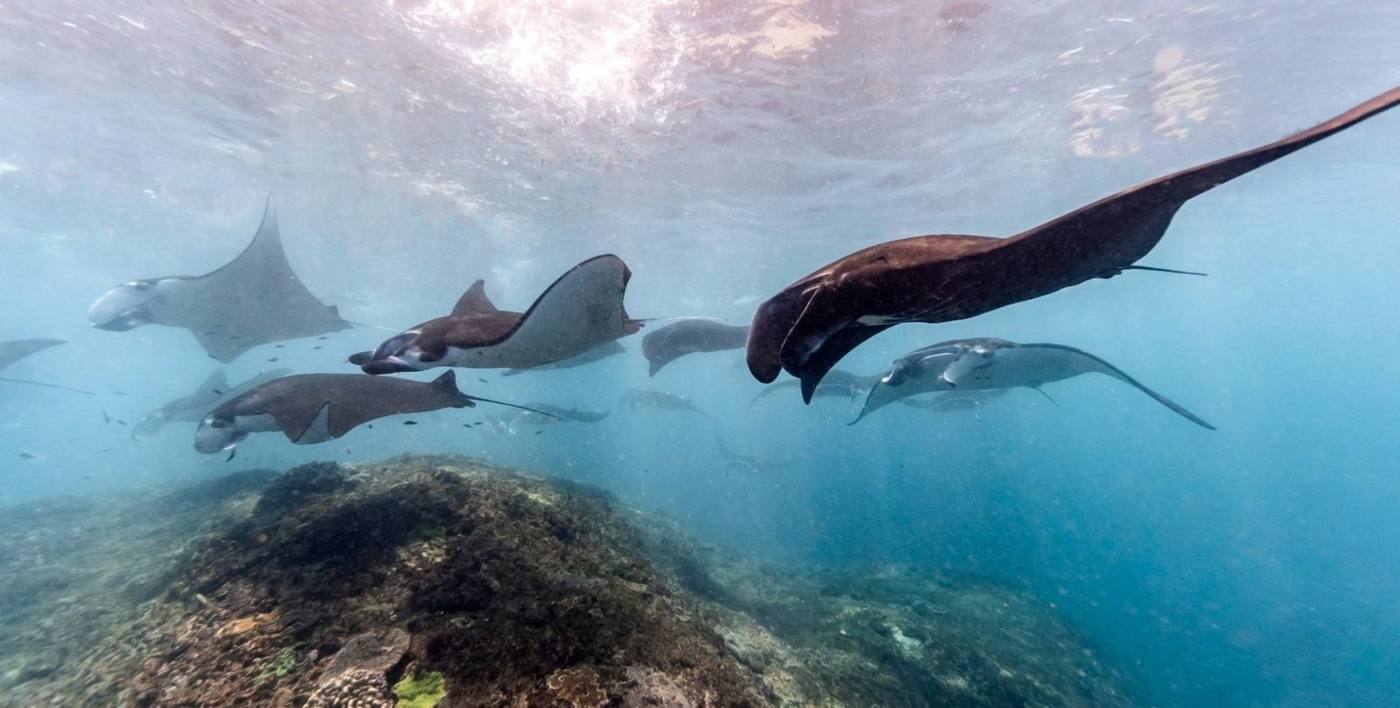
Liveaboard among the atolls
A week on a dive boat among the central atolls: channels with grey reef sharks, manta cleaning stations and night dives.
 5 daysEasy
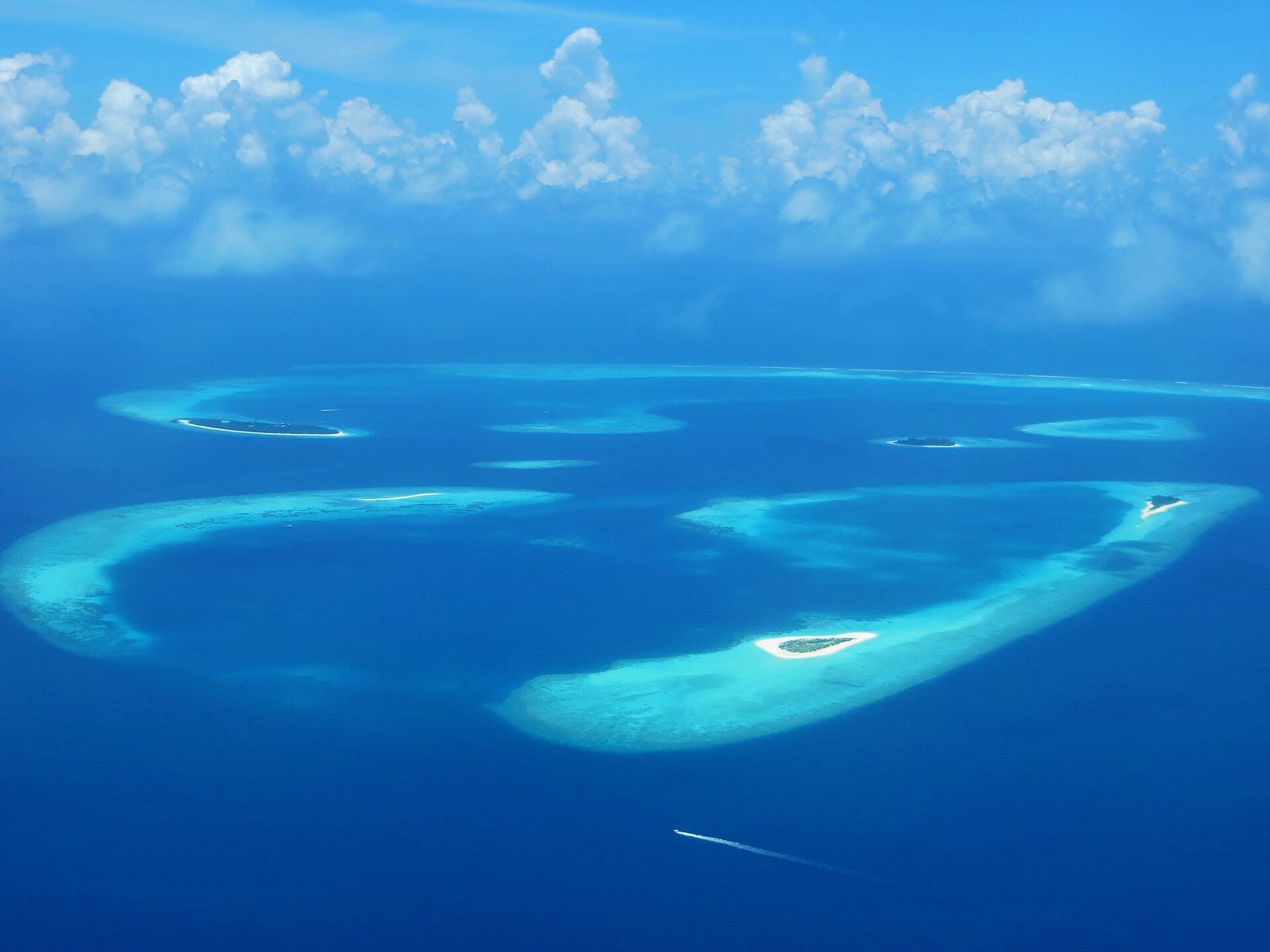
Baa Atoll and the mantas
The UNESCO biosphere reserve of Baa, with Hanifaru Bay where dozens of manta rays gather to feed on plankton, sometimes with whale sharks.
 4 daysEasy
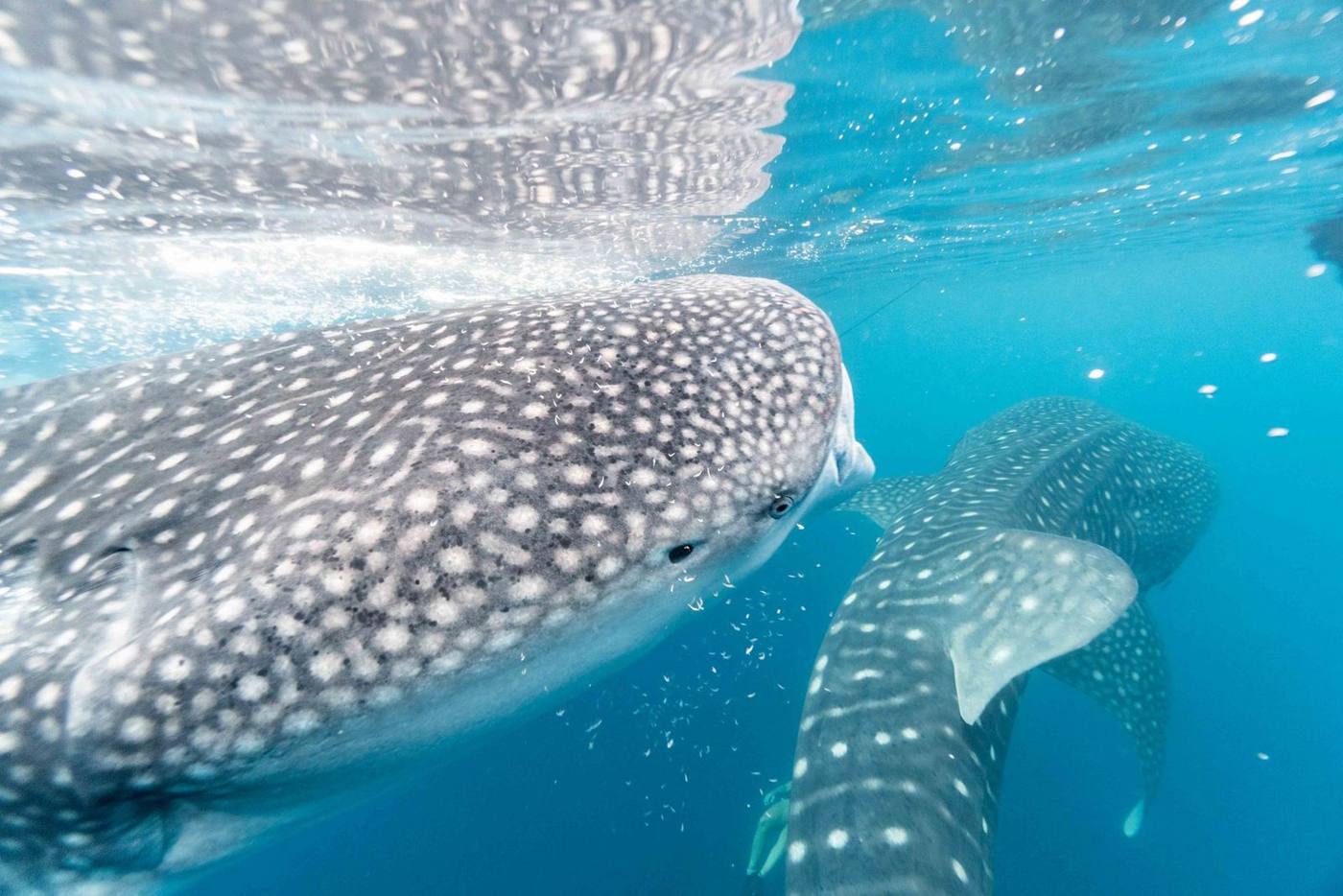
Whale sharks in South Ari
The protected area of South Ari, where whale sharks swim year-round along the outer reef, with snorkelling from a local island such as Dhigurah.