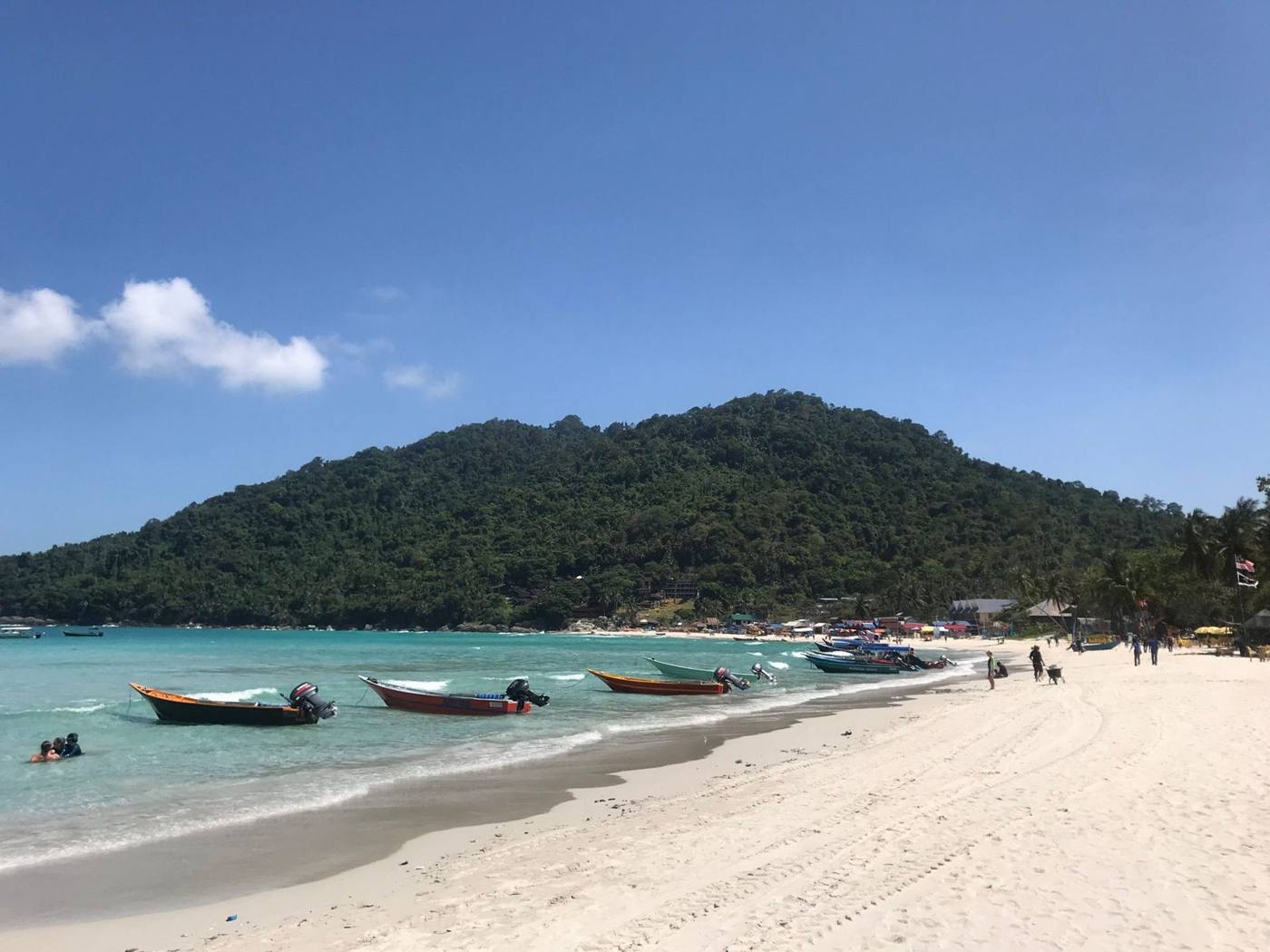
Langkawi and the Perhentians
The beaches and cable car of Langkawi on the west coast, then the clear water and snorkelling of the Perhentian islands on the east coast.
- Langkawi
- Sky Bridge
- Kilim
- Kota Bharu
- Kuala Besut
- Perhentian Kecil
Day by day
- Day 1
Arrival in Langkawi and Cenang beach
This seven-day trip combines two very different Malaysian seas: Langkawi, the archipelago off the west coast in the Andaman Sea, with its cable car, mangroves and sunset beaches, and the Perhentian islands, on the east coast, with clear water, turtles and blacktip reef sharks.
Before you go: Italian citizens enter Malaysia with a passport valid for at least six months, without a visa for up to 90 days for tourism, and fill in the Malaysia Digital Arrival Card (MDAC) only on the official portal, within the three days before arrival. Other nationalities should check their own rules. Both areas are calm. On the east coast, in the state of Terengganu, customs are more conservative: dress modestly away from the beaches.
You arrive in Langkawi by plane, often from Kuala Lumpur, or by ferry from Kuala Perlis or Kuala Kedah. The archipelago has almost a hundred islands, but nearly everything is on the main island, Pulau Langkawi, which is also a UNESCO Global Geopark thanks to its extremely ancient rocks.
Stay near Pantai Cenang, the liveliest beach, a few minutes from the airport. In the afternoon take your first swim in the warm, calm water and walk along the sand to Pantai Tengah.
At sunset watch the sun go down behind the islands on the horizon. In the evening visit one of the night markets, which move from village to village depending on the day of the week, and try satay, stuffed murtabak and coconut sweets.
Practical tip: public transport on Langkawi is almost non-existent, so hire a car or use ride-hailing apps; traffic drives on the left, and watch out for monkeys on the roads.
- Day 2
The cable car and the Sky Bridge
Today you go up into the Machinchang mountains, in the north-west of the island, among the oldest rocks in Malaysia.
Arrive early at the cable car base station, at Oriental Village, to avoid the queue and the clouds that often rise by midday. The cabin climbs steeply above the forest, at impressive gradients, up to the top station. From up there you see the islands of the archipelago, the Andaman Sea and, on clear days, even the coast of Thailand.
From the top station you can reach the Sky Bridge, a curved footbridge hanging over the void and the forest, held up by a single pylon. Walking on the bridge with the wind and the clouds drifting past is one of Langkawi's most famous experiences. Check prices and times: the cable car and the bridge close in strong winds and for maintenance.
Then go down to the Seven Wells waterfall, Telaga Tujuh, not far away: a flight of steps through the forest leads to a series of natural pools where the water slides over smooth rock.
In the afternoon relax on Pantai Kok beach or visit the centre of Kuah, the main town, with the large eagle statue at the harbour, the symbol of the island.
In the evening try grilled fish or nasi campur, rice with a choice of different dishes.
Practical tip: buy your cable car ticket online in advance on public holidays and bring a light jumper, because the wind is cool at the top.
- Day 3
The Kilim mangroves
Today you explore the Kilim geoforest park, in the north-east of the island: a maze of channels between the mangroves and limestone walls that rise straight out of the water.
Take a boat from the Kilim jetty for a trip of a few hours. You glide between mangrove roots, beneath cliffs covered in vegetation, out to the open sea. Along the way you see white-bellied sea eagles and brahminy kites circling, monitor lizards on the banks and macaques in the trees. Trips often stop at a bat cave and at a fish farm on stilts. Choose an outing that does not feed the eagles: the practice harms the animals.
In the afternoon go to Tanjung Rhu beach, in the north, a long strip of white sand among casuarina trees, with shallow water and small limestone islands offshore. At low tide you can walk to a little island nearby.
At sunset, if you like, visit the mausoleum of Mahsuri, linked to the legend of a young woman who was wrongly accused and who, the story says, put a curse on the island.
In the evening do some last shopping: Langkawi has a special tax status, exempt from import duties, and chocolate, perfume and alcohol cost less.
Practical tip: on boat trips through the mangroves wear a hat and sun cream, and always ask for a life jacket, even if the water looks calm.
- Day 4
Flight to Kota Bharu and boat from Kuala Besut
Today you cross the peninsula, from the west coast to the east coast. It is a travel day, so set off early.
Take the flight from Langkawi to Kota Bharu, the capital of the state of Kelantan, usually with a change in Kuala Lumpur. During the flight look out of the window at the forest and the mountains in the centre of the peninsula.
If you have time in Kota Bharu, walk around the central market, Pasar Siti Khadijah, a large building on several floors where the stallholders sell fruit, spices, dried fish and colourful sweets. Try nasi kerabu, rice coloured blue with flowers, served with herbs and fish.
Then continue by car or taxi to Kuala Besut, the fishing village where the speedboats to the Perhentians leave: about an hour by road. At the jetty pay the marine park fee and buy your boat ticket. Check prices and times.
The crossing takes about half an hour or a little more, with the sea changing colour to turquoise. Boats do not always dock at a jetty: sometimes you land straight on the beach, or a small boat takes you ashore.
Stay on Perhentian Kecil, the small island, younger and livelier, or on Perhentian Besar, the large island, which is quieter.
Practical tip: cash machines on the Perhentians are very rare and often out of order, so withdraw enough cash in Kota Bharu or Kuala Besut.
- Day 5
Snorkelling with turtles and blacktip reef sharks
Today the Perhentian sea is all yours: clear water, corals and a great variety of fish, a few minutes by boat from the beach.
In the morning take a boat for a snorkelling trip around the islands. Outings usually visit several spots: a bay where green turtles graze on seagrass over the sandy bottom, a stretch of rocks where small blacktip reef sharks swim, shy and harmless, and coral gardens with clownfish, parrotfish and giant clams.
Always stay at least a few metres away from the turtles, do not touch them and do not chase them. If the boat brings too many people to one spot, wait for them to move away.
In the afternoon relax on the beach. On Perhentian Kecil, Long Beach is the longest beach, with white sand and waves in the windy months; Coral Bay, on the opposite side, is calmer and perfect for sunset. A jungle trail links the two bays in about twenty minutes.
In the evening eat grilled fish on the beach, choosing it fresh from the counter.
Remember that Terengganu is a conservative state: alcohol is scarce and found only in a few places. Away from the beaches cover your shoulders and legs.
Practical tip: bring your own mask if you have one, because rental masks are often worn, and use a reef-safe sun cream.
- Day 6
Diving and island trails
Today choose between the deep sea and the jungle, or do a bit of both.
If you dive, the Perhentians are one of the best places in Malaysia to go underwater, beginners included. Among the most famous sites are Tokong Laut, the temple of the sea, a rock pinnacle covered in soft corals with shoals of fish and sometimes barracuda, and some wrecks lying on the sandy bottom. If you are not certified, you can try a first dive or take a basic course with a serious dive centre.
If you prefer to stay on land, walk the forest trails that link the beaches: on Perhentian Kecil you can go as far as the small fishing village on the south side, the only real village on the islands, with its mosque and school. Along the way you see monitor lizards, squirrels and butterflies.
In the afternoon hire a kayak and paddle along the shore to an empty bay, or cross the channel by boat to see the other island.
In the evening sit on the sand with a coconut and look at the sky: far from the cities the stars are countless, and sometimes the sea lights up with glowing plankton.
Practical tip: do not dive in the twenty-four hours before your flight home; plan your dives for this morning or the day before, to be safe.
- Day 7
The journey back
Today you leave the Perhentians. Book the morning boat to Kuala Besut: departures are usually early and the boat picks you up from your beach.
From Kuala Besut go back by car or taxi to Kota Bharu airport, about an hour, and take the flight to Kuala Lumpur, where flights to Italy leave from.
In these seven days you have seen two different seas in one trip: in Langkawi the cable car and the Sky Bridge above the forest, the Seven Wells waterfall, the Kilim mangroves with their eagles and the beaches of Cenang and Tanjung Rhu; then the market in Kota Bharu and, on the east coast, the Perhentian islands with snorkelling among turtles and blacktip reef sharks, diving and white sand beaches.
When to go: the two seas have different seasons. The Perhentians are at their best from April to September; from November to February the monsoon closes almost all accommodation and boats. Langkawi is at its best from November to April, but stays pleasant in summer too, with a few more storms. To combine both, the best months are April to June and September.
Remember to leave the beaches as you found them: the islands have few resources to deal with waste.
Practical tip: keep a day in hand before your long-haul flight, because in rough seas the boats from the Perhentians can leave late or be cancelled.
Two different seas in one trip. The Perhentians almost completely close from November to February because of the monsoon. Alcohol is hard to find on the east-coast islands, a very conservative region.
Before you go
- Documents and visa
- Passport valid for at least six months from the date of entry; for tourism Italian citizens enter without a visa for up to 90 days. The Malaysia Digital Arrival Card (MDAC) is compulsory: fill it in online, only on the official Malaysian immigration portal, within the three days before arrival. Sabah and Sarawak, on Borneo, have their own immigration control: even when arriving from Kuala Lumpur your passport is checked and stamped again.
- Health and vaccines
- No vaccinations are compulsory for travellers from Italy; a yellow fever certificate is needed only if you arrive from a country at risk. Dengue is common, especially in cities: use insect repellent and ask your doctor about other vaccinations and malaria prevention for forest areas. You need insurance covering medical costs and repatriation. Emergencies: 999.
- Money and payments
- Malaysian ringgit (MYR or RM). Cards work well in cities and shopping centres; carry cash for markets, islands and national parks.
- Power sockets
- Type G, 240 volts: British plugs fit without an adapter.
- Time zone
- UTC+8 all year.
- Safety
- Generally a safe country; watch out for bag snatching in cities. The UK advises against all but essential travel to all islands and dive sites off the coast of eastern Sabah, from Sandakan to Tawau, because of the threat of kidnapping; the Sabah mainland is not included. A night-time maritime curfew applies in those waters. Drug laws are very strict, up to the death penalty. Official advice: GOV.UK.
Information checked in November 2026 for Italian and EU citizens. Rules change: always check before you travel.
Variations
In 5 days: two days in Langkawi with the cable car and Kilim and two on the Perhentians, with the transfer day in between.
In 10 days: add three nights in Penang, between Langkawi and the east coast, for street food and the old town of George Town.
Frequently asked questions
What documents do I need for Malaysia?
Italian citizens enter with a passport valid for at least six months, without a visa for up to 90 days for tourism, and must fill in the MDAC online within the three days before arrival. Other nationalities should check their own rules.
When are the Perhentians open?
The Perhentians are at their best from April to September. From November to February the monsoon brings rough seas and almost all accommodation and boats stop.
Can you find alcohol on the Perhentians?
Only a little. Terengganu is a conservative state and alcohol is found only in a few places. In Langkawi, on the other hand, it is easy to find and cheaper thanks to its exemption from import duties.
Indicative itinerary written by World Atlas. Before booking, check timetables, seasonal openings, documents and safety.
 4 daysModerate
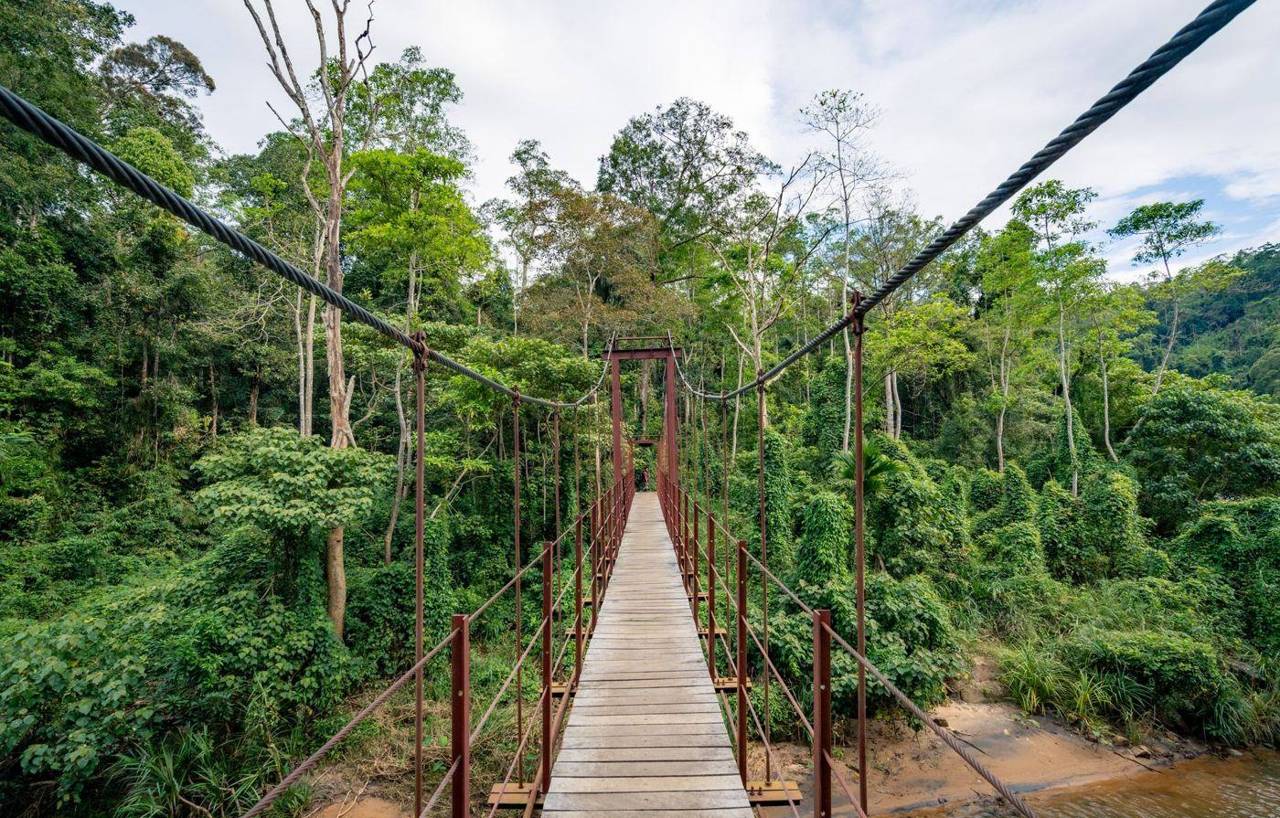
Taman Negara
One of the world's oldest rainforests: the canopy walkway, the climb up Bukit Teresek, a night in an observation hide and boats on the Tembeling.
 3 daysEasy
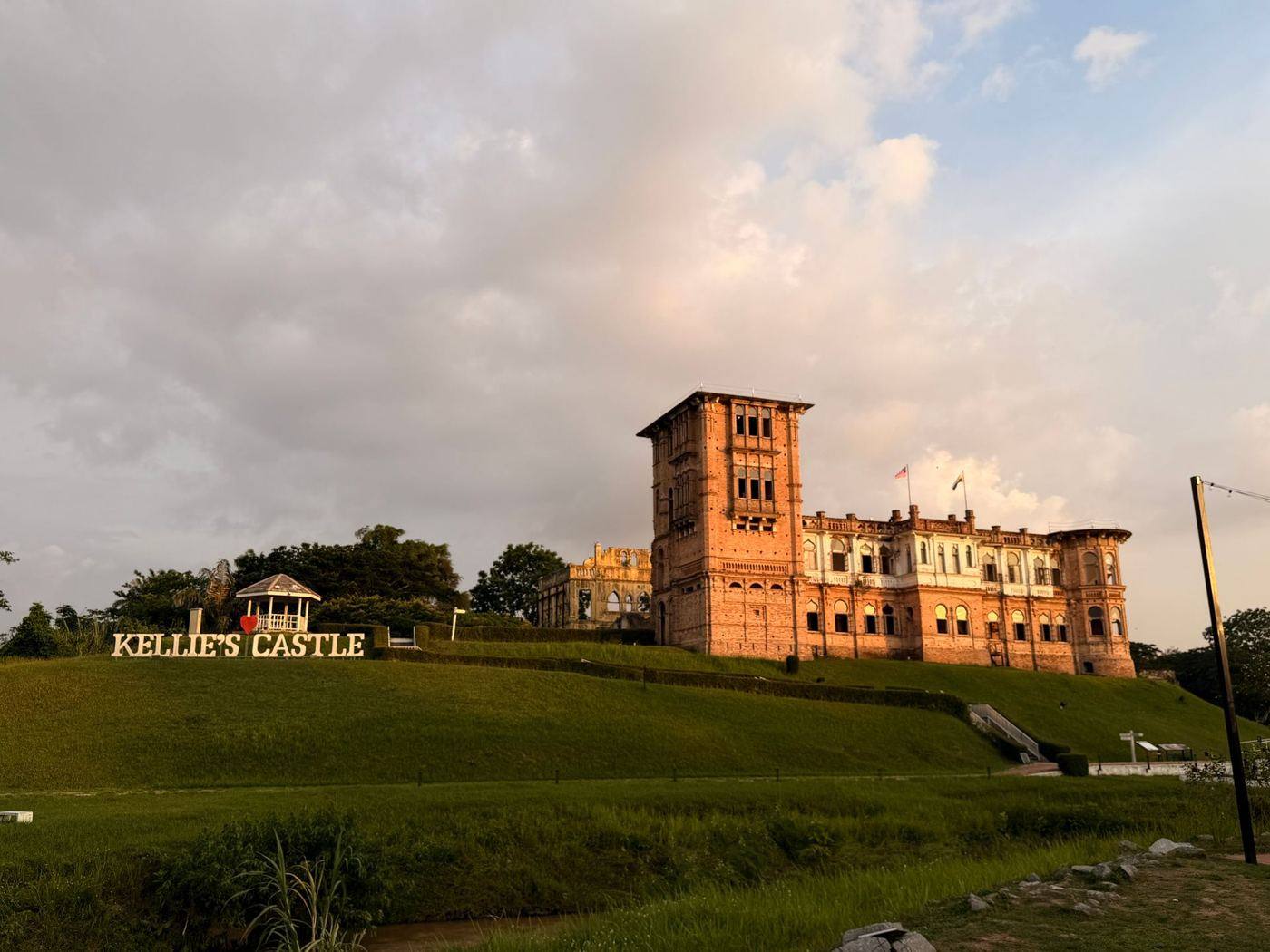
Ipoh and Perak
Ipoh with its old town, murals, white coffee and chicken with bean sprouts, the cave temples of Perak Tong and Sam Poh Tong and colonial Kellie's Castle.
 4 daysEasy
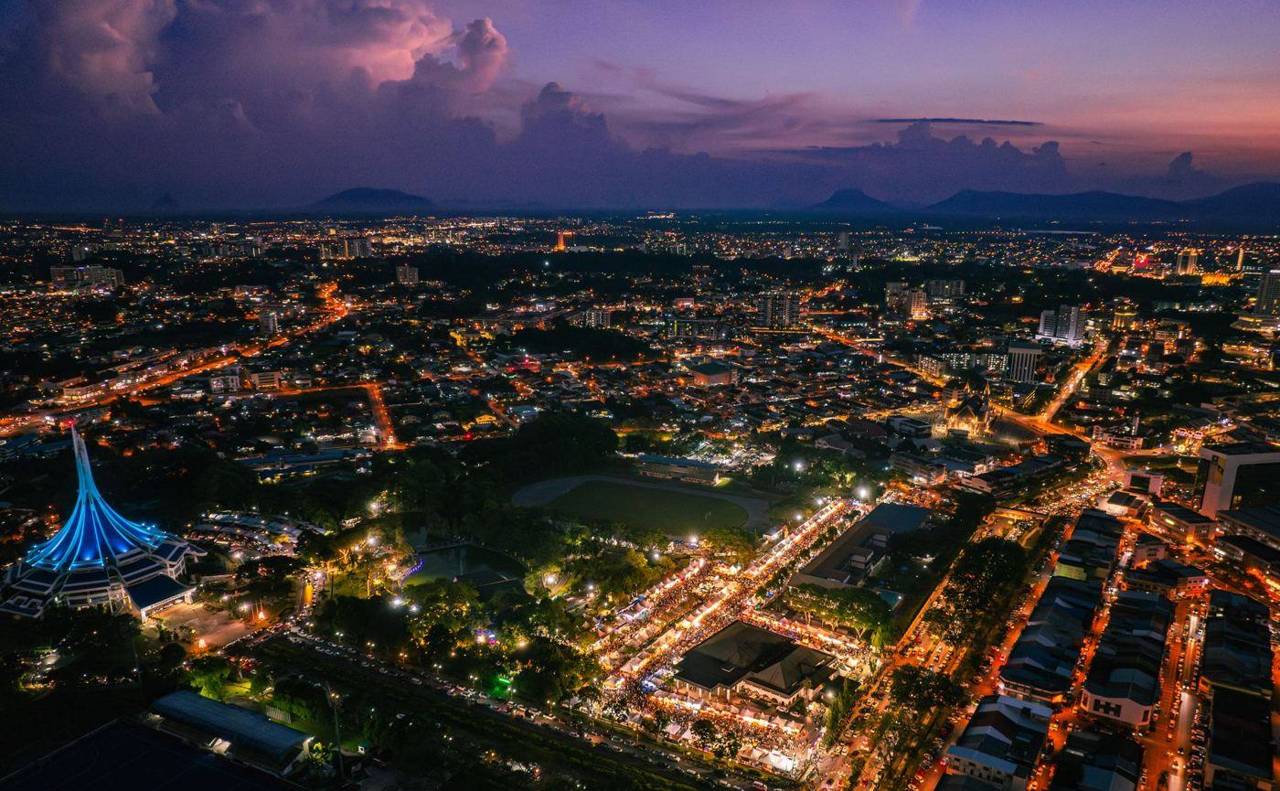
Kuching and Bako
Sarawak in Borneo: the riverside city of Kuching, the semi-wild orangutans of Semenggoh, and Bako park with proboscis monkeys and sea cliffs.