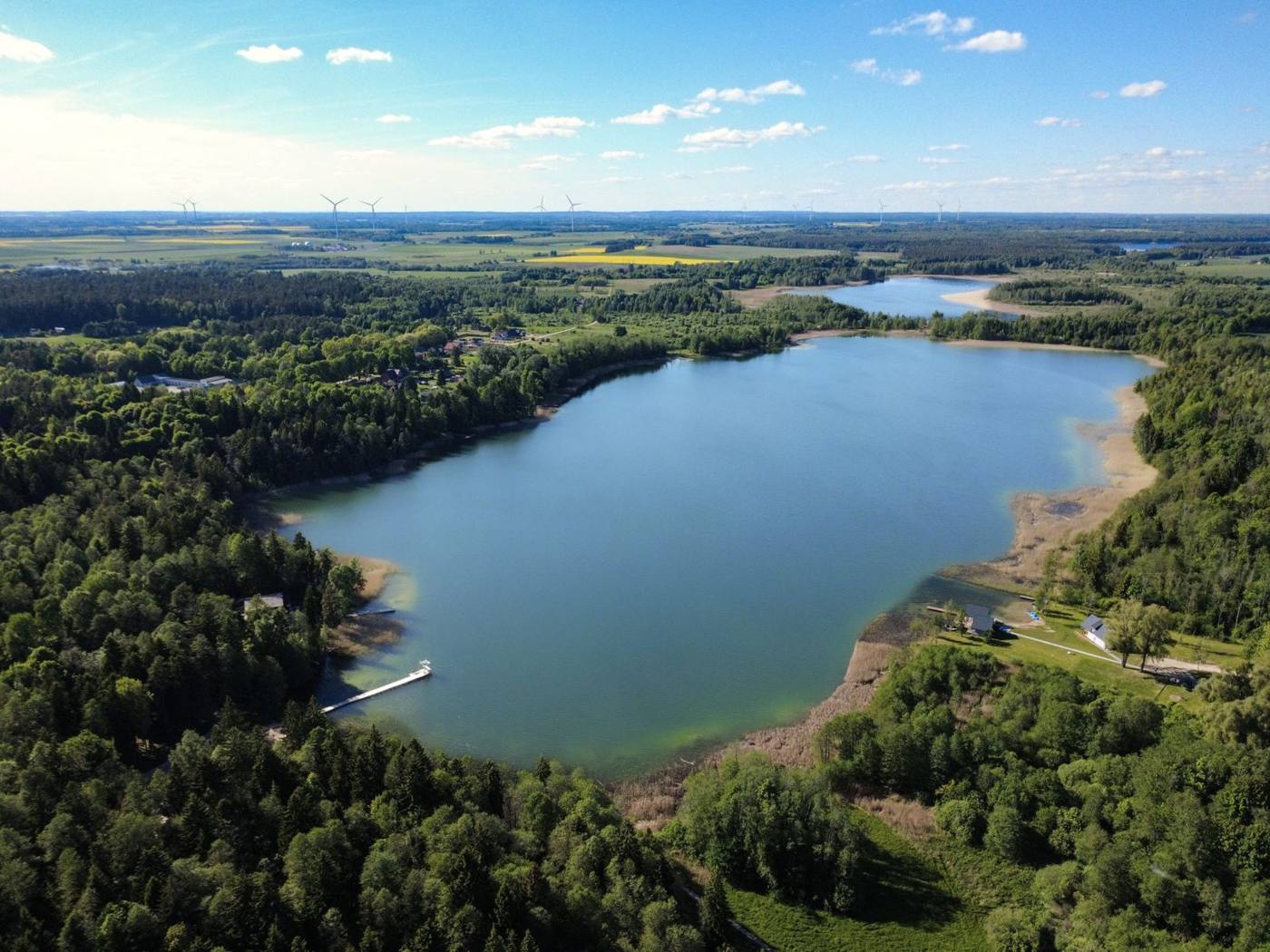
Aukštaitija and the lakes
Lithuania's oldest national park: over a hundred linked lakes, Ladakalnis hill, the wooden church of Palūšė and the villages of Salos and Šuminai.
- Vilnius
- Ignalina
- Palūšė
- Ladakalnis
- Stripeikiai
Day by day
- Day 1
From Vilnius to Palūšė
This trip takes you to Aukštaitija National Park, the oldest in Lithuania, founded in 1974, in the north-east of the country: 126 lakes among woods and hills, linked by rivers and channels. In four days you see the wooden church of Palūšė, the lakes by canoe, Ladakalnis hill, the beekeeping museum of Stripeikiai and the villages of Salos and Šuminai. You need a car.
Before you go: Italian citizens only need an electronic identity card valid for travel abroad or a passport, with no visa: Lithuania is in the European Union and the Schengen area. Other nationalities should check their own rules. The crossings with Belarus have been closed several times, sometimes at short notice, and Italy's foreign ministry advises against travel to Russia: this route does not cross the border. Some areas on this trip are close to borders or places where the situation changes often: check your government's travel advice before booking and again before you leave.
In the morning leave Vilnius heading north-east: in under two hours you reach Palūšė, a small village on the shore of Lake Lūšiai, the largest in the park, a few kilometres from Ignalina. The park visitor centre is here, where you pick up maps of the trails and canoe routes.
In the afternoon visit the Church of Saint Joseph, built of wood in 1750 and considered one of the oldest wooden churches left in Lithuania. According to tradition it was put together without nails, using only saws and axes.
At sunset walk out on the jetty over the lake, when the water is still and the woods are reflected in it.
Sleep on a rural tourism farm, the typical accommodation in the area.
Practical tip: stay inside the park and do not head east towards the Belarusian border; from spring to autumn use tick repellent when you walk through grass.
- Day 2
By canoe among the lakes
Today you discover the park in the best way: by canoe, from one lake to the next, along the waterways that link them.
In the morning hire a canoe in Palūšė and set off from Lake Lūšiai. The classic route follows the chain of lakes westwards, through narrow channels among the reeds, where the water is so calm that you hear only the sound of the paddles. Along the shore you see herons, grebes and, with a bit of luck, a beaver or its dams of branches.
Choose a half day trip if you have no experience, or a full day route with a car transfer back arranged by the people who hire you the canoe.
At midday stop at one of the equipped rest areas on the shore, with wooden tables and fire pits. Swim in the clean water of the lake: in summer it is cool but pleasant.
In the afternoon paddle back at an easy pace. If you prefer dry land, the park's cycle trails run round the lakes on dirt roads and forest tracks.
In the evening try cepelinai, large potato dumplings filled with meat, served with sour cream, or smoked fish from the lakes.
Practical tip: before you set off, tell the people who hire you the canoe which route you are taking, bring a waterproof bag for your phone and documents and always wear a life jacket; on the bigger lakes the wind quickly whips up waves.
- Day 3
Ladakalnis, Stripeikiai and the villages
Today you tour the park by car and on foot, between a panoramic hill, an unusual museum and wooden villages.
In the morning climb Ladakalnis hill, the most famous viewpoint in the park. A short path takes you to the top, where you see several lakes at once, among pine and birch woods. Go early, when there is a light mist over the water.
Then drive to Ginučiai, with its old water mill on the river and the hill fort of the ancient Balts, from which you look out over the lakes.
At midday go to Stripeikiai, to the museum of ancient beekeeping. Outdoors, among the meadows, you see hives hollowed out of tree trunks, wooden statues of the bee gods of Lithuanian mythology and the tools of the old beekeepers, who climbed trees to collect honey. Check prices and times, because it opens mainly in summer. Buy a jar of honey from the park.
In the afternoon visit the villages of Salos and Šuminai, protected as ethnographic villages. The wooden houses with painted windows, the barns and the vegetable gardens are laid out as they used to be, along a single street or scattered among the fields. Walk slowly and respect the lives of the people who live there.
At sunset stop on the shore of a lake away from the roads and wait for the sky to change colour.
Practical tip: many of the park's roads are unpaved and narrow; drive slowly, especially after rain, and fill up with fuel in Ignalina before you go in.
- Day 4
Back to Vilnius
On the last day you enjoy a final morning on the lakes and return to the capital.
In the morning walk one of the park's nature trails, waymarked and with panels explaining the plants and animals. Some have wooden observation towers from which you see the lakes from above. If it is warm, have a last swim in the lake.
Then stop in Ignalina for a coffee and a few supplies for the journey: honey, farm cheese and rye bread.
In the early afternoon drive back to Vilnius, under two hours on roads through woods and fields. If you have time, stop at Molėtai, in an area with more lakes, and at the nearby astronomical observatory, if it is open: check prices and times.
Trip summary: in four days you have seen the oldest national park in Lithuania, with the wooden church of Palūšė, the lakes explored by canoe, the Ladakalnis viewpoint, the Ginučiai mill, the beekeeping museum of Stripeikiai and the villages of Salos and Šuminai. It is the slow Lithuania of lakes and forests, with few tourists and plenty of water.
When to go: from June to September, when the water is warm enough to swim and the days are long. In June and July it gets dark very late. In September the woods change colour and there are fewer people.
Practical tip: rural tourism farms are few and fill up in summer, especially at weekends; book ahead and ask whether they also offer canoes or bicycles.
Lake Lithuania, ideal by canoe or bike. Simple lodging in rural tourism farms. The north-east near the Belarus border should be avoided.
Before you go
- Documents and visa
- EU citizens need a valid identity card or passport: Lithuania is in the EU and the Schengen area. Other nationalities should check the Schengen rules and the Entry/Exit System.
- Health and vaccines
- No vaccines required. EU citizens should bring their EHIC, plus insurance covering medical costs and repatriation. From spring to autumn the forests and meadows have ticks that can carry encephalitis: ask your doctor about the vaccine. Emergencies: 112.
- Money and payments
- Euro. Cards and phone payments are accepted almost everywhere; carry some cash for markets and villages.
- Power sockets
- Types C and F, 230 volts.
- Time zone
- Eastern European Time (UTC+2, summer UTC+3).
- Safety
- A safe country, with pickpockets in busy places in Vilnius and on public transport. Lithuania closed its border with Belarus in autumn 2025 after balloons crossed from Belarus, which also closed Vilnius airport several times; crossings can close again at short notice. Do not cross into Belarus or into the Russian region of Kaliningrad. The UK reports that some Ukrainian drones aimed at Russia have entered Lithuanian airspace: follow official guidance. Official advice: GOV.UK.
Information checked in November 2026 for Italian and EU citizens. Rules change: always check before you travel.
Variations
Shorter: two days, with Palūšė and the canoe on the first day and Ladakalnis with Stripeikiai on the second.
Longer: add a day in Vilnius or two days in Kaunas and Trakai.
Frequently asked questions
Do you need experience to canoe?
No, the lakes are calm and there are short routes for beginners. Always wear a life jacket and tell someone your route.
Can you do it without a car?
It is difficult: buses reach Ignalina, but inside the park you get around by car, bike or canoe. Some farms arrange transfers.
Is the park close to Belarus?
The park is in the north-east of the country, not far from the border. Stay inside the park, do not head towards the border and check your government's travel advice before leaving.
Indicative itinerary written by World Atlas. Before booking, check timetables, seasonal openings, documents and safety.
 4 daysEasy
Palanga and Klaipėda
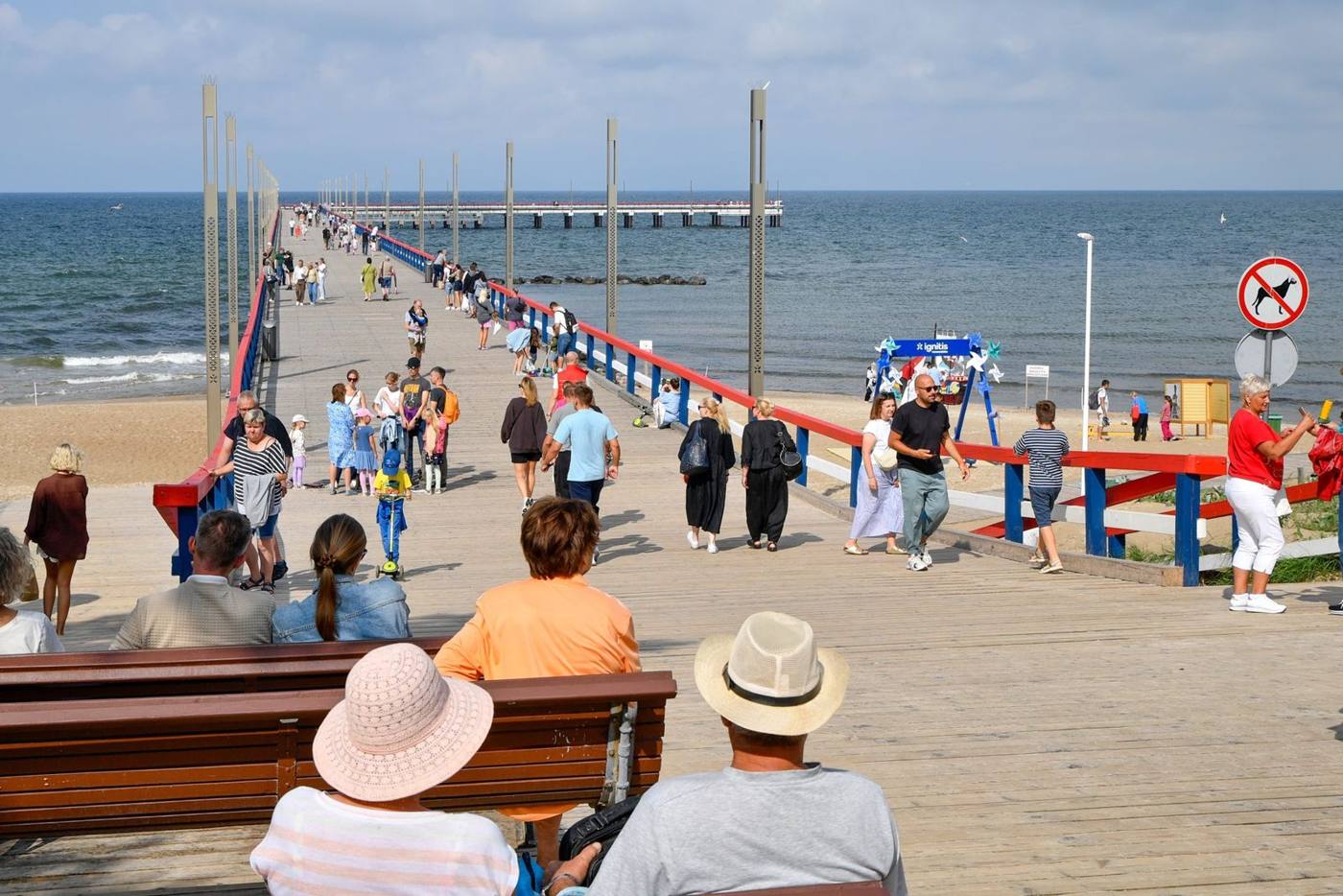
The resort of Palanga with the Amber Museum in the Tiškevičiai palace, the pier at sunset, Klaipėda's old town and the Sea Museum.
 3 daysEasy
Samogitia
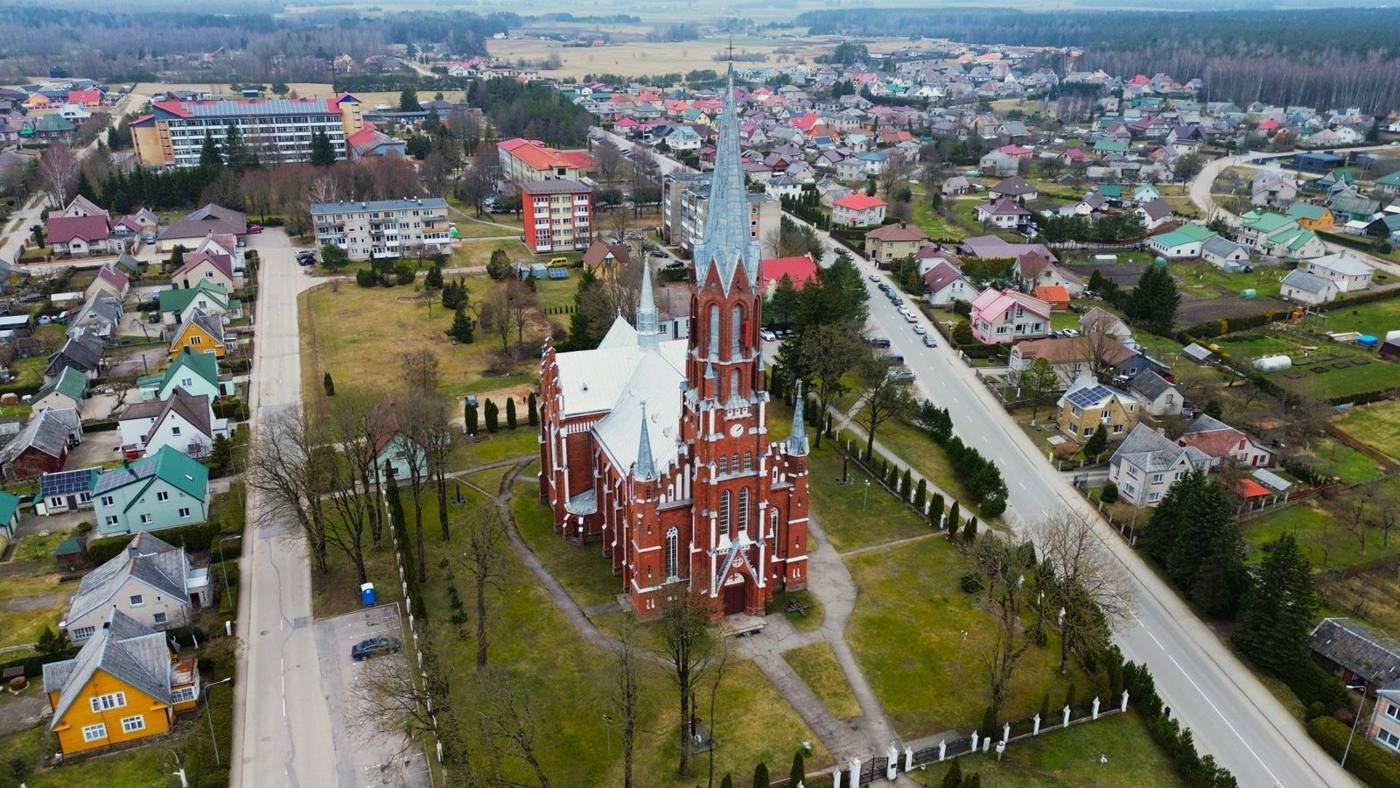
Žemaitija park with Lake Plateliai and the Soviet nuclear missile base at Plokštinė, now a Cold War museum, and the town of Telšiai.
 2 daysEasy
Kernavė and around Vilnius
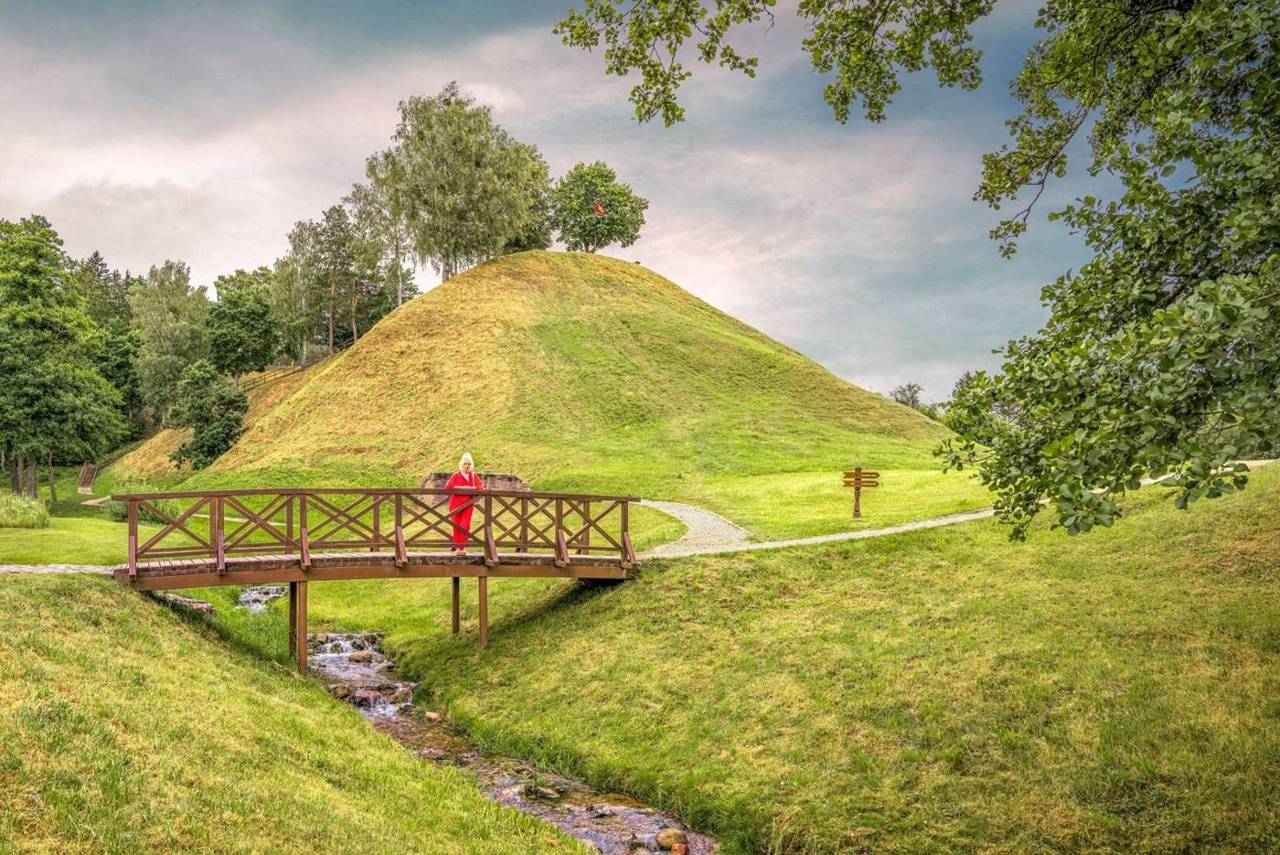
The UNESCO ancient capital of Kernavė with its mounds over the Neris river, the Europos Parkas sculpture park near the geographical centre of Europe and Užutrakis manor.