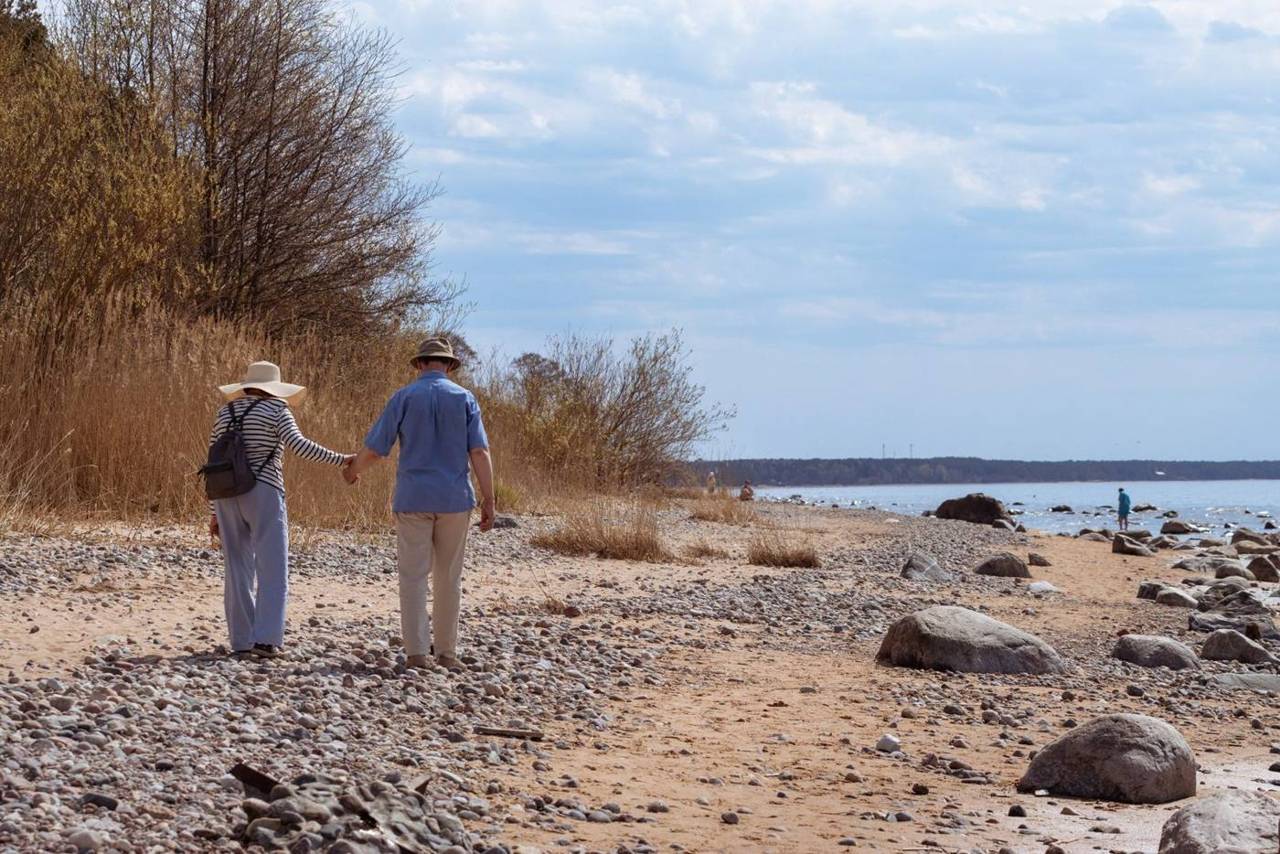
The Vidzeme coast
The red cliffs of Veczemji, the stony beaches of Tūja, the fishing village of Salacgrīva and the North Vidzeme bog, towards the Estonian border.
- Saulkrasti
- Veczemji
- Tūja
- Salacgrīva
- Ainaži
Day by day
- Day 1
Saulkrasti and the White Dune
This trip takes you along the Vidzeme coast, north of Riga, up to the border with Estonia: white dunes, red sandstone cliffs, stony beaches, fishing villages and the coastal meadows of the North Vidzeme Biosphere Reserve. You travel by train, by bus or by bike, along the EuroVelo 13 cycle route.
Before you go: Italian citizens can enter Latvia with an electronic identity card or a passport, with no visa needed. Latvia is in the European Union and the Schengen area, and the currency is the euro. Other nationalities should check their own rules. The country is safe; in Riga, at stations and on crowded trains watch out for pickpockets. The borders with Russia and Belarus are closed or heavily restricted, but this coast is far from them. The border with Estonia, at Ainaži, is open like all internal Schengen borders.
From Riga take the local train north: in less than an hour you reach Saulkrasti, a small holiday town between the pine forest and the sea. Drop your bag and walk to the White Dune, a wall of pale sand at the mouth of the Inčupe river, which Latvians love at sunset.
Then follow the Sunset Trail, a walk of a few kilometres along the coast, through pines, wooden steps and small viewpoints over the Gulf of Riga. The beach is wide, with fine sand, and even in summer it is rarely crowded.
In the evening taste smoked fish from the stalls along the road and dark rye bread, and watch the sun go down over the sea.
Practical tip: if you travel by bike, buy a bike ticket for the train and check the timetable, because local services heading north are few.
- Day 2
The red cliffs of Veczemji and the stones of Tūja
Today you see the wildest stretch of the coast, where sand gives way to sandstone and boulders.
From Saulkrasti carry on north by bus or by bike, for about thirty kilometres. Stop at the red cliffs of Veczemji, south of Tūja. They are low walls of Devonian sandstone, red and orange, carved by the sea into small caves, niches and arches. Walk along the beach at their foot and look at the layers of rock, which turn brick red in the afternoon sun. Do not climb onto the edge, because the sandstone is crumbly and prone to collapse.
Continue on foot along the shore to Tūja. Here the beach is made of pebbles and granite boulders, brought by glaciers many thousands of years ago. It is a different landscape from the long sandy beaches of the rest of Latvia, closer to northern Estonia. On calm days the water is clear; on windy days the waves crash on the stones.
In the afternoon find a sheltered spot for a picnic with rye bread, cheese and the strawberries or blueberries sold at roadside stalls, which in summer you find almost everywhere in the countryside.
In the evening sleep in Tūja or nearby, in a simple guesthouse or a campsite by the sea.
Practical tip: bring water shoes or closed sandals, because walking barefoot on the stony beaches of Tūja is uncomfortable and wet stones are slippery.
- Day 3
Salacgrīva, Ainaži and the Randu meadows
On the third day you reach the far north of the Latvian coast, a few kilometres from Estonia.
In the morning continue to Salacgrīva, a small port town at the mouth of the Salaca river. Walk along the river and the harbour, with fishing boats and timber stores. The Salaca is famous for its lampreys: for centuries fishermen have caught them with wooden weirs built across the river, and in autumn and winter you see them roasted and marinated at the markets. If you are here in the right season, try them.
Then head north to Ainaži, the last village before the border. In 1864 the first Latvian naval school was founded here, at the wish of the writer Krišjānis Valdemārs, to train Latvian sailors and captains. The building houses a small maritime museum, with ship models and navigation instruments. Check prices and times.
In the afternoon walk through the Randu coastal meadows, between Salacgrīva and Ainaži, in the North Vidzeme Biosphere Reserve. A wooden boardwalk crosses the wet meadows, reed beds and pools by the sea, and from an observation tower you see waterbirds, storks and, in spring and autumn, migrating flocks.
In the evening go back to Salacgrīva to sleep.
Practical tip: bring binoculars and mosquito repellent: in the Randu meadows, in summer and with little wind, there are a lot of mosquitoes.
- Day 4
Back to Riga along the coast
On the last day you return to Riga following the coast, with a few stops along the way.
In the morning, if you are cycling, ride a final stretch of EuroVelo 13 south, on cycle paths and back roads through the pines. If you are using public transport, take the bus to Riga, which follows the coast road: from the window you see forests, villages and, at times, the sea.
Stop for a break at one of the beaches you have not yet seen, for a last swim if the weather allows. The sea of the Gulf of Riga is shallow and cold even in summer, with the water rarely above twenty degrees, but on hot days a quick dip is pleasant.
In the afternoon you arrive in Riga. If you have time, take a walk in the old town or at the Central Market before you leave.
Trip summary: in four days you have seen the White Dune and the Sunset Trail at Saulkrasti, the red cliffs of Veczemji, the stony beach of Tūja, the port of Salacgrīva with its lamprey fishing, the naval school of Ainaži and the Randu meadows. It is a quiet coast with few visitors, ideal for those who love walking and cycling. You sleep in simple guesthouses and campsites.
When to go: from June to August, when the days are long and it is warmest. In late June, for the Midsummer festival, many places close or are full: book well ahead.
Practical tip: always keep a windproof jacket in your bag, because on the coast the wind changes quickly even on sunny days.
A wild, little-visited coast, perfect by bike along EuroVelo 13. The sea is cold and often rough. Accommodation is simple guesthouses and campsites.
Before you go
- Documents and visa
- EU citizens need a valid identity card or passport: Latvia is in the EU and the Schengen area. Other nationalities should check the Schengen rules and the Entry/Exit System.
- Health and vaccines
- No vaccines required. EU citizens should bring their EHIC, plus insurance covering medical costs and repatriation. Throughout the country, from spring to autumn, forests and meadows have ticks that can carry encephalitis: if you camp, canoe or hike, ask your doctor about the vaccine. Emergencies: 112.
- Money and payments
- Euro. Cards and phone payments are accepted almost everywhere; carry some cash for markets and small rest areas in the countryside.
- Power sockets
- Types C and F, 230 volts: you need an adapter for British plugs.
- Time zone
- Eastern European Time (UTC+2, summer UTC+3).
- Safety
- A safe country, with pickpocketing and bag snatching in Riga's Old Town, at the Central Market and at stations; watch your drinks and beware of card fraud. The border with Belarus is closed or heavily restricted, with closures at short notice, and the area within 2 km of it requires a special licence from the State Border Guard; crossings into Russia are also reduced. Do not try to cross these borders. Some Ukrainian drones aimed at Russia have crossed into Latvian airspace: follow official guidance. Official advice: GOV.UK.
Information checked in November 2026 for Italian and EU citizens. Rules change: always check before you travel.
Variations
Shorter version: in two days from Riga you see Saulkrasti, the Veczemji cliffs and the beach at Tūja.
Longer version: carry on across the border to Pärnu, in Estonia, and return to Riga by bus after six days.
Frequently asked questions
Can you cycle the Vidzeme coast?
Yes, the EuroVelo 13 route follows the whole coast, on cycle paths and quiet back roads. The terrain is almost flat; the wind is the main difficulty.
Can you swim in the sea?
Yes, but it is shallow and cold, often rough. On hot days in July and August people swim happily; otherwise it is more a coast for walking.
Can you go to Estonia from Ainaži?
Yes, the border with Estonia is an internal Schengen border, with no fixed checks. Always carry your identity card or passport anyway.
Indicative itinerary written by World Atlas. Before booking, check timetables, seasonal openings, documents and safety.
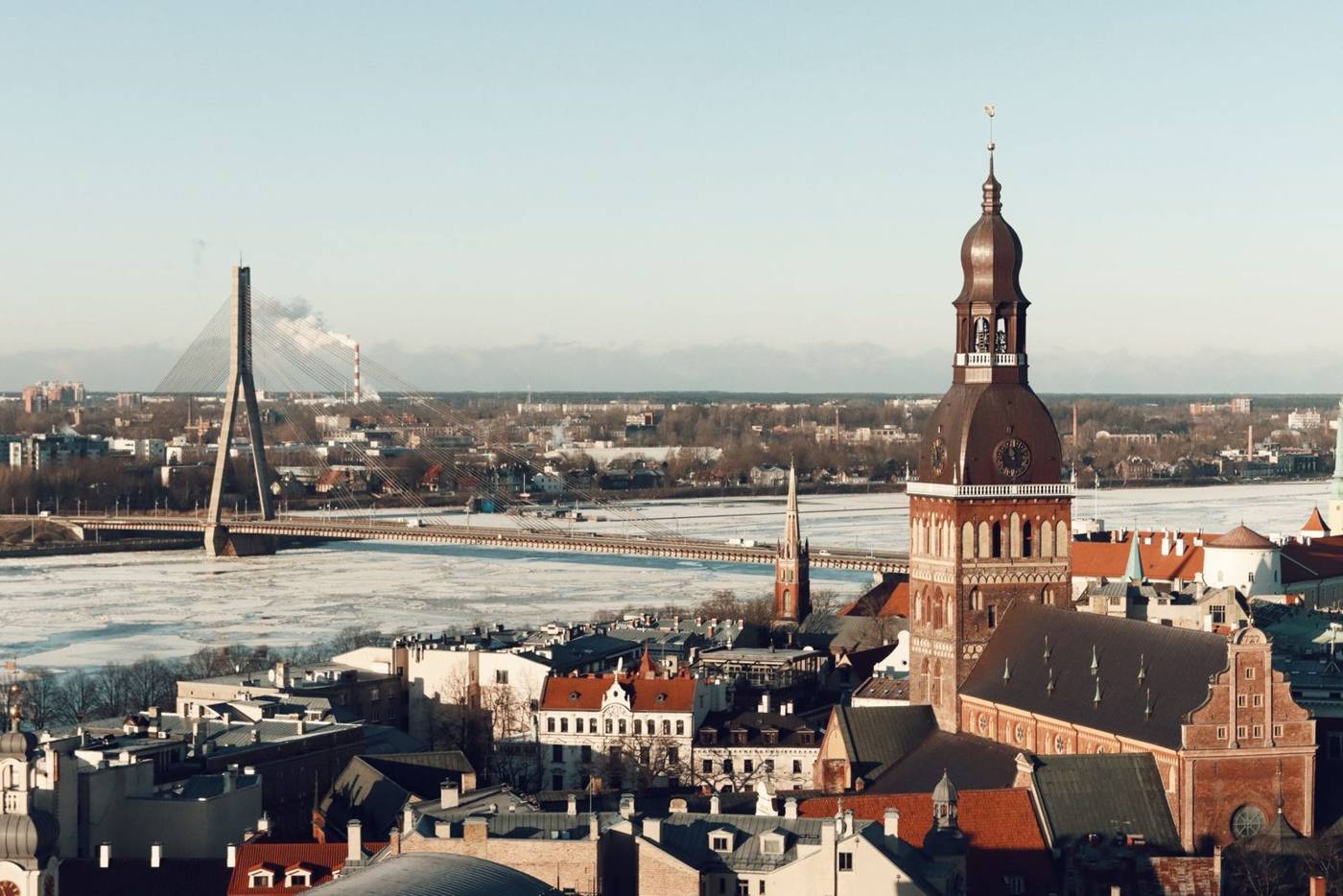 3 daysEasy
Riga in winter
Riga under snow: the Christmas market at the Dome, the first decorated Christmas tree in history according to local tradition, hot Black Balsam and garden saunas.
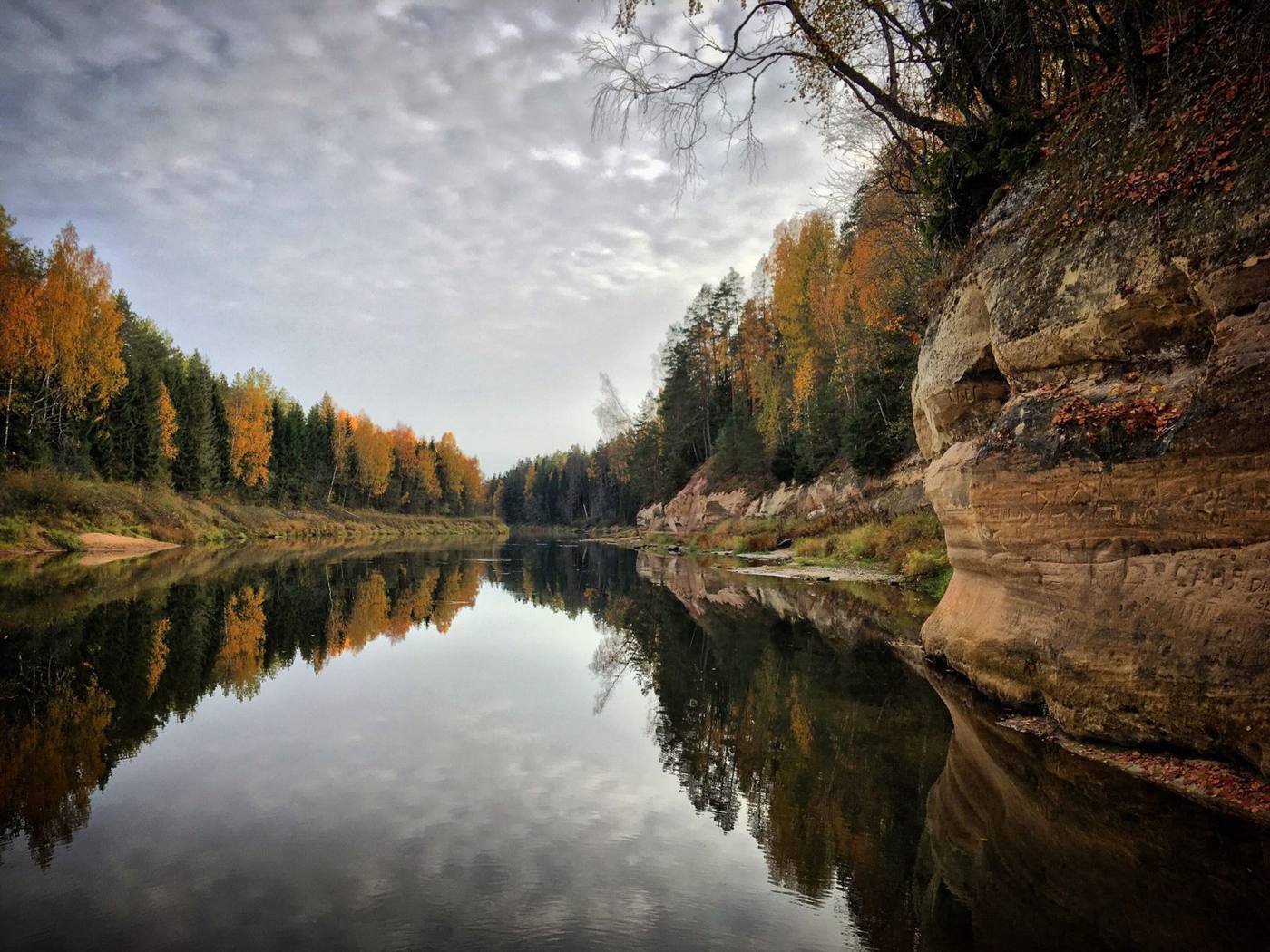 4 daysModerate
Canoeing the Gauja
Three days canoeing from Valmiera to Sigulda on Latvia's most beautiful river, among sandstone cliffs, woods and riverside campsites.
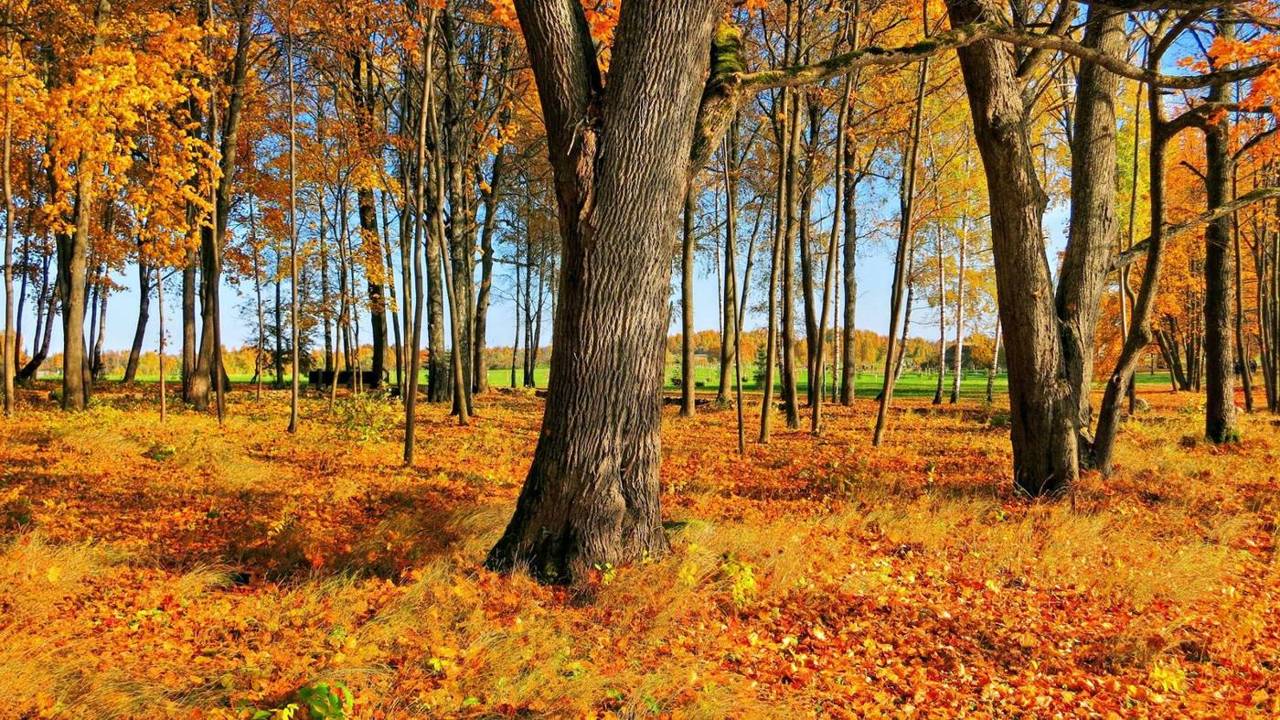 3 daysEasy
The Daugava valley
Along Latvia's great river: Koknese castle ruins, the Garden of Destinies, Aizkraukle and the town of Jēkabpils with its open-air museums.