Tsavo East and Watamu
Two days in the park closest to the sea and a week of Indian Ocean: coral reef, turtles and the Mida Creek lagoon.
- Mombasa
- Tsavo East
- Watamu
- Mida Creek
- Malindi
Day by day
- Day 1
Arrival in Mombasa
This trip combines a safari in Tsavo East, one of the largest parks in East Africa, with a few days by the sea at Watamu, on the Indian Ocean coast, among coral reefs, sea turtles, mangroves and Swahili ruins. It suits travellers who want to see wildlife without internal flights and finish with some rest.
Important notice: to enter Kenya you need an electronic travel authorisation, requested online before departure. The United States government has rated Kenya at level 3 of 4 since 19 October 2026, partly because of an Ebola outbreak in the region, crime and the risk of terrorism, and advises against the coast north of Malindi. This itinerary stays south of Malindi. Check the latest advice before you leave.
You fly into Mombasa, Kenya's second city. If you arrive early, visit Fort Jesus, the fortress built by the Portuguese at the end of the sixteenth century, a UNESCO site, and walk through the lanes of the old town, with its carved wooden doors and balconies.
In the evening have dinner with coastal cooking: fish in coconut, pilau rice and chapati. Rest, because tomorrow you leave early.
Sleep in Mombasa or on the nearby coast.
Practical tip: the best time is from June to October and from January to February, when it is drier. In April and May it rains a lot and some park tracks become difficult.
- Day 2
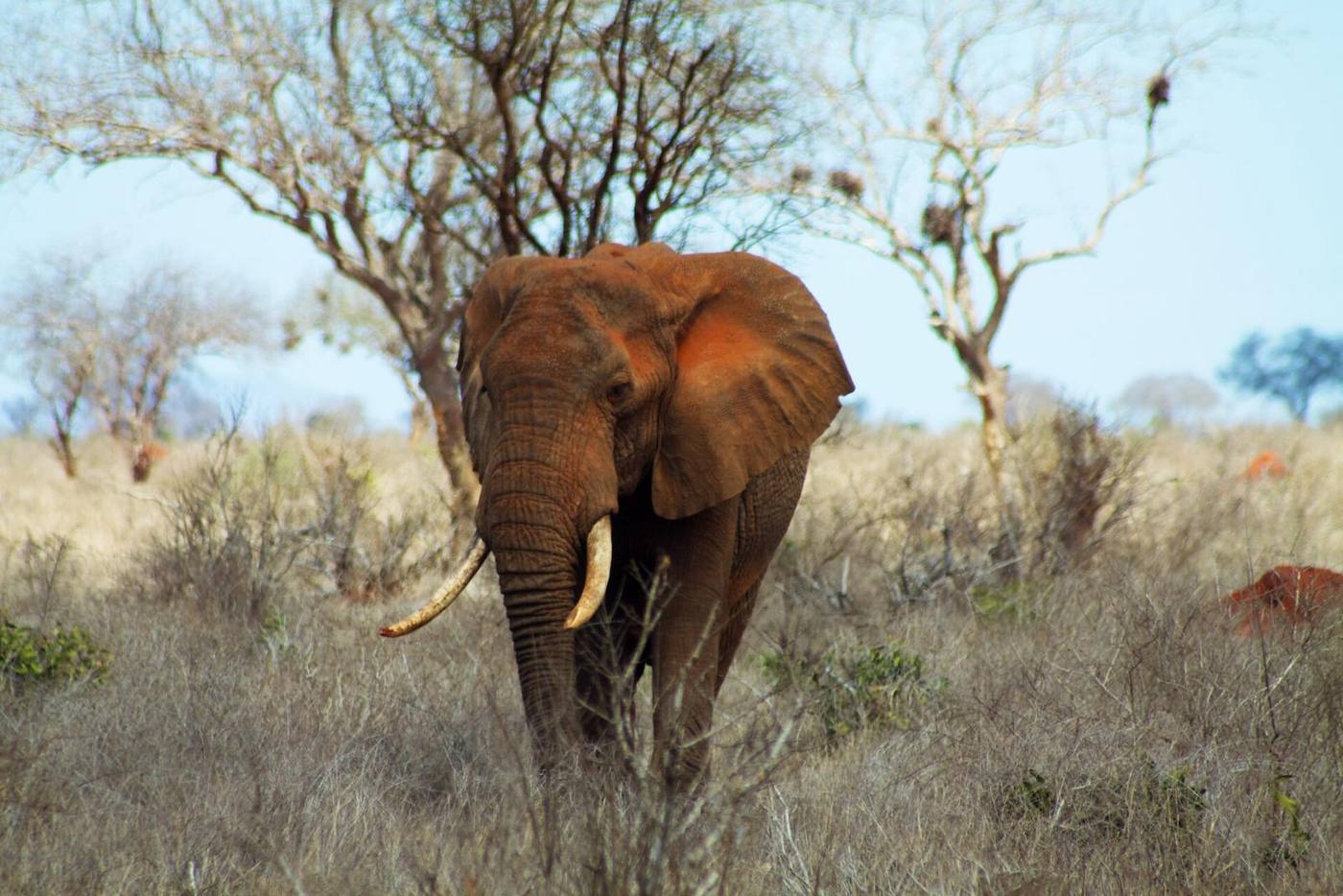
Tsavo East: the red elephants
Early in the morning you leave for Tsavo East. From Mombasa you take the Nairobi road to Voi, about three and a half hours with the lorry traffic, and enter the park through the main gate. The safari is done in a vehicle with a pop up roof, with a driver and guide.
Tsavo East and Tsavo West together form the largest protected area in Kenya. Tsavo East is flatter and drier: bush savannah, baobab trees, seasonal rivers and wide open spaces. The animals are less concentrated than in the Masai Mara, but you see them without crowds of vehicles.
The symbol of the park is its red elephants: they are actually grey, but they cover themselves in dust and mud from the red earth to protect themselves from the sun and insects. In the dry months they gather around the waterholes.
In the early afternoon go on a game drive towards Aruba dam, a small artificial lake where elephants, buffalo, zebras, gazelles and water birds come to drink. With luck you see lions, which here have a short or almost absent mane.
Entrance fees to Kenya Wildlife Service parks are paid online or by card: check the current fees for non residents.
Sleep in a tented camp or a lodge inside the park or on its edge.
Practical tip: bring binoculars. In such a large savannah many animals are seen at a distance.
- Day 3
Tsavo East: Lugard Falls and Mudanda Rock
Today you spend the whole day in the park. At dawn go out on the most important game drive: in the cool of the morning the animals move and predators are more active.
Then head north along the Galana river, the main river of the park, with doum palms and acacias along its banks. You reach Lugard Falls, which is in fact a series of rapids where the water rushes between rocks hollowed and carved by the current. Crocodiles live in the water: stay at the marked points and do not climb down onto the rocks near the river. A few kilometres further on there is a spot called Crocodile Point, where crocodiles often bask in the sun.
In the afternoon go to Mudanda Rock, a long ridge of stone that collects rainwater in a natural pool at its foot. You can climb up the rock on foot, with the rangers' permission, and watch the elephants coming to drink. It is one of the most beautiful places in the park in the dry months.
Tsavo is also famous for the story of the man eating lions, which in 1898 attacked the workers building the railway between Mombasa and Lake Victoria.
In the evening, at camp, listen to the sounds of the savannah.
Sleep in Tsavo East.
Practical tip: game drives are done at dawn and in the late afternoon. Rest at camp during the hot hours.
- Day 4
Transfer to Watamu
In the morning take a last short game drive, then leave for the coast. There are two ways to reach Watamu: go back towards Voi and Mombasa and then drive north along the coast, or leave by Sala gate, on the east side of the park, and drive towards Malindi on a partly unpaved road. Check with whoever organises your trip which road is safest and in the best condition: after rain some roads are difficult. The journey takes about four or five hours.
Watamu is a small seaside village with white sand beaches, turquoise water, coral outcrops and a lagoon. It lies inside the Malindi Watamu biosphere reserve, which protects the reef, the mangroves and the coastal forest.
In the afternoon rest on the beach. At low tide you can walk out to the coral islets in front of the coast and see pools full of fish, starfish and crabs. At high tide the water is deep and you can swim.
In the evening have dinner with fresh fish, prawns or lobster, often prepared with spices and coconut.
Sleep in Watamu.
Practical tip: in Watamu many beach sellers offer trips. Book boat outings with a licensed operator or through your accommodation, and pay only after seeing the boat and the life jackets.
- Day 5
Watamu marine park
Today you explore Watamu Marine National Park, managed by the Kenya Wildlife Service. For non residents, entry to the marine parks costs 25 dollars per person: check the current fee, which is usually paid on the boat or online.
In the morning go out on a glass bottom boat to the reef in front of the coast. You see corals, parrotfish, butterflyfish, surgeonfish, moray eels, octopus and often sea turtles. Then you snorkel in a protected area, where fish are plentiful because fishing is not allowed.
At low tide the sea around the reef becomes very shallow: boats go out at the right times. Ask your accommodation for the tide table.
From August to March dolphins are sometimes seen offshore and, in some months, whale sharks. From July to October humpback whales may also pass.
In the afternoon rest on the beach or take a kayak out on the lagoon.
Do not touch the corals, do not walk on them and do not feed the fish: it is forbidden and it damages the reef. Do not buy shells or coral sold on the beach: they are protected.
In the evening watch the sunset from the lagoon, where the water stays calm.
Sleep in Watamu.
Practical tip: wear a long sleeved shirt for snorkelling. The sun on the water burns within minutes.
- Day 6
The turtles and the ruins of Gede
In the morning visit the Watamu sea turtle rescue centre, run by a local association. Here turtles injured by fishing nets, plastic or boats are treated before being released back into the sea. The guides explain the five species that live on the Kenyan coast and the work with fishermen, who are paid to bring turtles caught by accident to the centre instead of killing them. Check the visiting hours and leave a donation.
Between November and March turtles lay their eggs on some beaches in the area: if a nest hatches during your stay, volunteers sometimes invite visitors to watch.
In the afternoon go to the ruins of Gede, a few kilometres from the village, in the forest. Gede was a Swahili town built of coral stone between the twelfth and the seventeenth century, then abandoned. You walk among the remains of houses, mosques, a palace, deep wells and pillar tombs, under huge trees, with monkeys jumping between the walls. The small museum tells the story of trade with Arabia, India and China: pieces of Chinese porcelain were found here.
In the evening return to Watamu.
Sleep in Watamu.
Practical tip: at Gede, in the woods, there are many mosquitoes. Use repellent and long clothes, especially in the evening, because there is malaria on the coast.
- Day 7
Arabuko Sokoke forest and the beach
Early in the morning go to Arabuko Sokoke forest, a few minutes from Watamu. It is the largest remaining coastal forest in East Africa and protects animals that live almost only here, such as the golden rumped elephant shrew, a small mammal with a long nose, and some rare birds that attract enthusiasts from all over the world.
With a guide from the visitor centre, walk on the trails among brachystegia trees and denser forest. In the silence of dawn you hear the birds, see butterflies and sometimes small antelopes. Elephants live in the forest but are rarely seen. From the centre a track also leads to a platform above the trees.
The local guides come from the villages around the forest and work to protect it: it is a good way to support the people who live here.
The afternoon is at no cost. Rest on the beach, swim in the lagoon or walk to the small island you can reach on foot at low tide.
In the evening try the village street food: samosas, chapati, mishkaki, grilled meat skewers, and tropical fruit such as mango and papaya.
Sleep in Watamu.
Practical tip: in the forest bring water and closed shoes. Red ants bite.
- Day 8
Mida Creek by canoe and Malindi
In the morning go to Mida Creek, a large inlet of the sea among the mangroves, behind Watamu. At high tide you paddle a canoe through the channels, guided by local fishermen, among mangroves of different species, herons, kingfishers and, from September to April, many migratory birds arriving from Europe and Asia. At low tide mud flats full of crabs appear.
There is also a raised wooden boardwalk through the mangroves, run by a local community, which leads down to the water: the entry fee helps fund the protection of the area.
In the afternoon go to Malindi, about half an hour to the north. Malindi is an ancient town: in 1498 Vasco da Gama stopped here and found a pilot to cross the ocean to India. The Vasco da Gama pillar, a stone column with the Portuguese cross, stands on a headland above the sea. You can also see the small Portuguese chapel, one of the oldest in East Africa, and the old town with its mosques.
The United States advises against the coast north of Malindi: do not go beyond the town.
In the evening return to Watamu or sleep in Malindi.
Practical tip: go to Mida Creek at high tide. Ask your accommodation for the times the day before.
- Day 9
Departure
On the last day, if your flight leaves in the afternoon, have a last swim in the morning or a walk on the beach at low tide.
There are two ways back. Domestic flights leave Malindi airport for Nairobi, where you connect to international flights: the flight takes about an hour. Or you drive back to Mombasa, about two and a half hours, for direct flights from Mombasa airport. Always leave a margin of time, because traffic on the coast road and near Mombasa can be very slow.
Before you leave, check the rules on plastic bags: they are banned in Kenya and can be confiscated at the airport. Put dirty clothes in cloth bags.
If you have a few more days, you can continue south to Diani, with its long beach, or add a safari in Tsavo West, greener and more mountainous, with clear water springs.
This trip shows two faces of Kenya: the vast, silent savannah of Tsavo and the Swahili coast, with its ancient history and warm sea. Given the risk level set by the United States, travel with a reliable organisation, always keep your documents with you and check the situation every day.
Practical tip: before you leave, see a doctor about vaccinations and malaria prevention, which is needed on the coast and in the parks.
Kenya's most relaxed and cheapest holiday, with charter flights from Italy to Mombasa and Malindi. Tsavo isn't the Mara, but it works well for a short first safari. Watamu has the north coast's finest beach and a strong Italian presence.
Before you go
- Documents and visa
- Valid passport and an eTA, applied for online on the official Kenyan government website before leaving. From 5 October 2026 compulsory government travel health insurance is also required.
- Health and vaccines
- Malaria prevention and the yellow fever vaccine are recommended. Drink only bottled water. Emergencies: 999 or 112.
- Money and payments
- Kenyan shilling. Mobile payment, M-Pesa, is everywhere; cards work in cities and lodges.
- Power sockets
- Type G, 240 volts: you need an adapter for British plugs.
- Time zone
- UTC+3 all year.
- Safety
- The United States has rated Kenya level 3 since 19 October 2026 (Ebola, crime, kidnapping, terrorism, unrest). Do not travel: Garissa, Wajir, Mandera, Lamu, Tana River (except Tsavo), Kilifi north of the C103 road, the coast north of Malindi, Marsabit and Turkana within 50 km of Ethiopia. Official advice: GOV.UK.
Information checked in November 2026 for Italian and EU citizens. Rules change: always check before you travel.
Variations
In 6 days: two days in Tsavo East and three in Watamu, without Arabuko Sokoke and Malindi.
In 12 days: add Tsavo West and a few days on the beach at Diani.
Frequently asked questions
Do I need a visa?
You need an electronic travel authorisation, requested online before you leave. Check the current requirements.
Is it safe?
The United States has rated Kenya at level 3 of 4 since 19 October 2026 and advises against the coast north of Malindi. This itinerary stays south of Malindi. Check the latest advice before you leave.
When is the best time to go?
From June to October and in January and February, the driest months. In April and May it rains a lot.
Indicative itinerary written by World Atlas. Before booking, check timetables, seasonal openings, documents and safety.
 7 daysModerate
Masai Mara and Lake Nakuru
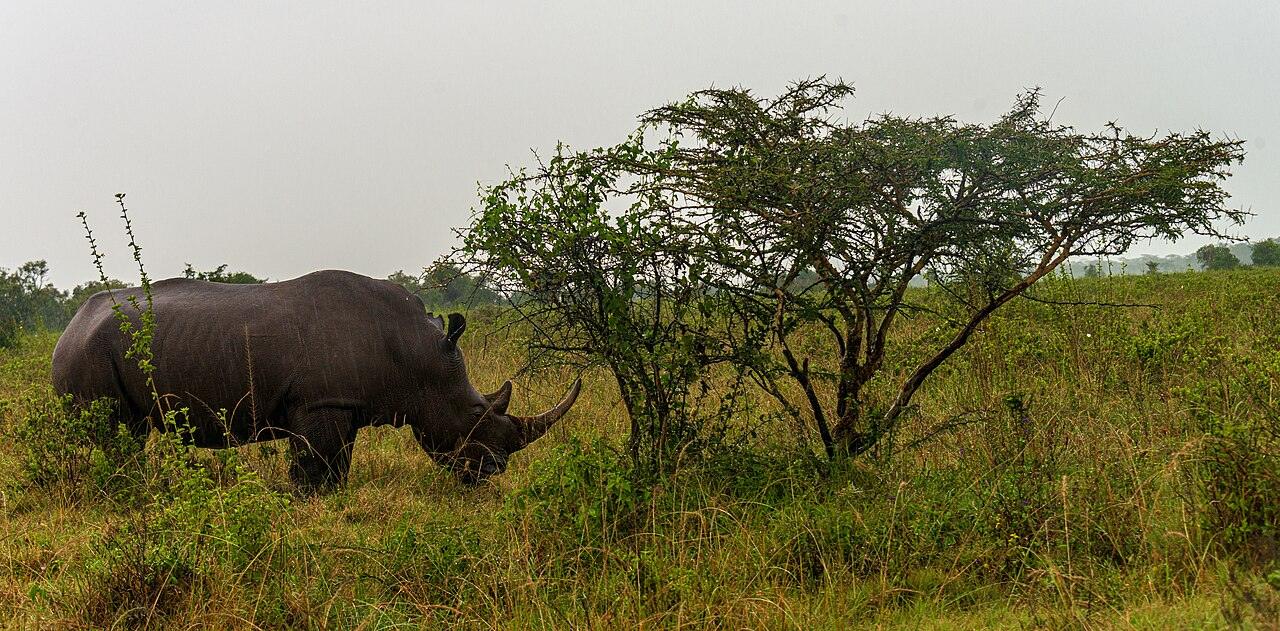
Africa's most famous safari in one week: rhinos at Nakuru, hippos at Naivasha and three days in the Masai Mara.
 15 daysModerate
Samburu, Masai Mara, Amboseli and the coast
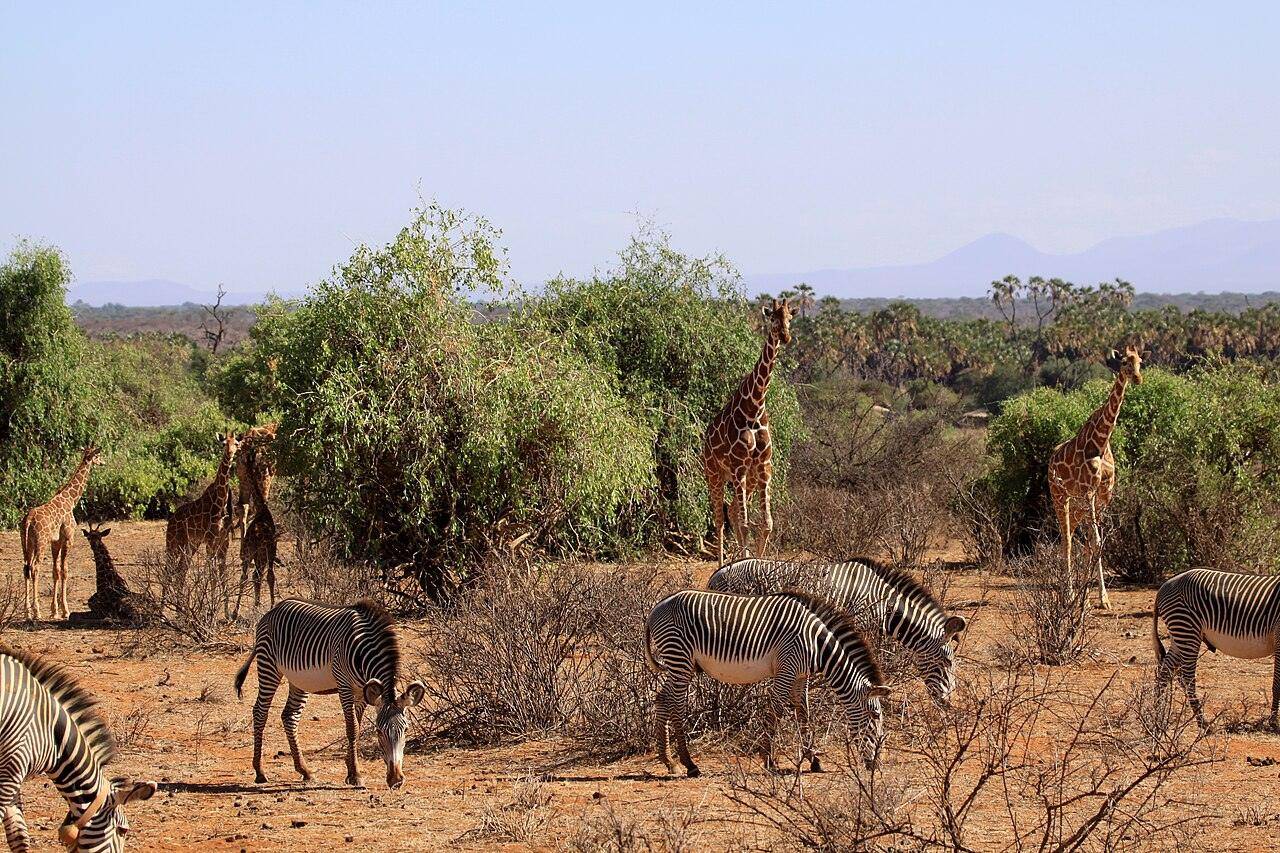
The fullest Kenya: rare northern species, the great savannah, elephants below Kilimanjaro and a finale in Diani.
 12 daysModerate
Magical Kenya: Samburu, the Rift Valley lakes and the Maasai Mara
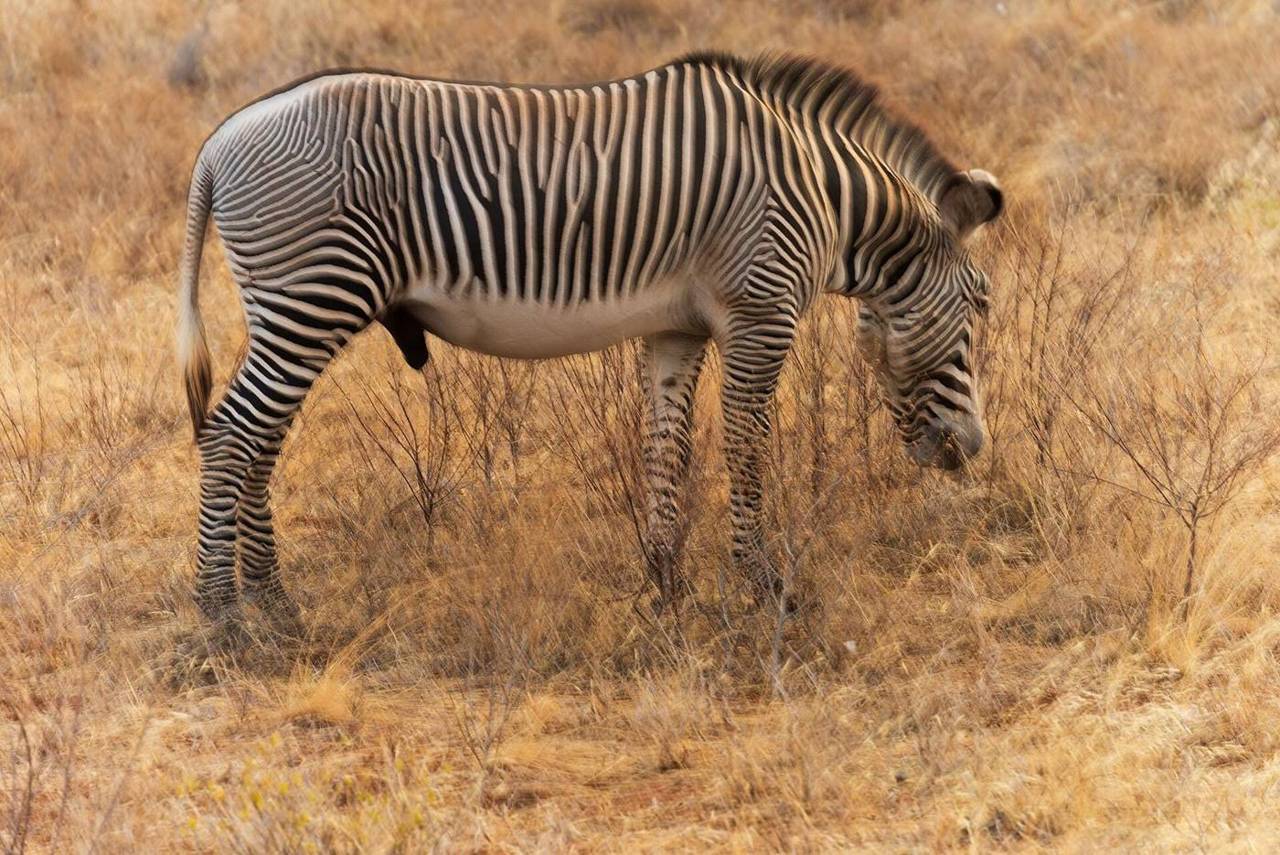
From Mount Kenya to the dry savannahs of the north, then down the Rift Valley lakes to the Maasai Mara: complete Kenya in under two weeks.