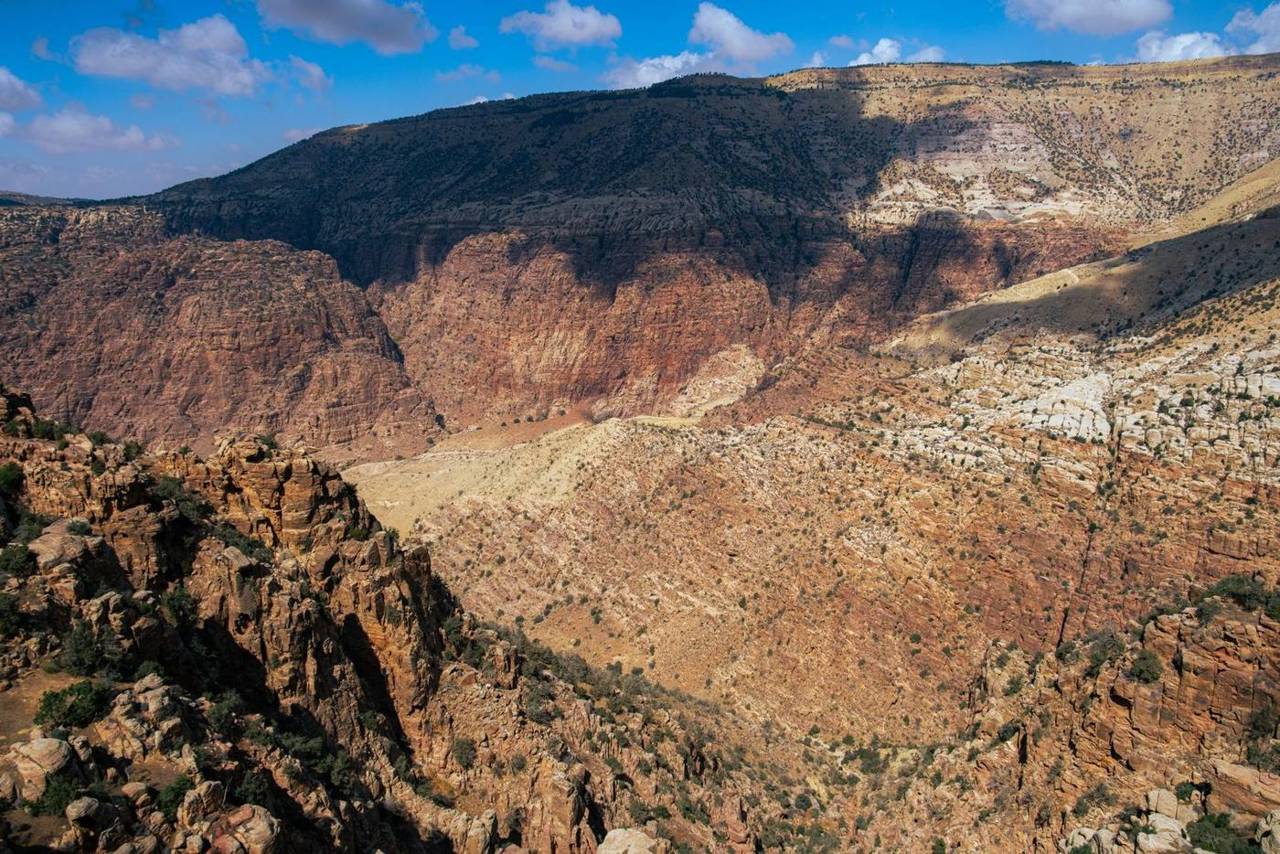
The Canyons of Jordan: Mujib, Hasa and Ghuwayr
Eight days with your feet in the water, walking the gorges that drop from the plateau to the Rift Valley, with a single classic day at Petra.
- Amman
- Dead Sea
- Wadi Mujib
- Wadi Hasa
- Dana
- Feynan
- Wadi Ghuwayr
- Petra
Day by day
- Day 1
Arrival in Amman and down to the Dead Sea
This eight day trip is Jordan of the gorges: Wadi Mujib on the Dead Sea, Wadi Hasa, the walk down from Dana to Feynan, the Wadi Ghuwayr gorge and, to finish, Petra. It is designed for fit groups who can swim. You get around with a driver and with the reserves' guides.
Before you go: Italian citizens need a passport valid for at least six months from entry and a visa, online on the Jordanian Ministry of Interior website or on arrival at Queen Alia airport. The Jordan Pass, bought only on jordanpass.jo, includes Petra and covers the visa fee if you stay at least three nights. Other nationalities should check their own rules.
Safety: with the regional conflict of 2026 flights can be cancelled; the UK advises against all travel within 3 kilometres of the Syrian border and the United States, which rates the country level 3, asks travellers not to go near the borders with Syria and Iraq, far from this route. In the canyons the real danger is flash floods: follow the rules and closures of the RSCN, the Royal Society for the Conservation of Nature that runs the reserves, and go only with authorised guides.
You land at Queen Alia airport and drive down to the Dead Sea, in about an hour. The road loses height among ever barer hills until it is more than four hundred metres below sea level. In the afternoon have your first swim: the water is so salty that you float without effort.
Sleep on the Dead Sea, for two nights.
Practical tip: buy closed water shoes and dry bags before you leave, because you need them every day in the canyons.
- Day 2
The Siq Trail of Wadi Mujib
Today you walk the most famous water trail in Jordan, the Siq Trail of the Mujib Biosphere Reserve.
According to the RSCN, the Siq Trail is done without a guide, takes two or three hours and is normally open from 1 April to 31 October, weather permitting. In winter and after rain the reserve closes it because of the risk of floods. Before going check on the RSCN website that it is open. Bring your passport, which you need at the entrance. Check prices and times.
At the visitor centre, on the Dead Sea road, you receive a life jacket, which you never take off in the water. You go down the steps to the stream and enter the canyon. You walk upstream in the water, first up to your knees and then up to your waist, between walls of red and yellow sandstone tens of metres high, which close in above your head. In some places you use fixed ropes to get over small waterfalls and smooth boulders.
At the end you reach a waterfall that fills the gorge with foam and noise. You go back letting the current carry you, at times sitting in the water.
In the afternoon rest on the shore of the Dead Sea and try the black mud on your skin.
Sleep on the Dead Sea.
Practical tip: put your phone in a waterproof case tied to your body and do not carry anything that fears water.
- Day 3
The Malaqi Trail, if the reserve opens it
Today is the most demanding day in Mujib, but it depends on what the reserve opens in your season.
The Malaqi Trail descends the canyon from above, with pools to swim across, jumps into the water and a final abseil. It is a long day, suitable only for strong swimmers who do not suffer from vertigo. According to the RSCN, the most demanding Mujib trails are done only with a reserve guide. The most recent RSCN price lists, however, show only the Siq Trail and the Ibex Trail: write to the reserve well in advance to find out whether the Malaqi is open and book it at least twenty four hours ahead. The reserve also sets a minimum age for the water trails: check it.
If the Malaqi is open, set off early in the morning with the guide. The route crosses a stony plateau to the edge of the canyon, then descends into an ever narrower gorge. You swim in green pools, slide down polished rocks and finally abseil beside the waterfall, down to the last stretch of the Siq Trail.
If it is not available, repeat the Siq Trail early in the morning, when the gorge is quieter, and rest on the Dead Sea in the afternoon. Never enter the canyons without permission.
In the evening pack your rucksack for the days in the south.
Sleep on the Dead Sea.
Practical tip: if the sky is cloudy over the mountains, even far away, give up: floods come from rain you cannot see.
- Day 4
Wadi Hasa
Today you head south to Wadi Hasa, the long valley that separates the regions of Kerak and Tafila.
Wadi Hasa is not an RSCN reserve and has no visitor centre with official rules. That is why you go only with an authorised local guide who knows the way in, the way out and the weather forecast, and you do not enter if there is the slightest risk of rain on the mountains.
In the morning follow the Dead Sea road south, then climb inland. With the guide you enter the canyon and walk in the bed of the stream, with water up to your ankles or knees. In some stretches the water comes from hot springs and is warm. Pink oleanders, reeds and palms grow all around, and the walls show layers of dark basalt and coloured sandstone. There are pools for a swim and small waterfalls to climb with care.
In the afternoon, after five or six hours of walking, leave the canyon and drive on to Dana, on the King's Highway. The village of Ottoman era stone houses clings to the edge of a great valley. At sunset watch the light sink towards the Arabah desert.
Sleep in Dana.
Practical tip: in Wadi Hasa carry a dry change of clothes in a dry bag, because at the exit the wind in the canyon can be cool.
- Day 5
From Dana to Feynan on foot
Today you do one of Jordan's classic walks: the descent from the village of Dana to Feynan, at the bottom of the valley.
In the RSCN 2026 price list the Wadi Dana Trail appears among the trails of the Dana Biosphere Reserve, with the guide included in the price: book it in advance and check prices and times. Transport to the start of the trail and from the end of the route is not included: also arrange the transfer of your luggage to Feynan separately.
Set off early in the morning, when the air is cool. The path descends from the edge of the plateau along Wadi Dana, among junipers, red, yellow and white sandstone rocks and granite walls. The descent is steep and your knees work hard. The lower you go, the drier the landscape becomes: acacias and desert shrubs appear and, if you are lucky, Nubian ibex on the rocks. Many species of birds also live in the reserve, including the raptors circling above the valley.
In the afternoon you reach Feynan, in an area where copper has been mined since ancient times. Bedouin families live around it with their tents and goats.
In the evening, far from the lights of the cities, look at the sky full of stars.
Sleep in Feynan, for two nights.
Practical tip: use trekking poles for the long descent and carry at least three litres of water each.
- Day 6
The Wadi Ghuwayr gorge
Today you explore Wadi Ghuwayr, a narrow gorge with running water near Feynan.
In the RSCN 2026 price list the Wadi Ghweir Trail appears among the trails of the Dana reserve, with the guide included in the price. Book it beforehand and follow the instructions of the guide and the rangers: if there is a risk of rain the gorge is closed, because the water rises very quickly. Check prices and times.
In the morning set off on foot from Feynan towards the mouth of the gorge, across a plain of stones and shrubs. Then you enter between sandstone walls that narrow to a few metres. You walk in the cool water of the stream, among palms, ferns and mosses, and climb small waterfalls using your hands. In some places the water forms pools where you can stop. The contrast between the green of the gorge and the desert outside is striking. You come back the same way, with the sun already high.
Along the way the guide shows you the traces of the ancient copper mines of the Feynan area, worked for thousands of years, until Roman times.
In the afternoon go back to Feynan and rest in the shade. Before sunset you can take a short walk with a Bedouin family and drink tea in their tent.
Sleep in Feynan.
Practical tip: in Ghuwayr wear closed water shoes with a gripping sole, because wet rocks are slippery.
- Day 7
Petra and the climb to the Monastery
Today you leave the gorges for Petra, the ancient capital of the Nabataeans, a UNESCO World Heritage Site.
Leave Feynan very early: it is about two hours by road to Wadi Musa, the small town at the entrance to the site. Enter Petra at opening time from the visitor centre and walk the Siq, the narrow, winding gorge more than a kilometre long. After the canyons of the last few days, here you walk on dry ground, but the walls are just as high. At the end the Treasury appears, the most famous facade in Petra.
Continue along the Street of Facades to the theatre and climb to the Royal Tombs, with the Urn Tomb and the Silk Tomb. Go down the colonnaded street to Qasr al-Bint.
At midday start the climb to the Monastery, about eight hundred steps cut into the rock. At the top the facade is even bigger than the Treasury. A few minutes higher up there are viewpoints over the Arabah valley, from where you recognise the mountains you crossed on foot over the previous days. The ticket is in the Jordan Pass: check prices and times.
In the late afternoon head back to the exit calmly. In the evening have mansaf for dinner, lamb cooked in dried yoghurt and served on rice, the Jordanian national dish.
Sleep in Wadi Musa.
Practical tip: after so many days of walking, consider climbing to the Monastery in the afternoon, when the facade is in full sun.
- Day 8
Back to Amman for your flight
Today is the day you head home.
In the morning leave Wadi Musa and drive back up to Amman, in about three and a half hours. Choose the road that avoids the city of Ma'an, which the United States asks travellers to reconsider: the King's Highway, slower and scenic, or the Desert Highway joined further north. If your flight is late, stop in Madaba to see the mosaic map in the Church of Saint George.
Trip summary: in eight days you have seen Jordan from inside its gorges. You walked upstream along the Mujib Siq Trail, tried the Malaqi or repeated the Siq, walked in the warm stream of Wadi Hasa among the oleanders, went down on foot from Dana to Feynan, crossed the water and palms of Wadi Ghuwayr and finally saw Petra from the Siq to the Monastery. They are hard days, but they leave you with an image of the country that classic tours do not show.
When to go: the best months are from late April to June and September and October. According to the RSCN, the Mujib Siq Trail is normally open from 1 April to 31 October, weather permitting; in winter the water canyons are closed because of floods. In July and August the heat is intense, above all in Feynan and on the Dead Sea.
Practical tip: keep a spare day in the programme, because with the risk of floods the rangers can close a canyon at the last minute.
For fit groups who have already seen classic Jordan or want to see it from a different angle. The strength is the range of gorges in a few days; the drawback is that everything depends on the weather, as rangers close the canyons when floods are possible and the plan falls apart. Bring closed water shoes and dry bags, and use a local agency to book guides and entry to the RSCN reserves; check current travel advice before you go.
Before you go
- Documents and visa
- Passport valid for at least six months from entry and a tourist visa, applied for online on the Jordanian Ministry of Interior website or on arrival at Queen Alia airport in Amman, paid in dinars. The Jordan Pass, bought only on the official website jordanpass.jo before arrival, covers the visa fee if you stay in Jordan for at least three nights and includes Petra, Jerash, Wadi Rum and more than forty sites.
- Health and vaccines
- No compulsory vaccinations: ask your doctor about recommended ones at least eight weeks before. Protect yourself from the sun and drink plenty of water, above all in the desert and the canyons. Outside Amman and Aqaba medical facilities are basic: you need insurance with medical costs and repatriation. Emergencies: 911.
- Money and payments
- Jordanian dinar. Cards work in cities and hotels; keep cash for villages, the desert and tips.
- Power sockets
- Mixed sockets for type A and C plugs, often also F and G, 230 volts: bring a universal adapter.
- Time zone
- UTC+3 all year.
- Safety
- With regional tensions and the missile and drone attacks of 2026, the United States rates Jordan level 3 and the UK advises against all travel within 3 km of the Syrian border. Do not go near the borders with Syria and Iraq, the refugee camps, Zarqa or Rusayfah; avoid the city of Ma'an. Flights and airspace can close without notice. In the canyons there is a risk of flash floods: follow the reserves' closures. Official advice: GOV.UK.
Information checked in November 2026 for Italian and EU citizens. Rules change: always check before you travel.
Variations
Shorter version: in five days do the Mujib Siq Trail, the walk down from Dana to Feynan and Petra.
Longer version: add two days in Wadi Rum, with a walk among the rocks and a night in a tented camp.
Frequently asked questions
Do you need to be able to swim?
For the Mujib Siq Trail it is enough to stay afloat with the life jacket, but for the Malaqi and the deep pools you must swim well. In the water canyons the life jacket never comes off.
When are the water canyons open?
According to the RSCN, the Mujib Siq Trail is normally open from 1 April to 31 October, weather permitting. In winter and after rain the gorges are closed: always check on the RSCN website.
Do you need a guide?
Yes, for the Malaqi, the Wadi Dana Trail and Wadi Ghuwayr you need the reserve's guides, and in Wadi Hasa an authorised local guide. Only the Mujib Siq Trail is done without a guide.
Indicative itinerary written by World Atlas. Before booking, check timetables, seasonal openings, documents and safety.
 7 daysModerate
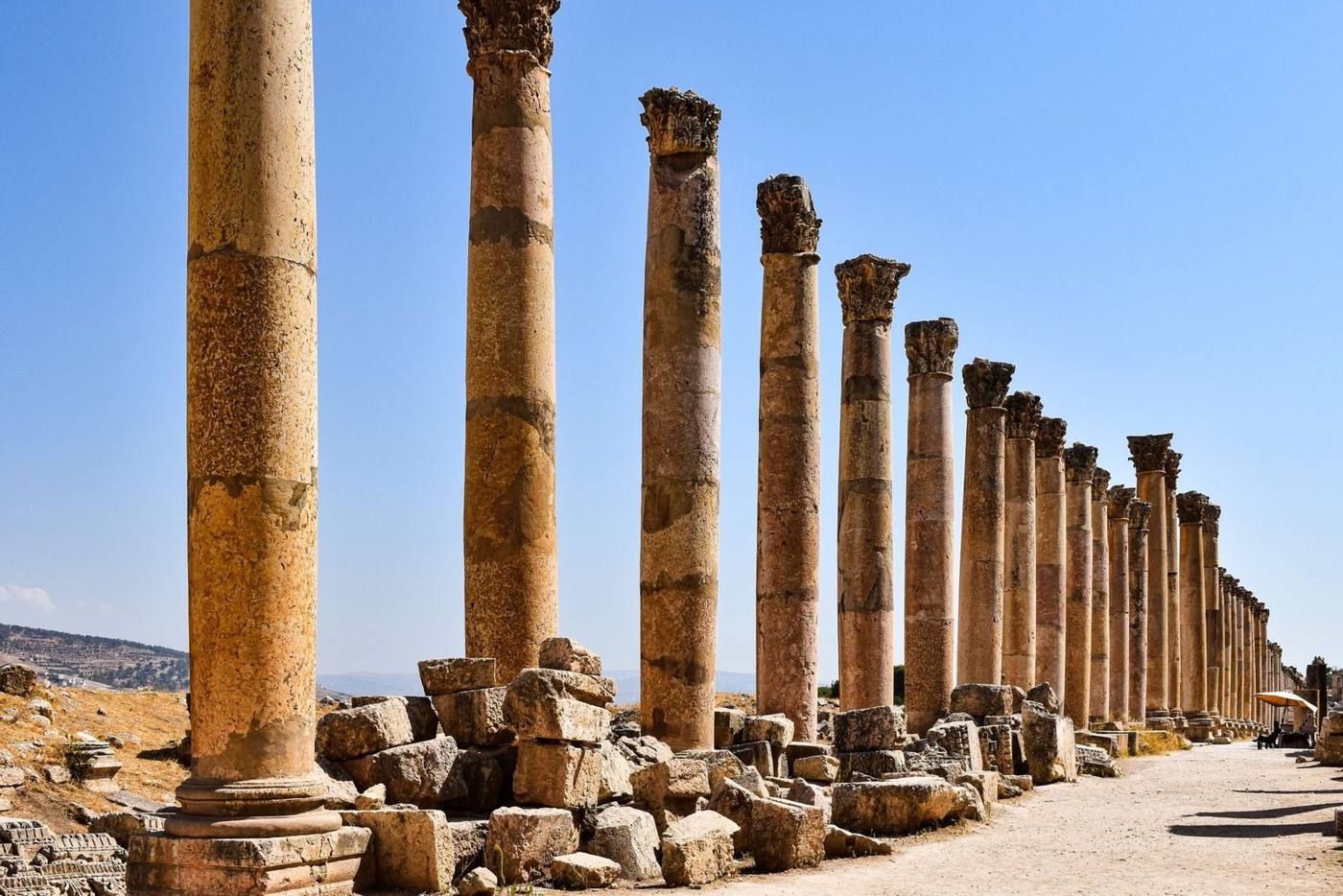
The North on Foot, from Umm Qais to Salt
The first stages of the Jordan Trail through olive groves, oak woods and farming villages, in the green Jordan few people picture, with Jerash halfway.
 8 daysEasy
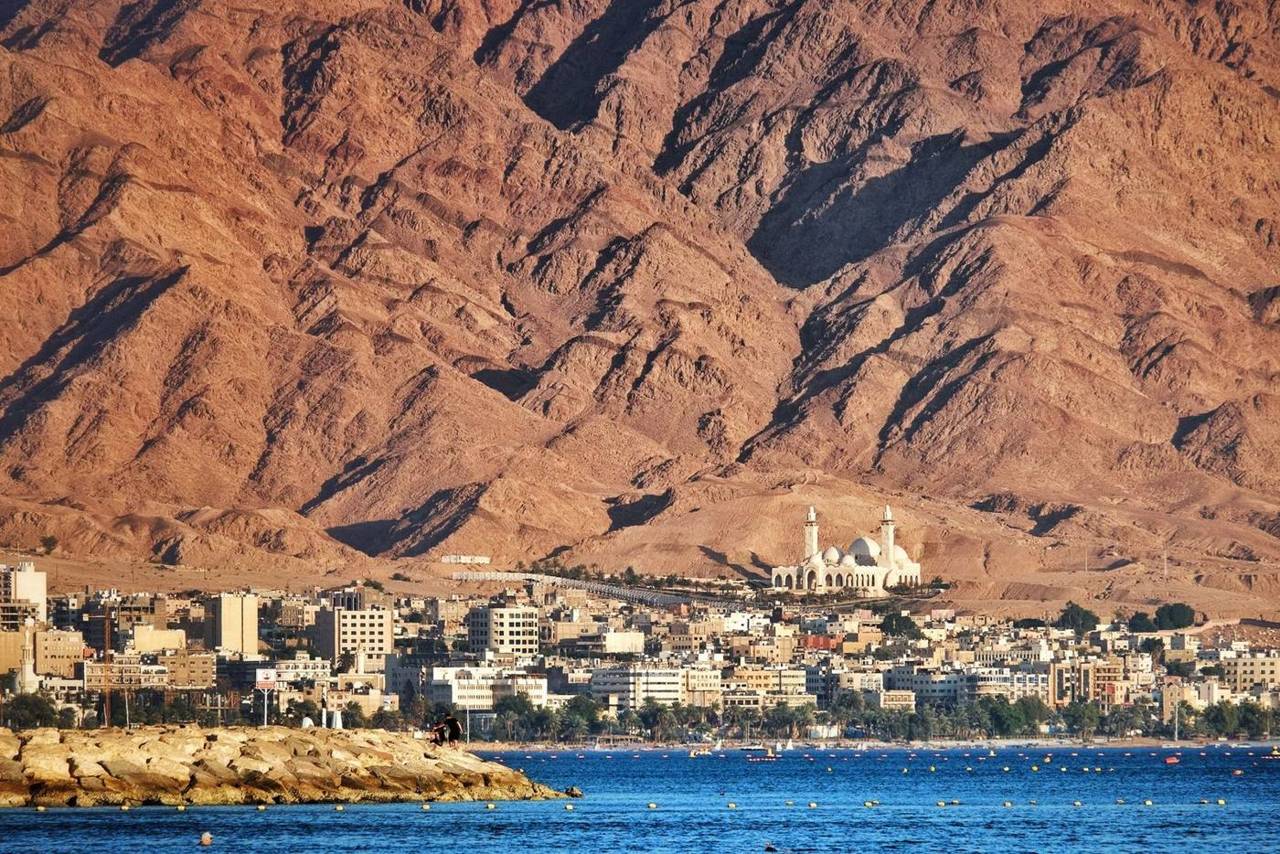
Aqaba and the Red Sea Underwater
Five days of diving on the Jordanian coast, among wrecks and reefs a few metres from shore, with a night in Wadi Rum and a day at Petra.
 16 daysEasy
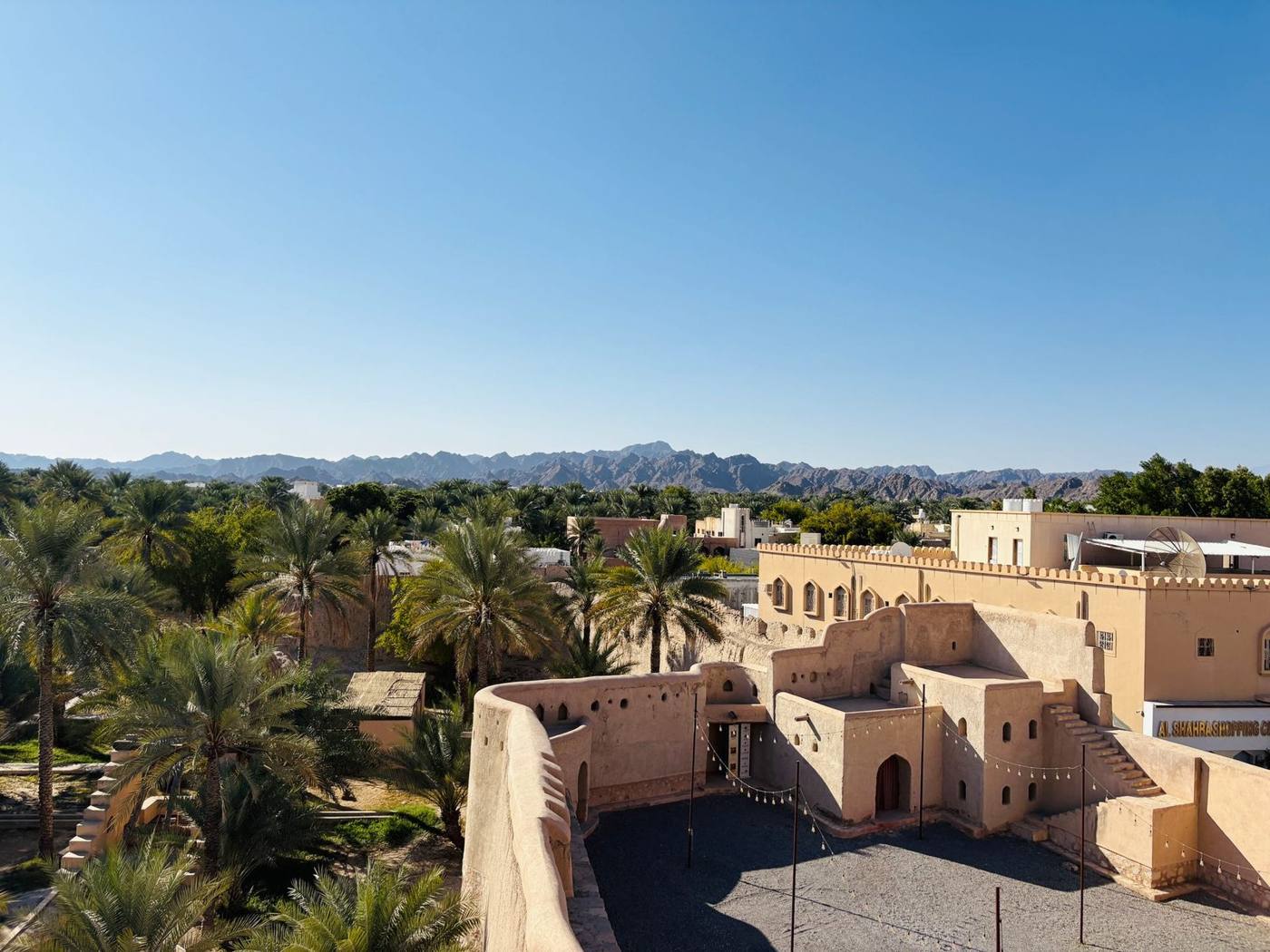
Jordan and Oman
Two Arab countries in one trip: Jordan's Nabataean and Roman ruins, then the forts, wadis and dunes of Oman, linked by a direct flight.