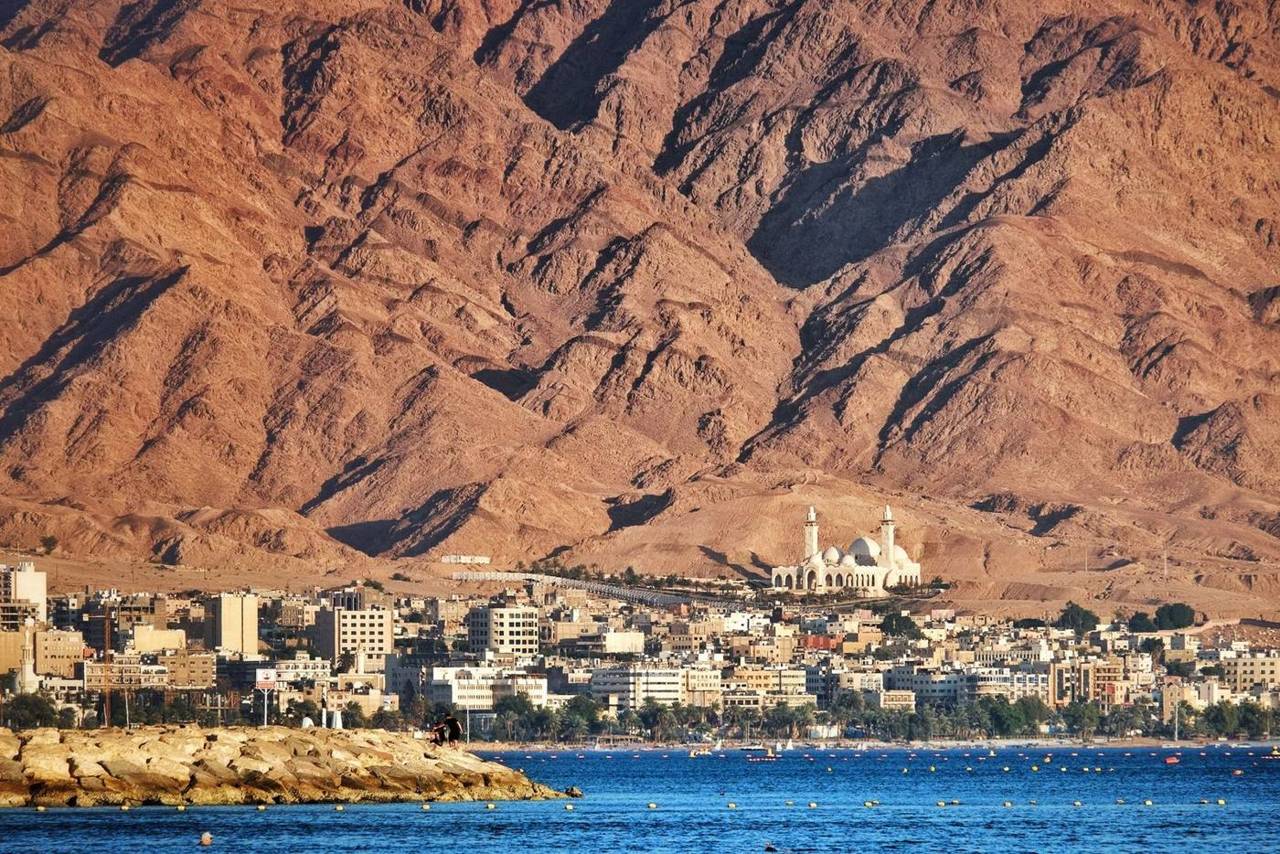
Aqaba and the Red Sea Underwater
Five days of diving on the Jordanian coast, among wrecks and reefs a few metres from shore, with a night in Wadi Rum and a day at Petra.
- Aqaba
- Aqaba Marine Park
- Relitto Cedar Pride
- Tala Bay
- Wadi Rum
- Petra
Day by day
- Day 1
Arrival in Aqaba and the south coast
This eight day trip is designed for certified divers, beginners included: five days on the Red Sea at Aqaba, among corals, wrecks and a sunken tank, then the Wadi Rum desert and Petra, respecting the breaks before going up to altitude and before flying.
Before you go: Italian citizens need a passport valid for at least six months from entry. According to the official Jordan Pass website, travellers from non restricted countries who land at Aqaba airport, a special economic zone, enter without a visa: check the conditions before you leave. The Jordan Pass, bought only on jordanpass.jo, includes Petra and Wadi Rum. Other nationalities should check their own rules.
Safety: with the regional conflict of 2026 Jordan has suffered missile and drone attacks and flights can be cancelled. The UK advises against all travel within 3 kilometres of the Syrian border and the United States, which rates the country level 3, asks travellers not to go near the borders with Syria and Iraq, very far from this route.
You land at Aqaba airport, a few kilometres from the city, Jordan's only port, squeezed between the mountains and the gulf. Settle on the south coast, where the dive sites of the marine park lie.
In the afternoon call in at the dive centre: show your certification card and logbook, try on the wetsuit and check regulator and computer. Then take your first swim to feel the temperature of the water.
In the evening walk along the seafront and look at the lights of Eilat and Egypt across the gulf.
Sleep on Aqaba's south coast, for four nights.
Practical tip: bring your certification card, your logbook and insurance that covers diving.
- Day 2
The marine park and the Japanese Garden
Today you make your first shore dives in the Aqaba Marine Park, the protected area that covers much of the south coast.
The first dive is for adjusting your weights and finding your buoyancy again. You enter the water from the beach, walk a few metres on the sand and descend along a gentle slope. The reef starts a few metres from the shore, with hard corals shaped like domes, tables and stag antlers.
The second dive is at the Japanese Garden, one of the most famous sites in the gulf, named after its neat gardens of soft and hard corals. You see sea fans, soft corals swaying in the light current, clownfish in the anemones, butterflyfish, parrotfish and shoals of orange anthias. With a little luck you meet a turtle or a crocodile fish lying still on the sand.
The sites are close together, shallow and almost always without current. The water is very clear, and the light reaches the bottom well.
In the afternoon rest in the shade and fill in your logbook. If you feel like it, snorkel over the reef, where the corals come almost to the surface.
In the evening have dinner in town with sayadieh, the fish dish with spiced rice and onion typical of Aqaba.
Sleep on Aqaba's south coast.
Practical tip: do not touch or stand on the corals and keep your fins away from the bottom, because the reef grows very slowly.
- Day 3
The Cedar Pride wreck and the tank
Today you make two of Aqaba's best known dives: a sunken wreck and a sunken tank.
In the morning descend to the Cedar Pride, a cargo ship sunk on purpose as an artificial reef. The hull lies on its side, between two reefs, and today it is covered with soft corals, sponges and sea fans. You swim along the keel and pass the ship's masts. Shoals of fish, groupers and lionfish circle around. With the guide you can look into some openings, but do not go inside the wreck without the right certification and experience. The upper part of the hull is close to the surface, the lower part is deeper: always stay within the limits of your certification.
After the surface interval, make the second dive on the tank, sunk a few metres down. It is easy even for beginners and perfect for photos: the gun barrel is covered with small corals and glassfish hide inside.
In the afternoon, if you stay in Aqaba, visit the Mamluk fortress near the sea and the small archaeological museum. Not far away flies the enormous flag of the Arab Revolt. Check prices and times.
In the evening stroll in the centre and have a fresh fruit juice or a mint tea at the kiosks.
Sleep on Aqaba's south coast.
Practical tip: underwater always follow the guide and your buddy, and check your air and computer often.
- Day 4
By boat to the south and the Hercules wreck
Today is the boat day and the last one with tanks.
In the morning board the dive centre's boat and head for the southernmost reefs, near the border with Saudi Arabia. Here the reef is further from the beach and less crowded. The coral walls drop towards the blue, with large sea fans and black corals. Look into the blue: sometimes tuna, barracuda or an eagle ray pass by.
The second dive is on the wreck of the Hercules transport plane, sunk on purpose as an artificial reef. The aircraft rests on the sand with its wings spread: you swim around the fuselage, the propellers and the tail, already covered with small corals. It is one of the most unusual dives in the Red Sea.
Lunch is on board, between dives, and if there is time you snorkel in the shallow water near the boat.
In the afternoon, back on shore, rinse your gear and return it to the centre. From now on the break without diving begins: diving guidelines ask you to wait at least 18 hours, better 24, before going up to high altitude or flying, and tomorrow the road to Wadi Rum climbs above a thousand metres.
In the evening have a fish dinner at Aqaba port.
Sleep on Aqaba's south coast.
Practical tip: drink plenty of water and no alcohol in the evening after diving, to reduce the risk of decompression sickness.
- Day 5
Wadi Rum by jeep at sunset
Today you leave the sea and go up into the Wadi Rum desert, about an hour by road from Aqaba.
In the morning stay on the beach and just have a swim or some gentle snorkelling. Leave after lunch, so you have respected the break from diving. The road climbs the valley northwards and then turns east among mountains of granite and sandstone. At the Wadi Rum visitor centre, a protected area and UNESCO World Heritage Site, you leave the car and get into a Bedouin guide's four by four.
In the late afternoon take the jeep tour. You see the red sand dunes, where you can run barefoot, Khazali canyon with ancient inscriptions carved into the rock, the spring linked to Lawrence of Arabia and the mushroom shaped rocks. The walls change colour as the sun goes down.
At sunset sit on a high rock and watch the desert turn red and then purple. Check prices and times with the camp.
In the evening have zarb for dinner, meat and vegetables cooked in a pit under the sand, and drink sage tea around the fire. The sky, far from the lights, fills with stars.
Sleep in a tented camp in Wadi Rum.
Practical tip: at night the desert is cold even after a hot day, so bring a fleece and thick socks.
- Day 6
Petra in a day
Today you visit Petra, the ancient capital of the Nabataeans carved into pink sandstone, a UNESCO World Heritage Site.
Leave Wadi Rum very early: it is about two hours by road. One stretch runs on the Desert Highway in Ma'an Governorate, where the United States asks travellers to reconsider the city of Ma'an and the areas along the road: drive in daylight and without stopping. Enter Petra at opening time, to walk the Siq in the morning light.
The Siq is a narrow, winding gorge, more than a kilometre long, with towering walls. At the end, between the rocks, the Treasury appears, the most famous facade in Petra. Continue along the Street of Facades to the theatre, then climb to the Royal Tombs, with the Urn Tomb and the Silk Tomb, with its coloured veins.
Go down the colonnaded street to Qasr al-Bint. If your legs allow, climb to the Monastery, about eight hundred steps cut into the rock, with the largest facade in Petra and the view over the Arabah valley. The ticket is in the Jordan Pass: check prices and times.
In the late afternoon leave without hurrying. In the evening have dinner in Wadi Musa, the small town at the entrance to the site, with mansaf, lamb cooked in dried yoghurt and served on rice.
Sleep in Wadi Musa.
Practical tip: carry at least two litres of water, a hat and shoes with a good sole, because the stone steps are slippery.
- Day 7
Back to Aqaba and snorkelling on the reef
Today you return to the sea for your last day in the water, without tanks.
In the morning have breakfast with freshly baked bread, labneh and oil with za'atar, then leave Wadi Musa and drive down to Aqaba, about two hours by road: the road descends from the plateau towards the gulf, with mountains that change colour. Today too, on the stretch of the Desert Highway, do not stop in the Ma'an area.
Once in Aqaba, take mask, snorkel and fins and spend the afternoon snorkelling on the south coast reef. The reef comes almost to the surface a few metres from the beach: you see corals, clownfish, surgeonfish and, with a little luck, a turtle. Snorkelling does not count as a dive, so it does not interrupt the break before your flight.
If you prefer, board a glass bottomed boat, which follows the coast above the corals.
Towards evening go to the fishermen's harbour and choose the catch of the day from the counter, grilled or baked with spices, lemon and coriander. Have it with salad, hummus and warm bread.
After dinner take a last walk along the seafront, among the families enjoying the cool air.
Sleep in Aqaba.
Practical tip: wear a T-shirt even while snorkelling, because the Red Sea sun burns your back in a few minutes.
- Day 8
A last morning and departure
Today is the day of your flight home, after more than twenty four hours without diving.
In the morning enjoy the beach or take a walk in the centre of Aqaba. Near the sea are the remains of Ayla, the early Islamic city, with its walls and gates. In the souk buy spices, dates, olive oil soap or the hand drawn bottles of coloured sand. Then head to the airport, a few kilometres from the city.
Trip summary: in eight days you have combined the sea, the desert and Petra. In Aqaba you made shore and boat dives in the marine park, at the Japanese Garden, the Cedar Pride wreck, the tank and the Hercules plane. In Wadi Rum you watched the sunset over the red rocks and slept under the stars, in Petra you walked the Siq to the Treasury. On the last day you snorkelled on the reef, following the safety rules of diving.
When to go: the best period runs from October to May, with warm but not scorching days. In winter the water in the gulf is cooler and you need a thicker wetsuit. In summer the water is perfect, but on land it often goes above 40 degrees and Petra and Wadi Rum become very tiring.
Practical tip: before your flight check its status, because with the regional situation schedules can change at the last minute.
Designed for a group of certified divers, beginners included: the sites are close, shallow and usually clear of current. The strength is combining sea, desert and Petra in a short trip; the drawback is that the Jordanian coast is short, and anyone who has done Egyptian Red Sea liveaboards will find less variety. Fly straight into Aqaba and keep strictly to the no-dive intervals before driving up to Petra and before the flight.
Before you go
- Documents and visa
- Passport valid for at least six months from entry and a tourist visa, applied for online on the Jordanian Ministry of Interior website or on arrival at Queen Alia airport in Amman, paid in dinars. The Jordan Pass, bought only on the official website jordanpass.jo before arrival, covers the visa fee if you stay in Jordan for at least three nights and includes Petra, Jerash, Wadi Rum and more than forty sites.
- Health and vaccines
- No compulsory vaccinations: ask your doctor about recommended ones at least eight weeks before. Protect yourself from the sun and drink plenty of water, above all in the desert and the canyons. Outside Amman and Aqaba medical facilities are basic: you need insurance with medical costs and repatriation. Emergencies: 911.
- Money and payments
- Jordanian dinar. Cards work in cities and hotels; keep cash for villages, the desert and tips.
- Power sockets
- Mixed sockets for type A and C plugs, often also F and G, 230 volts: bring a universal adapter.
- Time zone
- UTC+3 all year.
- Safety
- With regional tensions and the missile and drone attacks of 2026, the United States rates Jordan level 3 and the UK advises against all travel within 3 km of the Syrian border. Do not go near the borders with Syria and Iraq, the refugee camps, Zarqa or Rusayfah; avoid the city of Ma'an. Flights and airspace can close without notice. In the canyons there is a risk of flash floods: follow the reserves' closures. Official advice: GOV.UK.
Information checked in November 2026 for Italian and EU citizens. Rules change: always check before you travel.
Variations
Shorter version: in five days do only Aqaba and one night in Wadi Rum, without Petra.
Longer version: add two more days of diving and an extra night in Petra, to climb to the High Place of Sacrifice.
Frequently asked questions
Do you need a lot of experience to dive in Aqaba?
No, a basic certification is enough: the sites are close to the shore, shallow and almost always without current. To go inside wrecks, however, you need specific training and experience.
Why can't you go straight to Petra after diving?
Because the road climbs above a thousand metres and altitude, like flying, increases the risk of decompression sickness. The guidelines ask you to wait at least 18 hours, better 24.
What is the water temperature like?
In summer the water is warm and a shorty is enough; in winter it is cooler and you need a thicker wetsuit. Ask the dive centre for the right wetsuit for the season.
Indicative itinerary written by World Atlas. Before booking, check timetables, seasonal openings, documents and safety.
 16 daysEasy
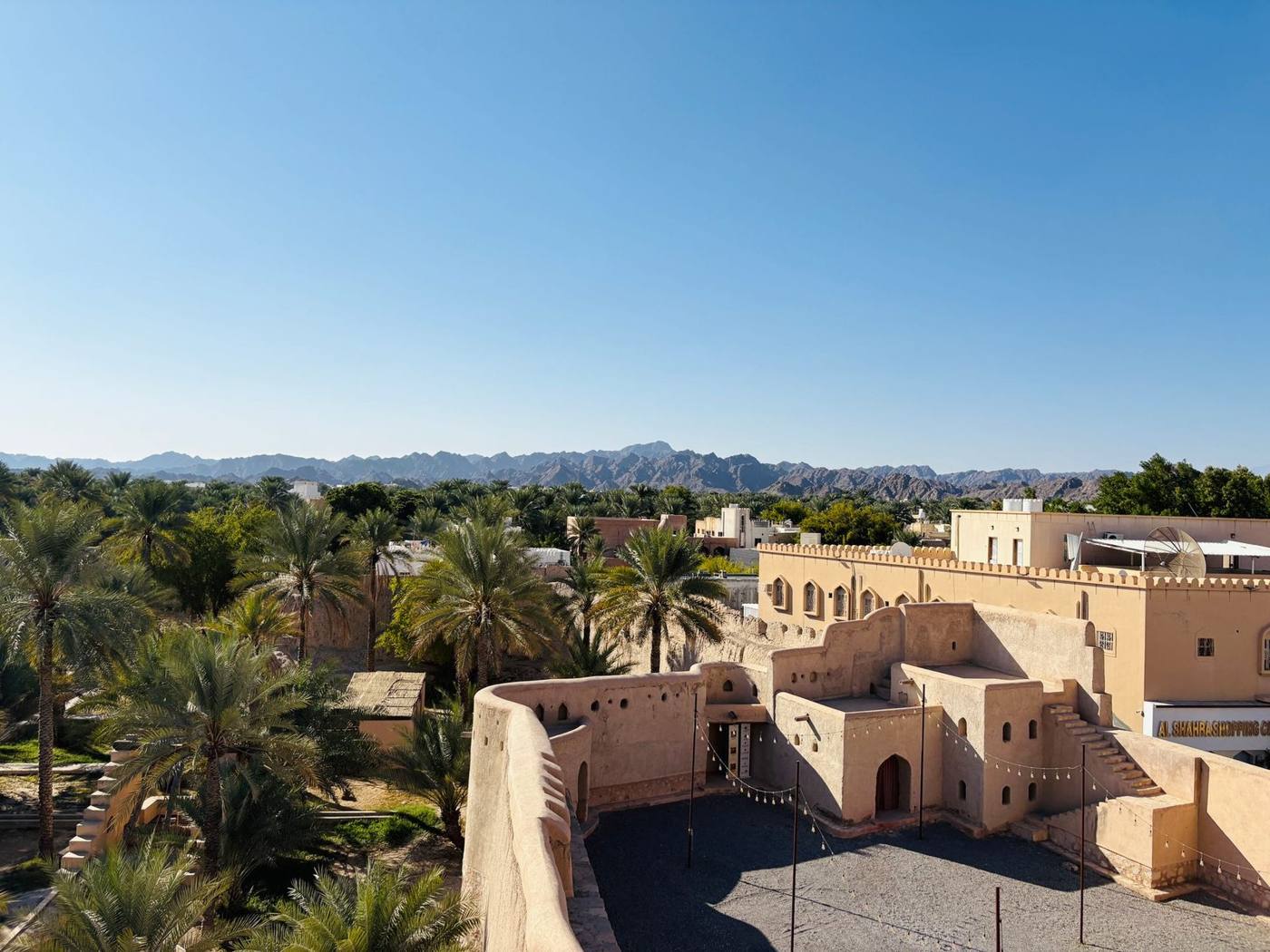
Jordan and Oman
Two Arab countries in one trip: Jordan's Nabataean and Roman ruins, then the forts, wadis and dunes of Oman, linked by a direct flight.
 15 daysModerate
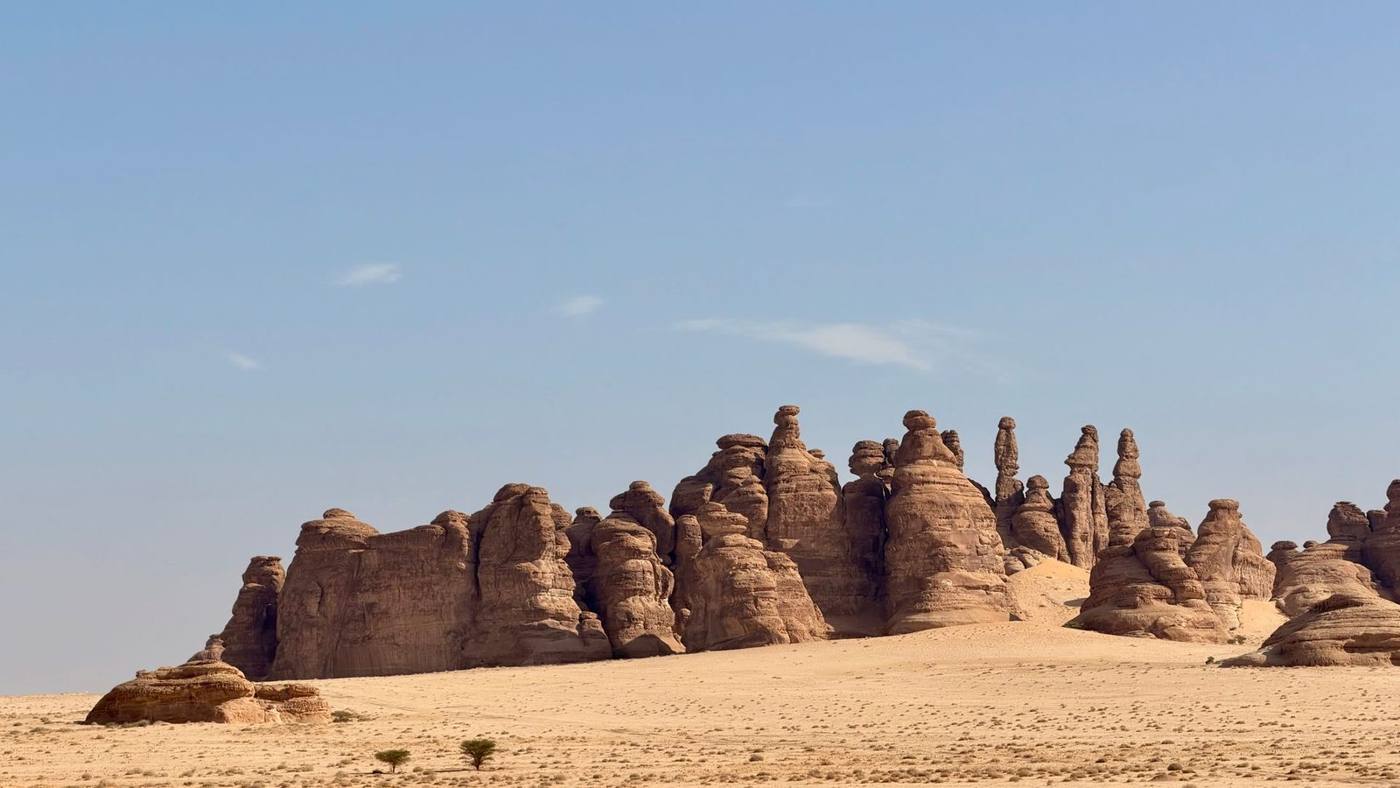
From Petra to AlUla: Jordan and Saudi Arabia
Following the Nabataeans from one capital to the other: Petra in Jordan, then overland across the border to the tombs of Hegra and the canyons of AlUla.
 15 daysEasy
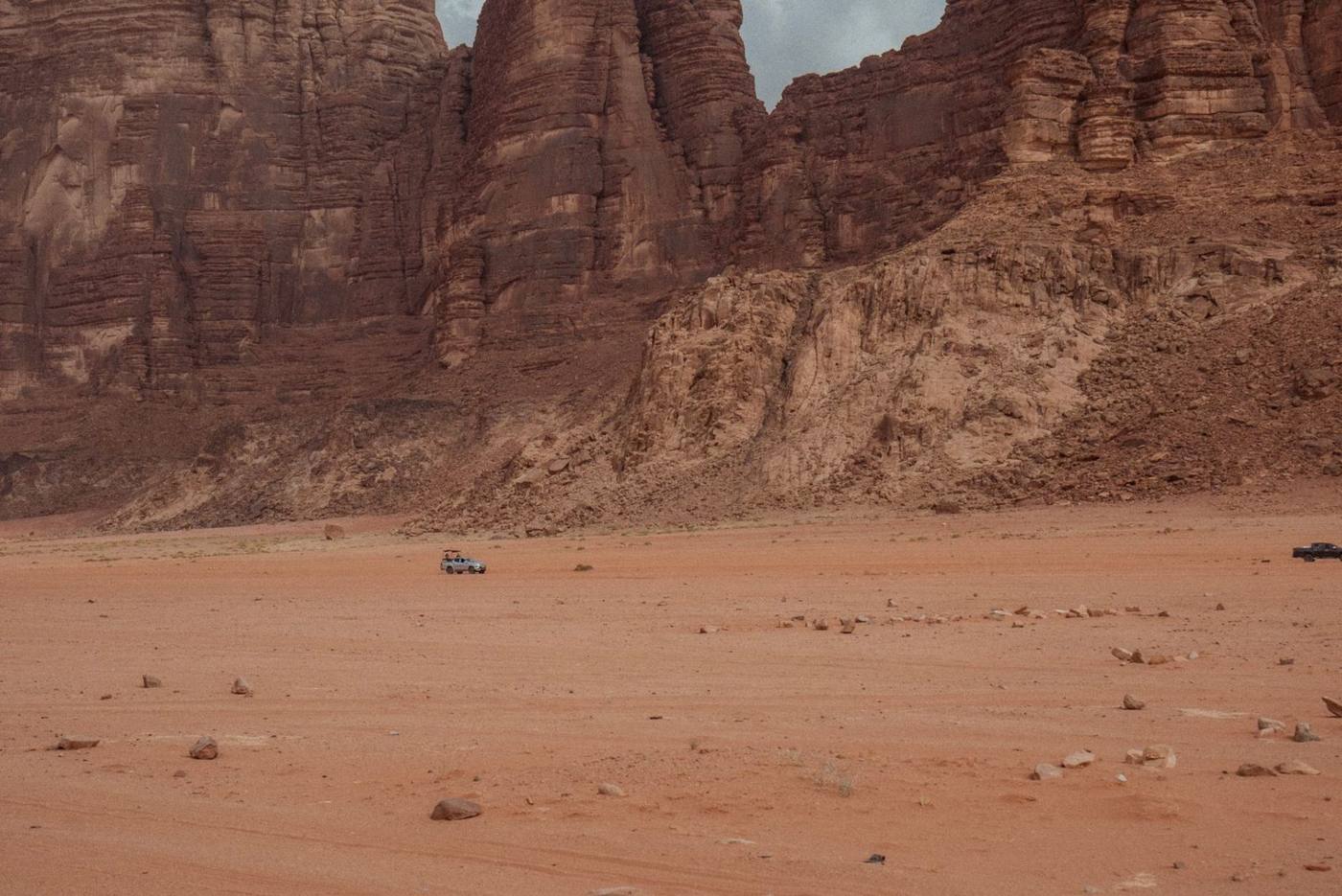
The Whole of Jordan, from Amman to Aqaba
Two unhurried weeks: the Umayyad desert castles, the Jordan Valley, Dana, Petra, a night in Wadi Rum and the Red Sea to finish.