Tokyo, Kyoto and Hiroshima in Ten Days
A first trip to Japan done properly: the metropolis, the shrines of Nikko, the temples of Kyoto and Nara, Osaka's food and the memory of Hiroshima.
- Tokyo
- Nikko
- Kyoto
- Nara
- Osaka
- Hiroshima
- Miyajima
Day by day
- Day 1
The flight to Tokyo and the first evening
There are no direct flights to Japan from every European city: many connect through another European or Middle Eastern hub, and the journey takes fourteen to eighteen hours. You arrive in Tokyo at one of two airports: Haneda, twenty minutes from the centre by monorail or Keikyu train, or Narita, about an hour away by Narita Express or Skyliner. On the plane try to sleep on Japanese time, eight hours ahead of Central Europe in winter and seven in summer.
As soon as you land, buy a rechargeable transport card, Suica or Pasmo, or add it to your phone: it works on the metro, city trains and buses, and in convenience stores too. Withdraw some cash at a convenience-store or post-office ATM, which accept foreign cards: many temples and small restaurants take cash only.
For four nights stay near a station on the Yamanote line, the loop line that touches all the main districts: Shinjuku, Shibuya, Ueno or Tokyo Station. Japanese hotels are small but spotless; check-in is usually at three in the afternoon, but you can leave your bags earlier.
Keep the first evening light: a walk around the neighbourhood and a simple dinner, a bowl of ramen or soba at the counter. Practical tip: if you arrive early in the morning, do not go to sleep straight away, stay up until evening to adjust to the time difference.
- Day 2
Tokyo: Shibuya, Meiji Shrine, Asakusa and Ueno
Start at Meiji Shrine, dedicated to the emperor who opened Japan to the world, hidden in a forest of a hundred thousand trees in the middle of the city. Entry is at no cost: you pass under great wooden torii, by the sake barrels offered to the shrine, to the main courtyard, where you may see a traditional wedding. Before entering, rinse your hands and mouth at the fountain with the ladle.
On the way out walk through Harajuku and Takeshita-dori, the street of youth fashion, then down Omotesando, the avenue of contemporary architecture, to Shibuya. Shibuya Crossing, where thousands of people cross in every direction at each green light, is best seen from above, from the upper floors of the station buildings.
In the afternoon take the metro to Asakusa, the oldest part of Tokyo. Sensō-ji, the city's oldest temple, is reached through the Thunder Gate with its great red lantern and along Nakamise street, lined with stalls of sweets and souvenirs. From here walk or take the metro to Ueno Park, with its temples, lotus pond and museums.
In the evening return to Shinjuku: the lights of Kabukicho, the alleys of Omoide Yokocho with tiny yakitori bars, and the no-cost view from the Metropolitan Government Building observatory. Practical tip: at temples and shrines photograph outside, as inside the halls it is often forbidden.
- Day 3
Nikko as a day trip: Tōshō-gū and the Shinkyō bridge
Nikko is about two hours from Tokyo. The easiest way is the Tobu limited express from Asakusa station; with the Japan Rail Pass you take the shinkansen to Utsunomiya and then the local line. Leave early: the day is full and in winter it is dark by half past four.
From the station walk or take the bus up to the Shinkyō bridge, the red lacquered bridge over the Daiya river at the entrance to the sacred area. In a forest of towering cedars stand Tōshō-gū shrine, the mausoleum of Tokugawa Ieyasu, founder of the shogun dynasty that ruled Japan for two and a half centuries, and the nearby temples, a World Heritage site.
Tōshō-gū is the opposite of Kyoto's restraint: buildings covered in gold, lacquer and coloured carvings. Look for the three monkeys who see, hear and speak no evil, the sleeping cat above a passageway and the Yōmeimon gate, called the twilight gate because you could gaze at it until evening. Tickets are sold at the entrance.
If there is time, take the bus up to Lake Chūzenji and Kegon Falls in the mountains above Nikko, along the hairpins of the Irohazaka road; in late October the maple colours are spectacular but traffic is heavy. Return to Tokyo in the evening. In Nikko try yuba, the skin that forms on soy milk, a local speciality. Practical tip: wear comfortable shoes, as the shrine area has many stone steps.
- Day 4
The shinkansen to Kyoto, Kiyomizu-dera and Gion
In the morning take the Nozomi or Hikari shinkansen from Tokyo or Shinagawa station to Kyoto: just over two hours. If the sky is clear, sit on the right-hand side in the direction of travel, the E seats, to see Mount Fuji about forty minutes after departure. Large suitcases on these trains require a reserved seat with luggage space; alternatively send them to your hotel with the delivery service, handy and inexpensive.
For three nights stay near Kyoto Station or in the centre, between Shijo and Kawaramachi. Since March 2026 Kyoto's accommodation tax is higher: for a room between 6,000 and 19,999 yen per person it is 400 yen per night. City buses are often packed: use the metro and walk.
In the afternoon climb to Kiyomizu-dera, the wooden temple on the hill with its great terrace on pillars, built without a single nail, overlooking the city. Then walk down Sannenzaka and Ninenzaka, the paved lanes of Higashiyama with wooden houses, pottery workshops and tea shops. Continue to the Yasaka pagoda and Yasaka Shrine.
At sunset enter Gion, the district of geisha, called geiko here, and their apprentices, the maiko. Teahouses line the Shirakawa canal and Hanamikoji. Some private streets ban photography and offenders risk a fine: respect the signs and never stop geiko in the street. For dinner try kaiseki cuisine or simple hot tofu, yudofu, a Kyoto speciality.
- Day 5
Kyoto: Fushimi Inari at dawn, the Golden and Silver Pavilions
Set your alarm early and reach Fushimi Inari shrine before seven, on the JR Nara line to Inari station. The shrine is open day and night and entry is at no cost. Its thousands of orange torii, donated by companies and families, form tunnels climbing Mount Inari. At this hour you walk almost alone; later the first stretches become packed. The climb to the top and back takes two to three hours, but after half an hour, at the Yotsutsuji viewpoint, the crowds thin and the view over the city is wide.
In mid-morning cross the city to Kinkaku-ji, the Golden Pavilion, covered in gold leaf and reflected in a pond: you see it from the path around the garden, you do not go inside. Then by bus or taxi reach Ryōan-ji, with its famous garden of stones and raked sand, fifteen rocks of which you can never see all at once from any point.
In the afternoon move to the east side of the city for Ginkaku-ji, the Silver Pavilion, which has nothing silver about it: it is an elegant wooden building with a moss garden and a cone of white sand. From here the Philosopher's Path begins, a two-kilometre walk along a cherry-lined canal to the temples of Nanzen-ji.
In the evening eat at Nishiki market, the covered food street, before the stalls close around six. Practical tip: at Nishiki you do not eat while walking, you stop in front of the stall where you bought.
- Day 6
Kyoto: Arashiyama, the bamboo and the river
Give the day to Arashiyama, on Kyoto's west side, fifteen minutes by train from the main station on the JR Sagano line. Arrive before eight to see the bamboo grove without crowds: the path between the towering stems is short, a few hundred metres, but the light filtering through the canes at dawn is special. Access is at no cost.
Next to it is Tenryū-ji temple, a World Heritage site, with a 14th-century garden built around a pond with the mountains behind, one of Japan's first landscape gardens. Then walk north among wooden houses and smaller temples, such as Gio-ji, with its moss garden, and Adashino Nenbutsu-ji, with thousands of small stone statues.
In the afternoon go down to the Katsura river and cross the Togetsukyō, the moon-crossing bridge. On the other bank climb to Iwatayama Monkey Park, about twenty minutes uphill, where Japanese macaques roam no-cost and the summit looks over all of Kyoto. If you prefer, ride the Hozu river down in a traditional boat, an hour and a half through the gorges, starting from Kameoka on the Sagano scenic train.
In the evening return to the centre and dine in Pontochō, the narrow alley parallel to the Kamo river, where restaurants set up terraces over the water in summer. Practical tip: the Sagano train and the Hozu river boats should be booked ahead in spring and autumn.
- Day 7
Nara as a day trip: the Great Buddha and the deer park
Nara is about forty-five minutes from Kyoto on the Kintetsu railway or the JR line. It was Japan's first permanent capital, in the 8th century, and has temples older than Kyoto's, almost all gathered in a large park a few minutes from the station.
More than a thousand deer live in the park, considered messengers of the gods, no-cost to wander among people. You may feed them only with the special crackers, shika senbei, sold at kiosks. Some deer bow to ask for them, but they can also push and nibble: keep maps and bags out of reach.
Tōdai-ji is the main temple: the Great Buddha Hall is one of the largest wooden buildings in the world, and inside is a bronze Buddha about fifteen metres tall. Behind a pillar is a hole the size of the Buddha's nostril: tradition says whoever squeezes through will have good fortune. Then walk to Kasuga Taisha shrine, with hundreds of stone lanterns along the forest paths and bronze lanterns hanging in the corridors.
In the afternoon visit Kōfuku-ji, with its five-storey pagoda, and stroll through Naramachi, with its old merchant houses. Return to Kyoto or, if you prefer, go straight to Osaka for the next night. Practical tip: Nara is small and walkable; avoid spring weekends, when the park is very crowded.
- Day 8
Osaka: the castle and an evening in Dōtonbori
Osaka is half an hour from Kyoto on the JR special rapid train. Spend one night near Namba or Shinsaibashi, the entertainment district. Osaka is the city of food: its people's nickname is tied to kuidaore, eating until you are ruined.
In the afternoon visit Osaka Castle, rebuilt in the 20th century but with huge original walls and moats, and a park around it full of cherry trees in spring. Inside is a museum on Toyotomi Hideyoshi, the general who reunified Japan, and the top looks over the whole city. If you prefer a more working-class atmosphere, go instead to Shinsekai, the old district at the foot of Tsutenkaku tower, with neon signs and kushikatsu bars serving fried skewers.
At sunset go to Dōtonbori, the canal with giant signs, mechanical crabs and the illuminated running-man sign, a symbol of the city. It is the place to eat standing at the counter: takoyaki, batter balls with octopus, and okonomiyaki, a cabbage pancake cooked on a griddle in front of you. Nearby is the covered Kuromon market, open mainly by day.
In the evening Osaka is louder and more direct than Kyoto: people talk more and laugh more. Practical tip: on Osaka escalators you stand on the right, the opposite of Tokyo, where you stand on the left.
- Day 9
Hiroshima, the Peace Park and Miyajima
Take an early shinkansen from Shin-Osaka to Hiroshima, about an hour and a half. Leave your bags in storage at the station and take the tram to the Peace Park. It is the most intense day of the trip.
The Atomic Bomb Dome is the skeleton of the building that stood almost beneath the point of the explosion on 6 August 1945, left as it was as a memorial. The park holds the cenotaph, aligned with the dome and the peace flame, the Children's Peace Monument with paper cranes folded around the world, and the Peace Memorial Museum. The museum tells of the city before the bomb, the explosion and its aftermath, with victims' belongings: it is a hard visit that needs an hour and a half and silence.
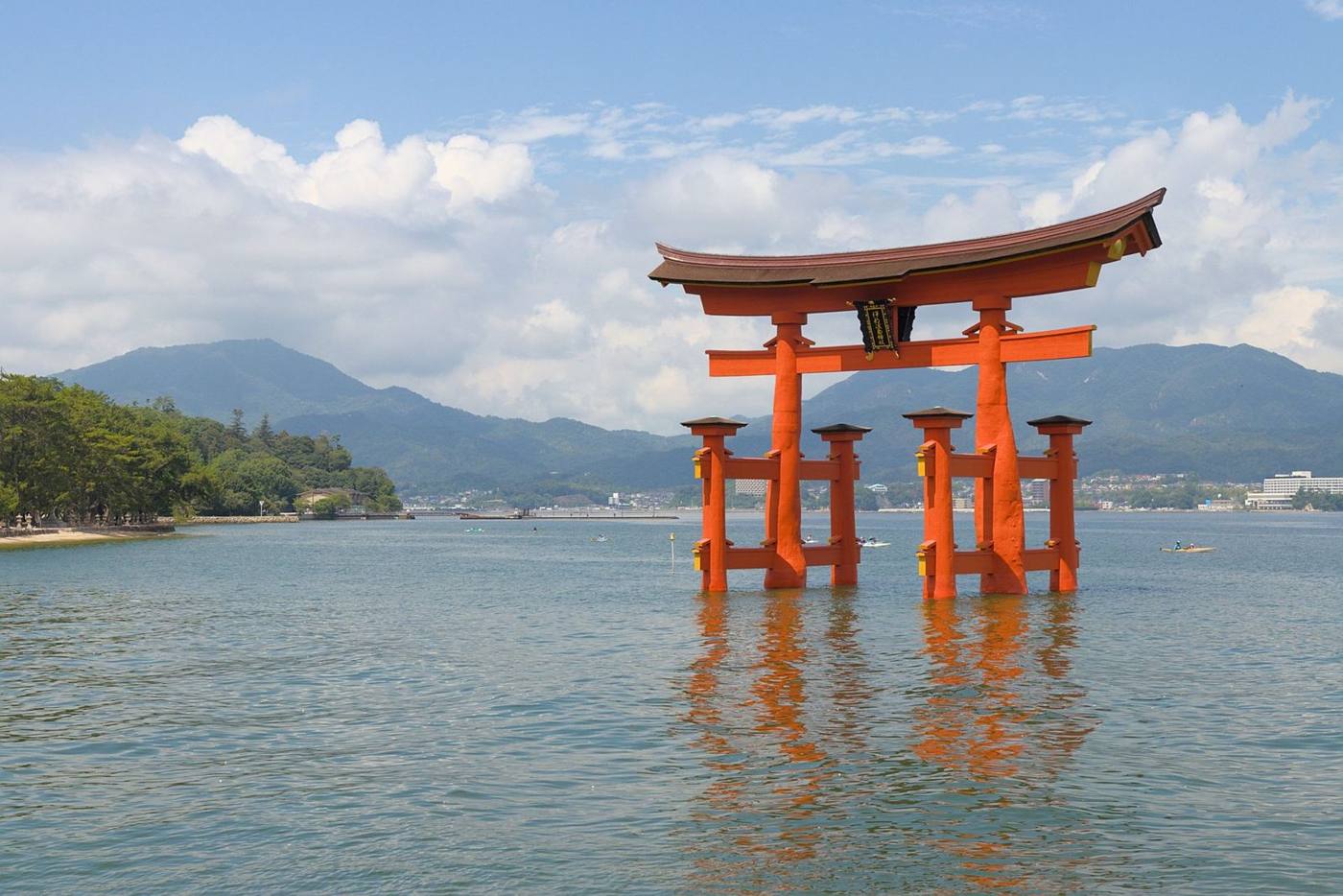
In the early afternoon take the JR train to Miyajimaguchi, about half an hour, then the ferry to Miyajima island, ten minutes. On arrival a small island visitor tax is charged, 100 yen. Itsukushima Shrine is built over the water, with the great orange torii that seems to float at high tide; at low tide you can walk to its base. Check the tide times to choose your moment.
Deer roam the island as in Nara, and a ropeway climbs towards Mount Misen. Try grilled oysters and momiji manjū, maple-leaf cakes. In the evening return to Hiroshima for the local okonomiyaki, layered with noodles. Practical tip: sleep in Hiroshima and leave the next morning.
- Day 10
Going home: the shinkansen to Tokyo or a flight from Osaka
The last day depends on where your flight leaves from. From Tokyo, the Nozomi shinkansen from Hiroshima reaches Tokyo Station in about four hours; from there Haneda airport is about thirty minutes away, Narita about an hour. From Kansai airport, near Osaka, Hiroshima is about two and a half hours by shinkansen and airport express.
If your flight is in the afternoon or evening, in the morning in Hiroshima visit Shukkei-en, a 17th-century garden with ponds, bridges and a teahouse, rebuilt after the war, or the castle, also rebuilt. In Tokyo, with a few no-cost hours, do your last shopping in Ginza or in the station itself, full of shops selling boxed sweets and regional specialities.
Things to take home: green tea from Uji, kitchen knives, ceramics, tenugui, printed cotton cloths, and boxed sweets. Remember that liquids in hand luggage are limited as in Europe, and sake goes in checked baggage.
On the flight home the time difference is easier: you arrive the evening of the same day or the next day. Practical tip: if you have the Japan Rail Pass, count its days of validity carefully; if not, buy your shinkansen ticket the day before, at the ticket machines or online.
This is the right circuit for a first trip to Japan, covering the places that matter without wasting days. Its limit is that it remains a journey of cities and temples, at a brisk pace, with Kyoto often crowded; nature is confined to the cedars of Nikko and the sea at Miyajima. Get up early every morning: Fushimi Inari at seven and at ten are two different places.
Before you go
- Documents and visa
- Passport valid for the whole stay; many nationalities, including EU citizens, enter without a visa for up to 90 days for tourism. An electronic travel authorisation (JESTA) has been announced but is not yet in force: check before you go.
- Health and vaccines
- No vaccines required. Healthcare is excellent but expensive: travel insurance with high medical cover is essential. Some common medicines, such as certain codeine painkillers, are banned or restricted. Emergencies: 119 ambulance, 110 police.
- Money and payments
- Yen. Cards are increasingly accepted, but temples, small restaurants and rural areas need cash: convenience-store ATMs accept foreign cards. Tipping is not customary.
- Power sockets
- Type A, 100 volts: you need a flat-pin adapter; phone and laptop chargers work, European hairdryers often do not.
- Time zone
- UTC+9, no daylight saving time.
- Safety
- One of the safest countries in the world. The risks are natural: earthquakes, typhoons from July to October, extreme summer heat. Download an English-language alert app. Official advice: GOV.UK.
Information checked in November 2026 for Italian and EU citizens. Rules change: always check before you travel.
Variations
In 7 days: two days in Tokyo, three days in Kyoto with half a day in Nara, and a day in Hiroshima and Miyajima before heading home. You give up Nikko and Osaka.
In 14 days: add two days at Hakone and Lake Kawaguchi for Mount Fuji, a night in a temple on Mount Kōya and a day at Himeji Castle, Japan's finest, between Osaka and Hiroshima.
Frequently asked questions
Is the Japan Rail Pass worth it?
It depends on the route. Since 1 October 2026 the 7-day ordinary pass costs 53,000 yen. For this itinerary, with Tokyo, Nikko, Kyoto, Osaka, Hiroshima and the return, compare it with single tickets: if you return to Tokyo by train the pass may pay off, if you fly out of Osaka it often does not. Non-JR city trains in Kyoto, Nara and Osaka are not included.
Do I need a visa and what taxes apply?
Many nationalities, including EU citizens, need no visa for tourism for up to 90 days; a passport is enough. Since 1 July 2026 the departure tax is 3,000 yen per person, already included in the air fare. Kyoto and other cities charge an accommodation tax at your lodging, higher for more expensive rooms.
When is the best time to go?
From late March to May, with cherry blossom in late March and early April, and from October to late November, with the red maples. July and August are very hot and humid, and typhoons can stop trains. Avoid Golden Week, in late April and early May, when the Japanese travel and prices rise.
Indicative itinerary written by World Atlas. Before booking, check timetables, seasonal openings, documents and safety.
 7 daysModerate
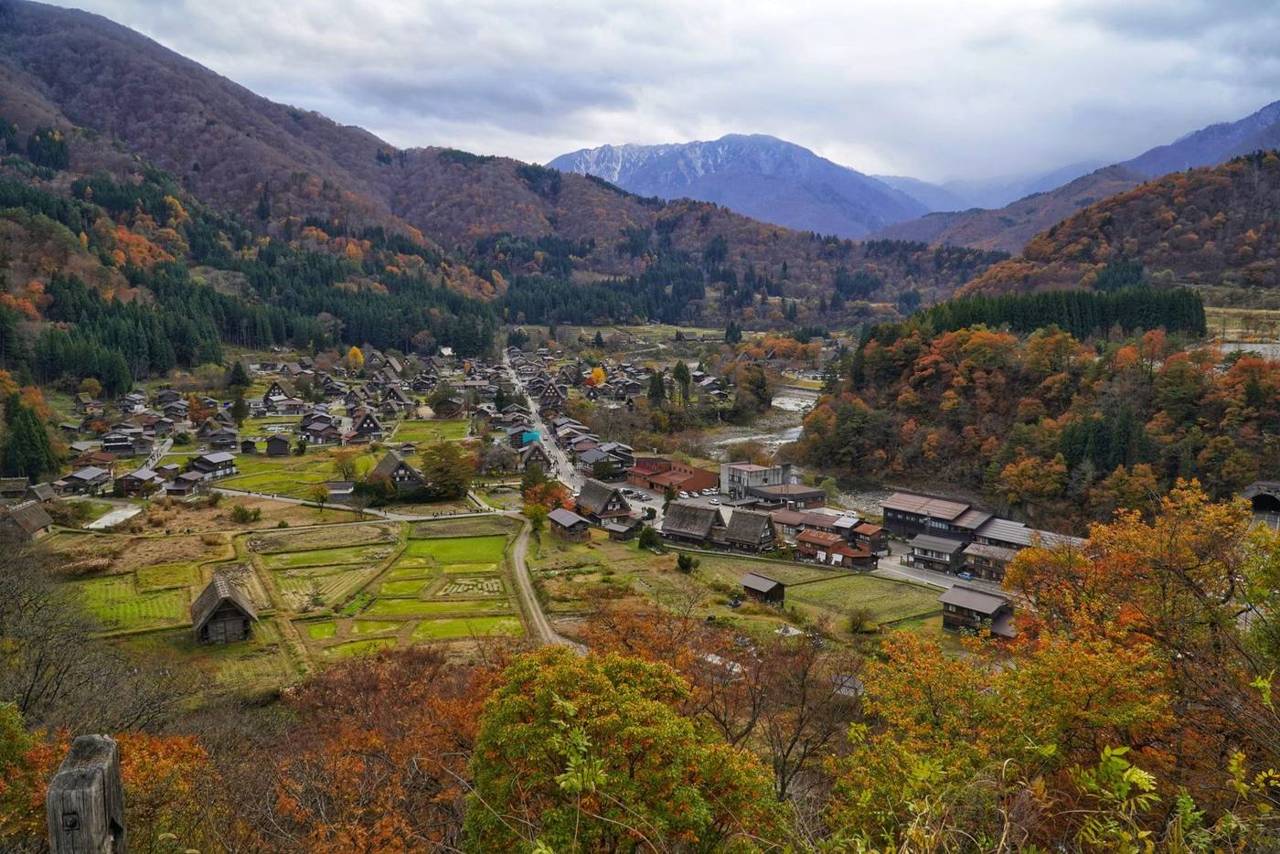
The Japanese Alps and the Nakasendo in a Week
A Japan of mountains and timber: Matsumoto's black castle, the old post road of the Kiso Valley, Takayama, Shirakawa-go and the gardens of Kanazawa.
 14 daysChallenging
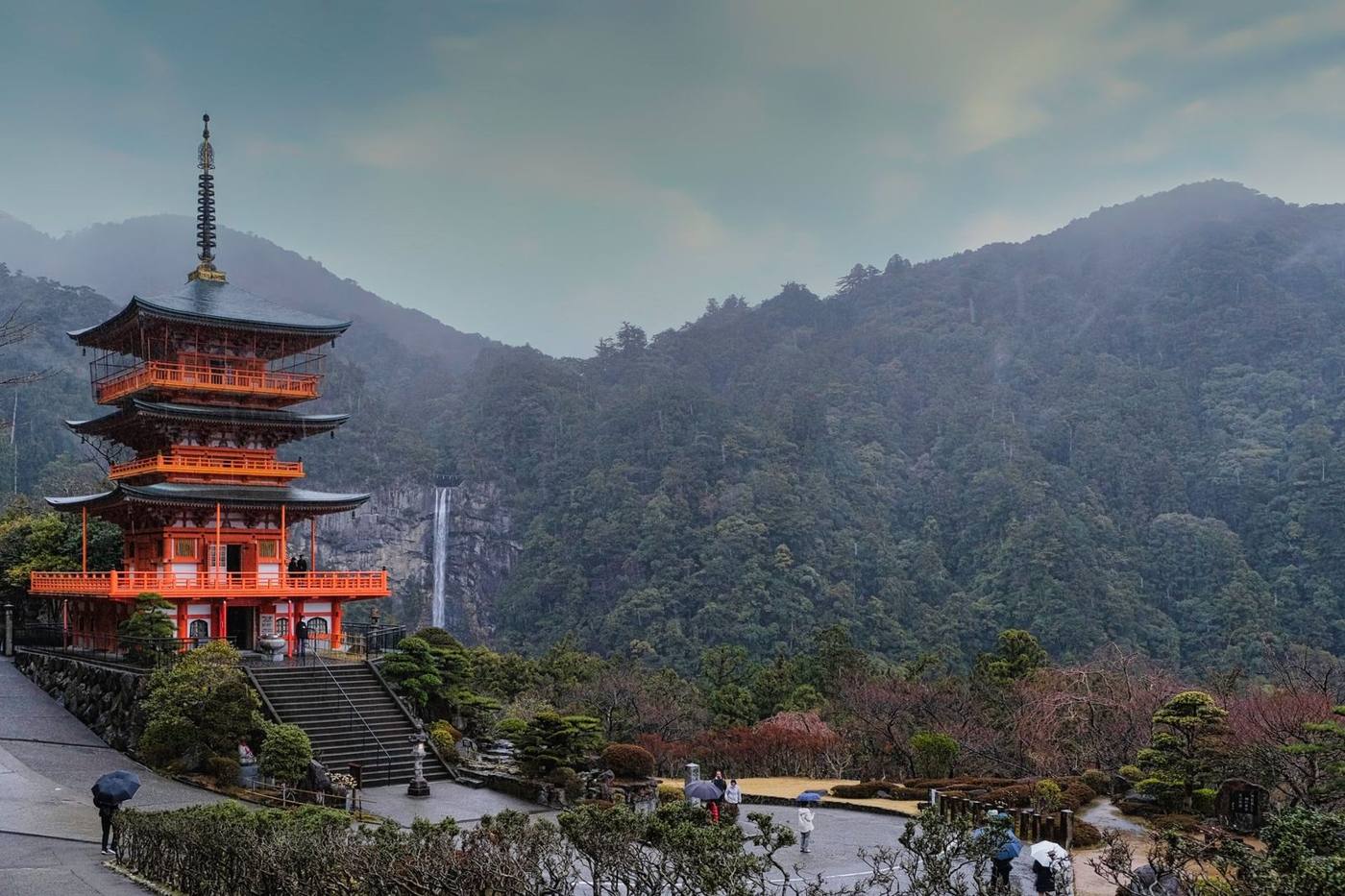
Kumano Kodo, the Sacred Trails of the Kii Peninsula
Six days on foot through cedar forests, shrines and hot spring villages on the pilgrims' trails, followed by the sacred mountains around Kyoto and Nara.
 16 daysModerate
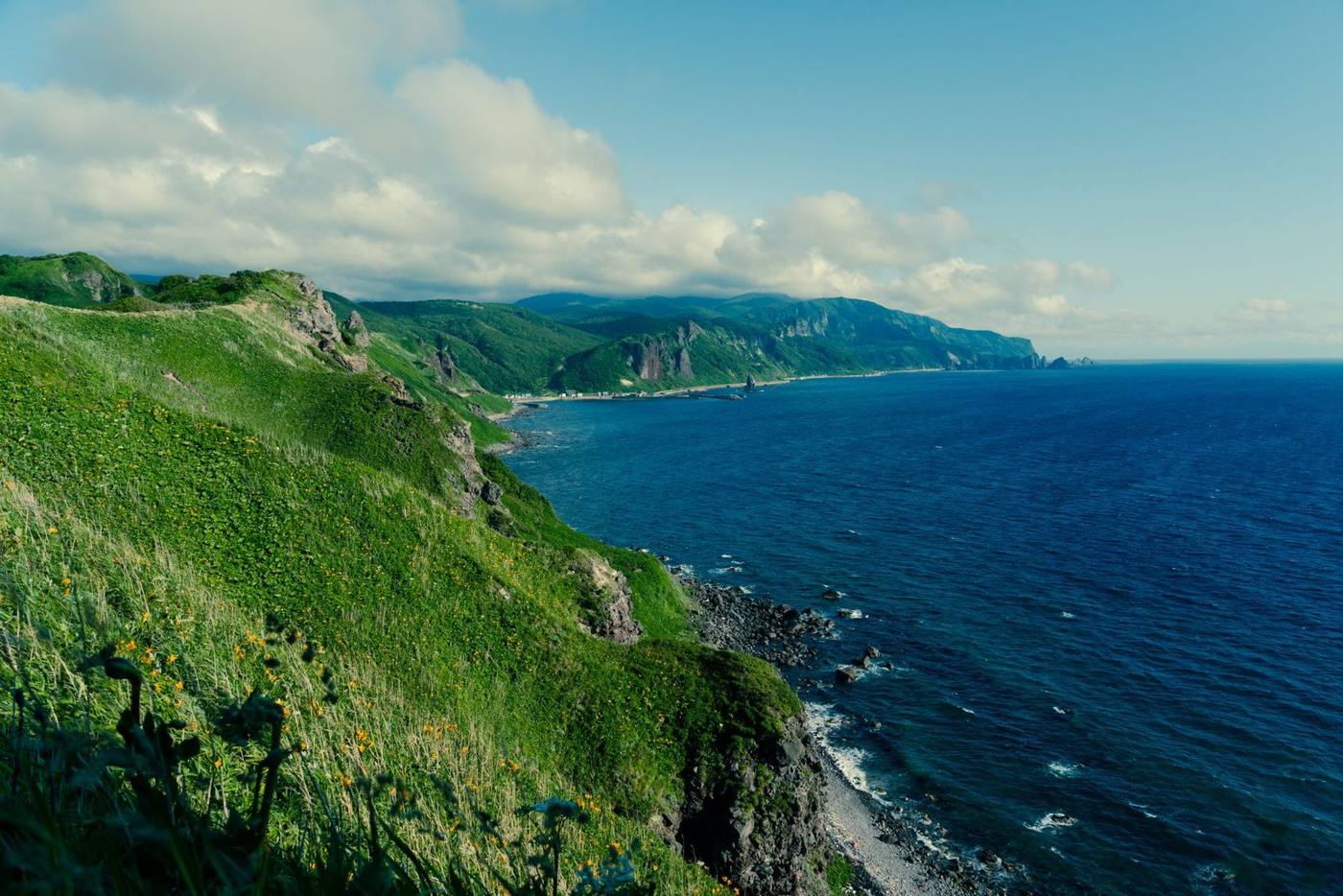
Hokkaido, Volcanoes, Lakes and Bears of the North
Japan's wildest island by train and bus: the volcanic lakes of Tōya, Mashū and Akan, the Sōunkyō gorge, the Shiretoko peninsula and the crane marshes.