Kumano Kodo, the Sacred Trails of the Kii Peninsula
Six days on foot through cedar forests, shrines and hot spring villages on the pilgrims' trails, followed by the sacred mountains around Kyoto and Nara.
- Osaka
- Tanabe
- Takijiri
- Hongū
- Totsukawa
- Koguchi
- Nachi
- Kyoto
- Nara
Day by day
- Day 1
Departure from Italy
This trip takes you onto the Kumano Kodo, the ancient pilgrimage routes of the Kii Peninsula, south of Osaka, a UNESCO World Heritage site together with Mount Koya and the shrines of Yoshino and Omine. For more than a thousand years emperors, monks and ordinary people walked them to reach the three great shrines of Kumano: Hongū, Hayatama and Nachi. You walk for six days through forests of cedar and cypress, sleeping in small family run inns, then finish with four days of walks around Kyoto.
Before you go: Italian citizens enter Japan without a visa for tourist stays of up to 90 days, with a passport valid for the whole stay. Other nationalities should check their own rules. Since 1 July 2026 the departure tax from Japan is 3,000 yen, usually already included in the air ticket.
Today you fly from Italy to Osaka, almost always with a stop in Europe, the Gulf or Asia. The journey takes between 14 and 18 hours in total. Japan is eight hours ahead of Italy in winter and seven in summer.
On the plane try to sleep according to Japanese time: it helps you get over the jet lag faster.
Sleep on the plane.
Practical tip: book the inns along the route well in advance, especially on the Kohechi, where places are very few. Many inns have only a handful of rooms and work by reservation with dinner and breakfast included.
- Day 2
Osaka and the coast to Tanabe
Today you arrive in Japan and reach the gateway to Kumano.
At Kansai airport, built on an artificial island in Osaka Bay, buy a prepaid transport card, such as ICOCA, which works on trains and buses and in many shops. Withdraw cash in yen: in the Kumano villages many inns and shops accept only cash.
Then take the limited express train that runs down the Pacific coast to Kii-Tanabe, about two hours. From the window you see bays, small harbours, citrus groves and the forested hills of Wakayama prefecture, famous for ume plums and mandarins.
In the afternoon you arrive in Tanabe, a quiet town by the sea and the starting point of the Nakahechi, the most walked branch of the route. Call in at the tourist information centre near the station: they give out detailed maps and information on the stages and on luggage transfer between inns.
In the evening walk around the neighbourhood near the station, with its small local eateries, and try fish from the coast or Wakayama ramen, with a soy and pork broth.
Sleep in Tanabe.
Practical tip: on the Kumano Kodo you can send your large bag from one inn to the next and walk with a small daypack. The service must be booked in advance; check prices and routes at the Tanabe information centre.
- Day 3
From Takijiri to Tsugizakura
Today you start walking on the Nakahechi.
In the morning take the bus from Tanabe to Takijiri, about forty minutes. Takijiri-ōji is the traditional entrance to the sacred mountains of Kumano. The ōji are small shrines along the route, dedicated to the child deities of Kumano: there were once more than a hundred, and many remain today, often just a stone and a straw rope in the forest.
Next to the shrine there is a small visitor centre, where you can buy the booklet for collecting stamps along the way. The first climb is steep straight away, over roots and rocks, and passes near a cave among the boulders called Tainai-kuguri, which you crawl through as if being reborn.
Then the path runs along the ridges, among towering cedars, small villages and tea fields. Every so often the view opens onto valleys covered in forests that seem endless.
In the afternoon you pass through Chikatsuyu, a village by the river, and continue to Tsugizakura-ōji, with the great thousand year old cedars around the shrine. About 17 kilometres in all, six or seven hours.
In the evening have dinner at the inn, mountain dishes served in many small bowls, and take a hot bath before bed.
Sleep in Tsugizakura or Chikatsuyu.
Practical tip: in the inns you sleep on a futon laid on the tatami. Take off your shoes at the entrance and never get into the bath before washing carefully under the shower.
- Day 4
From Tsugizakura to Hongū and Yunomine
Today you reach the first great shrine of Kumano.
In the morning set off early: the stage is long, about 20 kilometres, seven or eight hours. The path climbs and descends through dense forest, past small shrines and old abandoned teahouses, where pilgrims once stopped to rest. At some points there are panels explaining the history of each ōji.
In the afternoon you reach Hosshinmon-ōji, the gate of the awakening spirit, the entrance to the sacred precinct of Hongū. From here the last stretch descends through fields and villages to Kumano Hongū Taisha, the main shrine of the three. You climb a long stone stairway between white banners to buildings of dark wood with roofs of cypress bark.
Not far away, among the fields, is Ōyunohara, where the original shrine stood until the flood of 1889, with a great torii, the Shinto gateway, about 34 metres high, one of the largest in Japan.
In the evening take the bus or walk to Yunomine Onsen, a small hot spring village founded more than a thousand years ago. Here is Tsuboyu, a tiny wooden hut with a natural pool in the stream, considered the only hot spring in the world included in a UNESCO site. Check times and turns.
Sleep in Yunomine.
Practical tip: at Tsuboyu you go in by turns of about half an hour, for a fee, and there is often a wait. Go early in the morning or late in the evening.
- Day 5
The Kohechi: from Miura-guchi to Totsukawa
Today you enter the wildest branch of the Kumano Kodo.
The Kohechi links Mount Koya, the centre of Shingon Buddhism, to Hongū, crossing three passes above a thousand metres. It is a true mountain route, with very few services, walked in four days. On this trip you do the two finest days.
In the morning a transfer by bus or taxi takes you to Miura-guchi, the start of the trail. Buses are rare: check times and connections with the inn the evening before.
From here the path climbs steeply through the forest to the Miura pass, at about 1,080 metres, on an ancient track paved with stone in places. Along the way you meet stone statues of Jizō, the protector of travellers, and the remains of old teahouses. About 17 kilometres and seven hours in all.
In the afternoon descend into the valley of the Totsukawa river and arrive at Totsukawa Onsen, a small hot spring village by the river. Here the springs have plenty of hot water and many inns use only natural spring water, without recirculation.
In the evening take a hot bath and rest your legs.
Sleep in Totsukawa Onsen.
Practical tip: on the Kohechi there are no shops along the trail. Bring a packed lunch, asking the inn for it the evening before, and at least two litres of water. In heavy rain the path becomes slippery: ask the inn for advice.
- Day 6
The Hatenashi pass and back to Hongū
Today you cross the most famous pass of the Kohechi.
In the morning a short transfer takes you to Yanagimoto, near the suspension bridge over the river. From here climb towards the Hatenashi pass, at about 1,100 metres. The name means endless, and the climb explains it well: more than a thousand metres of ascent on stone steps, through forest and small terraced fields.
Halfway up you pass through the village of Hatenashi, a cluster of wooden houses on the slope, still home to a few families. In front of the houses there is often a small stand with fruit or water and a box for the money, as is the custom in Japan. From the village you see the whole Totsukawa valley.
After the pass the path descends for a long way through the forest to Yakio, on the Kumano river. About 16 kilometres and six or seven hours in all. From here the bus takes you back to Hongū in a few minutes.
In the afternoon, if you have energy, return to Kumano Hongū Taisha at a gentle pace, or walk to the viewpoint above Ōyunohara, from which you see the great torii among the fields.
In the evening stay at one of the nearby hot springs, such as Kawayu Onsen, where hot water rises straight from the riverbed.
Sleep in Hongū or Kawayu Onsen.
Practical tip: at Kawayu Onsen you can dig a small pool with your hands on the river gravel and bathe in the hot water. In winter there is a large open air pool in the river.
- Day 7
From Hongū to Koguchi
Today you return to the Nakahechi towards the Nachi shrine.
In the morning you can go down the Kumano river by boat to Shingu, as pilgrims once did, and visit the second shrine, Kumano Hayatama Taisha, with its red painted buildings and a sacred tree about a thousand years old. Check the boat season and times; boats must be booked. In this case you then return by bus towards the trail.
The classic route instead starts at Ukegawa, near Hongū, on the Kogumotori-goe, the lesser pass of the clouds. The path climbs through the forest and then follows the hillside, with a famous viewpoint, Hyakken-gura, from which you see the mountains of Kumano lined up one behind another, all the way to the horizon. On damp mornings the valley is full of mist.
In the afternoon descend to Koguchi, a small village at the bottom of the valley, by the river. About 14 kilometres in all, five or six hours.
In the evening, in Koguchi, eat early and go to bed early: tomorrow is the hardest stage of the trip.
Sleep in Koguchi.
Practical tip: Koguchi has little accommodation and almost no shops. Book well in advance and ask the inn for a packed lunch for the next day, along with an early breakfast.
- Day 8
The Ōgumotori-goe to Nachi
Today is the hardest and finest stage of the Kumano Kodo.
In the morning leave Koguchi at dawn on the Ōgumotori-goe, the great pass of the clouds. The path climbs about 800 metres almost without a break, on moss covered stone steps, among giant cedars and ferns. The steepest part is called Dōgiri-zaka, the slope that cuts the body. About 15 kilometres in all, seven or eight hours.
At the top you walk along the ridges, among stone statues and small shrines, until the view opens onto the Pacific Ocean. Then the path descends towards Nachi.
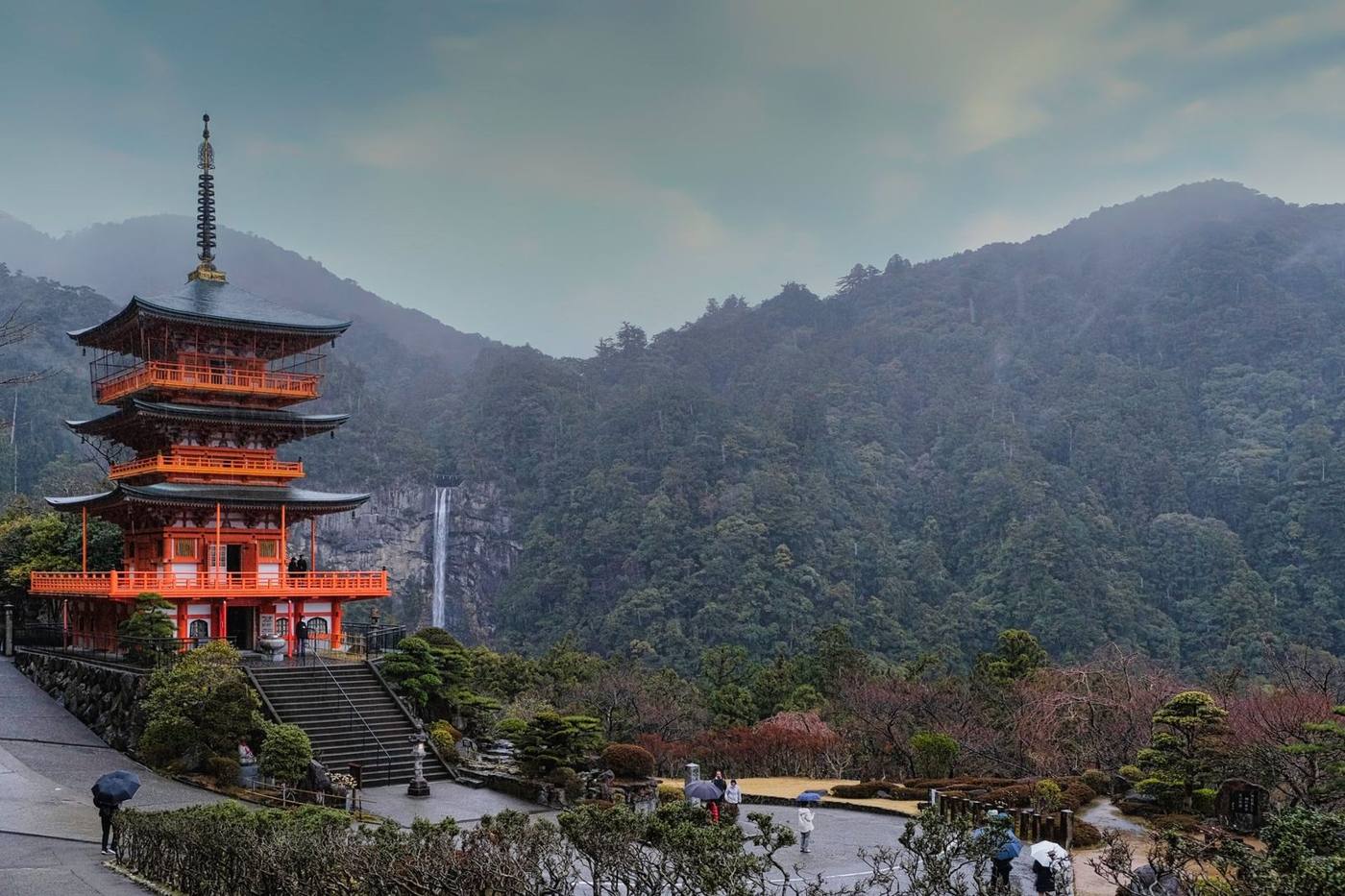
In the afternoon you reach Kumano Nachi Taisha, the third great shrine, on the mountainside. Next to it is the Buddhist temple of Seiganto-ji, with a red three storey pagoda. Behind the pagoda falls the Nachi waterfall, 133 metres high, the highest uninterrupted drop of water in Japan, venerated as a deity. The red pagoda in front of the white waterfall is one of the symbols of Japan.
Then descend the Daimon-zaka, an ancient stone stairway between centuries old cedars, to the bus for Kii-Katsuura, on the coast.
In the evening, in Katsuura, eat fresh tuna, the speciality of the port.
Sleep in Kii-Katsuura.
Practical tip: the final descent on wet stone is slippery. Keep your poles until the last step and set off early to reach Nachi before the buildings close.
- Day 9
Transfer to Kyoto
Today you leave the Kii Peninsula and travel to Kyoto.
In the morning, if you like, walk to Katsuura harbour to see the tuna market, where fish auctions are held at dawn. Check visiting days and times: it is a working market.
Then take the limited express along the coast and change at Osaka or Shin-Osaka for Kyoto. The journey takes about four or five hours. Along the way the landscape changes from the wild bays of the south to the big cities of Kansai.
The afternoon is yours in Kyoto, the imperial capital for more than a thousand years, with over 1,600 Buddhist temples and hundreds of Shinto shrines. Take a walk along the Shirakawa canal and through the Gion district, with its wooden houses and paper lanterns. Then climb the sloping lanes of Ninenzaka and Sannenzaka to Kiyomizu-dera temple, on the hill, with its great wooden terrace above the forest. Check opening times and tickets.
In the evening walk along the Kamo river, where in summer restaurants set up terraces over the water.
Sleep in Kyoto.
Practical tip: in the Gion district photography is banned on private streets, and fines apply. Respect the geisha and maiko: do not stop them or follow them for a photo. Kyoto also charges an accommodation tax.
- Day 10
Mount Atago
Today you climb the sacred mountain west of Kyoto.
In the morning take the bus to Kiyotaki, a small village by the river, about an hour from the centre. From here the path to Mount Atago begins, at 924 metres the highest summit around Kyoto.
The climb is about 850 metres of ascent, almost all on stone and wooden steps, through cedar forest. It takes about two and a half hours. Along the path there are benches and small wooden shelters, and you meet elderly Japanese walkers who have climbed here every month all their lives.
At the top stands Atago shrine, dedicated to the deity who protects against fire. For centuries cooks and families from Kyoto have climbed here to take a paper talisman to hang in the kitchen against fires. From the summit, on clear days, you see the city of Kyoto among the mountains.
In the afternoon descend by the same path or by the one towards Mizuo, a village famous for yuzu, the fragrant citrus fruit. About 13 kilometres in all.
In the evening return to Kyoto and rest.
Sleep in Kyoto.
Practical tip: on the night between 31 July and 1 August thousands of people climb Mount Atago for the night pilgrimage of a thousand days. If you are looking for silence, avoid that date. On other days the path is quiet even at weekends, and you can walk for long stretches without meeting anyone.
- Day 11
Fushimi Inari in full
Today you walk the whole of Fushimi Inari shrine, not just the famous part.
Early in the morning take the train to Inari station, a few minutes from Kyoto station. Fushimi Inari is the head shrine of Inari, the Shinto deity of rice and prosperity, and has thousands of orange torii donated by companies and families, forming tunnels along the mountain paths.
The first stretches, the Senbon Torii, are crowded with visitors even in the morning. Keep climbing: after the Yotsutsuji viewpoint the crowds thin out and the path circles the summit of Mount Inari, at 233 metres, among small shrines, statues of foxes, the messengers of Inari, and stone graves in the forest.
From the top descend by the lesser known side paths leading towards the bamboo grove and the Fukakusa district. Then walk to Tōfuku-ji temple, with its wooden bridge over a valley of maples. In autumn it is one of the most beautiful places in Kyoto. The full circuit, with the side paths and the return, is about 14 kilometres.
In the afternoon visit the covered Nishiki market, with stalls of pickles, tofu, fish and sweets.
Sleep in Kyoto.
Practical tip: Fushimi Inari shrine is open day and night. The best time is dawn, when the torii tunnels are almost empty and the light is soft.
- Day 12
Nara or Mount Hiei
Today you choose between two walking days around Kyoto.
First choice: Nara, the first permanent capital of Japan, less than an hour away by train. About a thousand sika deer live in the great park, considered messengers of the gods. Visit Tōdai-ji, the temple with the great bronze Buddha, about 15 metres high, in one of the largest wooden buildings in the world. Then climb Mount Wakakusa, a grassy hill of about 340 metres, with a view over the whole city. Check opening periods and tickets. Finish at Kasuga Taisha shrine, with its three thousand stone and bronze lanterns.
Second choice: Mount Hiei, north east of Kyoto, at 848 metres. Here stands Enryaku-ji, the great complex of monasteries founded in 788, the cradle of many schools of Japanese Buddhism. You climb on foot from the Shugakuin district, on a steep forest path of about two and a half hours, and walk between the three groups of temples hidden in the cedar woods. Check opening times and tickets.
In the evening, for your last dinner in Japan, try kaiseki, Kyoto cuisine in many small seasonal dishes, or a dish of tofu simmered in broth.
Sleep in Kyoto.
Practical tip: in Nara the deer are used to people but can bite and butt. Give them only the crackers sold in the park, never any other food, and take your rubbish away with you.
- Day 13
Heading back to Italy
Today you leave Japan.
In the morning, if your flight leaves in the afternoon, take a last walk in Kyoto: the Philosopher's Path, along a small canal between cherry trees and temples, or the Silver Pavilion, Ginkaku-ji, with its garden of sand and moss. Check opening times and tickets.
Then take the limited express straight to Kansai airport, about an hour and a quarter. Arrive at the airport at least three hours before an international flight.
At the airport spend your last yen in the sweet and tea shops, or top up your ICOCA card and keep it for your next trip.
Over these days you have walked the oldest pilgrimage routes in Japan, seen the three great shrines of Kumano and the Nachi waterfall, slept in mountain inns and bathed in hot springs, and discovered the greenest side of Kyoto.
When to go: the best months are March, April and May, with the flowers, and October and November, with clear skies and coloured leaves. June and July bring the rainy season; August and September are very hot and humid and typhoons can arrive.
Sleep on the plane.
Practical tip: it rains a lot in Kumano, even in spring and autumn. Always carry a waterproof jacket and a rucksack cover, and hiking shoes with a good sole. Pack a spare pair of socks in a dry bag for the evenings at the inn.
- Day 14
Arrival in Italy
Today you arrive in Italy.
Thanks to the time difference, if you leave Japan in the evening or at night, you reach Europe the morning of the same day or the next, depending on the stopover. In the first few days your body has to readjust to European time: get out in the daylight and go to bed at the normal hour.
This trip combines two different ways of walking in Japan. On the Kumano Kodo you were in the places of ancient pilgrimage, among forests and almost empty villages, where Japan keeps the bond between nature and the sacred. Around Kyoto you saw how mountains and shrines are part of the life of the city.
If you enjoyed it, there are other routes to discover in Japan: the pilgrimage of the 88 temples on the island of Shikoku, Mount Koya, where you sleep in Buddhist monasteries, or the Japanese Alps around Kamikochi.
One last practical note: anyone who has completed both the Kumano Kodo and the Camino de Santiago can apply for dual pilgrim recognition, with a dedicated certificate. Check the rules on the official websites of the two routes.
Practical tip: keep the booklet with the stamps collected along the way. It is a precious souvenir and you need it to apply for pilgrim recognition. Keep the inn receipts too, useful as a record of the trip and of the places where you stayed each night.
This is the best of Japan for people who enjoy walking: real forest, ancient shrines and a hot bath in a mountain village every evening. You need trained legs, as there are six consecutive days of 14 to 20 km with serious climbs, often in the rain. Lodgings along the route are few and small, so book many months ahead, and arrange luggage transfers between stages before you leave.
Before you go
- Documents and visa
- Passport valid for the whole stay; many nationalities, including EU citizens, enter without a visa for up to 90 days for tourism. An electronic travel authorisation (JESTA) has been announced but is not yet in force: check before you go.
- Health and vaccines
- No vaccines required. Healthcare is excellent but expensive: travel insurance with high medical cover is essential. Some common medicines, such as certain codeine painkillers, are banned or restricted. Emergencies: 119 ambulance, 110 police.
- Money and payments
- Yen. Cards are increasingly accepted, but temples, small restaurants and rural areas need cash: convenience-store ATMs accept foreign cards. Tipping is not customary.
- Power sockets
- Type A, 100 volts: you need a flat-pin adapter; phone and laptop chargers work, European hairdryers often do not.
- Time zone
- UTC+9, no daylight saving time.
- Safety
- One of the safest countries in the world. The risks are natural: earthquakes, typhoons from July to October, extreme summer heat. Download an English-language alert app. Official advice: GOV.UK.
Information checked in November 2026 for Italian and EU citizens. Rules change: always check before you travel.
Variations
In 9 days: only the Nakahechi, from Takijiri to Hongū and from Hongū to Nachi, with two nights at Yunomine and Kawayu, then back from Osaka.
In 18 days: add two nights on Mount Koya in the monasteries and the first two days of the Kohechi from Koya to Omata, so you walk the whole Kohechi.
Frequently asked questions
What document do I need for Japan?
Italian citizens enter Japan without a visa for tourist stays of up to 90 days, with a passport valid for the whole stay. Other nationalities should check their own rules. Since 1 July 2026 the departure tax is 3,000 yen.
How hard is the Kumano Kodo?
The stages are 14 to 20 kilometres with steep climbs on stone steps and roots. The Nakahechi suits people who walk regularly; the Kohechi and the Ōgumotori-goe are harder and need good fitness.
Do the inns need to be booked?
Yes, always and well in advance, because along the route the inns are few and small, especially on the Kohechi and at Koguchi. Many accept only cash: bring enough yen.
Indicative itinerary written by World Atlas. Before booking, check timetables, seasonal openings, documents and safety.
 16 daysModerate
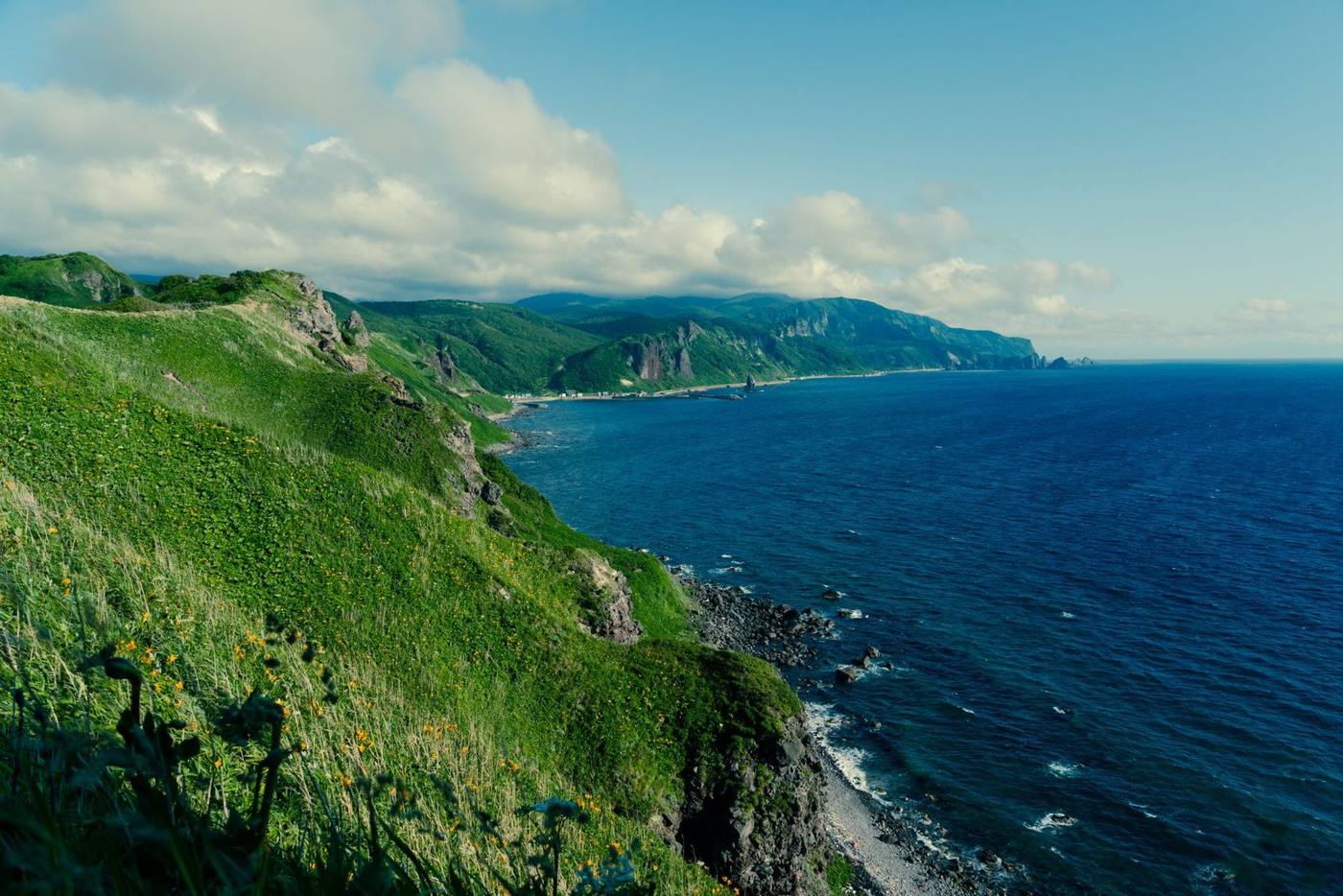
Hokkaido, Volcanoes, Lakes and Bears of the North
Japan's wildest island by train and bus: the volcanic lakes of Tōya, Mashū and Akan, the Sōunkyō gorge, the Shiretoko peninsula and the crane marshes.
 14 daysModerate
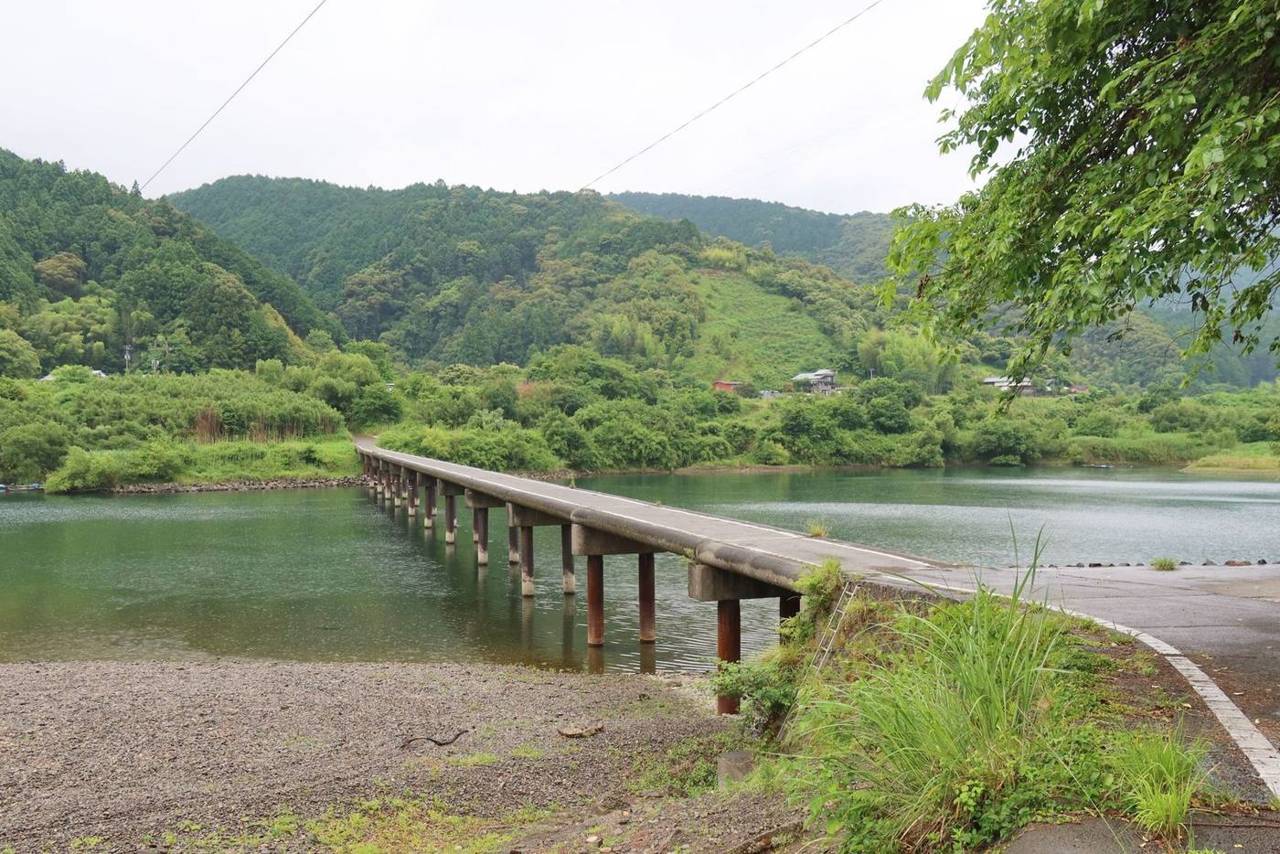
Shikoku on Foot, in the Pilgrims' Footsteps
A loop around the least visited of the four main islands, with sections of the 88 Temple pilgrimage, the Iya Valley, the Pacific capes and the Dōgo hot springs.
 16 daysEasy
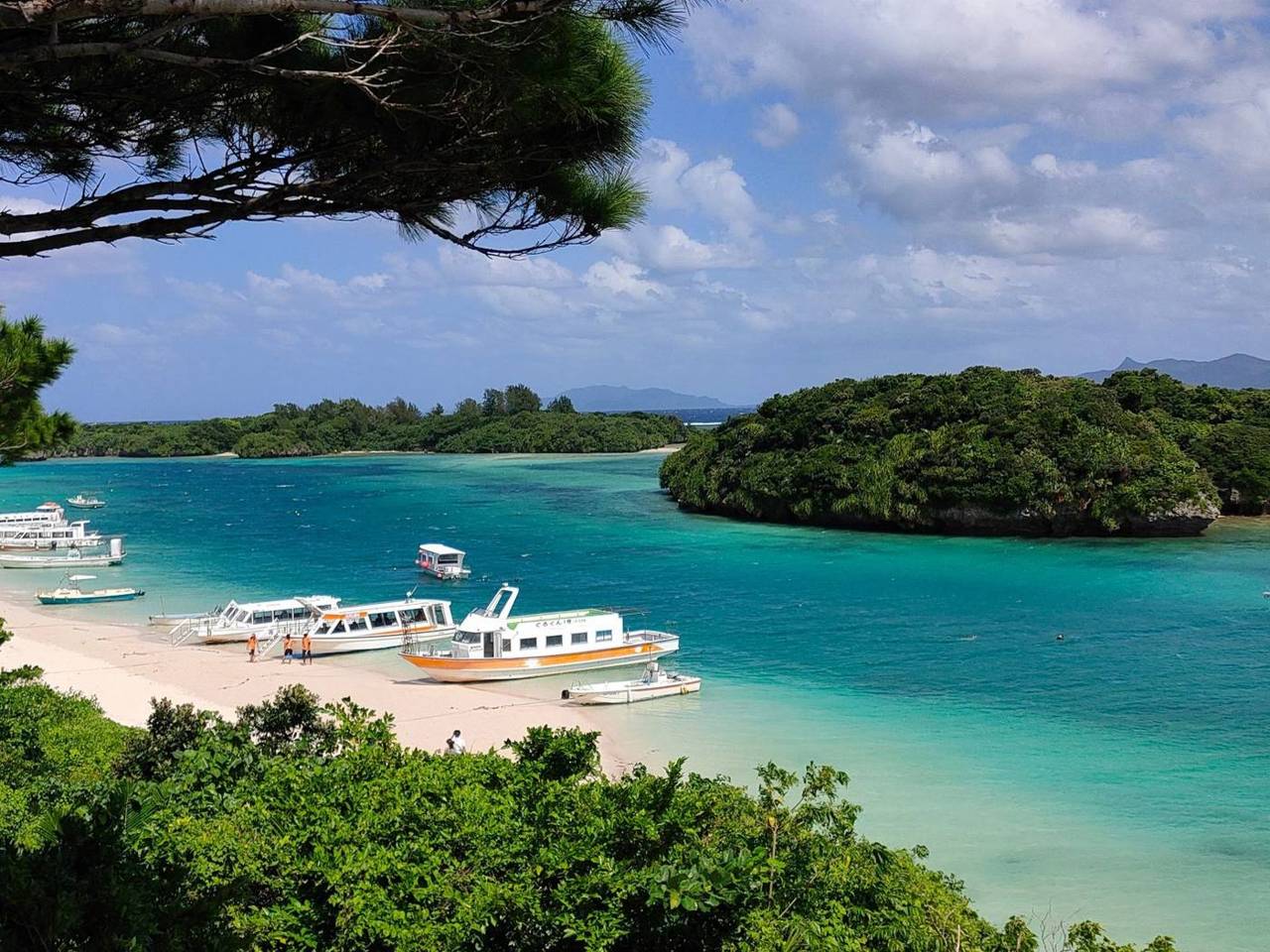
Okinawa and the Yaeyama Islands
Subtropical Japan: Naha and Ryūkyū culture, the coral reef of Ishigaki, the village of Taketomi and the jungle of Iriomote, finishing in Kyoto and Tokyo.