Okinawa and the Yaeyama Islands
Subtropical Japan: Naha and Ryūkyū culture, the coral reef of Ishigaki, the village of Taketomi and the jungle of Iriomote, finishing in Kyoto and Tokyo.
- Tokyo
- Naha
- Ishigaki
- Taketomi
- Iriomote
- Osaka
- Kyoto
Day by day
- Day 1
The flight to Tokyo
This trip takes you to subtropical Japan, the part few people know: Okinawa, the main island of the old Ryūkyū kingdom, then the Yaeyama Islands, at the far southern end of the country, with the coral reef of Ishigaki, the village of Taketomi and the jungle of Iriomote. At the end you return to classic Japan, with a few days between Kyoto and Tokyo. You travel by domestic flights, fast ferries and trains and, on the islands, by bus, bicycle or rental car.
Before you go: Italian citizens enter Japan without a visa for tourist stays of up to 90 days, with a passport valid for the whole stay. Other nationalities should check their own rules. Since 1 July 2026 the departure tax from Japan is 3,000 yen, usually already included in the air ticket. Japan is a very safe country; the main risk on this trip is typhoons, from August to October, which can stop flights and ferries. Follow the weather warnings and keep a spare day.
Today you leave Italy for Tokyo, with a direct flight or a connection in Europe, the Gulf or Asia. The journey usually takes between twelve and sixteen hours, and Japan is eight hours ahead of Italy in winter and seven in summer.
When you book, try to land at Haneda airport, where almost all flights to Okinawa leave from. If you land at Narita, allow at least two hours to get across to Haneda.
Overnight on the plane.
Practical tip: book the domestic flight to Naha together with the long haul flight, or with a good margin of hours, so that a late arrival does not make you miss the connection.
- Day 2
From Tokyo to Naha
You land in Tokyo in the morning and, after border control, take a domestic flight to Naha, the capital of Okinawa. The flight takes about two and a half hours and heads south for more than 1,500 kilometres over the ocean. When you arrive, the air is different at once: warmer and more humid, with palm trees, bougainvillea and a turquoise sea.
Okinawa was not always Japan. For centuries it was the centre of the Ryūkyū kingdom, an independent state that traded with China, Korea and Southeast Asia. Japan annexed the islands only in 1879. In 1945 one of the bloodiest battles of the Second World War was fought here, and after the war the islands stayed under United States administration until 1972. Large American military bases are still on the island today.
From the airport take the Yui Rail monorail, which reaches the centre in a few minutes. In the afternoon, with no hurry, walk along Kokusai Street, the main avenue of Naha, with souvenir shops, craft workshops and places where you hear the island's music.
In the evening try Okinawan food, very different from the rest of Japan: goya champuru, a stir fry of bitter melon, tofu and egg, Okinawa soba, with pork broth and wheat noodles, and rafute, pork belly slowly stewed with soy sauce and brown cane sugar.
Overnight in Naha, for three nights.
Practical tip: you will feel the jet lag today. Go out in daylight, avoid sleeping in the afternoon and go to bed early, by local time.
- Day 3
Shuri Castle and the Ryūkyū kingdom
Today you devote the day to the history of the Ryūkyū kingdom. Take the monorail up to Shuri, the hill where the kings lived for centuries. Shuri Castle, with curved limestone walls and red gateways, is one of the gusuku sites, the castles of the kingdom, listed by UNESCO as World Heritage.
In 2019 a fire destroyed the main hall, the Seiden, and other buildings. The rebuilding took years: the new Seiden has been completed and visits reopen from 23 November 2026. To go inside the main hall you need a reservation with a date and time: book online on the official website and check prices and times.
Around the castle, walk along the Kinjō stone path, a paved slope between old walls and big trees, and visit the royal mausoleum of Tamaudun, where the kings rest, also a UNESCO site.
In the afternoon go down to Shikinaen garden, the old royal villa where Chinese envoys were received, with a pond, stone bridges and a wooden pavilion. Check prices and times.
In the evening listen to the sanshin, the three stringed lute of Okinawa, with its body covered in snakeskin. In many places in the city musicians play the island's folk songs, and the audience often sings and dances along with them.
Overnight in Naha.
Practical tip: in Okinawa the sun is strong even when the sky is hazy. Take a hat, water and a sun cream that does not harm the corals.
- Day 4
Makishi market and the turtleback tombs
In the morning go to Makishi public market, the food heart of Naha. On the ground floor are the fish stalls with all the colours of tropical seas: blue parrotfish, lobsters, crabs, giant clams and umibudo, the seaweed that looks like a bunch of green grapes and pops in your mouth. You choose what you want and take it up to the first floor, where the kitchens cook it for you, raw, fried or in a soup.
Then walk along Tsuboya, the potters' quarter, with stone lanes, old kilns and ceramic workshops. This is also where they make shisa lions, the figures that are half dog and half lion, placed in pairs on roofs and by doors to keep evil spirits away. One has its mouth open, the other closed.
Around the city and on the hills you will notice the turtleback tombs, large stone family tombs with a curved roof that recalls a turtle's shell. It is said that the shape recalls the mother's womb: you return to where you came from. In spring families gather in front of the tombs for a festival with food and prayers.
In the afternoon, if you want to understand recent history, you can go to the south of the island, to the Peace Memorial Park at Itoman, dedicated to the victims of the Battle of Okinawa in 1945. Check the museum's prices and times.
Overnight in Naha.
Practical tip: at Makishi market always ask the price before you choose the fish, because you pay by weight and the cooking upstairs is charged separately.
- Day 5
Flight to Ishigaki, the gateway to the Yaeyama
Today you leave Okinawa and fly south west to Ishigaki, the main island of the Yaeyama archipelago. The flight from Naha takes about an hour. Ishigaki is closer to Taiwan than to Okinawa: here you are truly on the edge of Japan, in a world of coral reefs, forests and small villages.
From the airport a bus takes about half an hour to Ishigaki town, small and quiet, with the port where ferries leave for the other islands. Drop your bags and walk to the ferry terminal, so tomorrow you already know where to go.
In the afternoon, if you like, rent a scooter or a car and drive around the island. In the north you find white beaches, sugar cane fields and Cape Hirakubo, with its lighthouse above the ocean. Along the road there are viewpoints over the bays and cattle farms, the source of the famous Ishigaki beef.
At sunset return to town and stroll through the covered market, with produce from the islands: pineapples, mangoes in summer, sea salt and local chilli.
In the evening try Yaeyama soba, with thin round noodles and a light broth, and grilled Ishigaki beef.
Overnight in Ishigaki, for three nights.
Practical tip: to drive in Japan you need an International Driving Permit together with your Italian licence. Get it in Italy before you leave, because it cannot be obtained on the spot.
- Day 6
Kabira Bay and the coral reef
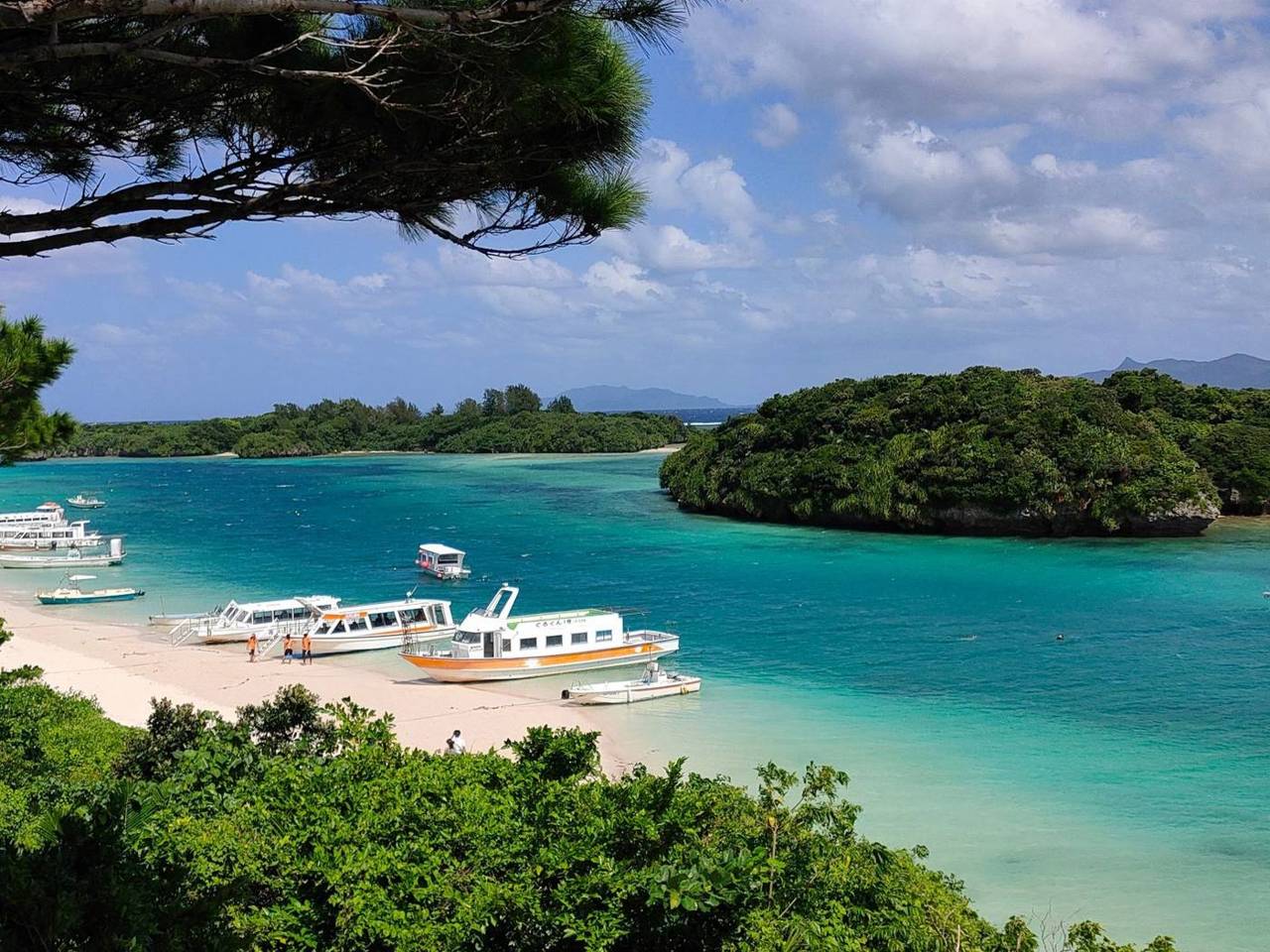
Today is a sea day. In the morning go to Kabira Bay, on the north west coast, considered one of the most beautiful landscapes in Japan: a sheltered inlet, with green islets and water that shifts from turquoise to deep blue. You cannot swim in the bay, though, because there are strong currents, boats and black pearl farms. To see the seabed you board glass bottom boats, which in half an hour show you corals, tropical fish and sometimes sea turtles.
Then head out for a snorkelling or diving trip on the coral reef. Around Ishigaki are some of the richest reefs in Japan, with hard and soft corals and fish of every colour. In some spots, especially in the warm season, manta rays pass by, stopping at cleaning stations where small fish remove their parasites. Divers come from all over the world to look for this sight.
Divers must bring their certification card and logbook, and book the dive centre in advance, especially in high season. If you do not dive, you can snorkel with a guide.
In the evening rest: the sun and the sea tire you more than you think.
Overnight in Ishigaki.
Practical tip: never touch or stand on corals, not even those that look dead. Use your fins carefully near the bottom and follow the guide's instructions.
- Day 7
Taketomi, the village of coral sand
Today take the ferry to Taketomi, a small flat island about ten minutes by sea from Ishigaki. Taketomi is the best preserved traditional village in the Yaeyama: the houses are low and wooden, with red tiled roofs fixed with white lime, and on top of every roof sits a shisa lion. Around the houses are coral stone walls and gardens with hibiscus and bougainvillea. The streets are not paved but covered in white coral sand, which residents sweep with brooms in the morning.
The most traditional way to tour the village is by a cart pulled by a water buffalo. The buffalo walks slowly between the houses while the driver tells the island's story and sometimes plays the sanshin and sings. Otherwise you can rent a bicycle: the island is small and flat.
Then cycle to Kaiji beach, famous for its star sand: if you look closely at the sand, you find tiny star shaped grains, which are in fact the shells of small sea creatures. Do not take any away, as the island is trying to protect it. At sunset Kondoi beach, with shallow clear water, is the loveliest place for a swim.
In the evening you return to Ishigaki by ferry.
Overnight in Ishigaki.
Practical tip: check the time of the last ferry back as soon as you arrive on Taketomi. On windy days the sailings can change, and it is better not to wait for the last one.
- Day 8
Ferry to Iriomote, the jungle island
Today you leave Ishigaki on the fast ferry to Iriomote, which usually takes less than an hour. Iriomote is the second largest island of Okinawa prefecture, yet it has very few inhabitants. About nine tenths of its surface is covered by subtropical jungle, with mangroves along the rivers, giant ferns and forested mountains. Since 2021 the island has been part of a UNESCO natural World Heritage site, together with other islands in southern Japan.
The ferries arrive at two ports, Uehara in the north and Ōhara in the south east. Between the two ports there is a single coastal road: there are no roads in the interior. Buses are few, so it is best to rent a car or be picked up by your accommodation.
In the afternoon take a first walk. From the east coast a cart pulled by water buffalo crosses the shallow sea to the small islet of Yubu, a botanical garden full of palms and flowers. Later walk on the nearby beaches: at low tide pools appear, full of crabs, fish and starfish.
To protect nature, the island has introduced a limit on visitor numbers and rules for some areas, which you may enter only with an authorised guide. Find out beforehand and respect the instructions.
Overnight on Iriomote, for two nights.
Practical tip: on Iriomote there are few shops, they close early and not all of them accept cards. Bring enough cash from Ishigaki.
- Day 9
The mangroves of the Urauchi River and the waterfalls
Today you enter the jungle. The Urauchi River is the longest in Okinawa prefecture and runs up into the interior of the island through mangrove forests. You can travel up it by boat, on a sightseeing cruise, or by kayak with a guide, paddling slowly on the dark water while the mangrove roots rise from the bank like legs. You hear birds, see crabs and mudskippers on the mud, and sometimes the crested serpent eagle, with a subspecies that lives only on these islands.
From the landing point a forest trail, with roots, steps and muddy stretches, leads first to Mariyudo Falls, wide and with several drops, seen from a viewpoint, and then to Kanbire Falls, where the river flows over flat slabs of rock. It is an easy but humid walk: you will sweat a lot.
This is also home to the Iriomote cat, a small wild cat that scientists discovered only in the 1960s and that lives only on this island. Very few remain, and seeing one is almost impossible, but along the roads you will find signs asking you to drive slowly so as not to hit one.
In the evening, if you have the energy, join a night walk with a guide to see frogs, insects and fireflies in the forest.
Overnight on Iriomote.
Practical tip: wear shoes that can get wet, and bring insect repellent and a waterproof bag for your phone and documents.
- Day 10
More Iriomote and back to Ishigaki
Today you have the morning for one last experience on Iriomote. You can choose between two very different things.
The first is the sea: from the north coast there are snorkelling trips to the coral reefs around the island and to the tiny island of Barasu, a strip of white coral fragments that rises from the middle of the sea, with no trees or houses. Around it the water is shallow and full of corals and fish.
The second is the river: you can take another kayak trip on a smaller river, with a guide, among the mangroves of the Nakama River, in the south east of the island. On some rivers access is limited and you need an authorised guide.
In any case, before you leave, taste the island's food: the fish of the day, wild boar when it is available, and sweets made with black cane sugar.
In the afternoon take the ferry back to Ishigaki. If the sea is rough, ferries from Uehara port sometimes stop and only leave from Ōhara: ask your accommodation or check the ferry company's notices that same morning.
In the evening in Ishigaki have your last dinner on the islands, perhaps with awamori, the rice spirit typical of Okinawa, to be drunk in moderation.
Overnight in Ishigaki.
Practical tip: in a typhoon, ferries are suspended, sometimes for several days. If bad weather is forecast, return early to Ishigaki, where the flights leave from.
- Day 11
From Ishigaki to Osaka
Today you leave the southern islands. In some periods there are direct flights from Ishigaki to Osaka, but you often go via Naha, with a change of plane. In all, the journey takes a few hours. From the air, look for the last time at the turquoise sea, the coral reefs and the green islands.
You land at Kansai airport, built on an artificial island in Osaka Bay, or at Itami airport, closer to the centre. From here trains and buses reach the city in less than an hour.
Osaka is Japan's second big city, noisy, cheerful and famous for its food. After the islands, the contrast is strong: skyscrapers, neon signs and crowds.
In the evening go to Dōtonbori, the street along the canal full of giant signs, with crabs, octopus and fish moving on the façades. Here you eat standing up or sitting at the counter: try takoyaki, batter balls with a piece of octopus inside, and okonomiyaki, a savoury pancake of cabbage, batter and meat or seafood, cooked on the hotplate in front of you.
Then walk through the covered arcade of Shinsaibashi, a long shopping street.
Overnight in Osaka, or move on to Kyoto by train that same evening, to save time.
Practical tip: if only a few days are left, you can send your large suitcase with a luggage forwarding service to your Tokyo hotel and travel light between Kyoto and Tokyo.
- Day 12
Kyoto: Fushimi Inari and Kiyomizu-dera
Early in the morning take the train to Kyoto, less than half an hour from Osaka. Kyoto was the capital of Japan for more than a thousand years and keeps hundreds of Buddhist temples and Shinto shrines, many of them UNESCO World Heritage.
Start with Fushimi Inari shrine, dedicated to Inari, the deity of rice and prosperity. It is famous for its thousands of torii, the red gateways donated by families and companies, which form tunnels along the paths on the hill. The higher you climb, the fewer people you meet. Arrive as early as you can, because by late morning it is very crowded.
Then go east to Kiyomizu-dera temple, built on the side of a hill, with a large wooden terrace held up by big wooden pillars, fitted without nails. From the terrace you see the whole city. Below, the Otowa spring splits its water into three streams: visitors drink from one for good luck. Check prices and times.
Walk down the lanes of Sannenzaka and Ninenzaka, with wooden houses, pottery shops and sweets.
At sunset you reach Gion, the geisha district; in Kyoto geisha are called geiko. Walk along Hanamikoji street and the Shirakawa canal, with its willows and teahouses.
Overnight in Kyoto, for two nights.
Practical tip: in Gion do not photograph geiko and apprentices up close or follow them, and respect the signs that forbid entering private lanes.
- Day 13
Kyoto: Arashiyama and the Zen temples
Today, if time allows, go to Arashiyama, in the west of Kyoto, at the foot of the mountains. Arrive early at the bamboo grove, a path among towering canes that sway and rustle in the wind. After nine o'clock it fills up with people.
Next to it is the Zen temple of Tenryū-ji, a UNESCO site, with a garden laid out about seven centuries ago around a pond, with rocks, pines and the mountains behind. Check prices and times.
Then walk to the Togetsukyō bridge over the river and, if you like, climb to the monkey park on the hill, where wild Japanese macaques live and from where you see the city from above.
In the afternoon return to the centre and visit one of the city's great temples. Kinkaku-ji, the Golden Pavilion, is covered in gold leaf and reflected in a pond. Ryōan-ji, not far away, has the Zen garden of raked gravel and fifteen stones, which can never all be seen together from any one point. Choose one or two, without rushing.
In the evening walk through Nishiki market, a long covered street with stalls of pickles, fish, tofu and sweets, then have dinner in a small eatery serving Kyoto food, light and seasonal.
Overnight in Kyoto.
Practical tip: in Kyoto the buses are slow and full. Use the subway and trains when you can, and group your visits by nearby areas.
- Day 14
By Shinkansen to Tokyo
In the morning take the Shinkansen, the bullet train, from Kyoto to Tokyo. The journey takes just over two hours. If the sky is clear, sit on the left side facing the direction of travel: halfway you see Mount Fuji, the highest mountain in Japan.
You arrive at Tokyo Station, one of the largest in the world, with its red brick façade from 1914. Leave your bags at the hotel and start with Asakusa, the oldest district of the city.
Here is Sensō-ji, the oldest temple in Tokyo. You enter through the Kaminarimon gate, with its great red lantern, and walk along Nakamise street, with stalls of sweets and souvenirs, to the main hall and the five storey pagoda. In front of the temple people gather round the large incense burner to waft the smoke over themselves, which is said to bring good health.
In the afternoon walk along the Sumida River, from where you see the Skytree, the tallest tower in Japan, and if you like take a river boat.
In the evening go to Shinjuku: from the Metropolitan Government Building you see the city lit up from above, then walk through the narrow lanes of Omoide Yokocho, with small grilled skewer places.
Overnight in Tokyo, for two nights.
Practical tip: buy your Shinkansen ticket with a reserved seat, especially at weekends and during holidays.
- Day 15
Tokyo: Shibuya and Shinjuku
Today is your last full day in Japan. In the morning go to Meiji Shrine, in Yoyogi Park, dedicated to Emperor Meiji, who opened Japan to the world at the end of the nineteenth century. You pass under a great wooden torii and walk through the forest, in silence, in the heart of the city. If you are lucky, you will see a traditional wedding, with the bride in a white kimono.
Then go down to Harajuku, to Takeshita street, full of young people, colourful fashion and sweets, and continue along Omotesando avenue, with shops by famous architects.
In the afternoon you reach Shibuya, with its famous crossing where, when the light turns green, thousands of people cross together in every direction. Near the station exit is the statue of Hachikō, the dog who waited for years for his dead master. To see the crossing from above, go up to one of the district's observation decks. Check prices and times.
In the evening return to Shinjuku, the liveliest area of Tokyo, with the Kabukichō district, full of lights, and the tiny bars of Golden Gai, in lanes of low houses. Have sushi or a bowl of ramen for dinner, to end the trip.
Pack your suitcase: if you forwarded your luggage, check that it has arrived.
Overnight in Tokyo.
Practical tip: for gifts, department stores have basement food halls with beautiful packaged sweets and foods, perfect to take home.
- Day 16
Return to Italy
Today is the day you go home. Reach the airport by direct train or bus, with plenty of time. The flight to Europe usually takes between thirteen and sixteen hours and, with the time difference, you often arrive in Italy on the evening of the same day.
Looking back, you have seen a Japan many people do not imagine: the Ryūkyū kingdom with the newly rebuilt Shuri Castle, the fish markets and the sound of the sanshin in Naha, the coral reefs of Ishigaki with manta rays, the village of Taketomi with its sand streets and buffalo carts, and the jungle of Iriomote with its mangroves and waterfalls. Then the contrast with Kyoto, its temples and Gion, and with Tokyo, between Asakusa and Shibuya. The limit is that the final part is short: Kyoto and Tokyo deserve another trip.
When to go: the best periods are April and early May, and from late October to November, with the sea still warm, little rain and less heat. In mid May and June the rainy season reaches the islands. July is very hot, and August to October is typhoon season, when flights and ferries can be cancelled. In winter the sea is cooler but sightseeing is easy.
To get used to Italian time again, in the first days get morning light and do not sleep in the afternoon.
Practical tip: remember that you cannot bring meat, milk and some animal products into Italy, nor protected corals or shells: they can be seized at customs.
This is Japan for travellers who want sea, coral reef and jungle, at a gentler pace and in a different culture, that of the old Ryūkyū kingdom. The drawback is twofold: typhoon season runs from August to October and can cancel ferries and flights, and the final stretch in Kyoto and Tokyo is too short to do either city justice. Divers should bring their certification and book a dive centre in Ishigaki in advance.
Before you go
- Documents and visa
- Passport valid for the whole stay; many nationalities, including EU citizens, enter without a visa for up to 90 days for tourism. An electronic travel authorisation (JESTA) has been announced but is not yet in force: check before you go.
- Health and vaccines
- No vaccines required. Healthcare is excellent but expensive: travel insurance with high medical cover is essential. Some common medicines, such as certain codeine painkillers, are banned or restricted. Emergencies: 119 ambulance, 110 police.
- Money and payments
- Yen. Cards are increasingly accepted, but temples, small restaurants and rural areas need cash: convenience-store ATMs accept foreign cards. Tipping is not customary.
- Power sockets
- Type A, 100 volts: you need a flat-pin adapter; phone and laptop chargers work, European hairdryers often do not.
- Time zone
- UTC+9, no daylight saving time.
- Safety
- One of the safest countries in the world. The risks are natural: earthquakes, typhoons from July to October, extreme summer heat. Download an English-language alert app. Official advice: GOV.UK.
Information checked in November 2026 for Italian and EU citizens. Rules change: always check before you travel.
Variations
In 12 days: Tokyo, Naha, Ishigaki with Taketomi and Iriomote, and back from Okinawa via Tokyo, without Kyoto.
In 20 days: add the Kerama Islands from Naha for the sea, a night on Hateruma, the southernmost inhabited island of Japan, and two more days in Kyoto and Tokyo.
Frequently asked questions
What documents do I need for Japan?
Italian citizens enter without a visa for tourist stays of up to 90 days, with a passport valid for the whole stay. Since 1 July 2026 the departure tax is 3,000 yen, usually included in the air ticket. Other nationalities should check their own rules.
When is there a risk of typhoons?
Mainly from August to October. Typhoons can stop flights and ferries for one or more days: keep a spare day in your plan and follow the official weather warnings.
Do I need a dive certification to see manta rays?
For diving, yes: bring your card and logbook and book a dive centre on Ishigaki in advance. Mantas are sometimes seen while snorkelling too, but it is not guaranteed.
Indicative itinerary written by World Atlas. Before booking, check timetables, seasonal openings, documents and safety.
 12 daysModerate
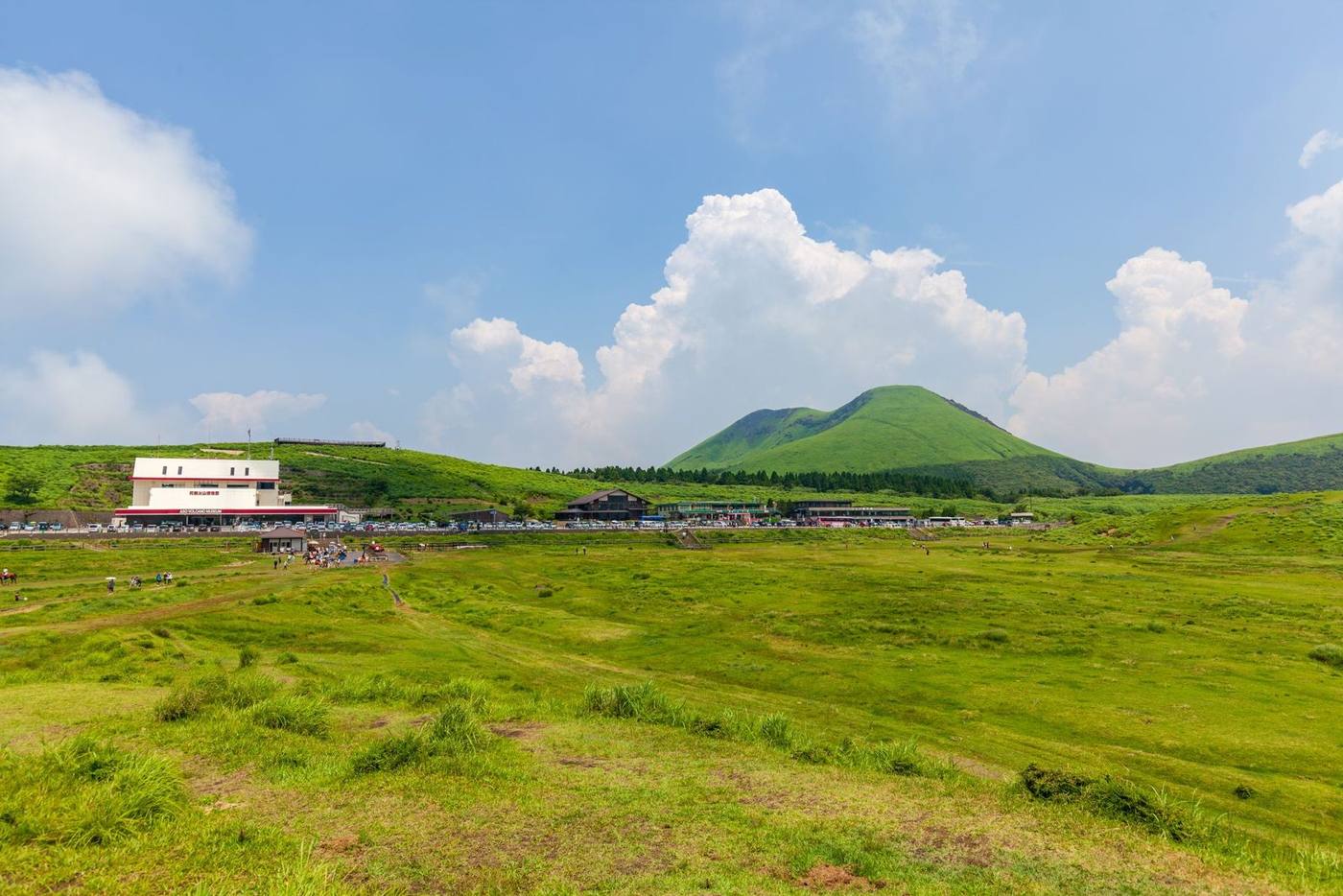
Kyushu: volcanoes, hot springs and Nagasaki
The southern island away from the classic circuit: the active Aso crater, the hot springs of Kurokawa and Beppu, Nagasaki and the Sakurajima volcano.
 7 daysEasy
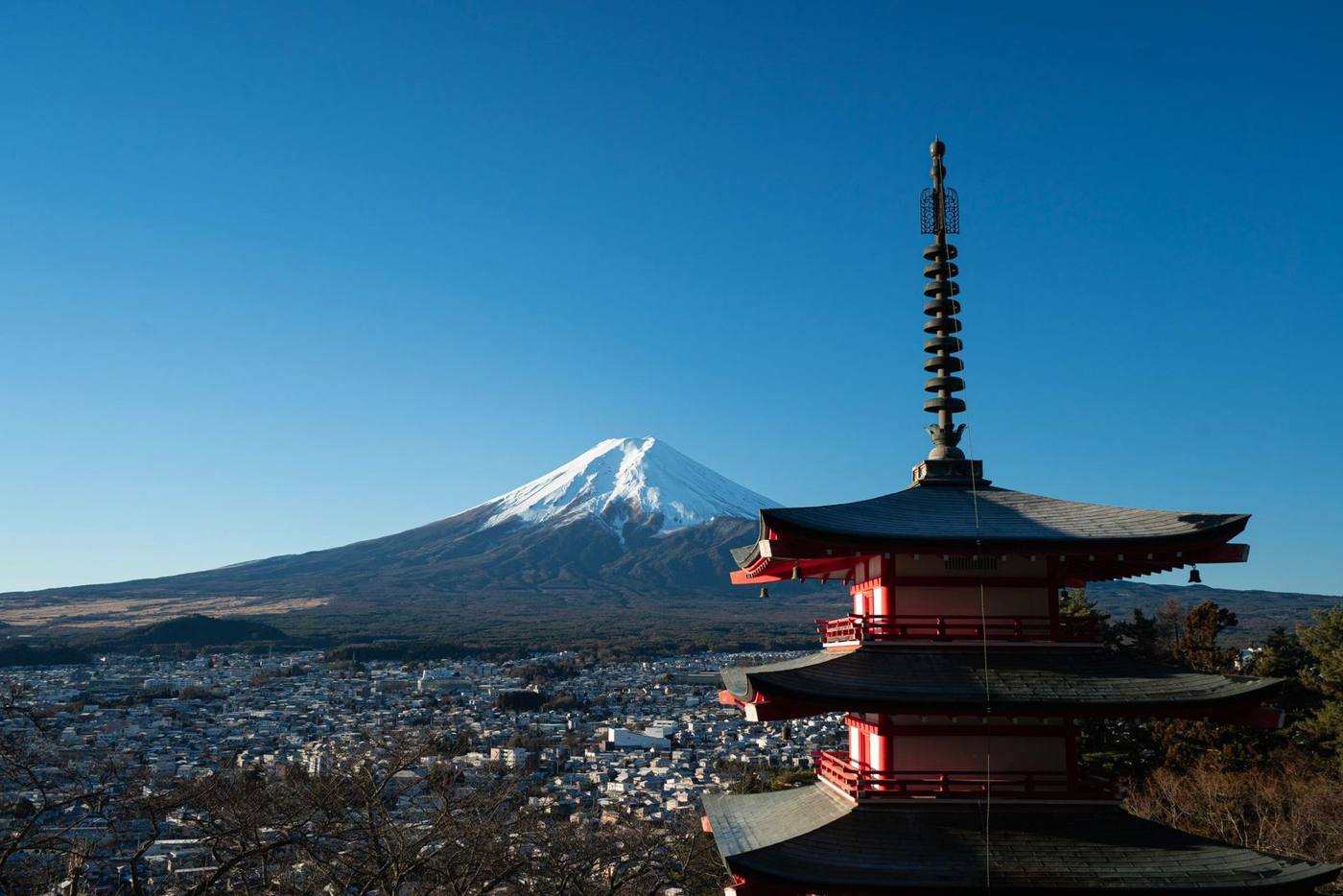
Mount Fuji, Hakone and Kamakura
A week around Tokyo: the Great Buddha of Kamakura, the hot springs of Hakone and Mount Fuji reflected in the lakes.
 9 daysEasy
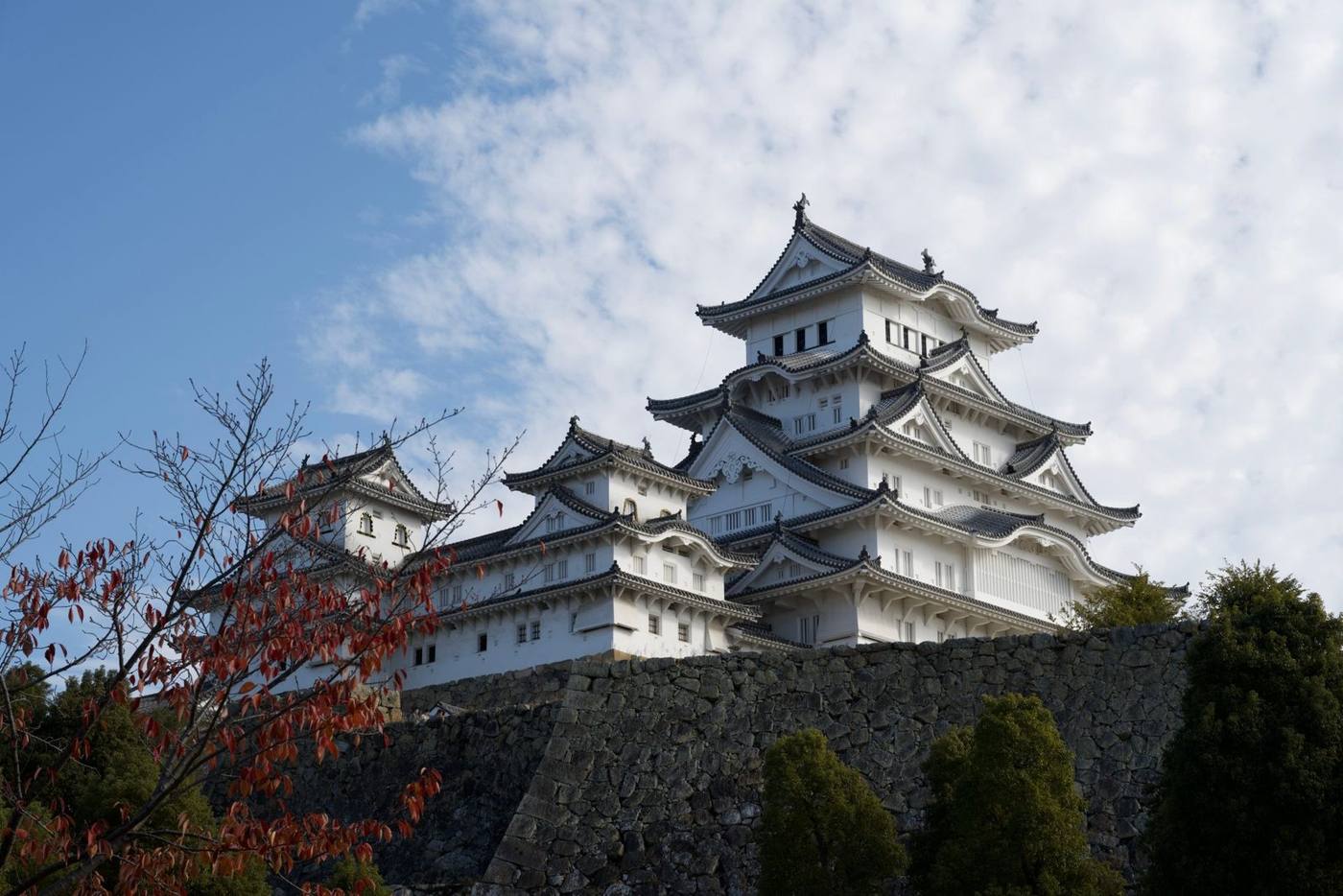
Kansai at a slow pace: Kyoto, Nara, Koyasan and Himeji
Four days in Kyoto, a night in a monastery on Mount Koya, the deer of Nara and Japan's finest castle.