Puglia and Matera
Old Bari, the trulli of Alberobello, the Itria Valley, the Sassi of Matera, the baroque of Lecce and the sea of Salento.
- Bari
- Polignano a Mare
- Matera
- Alberobello
- Ostuni
- Lecce
- Otranto
- Santa Maria di Leuca
Day by day
- Day 1
Old Bari and handmade orecchiette
Arrive at Bari airport: a train links it to the central station in about twenty minutes. Pick up your car only tomorrow, when you leave the city: Bari Vecchia is explored on foot and is a limited traffic zone. Drop your bags and walk to the Basilica of San Nicola, Romanesque and built of pale stone, with the crypt holding the saint's relics, also venerated by Orthodox Christians: that is why you will meet pilgrims from all over Eastern Europe. Nearby are the cathedral of San Sabino and the Norman-Swabian castle, which takes an hour.
In the afternoon lose yourself in the lanes of the old town. Around Strada dell'Arco Basso the women of the quarter make orecchiette by hand in front of their doorways, as they have for generations, and sell them to passers-by. Continue along the seafront to the Petruzzelli theatre and Via Sparano, the shopping street of the new town, laid out on a grid in the nineteenth century.
In the evening return to the old town to eat: fried panzerotto, Bari focaccia with cherry tomatoes and olives, orecchiette with turnip tops and, if you like it, raw seafood, much loved locally. Stay in the centre, between Bari Vecchia and the Murattiano district. Practical tip: scooters use the narrow lanes of the old town; keep your backpack in front and leave nothing visible in the car in city car parks.
- Day 2
Polignano a Mare and Monopoli
Pick up the car and drive south along the coast: Polignano a Mare is about half an hour away. The town is built on a cliff above the sea, with an old centre full of terraces over the Adriatic. The most photographed spot is Lama Monachile, a small pebble beach between two rock walls, crossed by a Bourbon bridge. On the seafront stands the statue of Domenico Modugno, who was born here. Walk along the panoramic balconies of the centre; the sea caves along the coast are seen from boats leaving the harbour, in calm seas.
Around midday continue to Monopoli, fifteen minutes further south. The old town is less crowded than Polignano and more lived-in: the old harbour with its blue wooden boats, the baroque cathedral of the Madonna della Madia, and the castle of Charles V on the sea. Along the coast south of the town there are small sandy and rocky coves, good for a swim, and a series of fortified farmhouses among the olive trees.
In the evening you can stay in Monopoli, convenient for reaching both Matera and the Itria Valley tomorrow. To try in the area: sea urchins in winter and spring, mussels, burrata from Andria and taralli. Tip: in summer you will not find parking in Polignano in the middle of the day; arrive early or towards evening, and use the paid car parks signed at the entrance to town.
- Day 3
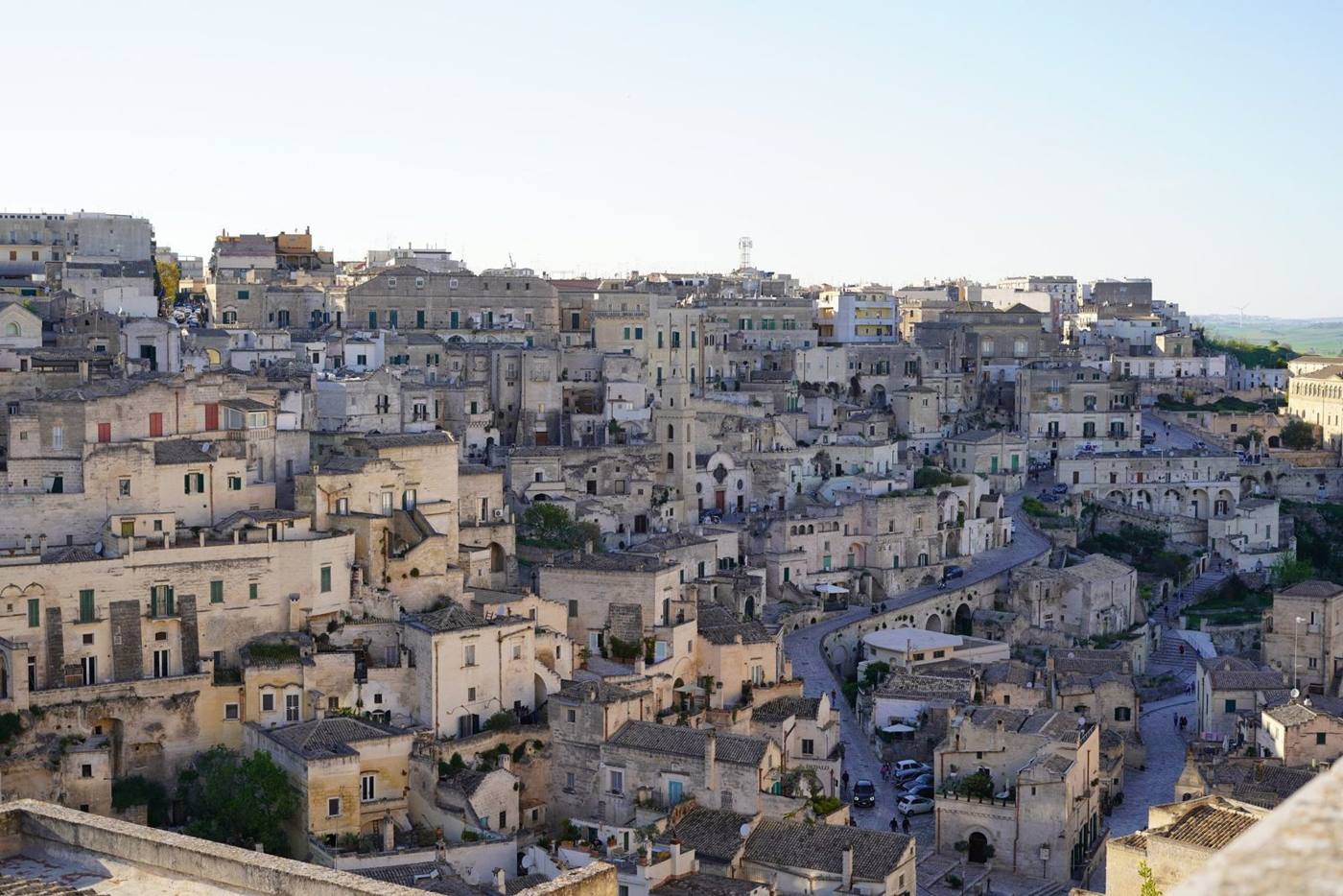
Matera: the Sassi and the rock churches
Matera is in Basilicata, about an hour and a quarter from Monopoli. The city is famous for the Sassi, two districts of houses cut into the limestone, the Sasso Barisano and the Sasso Caveoso, inhabited for millennia, emptied in the 1950s because of their harsh living conditions, then restored and listed by UNESCO. Park in the upper town and walk down: the Sassi are a tangle of steps and lanes where cars cannot go.
Start at the viewpoint of Piazza Vittorio Veneto or the Luigi Guerricchio viewpoint, which looks down on the Sasso Barisano. Then visit a cave house furnished as in the 1950s, to understand how families lived with their animals in the same room, and some of the rock churches with medieval frescoes, such as Santa Maria de Idris and San Pietro Barisano. The Romanesque cathedral dominates the Civita, the spur between the two Sassi.
In the late afternoon cross the gravina, the canyon separating the city from the Murgia plateau: from the Murgia Timone viewpoint, reached by car or on foot by a path and a suspension bridge, you see Matera at sunset as the lights come on. Stay in Matera, perhaps in one of the cave houses converted into accommodation. For dinner try crapiata, a pulse soup, and Matera IGP bread. Tip: wear comfortable shoes and watch the steps, often slippery.
- Day 4
The Itria Valley: Alberobello and Locorotondo
From Matera return to Puglia towards the Itria Valley, about an hour and a half: this is the landscape of trulli, dry-stone buildings with conical roofs, scattered among walls, olive groves and vineyards. Alberobello has two whole districts of them, Rione Monti and Aia Piccola, listed by UNESCO. Rione Monti is full of souvenir shops; Aia Piccola is quieter and still lived in. Visit the Trullo Sovrano, the only one on two floors, and the trullo-shaped church of Sant'Antonio. Arrive early: groups come from ten o'clock.
In the afternoon drive a quarter of an hour to Locorotondo, a white village built in a circle on the hill, as its name says. The houses have pointed roofs called cummerse, and the viewpoint looks over the whole valley, dotted with trulli. Locorotondo gives its name to a DOC white wine produced in the area.
This is the night to sleep in a trullo: many have been turned into accommodation, scattered in the countryside between Alberobello, Locorotondo and Martina Franca. You need a car to reach them. In the evening, the valley's cooking is about meat: bombette, pork rolls stuffed with cheese and grilled. Practical tip: rooms in trulli are cool in summer but small and fairly dark; read the description before booking, especially if travelling as a family.
- Day 5
Cisternino, Martina Franca and Ostuni
In the morning visit Cisternino, one of the valley's most beautiful villages, with a white, quiet old centre. It has a special tradition: butchers' shops with a ready grill, where you choose meat at the counter and have it grilled at once, to eat at tables outside. It is a typical evening experience, but some butchers also open at lunchtime.
Instead or as well, stop at Martina Franca, the valley's baroque town: the basilica of San Martino, the Ducal Palace and the lanes of the centre with wrought-iron balconies. In summer it hosts the Festival della Valle d'Itria, devoted to opera.
In the afternoon head down to the coast to Ostuni, about half an hour: the white city, built on a hill and entirely whitewashed, looks out over the plain of ancient olive trees to the sea. Climb to the Gothic cathedral at the top of the old town and walk along the walls for the view. At sunset, when the white stone takes on colour, Ostuni is at its best. Stay in Ostuni or at a farmhouse on the plain. Tip: the plain between Ostuni and Fasano has protected olive trees over a thousand years old; an autumn visit to an oil mill shows how olive oil is made. Many olive trees further south in Salento have been hit by Xylella: you will see fields of dead trees.
- Day 6
Lecce, the capital of baroque
From Ostuni to Lecce takes about fifty minutes on the dual carriageway. Lecce is called the Florence of the South for its baroque, carved in Lecce stone, a soft honey-coloured limestone worked almost like wood. Leave the car outside the historic centre, a limited traffic zone, and walk.
Start at the Basilica of Santa Croce, with the city's richest façade, full of animals, fruit and figures. Then go to Piazza del Duomo, closed on three sides, with the cathedral, bell tower and bishop's palace: one of the most theatrical squares in Italy. In Piazza Sant'Oronzo there is the Roman amphitheatre, half excavated, seen from above. In the afternoon visit a papier-mâché workshop, the city's traditional craft, and the Jewish museum, in the cellars of the old Jewish quarter.
In the evening Lecce comes alive: the centre fills with students and the streets stay busy until late. For dinner try ciceri e tria, pasta partly fried and served with chickpeas, and potato pitta; for breakfast, the custard-filled pasticciotto and iced coffee with almond milk, a city speciality. Stay in Lecce for two nights: it is the best base for Salento. Tip: in summer churches close in the middle of the day and the white stone reflects the sun; visit early in the morning and in the evening.
- Day 7
The Adriatic Salento: the Grotta della Poesia and Otranto
From Lecce drive to the Adriatic coast: about half an hour away is Roca Vecchia, with the Grotta della Poesia, a natural pool carved into the rock and connected to the sea, inside a Messapian archaeological area. Since 18 July 2026 entry to the area requires a 5-euro ticket for non-residents, bought online or at the on-site ticket offices; swimming and diving in the cave have been banned for years, ticket or not. In summer it opens from 9 a.m. until the evening.
Continue south along the coast to Torre dell'Orso, with its beach and the two sea stacks called the Due Sorelle, and then to Otranto, Italy's easternmost point. Otranto cathedral has a vast twelfth-century mosaic floor, with the tree of life, animals, kings and biblical scenes; a chapel holds the bones of the martyrs killed by the Ottomans in 1480. The Aragonese castle and the old town above the sea take an hour.
South of Otranto, the bauxite quarry, a green pond in a hollow of red earth, and the Baia dei Turchi, with its clear water, are good afternoon stops. Return to Lecce for the night. Practical tip: in summer the no-cost beaches of the Adriatic coast fill early; arrive before ten or choose a beach with paid facilities.
- Day 8
Santa Maria di Leuca and the Ionian coast to Gallipoli
Today you go round the heel of Italy. From Lecce or Otranto follow the Adriatic coast road south to Santa Maria di Leuca, about an hour: the road runs high above the sea past cliffs and watchtowers, with deep blue water below. At Leuca, at the tip of the peninsula, stands the sanctuary de finibus terrae, at the ends of the earth, with the lighthouse and the monumental stairway of the Apulian aqueduct, where on certain days water cascades down to the sea.
In season boats leave Leuca harbour for the sea caves along the coast, in calm seas. Then head back up the Ionian coast, which has longer sandy beaches and sunsets over the sea: Pescoluse, nicknamed the Maldives of Salento for its shallow, clear water, and further north Torre San Giovanni.
Reach Gallipoli in the late afternoon: the old town sits on an island linked to the new town by a bridge, with walls, a castle and the baroque cathedral of Sant'Agata. At sunset walk along the walls that ring the island. For dinner try fish: Gallipoli red prawns, fried fish and scapece, fried fish marinated in vinegar. Stay in Gallipoli or return to Lecce. Tip: in August Gallipoli is full of young people and parties and noisy at night; those wanting peace should stay outside town.
- Day 9
Departure from Brindisi
Brindisi airport is about fifty minutes from Lecce and an hour and a quarter from Gallipoli; returning the car here saves going back to Bari, nearly two hours away. Allow plenty of time, as Salento's roads are busy in summer.
If your flight is in the afternoon, use the morning for Brindisi: the natural harbour shaped like a stag's antlers, the Roman columns that marked the end of the Via Appia, the seafront and the round church of San Giovanni al Sepolcro, from the Crusader period. An hour and a half is enough, and the old town is compact and easy to walk. Alternatively, those coming from Lecce can stop at San Cataldo or in the Cesine nature reserve, a protected coastal wetland, with a path through pinewoods and ponds where migrating birds rest.
Before leaving, buy something to take home: extra virgin olive oil, taralli, dried orecchiette, Primitivo or Negroamaro wine, sun-dried tomatoes. At oil mills and farmhouses you can buy directly from producers. Practical tip: if you hired the car in Bari and return it in Brindisi, check the one-way fee, which should be agreed when booking and is not always shown in the initial price. Fill up before reaching the airport and keep the receipt.
The fashionable South, with white villages, excellent food and clear sea. A car is needed: fly into Bari and out of Brindisi. In August Salento is packed and expensive, and the no-cost beaches are full. Matera is in Basilicata but only an hour from Bari, and should not be missed.
Before you go
- Documents and visa
- EU citizens only need a valid identity card or passport; hotels and guesthouses must register it on arrival. Other nationalities should check the visa rules for the Schengen area.
- Health and vaccines
- No vaccines required. EU citizens should bring their European Health Insurance Card (EHIC). Emergency number: 112.
- Money and payments
- Euro. Cards are accepted almost everywhere; many cities charge a tourist tax per night, paid directly at your accommodation.
- Power sockets
- Types C, F and L, 230 volts.
- Time zone
- Central European Time (UTC+1), summer time (UTC+2) from the last Sunday of March to the last Sunday of October.
- Safety
- A safe country. In big cities and on crowded public transport watch out for pickpockets. Emergencies: 112. Official advice: GOV.UK.
Information checked in November 2026 for Italian and EU citizens. Rules change: always check before you travel.
Variations
In 6 days: Bari and Polignano on day one, Matera on day two, Alberobello and Ostuni on day three, Lecce on day four, Otranto and Leuca on day five, departure from Brindisi on day six. You skip Monopoli, Cisternino and Gallipoli.
In 12 days: add the Gargano with Vieste and the Foresta Umbra, Trani and Castel del Monte in northern Puglia, and an extra day on the Ionian coast.
Frequently asked questions
Do I need a car?
Yes. Bari, Lecce and some towns are linked by train, but the Itria Valley, the farmhouses, the Salento beaches and Matera from the Puglia side are awkward without a car. Leave it outside the historic centres, almost all limited traffic zones.
When is the best time?
May, June and September: the sea is already warm, crowds are smaller and prices lower. July and especially August are very busy and expensive in Salento. In spring and autumn the art towns and Matera are more pleasant.
Can I swim in the Grotta della Poesia?
No. Swimming and diving in the cave are banned because the rock is fragile, and the ticket introduced in 2026 does not allow them. You visit the archaeological area and look down on the cave.
Indicative itinerary written by World Atlas. Before booking, check timetables, seasonal openings, documents and safety.
 8 daysModerate
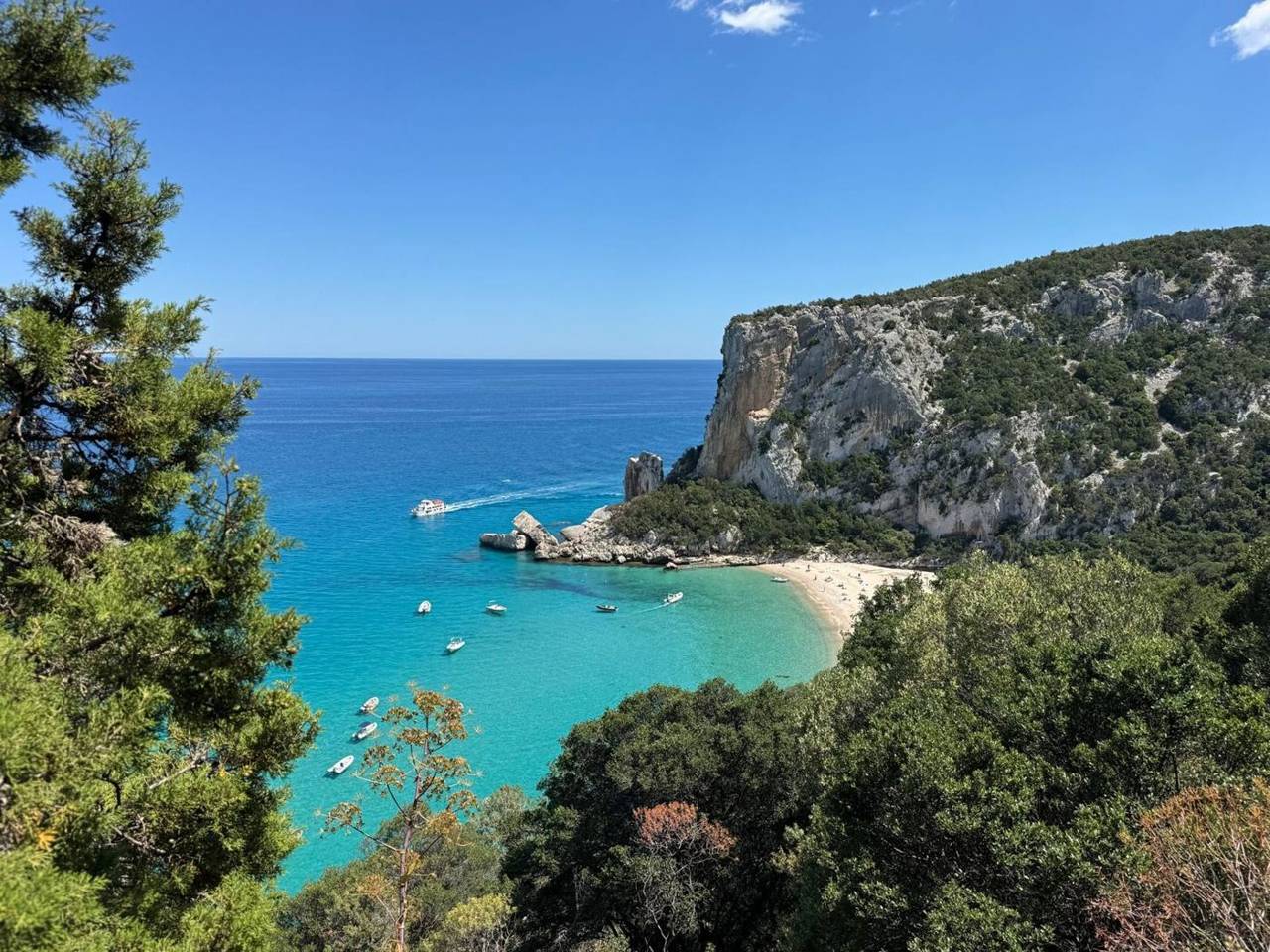
Sardinia: the Gulf of Orosei
Coves reachable only on foot or by boat, Cala Goloritzé and Cala Luna, the Gorropu gorge, the nuraghi and the villages of the Barbagia.
 5 daysModerate
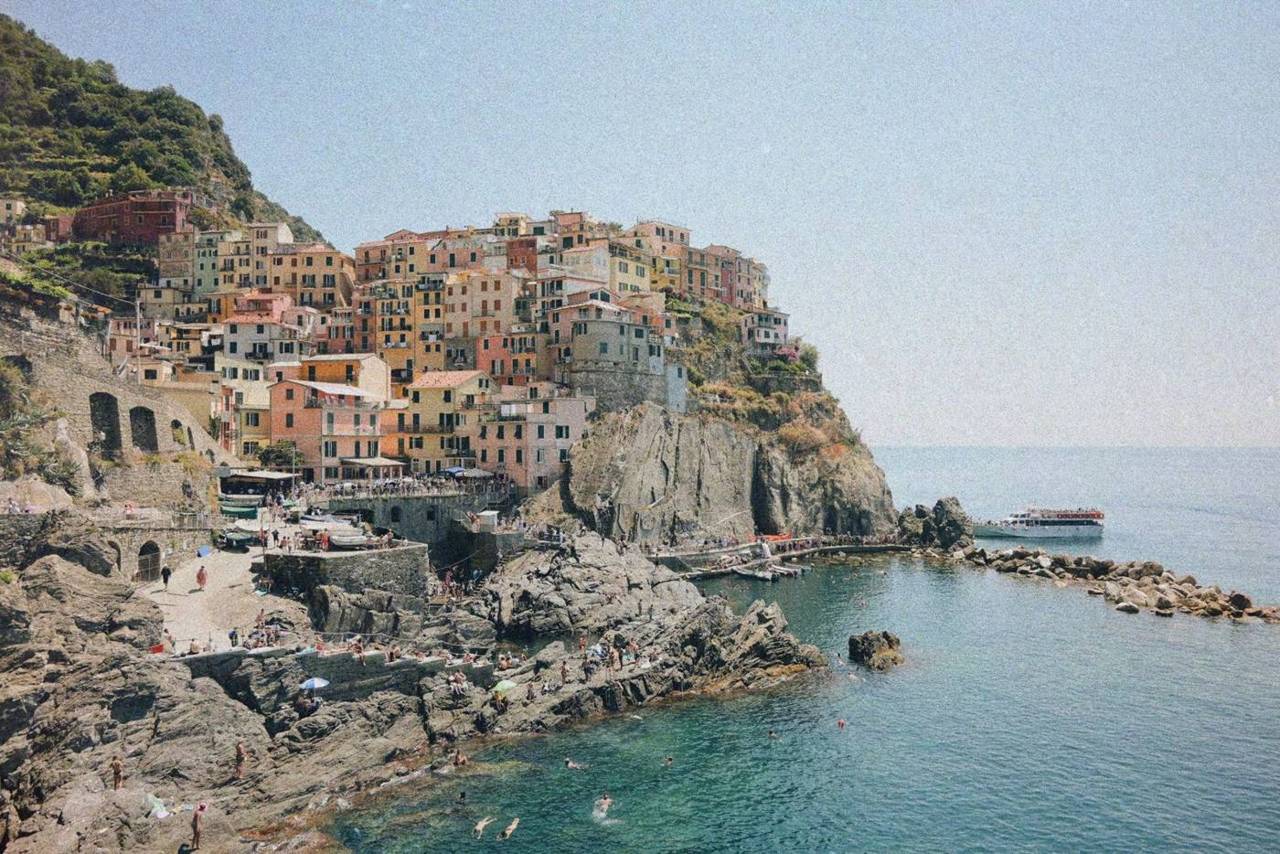
Cinque Terre and Portofino
Five cliff-top villages linked by train and footpaths, Portovenere, the Gulf of Poets and Portofino with San Fruttuoso.
 6 daysEasy
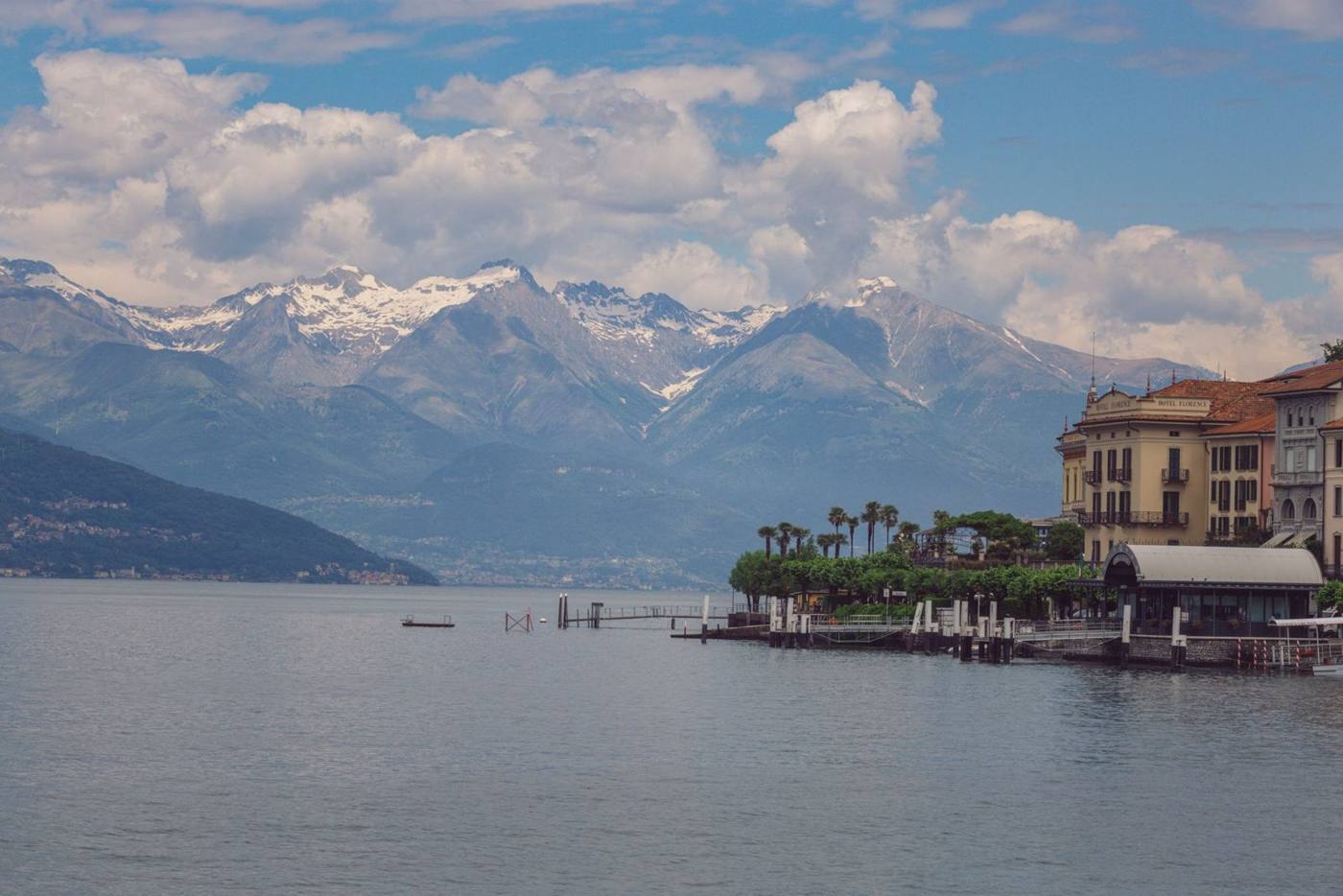
The great lakes: Como, Maggiore and Garda
The villas of Lake Como with Bellagio and Varenna, the Borromean Islands on Lake Maggiore, Sirmione and the Trentino shore of Lake Garda.