The Banda Islands
The Spice Islands of the Moluccas, over which the Dutch and English went to war: nutmeg plantations beneath giant canarium trees, the Dutch forts of Banda Neira, the Gunung Api volcano and pristine reefs with coral walls dropping sharply a few metres from shore.
- Ambon
- Banda Neira
- Gunung Api
- Pulau Ai
- Pulau Run
Day by day
- Day 1
Ambon and the crossing to Banda Neira
The Banda Islands are a small volcanic archipelago in the Banda Sea, in the Moluccas, in eastern Indonesia. They are remote, little visited and very beautiful: a volcano rising from the sea, Dutch forts, colonial houses, nutmeg plantations and some of the richest coral reefs in the world. For centuries they were the only place on earth where nutmeg grew, and so they were at the centre of wars between European powers.
You first fly to Ambon, the capital of the Moluccas, from Jakarta, Makassar and other Indonesian cities. Italian citizens need a visa, available on arrival at the airport for 500,000 rupiah, or online before departure. Other nationalities should check their own rules.
From Ambon to Banda Neira there are two options. The first is a fast boat, which takes several hours and runs on some days of the week. The second is a small plane, with rare and irregular flights. There are also large, slower passenger ships. Schedules change often and depend on the sea.
If the crossing is in the afternoon, walk around central Ambon in the morning, with the monument to Pattimura, a hero of the resistance against the Dutch, and the seafront.
Arriving in Banda Neira, the boat enters a narrow channel between the islands, with the Gunung Api volcano rising steeply right in front of the harbour. It is one of the most spectacular arrivals in Indonesia.
Spend the night in Banda Neira.
Practical tip: check fast boat and flight times a few days ahead, because they change often. In rough seas boats are cancelled. Always keep a day of margin.
- Day 2
Banda Neira: Fort Belgica, colonial houses and the museum
Today you explore Banda Neira, the archipelago's main town, quiet, with tree lined streets, colonial houses with columns and verandas, and constant views of the volcano.
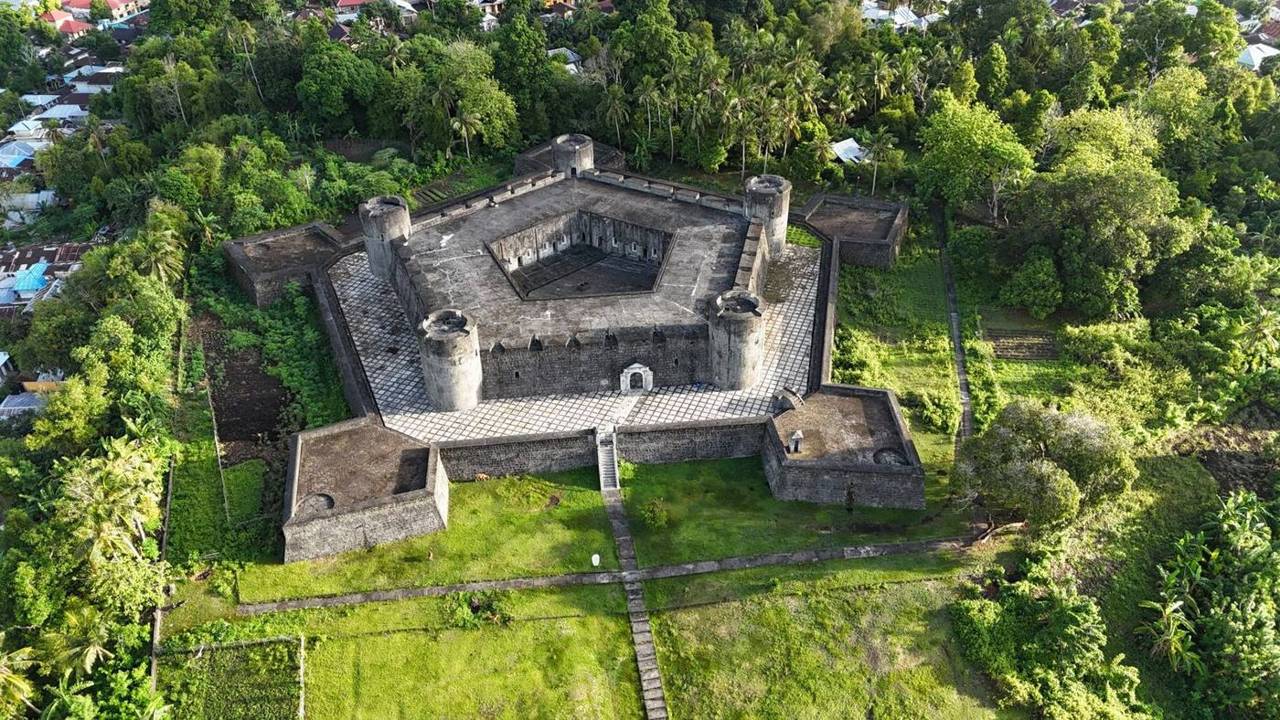
In the morning climb to Fort Belgica, a stone fortress built by the Dutch in 1611 on the hill above town, shaped like a five pointed star, with towers and high walls. From the walls the view over the harbour, Gunung Api and the surrounding islands is superb. Below the hill are the remains of the even older Fort Nassau.
The history of Banda is dramatic. In 1621 the Dutch East India Company conquered the islands by force to control the nutmeg trade. Much of the local population was killed, deported or forced to flee, and the land was divided into plantations worked by slaves brought from other islands.
In the afternoon visit the town's small museum, with objects, cannons, paintings and documents from that period. Then walk past the old Dutch governor's residence and the Protestant church.
Between 1936 and 1942 the Dutch also exiled Mohammad Hatta and Sutan Sjahrir, two of the founding fathers of Indonesian independence, to Banda Neira. Their houses are now small museums.
Spend the night in Banda Neira.
Practical tip: Banda has few cash machines and they often do not work. Bring enough cash in rupiah for your whole stay. Many places accept only cash.
- Day 3
Climbing Gunung Api at dawn and coral on the lava
Today you climb Gunung Api, the active volcano that towers over Banda Neira harbour, about six hundred metres high. You cross the strait by boat at dawn and start up a steep path, first through vegetation and then over volcanic stones and slippery sand. The climb takes one to two hours.
From the top, with a small steaming crater, the view is extraordinary: the Banda Islands all around, the blue sea and, below, the town of Banda Neira and its forts. At dawn the light is beautiful.
The volcano erupted strongly in 1988, and a lava flow ran down to the sea on one side of the island.
In the afternoon snorkel right there, over the 1988 lava flow. In a few decades the coral has regrown on the lava at a surprising speed, and today the area is covered in large, colourful table and branching hard corals, with tropical fish, turtles and sometimes reef sharks. Scientists study this place to understand how reefs recover. The water is clear and calm.
In the evening, at sunset, watch the volcano from the Banda Neira shore.
Spend the night in Banda Neira.
Practical tip: the Gunung Api climb is steep and the descent very slippery. Go with a local guide at dawn, with closed shoes, water and a torch. Do not climb in the rain or if the volcano shows signs of activity: always ask the local authorities.
- Day 4
Pulau Banda Besar and the nutmeg plantations
Today cross the channel by boat to Banda Besar, the archipelago's largest island, also called Lonthoir, a few minutes from Banda Neira.
Here you visit the nutmeg plantations, called perken. Nutmeg trees grow in the shade of large kenari trees, tall with enormous trunks, which protect them from sun and wind. A local guide, often from a family that has worked the plantations for generations, shows you the nutmeg fruit: a kind of yellow apricot that splits open to reveal the dark seed wrapped in a bright red web, the mace. Both are precious spices.
You also see how nutmeg and mace are dried, in the sun or over a fire, and can taste sweets and jams made from the fruit's flesh.
In the village of Lonthoir a long stairway climbs between houses to an old well and a mosque. There are also remains of Dutch planters' houses and a fort.
In the afternoon return to Banda Neira and snorkel or swim from the nearby beaches.
In the evening have dinner with Moluccan cooking, with grilled fish, sago and spiced sauces.
Spend the night in Banda Neira.
Practical tip: buy nutmeg and mace directly from the families who grow them. It is a simple way to support the island's economy.
- Day 5
Pulau Ai: village, beaches and reef
Today take a boat to Pulau Ai, a small island west of Banda Neira, about an hour away. It is a quiet island without cars, with a single fishing village, white sand beaches and crystal clear sea.
The island was disputed between the English and the Dutch in the early seventeenth century, and the remains of a fort can still be seen.
The main reason to come here is the reef. The coral walls begin a few metres from the beach and drop steeply into the blue, covered in hard and soft corals, gorgonians and sponges. Snorkelling, you see Napoleon wrasse, turtles, schools of fusiliers, parrotfish and sometimes reef sharks. For certified divers, the wall dives are among the finest in the archipelago.
In the afternoon walk around the village, with simple houses, a mosque and children playing on the beach. Islanders live from fishing and small plantations.
If you want to spend more time here, there are simple guesthouses run by local families on the island.
In the evening return to Banda Neira, or stay on the island.
Spend the night in Banda Neira or on Pulau Ai.
Practical tip: do not touch the coral and do not walk on the reef in fins. Use a reef safe sunscreen. Boats leave when the sea is calm: ask in Banda Neira the day before.
- Day 6
Pulau Run, the island of the Manhattan treaty
Today you go to Pulau Run, the westernmost of the Banda Islands, small and remote, about an hour and a half to two hours by boat from Banda Neira.
Run has a surprising history. In the early seventeenth century it was the only Banda island held by the English, who defended it against the Dutch for its nutmeg. In 1667, under the Treaty of Breda, which ended a war between England and the Netherlands, the English gave up Run and the Dutch gave up a small settlement of theirs in North America, New Amsterdam. That settlement became New York. That is why people often say Run was swapped for Manhattan.
Today Run is a quiet island with a fishing village, nutmeg trees and beaches. Around the island are steep coral walls and intact reefs, excellent for snorkelling and diving.
Stroll around the village, watch the fishing boats and snorkel in one of the bays. The landscape is simple and remote, and makes you think about how much the world has changed since that treaty.
In the afternoon return to Banda Neira.
Spend the night in Banda Neira.
Practical tip: the crossing to Run is long and in open sea. Leave early in the morning, when the sea is calmer, with a good boat and an experienced skipper. Bring water, food, a hat and sunscreen.
- Day 7
Back to Ambon
On the last day take the fast boat or plane back to Ambon, depending on the schedules available.
If you leave in the afternoon, take a last morning walk in Banda Neira. Climb Fort Belgica again to say goodbye to the volcano from above, or have a last swim near town. At the harbour market you find fresh fish, tropical fruit and spices. It is also a good moment to buy a last bag of nutmeg and mace to take home.
Once in Ambon, if you have time, visit Ambon Bay, with good snorkelling and diving spots, famous among divers for the small and rare creatures living on the sandy bottom. Or go to Natsepa beach, east of the city, with white sand and stalls selling rujak, a fruit salad with spicy sauce.
Flights leave Ambon for Jakarta, Makassar, Bali and other Indonesian cities, where you connect to Europe.
Practical tip: between Banda and Ambon keep at least one or two days of margin before your international flight, because boats and flights can be cancelled in rough seas or bad weather. The Moluccas have a rainy season different from the rest of Indonesia: also ask your doctor about malaria prevention and recommended vaccinations.
For curious travellers and divers seeking places far from mass tourism. Connections with Ambon are few and change often: small flights or slow ships, with spare days. Simple lodging. The sea is calmer in spring and autumn. Italian citizens need a visa on arrival (500,000 rupiah, best requested online beforehand as an e-VOA); an increase has been proposed: check the amount before leaving.
Before you go
- Documents and visa
- Passport with at least six months' validity. Visa on arrival 500,000 rupiah for 30 days, extendable once, or online on the official immigration website. In Bali you also pay the 150,000 rupiah tourist levy.
- Health and vaccines
- No compulsory vaccines arriving from Europe. Protect yourself against mosquitoes because of dengue; Bali has rabies, so keep away from dogs and monkeys. The eastern regions carry malaria risk: ask your doctor. Emergencies: 110 police, 112 general number.
- Money and payments
- Indonesian rupiah. Cards work in hotels and shops in tourist areas; QR payments are widespread; markets and villages need cash.
- Power sockets
- Types C and F, 230 volts: the same round-pin sockets as much of Europe.
- Time zone
- The country has three time zones. Java is UTC+7, Bali UTC+8, with no daylight saving time.
- Safety
- Tourist areas are generally calm. The United States rates Indonesia level 2 and the Papua regions level 4. Active volcanoes may close on alert. Very severe drug penalties. Official advice: GOV.UK.
Information checked in November 2026 for Italian and EU citizens. Rules change: always check before you travel.
Variations
In 5 days: Banda Neira, Gunung Api and Banda Besar, without Ai and Run.
In 10 days: add three days of diving in Ambon Bay or a diving cruise in the Banda Sea.
Frequently asked questions
When is the best time to go?
October, November and March to May, with calmer seas. From June to August wind and seas are often strong.
How do I get there?
From Ambon, by fast boat, small plane or passenger ship. Schedules are irregular: always keep spare days.
Do I need a diving certificate?
No, the snorkelling is already superb. Certification is only needed for scuba diving.
Indicative itinerary written by World Atlas. Before booking, check timetables, seasonal openings, documents and safety.
 7 daysModerate
Flores overland: Wae Rebo and Bajawa
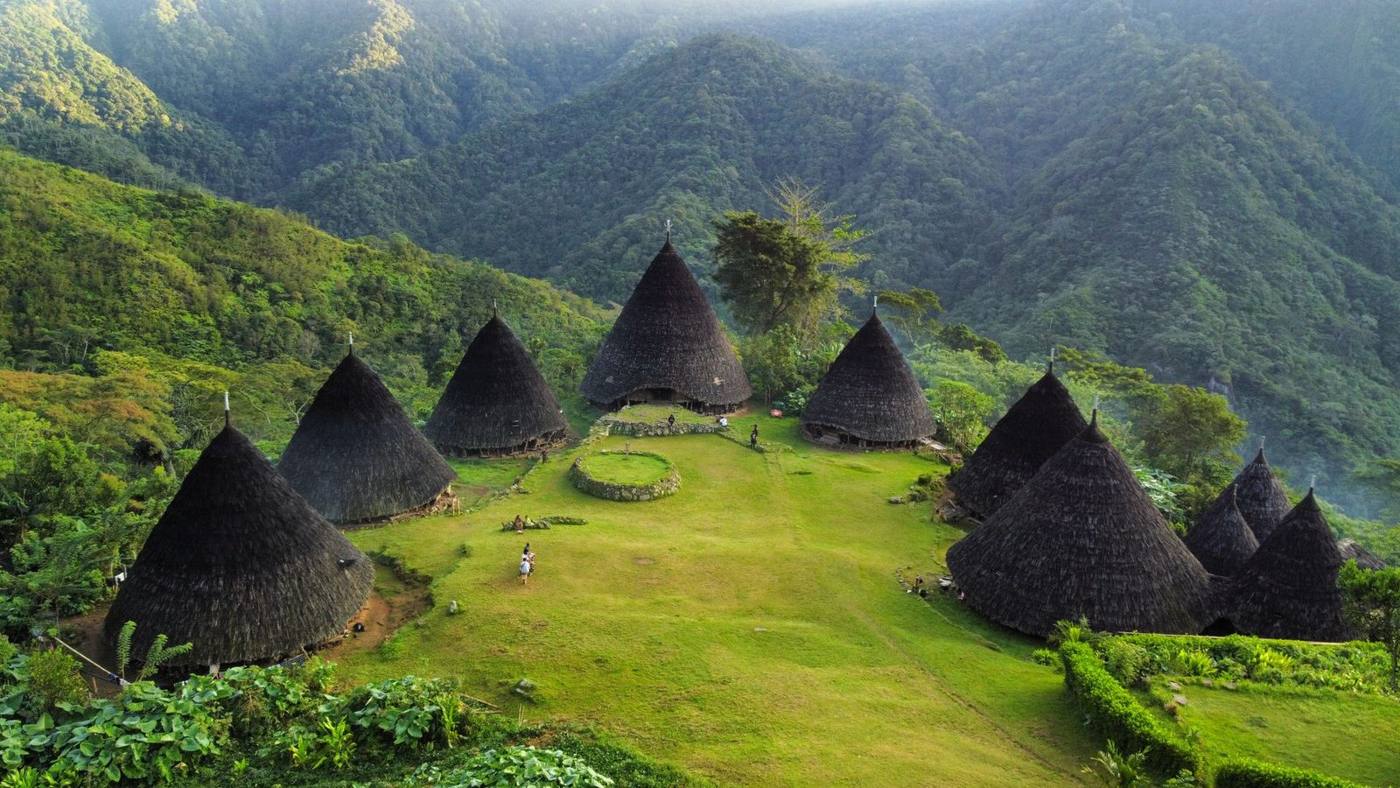
Inland Flores away from the Komodo boats: the spiderweb rice fields of Cancar, the village of Wae Rebo with its conical houses reached on foot through the forest, the megalithic Ngada villages of Bena around Bajawa, hot springs and the three coloured lakes of Kelimutu.
 7 daysModerate
Sumba: megalithic villages and the Pasola
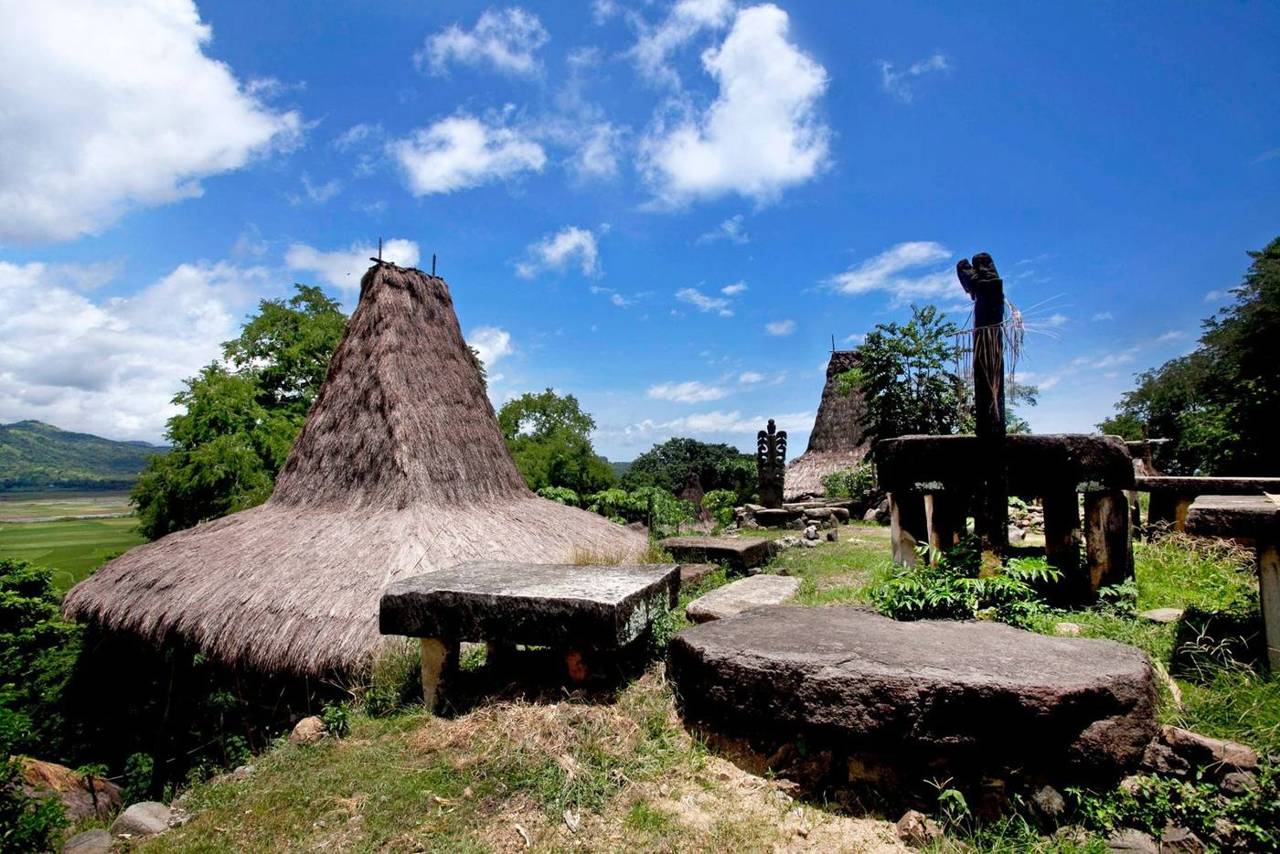
An island outside time, where the Marapu religion is still practised: villages with tall pointed roofs and stone tombs, ikat weavers, wild beaches such as Weekuri and Mandorak and, between February and March, the Pasola, a ritual battle on horseback with wooden spears.
 7 daysModerate
North Sulawesi: Bunaken and Lembeh
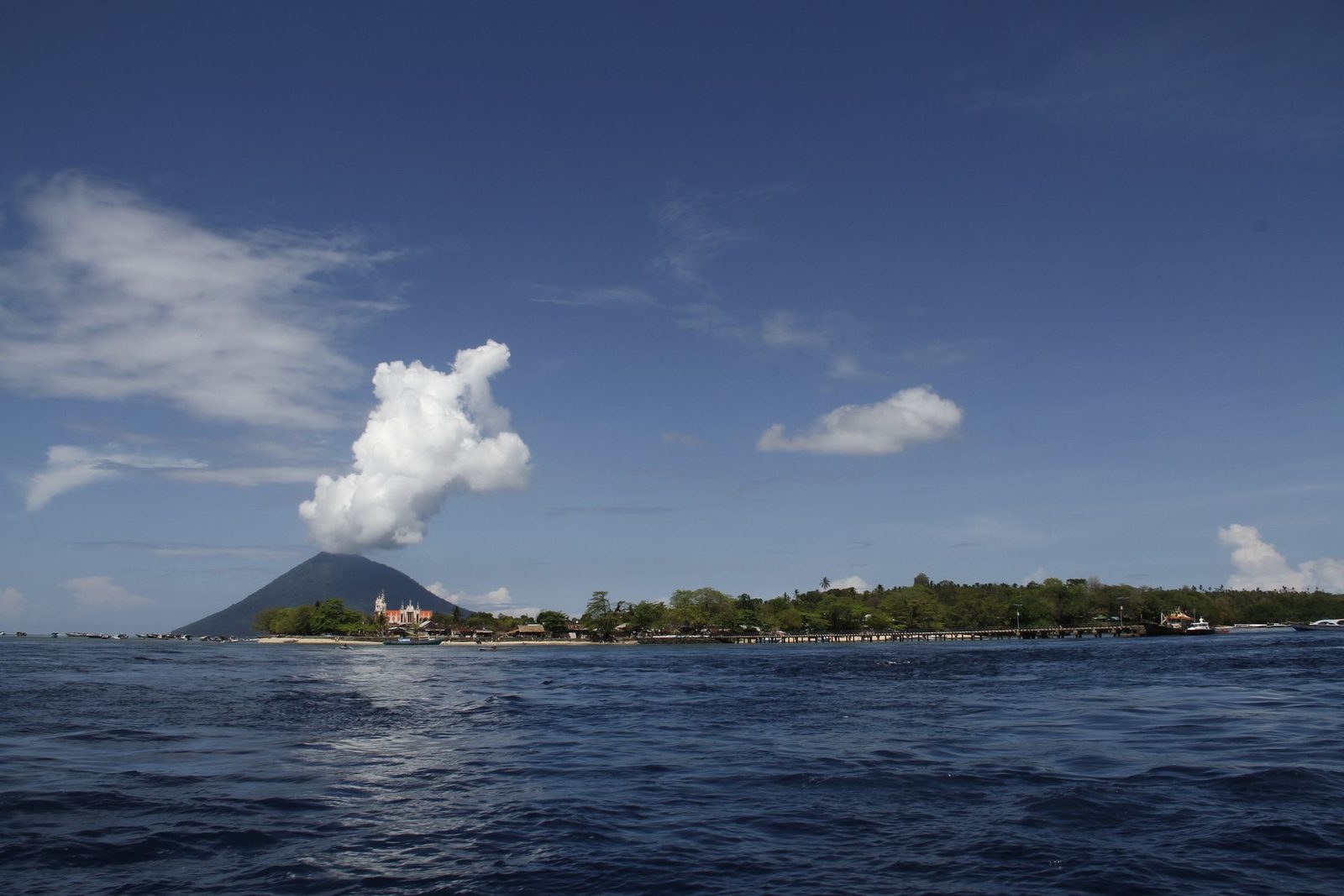
Two different kinds of diving in a week: the vertical walls of Bunaken marine park, full of turtles and fish, and the Lembeh Strait, the world capital of muck diving, with strange creatures on black sand; on land, the tarsiers and black macaques of Tangkoko reserve.