Borneo by klotok in Tanjung Puting
Three days on a wooden boat along the Sekonyer River, sleeping on deck, among orangutans, proboscis monkeys and fireflies.
- Pangkalan Bun
- Kumai
- Sekonyer River
- Tanjung Harapan
- Pondok Tanggui
- Camp Leakey
Day by day
- Day 1
The flight to Pangkalan Bun and boarding the klotok at Kumai
Tanjung Puting National Park lies in Central Kalimantan, the Indonesian part of Borneo, the third largest island in the world. It is a vast area of rainforest, swamps and black rivers, and one of the best places on Earth to see Bornean orangutans, a critically endangered species. Here the trip is made aboard a klotok, a two-deck wooden boat: you sail along the river by day, go ashore to walk in the forest and sleep on deck under a mosquito net, listening to the sounds of the jungle. In six days it is the simplest and most relaxing orangutan encounter possible.
You arrive on a domestic flight to Pangkalan Bun, a small riverside town, from Jakarta in about an hour and a half, or from other cities in Java. From the airport a car takes you in about twenty minutes to the port of Kumai, where the klotok and its crew are waiting: usually a captain, a deckhand, a cook and an English-speaking guide.
The park entry permit and registration are handled in Kumai: the trip organiser usually takes care of it, but bring your passport.
In the afternoon the boat leaves the wide bay of Kumai and enters the Sekonyer river, which gradually narrows between two walls of nipa palms. At the first stop, Tanjung Harapan, you walk along a forest path to the afternoon feeding platform.
Practical tip: choose an operator with good recent reviews, who respects the park rules and pays the local crew fairly. Ask in advance what is included in the price.
- Day 2
Pondok Tanggui and life on the river
On the klotok the day starts early, with the songs of gibbons and birds at dawn. The cook prepares breakfast on the lower deck, and the meals are simple and good: rice, stir-fried vegetables, tempeh, fish and tropical fruit.
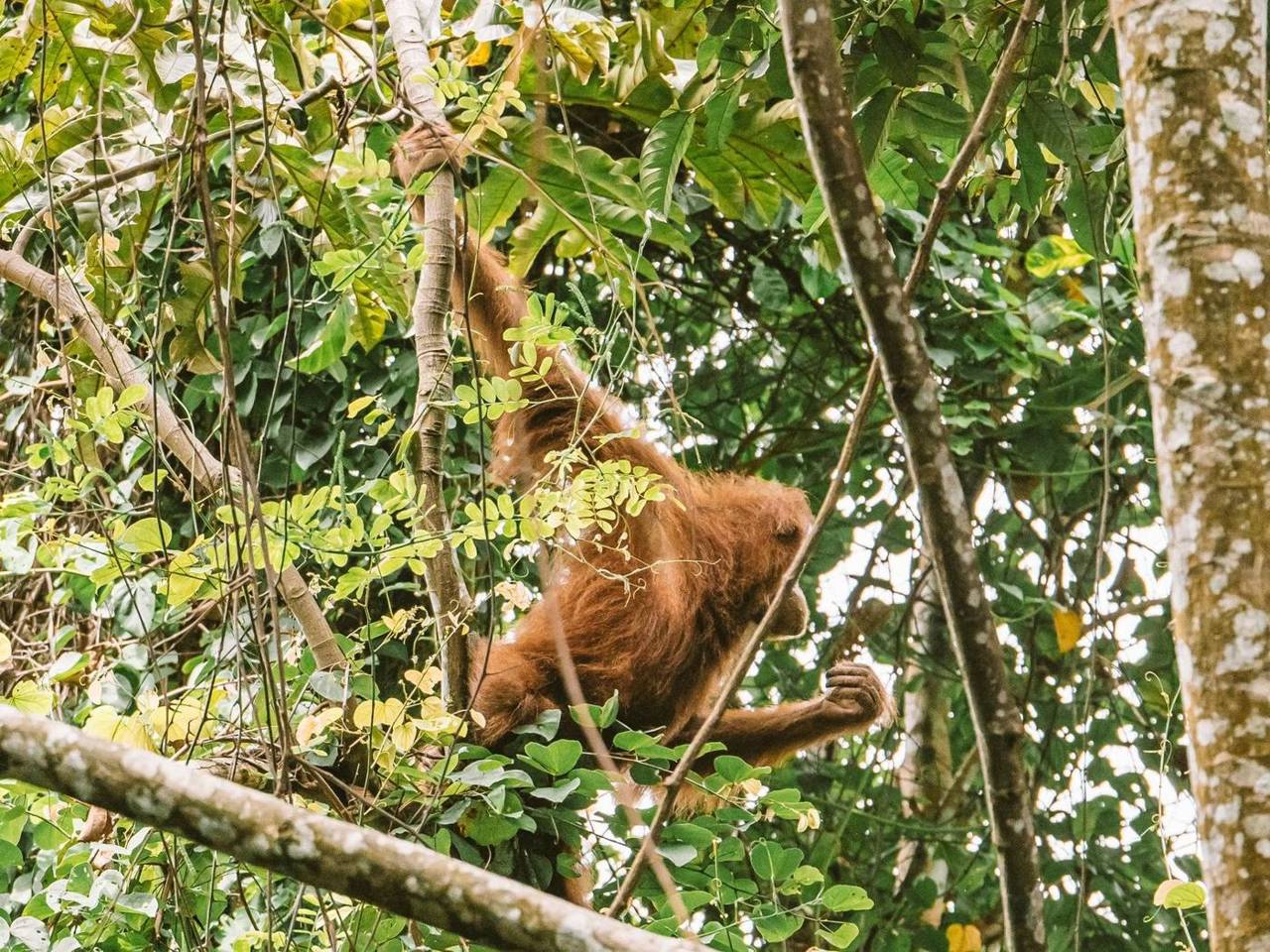
In the morning the boat sails upriver to Pondok Tanggui, another station with a feeding platform in the forest. The platforms are wooden structures where, at set times, the rangers leave bananas, sugar cane and milk for orangutans that were rehabilitated in the past and for their offspring. Today most of these animals live freely in the forest and come to the platform only when they need to, especially when there is little wild fruit. This is why sightings are almost certain, but less wild than in the jungles of Sumatra.
You wait in silence, a few metres away, until mothers arrive through the branches with their babies clinging to their fur, curious youngsters and sometimes an adult male with large flat cheek pads, the flanges, who makes the trees shake. It is a moving moment.
In the afternoon, relax on deck while the boat continues slowly upriver. This is the best time to see other animals: proboscis monkeys, the big-nosed monkeys found only in Borneo, which gather at sunset in the trees along the bank to sleep, macaques and colourful kingfishers.
Practical tip: at the platforms, do not eat, do not touch the orangutans and do not leave bags on the ground. Keep at least five metres away and always follow the rangers' instructions.
- Day 3
Camp Leakey, the orangutan research centre
Today you reach Camp Leakey, the most famous place in the park. To get there the boat leaves the main branch of the Sekonyer, where the water is sometimes murky because of pollution from gold mines upstream, and enters a blackwater tributary, dark and clear like tea, coloured by the leaves of the peat swamp forest. The river becomes narrow, the forest closes over the boat and the silence deepens.
Camp Leakey is a research station founded in 1971 by the primatologist Biruté Galdikas, who devoted her life to the study of Bornean orangutans. Decades of research have been carried out here, and hundreds of orphaned orangutans, rescued from the animal trade or from destroyed forests, have passed through before being released. In the small information centre you see photographs, family trees of orangutans known by name and explanations of the threats to the forest, above all palm oil plantations and fires.
In the early afternoon, walk to the camp's feeding platform, which is often the one most visited by orangutans and where a dominant male sometimes appears. Along the path you may meet gibbons, bearded pigs and hornbills.
In the evening the boat stays moored near the camp. After dinner, with the guide and a torch, you can take a short night walk to look for insects, spiders and frogs, or watch the fireflies in the trees along the bank from the deck.
Practical tip: never swim in the river: there are crocodiles. Use the mosquito net at night and repellent by day, and ask your doctor before you leave whether malaria prevention is needed.
- Day 4
A forest walk and the journey downriver
In the morning, if you like, take a longer walk with the guide in the forest around Camp Leakey, on paths used by researchers, through peat swamp and lowland forest. You walk in the humid heat, over roots and boardwalks, looking up for orangutans that do not come to the platform and for their nests, platforms of branches and leaves that they build every evening to sleep in. The guide also shows you medicinal plants and the fruit trees the animals prefer.
Then the boat begins to head downriver. Many operators arrange a stop at a reforestation project, where local communities plant native trees in areas of forest destroyed by past fires. You can often plant a tree with your name on it: it is a small gesture, but the money helps pay the work of local families.
In the afternoon, if there is time, stop again at a platform for a last feeding, or enjoy the journey on deck, scanning the banks with binoculars. At sunset the boat stops near a group of trees where proboscis monkeys sleep, and you have dinner on deck under a sky full of stars, far from any light.
The last night on board is often the best: the river is calm, the forest can be heard all around and the slow rhythm of the past days becomes natural.
Practical tip: bring light long-sleeved clothes, closed shoes you do not mind getting dirty, binoculars and a head torch. On the klotok there is electricity only for a few hours in the evening.
- Day 5
Return to Kumai and the flight to Jakarta or Bali
Early in the morning the boat travels down the last stretch of the Sekonyer and returns to the bay of Kumai. On the way you will again see the nipa palms, a few villages on stilts and the fishermen's boats. Before arriving, the guide often tells you about the life of the communities living on the edge of the park, who depend on fishing, tourism and, more and more, on work in the palm oil plantations, which in recent decades have replaced much of the forest around Tanjung Puting.
In Kumai you will notice large windowless buildings near the port: they are swiftlet houses, built to collect the saliva nests of certain species of swift, highly prized in Chinese cooking.
On arrival, say goodbye to the crew: it is normal to leave a tip in cash, to be shared among everyone. Then a car takes you to Pangkalan Bun airport for the flight back to Jakarta, or to other cities in Java, from where there are connections to Bali. If you have time before the flight, visit the sultan of Kotawaringin's wooden palace in town, the Istana Kuning, rebuilt after a fire.
Domestic flights from Borneo are sometimes delayed or cancelled, especially in the rainy season or when there is smoke from fires: this is why it is wise not to book your international flight for the same day.
Practical tip: bring cash in rupiah for tips and small expenses in Kumai and Pangkalan Bun, where there are few cash machines.
- Day 6
A spare day in Jakarta or Bali and departure
The last day serves as a buffer for your return flight and as a chance to rest after the days on the river. It depends on where your international connection is.
If you are in Jakarta, visit the colonial quarter of Kota Tua, with Fatahillah square, the old Dutch town hall turned into a museum of the city's history, and the port of Sunda Kelapa, where the large wooden sailing ships, the pinisi, which carry goods between the islands, are still moored. Then go to the National Museum, with its art and ethnographic collections from all over the archipelago, and the Istiqlal mosque, one of the largest in South-East Asia, usually visited with a volunteer guide, wearing clothes that cover your legs and arms. Jakarta is huge and congested: to get around, use metered taxis or the metro.
If you are in Bali instead, spend a calm day before departure on a beach in the south or among the rice fields and temples around Ubud. Remember that foreign tourists pay a Bali entry levy of 150,000 rupiah, payable online or on arrival.
If you want to combine this trip with a week on another island, Borneo goes well with Java, with the temples of Borobudur and Prambanan, or with Bali and Lombok.
Practical tip: for Indonesia you need a passport valid for at least six months and a visa on arrival, which costs 500,000 rupiah and can also be applied for online before you leave. Check the latest rules on the official website of Indonesian immigration.
The simplest and most relaxed orangutan encounter possible, with no walking. It pairs well with a week in Bali or Java. Feeding platforms make sightings almost certain, but less wild than in the Sumatran jungle.
Before you go
- Documents and visa
- Passport with at least six months' validity. Visa on arrival 500,000 rupiah for 30 days, extendable once, or online on the official immigration website. In Bali you also pay the 150,000 rupiah tourist levy.
- Health and vaccines
- No compulsory vaccines arriving from Europe. Protect yourself against mosquitoes because of dengue; Bali has rabies, so keep away from dogs and monkeys. The eastern regions carry malaria risk: ask your doctor. Emergencies: 110 police, 112 general number.
- Money and payments
- Indonesian rupiah. Cards work in hotels and shops in tourist areas; QR payments are widespread; markets and villages need cash.
- Power sockets
- Types C and F, 230 volts: the same round-pin sockets as much of Europe.
- Time zone
- The country has three time zones. Java is UTC+7, Bali UTC+8, with no daylight saving time.
- Safety
- Tourist areas are generally calm. The United States rates Indonesia level 2 and the Papua regions level 4. Active volcanoes may close on alert. Very severe drug penalties. Official advice: GOV.UK.
Information checked in November 2026 for Italian and EU citizens. Rules change: always check before you travel.
Variations
In 4 days: three days and two nights on the klotok, with Tanjung Harapan, Pondok Tanggui and Camp Leakey, flying there and back.
In 12 days: after Borneo, fly to Yogyakarta for Borobudur and Prambanan, then continue to Bali.
Frequently asked questions
When is the best time to go?
The dry season, from May to October, is the most comfortable. In the rainy season the boats still sail, with short, heavy showers. In some dry years, around August and September, smoke from fires can cover the sky and delay flights.
Is it safe to sleep on the boat?
Yes, the klotok is stable and the river is calm. You sleep on mattresses on deck under a mosquito net. The bathroom is basic, with filtered river water. You do not swim in the river because of crocodiles.
How many orangutans will I see?
It is not guaranteed, but sightings at the platforms are very likely. When there is plenty of fruit in the forest, orangutans come to the platforms less often.
Indicative itinerary written by World Atlas. Before booking, check timetables, seasonal openings, documents and safety.
 7 daysChallenging
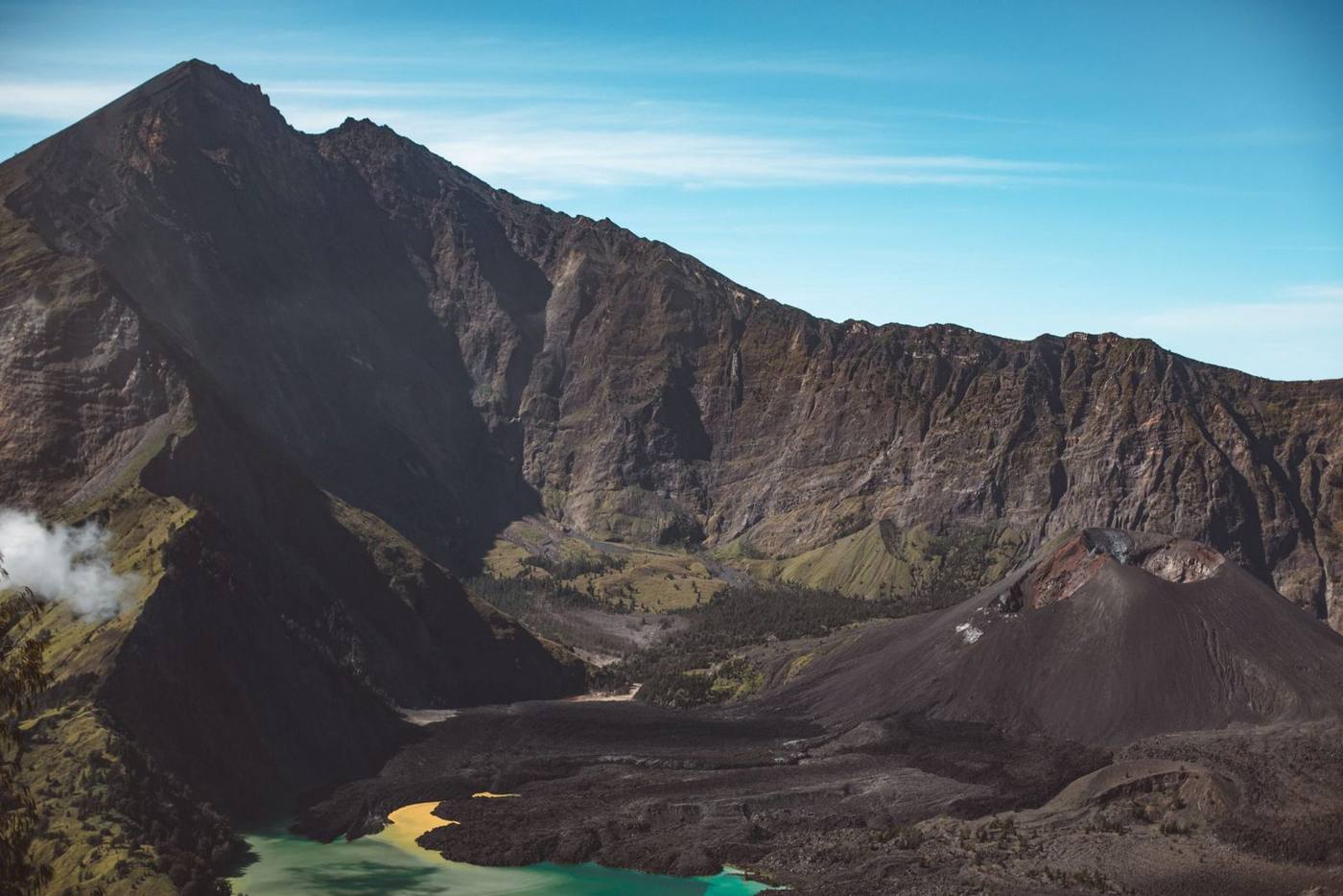
Lombok: trekking on Rinjani
Three days on Indonesia's second-highest volcano: the crater rim, Segara Anak lake and the 3,726-metre summit at dawn.
 16 daysModerate
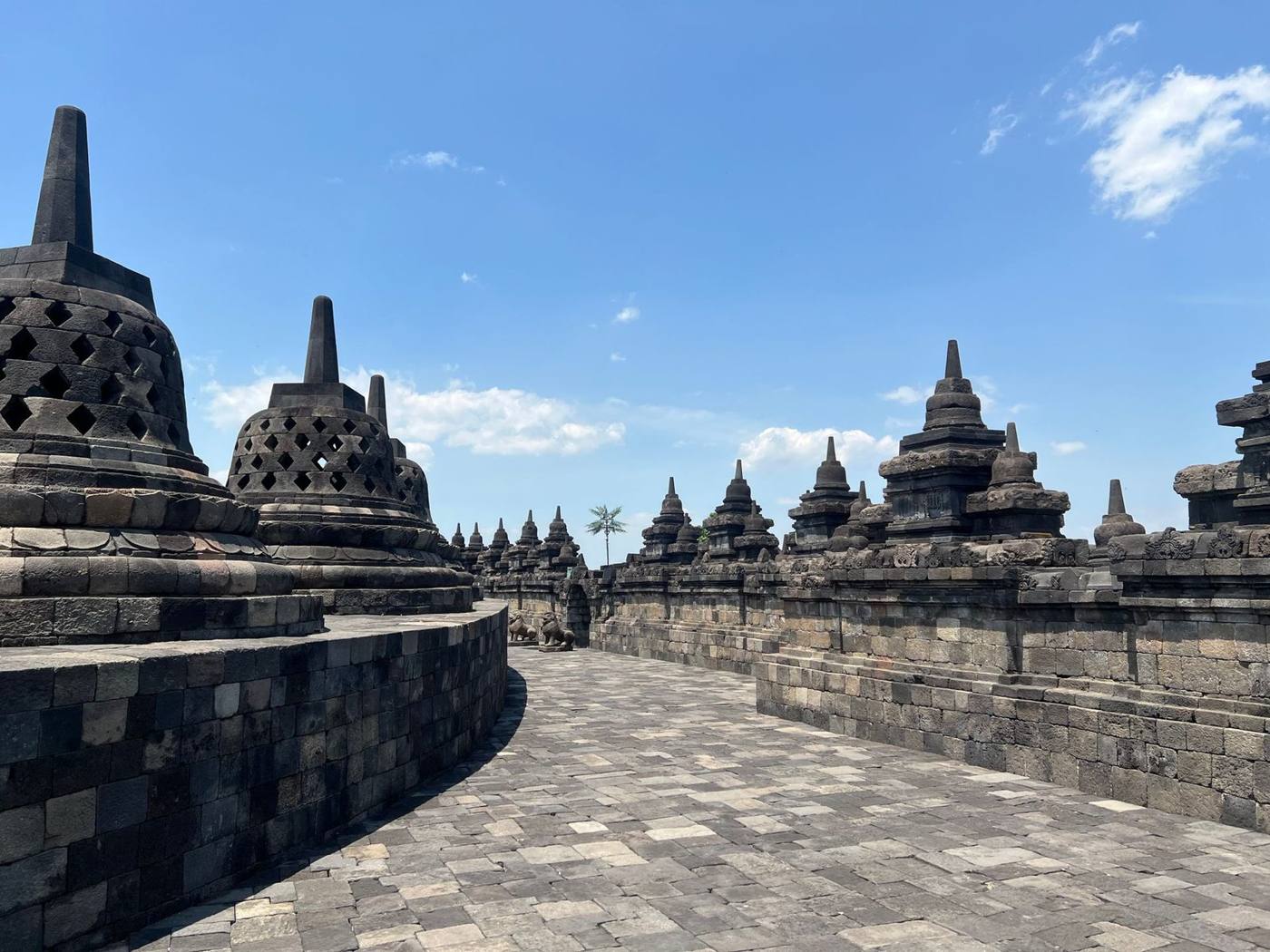
Great Indonesia: Java, Bali and Flores
The complete trip for a first visit: Borobudur and Bromo, Bali's rice terraces and the Komodo dragons.
 7 daysModerate
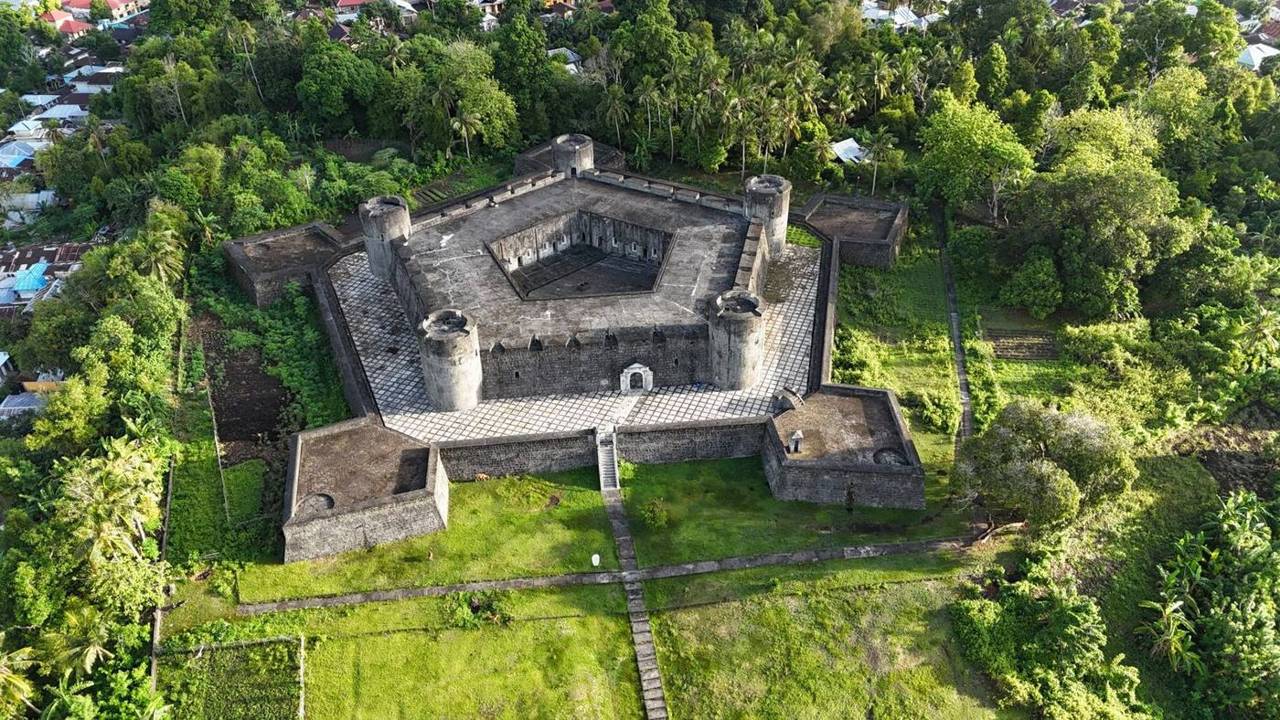
The Banda Islands
The Spice Islands of the Moluccas, over which the Dutch and English went to war: nutmeg plantations beneath giant canarium trees, the Dutch forts of Banda Neira, the Gunung Api volcano and pristine reefs with coral walls dropping sharply a few metres from shore.