Punjab and Himachal: Amritsar, Dharamsala, Manali and Shimla
From Amritsar's Golden Temple to the Himalayan foothills: Dharamsala and McLeod Ganj with the Tibetan community, the Kangra valley and its tea gardens, Manali and the Kullu valley, ending in Shimla with its historic toy train (UNESCO World Heritage).
- Amritsar
- Dharamsala
- McLeod Ganj
- Bir
- Manali
- Kullu
- Shimla
- Kalka
Day by day
- Day 1
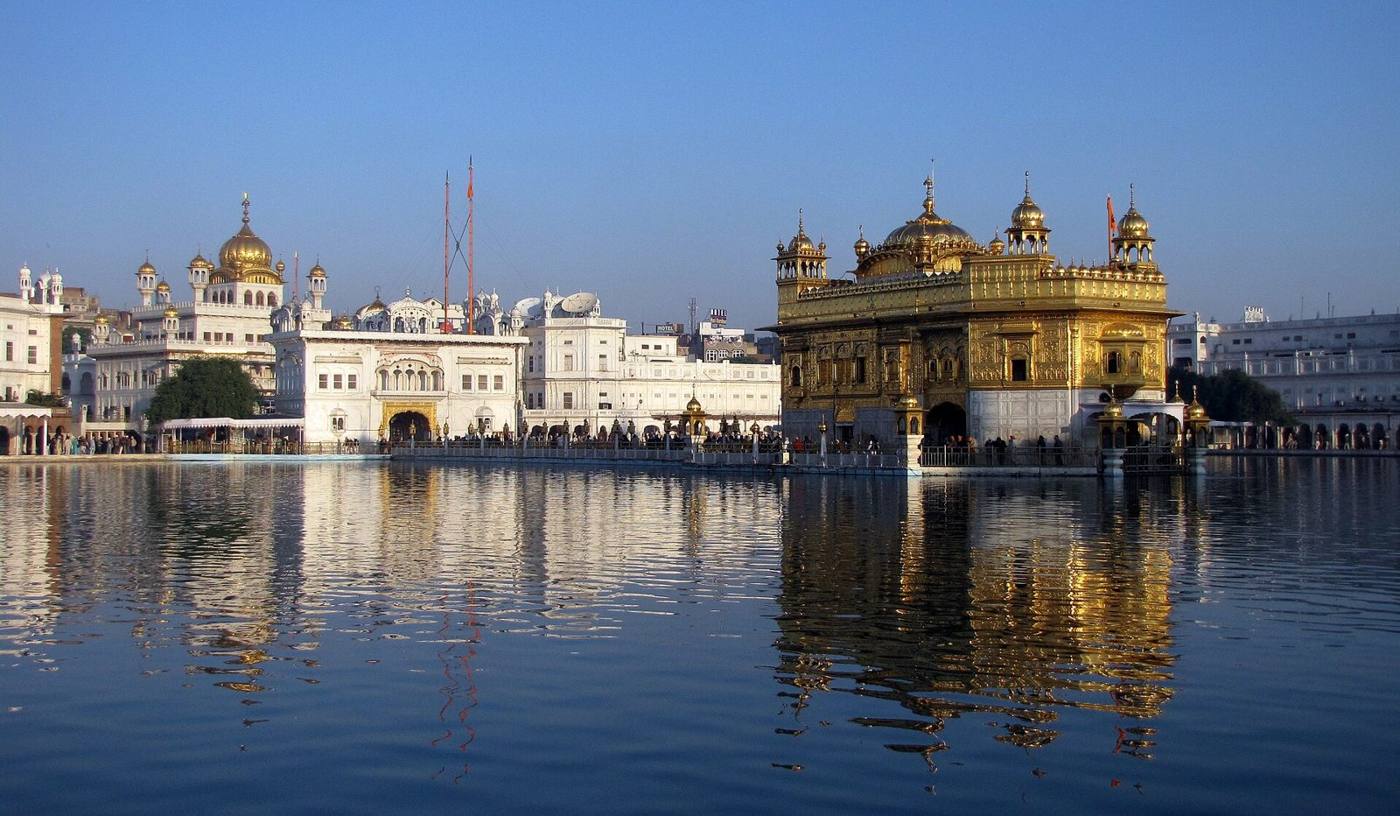
Amritsar and the Golden Temple at night
This trip runs from the plains of Punjab to the mountains of the Indian Himalaya: Amritsar with the Golden Temple, the heart of the Sikh faith, then Dharamsala, home of the Dalai Lama in exile, the tea gardens of the Kangra valley, Manali among cedar forests and snowy peaks, and Shimla, the summer capital of British India, with its mountain railway.
Before you leave: you need a visa. The thirty day tourist e-visa costs 25 dollars from July to March and 10 dollars from April to June, and is applied for online on the official Indian government website; other nationalities should check their fees. The United States government rates India at level 2 of 4; this itinerary does not enter the most discouraged areas, but check the latest advice, especially for border areas.
You fly into Amritsar, via Delhi or another city, or take a fast train from Delhi, about six hours.
In the afternoon rest. In the evening go to the Harmandir Sahib, the Golden Temple, a temple covered in gold leaf in the middle of a large pool of sacred water, surrounded by a white marble walkway. At night the illuminated temple is reflected in the water, while sacred hymns, sung without a break from dawn to night, play over the loudspeakers. Entry is at no cost and open to everyone, of any religion.
Sleep in Amritsar, near the temple.
Practical tip: the best time is October to March for Amritsar and March to June and September to November for the mountains. July and August bring the monsoon.
- Day 2
The Golden Temple at dawn, the langar and Jallianwala Bagh
Return to the Golden Temple at dawn, when worshippers carry the Sikh holy book, the Guru Granth Sahib, in procession from the room where it rests at night to the temple, with hymns and drums. The morning light on the gold and water is beautiful, and there are fewer visitors.
To enter you leave your shoes at the no-cost shoe deposit, wash your feet in a small pool at the entrance and cover your head with a scarf, which you can buy or be given at the entrance. No smoking, no alcohol, and you walk clockwise around the pool.
In mid morning take part in the langar, the temple's community kitchen, one of the largest in the world: every day thousands of volunteers cook and serve a no-cost vegetarian meal to anyone who comes, tens of thousands of people a day. You sit on the floor in long rows and receive lentils, vegetables, chapati and sweet rice. You can also help in the kitchen, cleaning vegetables or washing dishes.
In the afternoon visit Jallianwala Bagh, a few steps away, a garden where in 1919 British troops fired on an unarmed crowd, killing hundreds of people. Bullet marks can still be seen on the walls, and there is the well where many tried to escape. It was a turning point in India's struggle for independence.
In the evening wander the bazaars around the temple and try Amritsari kulcha and lassi.
Sleep in Amritsar.
Practical tip: bring a scarf or headscarf. In Sikh temples your head must stay covered.
- Day 3
To Dharamsala and McLeod Ganj
In the morning leave Amritsar and drive north east, about five or six hours, with a car and driver, the most comfortable way to do this trip. The road crosses the Punjab plain, with wheat and mustard fields, then climbs into the hills of Himachal Pradesh, among pines and terraced fields.
You reach Dharamsala, a mountain town in two parts. The lower part is the Indian town; the upper part, McLeod Ganj, at about one thousand eight hundred metres, is the centre of the Tibetan community in exile, where the Dalai Lama has lived since 1960 and where the Tibetan government in exile is based. That is why it is also called little Tibet.
In the afternoon wander McLeod Ganj, with colourful prayer flags, prayer wheels, monks in deep red robes, shops selling Tibetan books and objects, cafés and Tibetan restaurants. Behind the town rise the Dhauladhar mountains, snow capped for many months.
Walk the kora, the ritual circuit around the Dalai Lama's residence, a forest path with prayer wheels, stones carved with mantras and prayer flags. Tibetans walk it clockwise early in the morning and in the evening.
In the evening try Tibetan food: momos, steamed dumplings, thukpa, noodle soup, and butter tea.
Sleep in McLeod Ganj.
Practical tip: McLeod Ganj streets are narrow and steep. Wear comfortable shoes and bring a jacket: evenings are cool.
- Day 4
Tsuglagkhang temple, the Tibet Museum and Triund
In the morning visit the Tsuglagkhang complex, the main temple of McLeod Ganj, opposite the Dalai Lama's residence. Inside are large statues of the Buddha and other figures of Tibetan Buddhism, and you often see monks debating in the courtyard, with gestures and hand claps. When the Dalai Lama gives public teachings, the temple fills with people: check the official calendar.
In the same complex visit the Tibet Museum, which tells the history of Tibet, the Chinese occupation of 1950, the Dalai Lama's escape in 1959 and the life of the refugees, with photographs, documents and testimonies.
In the afternoon, if you are fit, climb to Triund, a grassy ridge at about two thousand eight hundred metres, with a spectacular view of the Dhauladhar peaks on one side and the Kangra valley on the other. The trail is about nine kilometres from McLeod Ganj, with about nine hundred metres of ascent: three or four hours uphill. Many people camp at the top to see sunset and sunrise.
If you prefer a shorter walk, go to Bhagsu waterfall, about two kilometres away, with an old temple to Shiva on the way.
In the evening attend the evening prayers in the small monasteries.
Sleep in McLeod Ganj or in a tent at Triund.
Practical tip: at Triund the weather changes quickly. Bring water, a waterproof jacket and a warm layer.
- Day 5
The Kangra valley: tea and paragliding at Bir
In the morning go down from McLeod Ganj and cross the Kangra valley, a wide green valley at the foot of the Dhauladhar, with tea gardens, rice paddies and villages.
Stop at one of the tea gardens near Palampur: Kangra tea has been grown here since the middle of the nineteenth century and is one of India's most delicate green and black teas. At some factories you can see the leaves being processed and taste the tea. Check whether visits are possible.
Then visit Sherabling monastery or the small Tibetan monasteries around Bir, a village with a Tibetan community.
Bir is also famous for paragliding: from the Billing take off, at about two thousand four hundred metres, paragliders glide over the valley to the Bir landing site. It is considered one of the best places in the world at no cost flying. You can take a tandem flight with a pilot, usually between half an hour and an hour. Choose a registered operator, check the wind conditions and make sure your travel insurance covers this activity.
In the evening, in Bir village, have dinner in one of the cafés popular with travellers and pilots.
Sleep in Bir.
Practical tip: the best time for paragliding at Bir is October to November and March to May. During the monsoon flights stop.
- Day 6
To Manali and Hadimba temple
In the morning leave Bir and drive to Manali, about six or seven hours, through the Mandi valley and then the valley of the Beas river, which grows ever narrower, with steep mountains and pine forests.
On the way you pass through the Kullu valley, famous for its apple orchards and hand woven wool shawls with colourful geometric patterns.
In the afternoon you reach Manali, at about two thousand metres, at the head of the valley, surrounded by snowy peaks and forests of Himalayan cedar.
Visit Hadimba temple, built in 1553 in a forest of towering cedars. It is a wooden pagoda style temple with four stacked roofs, dedicated to the goddess Hadimba, wife of Bhima, one of the heroes of the Mahabharata. The wooden doors are carved with animals and deities, and inside is a sacred rock.
Then walk around Old Manali, a quieter village on the hill, with traditional stone and timber houses, apple orchards and cafés, and over the bridge on the Manalsu stream.
In the evening try river trout, farmed in the valley's streams, and siddu, a stuffed steamed bread typical of Himachal.
Sleep in Manali.
Practical tip: the road from Bir to Manali is long and winding. If you get car sick, sit in front and take breaks.
- Day 7
The Solang valley and the Atal tunnel to Sissu
Today you head into the high mountains. In the morning go to the Solang valley, about fourteen kilometres from Manali, a wide valley with meadows, glaciers and snowy peaks. In summer you can walk, ride a cable car or try paragliding; in winter you can ski. There are many activity sellers: choose calmly and bargain.
Then continue to the Atal tunnel, a tunnel of about nine kilometres beneath the Rohtang pass, opened in 2020, at more than three thousand metres, which links the Manali valley to the Lahaul valley all year round. It is one of the longest road tunnels in the world at this altitude.
On the other side the landscape changes completely: you enter the Lahaul valley, drier, with high bare mountains, stone villages and a climate closer to that of Ladakh and Tibet. Go as far as Sissu, a village with a waterfall pouring down a rock face and a small lake, with views of the glaciers.
The rules for going up to the Rohtang pass and for vehicles on the road change: check the current permits and road conditions, as roads can be closed by snow.
In the late afternoon return to Manali.
Sleep in Manali.
Practical tip: at these altitudes the sun is strong and the air is thin. Bring sunscreen, sunglasses and a warm layer, and walk slowly.
- Day 8
The Kullu valley and the road to Shimla
In the morning leave Manali and go down the Kullu valley. Stop at Naggar, a hillside village with a sixteenth century stone and timber castle built in the traditional Himachal style, with alternating layers of stone and wooden beams that withstand earthquakes. Nearby is the gallery of the Russian painter Nicholas Roerich, who lived here and painted the Himalaya.
Then pass through Kullu, the valley's main town, famous for the Dussehra festival in autumn, when hundreds of village deities are carried into town in procession on palanquins. If you travel then, check the dates.
Stop at a Kullu shawl workshop, where you can see the hand looms and buy a wool or pashmina shawl.
Then continue to Shimla, a long road of about seven or eight hours, descending and climbing through the hills via Mandi and Bilaspur, with the large Gobind Sagar reservoir.
You reach Shimla in the evening, a town built on a mountain ridge at over two thousand metres, with houses tumbling down the hillsides.
Sleep in Shimla.
Practical tip: this is the longest stage of the trip. Leave early and bring water and something to eat on the road, because roadside stops on this route can be far apart.
- Day 9
Shimla: The Ridge, Mall Road and the Viceregal Lodge
Today you visit Shimla, the summer capital of British India from 1864 until independence. Every year the colonial government moved here to escape the heat of the plains, and the town still has European style buildings, churches, theatres and offices.
In the morning walk on The Ridge, the great open square on the ridge, with Christ Church, a yellow nineteenth century neo Gothic church with stained glass windows, and views of the mountains. Then go down to the Mall Road, the main pedestrian street, with shops, cafés and Tudor style buildings. Cars cannot circulate freely in central Shimla.
In the afternoon visit the Viceregal Lodge, the residence of the British viceroy, a large grey stone building in Scottish style from 1888, on a hill. The Simla Conference was held here in 1945, and some steps that led to the partition of India and Pakistan in 1947 were discussed here. Today it houses an institute of advanced study and can be visited with a guide. Check opening hours and prices.
If you have time, climb to Jakhu temple, on Shimla's highest peak, dedicated to Hanuman, with a giant statue of the monkey god visible from the whole town.
Sleep in Shimla.
Practical tip: at Jakhu temple there are many monkeys that steal glasses, hats and food. Keep everything in your bag.
- Day 10
The Kalka Shimla toy train and the train to Delhi
On the last day go down from Shimla on the toy train of the Kalka Shimla railway, built by the British in 1903 and now a UNESCO site among the mountain railways of India. It is a narrow gauge line almost a hundred kilometres long, descending about one thousand five hundred metres through more than a hundred tunnels and hundreds of bridges, among pine and oak forests, hills and small stations.
The journey takes about five or six hours. Seats are few: book well in advance, as early as possible, on the official Indian railways system, which requires registration. There are several classes of trains and seats: check what is available.
At Kalka, at the foot of the hills, take a fast train to Delhi, about four hours, or a car and driver to Chandigarh and then a flight. Check times and connections.
In Delhi, if your flight leaves at night, you have a little time for dinner. Arrive at the airport very early: checks take a long time.
Before leaving buy something to take home: Kangra tea, a Kullu shawl, Tibetan objects from McLeod Ganj or spices.
This trip shows two worlds of northern India: the faith and hospitality of the Sikhs in Punjab, and the Himachal mountains with their wooden temples, Tibetan monasteries and colonial towns.
Practical tip: on Indian trains keep your passport and ticket, printed or on your phone, to hand. The inspector may ask for them.
A varied trip, from Sikh and Tibetan spirituality to the mountains. The Wagah crossing, with its border ceremony, is less than 10 km from Pakistan: the United States advises against all travel within 10 km of that border, so the itinerary leaves it out. At the Golden Temple keep your head covered and feet bare. In July and August the monsoon causes landslides on mountain roads.
Before you go
- Documents and visa
- Passport with at least six months' validity and two blank pages, plus an electronic tourist visa from the official Indian government website: 30 days for 25 dollars from July to March, 10 dollars from April to June.
- Health and vaccines
- No compulsory vaccines arriving from Europe; ask your doctor about hepatitis A, typhoid and malaria depending on the area. Drink only sealed bottled water. Emergencies: 112.
- Money and payments
- Indian rupee. Cards and digital payments are common in cities; markets, villages and rickshaws need cash.
- Power sockets
- Types C, D and M, 230 volts: a universal adapter is useful.
- Time zone
- UTC+5:30 all year: India does not use daylight saving time.
- Safety
- The United States rates India level 2, with level 4 for Jammu and Kashmir (except Ladakh), Manipur and the 10 km strip along the Pakistani border. Official advice: GOV.UK.
Information checked in November 2026 for Italian and EU citizens. Rules change: always check before you travel.
Variations
In 7 days: Amritsar, McLeod Ganj and Manali, returning by air from Kullu or by car.
In 14 days: add the Spiti valley after Sissu, only in summer when the roads are open.
Frequently asked questions
Do I need a visa?
Yes. The thirty day tourist e-visa costs 25 dollars from July to March and 10 dollars from April to June. Apply online on the official Indian government website.
Is it safe?
The United States rates India at level 2 of 4. This itinerary does not enter the most discouraged areas; still check the latest advice, especially for border areas.
When is the best time to go?
March to June and September to November for the mountains; October to March Amritsar is more pleasant. In July and August the monsoon can close roads.
Indicative itinerary written by World Atlas. Before booking, check timetables, seasonal openings, documents and safety.
 8 daysEasy
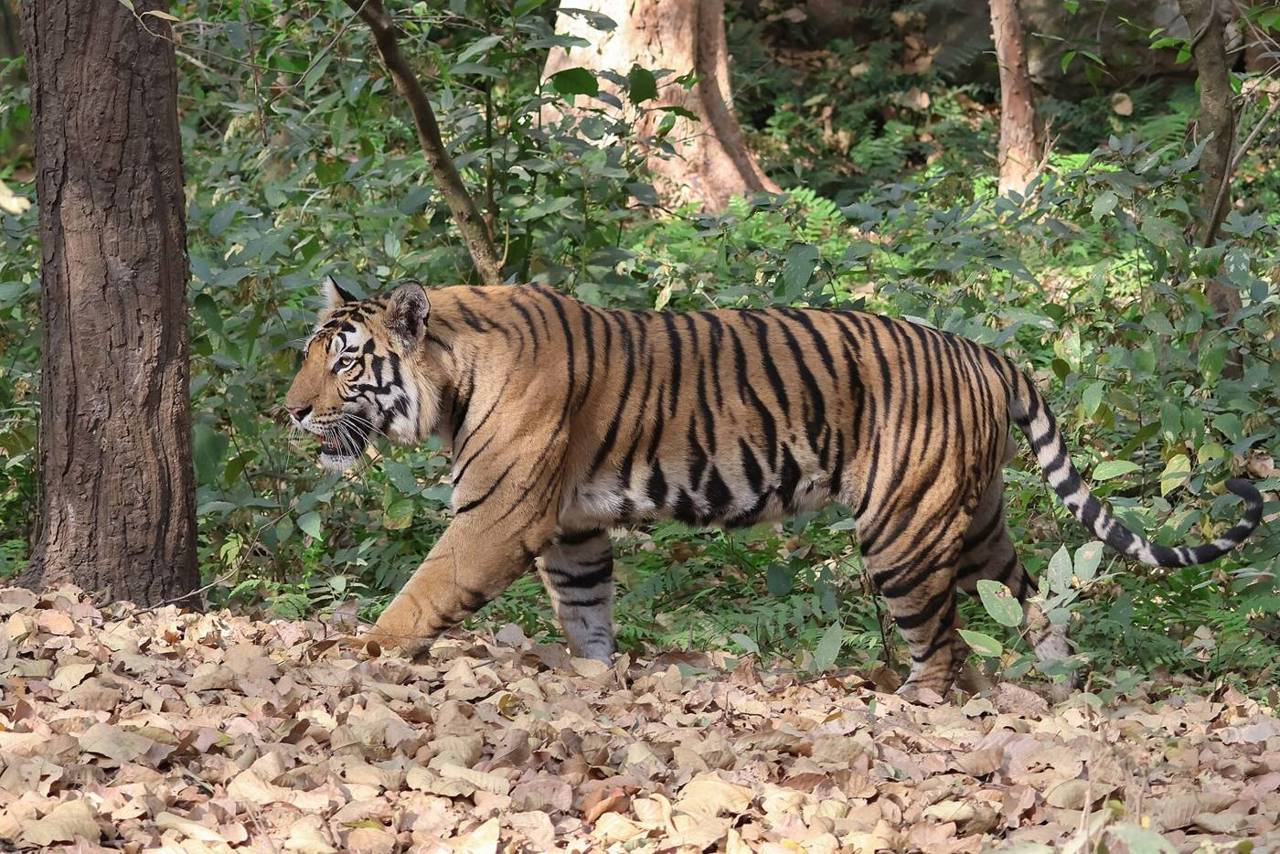
Madhya Pradesh: tigers of Bandhavgarh, Pench and Satpura
The heart of the Jungle Book forests: Bandhavgarh, one of India's parks with the most tigers, Pench with its teak forests, and Satpura, where safaris are done on foot, by canoe and by jeep among leopards, sloth bears and sambar deer.
 6 daysEasy
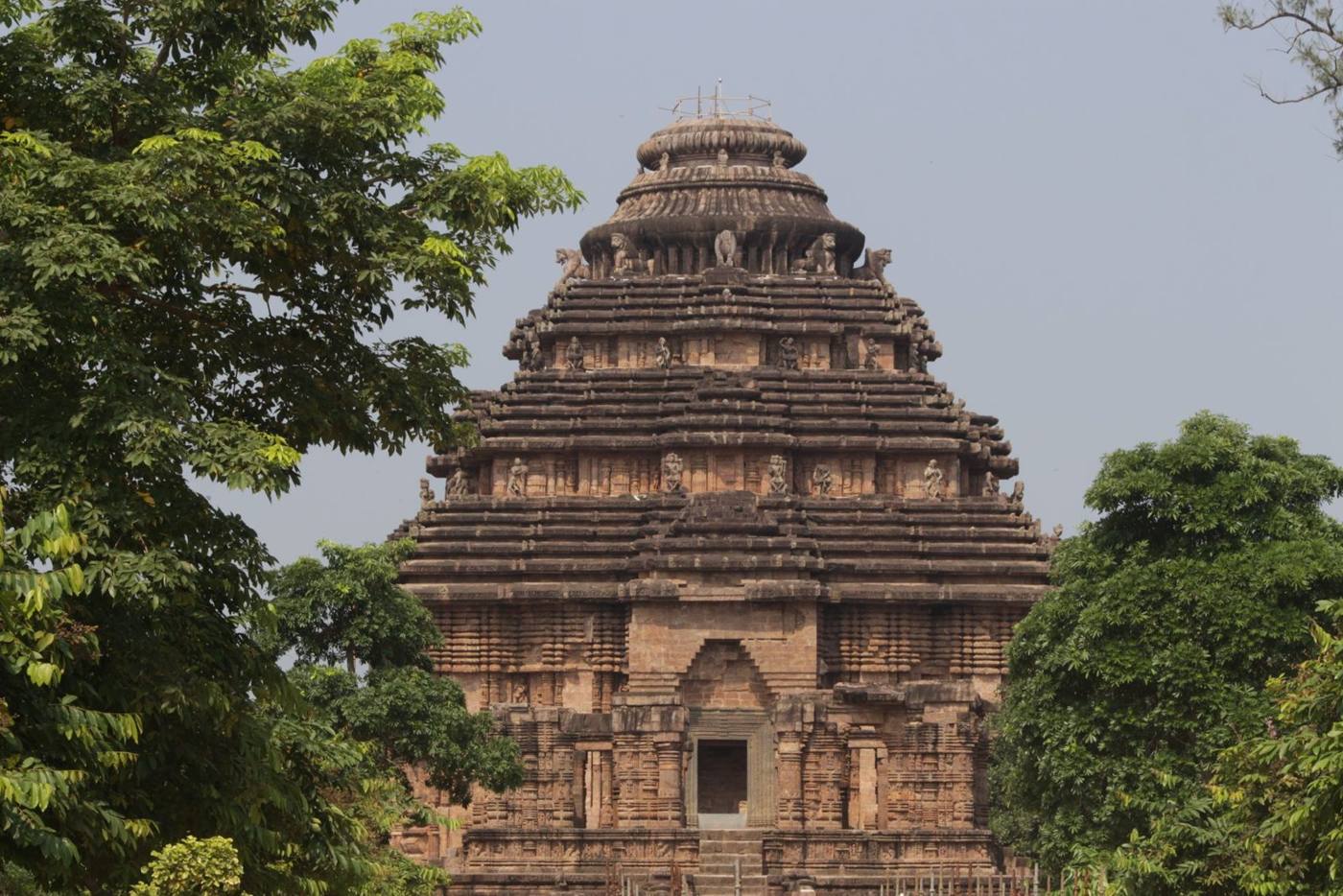
Odisha: the temples of Bhubaneswar, Konark and Puri
The less-known east coast: the temple city of Bhubaneswar, the chariot-shaped Sun Temple of Konark (UNESCO World Heritage), the holy city of Puri, the painters' village of Raghurajpur and the Irrawaddy dolphins of Chilika lagoon.
 8 daysEasy
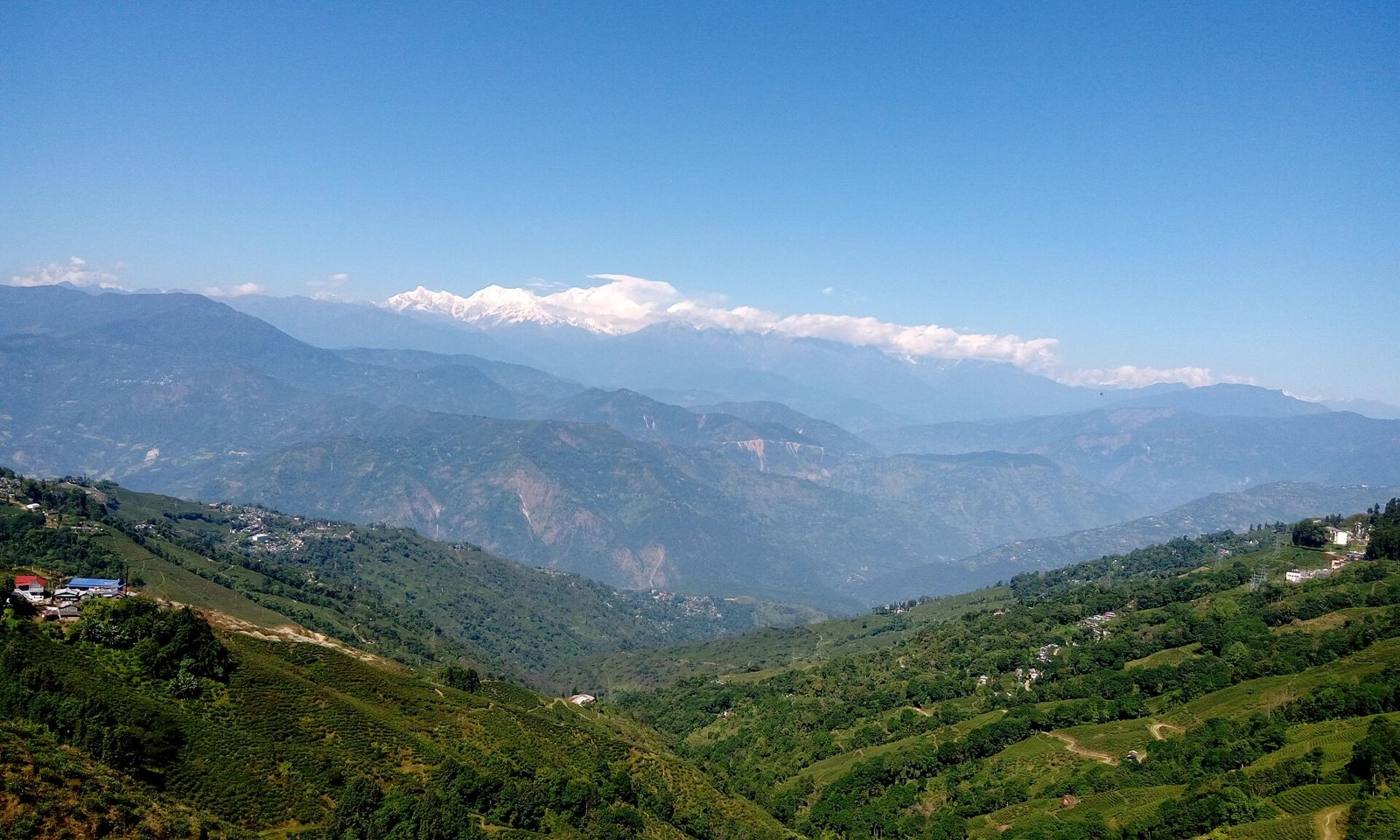
Kolkata, the Sundarbans and Darjeeling
India's cultural capital with the Victoria Memorial, the flower market and the ghats on the Hooghly river, the mangroves of the Sundarbans, home of the Bengal tiger, and Darjeeling with its tea gardens, historic toy train and sunrise over Kanchenjunga.