The Dodecanese by Gulet: Kos, Leros, Patmos and Kalymnos
A week aboard a wooden gulet sailing from Bodrum, among the smaller islands, roadless bays and the monastery of Patmos.
- Bodrum
- Kos
- Leros
- Patmos
- Lipsi
- Kalymnos
Day by day
- Day 1
Flight to Bodrum and boarding the gulet
This trip is a week long cruise on a gulet, the traditional wooden sailing and motor boat of the Turkish coast, between Bodrum in Turkey and the Greek islands of the Dodecanese: Kos, Leros, Patmos, Lipsi and Kalymnos. You sleep on board in small cabins, eat on deck, swim in clear bays and visit a different island every day, with monasteries, castles, white villages and fishing harbours. The programme changes with the wind and the group's choices.
For Turkey Italian citizens can use a passport or a valid electronic identity card; Greece is in the Schengen area. The gulet passes from one country to the other: there are border checks on leaving Turkey and entering Greece, usually arranged by the crew.
You fly into Bodrum, with direct flights from several European cities in season, or via Istanbul. From the airport the harbour is about half an hour away.
Bodrum is a white town by the sea, with a large marina dominated by the Castle of St Peter, built by the Knights of Rhodes in the fifteenth century with stones from the Mausoleum of Halicarnassus, one of the seven wonders of the ancient world. Today the castle houses the museum of underwater archaeology, with ancient wrecks found on the seabed along the coast.
In the afternoon board the gulet, settle into your cabin and meet the crew and the group.
In the evening have dinner on deck in Bodrum harbour.
Spend the night on board in Bodrum harbour.
Practical tip: bring a soft bag, not a hard suitcase: cabin space is limited. Always carry your identity document, needed at every border crossing.
- Day 2
First sail to Kos and the Asklepion
Today the gulet leaves Bodrum and crosses the strait to Kos, the nearest Greek island, about two hours' sailing. On arrival in Kos harbour you go through border checks to enter Greece.
Kos is a long, narrow island with beaches, hills and a main town with monuments from many eras: Greek and Roman ruins scattered among the houses, a castle of the Knights of Rhodes on the harbour, Ottoman mosques and Italian buildings from the 1930s, when the Dodecanese were under Italy.
In the square near the harbour stands the plane tree of Hippocrates, a huge and very old tree under which, according to tradition, the physician Hippocrates, born on Kos in the fifth century BC, taught his pupils. The present tree is about five hundred years old and is propped up by metal supports.
In the afternoon visit the Asklepion, about four kilometres from town, on a hill overlooking the sea and the Turkish coast. It was a sanctuary dedicated to Asclepius, the god of medicine, and at the same time a great healing centre, linked to the school of Hippocrates, where the sick were treated with water, rest, diet and herbs. You see three terraces linked by staircases, with remains of temples, fountains and porticoes.
In the evening have dinner in a taverna in Kos or on board, and spend the night at anchor or in the harbour.
Spend the night on board.
Practical tip: the Asklepion charges an entry fee: check the price. In the middle of the day it is very hot and there is no shade: visit early in the morning or late in the afternoon.
- Day 3
Leros: Agia Marina, Pandeli castle and Lakki
Today the gulet sails north to Leros, an island little visited by tourists, with deep bays, hills and quiet villages.
You arrive at Agia Marina, the main harbour on the east side, with colourful houses and cafés by the sea. From here climb on foot or by taxi to Pandeli castle, a Byzantine fortress on the hilltop that the Knights of Rhodes enlarged in the fifteenth century. Along the ridge below the castle stands a row of old windmills, and from the top you see three of the island's bays and the village of Platanos, the main town, with white houses and small squares.
In the afternoon the gulet moves to Lakki, the great natural harbour on the west of the island, a town built by the Italians in the 1930s as a naval base, then called Portolago. It is one of the finest examples of Italian rationalist architecture outside Italy, with white buildings of curved, modern lines: the cinema, the market, the clock tower, the school. Many buildings are now abandoned or under restoration. Leros saw a battle in 1943 between Germans and British, remembered in a small war museum inside a tunnel.
At sunset the gulet stops in Xirokampos bay, in the south of the island, for a swim in calm water.
Spend the night on board at anchor.
Practical tip: Leros has few tourist services compared with the neighbouring islands. Carry cash for small purchases and for cafés in the villages.
- Day 4
Patmos, the Monastery of St John, and Lipsi
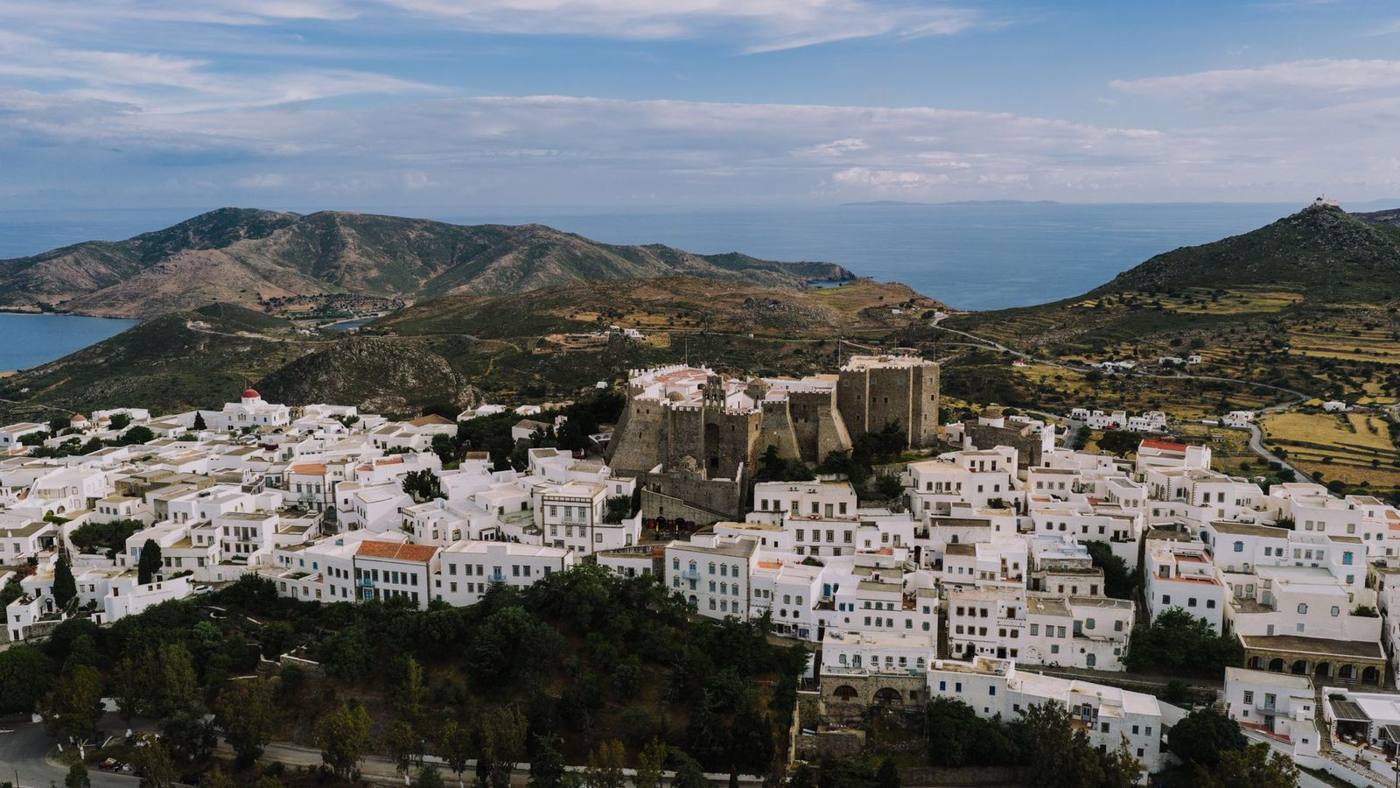
Today the gulet goes to Patmos, one of the most important islands in the history of Christianity, a UNESCO World Heritage Site.
According to tradition, the apostle John was exiled to Patmos by the Romans at the end of the first century and here, in a cave, had the visions he wrote down in the Book of Revelation, the last book of the Bible. The Cave of the Apocalypse lies halfway between the harbour of Skala and the village of Chora, inside a small monastery. You see the rock where the saint rested his head and the cleft through which, according to tradition, the voice of God came.
Higher up, on top of the hill, stands the Monastery of St John, founded in 1088, a fortified monastery with high, crenellated walls like a castle, to defend against pirates. Inside are a church with frescoes, courtyards, stairways and a museum with icons, ancient manuscripts and treasures. Around the monastery spreads Chora, a village of white houses, narrow lanes and the mansions of wealthy shipowners.
In the afternoon the gulet goes to Lipsi, a small nearby island with a few hundred inhabitants, a white village with a blue domed church and bays of shallow, clear water, such as Katsadia or Platis Gialos, perfect for swimming.
Spend the night on board at Lipsi.
Practical tip: to enter the monastery and the cave you need shoulders and knees covered. Check the opening hours, which change and are reduced on some days.
- Day 5
Kalymnos and Pothia harbour, the island of sponge divers
Today the gulet heads south to Kalymnos, a mountainous, rocky island famous for its sponge divers.
For centuries the men of Kalymnos dived, first holding their breath and later in diving suits, to the seabed of the Mediterranean, as far as the coasts of Africa, to gather natural sponges, extremely hard and dangerous work that caused many deaths and illnesses. Every spring the fleets left for months. Today far fewer sponges are gathered, but the island keeps this tradition alive.
You arrive at Pothia, the main harbour, a colourful town with houses of many colours rising like an amphitheatre on the hills around the port, domed churches and shops selling sponges. Visit a sponge workshop to see how they are cleaned, processed and trimmed, and the nautical museum, which tells the divers' story.
In the afternoon the gulet follows the island's west coast, with great walls of grey and orange limestone. Kalymnos is today one of the world's most famous sport climbing destinations, with thousands of bolted routes on the cliffs above the sea, and climbers from all over Europe.
You swim in the bays along the coast, or off the islet of Telendos, separated from Kalymnos by an earthquake in the sixth century, with a small car no-cost village.
In the evening have dinner with fish and mououri, a slow cooked goat dish.
Spend the night on board at Kalymnos or Telendos.
Practical tip: buy sponges in the island's workshops, checking that they are natural rather than synthetic, and ask how to clean and store them.
- Day 6
Back towards the Turkish coast and the first bays
Today the gulet leaves the Greek islands and heads back towards the Turkish coast. Before leaving Greece there are exit border checks, usually at Kos, and then entry checks on arrival in Turkey.
The sail, a few hours long, follows the Bodrum peninsula or heads towards the Gulf of Gökova, depending on the wind. The Turkish coast is very different from the Greek islands: hills covered in pines, olive trees and scrub, small villages and deserted bays, many reachable only by sea.
The gulet stops in a quiet bay where you swim, sunbathe on deck, read or snorkel near the rocks. Guests can also take out the kayak or paddleboard if there are any on board.
In the afternoon, depending on the route, you visit a small fishing village or an ancient ruin on the coast. The Bodrum peninsula and the Gulf of Gökova are full of remains of ancient Caria, with Greek and Roman cities, harbours and tombs.
In the evening the cook prepares a Turkish dinner, with meze, small starters of vegetables, yoghurt, aubergines and pulses, grilled fish and fruit.
Spend the night on board at anchor.
Practical tip: the currency in Turkey is the Turkish lira. Carry some cash for the villages, where cards are not always accepted.
- Day 7
The last bays, including Akvaryum
Today is the last full day of sailing, devoted to the most beautiful bays of the Turkish coast, chosen by the captain according to the wind and the group's wishes.
One of the favourite stops is Akvaryum bay, on the coast of the Bodrum peninsula, named for water so clear it looks like an aquarium: you see the fish and the sandy, rocky bottom even several metres down. The gulet drops anchor and you swim straight from the boat.
Other possible bays are around Kara Ada island off Bodrum, with underwater hot springs and a cave where people take mud baths, or the bays on the southern coast of the peninsula, with sand and pines.
In the afternoon there are last swims and a last sunset on deck. Many groups spend the evening in a bay near Bodrum and have a farewell lunch or dinner on board, with fish, meze and Turkish sweets.
In the evening, if the gulet returns to harbour, you can have dinner in Bodrum and take a last stroll along the harbour and the lanes of the old town, with shops, bars and lights on the sea.
Spend the night on board at anchor or in Bodrum harbour.
Practical tip: in summer the meltemi, a strong north wind, can make the sea rough in the afternoon. The captain may change the route for the group's safety: this is normal.
- Day 8
Disembarking in Bodrum and the flight home
On the last morning the gulet returns to Bodrum harbour, you have breakfast on board and disembark, saying goodbye to the crew.
If your flight is in the afternoon, you have a few hours to visit Bodrum. The main visit is the Castle of St Peter, built by the Knights of Rhodes in the fifteenth century, with towers dedicated to the knights' different nations, including an Italian, a French, an English and a German tower. Inside, the museum of underwater archaeology holds wrecks and cargoes of ancient ships found on the seabed, including one of the oldest known wrecks, from the Bronze Age, with copper ingots, glass and objects from many Mediterranean civilisations.
Then visit the remains of the Mausoleum of Halicarnassus, the monumental tomb of King Mausolus from the fourth century BC, one of the seven wonders of the ancient world. Today only the foundations and a few fragments remain: many of its stones were used to build the castle, and the finest sculptures are in the British Museum in London. The word mausoleum comes from his name.
Finally walk through the market and the lanes of the old town, with white houses and bougainvillea.
In the afternoon transfer to Bodrum airport, about half an hour away, for your flight home.
Practical tip: the Bodrum castle and the mausoleum charge entry fees and opening times change with the season: check. Leave your luggage in a left luggage office or on board, if the crew allows.
Good for those who want to see several islands without packing and unpacking every two days. Patmos and Leros are the heart of the trip. The drawbacks are a week in small cabins, the summer meltemi that can change the route, and the start in Turkey, so valid travel documents are needed. The high base price already covers the boat, and the shared kitty is minimal.
Before you go
- Documents and visa
- EU citizens need a valid identity card or passport, including on ferries, where ID may be checked at boarding. Other nationalities should check the Schengen rules.
- Health and vaccines
- No vaccines required. EU citizens should bring their EHIC; in summer protect yourself from the sun and drink plenty. Emergencies: 112.
- Money and payments
- Euro. Cards are accepted almost everywhere; every accommodation charges a fee per room per night, often paid on departure.
- Power sockets
- Types C and F, 230 volts.
- Time zone
- Eastern European Time (UTC+2), summer time (UTC+3) from late March to late October.
- Safety
- A safe country. In summer watch for wildfires and 112 alerts; in Athens, for pickpockets on the metro. Official advice: GOV.UK.
Information checked in November 2026 for Italian and EU citizens. Rules change: always check before you travel.
Variations
In 5 days: Bodrum, Kos and Kalymnos only, returning to Bodrum.
In 11 days: add Rhodes and Symi by ferry, or a few days in Bodrum and on the Turkish coast.
Frequently asked questions
What documents do I need?
A passport, or for Italian citizens a valid electronic identity card, for both Turkey and Greece. Always keep it with you.
When should I go?
May to October. July and August are hot and windy; June and September are the most pleasant months.
Will I get seasick?
The legs are short and the gulet often stops in sheltered bays, but in wind the sea can be rough. Bring medication if you are prone to it.
Indicative itinerary written by World Atlas. Before booking, check timetables, seasonal openings, documents and safety.
 9 daysEasy
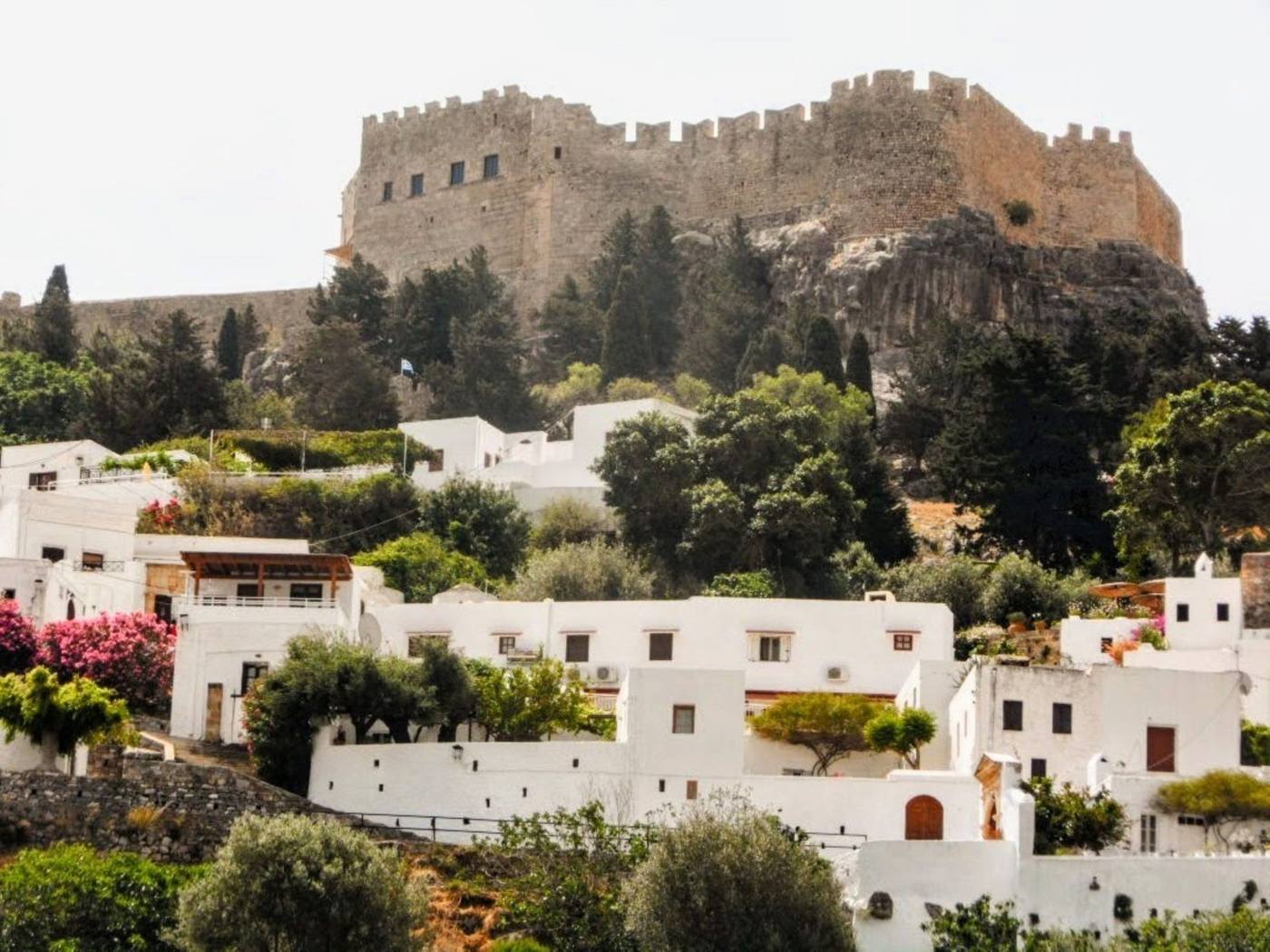
Rhodes by Car: Lindos, Kameiros and the South
One island explored at an easy pace, from the city of the Knights to the inland villages, with a hire car as the base.
 10 daysEasy
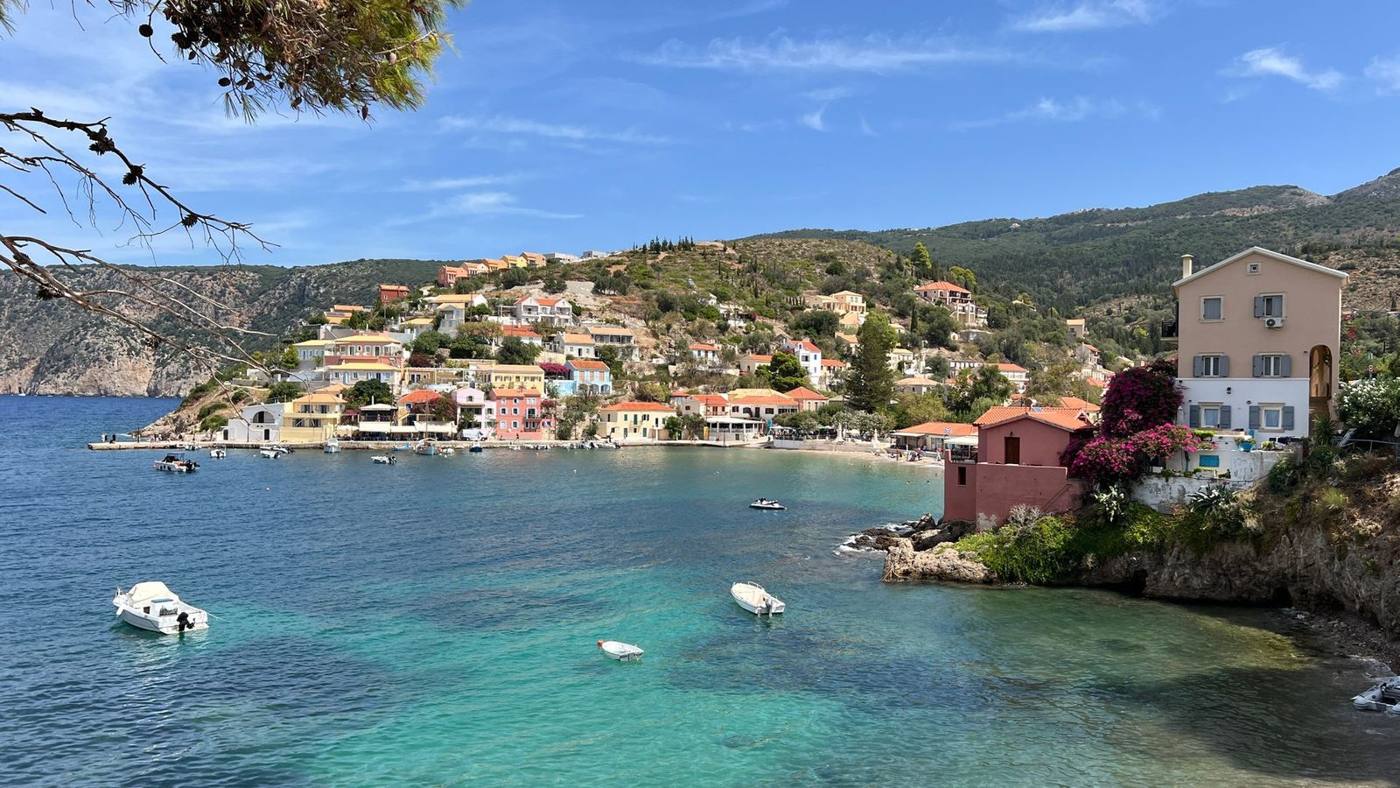
Kefalonia and Ithaca, Odysseus's Sea
Ten days in the Ionian islands among cliffs, karst caves and Venetian villages, with a crossing to the island Homer gave to Odysseus.
 16 daysModerate
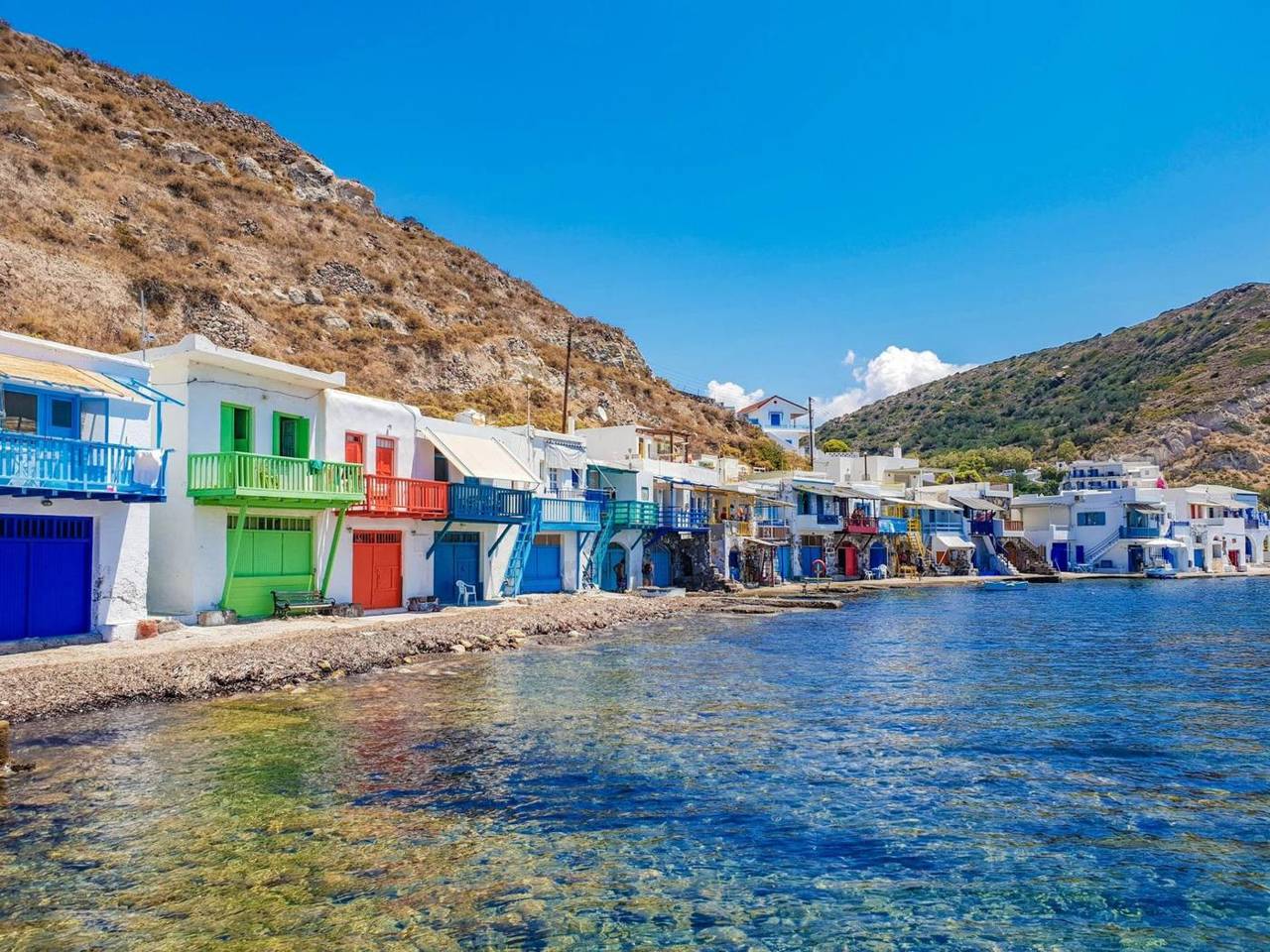
The Lesser Cyclades: Sifnos, Milos, Folegandros, Amorgos and Paros
Two weeks of ferries through the less trodden Cyclades, leaving Mykonos and Santorini aside, with three nights on the islands that deserve it.