Kefalonia and Ithaca, Odysseus's Sea
Ten days in the Ionian islands among cliffs, karst caves and Venetian villages, with a crossing to the island Homer gave to Odysseus.
- Argostoli
- Lixouri
- Myrtos
- Assos
- Fiskardo
- Sami
- Itaca
- Skala
Day by day
- Day 1
Arrival in Argostoli
This trip takes you to the Ionian islands, to Kefalonia, the largest, mountainous and green, with white sand beaches and turquoise water, caves and underground lakes, Venetian villages, and nearby Ithaca, home of Odysseus in the Odyssey. It is a Greece of hills covered in pines and cypresses, vineyards and clear sea, quieter than the Cyclades.
Before you leave: EU citizens only need a valid identity card; other nationalities should check their own rules. In Greece accommodation charges a nightly tax, which varies with category and season: check the amount when you book.
You fly into Kefalonia airport, about a quarter of an hour from Argostoli, with direct summer flights from various European cities, or via Athens. Alternatively there are ferries from the Greek mainland and, in summer, from Italy. Rent a car: the island is large and public transport is limited.
In the afternoon settle in Argostoli, the capital, a small town on the shore of a deep bay. It was almost completely rebuilt after the great earthquake of 1953, which destroyed most of the island.
In the evening walk along the waterfront and the main square, full of cafés and people.
Sleep in Argostoli.
Practical tip: the best time is May to June and September. In August it is crowded and the famous beaches are busy.
- Day 2
Argostoli: the museum and the katavothres
Early in the morning walk along the Argostoli waterfront to the fishing harbour. Here, when the boats come in, you often see loggerhead sea turtles swimming close to the quay, attracted by fish scraps. Watch them from a distance, without touching or feeding them.
Then visit the Argostoli Archaeological Museum, small but interesting, with objects found in the island's Mycenaean tombs, pottery, jewellery and weapons, telling the story of Kefalonia in the time of the Odyssey. Check opening hours and prices.
Cross the De Bosset bridge, a long stone bridge built in 1813 during the British period across the Koutavos lagoon, with an obelisk in the middle.
In the afternoon go to the Lassi peninsula, north of Argostoli, to the katavothres: here seawater flows into cracks in the rock and disappears underground. For centuries no one knew where it went. In 1963 scientists dyed the water and discovered that it crosses the whole island underground and re emerges, after about two weeks, on the other side, at Lake Melissani and near Sami. The current once turned water mills, one of which has been rebuilt.
At sunset go to the Agioi Theodoroi lighthouse, a small white temple with Doric columns on the point.
Sleep in Argostoli.
Practical tip: if you want a beach near Argostoli, Makris Gialos and Platis Gialos are the closest. Arrive early.
- Day 3
The Paliki peninsula and the red sand of Xi
Today you explore the Paliki peninsula, the western part of the island, quieter and agricultural. From Argostoli take the small ferry to Lixouri, a crossing of about half an hour across the bay, or drive around the bay.
Lixouri is Kefalonia's second town, with a large tree lined square by the sea, cafés and the statue of two local satirical poets. It is less touristy than Argostoli.
From Lixouri drive south to Xi beach, famous for its red and orange sand and the grey and white clay cliffs behind it. The water is shallow for many metres and warm. Some people smear the clay from the cliffs on their skin. The colour of the sand is strongest at sunset.
A little further south is the Kounopetra rock, which for centuries rocked in the sea with a regular rhythm, attracting visitors and scientists. After the 1953 earthquake it stopped. Today it remains a curiosity, in a landscape of rocks and open sea.
In the afternoon swim at Xi or at nearby Megas Lakkos beach.
Sleep on the Paliki peninsula or return to Argostoli.
Practical tip: on beaches below the clay cliffs, do not stay close to the walls. They can collapse, especially after rain.
- Day 4
Kipouria monastery and the beaches of Paliki
In the morning visit the wilder beaches of Paliki's west coast. Petani is a bay of white pebbles and turquoise water, surrounded by green hills, with few buildings. Further north, reached by a narrow road, is Platia Ammos, a beach below the cliffs with a long stairway of hundreds of steps, beautiful but tiring on the way back.
Have lunch in a village taverna. Try the dishes of Kefalonia: kreatopita meat pie, with meat, rice and spices in pastry, bakaliaros, fried salt cod with garlic sauce, robola, the white wine from the island's mountain vineyards, and mandola, the almond and honey sweet.
In the afternoon visit the inland villages of the peninsula, with white churches, olive trees and dry stone walls.
At sunset go to Kipouria monastery, on the west coast, built on the edge of a cliff above the open sea, founded in the eighteenth century by a monk. From the square in front of the church you watch the sun set into the water: it is one of the finest sunsets on the island. Enter with shoulders and knees covered, quietly.
In the evening return to Argostoli or stay on the peninsula.
Sleep in Argostoli or Lixouri.
Practical tip: some of the island's minor roads are narrow and steep. Drive slowly and sound your horn before blind bends.
- Day 5
Myrtos and the village of Assos
Today you head to the north west coast, one of the most beautiful parts of the island, about half an hour from Argostoli. The road climbs into the mountains and then descends in hairpins with sea views.
The first stop is the viewpoint above Myrtos beach, one of the most photographed beaches in Greece: a long crescent of dazzling white pebbles at the foot of tall cliffs, with deep turquoise and blue water. Look at it first from above, from the road, then drive down the hairpin road to the beach. The water gets deep quickly and the waves can be strong: be careful.
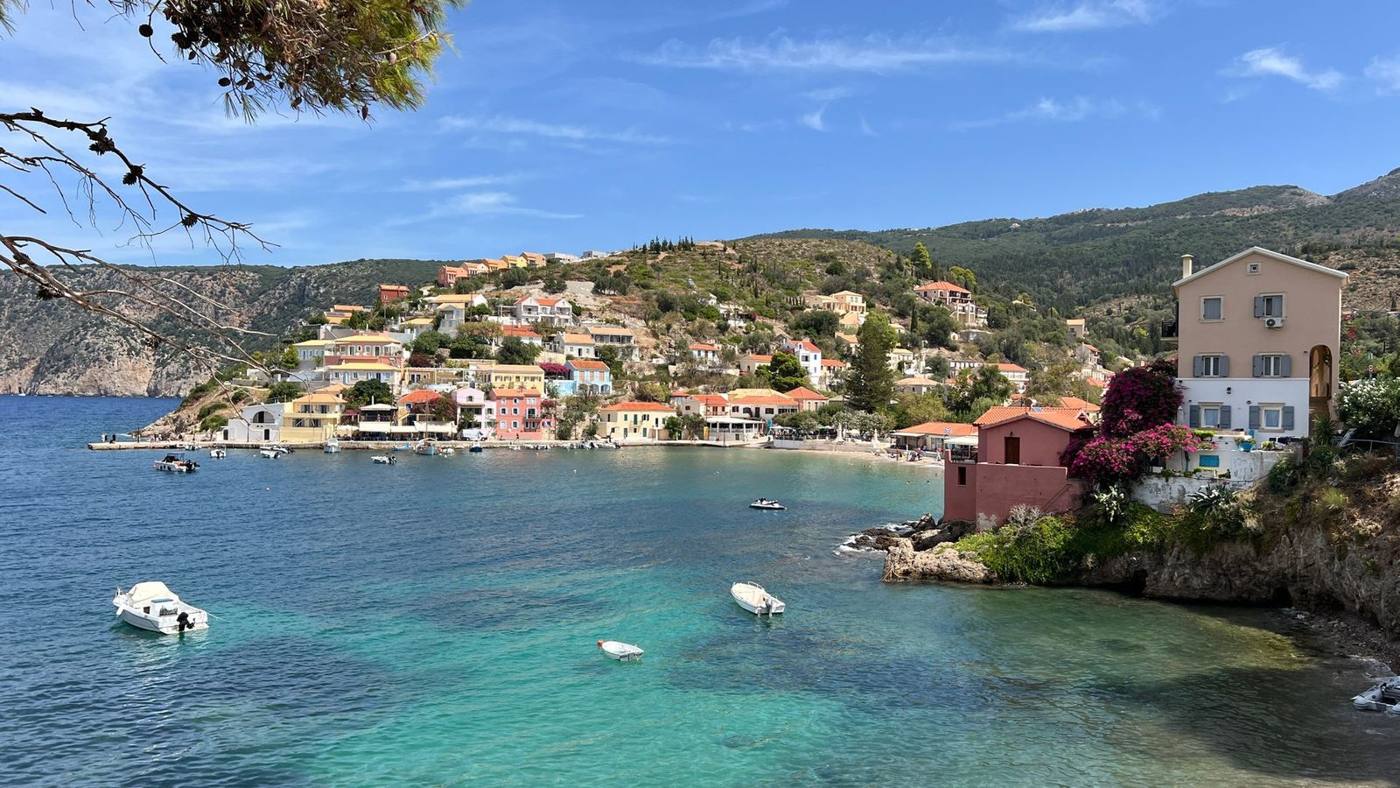
In the afternoon continue north to Assos, a small village of colourful houses on a narrow isthmus between two bays, at the foot of a peninsula with a large sixteenth century Venetian fortress. The village houses were rebuilt after the earthquake partly with help from the city of Paris, remembered in a small square.
Walk up to the fortress on a path of about forty minutes through the pine woods. The walls are long and partly collapsed, with a view over the sea and the village. Come back before sunset.
In the evening have dinner on the small harbour of Assos.
Sleep in or near Assos.
Practical tip: in summer the Myrtos car park fills up early. Arrive in the morning or late afternoon.
- Day 6
Fiskardo and the northern coves
In the morning drive to Fiskardo, at the northern tip of the island, about half an hour from Assos. It is one of the few villages on Kefalonia spared by the 1953 earthquake, so it keeps its original colourful Venetian houses with shutters, around a small harbour full of sailing boats and yachts. Opposite, a few kilometres away, you see Ithaca.
Walk along the waterfront and the paths around the village: one leads to the remains of a Norman church and the Venetian lighthouse, in a pine wood on the coast.
In the afternoon swim in the nearby coves. Emplisi is a small bay of white pebbles and clear water, about twenty minutes' walk from Fiskardo. Foki is a narrow sheltered bay surrounded by olive trees, with a sea cave where Mediterranean monk seals once sheltered, hence the name.
You can also hire a small boat that needs no licence to explore the coves of the coast, reachable only by sea. Ask about the conditions and the weather before setting out.
In the evening have dinner on the Fiskardo harbour, with the catch of the day.
Sleep in or near Fiskardo.
Practical tip: parking in Fiskardo village is limited. Leave the car in the car parks at the entrance and walk down.
- Day 7
A day of sea and trails in the north
Today is a freer day in the north of Kefalonia, for resting and walking.
In the morning walk one of the marked trails of the Erisos peninsula, between Fiskardo and Assos, which pass through olive groves, cypresses and villages abandoned after the earthquake, with roofless old stone houses and country chapels. The trails are easy and give views of the sea and Ithaca.
Visit one of these villages, such as Antipata or Tselentata, where some houses have been restored and others remain as the earthquake left them.
In the afternoon return to the sea. You could choose a beach on the north east coast, such as Dafnoudi, a small pebble cove reached by a path through the woods of about twenty minutes, with crystal clear water and usually few people.
Alternatively take a guided kayak trip along the coast, paddling into sea caves and coves.
In the evening, if you are in Assos, watch the sunset from the fortress or the village, as the lights come on in the colourful houses.
Sleep in Assos or Fiskardo.
Practical tip: in summer the trails are hot and there is little shade. Walk early in the morning and bring plenty of water, a hat and closed shoes.
- Day 8
Drogarati, Melissani and the ferry to Ithaca
In the morning drive to Sami, on the east coast, about an hour from Fiskardo. Near Sami are two of the island's natural wonders.
Drogarati cave is a large cave of stalactites and stalagmites, discovered about three hundred years ago after an earthquake. You go down a stairway into a huge chamber with acoustics so good that concerts have sometimes been held there.
Nearby is the underground Lake Melissani, a cave with a partly collapsed roof, where you walk down a tunnel to a lake of clear brackish water. You take a short trip in a rowing boat: when the midday sun shines through the opening in the roof, the water turns brilliant blue and the boats seem to float in the air. This is where part of the water from the Argostoli katavothres re emerges. Check opening hours and prices for both.
In the afternoon take the ferry from Sami to Ithaca, about half an hour to an hour depending on the arrival port. Check the timetable, which changes with the season.
Arrive at Vathy, the capital of Ithaca, a town of pale houses around a deep natural harbour among green hills.
In the evening walk along the Vathy waterfront.
Sleep in Vathy.
Practical tip: at Melissani the best time is between eleven and two, with the sun high. Before and after, the colour is less intense.
- Day 9
Ithaca: Kioni, Stavros and the Palace of Odysseus
Today you explore Ithaca, a small island of green mountains and quiet bays, bound to the myth of Odysseus, who according to the Odyssey returned here after twenty years of war and wandering.
In the morning drive north on the road that runs along the island's ridge, with the sea on both sides. Stop at Katharon monastery, high on the mountain, with a view over the gulf.
Reach Stavros, a village in the north, with a small statue of Odysseus. Nearby is the site known as the Palace of Odysseus, on the hill of Agios Athanasios, where archaeologists have found the remains of an important Mycenaean era building. Many scholars think it may be linked to the palace of the king of Ithaca, but there is no firm proof. Also visit the small archaeological museum in Stavros if it is open.
In the afternoon go down to Kioni, a small fishing village on the north east coast, with Venetian houses on a bay and three ruined old windmills on the point. Swim in one of the nearby coves.
On the way back to Vathy stop at Gidaki beach, reached on foot by a path of about half an hour or by boat from Vathy, with turquoise water and white pebbles.
Sleep in Vathy.
Practical tip: on Ithaca distances are short but roads are narrow and winding. Allow time.
- Day 10
Southern Kefalonia and departure
In the morning take the ferry from Ithaca to Kefalonia and drive to the south of the island.
Visit the monastery of Agios Gerasimos, Kefalonia's patron saint, in a plain of vineyards at the foot of Mount Ainos, the highest mountain in the Ionian islands, covered by a forest of Kefalonian fir, a species that grows only here and in a few other places. Beneath the church is a small cave where the saint lived in prayer. In August and October great festivals are held in his honour. Enter with covered clothing.
Then climb to the castle of Agios Georgios, the island's old Venetian capital, on a hill, with walls, ruins and a view over the whole south to the sea.
If you have time, continue to Skala, on the south east coast, where you can see the mosaics of a third century Roman villa, with animal scenes, and have a last swim on the long sandy beach. On this coast loggerhead turtles lay their eggs in summer: respect the protected areas and leave nothing on the beach at night.
Then return to the airport, about an hour away, return the car with a full tank and arrive early.
Before leaving buy something to take home: robola, thyme honey, mandola and olive oil.
Practical tip: you can drive almost to the top of Mount Ainos. Bring a jacket: it is cool up there even in summer.
For those who want a large, varied island, with clear water and plenty to see between beaches. Melissani and the north coast are the high points, and Italian travellers will also feel the memory of the Acqui Division. The drawback is that without a car you see little, and one day only gives a taste of Ithaca; those who like slow places can stay a night.
Before you go
- Documents and visa
- EU citizens need a valid identity card or passport, including on ferries, where ID may be checked at boarding. Other nationalities should check the Schengen rules.
- Health and vaccines
- No vaccines required. EU citizens should bring their EHIC; in summer protect yourself from the sun and drink plenty. Emergencies: 112.
- Money and payments
- Euro. Cards are accepted almost everywhere; every accommodation charges a fee per room per night, often paid on departure.
- Power sockets
- Types C and F, 230 volts.
- Time zone
- Eastern European Time (UTC+2), summer time (UTC+3) from late March to late October.
- Safety
- A safe country. In summer watch for wildfires and 112 alerts; in Athens, for pickpockets on the metro. Official advice: GOV.UK.
Information checked in November 2026 for Italian and EU citizens. Rules change: always check before you travel.
Variations
In 7 days: Argostoli, Myrtos, Assos, Fiskardo, Melissani and a day on Ithaca.
In 13 days: add Zakynthos or Lefkada, reached by ferry.
Frequently asked questions
What document do I need?
EU citizens only need a valid identity card. Other nationalities should check their own rules. In Greece accommodation charges a nightly tax: check the amount when you book.
Do I need a car?
Yes. Kefalonia is large and public transport is limited. On Ithaca a car or scooter is also useful.
When is the best time to go?
May to June and September. August is crowded; ferries to Ithaca have different timetables depending on the season, so check them first.
Indicative itinerary written by World Atlas. Before booking, check timetables, seasonal openings, documents and safety.
 16 daysModerate
The Lesser Cyclades: Sifnos, Milos, Folegandros, Amorgos and Paros
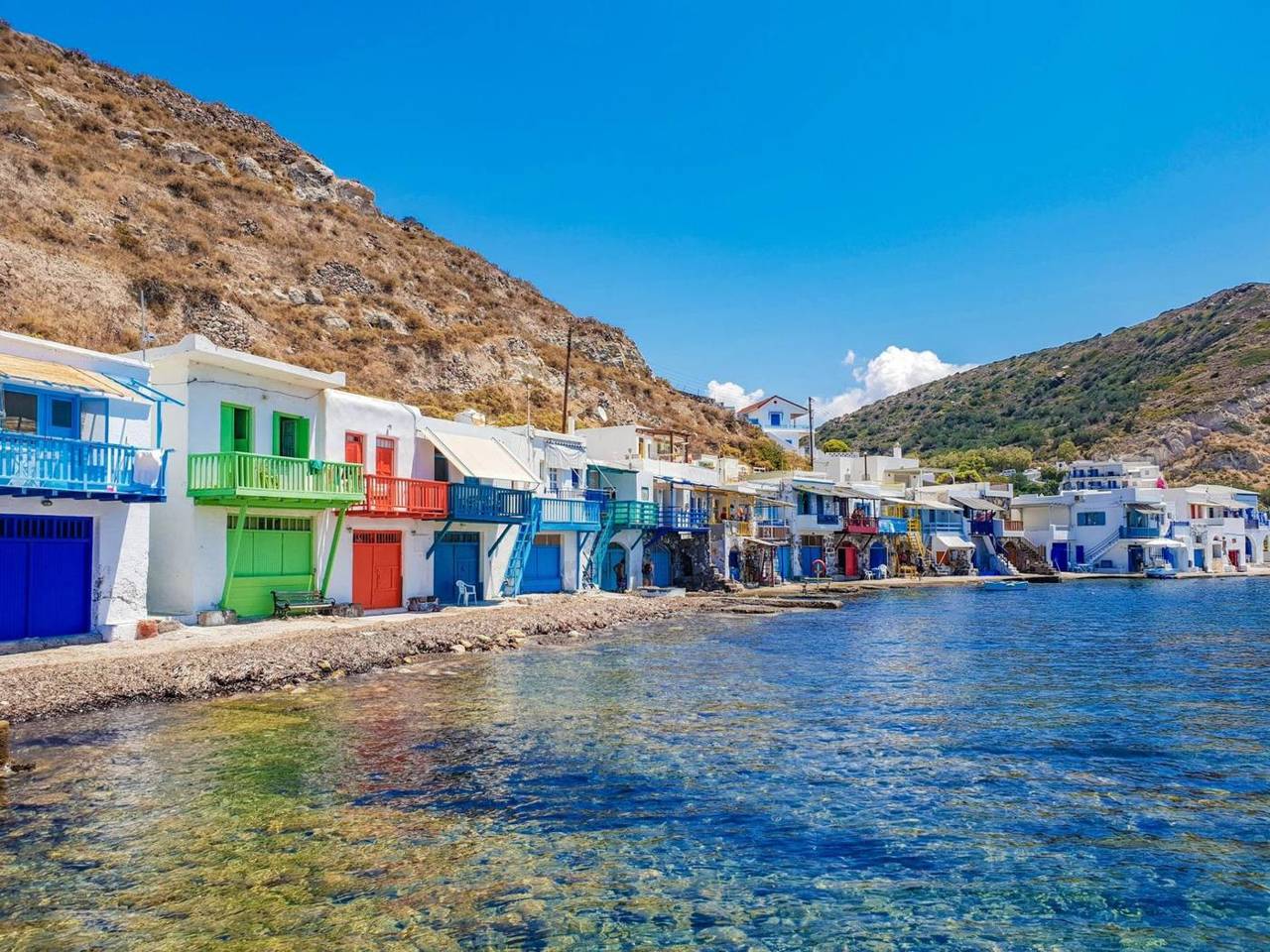
Two weeks of ferries through the less trodden Cyclades, leaving Mykonos and Santorini aside, with three nights on the islands that deserve it.
 6 daysEasy
Corfu and Paxos
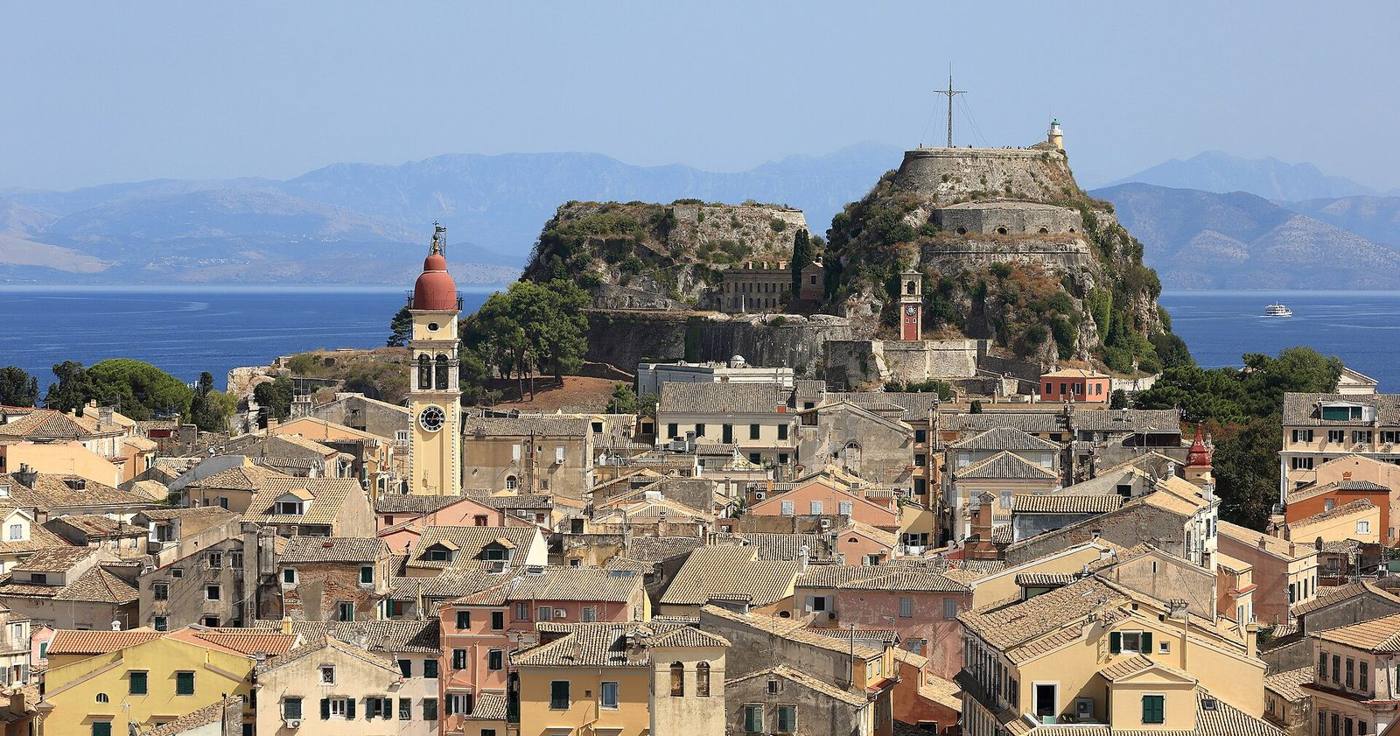
The greenest Ionian islands: Corfu old town (UNESCO) with its two Venetian fortresses and the Liston, the Achilleion palace, the bays of Paleokastritsa, the north-east coast up to Kassiopi, then Paxos with its olive groves and the white beaches of Antipaxos.
 5 daysEasy
Mount Pelion, mountain villages and beaches
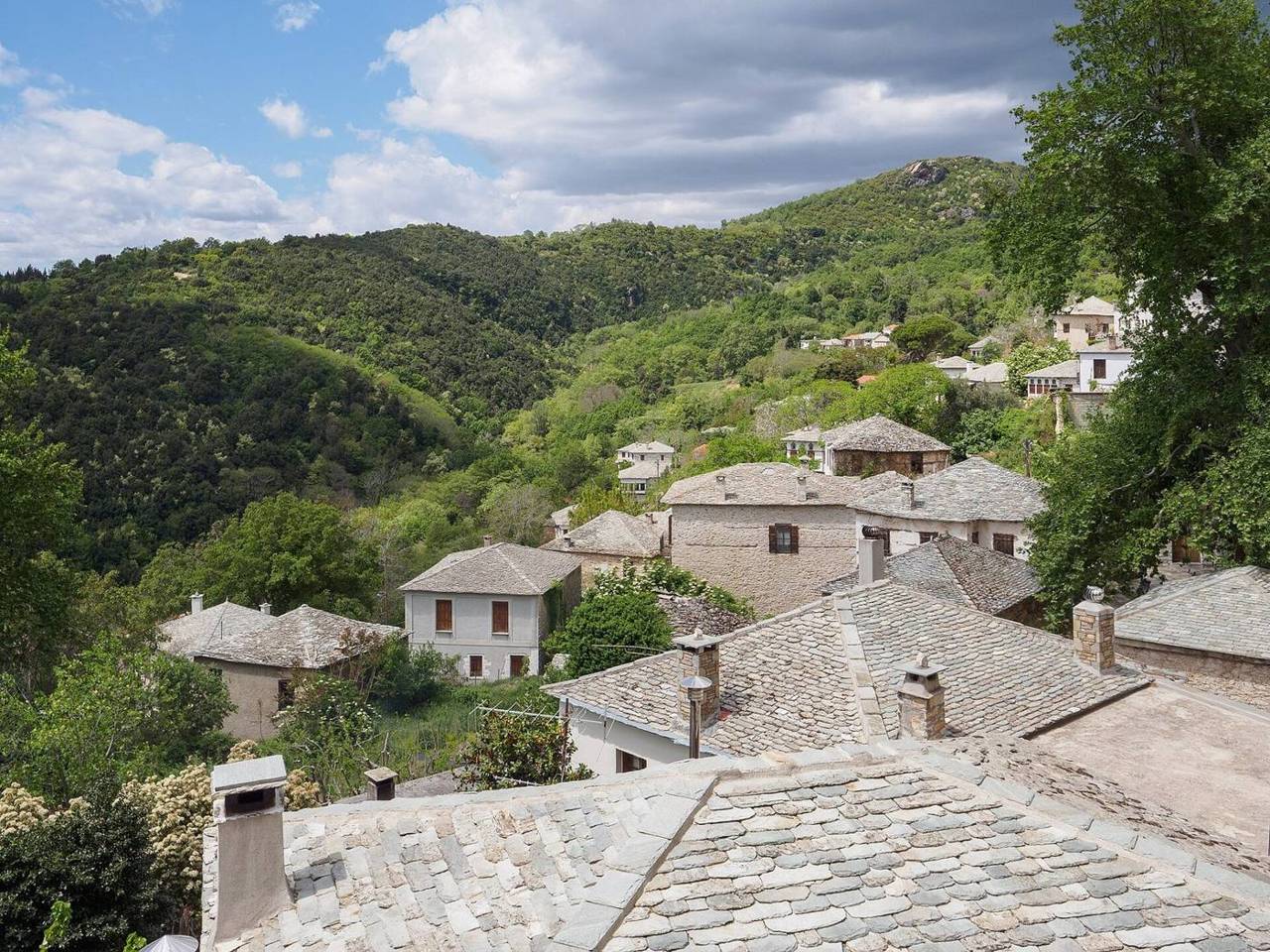
The mountain of the centaurs between the Gulf of Volos and the Aegean: the stone villages of Makrinitsa and Portaria, chestnut and beech woods, old cobbled mule tracks, Tsagarada and the beaches of Damouchari and Mylopotamos, and the little steam train to Milies.