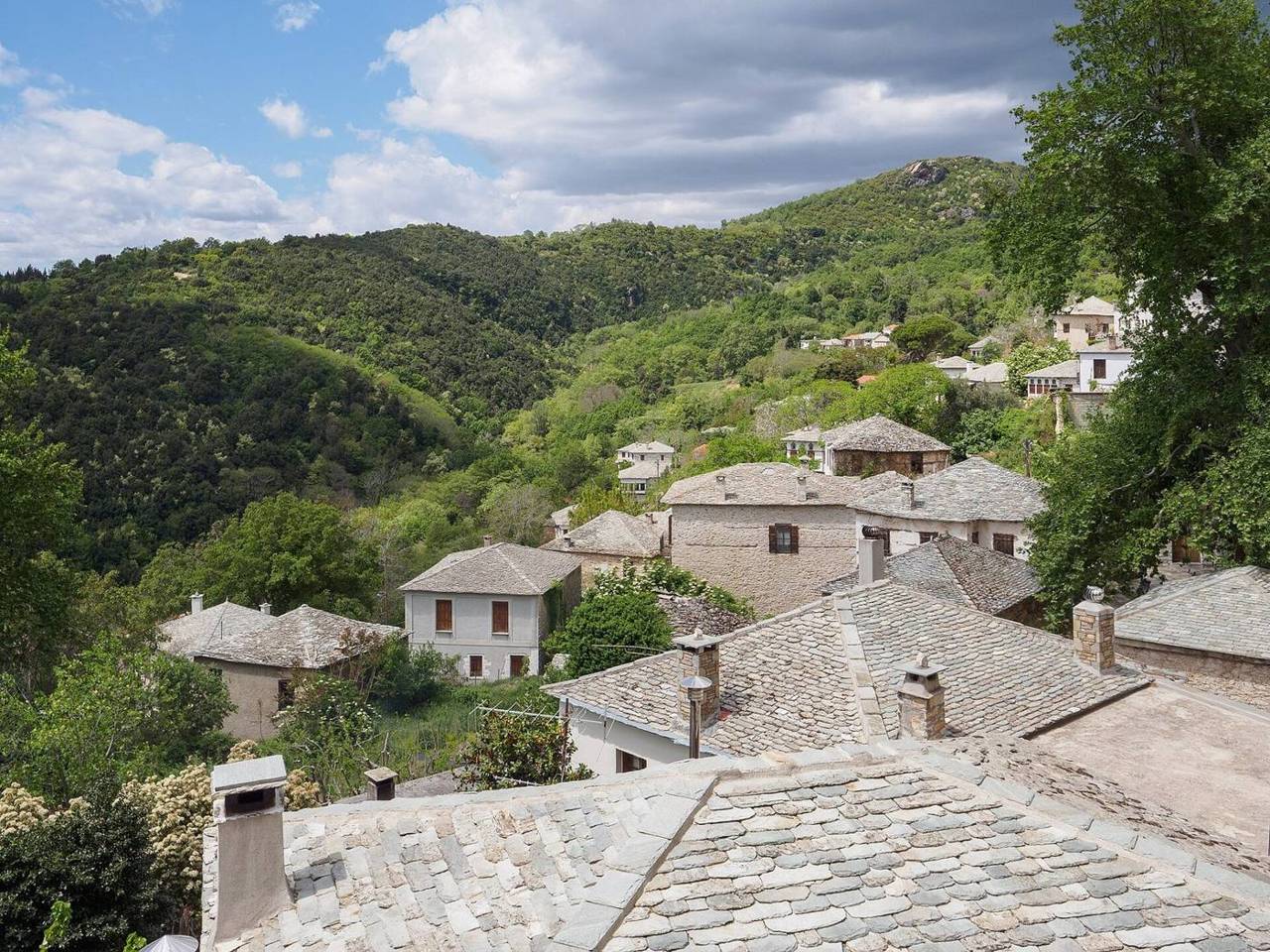
Mount Pelion, mountain villages and beaches
The mountain of the centaurs between the Gulf of Volos and the Aegean: the stone villages of Makrinitsa and Portaria, chestnut and beech woods, old cobbled mule tracks, Tsagarada and the beaches of Damouchari and Mylopotamos, and the little steam train to Milies.
- Volos
- Makrinitsa
- Portaria
- Tsagarada
- Damouchari
- Milies
Day by day
- Day 1
Volos and the climb to Portaria and Makrinitsa
To enter Greece EU citizens can use a valid identity card or passport. Check the rules for your nationality.
Pelion is a mountainous peninsula in Thessaly, central Greece, stretching between the Pagasetic Gulf and the Aegean Sea. In myth it was the home of the centaurs, half men and half horses. The mountains, up to about 1,600 metres, are covered in beech, chestnut and plane forests, with springs, streams and some seventy traditional stone villages with grey slate roofs, linked by old cobbled mule paths, the kalderimia. Below, the coast has white pebble beaches and clear water. Volos, the port city at the foot of the mountain, has a small airport with seasonal flights; from Athens it is about four hours by car or bus, from Thessaloniki about two and a half.
In the morning walk along the Volos waterfront, with cafés and views over the gulf. Volos is famous for its tsipouradika, small tavernas where you drink tsipouro, a local grape spirit served in small bottles with little plates of fish, octopus and vegetables: each bottle brings a new plate.
In the afternoon drive up the mountain to Portaria, about twenty minutes, and then to Makrinitsa, called the balcony of Pelion, at about six hundred metres. The village closed to cars rises in terraces up the mountain, with large eighteenth- and nineteenth-century mansions of stone and wood. From the square, with its great plane tree, fountain and small church, you see the whole gulf and the city.
In the evening dine in a village taverna on spetzofai, sausage with peppers.
Practical tip: Pelion's roads are narrow and winding; always allow more time than expected.
- Day 2
The Hania pass and down the Aegean side to Tsagarada
In the morning continue on the road climbing beyond Makrinitsa across the mountain. Past the chestnut and beech woods you reach the Hania pass, at about 1,200 metres, near the small Agriolefkes ski centre, one of the few places in Greece where on clear days you can see the sea on two sides. In summer it is cool here even when the coast is very hot, and trails head off into the woods.
Then descend the eastern side, facing the Aegean, greener, wetter and wilder. Pass through Zagora, one of the largest villages, famous for its apples, with churches and the eighteenth-century Greek school, which keeps an old library, and then along the panoramic road halfway up the slopes through the forest.
In the afternoon arrive in Tsagarada, a village divided into four quarters, each with its square and church, hidden among chestnut, plane and beech woods about five hundred metres above the sea. In the square of Agia Paraskevi stands one of the largest and oldest plane trees in Greece, with an enormous trunk, said to be about a thousand years old.
In the evening try Pelion mountain dishes, such as kouneli stifado, rabbit with small onions, savoury pies and spoon sweets, fruit preserved in syrup.
Practical tip: in winter the Hania pass may have snow and ice; check road conditions.
- Day 3
The mule path to Damouchari and Mylopotamos beach
In the morning walk down from Tsagarada to the sea along an old kalderimi, a stone-paved mule path that for centuries was the only link between the mountain villages and the small harbours. The downhill path takes about an hour and a half through chestnut, olive and plane woods, with little stone bridges over streams, chapels and glimpses of the blue sea between the trees.
You reach Damouchari, a tiny fishing harbour hidden in a small bay, with a white pebble beach, turquoise water, stone houses and the remains of a Venetian castle. The bay became world-famous because scenes from a well-known musical film with ABBA songs were shot here. Swim and rest.
In the afternoon walk or drive to Mylopotamos beach, a few kilometres away, one of the most beautiful on Pelion: it is split into two small coves by a rock with a natural arch, through which you pass from one beach to the other. The water is crystal clear and the seabed drops quickly. Behind the beach rise the green walls of the mountain.
To return to Tsagarada you can walk back up the path in about two hours or take a taxi, booked in advance.
In the evening go back up the mountain and dine in the square under the great plane tree.
Practical tip: wear hiking shoes for the kalderimi, as the stones are smooth and slippery, especially when damp.
- Day 4
The little train from Ano Lechonia to Milies
In the morning drive to the western side of Pelion, facing the gulf, to Ano Lechonia, about a quarter of an hour from Volos. From here the Pelion train runs, nicknamed Moutzouris, the smoky one, a narrow-gauge railway with tracks only sixty centimetres apart. The line was built in the early twentieth century to a design by Italian engineer Evaristo de Chirico, father of the painter Giorgio de Chirico, who was born in Volos. The heritage train, pulled by an old locomotive, covers about fifteen kilometres in about an hour and a half through olive groves, woods and ravines, over stone and iron bridges, including a curved one said to have been designed with Eiffel's office. Halfway there is a stop for a stroll.
The train arrives in Milies, a quiet mountain village with a tree-lined square and the church of the Taxiarchs, decorated with eighteenth-century frescoes. Here in 1821 the Pelion uprising against the Turks began during the Greek War of Independence. Visit the historic library, with old books, and the small folklore museum. From Milies station you see the whole gulf.
In the afternoon return by train to Ano Lechonia, or walk down the trails. Then visit Vyzitsa, a village near Milies with very well-preserved traditional stone houses.
Practical tip: the train usually runs at weekends and on public holidays, and more often in summer; check the timetable and book.
- Day 5
Back to Volos and departure
In the morning, if you have time, make a last stop in one of the western villages, such as Agios Georgios Nileias, with its large square and church, or go down to the sea at Afissos, a village with beaches on the Pagasetic Gulf, where the water is calm and warm, ideal for children.
Then return to Volos and visit the Archaeological Museum, one of Greece's oldest, with a collection of painted Hellenistic gravestones, unique for their still visible colours, and finds from the Neolithic villages of Sesklo and Dimini, among the oldest in Europe, a few kilometres from the city. If you are interested, at Dimini you can visit the remains of the Neolithic village and a Mycenaean tholos tomb.
In the afternoon take a last walk along the Volos waterfront, with the church of Saint Nicholas and the large modern ship-shaped sculpture, the Argo, recalling the myth of the Argonauts: legend says Jason set out from this very gulf in search of the Golden Fleece, in a ship built from Pelion timber.
From Volos there are buses and trains to Athens and Thessaloniki; Volos airport has mainly seasonal flights.
Things to take home: Pelion spoon sweets, chestnut honey, tsipouro, olive oil and olives, mountain herbal teas and Zagora apples.
Practical tip: check your government's travel advice before leaving. In summer, check the wildfire risk in the forests.
Volos is about four hours' drive from Athens; on Pelion a car is essential. The steam train runs only on certain days, mainly in summer and at weekends in spring and autumn: check the timetable. In winter there is skiing at Hania. A valid identity card is enough for EU citizens. Accommodation charges a nightly tax that varies with season and category. In summer the wildfire risk is high: on alert days some forest areas and trails may be closed, and lighting fires outdoors is forbidden.
Before you go
- Documents and visa
- EU citizens need a valid identity card or passport, including on ferries, where ID may be checked at boarding. Other nationalities should check the Schengen rules.
- Health and vaccines
- No vaccines required. EU citizens should bring their EHIC; in summer protect yourself from the sun and drink plenty. Emergencies: 112.
- Money and payments
- Euro. Cards are accepted almost everywhere; every accommodation charges a fee per room per night, often paid on departure.
- Power sockets
- Types C and F, 230 volts.
- Time zone
- Eastern European Time (UTC+2), summer time (UTC+3) from late March to late October.
- Safety
- A safe country. In summer watch for wildfires and 112 alerts; in Athens, for pickpockets on the metro. Official advice: GOV.UK.
Information checked in November 2026 for Italian and EU citizens. Rules change: always check before you travel.
Variations
In 3 days: Volos and Makrinitsa on day one, Tsagarada and Mylopotamos on day two, the train and Milies on day three.
In 8 days: add the Sporades, with Skiathos and Skopelos, reached by ferry from Volos.
Frequently asked questions
Which document do I need for Greece?
A valid identity card or passport for EU citizens.
When is the best time for Pelion?
May to October for the sea, autumn for the forest colours, winter for snow; Pelion is lovely all year.
When does the Pelion train run?
Usually at weekends and on public holidays, more often in summer; the timetable changes every year.
Indicative itinerary written by World Atlas. Before booking, check timetables, seasonal openings, documents and safety.
 7 daysEasy
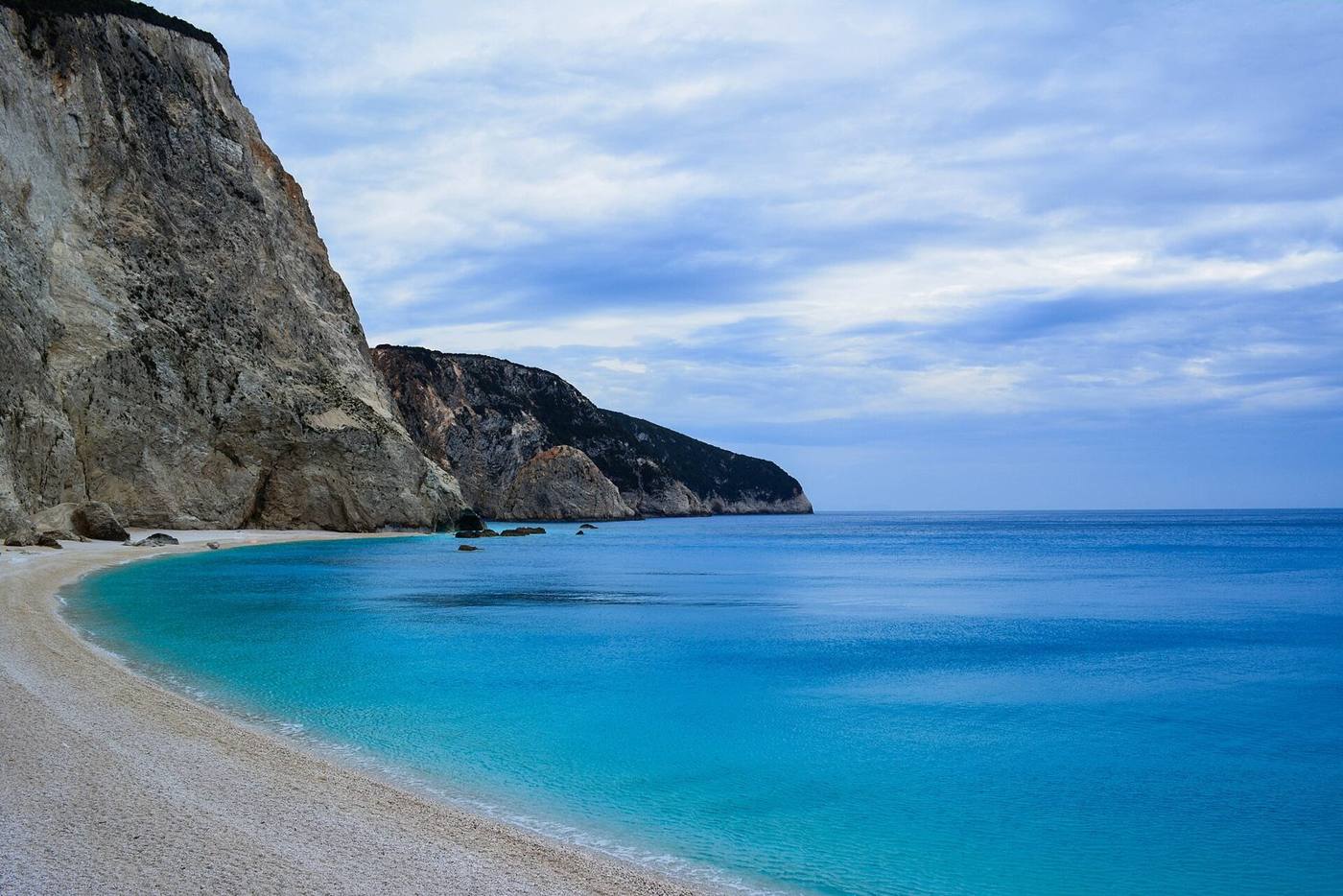
Lefkada and the Epirus coast: Parga and Sivota
The turquoise sea of western Greece by car: Lefkada, linked to the mainland by a bridge, with Porto Katsiki and Egremni below the white cliffs, the islands of Meganisi and Kalamos by boat, then Parga with its Venetian castle, Sivota and the springs of the Acheron river.
 6 daysEasy
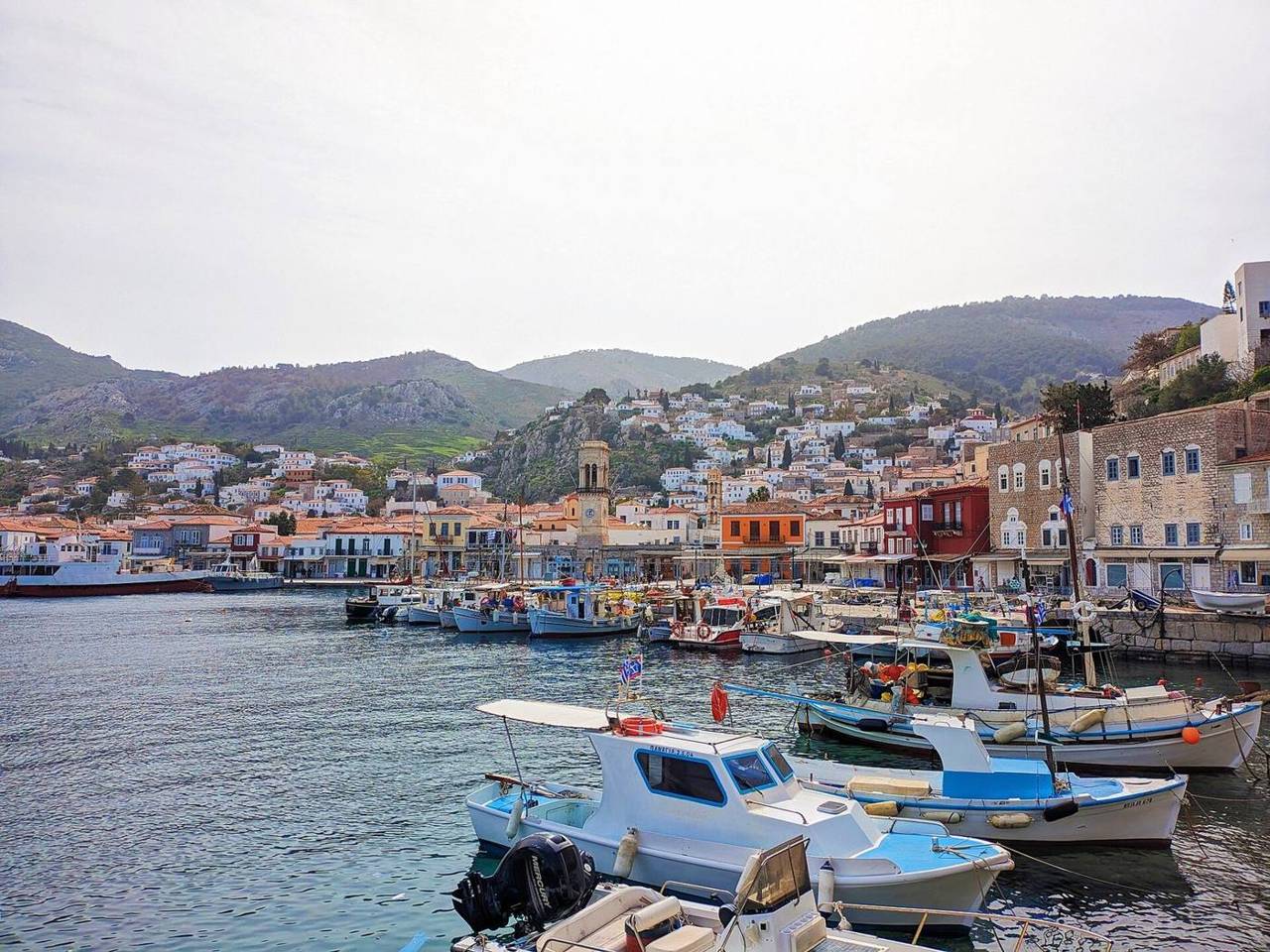
The Saronic islands: Aegina, Poros, Hydra and Spetses
Four islands a few hours from Piraeus: Aegina with the temple of Aphaia and its pistachios, Poros with its clock tower above the channel, Hydra closed to cars, where you get around on foot, by boat or by mule, and Spetses with its captains' mansions and horse carriages.
 8 daysEasy
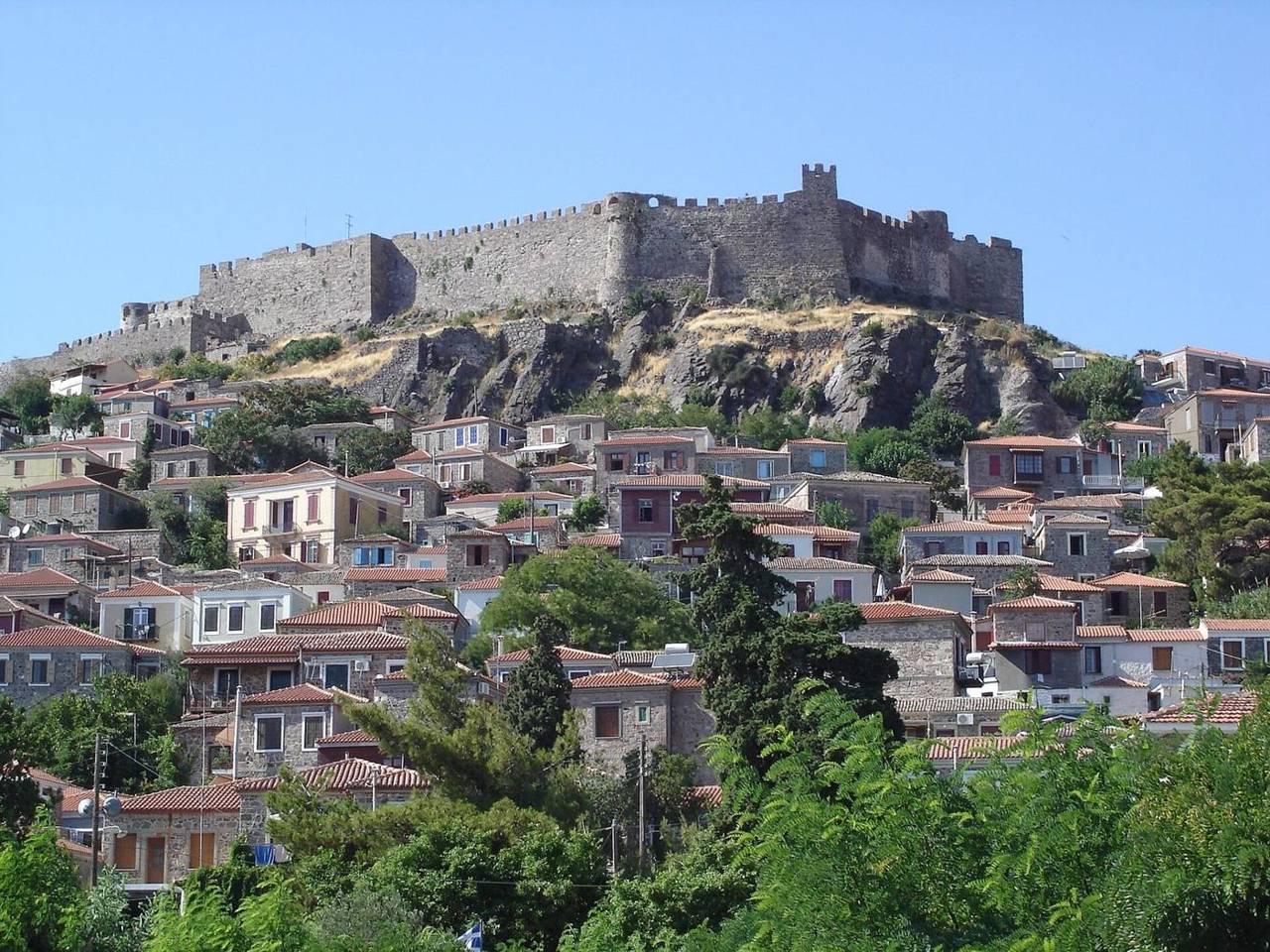
Lesbos and Chios
The north-eastern Aegean, far from the crowds: Lesbos with Mytilene, the village of Molyvos below its castle, the petrified forest at Sigri and the ouzo of Plomari, then Chios with the mastic villages, Pyrgi with its sgraffito facades, Mesta and the monastery of Nea Moni (UNESCO).