Kumasi and the Ashanti kingdom
Manhyia Palace, the huge Kejetia market, the craft villages of kente and adinkra cloth and the sacred Lake Bosumtwi.
- Accra
- Kumasi
- Bonwire
- Ntonso
- Lake Bosumtwi
Day by day
- Day 1
From Accra to Kumasi
This trip takes you to the heart of the Ashanti kingdom, in the centre of Ghana: Kumasi with Manhyia Palace and Kejetia market, the craft villages of Bonwire, where kente is woven, and Ntonso, where adinkra cloth is printed, and the sacred lake of Bosumtwi. You travel by plane and then by car with a driver or by taxi.
Before you go: Italian citizens enter Ghana with a passport and a visa, to be obtained before departure; since May 2026 it is requested online on the official electronic visa portal of the Ghana Immigration Service, without going through intermediary websites. Yellow fever vaccination is compulsory for all travellers over nine months old and the certificate is checked on arrival. Since November 2026, as a precaution against Ebola, a health declaration and a temperature check are required at airports. Talk to your doctor about malaria prevention. Other nationalities should check their own rules. The UK advises against all but essential travel only to the Bawku area, in the far north-east, far from the Ashanti Region.
From Accra to Kumasi the easiest way is the domestic flight, which takes less than an hour. By car or coach it usually takes between five and seven hours, depending on traffic.
Kumasi is the second city of Ghana and the historic capital of the Ashanti, a powerful kingdom that for centuries controlled the gold trade of the region.
In the afternoon take a first walk in the centre and visit the Armed Forces Museum, inside the old Kumasi fort, built by the British at the end of the nineteenth century, which tells the story of the wars between the British and the Ashanti. Check prices and times.
Sleep in Kumasi, for four nights.
Practical tip: book the domestic flight a few days ahead and arrive at the airport early, because the health checks can make things slower.
- Day 2
Manhyia Palace and Kejetia market
Today you discover the history of the Ashanti kingdom and the great market of the city.
In the morning visit the Manhyia Palace Museum, in the building where the Ashanti kings lived in the twentieth century. With the guide you see the rooms, the thrones, the objects of the court and the wax figures of the kings and queen mothers, and you hear the story of the kingdom, of the wars against the British and of the Golden Stool, the symbol of the soul of the Ashanti nation, which is never shown to the public. Check prices and times. Inside you usually cannot take photos.
If your visit coincides with Akwasidae, the festival held every six weeks according to the traditional Akan calendar, you can watch the king holding court in the palace grounds, with the chiefs seated under large coloured umbrellas, drums and dancing. Ask for the exact dates at the museum or the tourist office.
In the afternoon go into Kejetia market, one of the largest in West Africa, with thousands of stalls on several levels and in the streets around. You find fabrics, beads, sandals, pots, spices, fruit, dried fish and giant snails. It is chaotic, noisy and fascinating: so as not to get lost and to understand what you see, go with a local guide.
In the evening try fufu, the paste of pounded cassava and plantain, with light soup, groundnut soup or palm nut soup, a typical Ashanti dish.
Sleep in Kumasi.
Practical tip: at the market carry only a little cash in a closed pocket and leave valuables in your room, because bag-snatching is common in the crowds.
- Day 3
Bonwire for kente and Ntonso for adinkra
Today you visit two craft villages near Kumasi, where the most famous fabrics of Ghana are made.
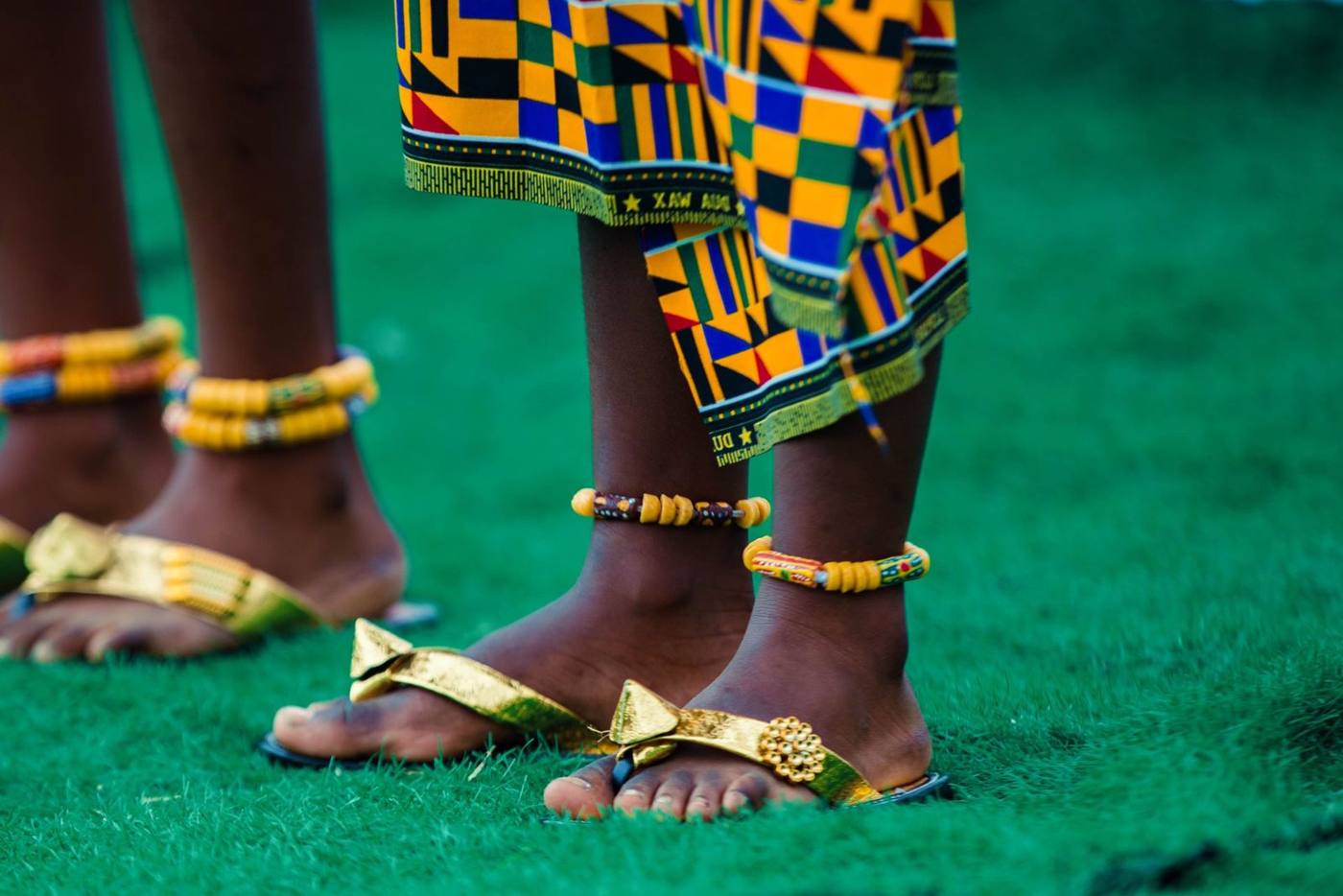
In the morning go to Bonwire, about half an hour by road to the north-east. It is considered the village of kente, the silk or cotton cloth with coloured strips that was once reserved for the king and the chiefs. In the centre you visit the weavers' workshop: you watch the men working on narrow wooden looms, their feet moving the threads and their hands throwing the shuttle at great speed. Every pattern has a name and a meaning, linked to a proverb or an event in history. Check prices and times.
If you want to buy a strip of kente, buy it directly from the weavers and ask how long it took to make: you will understand the price.
In the afternoon continue to Ntonso, north of Kumasi, the village of adinkra. Adinkra are traditional symbols, each with a meaning, such as wisdom, courage or unity. Here they are printed by hand on cloth with stamps carved from calabashes, using a dark ink made by boiling the bark of a tree. In the workshop you can try printing a small piece of cloth with the help of the craftspeople.
On the way back you can stop at Ahwiaa, a village of woodcarvers, with stools, masks and figurines.
Sleep in Kumasi.
Practical tip: agree the price of the taxi for the whole day before leaving, so the driver waits for you in each village and you do not have to look for another one.
- Day 4
Lake Bosumtwi, in a meteorite crater
Today you go to Lake Bosumtwi, the only large natural lake in Ghana, about an hour by road south-east of Kumasi.
The lake fills an impact crater, formed about a million years ago by the fall of a meteorite, and is surrounded by hills covered in forest. For the Ashanti it is a sacred place: according to tradition the souls of the dead come here to say farewell to the god Twi.
The road reaches the village of Abono, on the northern shore. From the viewpoint, before the descent, you see the whole ring of the crater with the dark water in the middle.
In the morning walk with a guide from the village along the shore and over the hills around, among cocoa fields, banana plantations and small fishing villages. It is an easy and very beautiful walk, with views over the lake.
Watch the fishermen: by tradition they do not use ordinary boats, but wooden planks, called padua, on which they lie and paddle with their hands or small paddles. You can ask to try.
In the afternoon rest on the shore and, if you like, swim where local people show you. Towards evening the sky is reflected on the water and the fishermen come back on their planks.
Return to Kumasi before dark.
Sleep in Kumasi.
Practical tip: at the entrance to the village you usually pay a small fee for access to the lake; check prices and times and pay only at the official point, with a receipt.
- Day 5
Return to Accra
Today you go back to Accra, with a last morning in Kumasi.
In the morning visit the Prempeh II Jubilee Museum, in the Centre for National Culture, small but full of objects from Ashanti history: royal regalia, drums, brass weights used to weigh gold dust and old photographs. Check prices and times.
Then, if you have time, pass by the Komfo Anokye hospital, where according to tradition stands the sword driven into the ground by the priest Okomfo Anokye, who with King Osei Tutu founded the Ashanti confederation around 1700. Legend says that nobody has ever managed to pull it out.
Around midday go to the airport and take the flight to Accra, or leave by car or coach, allowing many hours on the road and trying to arrive before dark.
In five days you have seen the cultural heart of Ghana: Manhyia Palace and the history of the Ashanti kingdom, the great market of Kejetia, the kente looms in Bonwire, the adinkra stamps in Ntonso and the sacred lake of Bosumtwi, in its crater.
When to go: from November to March, in the dry season, when the roads are easier and the walks more pleasant. Between December and February the harmattan sometimes blows, a dry wind from the Sahara that brings dust and makes the sky hazy. Before leaving, check the dates of Akwasidae, to make the trip coincide with the festival.
Practical tip: if you buy kente or adinkra, put them in your hand luggage folded in a cloth bag, so they are not damaged on the journey.
Ghana's cultural heart. If you coincide with an Akwasidae festival, every six weeks, you can attend the king's court. Kejetia market is huge and chaotic: best with a guide.
Before you go
- Documents and visa
- Valid passport and a compulsory visa, to be obtained before departure. Since May 2026 the visa is requested online on the official electronic visa portal of the Ghana Immigration Service: beware of unofficial websites.
- Health and vaccines
- Yellow fever vaccination is compulsory for all travellers over nine months old: the certificate is checked on arrival. Since November 2026, as a precaution against Ebola, international airports require a health declaration and a temperature check. Malaria prevention is recommended, after medical advice. Drink only bottled water.
- Money and payments
- Ghanaian cedi. Mobile payment is everywhere; cards work in large hotels and shopping centres in Accra, outside the cities you need cash.
- Power sockets
- Type G, 230 volts, the same as in the UK.
- Time zone
- UTC+0 all year.
- Safety
- The UK advises against all but essential travel to the Bawku Municipal area in the Upper East region, and reports attacks on some northern roads and clashes in the western part of the Savannah region, near the borders with Côte d'Ivoire and Burkina Faso. In Accra robbery and bag-snatching are increasing: avoid walking alone at night and taking a taxi alone after dark. On southern beaches currents are dangerous. Avoid roads outside towns after dark. Official advice: GOV.UK.
Information checked in November 2026 for Italian and EU citizens. Rules change: always check before you travel.
Variations
In 3 days: Manhyia Palace, Kejetia market and the villages of Bonwire and Ntonso, without Lake Bosumtwi.
In 7 days: add the Boabeng-Fiema monkey sanctuary and the Kintampo waterfalls, north of Kumasi.
Frequently asked questions
What is Akwasidae?
It is an Ashanti festival held every six weeks according to the traditional Akan calendar. At Manhyia Palace the king receives the chiefs and the public, with drums and dancing. Ask for the exact dates before you leave.
How do you get to Kumasi from Accra?
The easiest way is the domestic flight, which takes less than an hour. By car or coach it usually takes between five and seven hours, depending on traffic.
What documents do I need for Ghana?
Italian citizens enter with a passport and a visa, to be requested online on the official portal of the immigration service. Yellow fever vaccination is compulsory. Other nationalities should check their own rules.
Indicative itinerary written by World Atlas. Before booking, check timetables, seasonal openings, documents and safety.
 5 daysModerate
The Volta region
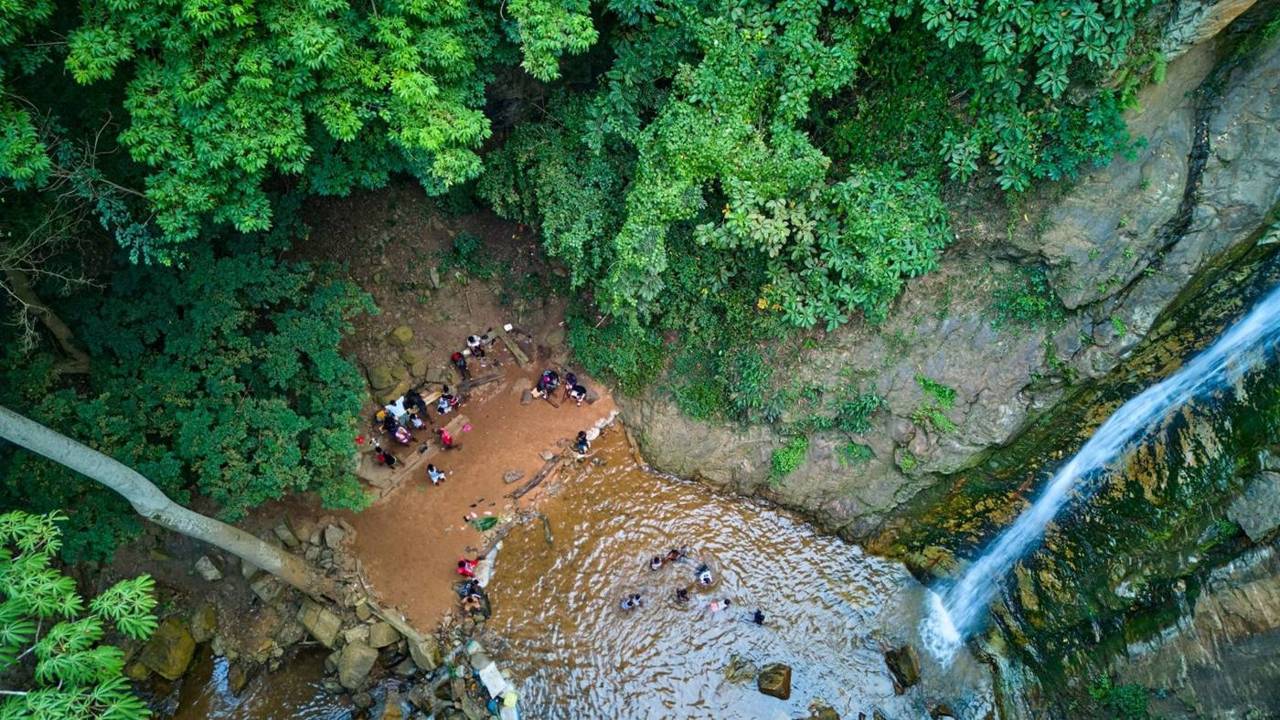
Wli waterfall, the highest in West Africa, Mount Afadjato, the Tafi Atome monkey sanctuary and Lake Volta.
 2 daysEasy
Kakum and the canopy walkway
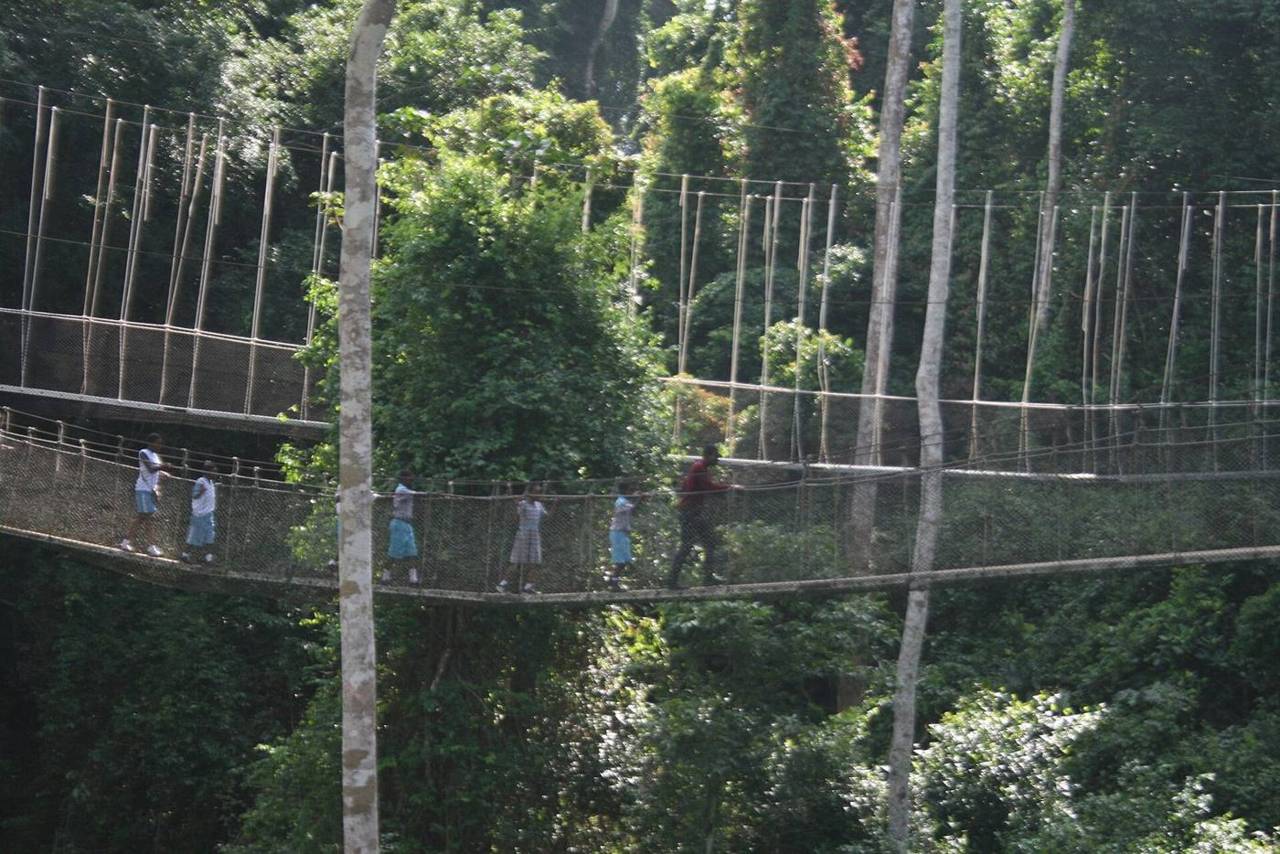
Kakum rainforest from above, with suspension bridges 40 metres up, and a night on stilts at Hans Cottage next to the crocodiles.
 4 daysEasy
Busua and Cape Three Points
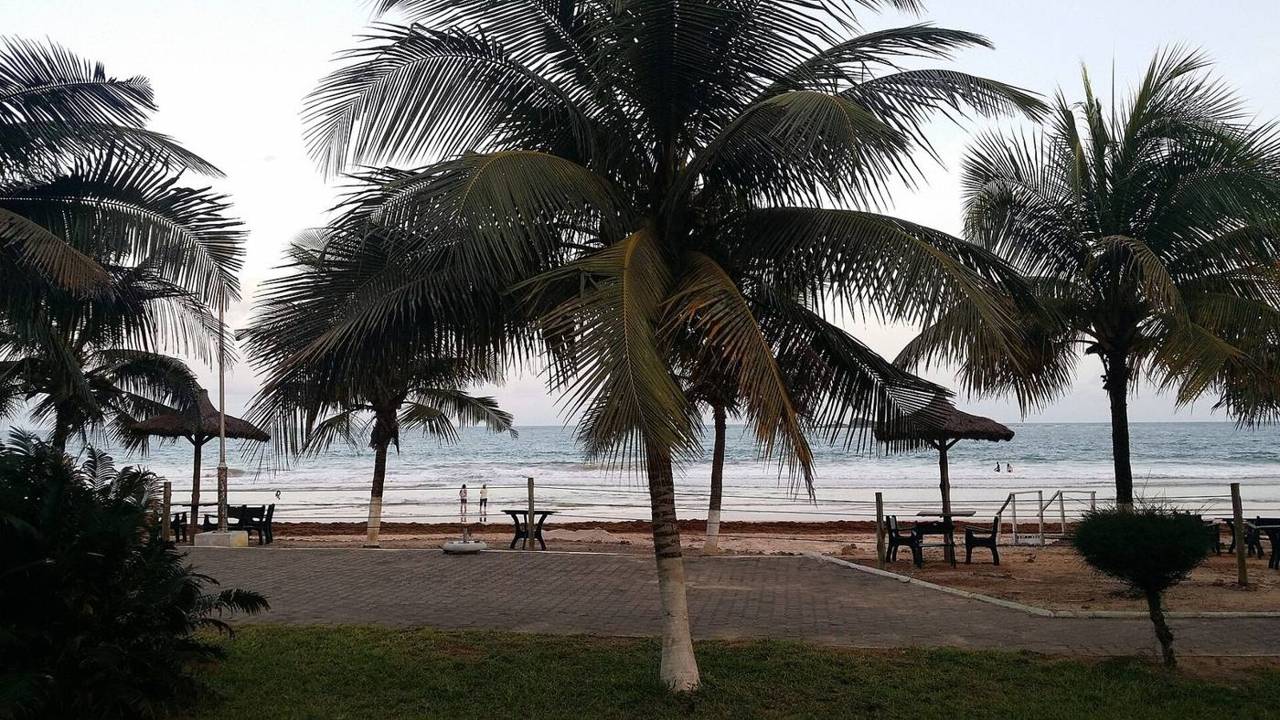
The quieter western coast: surfing at Busua, the Dutch fort at Dixcove, the palm beaches of Akwidaa and the lighthouse at Cape Three Points, Ghana's southernmost tip.