The Danube by bike from Regensburg to Passau
The Bavarian Danube cycle path: the Danube gorge by boat to Weltenburg Abbey, Regensburg (UNESCO) with its stone bridge, the Walhalla temple, Straubing, the river plain and Passau, the city of three rivers.
- Kelheim
- Weltenburg
- Regensburg
- Walhalla
- Straubing
- Deggendorf
- Passau
Day by day
- Day 1
Kelheim and the boat through the Danube Gorge
The Danube cycle path follows the river right across eastern Bavaria. The stretch between Kelheim and Passau is one of the easiest and most varied: almost entirely flat, often on top of the flood banks or on small roads closed to traffic, with abbeys, historic towns and farming villages along the way. Over five days you ride about one hundred and eighty kilometres, in stages of thirty to sixty, and return to the start by train.
The nearest airport is Munich. From there the train takes you to Regensburg and on to Saal an der Donau, from where Kelheim is a few kilometres away by bus or by bike. Many people start directly in Regensburg instead, where bike hire is easy to find.
Kelheim is a small town where the Altmühl flows into the Danube. Above it, on the Michelsberg hill, stands the Befreiungshalle, a large rotunda commissioned by King Ludwig I to remember the wars against Napoleon.
The highlight of the day is the boat that runs up the Danube Gorge, where the river squeezes between tall white limestone cliffs. The trip ends at the Benedictine abbey of Weltenburg, on the bank, with a baroque church rich in stucco and gilding. The monks have brewed beer here for centuries and you can taste it in the courtyard.
Spend the night in Kelheim.
Practical tip: Germany has extended its land border checks until March 2027, so always carry your passport or national identity card. Gorge boats usually run from spring to autumn: check the timetable, as services can be suspended when the river is high.
- Day 2
Cycling to Regensburg, the stone bridge and the old town
Today's stage is short, about thirty kilometres, which leaves time for the city. From Kelheim the path follows the Danube east through fields, woods and small villages. It is well signposted as the Danube cycle route and there are no hard climbs.
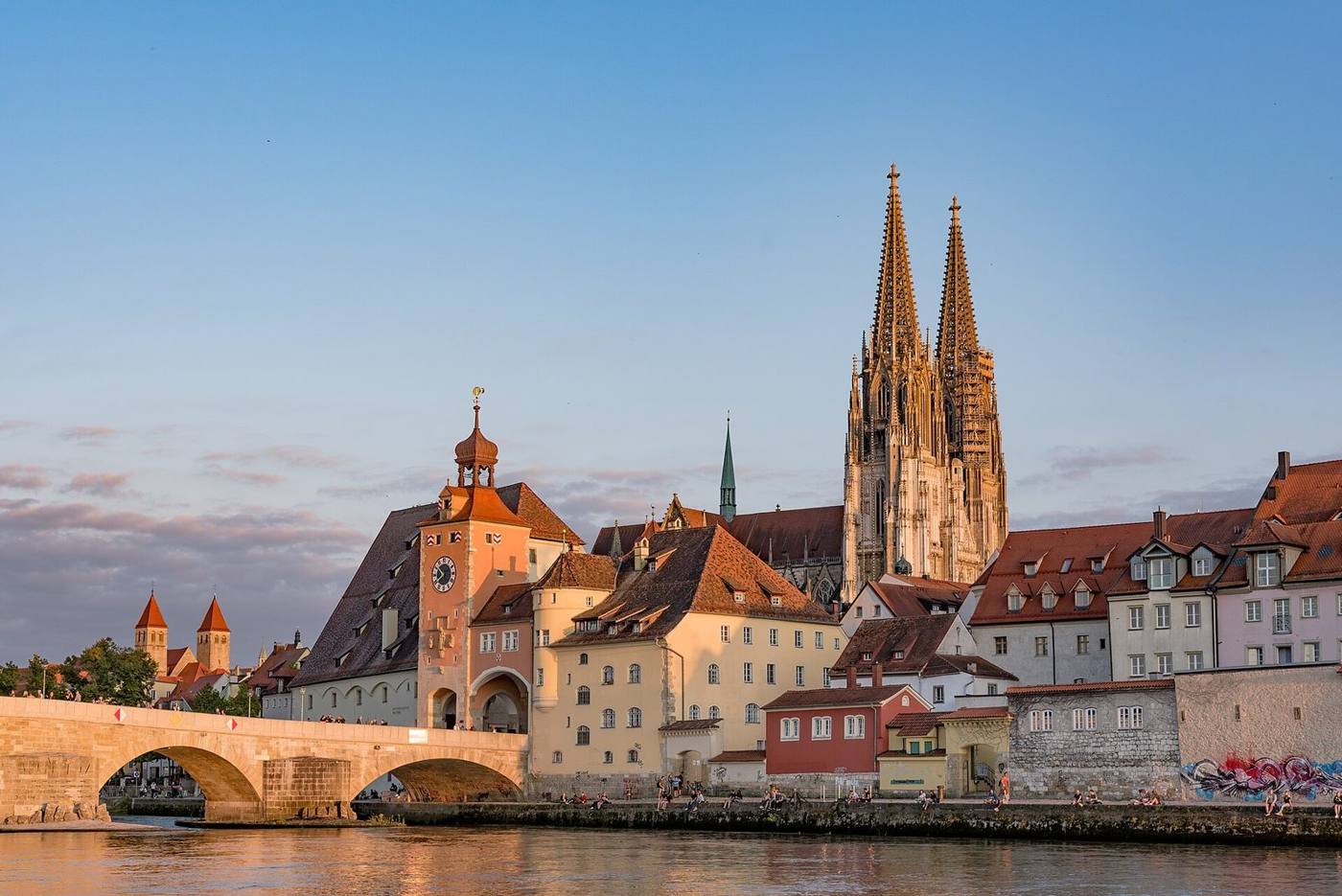
Regensburg is one of the best preserved medieval cities in Germany. Its old town, together with the Stadtamhof district on the opposite bank, is a UNESCO World Heritage Site. It began as a Roman camp, became a wealthy merchant city and for a long time hosted the Imperial Diet of the Holy Roman Empire. In the centre you still see the tower houses of noble families, as tall as those of Tuscan towns, and the remains of the Roman Porta Praetoria.
The city's symbol is the stone bridge, built in the twelfth century. For centuries it was the only bridge over the Danube in this area, and it is one of the oldest medieval bridges in Germany still in use. Today it is open only to people on foot and on bikes, and from the centre it gives the finest view of the river and the cathedral spires.
St Peter's Cathedral is a great example of German Gothic, with beautiful medieval stained glass. On Sundays, during Mass, the cathedral boys' choir, one of the oldest in the world, sometimes sings: check the calendar.
In the evening walk along the river and through the lively squares, then sleep in town.
Practical tip: Regensburg is a good place to leave your suitcase if you are not using a luggage transfer. Many local operators arrange bike hire and move your bags from one place to the next.
- Day 3
The Walhalla and Straubing, about fifty kilometres
Leave Regensburg in the morning and follow the river east. After about ten kilometres, near the village of Donaustauf, the Walhalla appears on the hillside, one of the most surprising monuments in Bavaria. It looks like a Greek temple, inspired by the Parthenon in Athens, white and solemn among the trees.
King Ludwig I had it built in the first half of the nineteenth century, to a design by the architect Leo von Klenze. Inside are busts and plaques of great figures from German speaking history: kings, scientists, composers and writers. A new one is still added from time to time.
You leave the bike at the bottom and climb a long flight of steps on foot. From the terrace the view over the flat green Danube valley is very wide. Take your time here, because it is one of the best moments of the trip.
After the Walhalla the path becomes quieter and crosses the farmland of the Gäuboden, one of the most fertile areas of Bavaria. The river widens, and herons and storks gather along the banks.
In the afternoon you reach Straubing, an elegant town with a long central square and a Gothic tower in the middle. In August it hosts one of the largest folk festivals in Bavaria, with beer tents, rides and music. By the river the town remembers Agnes Bernauer, a young woman drowned in the Danube in the fifteenth century for reasons of power, a story Bavarians still tell.
Spend the night in Straubing.
Practical tip: helmets are not compulsory for cyclists in Germany, but they are recommended. Always carry water and a snack, as some stretches between villages have no shops.
- Day 4
From Straubing to Deggendorf along the river
Today's stage is about forty kilometres, almost all of it on the Danube flood banks. This is the wildest part of the route: here the river still flows freely, without dams, between wet meadows, floodplain forest and bends where many birds live. It is one of the most valuable natural areas along the whole German Danube.
Ride slowly and stop in the small villages, where baroque churches have onion domed bell towers and farmyards are full of flowers. You often meet other cyclists doing the same route, and the rest stops are comfortable, with benches and boards about the river's wildlife.
Before Deggendorf, a short detour leads to the Benedictine abbey of Metten, founded in the Carolingian period. Its treasure is the baroque library, with carved shelves, statues and ceiling frescoes, one of the most beautiful in Bavaria. It can only be visited at certain times, often with a guide: check before you set off.
Deggendorf is a lively small town at the foot of the first hills of the Bavarian Forest. The centre has a long square with the old town hall in the middle and a tower that looks over the valley. A little downstream the Isar joins the Danube, in a protected area of wetland woods.
Spend the night in Deggendorf.
Practical tip: after days of rain some stretches on the flood banks may be closed because of high water. Always follow the diversion signs and ask your host about the state of the path before you leave.
- Day 5
Arriving in Passau, the city of three rivers, and the train back
The last stage is the longest, about fifty five kilometres, but flat all the way. Leave Deggendorf early and follow the river south east. You pass the abbey of Niederalteich, founded in the eighth century, then the valley narrows and wooded hills close in. Vilshofen, a small town on the river, is a good stop before the final stretch.
You see Passau from far away, with the green domes of the cathedral above the roofs. The old town sits on a narrow tongue of land where three rivers meet: the Danube, the Inn coming down from the Alps and the Ilz flowing out of the Bavarian Forest. At the tip, called Ort, the colours are easy to tell apart: the Inn is pale green, the Danube darker and the Ilz almost black.
St Stephen's Cathedral is baroque, bright and full of light, built by Italian architects and stucco artists. It houses one of the largest church organs in the world. In the warmer months there are often short organ concerts at midday: check the calendar.
If you still have energy, climb to the Oberhaus fortress on the hill opposite to see the city and the three rivers from above.
In the afternoon take the regional train back to Regensburg or straight on towards Munich.
Practical tip: on German regional trains a bike usually needs its own ticket, and spaces can run out on public holidays. If you hired your bike, many operators collect it in Passau: ask when you book.
About 150 km in all, almost entirely flat on signposted routes. Bikes, e-bikes included, can be rented with luggage transfers between stages. Bavarian regional trains take bikes with a separate ticket. A valid identity card is enough for EU citizens. Germany has reintroduced spot checks at all its land borders, extended until March 2027: keep your document to hand on trains and in the car too.
Before you go
- Documents and visa
- A valid identity card or passport is enough for EU citizens. German land border checks have been extended until March 2027: always carry your document.
- Health and vaccines
- No vaccines required. EU citizens should carry the European Health Insurance Card. Emergencies: 112, police 110.
- Money and payments
- Euro. Cards are increasingly accepted, but many bars, bakeries and beer halls still take cash only.
- Power sockets
- Types C and F, 230 volts.
- Time zone
- UTC+1, UTC+2 in summer.
- Safety
- The United States rates Germany level 2 for terrorism. In stations and crowded markets watch out for pickpockets. Official advice: GOV.UK.
Information checked in November 2026 for Italian and EU citizens. Rules change: always check before you travel.
Variations
In 3 days: just Regensburg to Deggendorf, with the Walhalla and Straubing.
In 8 days: carry on from Passau to Linz in Austria, along the most beautiful part of the valley.
Frequently asked questions
Do I need to be fit?
No. The route is almost entirely flat and stages can be shortened. With an electric bike it suits almost everyone.
When is the best time to go?
From May to September. Spring brings a higher risk of floods, and in high summer it can be hot on the banks with little shade.
Can I do it with children?
Yes, many stretches are closed to cars. With children it is best to plan shorter stages and use the train to skip a section.
Indicative itinerary written by World Atlas. Before booking, check timetables, seasonal openings, documents and safety.
 5 daysEasy
Berlin in five days
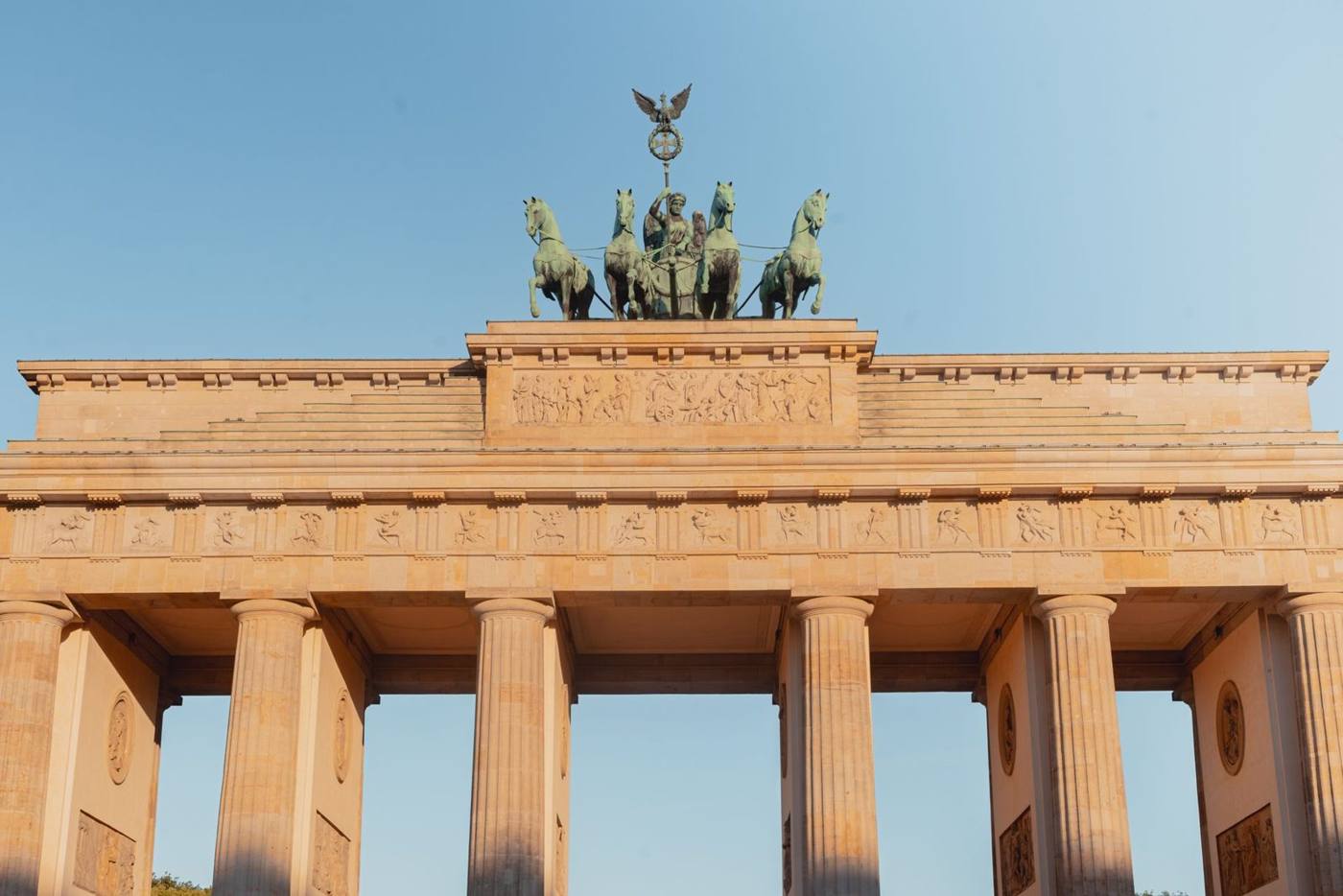
The Brandenburg Gate and the Reichstag, Museum Island, the Wall and the East Side Gallery, the Kreuzberg and Prenzlauer Berg districts and Potsdam.
 8 daysEasy
The Romantic Road and Bavaria
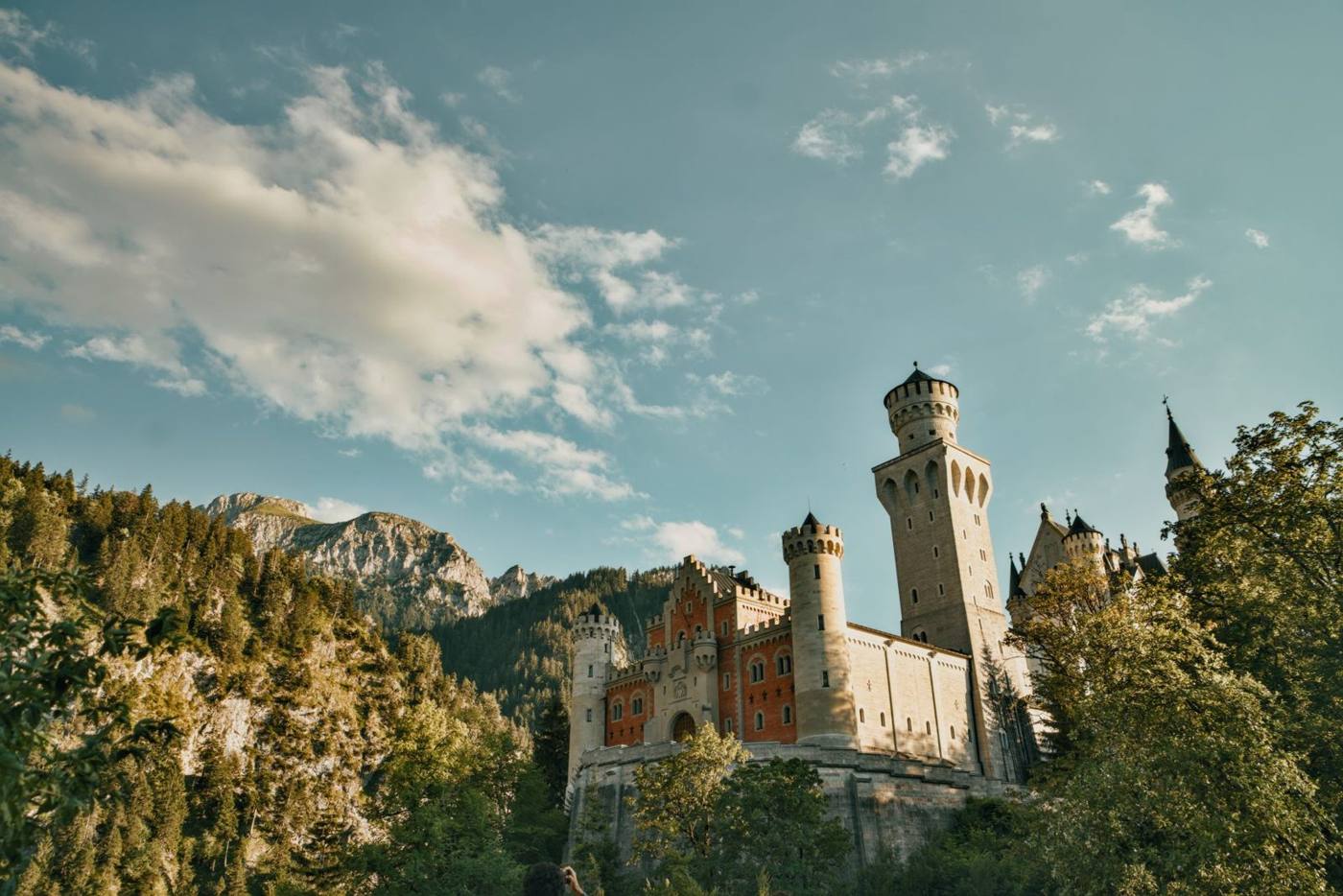
Würzburg, Rothenburg ob der Tauber, Dinkelsbühl, Augsburg, the castles of Neuschwanstein and Linderhof and Munich with its beer halls.
 6 daysEasy
The Rhine and the Moselle
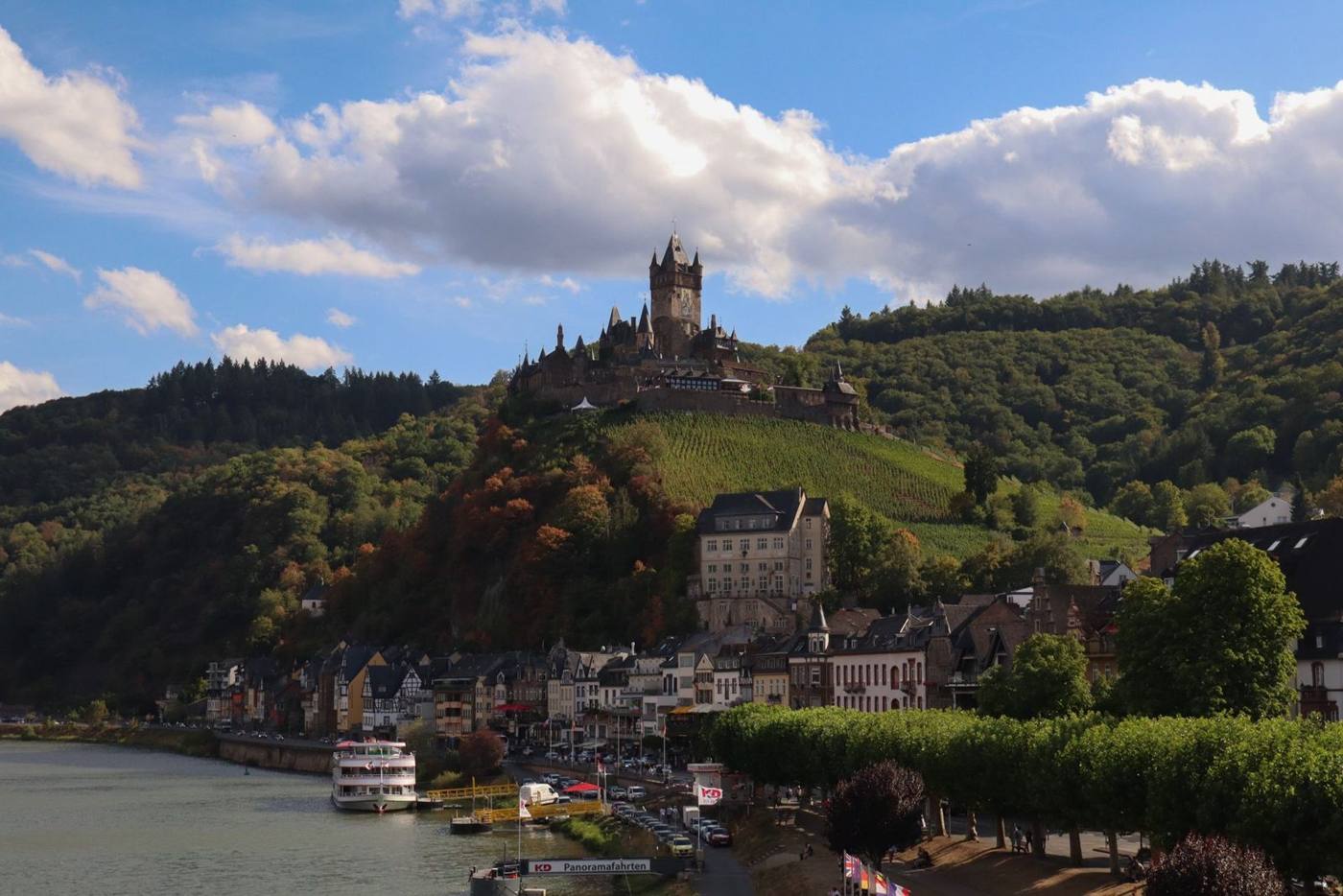
The Middle Rhine valley among castles and the Loreley rock, Koblenz, the steep vineyards of the Moselle, Eltz Castle and Roman Trier.