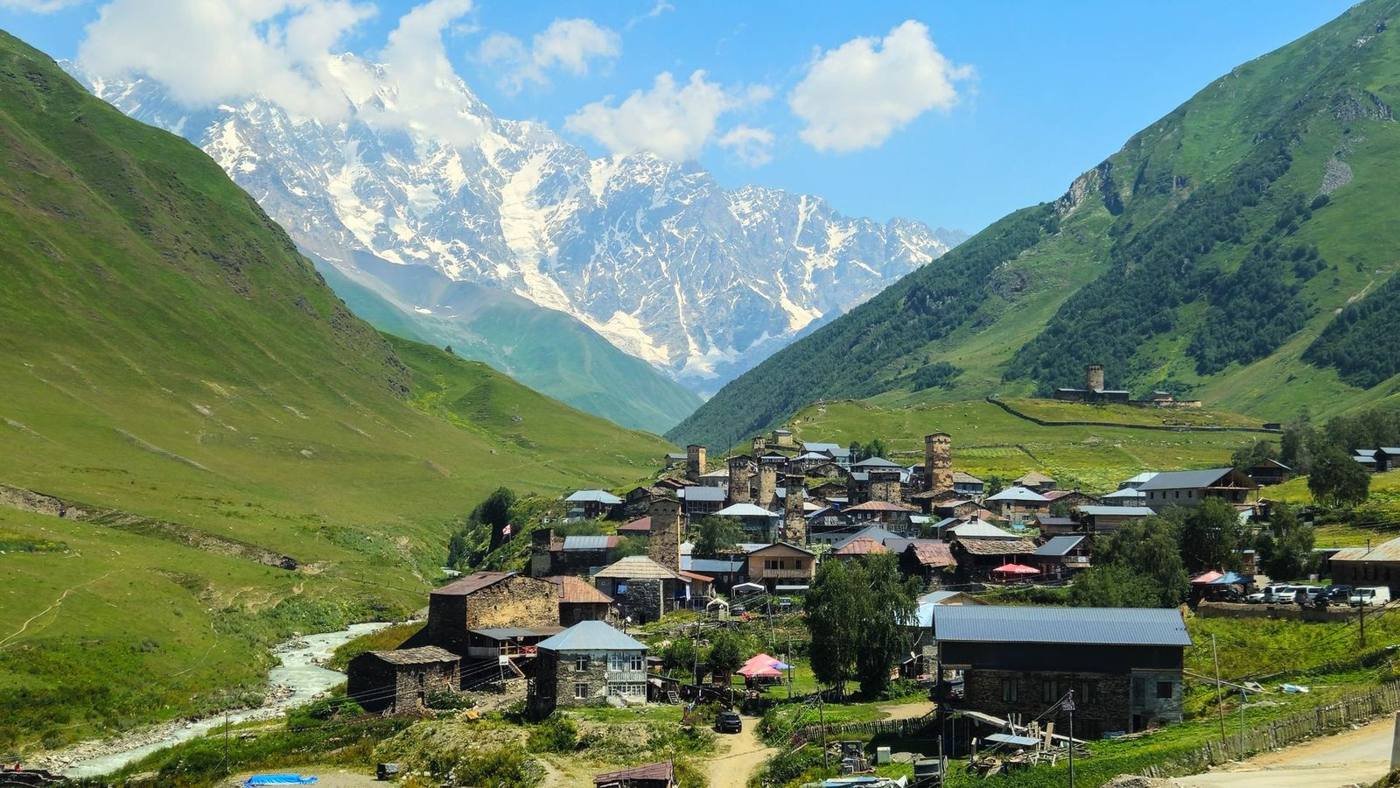
Trekking Upper Svaneti, from Mestia to Ushguli
Ten days on foot among medieval towers, passes above 2,700 metres and the glaciers of the Greater Caucasus, flying in and out of Kutaisi.
- Kutaisi
- Prometheus Cave
- Mestia
- Adishi
- Ushguli
- Mazeri
- Ushba Glacier
- Canyon di Martvili
- Gelati
Day by day
- Day 1
Arrival in Kutaisi
This trip is a ten day trek in Upper Svaneti, the region of medieval towers beneath the glaciers of the Greater Caucasus: from Mestia to Adishi and Ushguli over the Chkhunderi pass, the Guli pass, Mazeri and the Ushba glacier, starting and ending in Kutaisi, with a final stretch among the caves, canyons and monasteries of Imereti and Mingrelia.
Before you go: for Italian citizens the recommended document is a passport, valid for at least six months from the date of entry. The electronic identity card is accepted only if you transit through Schengen countries, but there have been cases of refusal: use the same document to enter and to leave. No visa is needed for stays of up to 365 days. Since 2026 health and accident insurance with cover of at least 30,000 lari has been compulsory: choose one that also covers trekking and mountain rescue. Other nationalities should check their own rules. Italy's travel advice warns against all travel to Abkhazia and South Ossetia, and the UK also advises against the areas immediately next to their boundary lines: Svaneti borders Abkhazia to the west, but this route stays well away from the line. Mountain rescue is limited.
You land at Kutaisi airport at dawn on the overnight flight. Rest for a few hours at your hotel in the old centre.
In the afternoon walk around the centre of Kutaisi, on the banks of the Rioni river. The city was part of the kingdom of Colchis, where Greek myth places the Golden Fleece sought by Jason and the Argonauts. Pass the Colchis fountain and the covered market, full of spices, cheeses and fruit.
In the evening have khachapuri imeruli for dinner, the round cheese-filled bread of this region.
Sleep in Kutaisi.
Practical tip: after the overnight flight, do not plan anything demanding: sleep for a few hours and drink plenty, because tomorrow brings many hours on the road.
- Day 2
Prometheus cave and the climb to Mestia
Today you visit one of the most beautiful caves in the Caucasus and then climb up into Svaneti, a long day.
In the morning go to Prometheus cave, near Tskaltubo, about twenty kilometres from Kutaisi. The route crosses several underground halls with stalactites, stalagmites, columns and stone cascades, lit with coloured lights. Inside it is cool even in summer. If the water allows, you can leave by boat on the underground river. Check prices and times.
At midday you cross the Colchis plain, green and humid, with its hazelnut plantations, to Zugdidi. Here follow the main road towards the mountains and do not head towards the Enguri bridge, which leads to Abkhazia.
In the afternoon the road climbs beside the reservoir of the Enguri dam, one of the highest arch dams in the world, with turquoise water among the mountains. Then you enter the narrow, wooded Enguri gorge and climb for about three hours to Mestia, the main town of Upper Svaneti, at about 1,500 metres.
Towards evening you see the first Svan stone towers, tall and slim, built in the Middle Ages by families to protect themselves from attacks and feuds. Upper Svaneti is a UNESCO World Heritage Site.
In the evening try kubdari, the bread filled with spiced meat typical of Svaneti, and Svan salt, mixed with herbs and garlic.
Sleep in Mestia.
Practical tip: the road between Zugdidi and Mestia has many bends and landslide sections: stop regularly and, if you get car sick, sit in the front.
- Day 3
The Mestia museum and the path to Adishi
Today you visit the Svaneti museum and begin the trek east, to the village of Adishi.
In the morning go into the Svaneti Museum of History and Ethnography, in Mestia, with medieval icons, silver and gold crosses and ancient manuscripts that families kept for centuries in churches and towers, far from invaders. Check prices and times. If you have time, also go inside a tower open to visitors: the wooden ladders inside are steep and narrow.
At midday take a 4x4 to Zhabeshi, east of Mestia, where the path begins.
In the afternoon walk for about 10 kilometres. The path climbs through the woods and then over high meadows, with views of the snowy peaks of the Caucasus and the glaciers. Then it drops towards Adishi, at about 2,000 metres, one of the most isolated villages in Svaneti, with its stone towers at the bottom of the valley. In winter you can only get here on foot or on horseback.
In the evening eat in a village house, with warm bread, cheese and bean soup.
Sleep in Adishi.
Practical tip: before leaving Mestia, ask your guide or in the village whether tomorrow's crossing of the Adishchala is passable and book a horse to cross it: in summer the horsemen wait at the river, but there are not always enough of them.
- Day 4
The Adishchala crossing and the Chkhunderi pass
Today is the longest and hardest stage of the trip, about 19 kilometres with a river crossing and a high pass.
In the morning leave Adishi early and walk up the valley towards the Adishi glacier, which tumbles down the mountains like a frozen waterfall. Soon after you reach the Adishchala river, cold and fast, fed by the glacier. The crossing is the most delicate moment: the water rises during the day as the ice melts, so cross in the morning. You can cross on horseback, the safest choice, or on foot in sandals, only if the water is low and with your guide.
At midday climb to the Chkhunderi pass, at over 2,600 metres, on a steep path through the meadows. From the top the view of the Adishi glacier and the surrounding peaks is one of the finest in Svaneti.
In the afternoon walk down through the woods to the village of Iprari, in the Kala valley. The descent is long and hard on the knees.
From Iprari take a 4x4 to Ushguli, about half an hour away.
In the evening, in Ushguli, rest and have kubdari and baked potatoes for dinner.
Sleep in Ushguli.
Practical tip: keep a dry change of clothes in a waterproof bag in your rucksack and your sandals easy to reach: after the crossing you can change socks and shoes in a few minutes.
- Day 5
Ushguli, Lamaria and back to Mestia
Today you discover Ushguli, the group of villages beneath Shkhara, the highest peak in Georgia, and then return to Mestia.
In the morning walk among the four villages of Ushguli, at about 2,100 metres, one of the highest year-round settlements in Europe. Stone towers rise among houses, stables and haylofts, and in winter snow cuts the villages off for months. Climb to Lamaria church, a medieval church on a hill above the village, with its tower beside it and the great white wall of Shkhara in front.
Then take a short walk on the ridge above Ushguli, about two hours there and back, to see all the villages from above and the Enguri valley running up towards the glacier.
At midday drive back to Mestia by 4x4, about two and a half hours on a mountain road, partly unpaved.
In the afternoon take the Hatsvali chairlift, above Mestia, for the view over the valley and the twin summit of Ushba, called the Matterhorn of the Caucasus. Check prices and times.
In the evening, in Mestia, try chvishtari, cornbread with cheese, and tashmijabi, mashed potato with stretchy cheese.
Sleep in Mestia.
Practical tip: in Ushguli photograph the villages at dawn or sunset, when the low sun lights the towers; at midday Shkhara is often hidden by clouds.
- Day 6
The Guli pass and Mazeri
Today you cross on foot the mountains north of Mestia, with the closest view of Ushba.
In the morning leave Mestia early and climb through the forest of firs and birches. The path is steep and has no shade in its upper part, so carry plenty of water. The higher you climb, the wider the view of the Caucasus peaks: in front of you the twin summit of Ushba, over 4,700 metres high, and the glacier pouring down its face.
At midday you reach the Guli pass, well above the tree line, among meadows and rocks. It is one of the best viewpoints in Svaneti, with Ushba just a few kilometres away. Stop for a packed lunch, sheltered from the wind.
In the afternoon walk down to the village of Guli, on a steep and sometimes slippery path. It is a long day, with a big height gain and loss: allow between seven and nine hours of walking.
From Guli take a 4x4 to Mazeri, a village in the Becho valley, beneath Ushba.
In the evening, in Mazeri, have dinner in a house with a view of the mountains.
Sleep in Mazeri, for two nights.
Practical tip: check the forecast the evening before: if a storm is coming do not climb to the pass, because the upper part is exposed to lightning. You can reach Mazeri by 4x4 instead.
- Day 7
The Dolra gorge and the Ushba glacier
Today you make a there and back walk from Mazeri to the foot of the Ushba face.
In the morning leave Mazeri and walk up the gorge of the Dolra river, through the forest. The path climbs gently at first, then gets steeper and passes three waterfalls. The highest, the Shdugra waterfall, drops in a long leap down the mountain, and on the path you hear the water before you see it.
At midday you reach the Ushba glacier, at the end of the valley. In front of you are the tongue of ice, the stony moraines and the huge face of the mountain. Do not go onto the glacier without equipment and a mountain guide: there are hidden crevasses and the ice moves.
In the afternoon return to Mazeri on the same path, with the light changing over the Becho valley. It is about six or seven hours of walking in all, with a significant height gain but no technical difficulty.
In the evening rest and enjoy your last night in Svaneti. Try homemade chacha, the grape pomace brandy, or a mountain herb tea.
Sleep in Mazeri.
Practical tip: at the waterfall and near the glacier the rocks are wet and slippery: stay on the path and do not go near the edge of the water for photos.
- Day 8
Down to the plain and Martvili canyon
Today you leave the mountains and drop down to the plain, into the region of Mingrelia.
In the morning leave Mazeri early and drive back down the Enguri gorge and along the reservoir to Zugdidi. It is several hours of mountain road, with last views of the peaks of Svaneti.
At midday you reach Martvili canyon, carved by the Abasha river into the limestone. You walk on walkways and steps along the walls, above clear green water, with small waterfalls and pools among moss-covered rocks. If there is enough water, you can take a short boat ride in the narrowest part of the canyon. Check prices and times and arrive early: in summer it gets crowded.
In the afternoon visit Martvili monastery, on a hill above the town, one of the oldest religious centres of Mingrelia, with its medieval church surrounded by trees and a view over the plain.
In the evening try the cooking of Mingrelia, the spiciest in Georgia: elarji, cornmeal porridge with stretchy cheese, and Mingrelian kharcho, beef in a walnut and spice sauce.
Sleep in Martvili.
Practical tip: after days on mountain paths the canyon is an easy walk, but the walkways are damp: keep your walking shoes on here too.
- Day 9
The Dadiani residence, Gelati and Bagrati
Today you visit a princely residence and the great monasteries of Kutaisi, before your last dinner in Georgia.
In the morning, near Martvili, stroll in the park of the summer residence of the Dadiani, the princely family who ruled Mingrelia for centuries, among old trees and quiet avenues. Check prices and times.
Then head towards Kutaisi, about an hour away.
At midday visit Gelati monastery, founded in 1106 by King David IV the Builder, a UNESCO World Heritage Site. It housed an academy, one of the great centres of Georgian culture in the Middle Ages. In the main church look at the 12th century mosaic of the Virgin in the apse and the frescoes covering the walls. At the entrance to the complex lies the tomb of King David, who wished to be buried beneath the gate so that everyone would step on him as they came in.
In the afternoon go up to Bagrati cathedral, on the hill above Kutaisi, built in the early 11th century by King Bagrat III, the first king of a united Georgia. Destroyed by the Ottomans in the 17th century, it has been rebuilt in recent times. From the churchyard you see the whole city and the Rioni river.
In the evening have dinner in the centre of Kutaisi at a Georgian table and toast the end of the trip with a wine from Imereti.
Sleep in Kutaisi.
Practical tip: at Gelati go in with your shoulders and legs covered; women usually cover their hair with a scarf.
- Day 10
Flight home
Today is departure day.
In the morning, if your flight is late, take a walk around the Kutaisi market to buy spices, Svan salt with herbs, mountain honey and churchkhela, walnuts threaded on a string and coated in thickened grape juice. Then go to the airport, about half an hour from the centre, and take your flight home.
In these ten days you have seen Svaneti on foot: the towers of Mestia and its museum, the path to Adishi, the Adishchala crossing and the Chkhunderi pass facing the glacier, the villages of Ushguli beneath Shkhara, the Guli pass with Ushba in front, the Dolra gorge and the Ushba glacier. Then Prometheus cave, the canyon and monastery of Martvili, Gelati and Bagrati in Kutaisi. It is the most direct way to walk in Svaneti, without losing days on the roads from Tbilisi, thanks to arriving in Kutaisi. The Chkhunderi day is hard and needs trained legs.
When to go: the best period is from late June to September. Before late June there is still snow on the passes and the rivers are high; from October come the cold and the first snowfalls. In July and August the meadows are in flower, but afternoon thunderstorms are common.
Practical tip: for this trek bring poles, sandals for the river crossings, a waterproof jacket, a warm layer and a small first aid kit, with plasters for blisters.
It is the most direct way to see Svaneti on foot, and flying into Kutaisi saves the long drive from Tbilisi. The Chkhunderi day is tough, with a river crossing and nearly 19 km, so you need trained legs. The drawback is the overnight outbound flight, which takes the edge off day one. Pack river sandals and trekking poles.
Before you go
- Documents and visa
- Passport valid for the whole stay. British citizens can visit without a visa for up to one year. Since 1 January 2026 health and accident insurance is compulsory, valid for the whole stay, with cover of at least 30,000 lari: you may be asked for proof on arrival. Some British citizens have been refused entry or had trouble leaving, apparently linked to taking part in demonstrations or to unpaid fines.
- Health and vaccines
- No compulsory vaccinations. Medical facilities in remote areas are limited: you need insurance covering medical costs and repatriation. Georgia has strict rules on medicines: some products sold over the counter in the UK, such as those containing codeine, are illegal. Carry prescription medicines with the prescription and original packaging. Emergencies: 112.
- Money and payments
- Georgian lari. Withdrawing cash and changing euros or dollars is easy in Tbilisi and the main towns; carry cash in mountain villages.
- Power sockets
- Types C and F, 230 volts: you need an adapter for British plugs.
- Time zone
- UTC+4 all year, four hours ahead of the UK in winter, three in summer.
- Safety
- The UK advises against all travel to the Russian occupied regions of Abkhazia and South Ossetia, and against all but essential travel to the areas immediately next to the administrative boundary lines, which are generally unmarked. Protests have taken place in Tbilisi almost every day for nearly two years, centred on Parliament on Rustaveli Avenue, and some have turned violent: avoid demonstrations and large gatherings. At the Udabno caves of David Gareja, take care not to cross the unmarked border with Azerbaijan; the land border with Azerbaijan is closed. Mountain rescue can be limited. Official advice: GOV.UK.
Information checked in November 2026 for Italian and EU citizens. Rules change: always check before you travel.
Variations
In 7 days: from Kutaisi to Mestia, Adishi, the Chkhunderi pass and Ushguli, without Mazeri and Mingrelia.
In 13 days: add three days in Tbilisi and Mtskheta, reaching the capital by train or car from Kutaisi.
Frequently asked questions
What document do I need for Georgia?
A passport valid for at least six months from entry is the recommended document for Italian citizens. The electronic identity card is accepted only if you transit through Schengen countries, but there have been refusals. No visa is needed for up to 365 days and health insurance is compulsory. Other nationalities should check their own rules.
Is the Adishchala crossing dangerous?
It can be: the river comes from the glacier and rises during the day. Cross in the morning, preferably on horseback, and on foot only if the water is low and your guide agrees.
Is Svaneti close to Abkhazia?
Yes, Svaneti borders Abkhazia, which is advised against, to the west, but this route stays well away from the boundary line. In Zugdidi follow the main road and do not head towards the Enguri bridge.
Indicative itinerary written by World Atlas. Before booking, check timetables, seasonal openings, documents and safety.
 10 daysChallenging
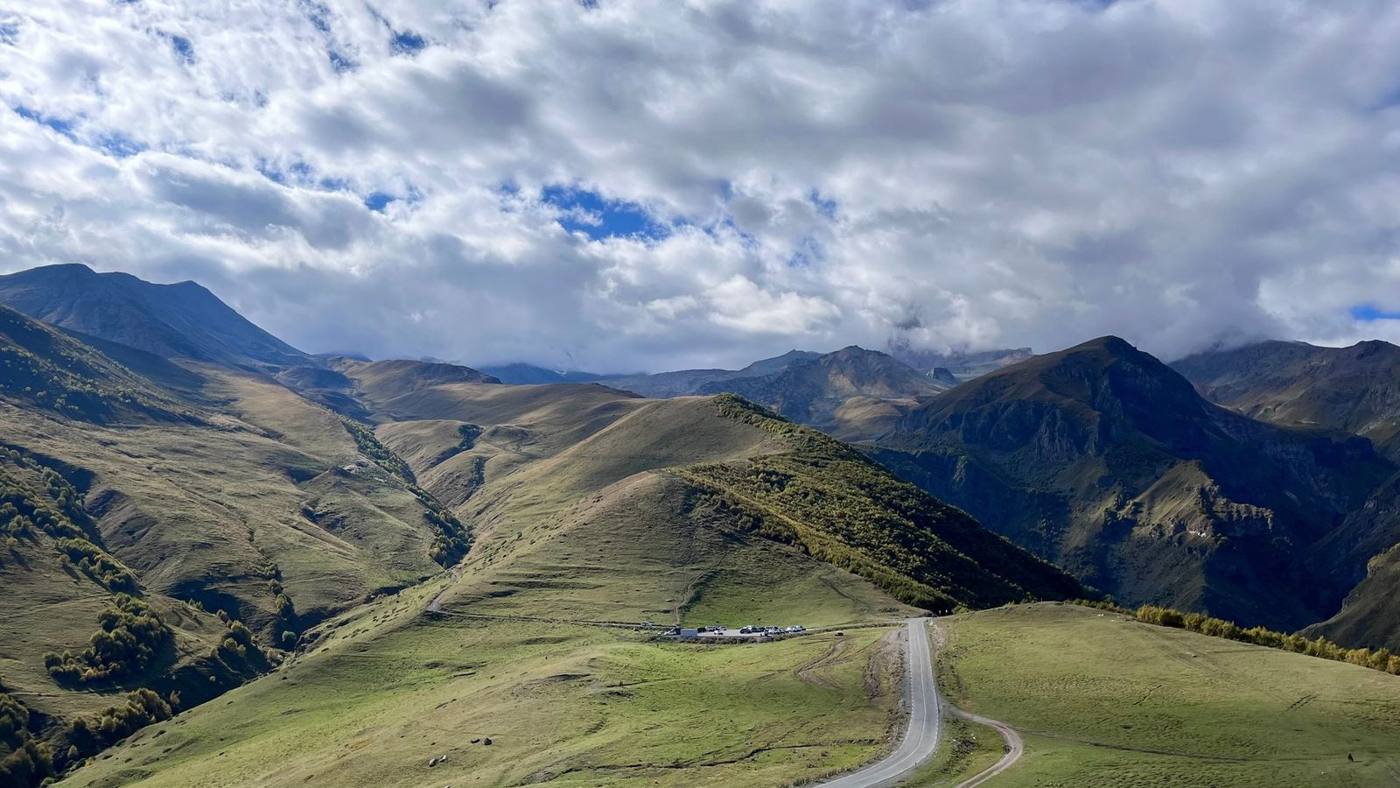
Across Tusheti and Khevsureti
From Omalo to Stepantsminda on foot, over the Atsunta and Chaukhi passes, with two nights under canvas in the most isolated valleys of the Georgian Caucasus.
 15 daysModerate
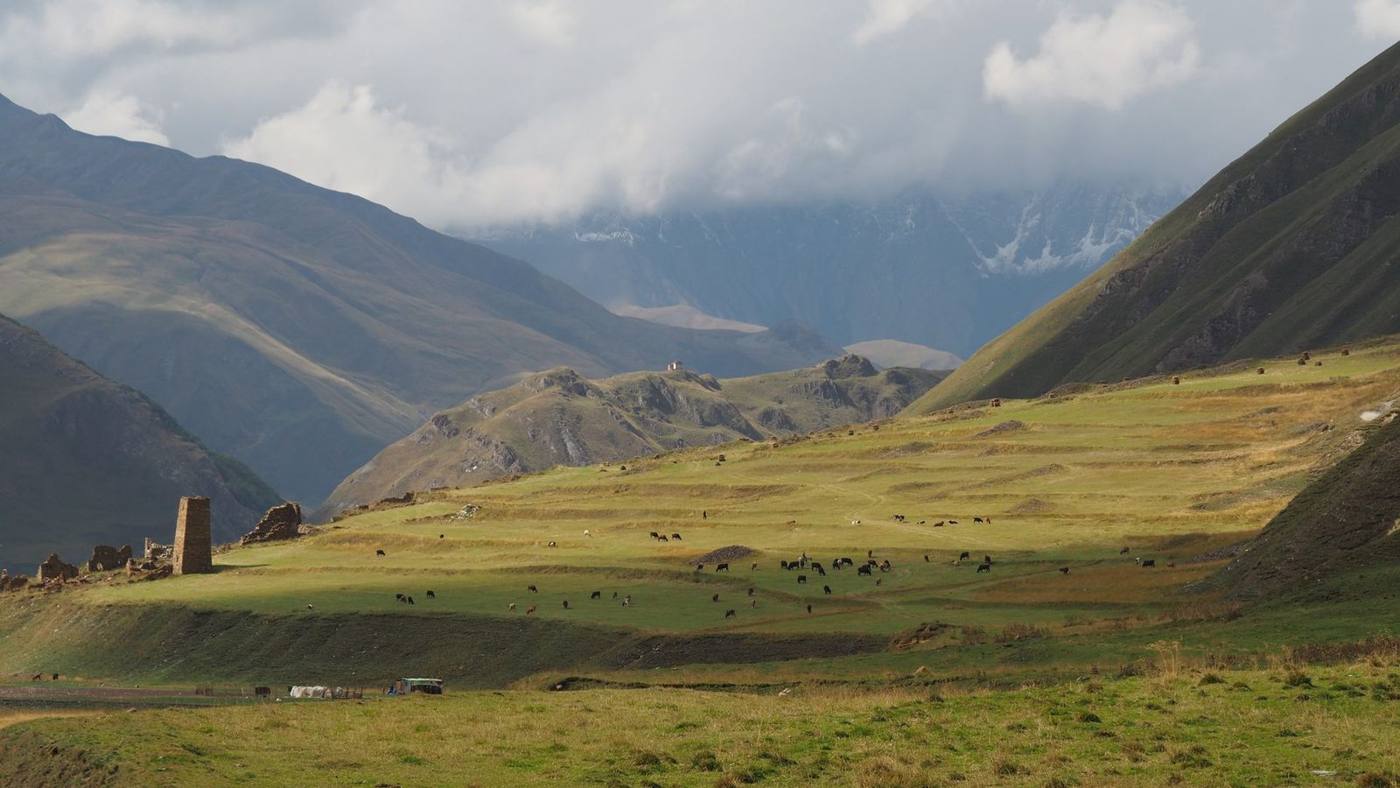
Kazbegi and Tusheti at an easy pace
Day hikes from Kazbek to the valleys of the Bats people, with nights in villages and the longer distances covered by 4x4.
 22 daysChallenging
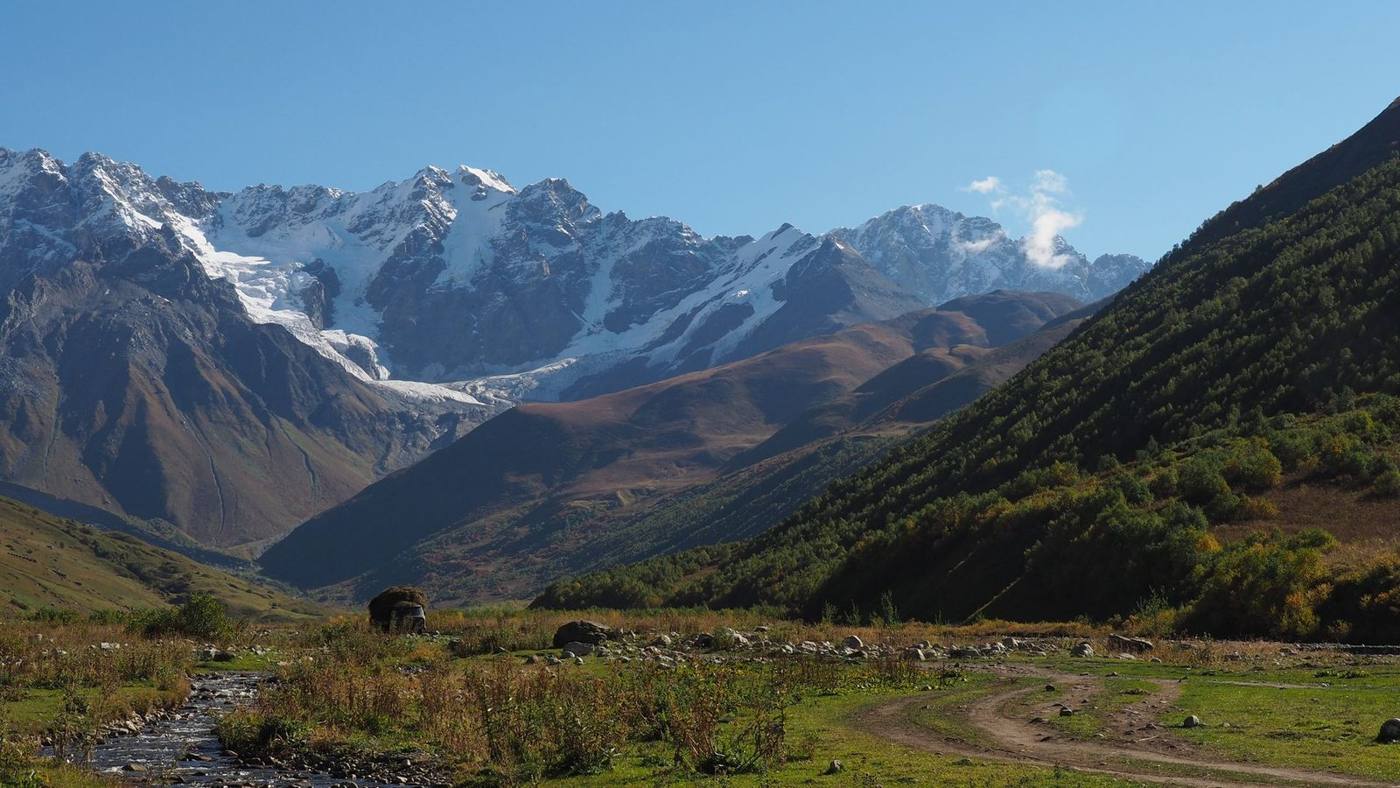
The great Caucasus traverse on foot
Fourteen walking days through Javakheti, Svaneti, Khevsureti and Tusheti, finishing among the wineries of Kakheti and the monasteries of David Gareja.