The Jura: lakes and Besançon
The green France of Comté cheese and yellow wine: Besançon with Vauban's citadel, the Royal Saltworks of Arc-et-Senans, a UNESCO World Heritage site, the village of Baume-les-Messieurs at the end of a blind valley, the Hérisson waterfalls and the Jura lakes.
- Besançon
- Arc-et-Senans
- Arbois
- Baume-les-Messieurs
- Cascades du Hérisson
Day by day
- Day 1
Besançon: the citadel and the old town
The Jura is a region of gentle mountains, forests, lakes, waterfalls and pastures in eastern France, on the Swiss border, little known to foreigners but much loved by the French. It is the land of comté, one of France's most famous cheeses, and of vin jaune, a wine unique in the world. In five days you combine Besançon, the historic capital of Franche-Comté, with the royal saltworks, the wine villages and the lakes and waterfalls of the Jura.
You arrive in Besançon by train from Paris, in about two and a half hours on the high-speed train, or from Lyon or Switzerland. It is best to pick up a hire car here for the following days.
Besançon is built inside an almost perfect loop of the Doubs river, which surrounds it like a natural moat, closed by a hill crowned with the citadel. In the morning climb to the citadel, built at the end of the seventeenth century by Vauban, Louis XIV's great military engineer, and now a UNESCO site along with other fortifications of his. From the walls you see the whole city and the river. Inside there is a museum of the resistance and deportation, a museum of rural life and a small zoo.
In the afternoon go down into the old town, with its palaces of the local grey and blue stone. Visit the cathedral of Saint John, with its great nineteenth-century astronomical clock, which has thousands of parts and dozens of dials and shows, among other things, the tides in several ports around the world. Walk past the birthplace of Victor Hugo and that of the Lumière brothers, who were also born in Besançon.
In the evening try Franche-Comté cooking: saucisse de Morteau, a smoked sausage, and cancoillotte, a melted cheese. Practical tip: the citadel is steep; a bus runs up from the centre.
- Day 2
The Royal Saltworks of Arc-et-Senans and Arbois with vin jaune
In the morning drive south-west to Arc-et-Senans, about half an hour from Besançon, to visit the Royal Saltworks, a UNESCO site. They were built between 1775 and 1779 by the architect Claude-Nicolas Ledoux to produce salt, then precious because it was used to preserve food and was taxed by the king. Brine came here from the springs of Salins-les-Bains through a long wooden pipe and was evaporated in large pans heated with wood from the nearby Chaux forest.
Ledoux designed the saltworks as an ideal city, in a semicircle, with the director's house in the centre and the workers' buildings and works around it, following Enlightenment ideas of order and labour. Today the buildings host exhibitions, themed gardens and a museum on Ledoux's projects.
In the afternoon continue to Arbois, about half an hour away, the wine capital of the Jura, a small town of stone houses on the banks of the Cuisance. Visit the house of Louis Pasteur, who grew up here and returned every summer to work in his laboratory: he carried out some of his experiments on fermentation in the Arbois vineyards.
Then taste Jura wines in one of the town's wineries. The most famous is vin jaune, made from savagnin grapes and aged for at least six years and three months in barrels under a veil of yeast, without topping up: it has a unique taste of walnut and spice and is sold in the bottle called clavelin, holding 62 centilitres.
Practical tip: vin jaune pairs perfectly with aged comté and chicken with morels.
- Day 3
Baume-les-Messieurs and Château-Chalon
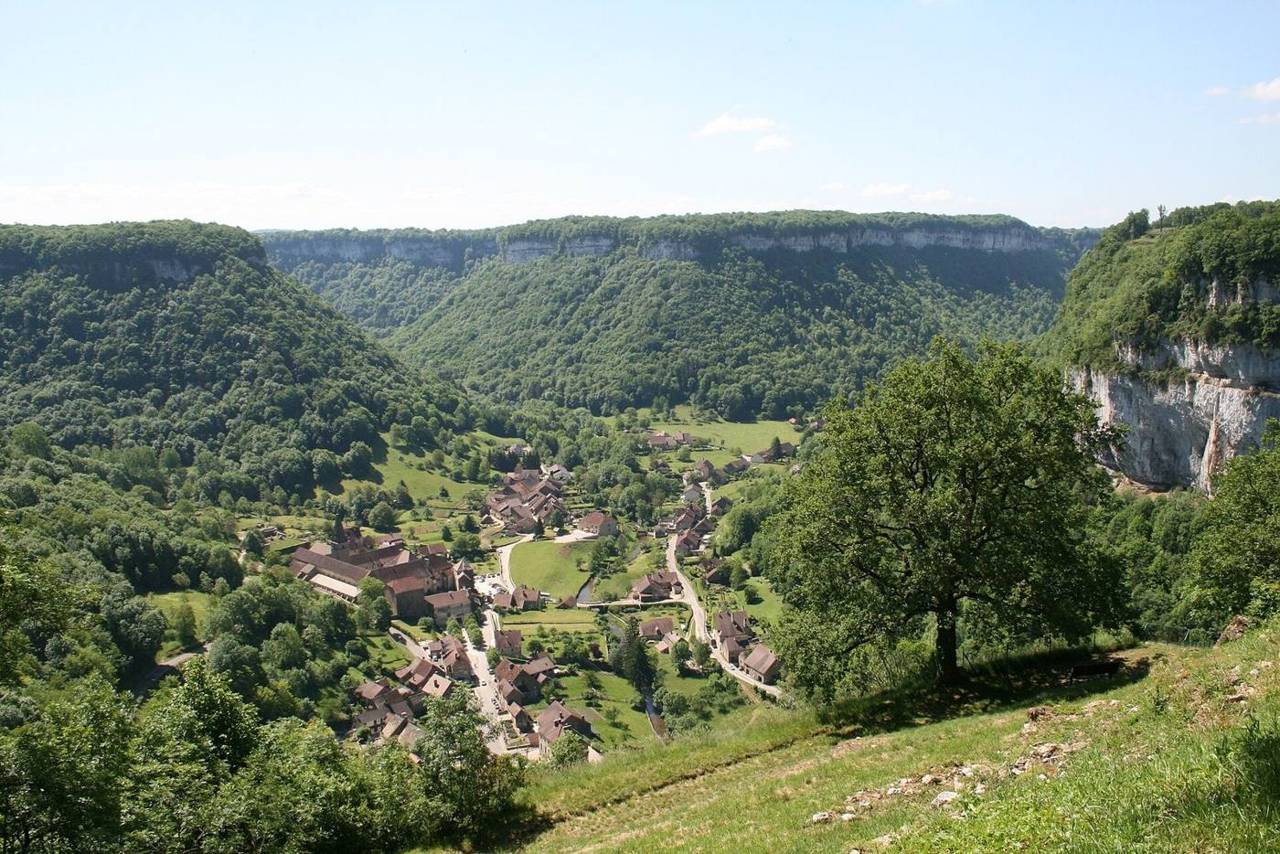
In the morning go to Baume-les-Messieurs, about forty minutes from Arbois, one of the most spectacular places in the Jura. The village lies at the bottom of a blind valley, a reculée, surrounded by limestone cliffs more than two hundred metres high in the shape of an amphitheatre. The name comes from the Benedictine abbey founded here in the Middle Ages, which later became an abbey for noblemen, the messieurs. You can visit the abbey church, with a large sixteenth-century Flemish carved altarpiece, and the cloister.
At the head of the valley, below the cliffs, are the Baume caves, which can be visited with a guide from spring to autumn, with large chambers and an underground river. The water flowing out of the cave forms a stepped waterfall covered with moss and tufa, very beautiful after rain.
Before leaving, drive up to the viewpoint above the valley, from which you see the whole rock amphitheatre with the village and the abbey below.
In the afternoon go to Château-Chalon, about twenty minutes away, a stone village built on a rocky spur above the vineyards, listed among the most beautiful villages in France. It is the village most celebrated for vin jaune, which here has its own appellation. Stroll among the winemakers' houses, look at the view over the sloping vineyards and the Bresse plain, and visit the small Romanesque church.
In the evening return to Arbois or sleep in a village nearby. Practical tip: in vin jaune country, in early February, the Percée du vin jaune festival is held each year in a different village, when the new vintage is opened.
- Day 4
The Hérisson waterfalls and Lake Chalain
In the morning head south-east into the Jura lake district, about an hour from Arbois. Your goal is the Hérisson waterfalls trail, one of the finest walks in France: the Hérisson river drops about 280 metres in less than four kilometres, with some thirty waterfalls one after another, in a forest of beech and fir.
Start from the lower car park near Ménétrux-en-Joux. After a few minutes you reach the first and most famous, the Éventail, or fan, where the water spreads over stepped rock like a fan, about sixty-five metres high. Then the path climbs through the forest, with wooden and stone steps and walkways, past large and small waterfalls such as the Grand Saut, where the water drops sheer for about sixty metres. Allow about three hours there and back. The path is well maintained but steep in places and slippery when damp.
In the afternoon go to Lake Chalain, about twenty minutes away, one of the largest lakes in the Jura, with emerald green water and wooded shores. In summer people swim, hire canoes and pedal boats; on the shores archaeologists have found the remains of Neolithic pile-dwelling villages, part of a UNESCO site. From the viewpoint above the lake, on the road to Fontenu, you see the lake from above.
Practical tip: the waterfalls are most spectacular in spring and after rain; in high summer, in a drought, they may have very little water.
- Day 5
A comté dairy and the journey home
The last morning is devoted to comté, the hard cheese that is the symbol of the region. Comté is made only from the raw milk of Montbéliarde cows grazing the meadows of the Jura and the Doubs, and is still produced in small cooperative village dairies called fruitières, where farmers bring their milk every morning. Each wheel, as big as a cartwheel and weighing about forty kilos, takes around four hundred litres of milk.
Visit one of these fruitières early in the morning, when the cheesemaker works the milk in large copper vats, breaks the curd, heats it and puts it into moulds. Many have a viewing window or a visitor route, and a shop where you can buy cheese of different ages. Then visit an ageing cellar, where thousands of wheels mature for months or years on spruce boards, turned and rubbed regularly. Taste the difference between a young comté, sweet and soft, and one aged eighteen or twenty-four months, more intense, with crystals that crunch between your teeth.
In the afternoon return to Besançon for your train, or continue to Switzerland, just over an hour away, or to Lyon.
Practical tip: the Jura is at its best from May to October, with flowering meadows and full waterfalls in spring; in winter it is an area for cross-country skiing and snowshoeing, with plenty of snow. A car is essential to get around the region.
A quiet trip, little known to Italians, convenient from Luxembourg and Switzerland. A car is needed. The Hérisson waterfalls trail has many steps and can be slippery.
Before you go
- Documents and visa
- EU citizens need a valid identity card or passport. Other nationalities should check the Schengen rules.
- Health and vaccines
- No vaccines required. EU citizens should bring their EHIC. Emergencies: 112.
- Money and payments
- Euro. Cards are accepted almost everywhere; every accommodation charges the taxe de séjour per person per night.
- Power sockets
- Types C and E, 230 volts.
- Time zone
- Central European Time (UTC+1), summer time (UTC+2) from the last Sunday of March to the last Sunday of October.
- Safety
- A safe country, with a high terrorism alert level and security checks at museums and stations. In Paris watch for pickpockets on the metro. Official advice: GOV.UK.
Information checked in November 2026 for Italian and EU citizens. Rules change: always check before you travel.
Variations
In 3 days: Besançon and the Royal Saltworks on day one, Arbois and Baume-les-Messieurs on day two, the Hérisson waterfalls on day three.
In 8 days: add the high Jura with Lake Saint-Point and Pontarlier, the town of absinthe, and then Switzerland with Neuchâtel.
Frequently asked questions
When is the best time to go?
From May to October. In spring the waterfalls are at their best; in summer you can swim in the lakes; in autumn the woods change colour and it is harvest time.
Do I need a car?
Yes: apart from Besançon, all the places on this trip are in the countryside and public transport is rare.
What is special about vin jaune?
It ages for at least six years and three months in barrels under a natural veil of yeast, without topping up, and takes on a taste of walnut and spice that no other wine has.
Indicative itinerary written by World Atlas. Before booking, check timetables, seasonal openings, documents and safety.
 4 daysEasy
Chartres, Fontainebleau and Vaux-le-Vicomte
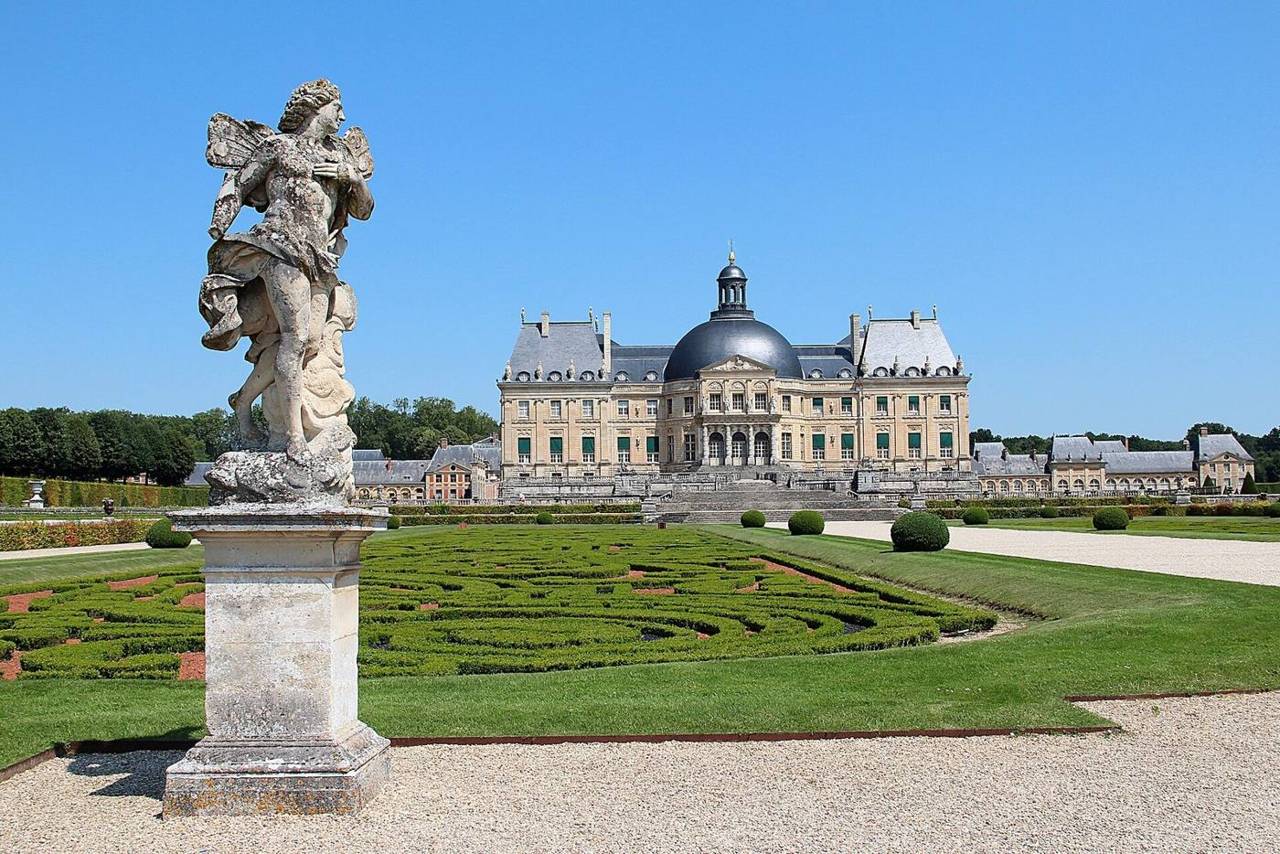
The treasures around Paris beyond Versailles: the Gothic cathedral of Chartres with its blue stained glass, the Château de Fontainebleau, home to kings and Napoleon, and its boulder forest, the Château de Vaux-le-Vicomte with Le Nôtre's gardens and the painters' village of Barbizon.
 5 daysEasy
Paris in five days
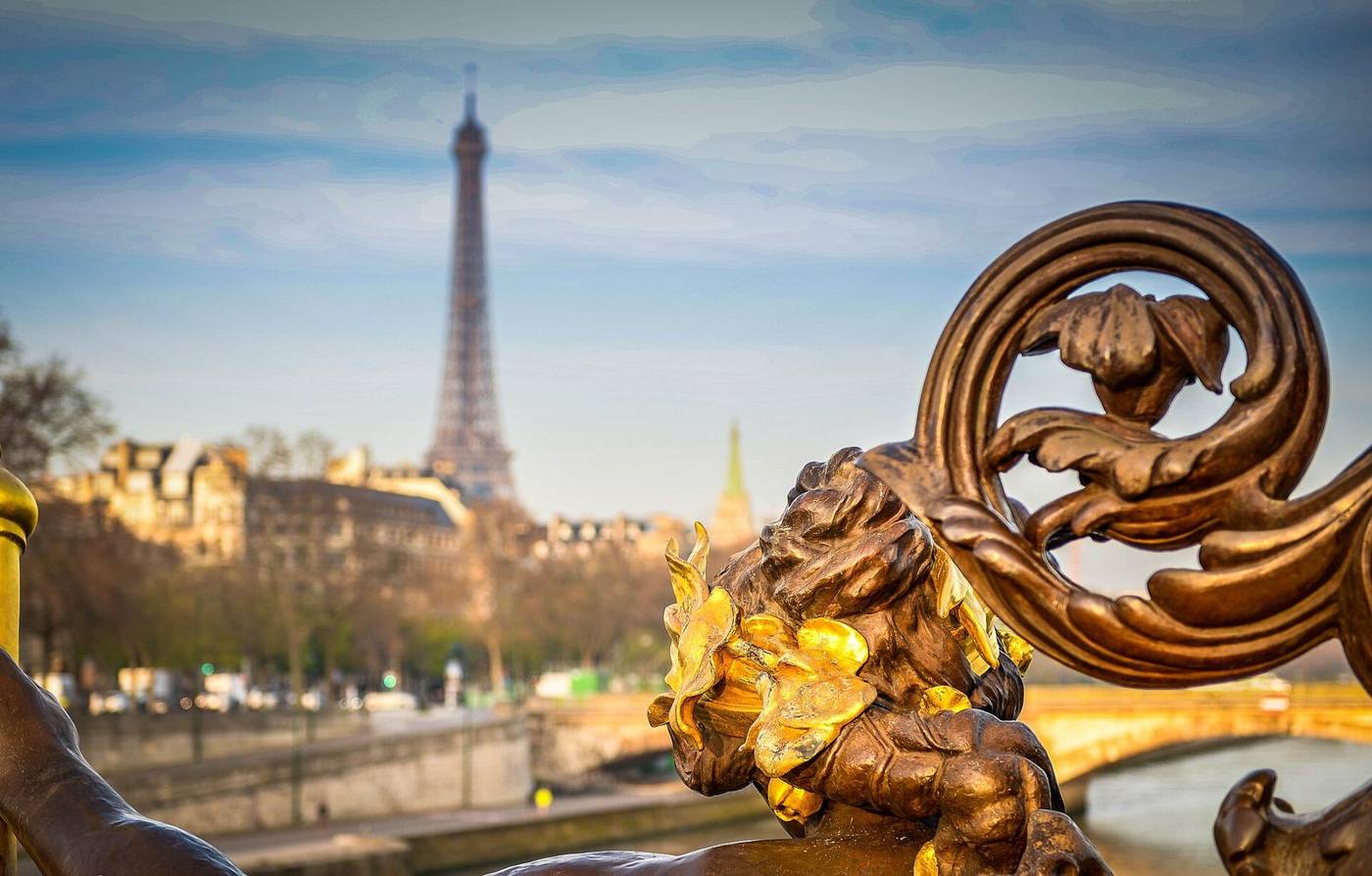
The Louvre and the Orsay, the Île de la Cité with reopened Notre-Dame, the Marais, Montmartre, the Seine by boat and a day at Versailles.
 10 daysEasy
Provence and the Côte d'Azur
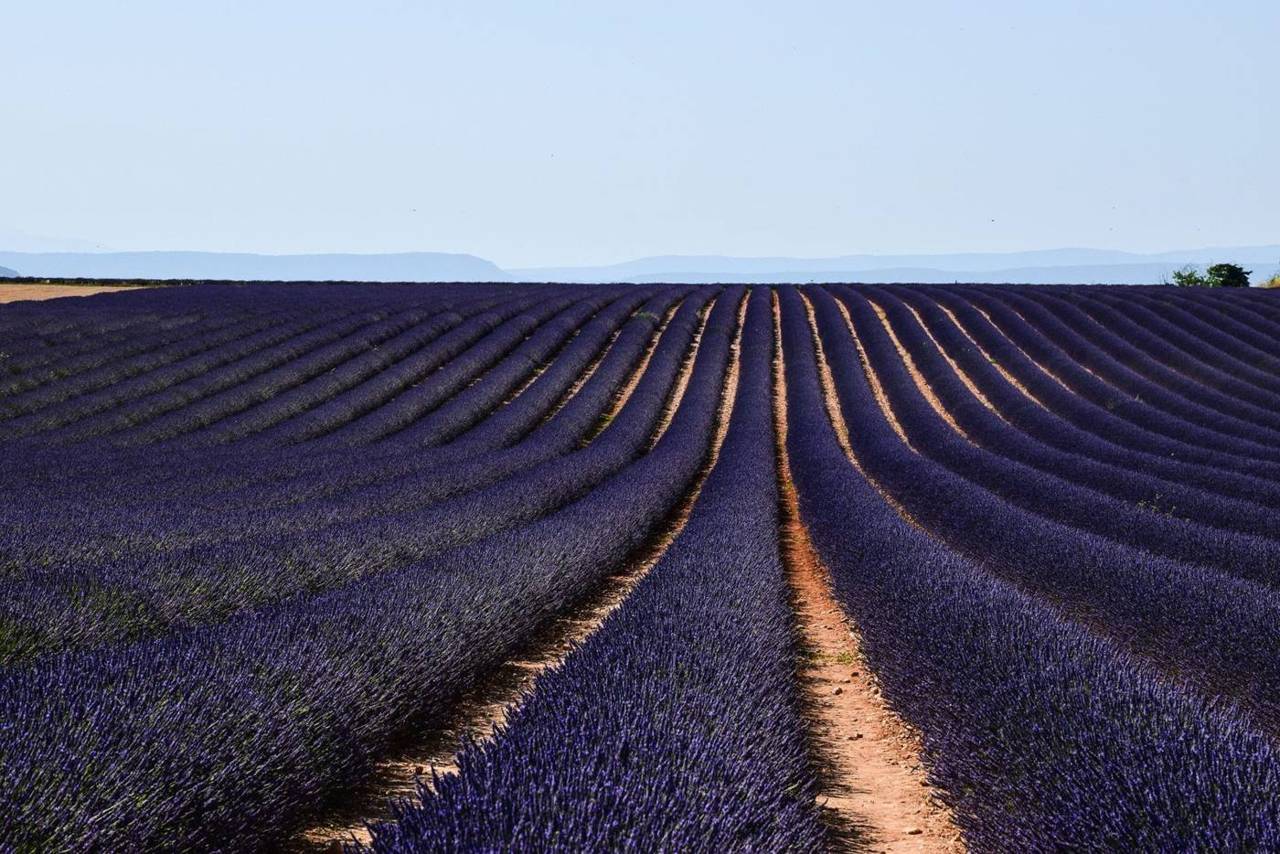
Avignon and the Pont du Gard, the Luberon villages and lavender fields, Arles and the Camargue, the Verdon gorges and the coast from Nice to Èze.