The Kalinago Territory
The wild east coast, home of the Kalinago, the last descendants of the Caribbean's first peoples: the Barana Autê village museum, basket weavers, the Emerald Pool and the Atlantic cliffs.
- Emerald Pool
- Kalinago Territory
- Barana Autê
- Castle Bruce
Day by day
- Day 1
The Emerald Pool and Barana Autê
This two-day trip takes you to the east coast of Dominica, the wildest one, facing the Atlantic. This is home to the Kalinago, descendants of the Caribbean peoples who lived in the Lesser Antilles before the Europeans arrived. You visit the Emerald Pool, the Barana Autê cultural village, the basket weavers' villages and the coast of Castle Bruce.
Before you go: Italian citizens can enter Dominica without a visa for short tourist stays, with a passport valid for at least six months from arrival; a return ticket may be requested. Other nationalities should check their own rules. The United Kingdom describes crime as low, but advises against driving at night on the main east coast road, which is prone to landslides after bad weather.
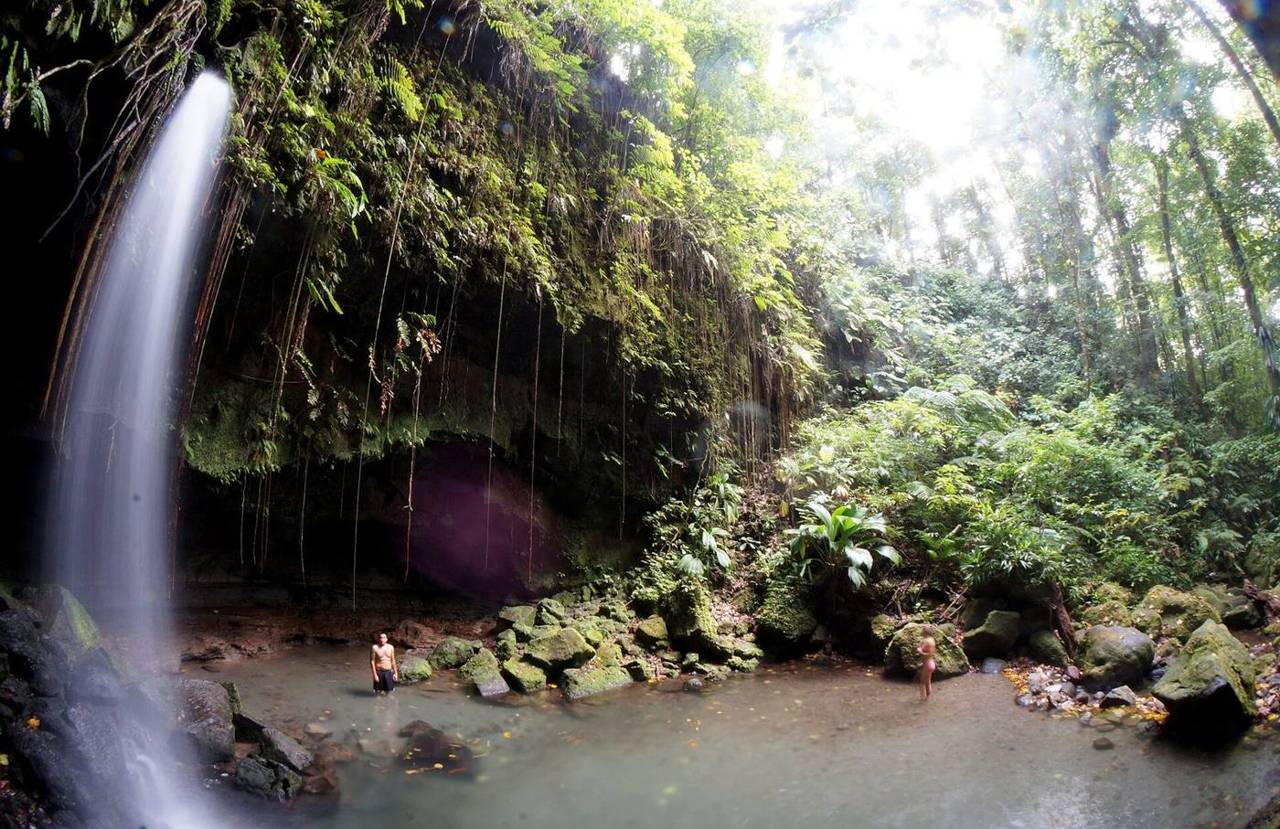
In the morning stop at the Emerald Pool, in Morne Trois Pitons National Park. A short trail through the forest leads to a waterfall that drops into a green pool. You need the eco-tourism site pass: check prices and times.
Then drive down towards the sea and enter the Kalinago Territory, created in 1903, where the community has its own council and an elected chief. At Barana Autê, the cultural village by the sea, Kalinago guides tell you the story of their people and show you the traditional huts, how cassava bread is made, canoes carved from a single trunk and medicinal herbs. Check prices and times.
This is a place where people really live: it is not a museum. Always ask permission before photographing anyone, especially children, and accept a no with a smile.
Sleep in the Kalinago Territory or nearby.
Practical tip: bring cash in Eastern Caribbean dollars for crafts and donations, because cards are hardly used in the villages.
- Day 2
The basket weavers and the coast of Castle Bruce
Today you meet Kalinago crafts and the Atlantic coast.
In the morning follow the road through the villages of the territory. Along the way you will see the stalls and houses where families weave baskets from larouma, a reed that grows in the forest, with patterns in natural colours. Stop to watch the work and buy directly from the people who make it: it is the best way for the money to stay in the community. Do not haggle too much, because one basket takes days of work.
Then go and see L'Escalier Tête Chien, a flow of hardened lava that runs down into the sea like a staircase, linked to a Kalinago legend about the snake. The waves here are strong: stay away from the edge.
In the afternoon continue south to Castle Bruce, a village on a bay with a river mouth, farmed fields and the cliffs above the Atlantic. Walk on the beach, but do not swim where the waves and currents are strong.
In short: in two days you have got to know a living culture, not a show, with its stories, its crafts and a spectacular coastline, and you have seen one of the easiest waterfalls to reach on the island.
When to go: the best months are February to May, which are drier. From June to November it is hurricane season.
Practical tip: if you want to photograph a craftsperson at work, ask first and, if you buy something, the answer will almost always be yes; do not post photos of children without their parents' consent.
A real encounter with a living culture, not a show. Buy crafts directly from families; always ask before photographing people.
Before you go
- Documents and visa
- Passport valid for at least six months from arrival. No visa is needed for short tourist stays for Italian and EU citizens; border officers may ask for a return or onward ticket.
- Health and vaccines
- No compulsory vaccinations, except a yellow fever certificate if you arrive from a country at risk. Protect yourself from mosquitoes, which can carry dengue. You need insurance covering medical costs and repatriation. Emergencies: 999.
- Money and payments
- Eastern Caribbean dollar. US dollars are often accepted; cards work in towns and larger accommodation, cash is needed in the villages.
- Power sockets
- Type D and G, 230 volts: you need an adapter.
- Time zone
- UTC-4 all year.
- Safety
- The United Kingdom describes crime as low, but advises against walking alone away from main roads after dark and against driving at night on the road from Douglas-Charles Airport, which is prone to landslides. The hurricane season usually runs from June to November. Before the Boiling Lake, ask guides whether the trail is safe. Official advice: GOV.UK.
Information checked in November 2026 for Italian and EU citizens. Rules change: always check before you travel.
Variations
Shorter: just one day, with the Emerald Pool and Barana Autê.
Longer: add two days in the Roseau valley, with Trafalgar Falls and the hot springs.
Frequently asked questions
Can you photograph people in the Kalinago Territory?
Yes, but only after asking permission. This applies to everyone, and even more to children and to people in their homes.
How do you buy baskets the right way?
Directly from the families who weave them, at the roadside stalls or at Barana Autê, paying in cash and without haggling too much.
Do you need the pass for the Emerald Pool?
Yes, the Emerald Pool is one of the park's eco-tourism sites and the pass is required. Check prices and times.
Indicative itinerary written by World Atlas. Before booking, check timetables, seasonal openings, documents and safety.
 7 daysModerate
The nature island
The Boiling Lake in the UNESCO Morne Trois Pitons park, Trafalgar Falls, Titou Gorge, Champagne Reef with its volcanic bubbles and the Kalinago Territory.
 8 daysChallenging
The Waitukubuli Trail
The Caribbean's first long-distance trail, from Scotts Head to Cabrits, through rainforest, villages and coast, in selected stages.
 2 daysChallenging
The Boiling Lake
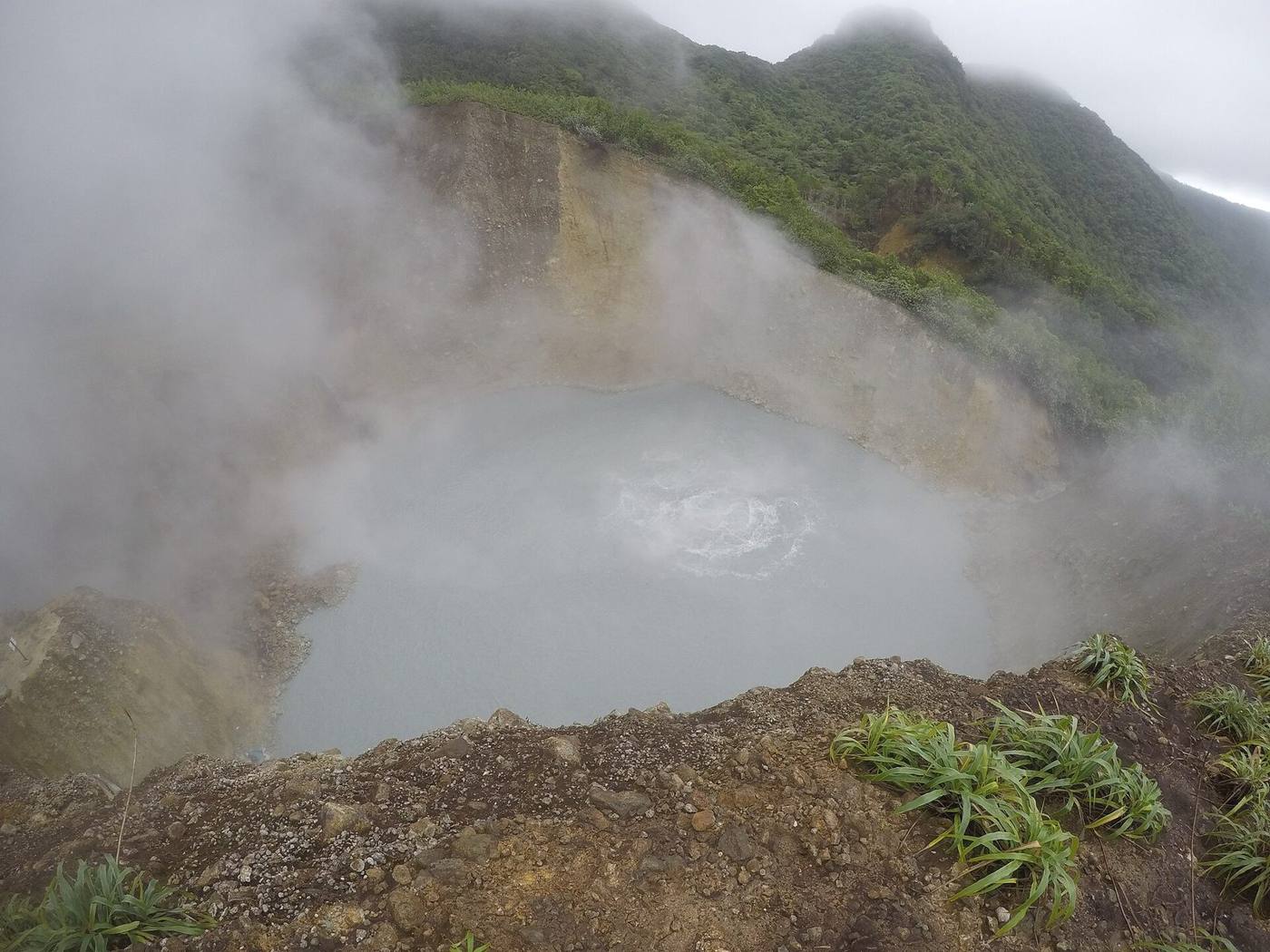
The Caribbean's most famous trail, in Morne Trois Pitons National Park, a UNESCO site: forest, ridges, the steaming Valley of Desolation and a lake that boils in a crater.