The nature island
The Boiling Lake in the UNESCO Morne Trois Pitons park, Trafalgar Falls, Titou Gorge, Champagne Reef with its volcanic bubbles and the Kalinago Territory.
- Roseau
- Trafalgar Falls
- Titou Gorge
- Boiling Lake
- Champagne Reef
- Kalinago Territory
Day by day
- Day 1
Roseau and Trafalgar Falls
This one-week trip crosses Dominica, the wildest island in the Caribbean, with no big beaches but extraordinary nature: Trafalgar Falls, Titou Gorge, the Boiling Lake hike in the UNESCO-listed Morne Trois Pitons National Park, the bubbles of Champagne Reef, the Kalinago Territory and a boat trip to see sperm whales.
Before you go: Italian citizens can enter Dominica without a visa for short tourist stays, with a passport valid for at least six months from arrival; a return ticket may be requested. Other nationalities should check their own rules. The United Kingdom describes crime as low and advises against driving at night on the road from Douglas-Charles Airport, which is prone to landslides after bad weather. The hurricane season usually runs from June to November.
You arrive on a flight from Antigua, Barbados or Guadeloupe. The road from the airport to Roseau crosses the mountains and is long and full of bends: allow more than an hour.
In the afternoon go up to Trafalgar Falls, in the valley above Roseau. A short trail leads to the viewpoint over the two waterfalls, one taller and one lower, which fall between the rocks and the forest. Warm water also comes out at the foot of the rocks. You need the eco-tourism site pass: the week pass is worth it if you want to visit several sites. Check prices and times.
Sleep in Roseau or in the valley, for four nights.
Practical tip: the wet rocks near the falls are very slippery: wear sandals with a good grip or hiking boots.
- Day 2
Titou Gorge and Wotten Waven
Today you swim in a canyon and rest in warm water.
In the morning go to Laudat, to Titou Gorge, a narrow, deep gorge cut into volcanic rock. You get into cold water and swim against the current between high walls green with moss, with light coming from above, as far as a small waterfall at the end. The stretch is short, but the water is deep: you need to be able to swim and a life jacket is a good idea. After heavy rain the current becomes dangerous and the gorge may be closed. Check prices and times.
Near the gorge is also the start of the trail to the Boiling Lake: it is a good moment to look at the beginning of tomorrow's route and talk to your guide.
In the afternoon go down to Wotten Waven, the village of hot springs. Volcanic water fills open-air stone pools among the ferns, run by local families. Soak to warm up after the gorge, but do not overdo the heat. Check prices and times.
In the evening have an early dinner with a local dish, such as stewed chicken with rice and beans and fried plantain, and pack your rucksack with water, a packed lunch and a waterproof jacket: tomorrow you get up at dawn.
Sleep in the Roseau valley.
Practical tip: at Titou Gorge leave your phone and valuables on the shore, or carry them in a waterproof case.
- Day 3
The Boiling Lake hike
Today is the hardest and most spectacular day of the trip.
Set off at dawn from Laudat with an authorised guide. The Boiling Lake hike usually takes between six and eight hours there and back, on a muddy trail with roots, steps and river crossings. The eco-tourism site pass is valid here too.
The trail enters the rainforest, drops to the Breakfast River and then climbs hard to a ridge, from which on clear days you see both coasts of the island. Then you go down into the Valley of Desolation: no trees, only grey, yellow and orange rocks, fumaroles, boiling pools and hot streams. Here you walk only where your guide shows you, because the ground can be scalding and fragile.
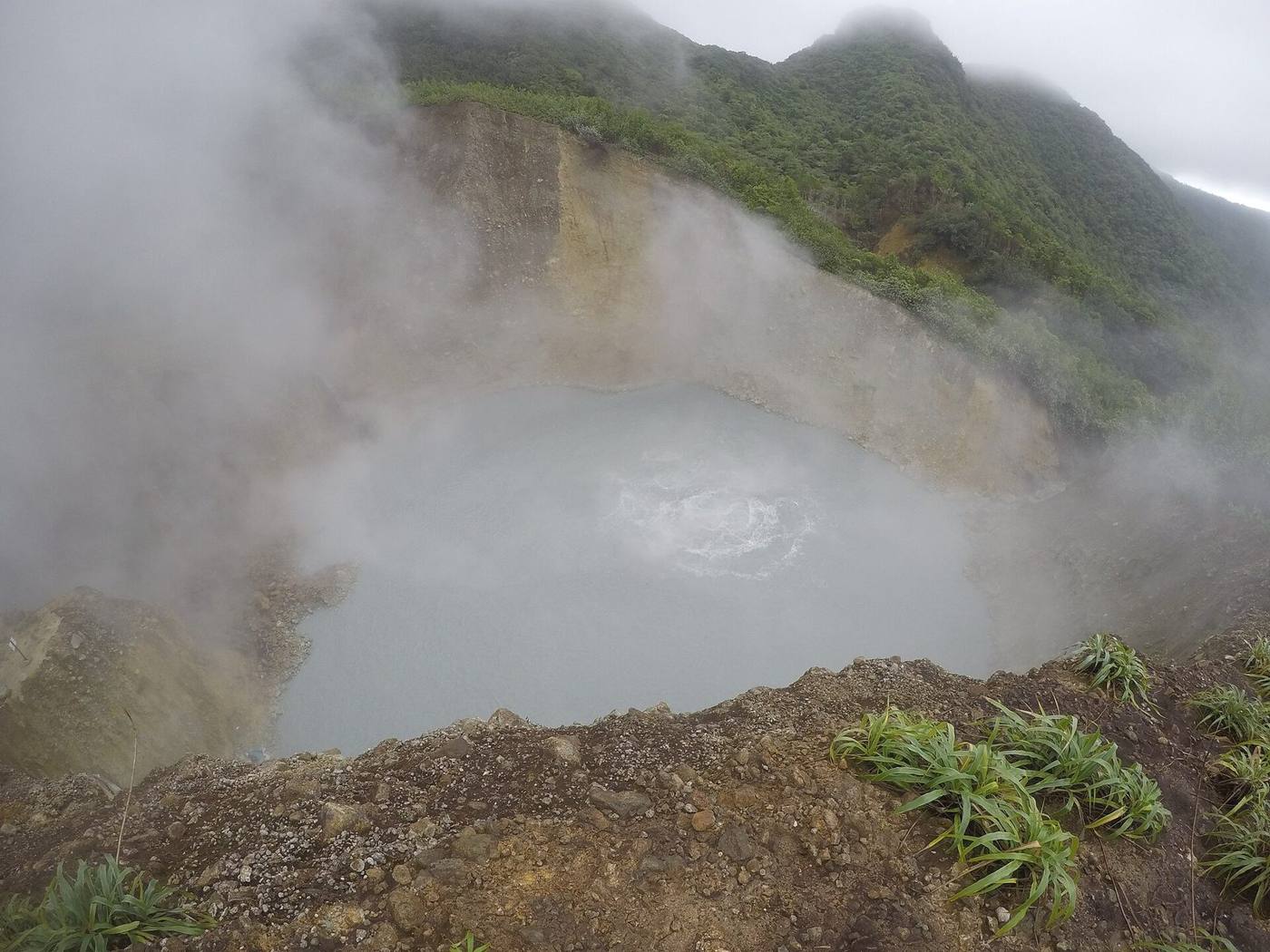
After a last stretch through the forest you arrive above the crater. The Boiling Lake is a lake of grey water that bubbles under clouds of steam, heated by magma below the ground. Stop for your packed lunch, then take the same path back.
In the evening go back to the hot springs, if you still have the strength, or rest with your legs up. Leave a tip for your guide if you were happy with the service.
Sleep in the Roseau valley.
Practical tip: the United Kingdom advises asking guides, before you set off, whether the trail is safe; after heavy rain, give up without hesitation.
- Day 4
Champagne Reef and Scotts Head
Today is a sea day, to rest your legs.
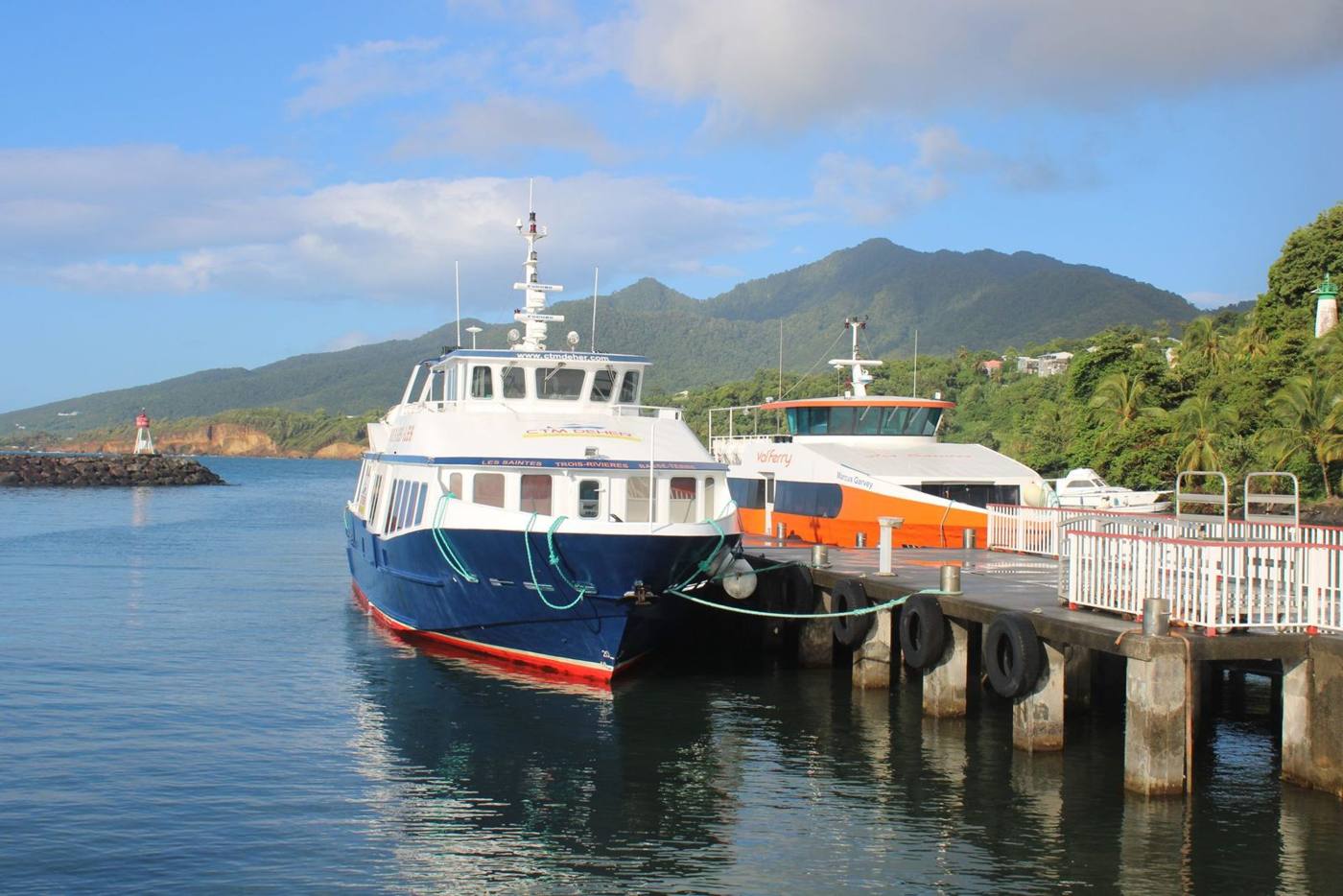
In the morning go to the south-west coast, to Champagne Reef, near Pointe Michel. Bubbles of volcanic gas come out of the seabed and rise to the surface as in a glass of sparkling wine. With mask and snorkel you swim among the bubbles, corals, sponges and colourful fish, in shallow water. The site is part of the Soufrière Scotts Head Marine Reserve: check prices and times.
Then go to Scotts Head, the fishing village at the southern tip of the island. A narrow tongue of land separates the Caribbean Sea, usually calm, from the rougher Atlantic Ocean. Walk up the headland, among the remains of an old fort, and look down on the bay of Soufrière with the mountains dropping into the sea.
In the afternoon snorkel in Scotts Head bay too, if the water is calm, and watch the fishing boats come back in.
In the evening have the catch of the day for dinner in one of the coastal villages, with sweet potatoes, plantain and a fresh fruit juice, such as guava or passion fruit.
Sleep in Roseau or on the south-west coast.
Practical tip: do not touch the coral, do not stand on the seabed and choose a reef-friendly sun cream.
- Day 5
The Kalinago Territory and the Emerald Pool
Today you cross the island to the Atlantic coast.
In the morning follow the road that climbs through the mountains and the forest and stop at the Emerald Pool, in Morne Trois Pitons National Park. A short trail leads to a waterfall that drops into an emerald green pool. The site pass is valid here too.
Then go down towards the east coast and enter the Kalinago Territory, created in 1903, home to the descendants of the Caribbean peoples of the Lesser Antilles, with its own council and an elected chief. At Barana Autê, the cultural village by the sea, Kalinago guides tell their story and show the traditional huts, cassava bread, canoes carved from a trunk and medicinal plants. Check prices and times.
Along the road families weave baskets from larouma fibre: buy directly from them. Always ask permission before photographing people, especially children.
In the afternoon, on the way back, stop to look at the Atlantic cliffs and bays, beaten by wind and waves, and the small fields of bananas and vegetables on the slopes. The sea here is too rough for swimming.
Sleep on the west coast, for two nights.
Practical tip: set off early and be back before dark, because the mountain roads are narrow, winding and poorly lit.
- Day 6
By boat to see sperm whales
Today you go out to sea in the sperm whale reserve, off the west coast.
The sea in front of Dominica becomes very deep a few kilometres from the coast, and families of sperm whales live here all year round. Sightings are more frequent from November to April, but they are never guaranteed.
Since 2025 a law passed by Parliament has protected these animals with a reserve on the west coast, a reserve office and rangers. The law prohibits vessel strikes, pollution and harassment of the sperm whales, with strict penalties, and does not allow swimming with them outside the rules. So choose only a trip authorised by the reserve and follow the instructions of the crew and the rangers.
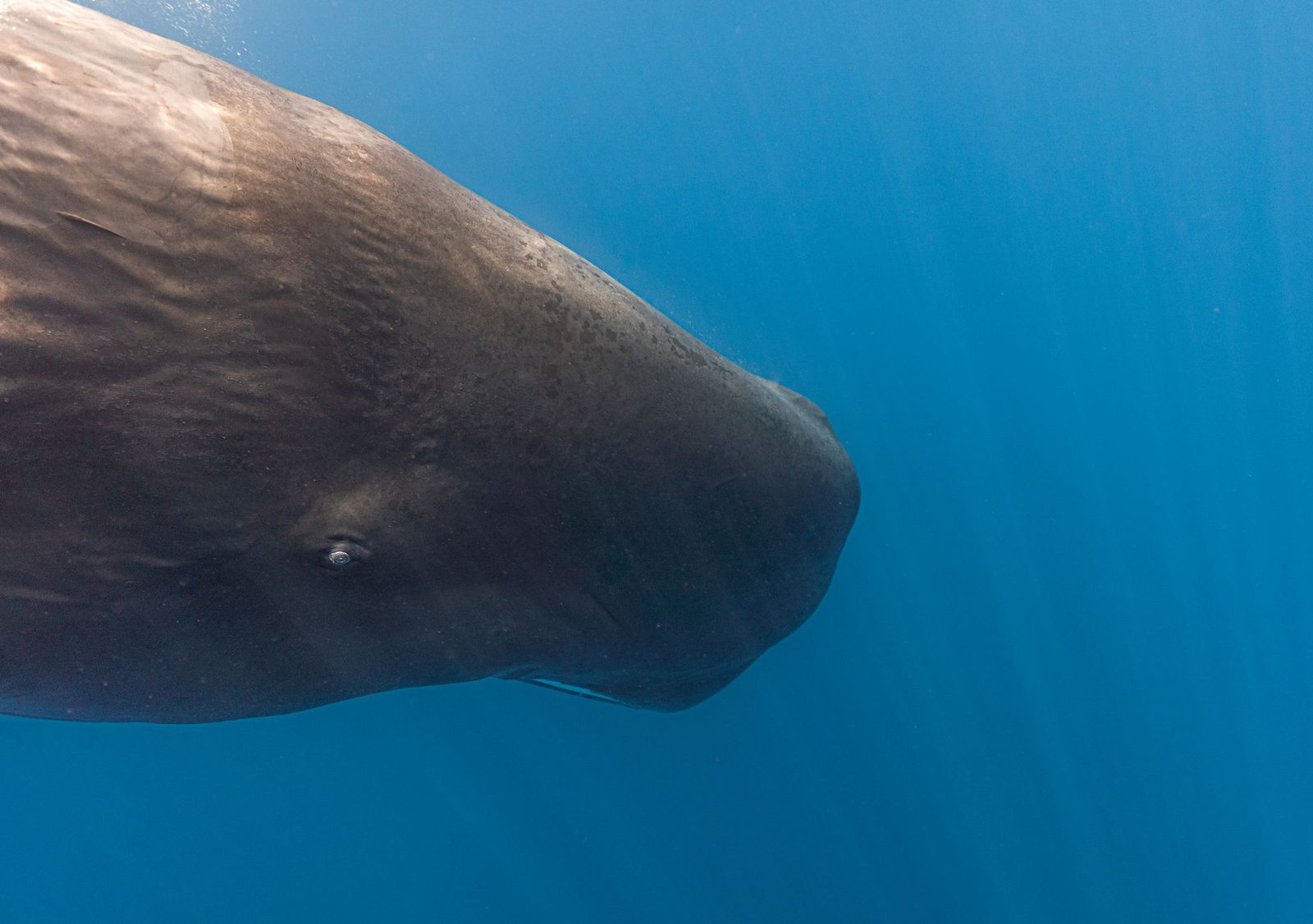
On the boat the crew listens for the whales' clicks with a hydrophone, then approaches calmly. You will see the blow, the dark back and the tail rising before the dive. Dolphins often come along too. Swimming with sperm whales is possible only with a special permit, in small groups: in all other cases you watch from the boat.
In the afternoon rest on the west coast, have a last swim if the sea is calm and watch the sunset over the Caribbean Sea.
Sleep on the west coast.
Practical tip: take something for seasickness before you leave, because the boat often stops and the open sea can be rough.
- Day 7
Departure
Today you leave Dominica.
In the morning, if you have time before your flight, take a last walk around Roseau market, with fruit, cocoa and spices, or a stroll in the Botanic Gardens. You can take home a Kalinago basket, bought in the previous days, or a packet of local cocoa.
Then take the long road back across the mountains to Douglas-Charles Airport, on the north-east coast. Leave plenty of time, because the journey takes more than an hour and traffic, roadworks or landslides can slow you down. From here you fly to Antigua, Barbados or Guadeloupe, for your connection to Europe.
In short: in one week you have seen the best of Dominica's nature. You swam in Titou Gorge, warmed up in the springs of Wotten Waven, hiked to the Boiling Lake through the Valley of Desolation, snorkelled among the bubbles of Champagne Reef, met the Kalinago people and went out to sea among the sperm whales. It is an active trip, of medium level, for people who love the forest more than the beach.
When to go: the best months are January to May, which are drier, with less muddy trails and, until April, more sperm whale sightings. From June to November it is hurricane season, with heavy rain.
Practical tip: keep dry clothes for the last day in a separate bag, because with the island's humidity nothing really dries.
The Caribbean's wildest island, without big beaches but with extraordinary nature. The Boiling Lake hike takes 6-8 hours on a muddy trail. The road from the airport is long: you arrive via Antigua, Barbados or Guadeloupe.
Before you go
- Documents and visa
- Passport valid for at least six months from arrival. No visa is needed for short tourist stays for Italian and EU citizens; border officers may ask for a return or onward ticket.
- Health and vaccines
- No compulsory vaccinations, except a yellow fever certificate if you arrive from a country at risk. Protect yourself from mosquitoes, which can carry dengue. You need insurance covering medical costs and repatriation. Emergencies: 999.
- Money and payments
- Eastern Caribbean dollar. US dollars are often accepted; cards work in towns and larger accommodation, cash is needed in the villages.
- Power sockets
- Type D and G, 230 volts: you need an adapter.
- Time zone
- UTC-4 all year.
- Safety
- The United Kingdom describes crime as low, but advises against walking alone away from main roads after dark and against driving at night on the road from Douglas-Charles Airport, which is prone to landslides. The hurricane season usually runs from June to November. Before the Boiling Lake, ask guides whether the trail is safe. Official advice: GOV.UK.
Information checked in November 2026 for Italian and EU citizens. Rules change: always check before you travel.
Variations
Shorter: five days, without the sperm whale trip and without Scotts Head.
Longer: add three days in the north, with Portsmouth, Cabrits National Park and the Indian River.
Frequently asked questions
Is the Boiling Lake hike suitable for everyone?
No, it is very tiring: it usually takes between six and eight hours on a muddy trail, with river crossings and hot steam. You need to be fit and to go with an authorised guide.
Which pass do you need for the natural sites?
For the eco-tourism sites, including Trafalgar, the Emerald Pool and the Boiling Lake, you need the site pass; for a week the week pass is worth it. Check prices and times.
How do you get to Dominica?
Usually on a regional flight from Antigua, Barbados or Guadeloupe, landing at Douglas-Charles Airport on the north-east coast.
Indicative itinerary written by World Atlas. Before booking, check timetables, seasonal openings, documents and safety.
 8 daysChallenging
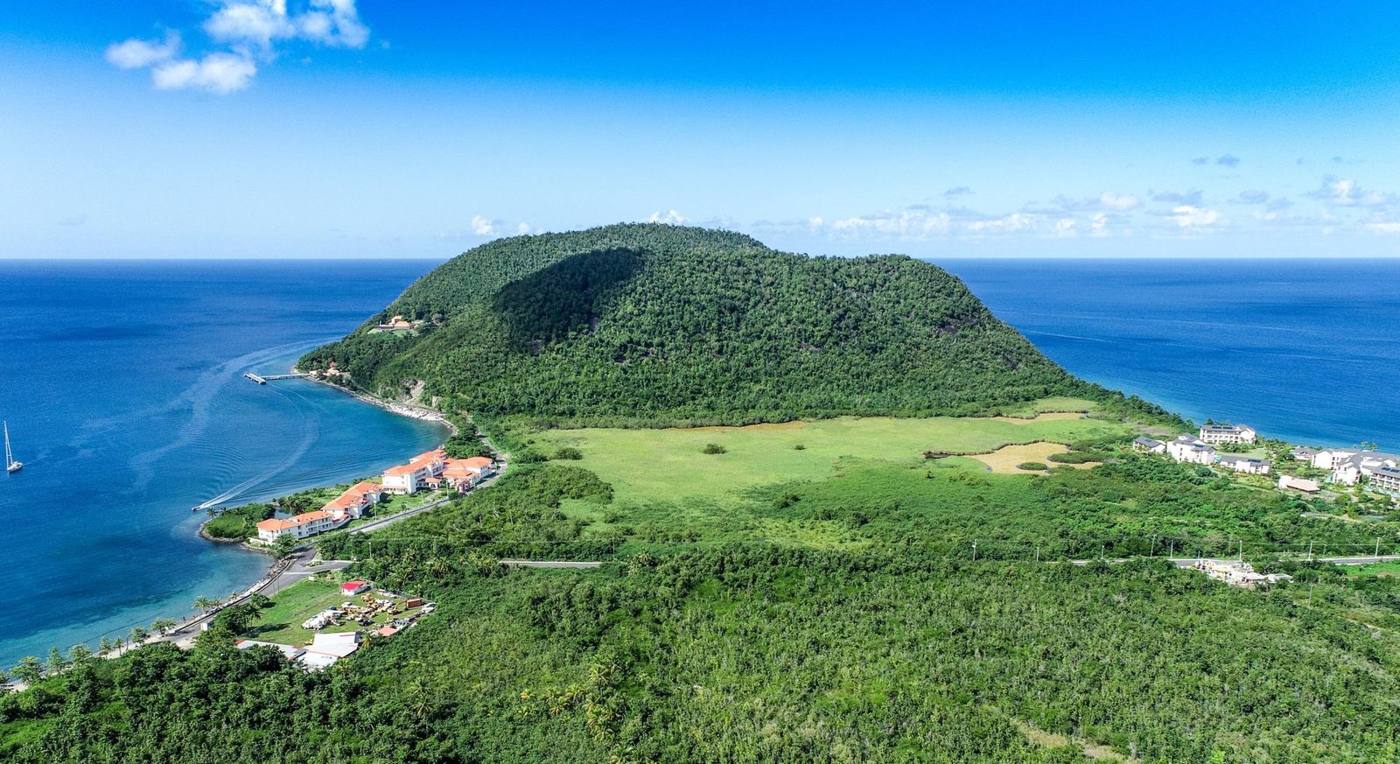
The Waitukubuli Trail
The Caribbean's first long-distance trail, from Scotts Head to Cabrits, through rainforest, villages and coast, in selected stages.
 2 daysChallenging
The Boiling Lake
The Caribbean's most famous trail, in Morne Trois Pitons National Park, a UNESCO site: forest, ridges, the steaming Valley of Desolation and a lake that boils in a crater.
 3 daysEasy
The sperm whales
The deep sea off Roseau, where families of sperm whales live year-round, protected by a marine reserve: boat trips to see them, with dolphins and sunsets on the west coast.