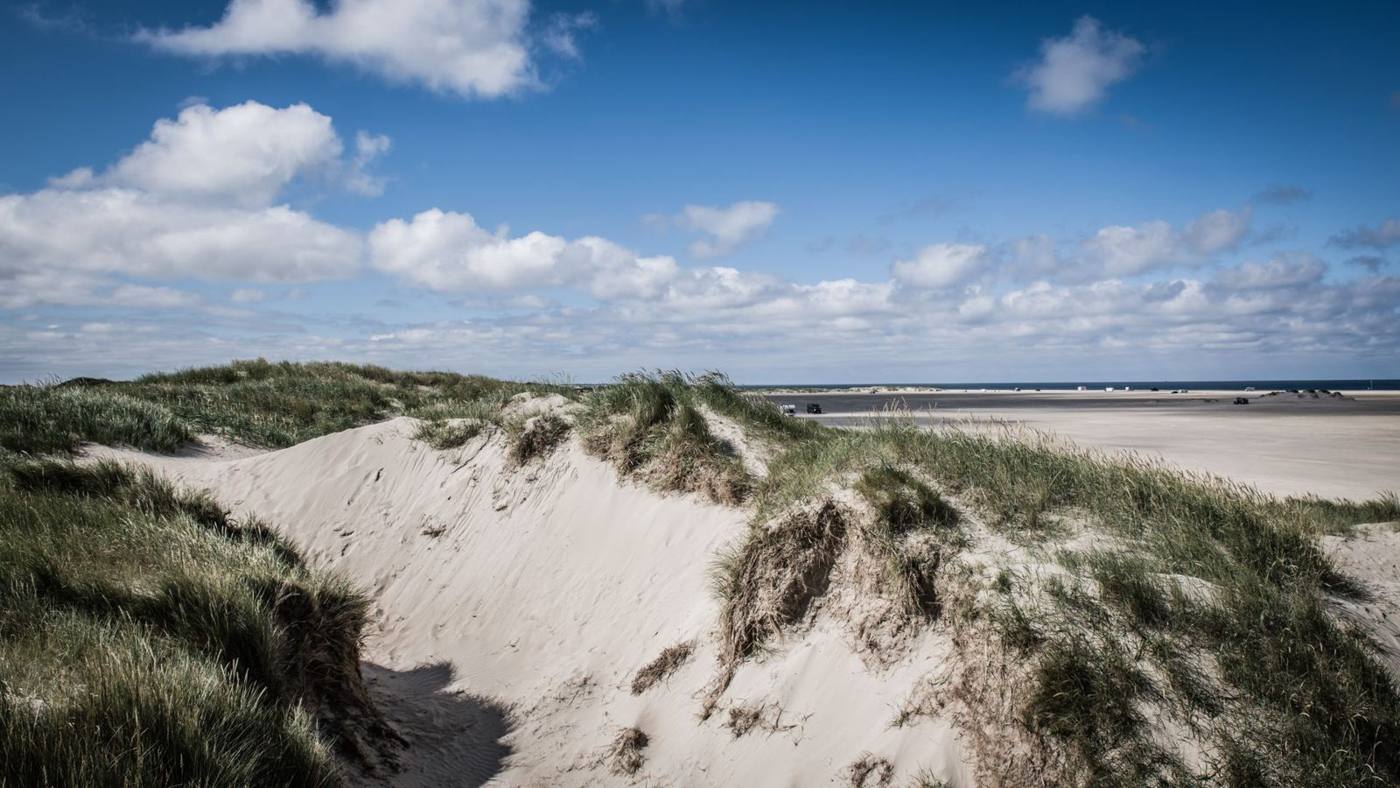
The Wadden Sea and Rømø
The UNESCO Wadden Sea park: Rømø's huge drive-on beach, oyster picking at low tide, seals and the 'black sun' of starlings.
- Ribe
- Rømø
- Mandø
- Esbjerg
- Fanø
Day by day
- Day 1
Ribe and the Wadden Sea Centre
This trip takes you to the south-west coast of Jutland, into the Wadden Sea national park, a UNESCO World Heritage Site: a shallow sea that at low tide uncovers kilometres of sand and mud. You see the beach at Rømø, oysters, seals, the island of Mandø and, in season, the "black sun" of the starlings. You travel by car.
Before you go: Italian citizens can enter Denmark with an electronic identity card or a passport. Denmark is in the EU and the Schengen area; until 17 May 2027 it is running checks on its border with Germany, very close to this area, so keep your document with you. Other nationalities should check their own rules. The currency is the Danish krone. The country is very safe, but the Wadden Sea is not: the tide comes in fast, sometimes with fog, and you walk on the seabed only with a guide.
You arrive in Ribe, the oldest town in Denmark, founded as a market in the early eighth century. Walk among the half-timbered houses, the cobbled streets and the river with its boats. Visit the Romanesque cathedral and climb the tower to see the red roofs and the plain stretching to the sea. Check prices and times.
In the afternoon drive for about a quarter of an hour towards the sea to the Wadden Sea Centre at Vester Vedsted. The museum explains the tides, migrating birds, seals and the life of coastal communities. It is also the starting point for many guided trips.
In the evening, in summer, follow the Ribe night watchman, who walks the streets of the centre with his lantern, singing the old songs.
Practical tip: download the local tide table and plan your days around low tide; the times shift by about an hour each day.
- Day 2
Rømø: driving on the beach and an oyster safari with a guide
Today you go to Rømø, the southernmost Danish island in the Wadden Sea. From Ribe drive south for about three quarters of an hour, then cross the causeway, about nine kilometres long, that links the island to the mainland, with sea and sand flats on both sides.
On the west coast of Rømø, at Lakolk, lies one of the widest beaches in Europe: hard, flat sand stretching for hundreds of metres to the North Sea. You can drive onto it and park on the beach. Drive slowly, stay in the marked areas and keep away from the dunes. In the southern part of the beach you see sand yachts and traction kites racing across the sand.
In the afternoon, at low tide, join an oyster safari with a licensed guide. You walk across the seabed to the oyster beds, in tall boots or closed shoes. They are Pacific oysters, a species that arrived from elsewhere and now covers many beds in the Wadden Sea, so collecting them helps the environment. The guide shows you how to open them and you taste them on the spot or cook them in the evening.
Along the way look at the lugworms, crabs and birds feeding in the mud. Always return to shore with the group, before the tide comes back in.
Practical tip: wear rubber boots or old closed shoes, trousers that can get wet and a windproof jacket; the shells on the beds are sharp.
- Day 3
The tractor bus to Mandø and the black sun at sunset
Today you reach Mandø, a small flat island with a village of a few dozen inhabitants, fields and dykes. Mandø has no bridge: at low tide you reach it on a gravel road across the seabed, called Låningsvejen, or by tractor bus, a large trailer pulled by a tractor that leaves from the Vester Vedsted area.
Board the tractor bus and cross the exposed seabed, with its pools, gulls and, at times, seals lying on the sandbanks in the distance. The trip takes about half an hour. On the island walk to the village, with its white church, the captains' houses and the old windmill. Climb the dyke to see the Wadden Sea on every side. The tractor always returns in time for the tide: be there for the departure time.
There are two species of seal in the Wadden Sea, the harbour seal and the grey seal. Watch them only from a distance and do not approach pups left on the sand: the mother is usually close by, in the water.
At sunset, in March and April or between September and October, look for the black sun in the marshes around Ribe and further south, towards Tønder. Hundreds of thousands of starlings gather before roosting in the reeds and fly together, forming dark clouds that change shape across the sky. It depends on the weather and the birds, and is not guaranteed.
Practical tip: never go to Mandø on foot or by car on your own without knowing the tide; the road across the seabed floods quickly and the water can trap anyone who sets off late.
- Day 4
Fanø and departure from Esbjerg
On the last day drive north for about three quarters of an hour to Esbjerg, the big port on the west coast. From here the ferry to Fanø takes only a quarter of an hour.
Fanø is an island of dunes, heath and pine woods, with two seafaring villages. Nordby, where the ferry arrives, has low houses and gardens. Sønderho, in the south of the island, is one of the prettiest villages in Denmark: thatched houses, coloured doors, narrow lanes and a church with model ships hanging from the ceiling, given by sailors. On the west coast the beach is wide and hard, and here too you can drive onto some stretches.
In the afternoon return to Esbjerg and stop in front of Man Meets the Sea, four large white figures seated on the shore, nine metres tall, gazing out to sea.
Trip summary: in four days you saw Ribe and the Wadden Sea Centre, the beach at Rømø and the oyster safari, the exposed seabed on the way to Mandø by tractor bus, the seals and, if you were lucky, the black sun, and finally Fanø with Sønderho. It is an unusual natural world, little known outside Denmark.
When to go: March and April or September and October for the black sun and migrating birds; May to September for the sea and long days. Oysters are gathered mostly in the colder months, from September to April.
Practical tip: book the ferry and your accommodation on Fanø early for July, when the island is full of Danish and German families on holiday.
Unusual nature, little known outside Denmark. Walks on the seabed at low tide must be done with a guide, as tides come in fast. The black sun depends on weather and the starlings: it is not guaranteed.
Before you go
- Documents and visa
- EU citizens need a valid identity card or passport: Denmark is in the EU and the Schengen area. Until 17 May 2027 Denmark is running checks on its border with Germany: always carry your document. Greenland and the Faroe Islands have their own rules. Other nationalities should check the Schengen rules.
- Health and vaccines
- No vaccines required. EU citizens should bring their EHIC; insurance with medical cover and repatriation is advised. In summer watch out for currents on North Sea beaches. Emergencies: 112.
- Money and payments
- Danish krone. Cards are accepted almost everywhere, even for small purchases; cash is rarely used. The euro is not the official currency.
- Power sockets
- Types C, F and K, 230 volts: you need an adapter for British plugs.
- Time zone
- Central European Time (UTC+1, summer UTC+2).
- Safety
- A very safe country with low crime. Watch out for pickpockets at stations and in crowded places in Copenhagen. On a bicycle use the cycle lanes and follow the signals, as bike traffic is heavy. On the Wadden Sea coast the tide comes in fast: walk on the seabed only with a guide. Official advice: GOV.UK.
Information checked in November 2026 for Italian and EU citizens. Rules change: always check before you travel.
Variations
In 3 days: Ribe, Rømø with the oyster safari and Mandø by tractor bus, without Fanø.
In 6 days: add Tønder and the southern marshes for the black sun and a full day cycling on Fanø.
Frequently asked questions
Can I walk on the Wadden Sea seabed on my own?
Better not: the tide comes in fast, sometimes with fog. Walks on the seabed at low tide should only be made with a guide.
Is the black sun guaranteed?
No. The starlings gather in March and April and between September and October, but it depends on the weather and the birds. Local guides know where they have been seen in recent days.
Can you really drive on the beach at Rømø?
Yes, at Lakolk and on other marked stretches you can drive onto the hard sand. Drive slowly, stay in the permitted areas and keep away from the dunes.
Indicative itinerary written by World Atlas. Before booking, check timetables, seasonal openings, documents and safety.
 4 daysEasy
Aarhus and the lakes
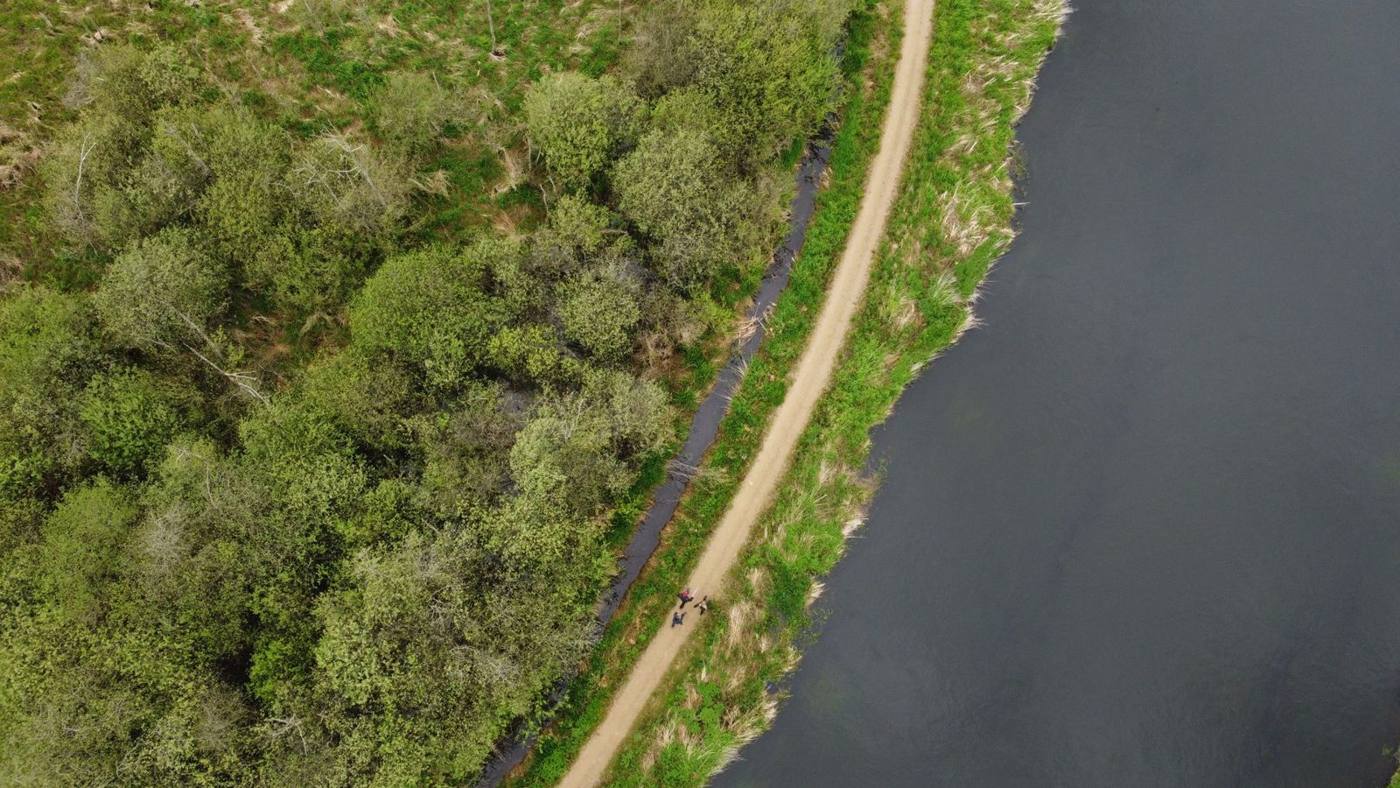
The lake district around Silkeborg, canoeing on the Gudenå river, the Himmelbjerget hill and Moesgaard Museum with the Grauballe Man.
 5 daysEasy
Thy and the north-west coast
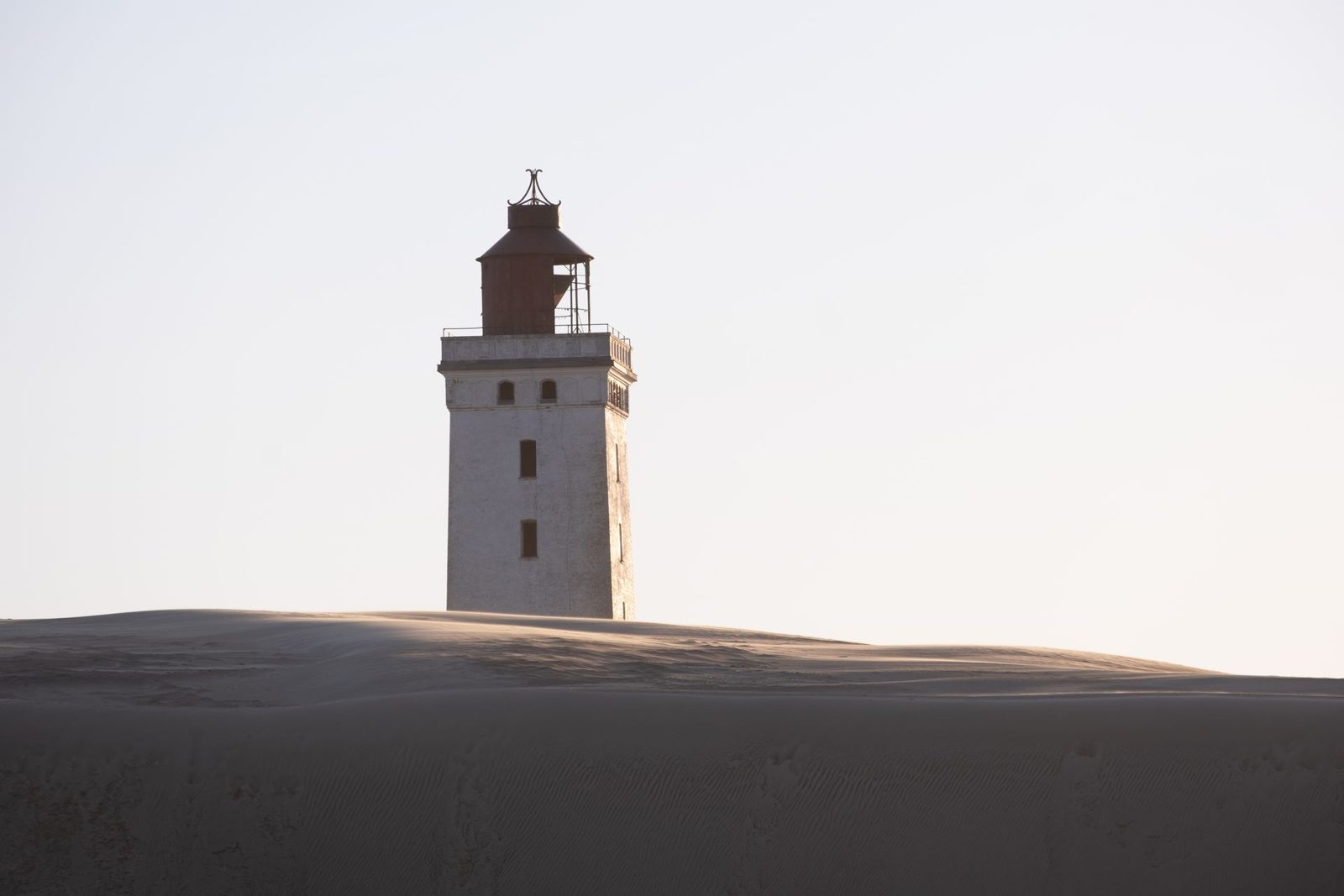
Thy National Park among dunes and heath, the surf of Klitmøller known as 'Cold Hawaii', Rubjerg Knude lighthouse moved in 2019 and the sand-buried church.
 6 daysModerate
The Faroe Islands
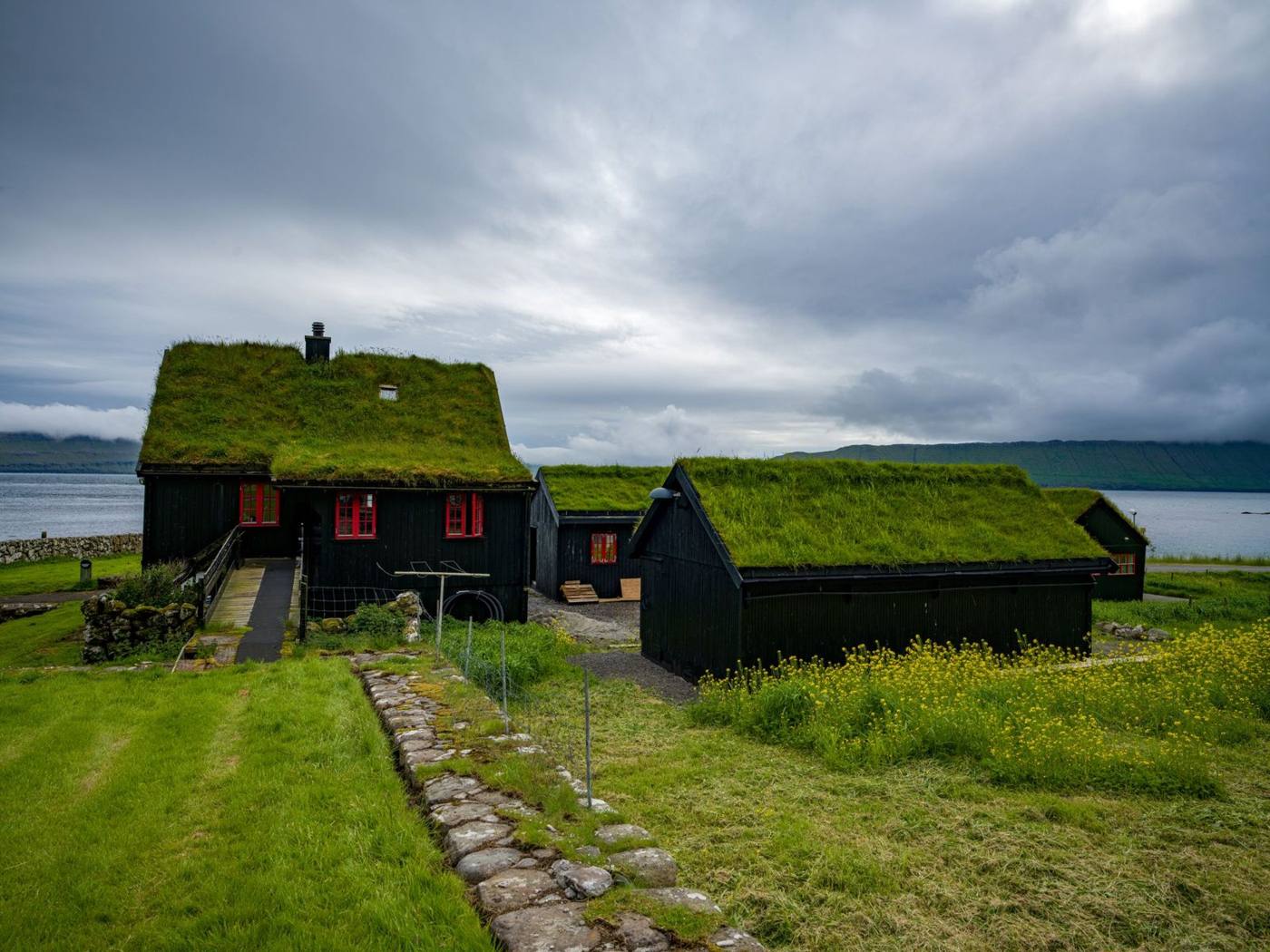
The autonomous islands of the Kingdom of Denmark: Múlafossur waterfall at Gásadalur, the lake above the ocean at Sørvágsvatn, the puffins of Mykines and turf-roofed villages.