Thy and the north-west coast
Thy National Park among dunes and heath, the surf of Klitmøller known as 'Cold Hawaii', Rubjerg Knude lighthouse moved in 2019 and the sand-buried church.
- Aalborg
- Thy
- Klitmøller
- Hanstholm
- Lønstrup
- Rubjerg Knude
Day by day
- Day 1
Aalborg and the Limfjord
This trip takes you to north-west Jutland, the wildest part of Denmark: Aalborg on the Limfjord, Thy National Park among dunes and heath, the surf at Klitmøller, the bunkers of Hanstholm, the village of Lønstrup and Rubjerg Knude lighthouse. You need a car.
Before you go: Italian citizens can enter Denmark with an electronic identity card or a passport. Denmark is in the EU and the Schengen area; until 17 May 2027 it is running checks on its border with Germany, so keep your document with you. Other nationalities should check their own rules. The currency is the Danish krone, and cards are used almost everywhere. The country is very safe; on North Sea beaches watch out for currents and swim only where there are flags and lifeguards.
You arrive in Aalborg by plane or train. The city lies on the shores of the Limfjord, the long arm of sea that cuts across Jutland from west to east. Walk along the waterfront, where the old harbour warehouses have become cultural spaces, and look at the Utzon Center, the last building designed by Jørn Utzon, the architect of the Sydney Opera House, who grew up in Aalborg.
In the afternoon cross the fjord and climb to Lindholm Høje, a hill with a large Viking burial ground: hundreds of stones laid out in the shape of ships and circles in the grass. The museum nearby explains who was buried here. Check prices and times.
In the evening stroll through the old centre, with merchants' houses and courtyards.
Practical tip: pick up the car in Aalborg; on the coast park facing into the wind and hold the doors firmly when you open them, because gusts can bend them.
- Day 2
Thy National Park among dunes and heath
Today you drive west for about two hours to Thy National Park, Denmark's first national park, created in 2008.
The park is a long strip of North Sea coast: high dunes, heath that turns purple in summer, lakes among the sand and pine plantations bent by the wind. There are no mountains, but the space is huge and the sky changes all the time, from bright sunshine to low grey cloud within an hour.
Start near Lake Vandet, where a marked trail loops through dunes and woodland. Then go to Stenbjerg, a small fishing landing with white wooden huts on the beach, where boats were once hauled ashore with winches. The huts hold a small exhibition on the life of the fishermen.
In the afternoon walk north along the beach. The sand is wide and almost empty, the sea often rough. Look at the remains of Second World War bunkers that the sea has moved onto the shoreline. Further south, the spit of Agger Tange is an area for migrating birds, good to watch with binoculars.
Sleep in Klitmøller or a nearby village.
Practical tip: in the park walk only on marked paths; the dunes are fragile and some areas are closed while birds are nesting.
- Day 3
Klitmøller, «Cold Hawaii», and a surf lesson
On the third day you stay in Klitmøller, a fishing village that has become famous among surfers all over Europe under the nickname «Cold Hawaii».
The coast here gets North Sea waves almost all year round, and the bottom of rock and sand creates regular waves. In the morning watch the surfers from the jetty, then sign up for a beginners' lesson with a local school. A lesson usually lasts a couple of hours: you learn to balance on the board in small waves close to the shore. The water is cold even in August, so a thick wetsuit, boots and often a hood are essential. Check prices and times.
If you would rather stay dry, watch the windsurfers from the beach or take a bike ride on the path that crosses the dunes towards Hanstholm.
In the afternoon drive to Bulbjerg, a limestone cliff rising above the beach, rare on this sandy coast. From the top you see the coastline for miles and, in spring and summer, the seabirds nesting on the cliff face. At the top there are also the remains of wartime bunkers.
In the evening eat fresh fish from the harbour, for example fried plaice with potatoes.
Practical tip: go into the water only with an instructor and check the wave and wind forecasts; with an offshore wind the currents can carry you out to sea.
- Day 4
The Hanstholm bunkers, Lønstrup and Rubjerg Knude lighthouse
Today you leave Thy and head east along the coast.
In the morning visit Hanstholm. During the Second World War the German army built one of the largest fortresses of the Atlantic Wall here, with huge guns to control the strait towards Norway. The bunker museum takes you through the concrete corridors and next to the remains of a battery. Check prices and times. Outside the museum look at the lighthouse and the big fishing harbour.
Then drive about two hours to Lønstrup, a small village of fishermen and artists by the sea, with low houses, pottery and glass workshops and a beach at the foot of the cliff.
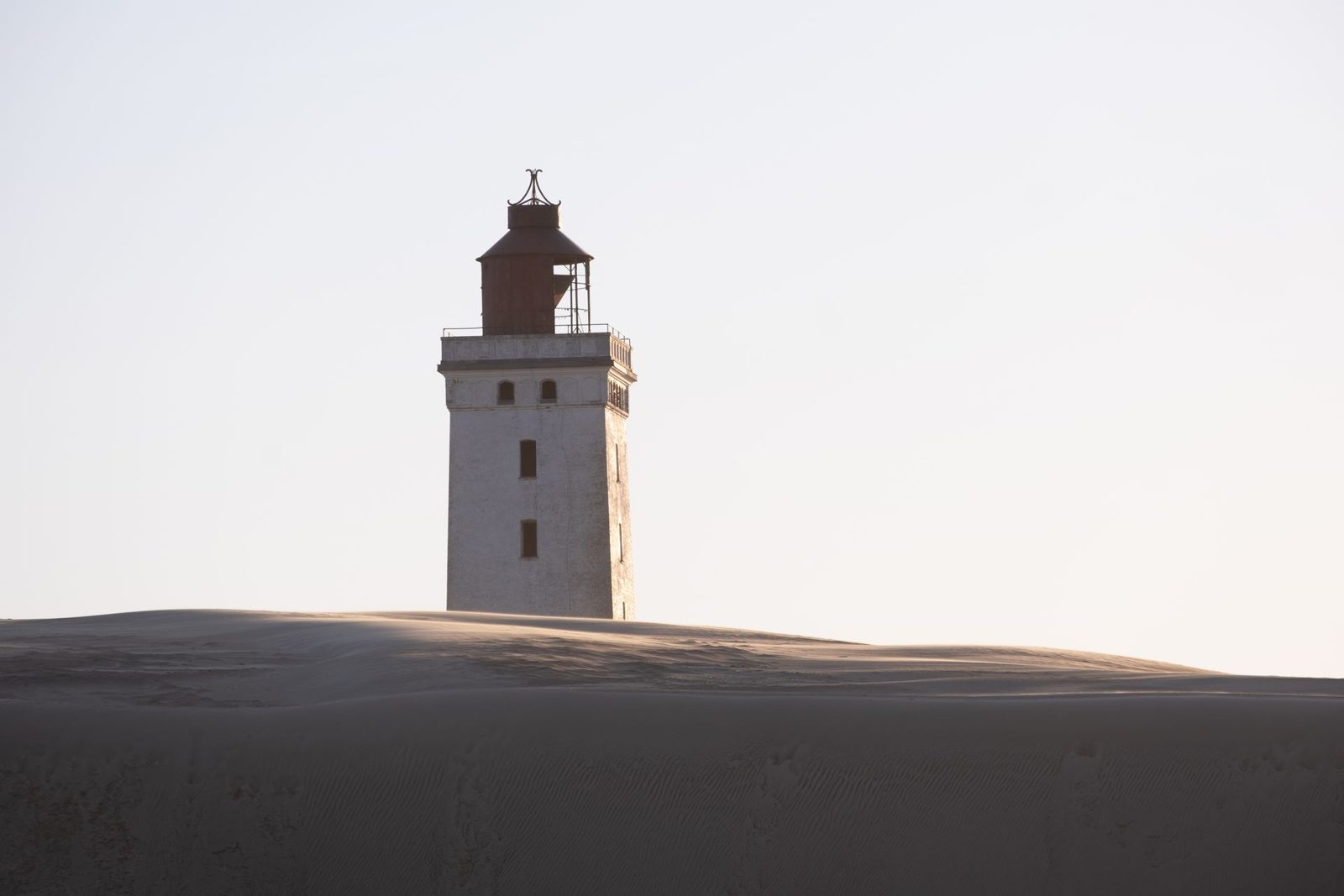
In the late afternoon walk to Rubjerg Knude lighthouse, a few kilometres from Lønstrup. The lighthouse was first lit in 1900 on a cliff of clay and sand. The wind piled a huge dune around it, and the sea ate away the coast year after year. In 2019, to save it, it was moved about seventy metres inland on rails. Climb the dune, barefoot if you like, and look down at the sea. Along the cliff you will see that the coast keeps retreating.
Practical tip: do not go near the edge of the cliff at Rubjerg Knude; sudden landslides are frequent, especially after rain.
- Day 5
Back to Aalborg
On the last day you return to Aalborg, about an hour's drive from Lønstrup.
If you have time, in the morning go north for about an hour to the sand-buried church near Skagen. Only the white tower of the medieval church still rises from the dunes: in the eighteenth century the windblown sand covered the building, and churchgoers had to dig their way in until the church was closed. Walk among the dunes and the small pine woods around it. From here to Aalborg takes about an hour.
If you prefer to stay close, take a walk on Lønstrup beach early in the morning, when the light is low, then drive to Aalborg through the countryside. Return the car and take your train or flight home.
Trip summary: in five days you have seen Aalborg and the Limfjord with the Viking burial ground of Lindholm Høje, Thy National Park with its dunes, lakes and the landing at Stenbjerg, the surf at Klitmøller, the cliff at Bulbjerg, the bunkers of Hanstholm, Lønstrup and Rubjerg Knude lighthouse. This is the Denmark of wind and open sea.
When to go: from May to September, with long days and mild temperatures. For surfing the waves are often better in spring and autumn, but the water is colder.
Practical tip: bring warm layers and a windproof jacket even in summer; on the North Sea the wind makes it feel much colder.
Denmark at its wildest, with wind and North Sea. The water is cold even in summer: a wetsuit is needed to surf. It combines well with Skagen, an hour and a half away.
Before you go
- Documents and visa
- EU citizens need a valid identity card or passport: Denmark is in the EU and the Schengen area. Until 17 May 2027 Denmark is running checks on its border with Germany: always carry your document. Greenland and the Faroe Islands have their own rules. Other nationalities should check the Schengen rules.
- Health and vaccines
- No vaccines required. EU citizens should bring their EHIC; insurance with medical cover and repatriation is advised. In summer watch out for currents on North Sea beaches. Emergencies: 112.
- Money and payments
- Danish krone. Cards are accepted almost everywhere, even for small purchases; cash is rarely used. The euro is not the official currency.
- Power sockets
- Types C, F and K, 230 volts: you need an adapter for British plugs.
- Time zone
- Central European Time (UTC+1, summer UTC+2).
- Safety
- A very safe country with low crime. Watch out for pickpockets at stations and in crowded places in Copenhagen. On a bicycle use the cycle lanes and follow the signals, as bike traffic is heavy. On the Wadden Sea coast the tide comes in fast: walk on the seabed only with a guide. Official advice: GOV.UK.
Information checked in November 2026 for Italian and EU citizens. Rules change: always check before you travel.
Variations
In 3 days: Aalborg, Thy National Park and Klitmøller, returning to Aalborg.
In 7 days: add two days in Skagen, with the Grenen point and the moving dune of Råbjerg Mile.
Frequently asked questions
Can you swim in the North Sea?
Yes, in summer, but the water is cold and the currents can be strong. Swim only on beaches with lifeguards and follow the flags.
Do I need experience for a surf lesson in Klitmøller?
No, the schools run beginners' lessons with wetsuit and board. You need to be able to swim and to accept cold water.
Can you visit Rubjerg Knude lighthouse?
You can walk around the lighthouse and on the dune. If you want to climb the tower, check prices and times: opening depends on the season.
Indicative itinerary written by World Atlas. Before booking, check timetables, seasonal openings, documents and safety.
 6 daysModerate
The Faroe Islands
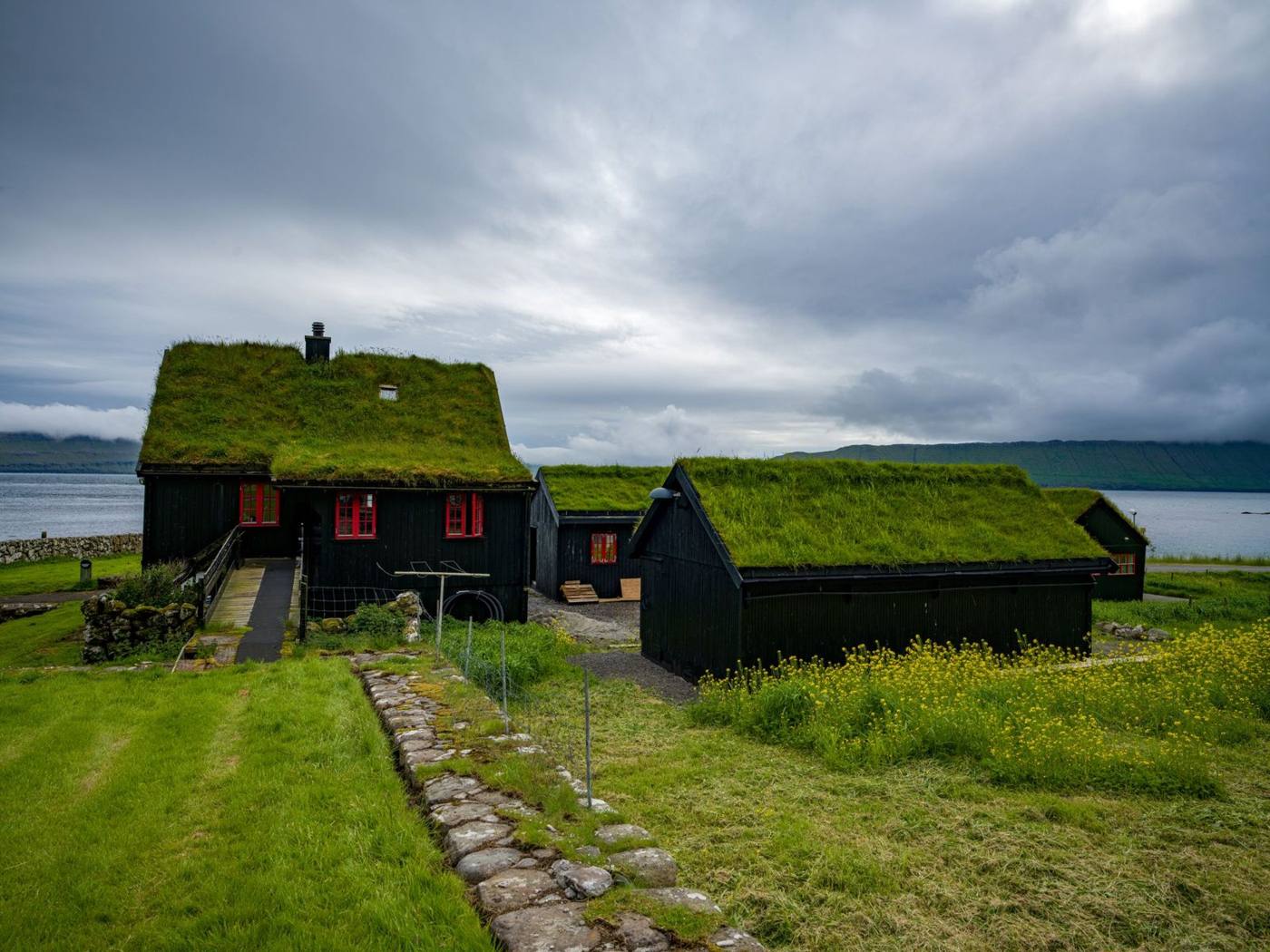
The autonomous islands of the Kingdom of Denmark: Múlafossur waterfall at Gásadalur, the lake above the ocean at Sørvágsvatn, the puffins of Mykines and turf-roofed villages.
 6 daysModerate
Greenland and Ilulissat
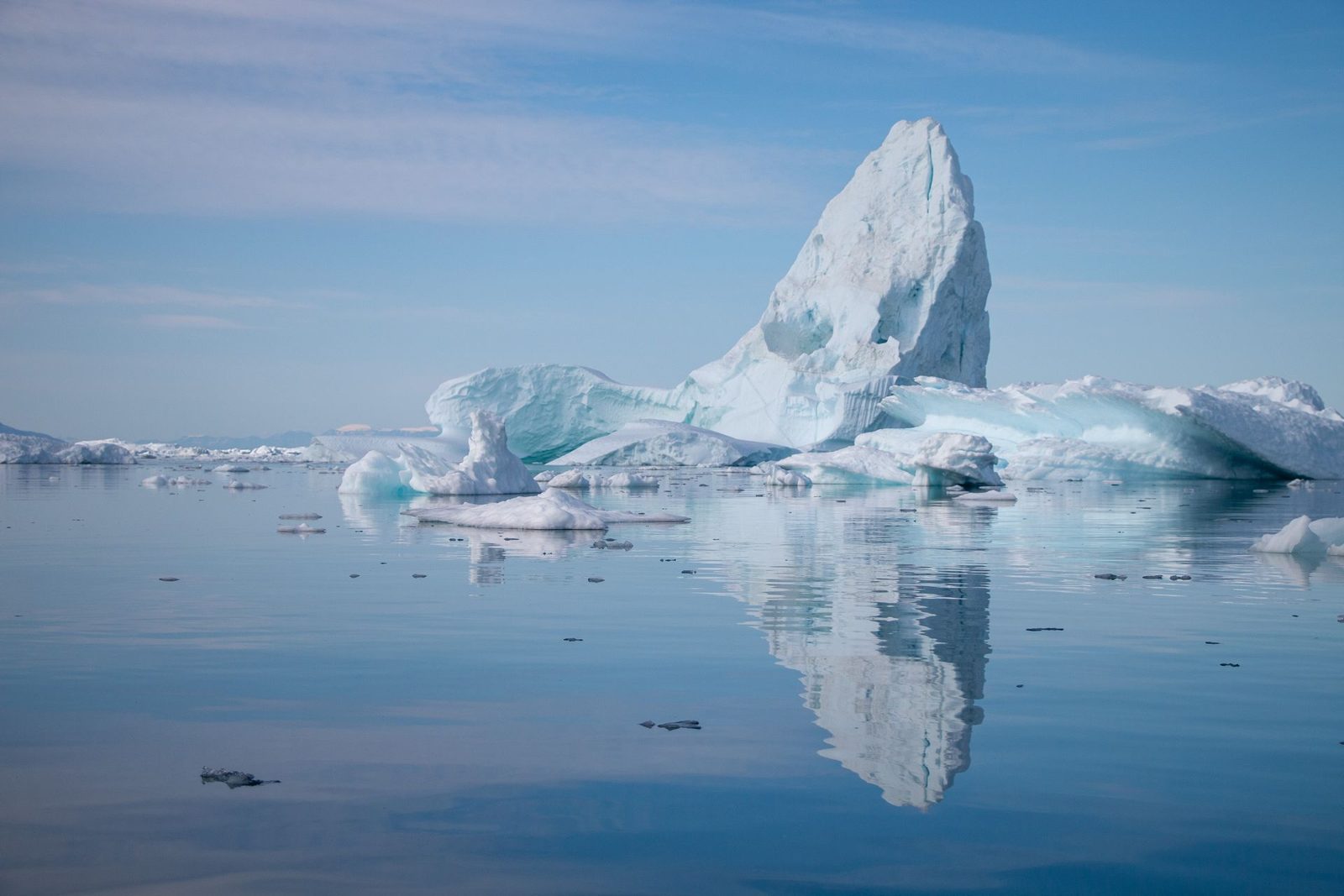
The UNESCO Ilulissat Icefjord with its giant icebergs, the midnight cruise among the ice, the village of Oqaatsut and whales in Disko Bay.
 5 daysEasy
Copenhagen and Zealand
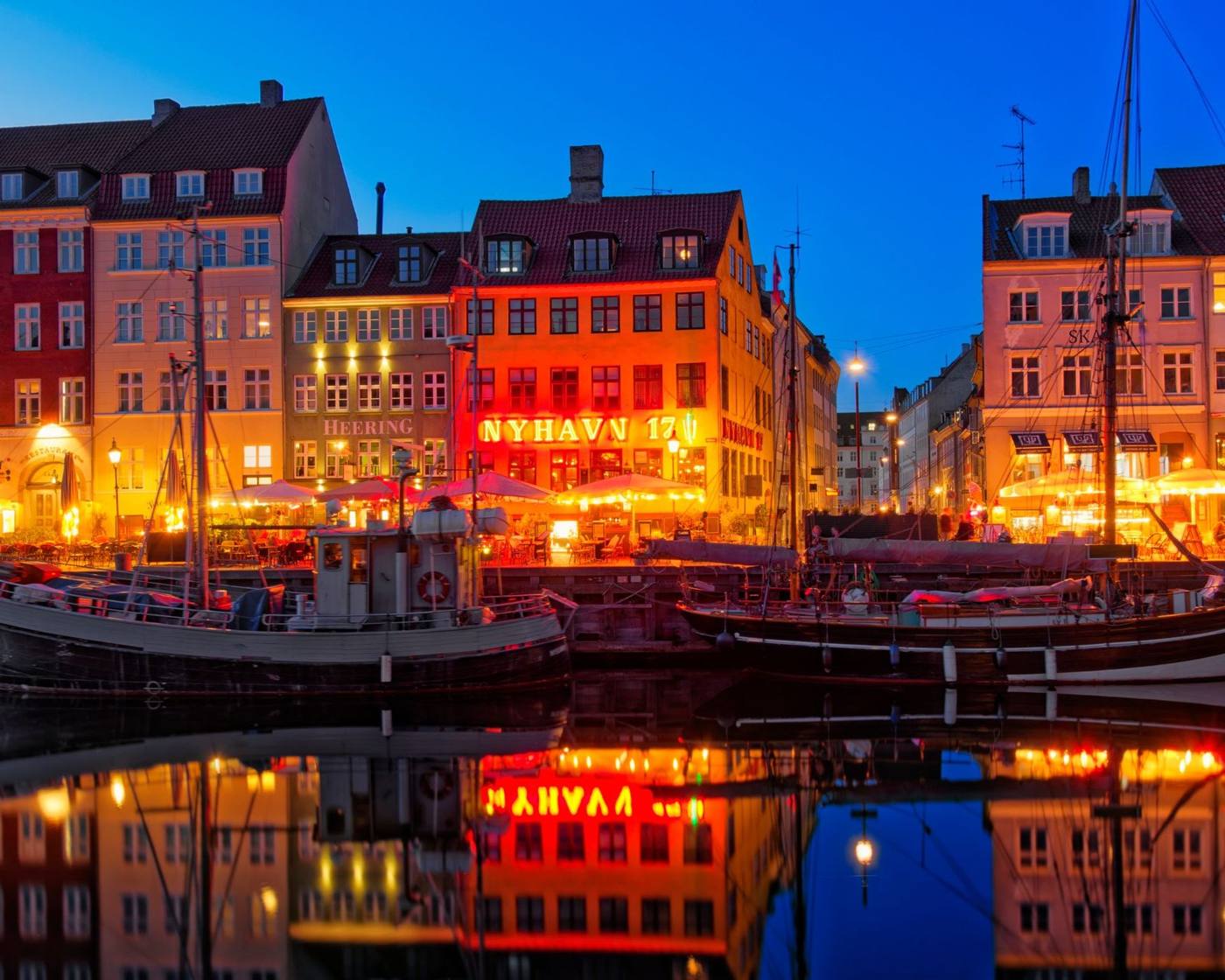
Nyhavn, Christiania and Tivoli Gardens, then Hamlet's castle at Helsingør, the Louisiana museum and the Viking ships of Roskilde.