Havana, Viñales and Trinidad
The capital of vintage cars and music, the tobacco valley and the island's most beautiful colonial town.
- Havana
- Viñales
- Cienfuegos
- Trinidad
Day by day
- Day 1
Arrival in Havana
This trip is the classic first week in Cuba: Havana with its vintage cars and music, the tobacco valley of Viñales, Cienfuegos by the sea and Trinidad, the most beautiful colonial town on the island, with the Valle de los Ingenios and the beach of Playa Ancón.
Before you go: Italian citizens enter Cuba with a passport valid for at least six months after the date of arrival; the electronic identity card is not enough. You need the tourist card, the tourist visa, now issued in electronic form, then the online D'Viajeros form to fill in within 72 hours before arrival, a return ticket and health insurance covering medical costs in Cuba, which is compulsory on entry. The rules change often: check them on the website of the Cuban embassy before you leave. Other nationalities should check their own rules. Some areas on this trip are close to borders or places where the situation changes often: check your government's travel advice before booking and again before you leave.
Power cuts and shortages of fuel and medicines are common on the island: bring a power bank, a torch, your own medicines and cash in euros, because foreign cards often do not work.
You land at José Martí airport, about half an hour from the centre. Use an official taxi or a transfer booked through your accommodation. The best way to stay in Cuba is in casas particulares, rooms rented in family homes, registered and with a sign on the door.
In the evening, take a short walk near your accommodation and go to bed early. Sleep in Havana, for three nights.
Practical tip: change your first euros only at official offices and never on the street.
- Day 2
Old Havana and the Malecón at sunset
Today you discover Habana Vieja, the historic centre, a UNESCO World Heritage Site, with fortresses, churches and colonial mansions, some restored and many still marked by time.
Start in the Plaza de la Catedral, with the baroque façade of the cathedral, then go to the Plaza de Armas, the oldest, with its second hand book stalls and the Castillo de la Real Fuerza, one of the oldest fortresses in the Americas. Continue to the Plaza de San Francisco, by the harbour, and the Plaza Vieja, surrounded by colourful mansions with balconies. Check prices and times for the museums.
Walk along calle Obispo, the pedestrian street of the centre, to the Capitolio, with its great dome, and the Paseo del Prado, the tree lined avenue with marble benches and bronze lions. At midday, stop for something simple, such as a Cuban sandwich or rice and black beans, and drink plenty of water: among the stones of the centre it is hot even in winter.
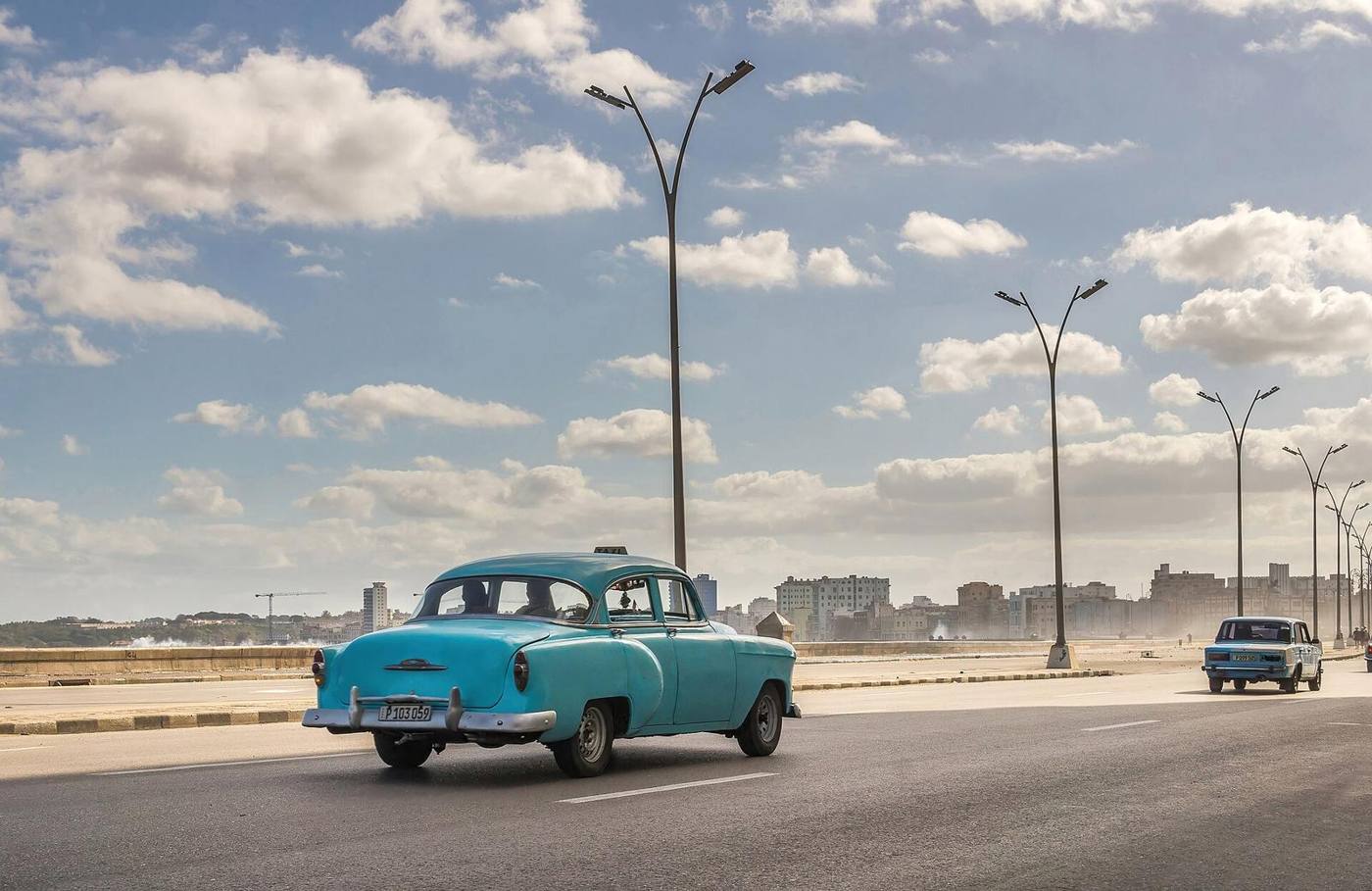
In the late afternoon, get into a vintage American car, one of the big convertibles from the 1950s, for a ride along the Malecón, the seafront, about eight kilometres long. Agree the price and the length of the ride before you get in. At sunset, get out and sit on the wall with the Cubans, among fishermen, couples and musicians.
Practical tip: in the evening, go back by taxi and do not walk alone in dark streets, where thefts are more frequent during power cuts.
- Day 3
Viñales, the mogotes and tobacco on horseback
Today you leave early heading west to Viñales, about three hours by road. The valley, a UNESCO World Heritage Site, is one of the most beautiful landscapes in Cuba: fields of red earth planted with tobacco and the mogotes, limestone hills with sheer sides covered in vegetation, rising from the plain.
Stop at the viewpoint above the valley to see the panorama from above. Then go down into the village of Viñales, a long street of low, colourful wooden houses with a porch and a rocking chair. The village is small and you can walk everywhere.
In the afternoon, take a horse ride with a local guide among the fields and the mogotes. You visit a tobacco farm: the farmer shows you the wooden barn where the leaves hang to dry, explains how they are grown and rolls a cigar in front of you. He often offers you a taste of the farm's coffee and rum too.
Along the way you can stop at a cave with an underground river or at the large mural painted on the side of a mogote. Check prices and times.
In the evening, sit under a porch in the village and listen to the music drifting from the square. Sleep in Viñales, for one night.
Practical tip: agree the price of the horse ride beforehand, ask for a helmet and wear long trousers so the saddle does not rub your legs.
- Day 4
Back to Havana and live music
In the morning, enjoy Viñales at a slow pace. Take a short walk in the fields as the mist lifts from the mogotes, or visit the village botanical garden, a private garden full of tropical plants. Check times.
Then return to Havana, arriving in the early afternoon. Along the road you see the thatched tobacco barns again and oxen ploughing the red fields. Spend the rest of the day in Vedado, the modern district, with its wide tree lined avenues, villas from the 1920s and 1930s and tall buildings overlooking the Malecón. Pass by the Plaza de la Revolución, with the large portrait of Che on the façade of a ministry, and the university, with its grand stairway. Vedado is big: take a taxi between one area and another.
Stop for an ice cream at the famous state ice cream parlour in Vedado, where Cubans queue: it is a very popular experience.
The evening is the time for music. Havana is one of the music capitals of the world: son, salsa, jazz, rumba and bolero are played in small venues, in the courtyards of old buildings and in cultural centres. Ask your accommodation which concerts are on that evening, because programmes change often with the power cuts.
Practical tip: keep small notes in your pocket to tip the musicians, who often pass between the tables with a hat.
- Day 5
Cienfuegos and arrival in Trinidad
Today you head south east to Cienfuegos, about four hours by road. It is called the Pearl of the South: founded in 1819 by French settlers, it has an orderly centre, with straight streets and neoclassical buildings, a UNESCO World Heritage Site.
Start in Parque José Martí, the central square, with the triumphal arch, the cathedral and the Tomás Terry theatre, with its wooden interior and frescoes. Check prices and times. Then walk along the Prado, the long avenue with columns, to the Punta Gorda peninsula, where the Palacio de Valle stands, an early twentieth century building in Moorish style, with domes and colourful decoration. The town is easy to explore on foot or by calesa, the small horse drawn carriage.
After lunch, continue to Trinidad, about an hour and a half away, along the Caribbean coast, with the Escambray mountains on your left. Along the road you pass villages, sugar cane plantations and fields of royal palms, the tree that symbolises Cuba.
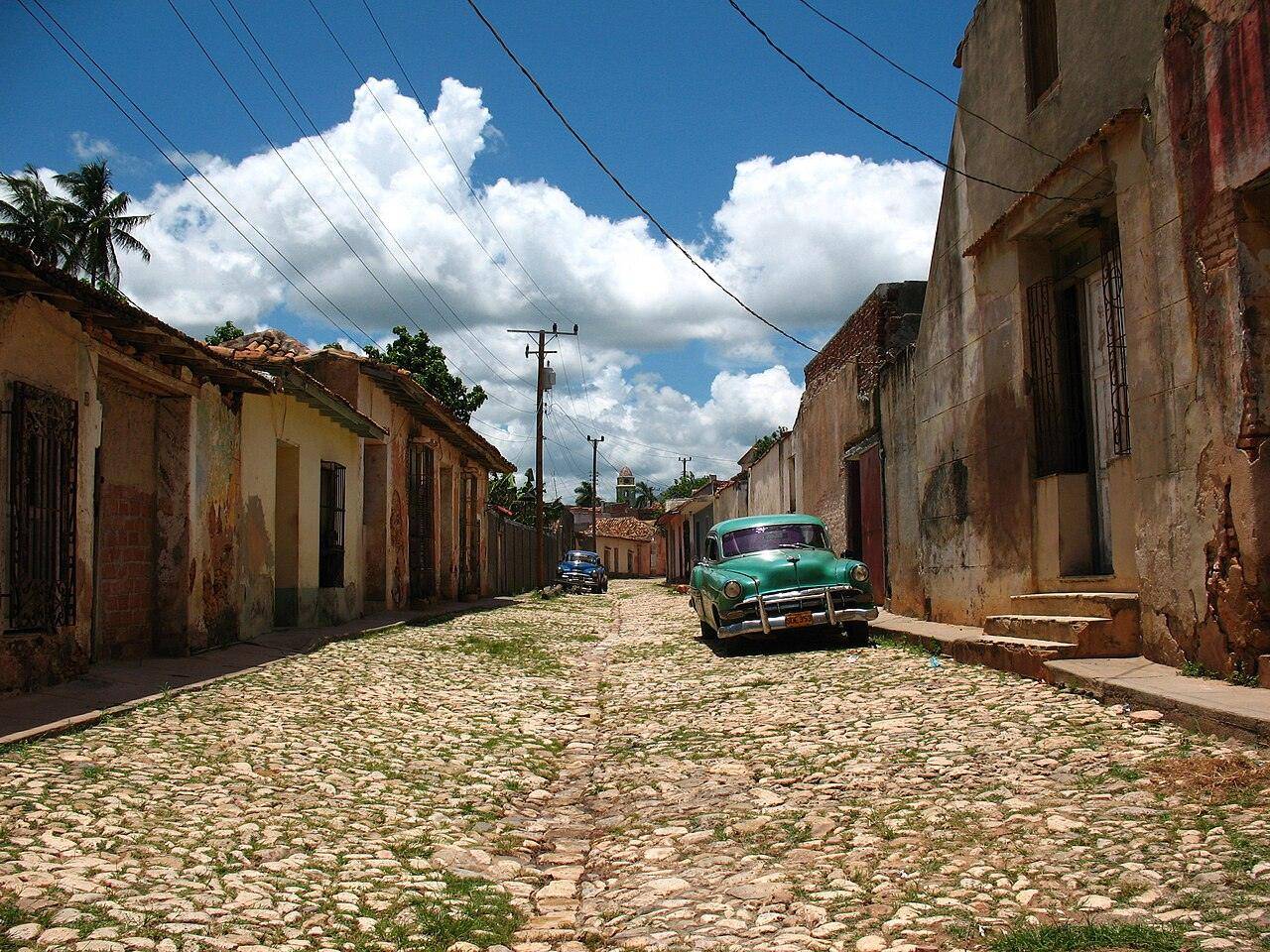
You reach Trinidad in the late afternoon. Take a first stroll in the cobbled streets around the Plaza Mayor, with pastel houses and windows with wooden grilles. Sleep in Trinidad, for two nights.
Practical tip: go to Punta Gorda towards sunset, when the light on the bay is at its best and it is less hot.
- Day 6
Trinidad, the Valle de los Ingenios and Playa Ancón
Today is the day for Trinidad. Founded in the early sixteenth century and made rich by sugar, it is a UNESCO World Heritage Site together with the nearby valley of the sugar mills.
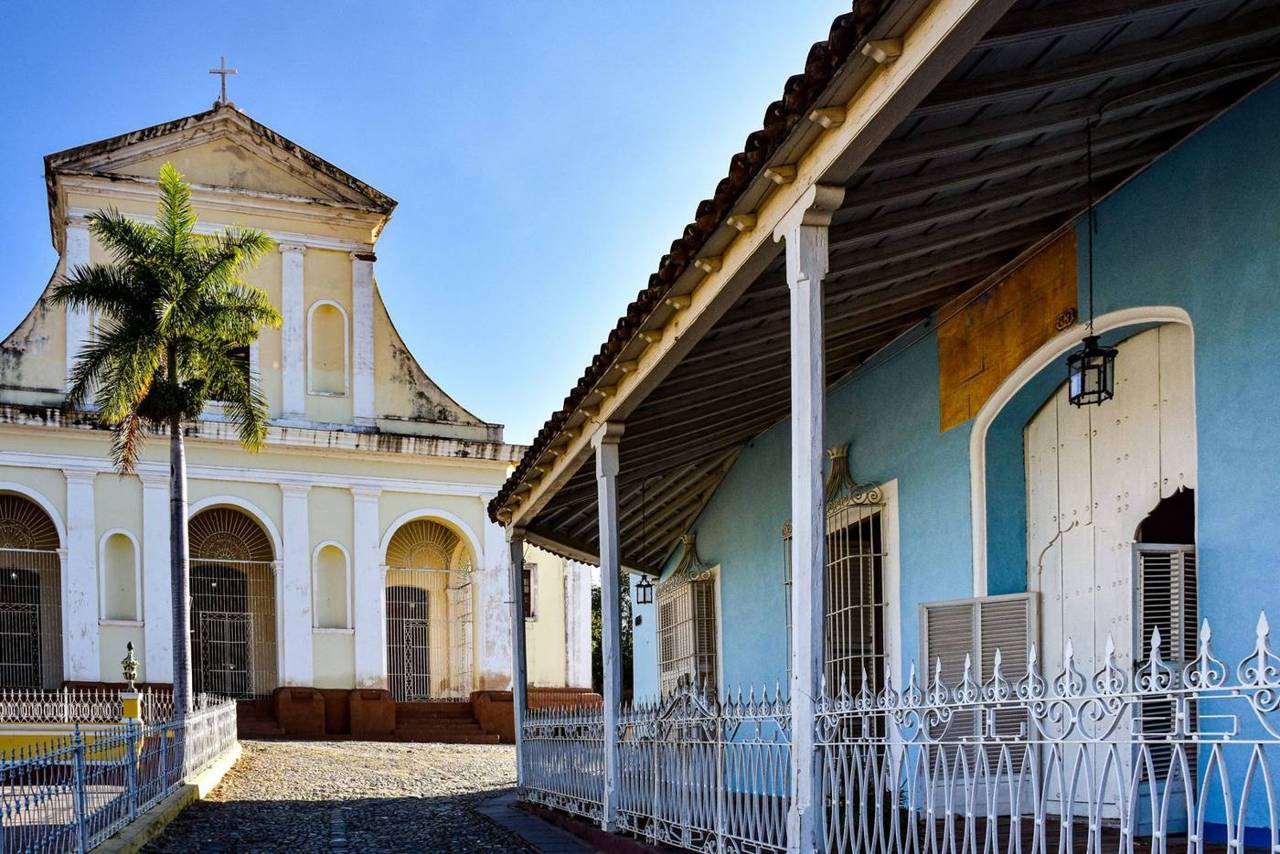
In the morning, visit the Plaza Mayor, with the church of the Holy Trinity and the mansions of the wealthy families, now museums, such as the Museo Romántico. Climb the tower of the Cantero mansion or the bell tower of the old convent of San Francisco, the symbol of the town, to see the red roofs and the sea. Check prices and times.
In the middle of the morning, go to the Valle de los Ingenios, east of the town. In the nineteenth century thousands of enslaved people worked here on the sugar cane plantations. At Manaca Iznaga you see the tower, about 45 metres high, used to watch over the fields, and the manor house, with the great bell that called people to work. Women in the village sell hand embroidery.
In the afternoon, go to Playa Ancón, about twenty minutes from town: a long beach of pale sand on the Caribbean Sea, for a swim until sunset.
In the evening, return to the centre and sit on the stairway beside the Plaza Mayor, where people play music and dance salsa in the open air.
Practical tip: for the valley, hire a car with a driver for half a day, because the old tourist train often does not run during the fuel crisis.
- Day 7
Back to Havana and departure
Today you leave Trinidad. Early in the morning, take a last walk through the empty streets, when the town is silent and the light is soft, then set off for Havana with your driver. It is about five hours by road: if your flight is in the evening, leave early to have a margin; if it is the next morning, spend a night in Havana near the airport.
In these seven days you have seen the most complete Cuba for a first visit: the squares and fortresses of Old Havana, the Malecón at sunset in a vintage car, the music of Vedado, the mogotes and tobacco of Viñales, the neoclassical buildings of Cienfuegos, the cobbles of Trinidad, the tower of Manaca Iznaga and the sea at Playa Ancón.
When to go: the best period runs from November to April, with dry weather and pleasant temperatures. From June to November it is very hot and humid, it often rains in the afternoon and it is hurricane season. Christmas, New Year and Easter are the busiest times.
Before you leave, buy something to take home: coffee, rum, cigars with the official receipt for customs, a piece of embroidery from Trinidad or a painting by a local artist.
Power cuts and shortages are common: set off with realistic expectations, and the kindness of the people will make up for the discomfort.
Practical tip: keep some cash aside until the very end, for the taxi, food and any surprises at the airport.
The perfect first week in Cuba: music, vintage cars, the tobacco valley and the best-preserved colonial town. Casas particulares, rooms in local homes, are the best way to stay and to get to know the island. Be aware that power cuts and shortages are common, so travel with realistic expectations.
Before you go
- Documents and visa
- Passport valid for at least six months after arrival. You need a tourist visa (the tourist card), now issued only in electronic form: apply online on the official eVisa platform, at a Cuban consulate or through an agency; it is valid for up to 90 days and can be extended in Cuba. After the visa, fill in the online D'Viajeros form within 72 hours before arrival and carry the printed QR code. You also need a return or onward ticket. Anyone who has been in Cuba on or after 12 January 2021 can no longer use ESTA for the United States and must apply for a US visa.
- Health and vaccines
- Health insurance covering medical costs in Cuba is compulsory on entry; it is best if it includes repatriation. Hospitals are struggling and often lack medicines and supplies: bring a stock of your own medicines and a first aid kit. Dengue, chikungunya and Oropouche are present: use repellent all day. Drink only bottled water, without ice. No vaccinations are compulsory: ask your doctor.
- Money and payments
- Cuban peso. Since 6 June 2026 Visa and Mastercard cards are no longer accepted and you cannot withdraw cash from ATMs with foreign cards; cards on US networks do not work either. Bring cash in euros or dollars for the whole trip and for emergencies, and change money only at Cadeca offices: changing on the street is illegal. Amounts over 5,000 dollars, or the equivalent, must be declared on arrival.
- Power sockets
- Types A, B, C and L, at 110 volts in most of the country and 220 volts in some newer hotels: bring an adaptor and check that your devices accept 110 volts.
- Time zone
- UTC-5, UTC-4 in summer.
- Safety
- Cuba is going through a severe crisis of fuel, electricity, water and medicines, with long power cuts across the country, cancelled flights and unreliable domestic transport; the UK advises against all but essential travel to the whole island. In the east, after Hurricane Melissa in October 2025, electricity and water remain severely limited. Theft and bag snatching are rising, especially in Havana: do not walk at night, use licensed taxis, do not change money on the street and stay only in registered accommodation. Bring a power bank and a torch. Official advice: GOV.UK.
Information checked in November 2026 for Italian and EU citizens. Rules change: always check before you travel.
Variations
In 5 days: Havana for two days, one night in Viñales and two days in Trinidad, without Cienfuegos.
In 10 days: add three days by the sea, on Cayo Santa María or at Playa Larga, on the Bay of Pigs, before returning to Havana.
Frequently asked questions
What documents do I need for Cuba?
Italian citizens enter with a passport valid for at least six months, the electronic tourist card, the online D'Viajeros form and compulsory health insurance. The rules change often: check them before you leave. Other nationalities should check their own rules.
How do you travel between Havana, Viñales and Trinidad?
The easiest way is a car with a driver or a shared taxi, booked through your accommodation. With the fuel shortage, confirm every transfer the day before.
Where is it best to stay in Cuba?
In casas particulares, registered rooms in family homes, recognisable by the sign on the door: they are the best way to get to know the island. Ask whether they have a generator or a battery for power cuts.
Indicative itinerary written by World Atlas. Before booking, check timetables, seasonal openings, documents and safety.
 15 daysModerate
Cuba from west to east, to Santiago
The whole island: Havana, Viñales, the colonial towns of the centre, the Sierra Maestra, Santiago and a few days by the sea.
 11 daysEasy
Cuba express: Havana, Viñales and Trinidad
The heart of Cuba in under two weeks: colonial Havana, the tobacco valleys of Viñales, timeless Trinidad and the Bay of Pigs.
 22 daysModerate
Cuba libre: the whole island from Havana to Santiago
Three weeks to really see Cuba: Viñales, Varadero, Trinidad, the colonial cities of the centre, the Sierra Maestra, Santiago and Baracoa.