Comfortable Cuba: colonial hotels and a car with driver
The classic loop without surprises: hotels and transport already booked, Havana, Viñales, Trinidad, Santa Clara and a few days by the sea on the Cayos.
- Havana
- Viñales
- Cienfuegos
- Trinidad
- Santa Clara
- Cayo Santa María
Day by day
- Day 1
Welcome to Havana
This is the classic tour of Cuba done at a gentle pace: colonial hotels and transfers booked in advance, a driver for the whole trip, then Havana, Viñales, Cienfuegos, Trinidad, Santa Clara and a few days by the sea on the Cayos. It suits travellers who want to avoid surprises, including families and older parents.
Before you go: Italian citizens enter Cuba with a passport valid for at least six months after the date of arrival; the electronic identity card is not enough. You need the tourist card, the tourist visa, now issued in electronic form, then the online D'Viajeros form to fill in within 72 hours before arrival, a return ticket and health insurance covering medical costs in Cuba, which is compulsory on entry. The rules change often: check them on the website of the Cuban embassy before you leave. Other nationalities should check their own rules. Some areas on this trip are close to borders or places where the situation changes often: check your government's travel advice before booking and again before you leave.
Power cuts and shortages of fuel and medicines are common on the island. Bring a power bank, a torch, your own medicines and cash in euros for the whole trip, because foreign cards do not work. Change money only at Cadeca offices.
At José Martí airport your driver is waiting with a sign. In half an hour you are in the centre of Havana. Choose a hotel in a colonial building in Old Havana with a generator: ask before you book, because it makes all the difference during power cuts.
In the afternoon, rest, then stroll to the Malecón to watch the sunset over the sea. Have an early dinner and go to sleep: tomorrow you meet your guide.
Practical tip: always carry a copy of your passport and of the D'Viajeros form, as hotels and checkpoints may ask for them.
- Day 2
Old Havana with a local guide
Today you visit Old Havana, a UNESCO World Heritage Site, with a local guide. A good guide takes you into the courtyards of the palaces, tells you the story of each square and helps you understand the daily life of Cubans, which is not easy to read on your own.
Start at the Plaza de Armas, with the Castillo de la Real Fuerza, one of the oldest fortresses in the Americas, and the Palacio de los Capitanes Generales, home of the city museum. Then move on to the Plaza de la Catedral, with its baroque facade in coral stone, and the Plaza de San Francisco, open towards the harbour.
Take a break in the Plaza Vieja, the most beautiful of all, surrounded by colourful palaces with iron balconies and half-moon stained-glass windows. From here follow Calle Mercaderes and Calle Obispo, with their old pharmacies, bookshops and craft workshops.
In the afternoon, after a rest at your hotel, take your time at the Museo Nacional de Bellas Artes, dedicated to Cuban art from colonial times to today. Check prices and times. In the evening your guide can suggest a quiet place to listen to live music.
The streets of Old Havana have broken pavements and potholes: watch where you step, especially if you are travelling with older people.
Practical tip: agree with your guide on breaks in the shade and in courtyards, because the humid midday heat is very tiring.
- Day 3
Classic cars, Vedado and the cannon shot
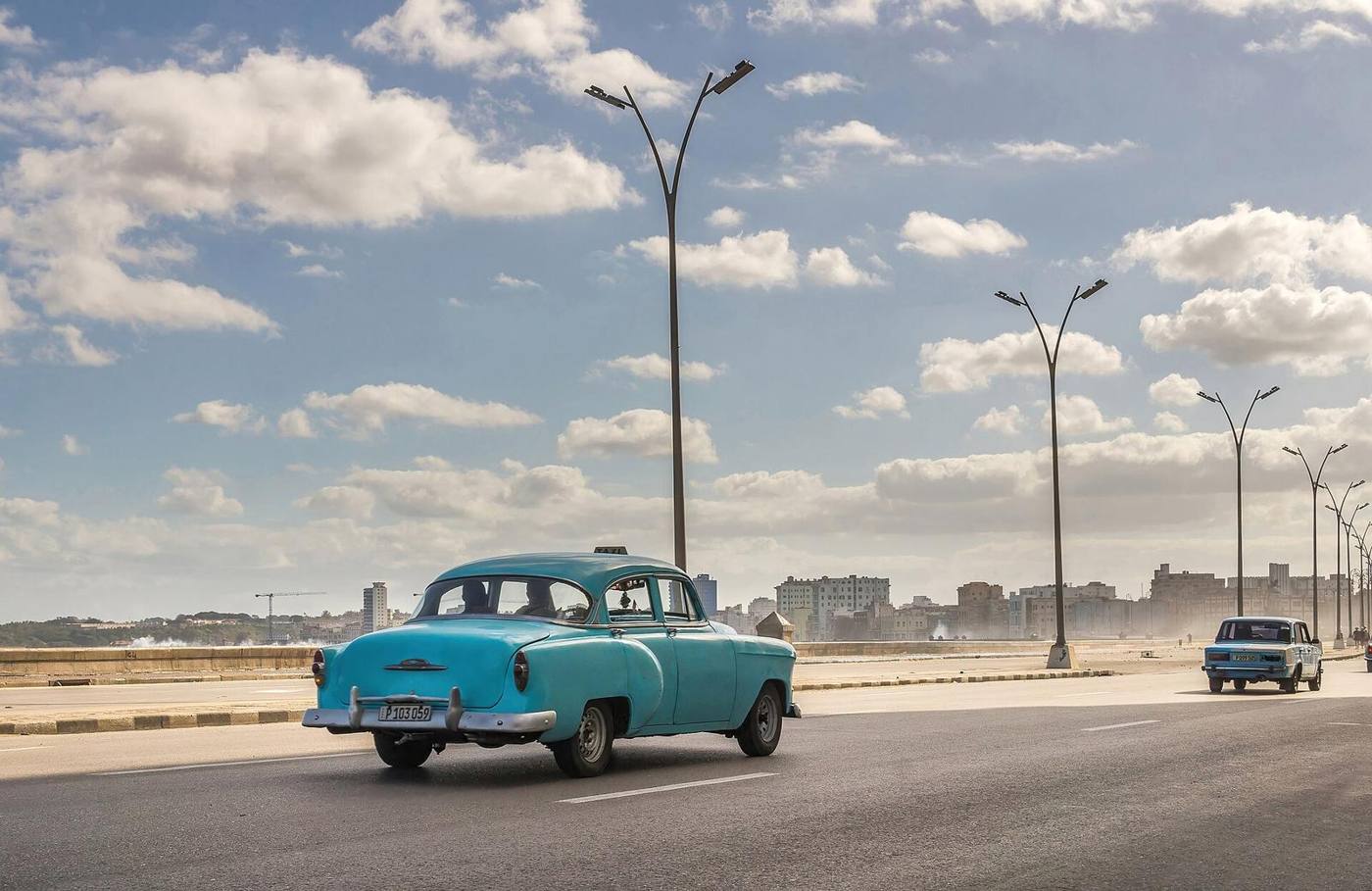
Today you see modern Havana. In the morning, take a ride of a couple of hours in an open-top American car from the 1950s, with a driver. It is a tourist experience, but fun, and it lets you cover long distances without effort.
Drive along the Malecón to Vedado, the district of wide avenues, villas and mid-twentieth-century buildings. Stop at the Plaza de la Revolución, the huge square with the José Martí memorial and the faces of Che Guevara and Camilo Cienfuegos on the facades of the ministries. Continue to the Bosque de La Habana, a park with enormous trees along the Almendares river.
Then head to Jaimanitas, on the western edge of the city, to see Fusterlandia: the artist José Fuster has covered the houses of his neighbourhood in colourful mosaics, with figures, palms and suns. You walk among the houses, respecting the people who live there.
Rest in the afternoon. In the evening your driver takes you across the bay to the fortress of San Carlos de la Cabaña, where every night at nine soldiers in eighteenth-century uniforms fire a cannon, as when the city gates were closed. Check prices and times.
At night in Havana, get around only with your driver or with authorised taxis.
Practical tip: in an open-top car the sun is fierce, so bring a hat, sunglasses and a bottle of water.
- Day 4
To Viñales, with a stop at Las Terrazas
Leave Havana in the morning with your driver and head west. After about an hour on the motorway, turn off towards the Sierra del Rosario, a UNESCO biosphere reserve, and reach Las Terrazas, a community founded in the late 1960s with a large reforestation project.
The white houses of the village look over a small lake. Visit the ruins of a nineteenth-century coffee plantation, built by French settlers, and swim in the natural pools of the San Juan river, if the water is clean. These are short, easy walks.
Then continue to Viñales, in the province of Pinar del Río. The landscape becomes the one on the postcards: fields of red earth, tobacco, royal palms and the mogotes, limestone hills with vertical walls. The valley is a UNESCO cultural landscape.
In the late afternoon, visit a tobacco farm. The farmer shows you the wooden drying barn, where the leaves hang from the ceiling, and explains how cigars are fermented and rolled. At sunset, go up to the viewpoint above the village, when the valley turns orange.
Sleep in Viñales for two nights, in a hotel with a view of the valley or in a comfortable registered casa particular.
Practical tip: in Viñales winter nights can be cool, so bring a light sweatshirt for the evening.
- Day 5
The Viñales valley at a gentle pace
Today you explore the valley without hurrying. In the morning your driver takes you to the Los Jazmines viewpoint, where you can see the whole valley, with the mogotes rising from the plain like islands. It is the best spot for photos, while the light is still soft.
Then go to the Cueva del Indio, a cave you visit partly on foot and partly in a motorboat along an underground river. It is a short visit, suitable for children too. Check prices and times.
Further on you see the Mural de la Prehistoria, a large colourful painting on the side of a mogote, made in the 1960s, which tells the story of the evolution of life. It is not ancient, but it is very striking.
In the afternoon, if you like, take a horse ride with a guide through the tobacco fields, at a slow pace: it is the traditional way of getting around the valley. Those who prefer can take a short walk on the flat or stay at the hotel and look at the valley from the terrace.
In the evening, try the farmhouse cooking: roast pork, rice with black beans, cassava and fried plantains. They are simple dishes, made with whatever is available.
The horses should be in good health with saddles in good order: if they do not convince you, simply say no.
Practical tip: tomorrow's drive to Cienfuegos is long, so ask your driver to leave early so that you arrive in daylight.
- Day 6
Cienfuegos, the pearl of the south
Today is a long travel day. From Viñales you head back towards Havana and take the motorway east, then drop down to the south coast to Cienfuegos. It is several hours on the road: stop regularly and bring water and something to eat.
Cienfuegos was founded in 1819 by French settlers from Bordeaux and Louisiana. Its centre, with straight streets and neoclassical buildings, is a UNESCO World Heritage Site and feels very different from the other colonial cities of Cuba.
In the late afternoon, walk around the Parque José Martí, the main square, with its triumphal arch, the cathedral and the Tomás Terry theatre, opened at the end of the nineteenth century, with an auditorium made entirely of wood. Check prices and times to go in.
Then your driver takes you to Punta Gorda, the peninsula south of the city, along the Malecón. Here you find the elegant villas of the early twentieth century and the Palacio de Valle, a Moorish-style building with towers and decorations. At sunset the view over the bay is lovely.
Sleep in Cienfuegos for one night, in a historic hotel near the square.
Do not travel at night on Cuban roads: there are few lights and signs, and there are carts, bicycles and animals.
Practical tip: if you are travelling with children, bring games and music for the car, because on some days you will spend many hours sitting down.
- Day 7
Along the coast to Trinidad
Leave Cienfuegos at a relaxed pace. The road to Trinidad runs between the Caribbean coast and the Escambray mountains, with little traffic and fine views. You arrive in about two hours, with time for a few photos along the coast.
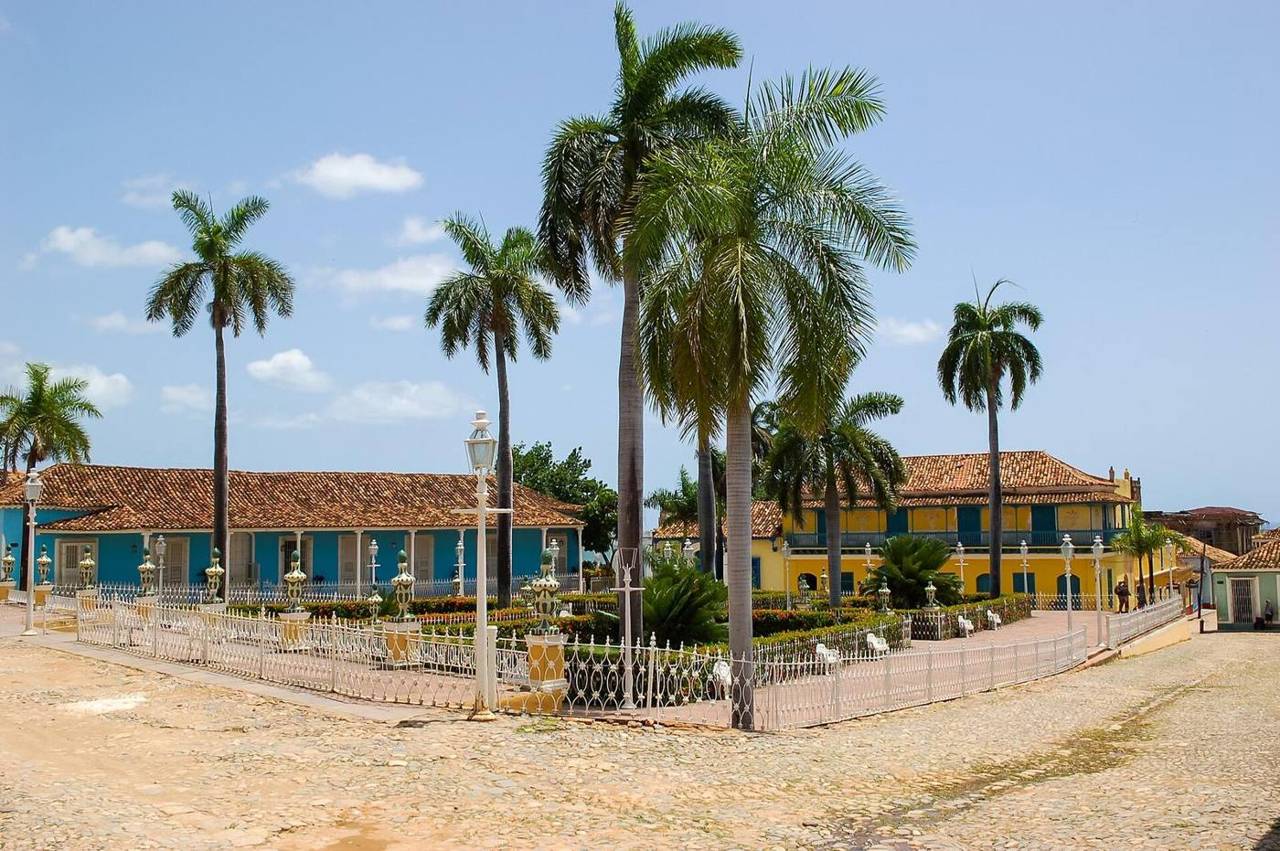
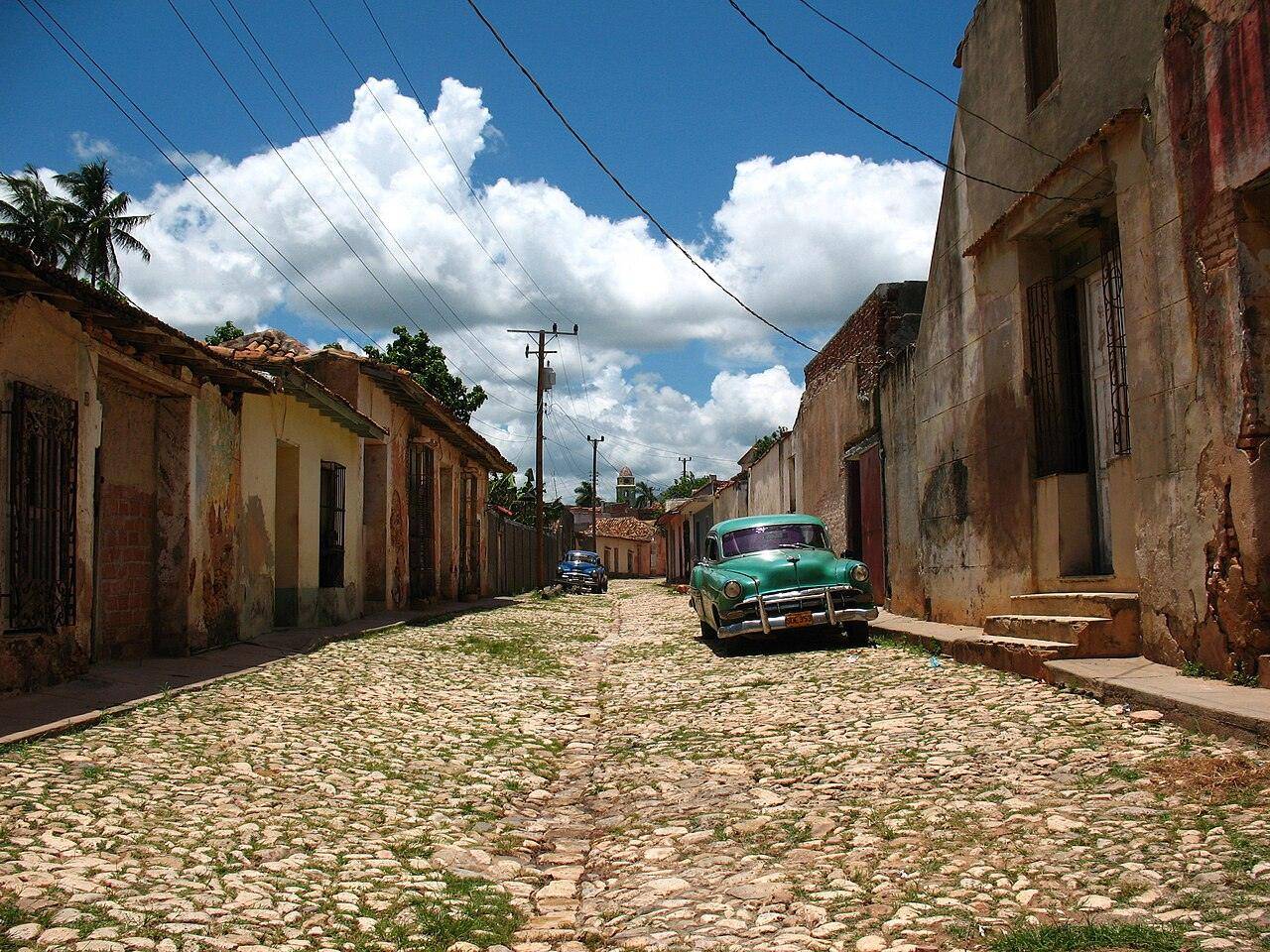
Trinidad is a small colonial town founded in 1514 that grew rich on sugar in the nineteenth century. Together with the Valle de los Ingenios, it is a UNESCO World Heritage Site. The centre has remained almost intact: cobbled streets, low pastel-coloured houses, large windows with wooden grilles.
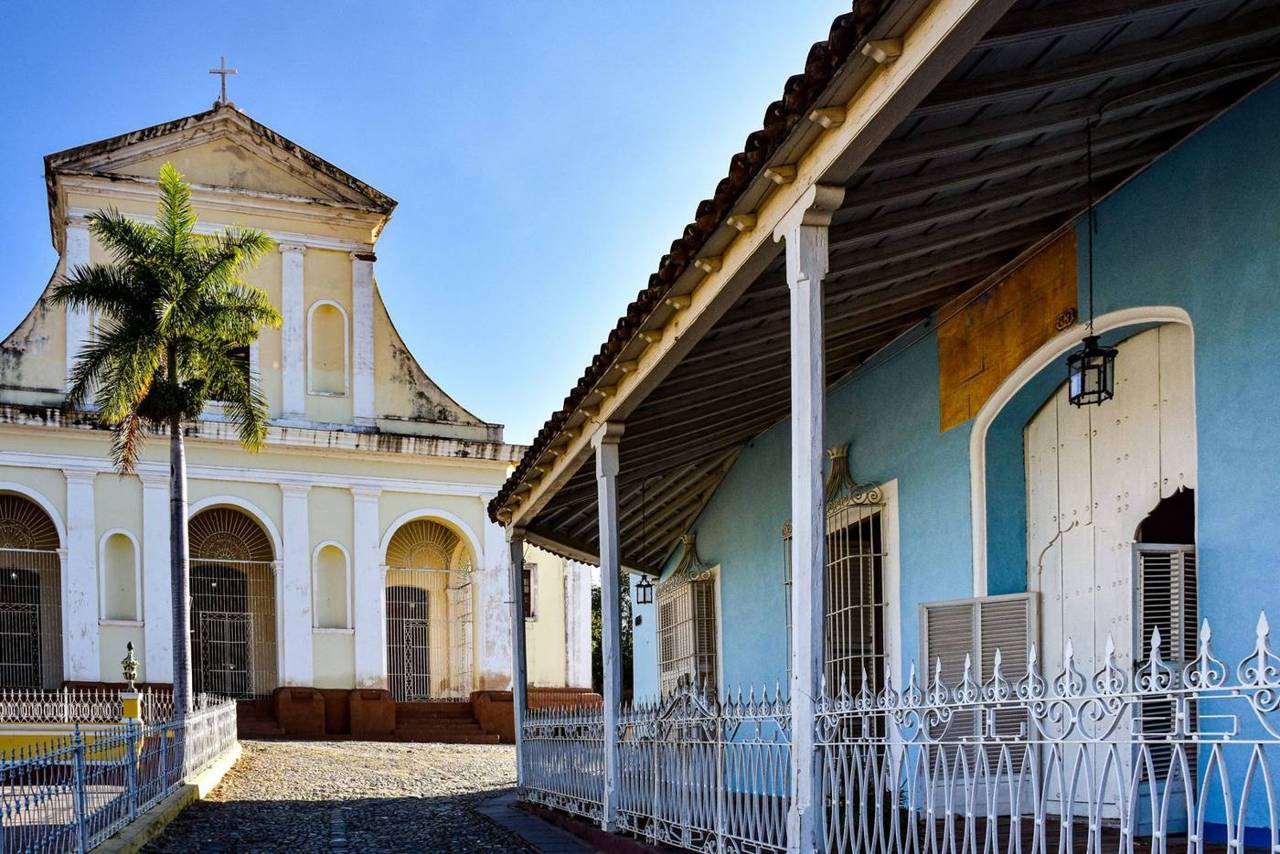
After leaving your bags at the hotel, walk to the Plaza Mayor, the heart of the town, with its palms, iron benches and the church of the Santísima Trinidad. Around it stand the mansions of the great sugar barons, now museums. Visit the Museo Romántico, with its nineteenth-century furniture and porcelain. Check prices and times.
In the afternoon, rest in the hotel courtyard, then go out at sunset, when the streets fill with people and music. On the steps near the Plaza Mayor there is playing and dancing almost every evening.
Sleep in Trinidad for three nights. Keeping the same room for several days makes the trip much more restful.
Practical tip: wheeled suitcases do not roll on Trinidad's cobbles, so ask your driver to drop you as close as possible to your hotel.
- Day 8
The Valle de los Ingenios
Today you visit the Valle de los Ingenios, a few kilometres from Trinidad. In the nineteenth century there were dozens of sugar mills here, called ingenios, where thousands of enslaved people brought from Africa were forced to work. It is a very beautiful place, but also a hard one to talk about.
First stop at the viewpoint on the road, from where you see the whole green valley with the mountains behind. Then go to Manaca Iznaga, the old estate of one of the richest families. The tall, slender tower was used to watch over the work in the fields. If you feel up to it, climb the wooden stairs to the top for a wide view of the valley. Check prices and times.
Around the tower, the women of the village sell hand-embroidered tablecloths and lace. It is a traditional craft of the area.
Also visit the ruins of another sugar mill, with the main house, the slave quarters and the remains of the sugar machinery. Your guide helps you understand how everything worked.
Return to Trinidad for lunch and rest in the afternoon. In the evening, walk up towards the Ermita de la Popa, above the town, to see the roofs at sunset, or stay in the streets of the centre.
Practical tip: the stairs of the Manaca Iznaga tower are steep and narrow, so if you are travelling with small children or older people, it is fine to stay at the bottom.
- Day 9
The sea at Playa Ancón
Today is a day of rest by the sea. About a quarter of an hour by car from Trinidad lies Playa Ancón, a long beach of pale sand on a peninsula that stretches into the Caribbean Sea. The water is warm and usually calm.
Arrive in the morning, when there are few people and the sun is gentler. Hire a parasol or look for shade under the palms. With a mask and snorkel you can see a few fish near the rocks, but to reach the coral reef you need a boat trip, which you can ask about locally.
On the way to Ancón you pass through La Boca, a small fishing village at the mouth of a river, with wooden houses and a little beach popular with Cuban families. It is a good place for a quiet break and to see life on the coast.
In the afternoon, return to Trinidad. Take one last walk around the centre: climb the bell tower of the municipal history museum to see the roofs and the mountains, or go into one of the pottery workshops the town is known for.
At the beach, bring everything you need: water, sun cream, a hat and something to eat, because services on the beach can be limited.
Practical tip: do not leave bags and phones unattended on the sand while you swim, take turns with your travel companions.
- Day 10
Santa Clara and the memory of Che
Leave Trinidad in the morning and cross the Escambray mountains or the plain to Santa Clara, the city linked to Ernesto Che Guevara. The journey takes a few hours.
At the end of December 1958 the rebels led by Che took Santa Clara, one of the last battles before the fall of the dictator Batista. At the Tren Blindado monument you see the carriages of the armoured train that the rebels derailed, with a small museum inside.
Then visit the large memorial complex dedicated to Che, with the bronze statue looking over the city. Below it is the mausoleum, where since 1997 his remains have rested together with those of some companions who died in Bolivia, and a museum with photographs and personal belongings. The visit is silent and controlled: no photos are allowed inside and bags are left at the entrance. Check prices and times, because opening days can change.
In the afternoon, stroll in the Parque Vidal, the main square, where locals sit on benches under the trees. Santa Clara is a lively university city with few tourists. In the evening, young people gather around the square to chat and listen to music.
Sleep in Santa Clara for one night.
Practical tip: at the mausoleum, dress soberly and leave valuables in the car, because the bag deposit is very basic.
- Day 11
Remedios and the road over the sea to Cayo Santa María
Leave Santa Clara in the morning and head north. In less than an hour you reach Remedios, one of the oldest towns in Cuba, small and quiet, with a tree-lined square and two churches. The main church has a very rich gilded altar.
Remedios is famous for the Parrandas, the festival on Christmas Eve, when the districts of the town compete with illuminated floats and fireworks. If you are not travelling in December, you can see the floats and the photographs in the small museum dedicated to the festival. Check prices and times.
Then you pass through Caibarién, a fishing town, and take the pedraplén, a causeway built across the sea, almost fifty kilometres long, linking the small islands of the archipelago. On either side the water is shallow and changes colour from green to turquoise, and you often see herons and pelicans.
You arrive at Cayo Santa María, an island of white sand beaches within a UNESCO biosphere reserve. There are only large resorts here, nearly all of them all-inclusive. With the crisis some have closed: book only places that are open and confirmed a few days in advance.
Sleep on Cayo Santa María for four nights, and let your hotel arrange the excursions.
Practical tip: bring insect repellent, because at sunset on the islands the sandflies bite a lot.
- Day 12
A beach day on the Cayos
Today you do not have to go anywhere. After many days of cities and roads, enjoy the beach of Cayo Santa María, with fine, very white sand and the shallow, calm water of the Atlantic Ocean, protected by the coral reef.
In the morning, take a long walk along the shore while the sand is still cool. The beach is often almost empty and you can walk for kilometres between the dunes and the low vegetation. It is also the best time to swim, before the sun gets strong.
During the hottest hours, rest in the shade. If you are travelling with children, the shallow sea is perfect for playing safely near the shore, but always keep an eye on the currents and the flags on the beach.
In the afternoon, try a canoe or a pedalo, if available, or go snorkelling near the rocks. With a mask and snorkel you see colourful fish and starfish.
In the evening, watch the sunset over the sea. On the Cayos, power cuts may be less frequent than in the cities, because many resorts have generators, but hot water and services can still be missing.
The Caribbean sun burns quickly, even when it is windy: use high-factor sun cream, put it on often and wear a T-shirt in the water.
Practical tip: bring a refillable bottle from home, so you can fill up with drinking water where available and use fewer plastic bottles.
- Day 13
By boat among the islands
Today you go out by boat. On the Cayos there are catamaran trips to the coral reef and the nearby islets, with stops for snorkelling and swimming on beaches that can only be reached from the sea. Book the trip through your hotel and check that it is confirmed, because with the fuel crisis trips can be cancelled.
The boat leaves in the morning. As you sail, you see the water change colour over the sandbanks and the roots of the mangroves. Once at the reef, get into the water with mask and fins: there are corals, sea fans, parrotfish, butterflyfish and sometimes turtles and rays.
After snorkelling, the boat stops at an isolated beach for lunch and a swim. It is the most relaxing moment of the day.
In the afternoon you return to Cayo Santa María. Rest and, at sunset, take a walk on the beach to watch the birds flying back to the mangroves.
Do not touch the corals or stand on them with your fins: they are alive and break easily. Use a reef-friendly sun cream.
If the sea is rough, do not hesitate to give up: a day on the beach is better than a difficult outing, especially with children.
Practical tip: if you suffer from seasickness, take a tablet before boarding and stay out on deck, looking at the horizon.
- Day 14
Last day by the sea and Cayo Las Brujas
It is your last day on the Cayos. In the morning, take a short trip to Cayo Las Brujas, the islet you pass on the causeway, with a quieter beach and a small marina. From here you can clearly see the difference between the shallow water of the bay and the open sea.
On the way, stop where the vegetation reaches the water: many birds live among the mangroves, such as great egrets, brown pelicans and, with a little luck, pink flamingos in the inner lagoons. Bring binoculars, if you have them.
Return to Cayo Santa María for lunch and spend the afternoon by the sea, with a last swim. Then pack your bags calmly: tomorrow is a long day.
In the evening, watch the sunset from the beach and confirm with your driver the departure time for tomorrow morning. Also ask whether he has enough fuel for the whole journey, or where he plans to fill up.
In these days you have seen a Cuba very different from the cities: sea, mangroves and low islands. It is a useful break before returning to Havana.
Remember to check your flight home: airlines can change times at short notice, so check on their website or with your travel agent.
Practical tip: keep a change of clothes, your medicines and your documents in your hand luggage, so tomorrow's journey is more comfortable.
- Day 15
Back to Havana
Today you drive back to Havana. It is a long day on the road: from Cayo Santa María you cross the causeway again, then pass through Remedios and Santa Clara and take the motorway west. Leave early and plan regular stops. With the stops, allow almost the whole day.
On the way you can stop in Matanzas, the city of bridges, on the sea, or at the Bacunayagua bridge, the highest in Cuba, from which you see a green valley full of royal palms running down to the coast. It is a good chance to stretch your legs before the final stretch.
You reach Havana in the afternoon. After leaving your bags at the hotel, take a last walk in Old Havana or on the Malecón. If you still have some shopping to do, look for books, vintage posters, coffee or rum in the official shops.
In the evening, have a relaxed dinner and enjoy your last Cuban night, perhaps with some live music in a place recommended by your guide.
Remember that rum and cigars have limits for export and for entry into Europe: check the permitted quantities before you buy.
Sleep in Havana for one night, in a hotel with a generator.
Practical tip: for your departure, keep some cash in euros aside for any unexpected costs at the airport.
- Day 16
Departure
Last day. Depending on your flight time, have a final relaxed breakfast and a short walk. Your driver takes you to José Martí airport well in advance, because checks can be slow and sometimes the power goes off even at the airport.
In sixteen days you have seen the best of classic Cuba without stress: Old Havana with a guide, the classic cars and the mosaics of Fusterlandia, the mogotes and tobacco farms of Viñales, the French city of Cienfuegos, the colonial streets and the Valle de los Ingenios at Trinidad, the memory of Che in Santa Clara and a few days of white and turquoise sea on the Cayos. Having a driver and hotels booked in advance allowed you to face the fuel, power and transport problems calmly.
When to go: the best time is from November to April, the dry season, with hot but less humid days and a calm sea. December and January are the coolest and most popular months, so book early. From June to November it is very hot, it often rains in the afternoon and it is hurricane season: in those months follow the forecasts closely.
Practical tip: before you leave, give a good tip to your driver and your guide, who were the key to the trip: in Cuba tips are an important part of their income.
In Cuba logistics are the hardest part: fuel shortages, blackouts, public transport that falls through. Having everything booked with a driver makes the difference between a stressful trip and a relaxed one. Suitable even when travelling with parents or children.
Before you go
- Documents and visa
- Passport valid for at least six months after arrival. You need a tourist visa (the tourist card), now issued only in electronic form: apply online on the official eVisa platform, at a Cuban consulate or through an agency; it is valid for up to 90 days and can be extended in Cuba. After the visa, fill in the online D'Viajeros form within 72 hours before arrival and carry the printed QR code. You also need a return or onward ticket. Anyone who has been in Cuba on or after 12 January 2021 can no longer use ESTA for the United States and must apply for a US visa.
- Health and vaccines
- Health insurance covering medical costs in Cuba is compulsory on entry; it is best if it includes repatriation. Hospitals are struggling and often lack medicines and supplies: bring a stock of your own medicines and a first aid kit. Dengue, chikungunya and Oropouche are present: use repellent all day. Drink only bottled water, without ice. No vaccinations are compulsory: ask your doctor.
- Money and payments
- Cuban peso. Since 6 June 2026 Visa and Mastercard cards are no longer accepted and you cannot withdraw cash from ATMs with foreign cards; cards on US networks do not work either. Bring cash in euros or dollars for the whole trip and for emergencies, and change money only at Cadeca offices: changing on the street is illegal. Amounts over 5,000 dollars, or the equivalent, must be declared on arrival.
- Power sockets
- Types A, B, C and L, at 110 volts in most of the country and 220 volts in some newer hotels: bring an adaptor and check that your devices accept 110 volts.
- Time zone
- UTC-5, UTC-4 in summer.
- Safety
- Cuba is going through a severe crisis of fuel, electricity, water and medicines, with long power cuts across the country, cancelled flights and unreliable domestic transport; the UK advises against all but essential travel to the whole island. In the east, after Hurricane Melissa in October 2025, electricity and water remain severely limited. Theft and bag snatching are rising, especially in Havana: do not walk at night, use licensed taxis, do not change money on the street and stay only in registered accommodation. Bring a power bank and a torch. Official advice: GOV.UK.
Information checked in November 2026 for Italian and EU citizens. Rules change: always check before you travel.
Variations
In 10 days do Havana, Viñales and Trinidad, with two days by the sea at Playa Ancón instead of the Cayos.
In 20 days add Camagüey and Santiago de Cuba with a domestic flight, or a few more days in Varadero.
Frequently asked questions
Why is it worth having a driver for the whole trip?
Because in Cuba fuel, buses and domestic flights are uncertain. A private driver booked in advance knows where to find fuel, knows the roads and saves you hours of waiting. Always confirm the service a few days before you leave.
Is this trip suitable for children or elderly parents?
Yes, because the stages are comfortable and the transfers are organised. Choose hotels with a generator and a lift, bring all the medicines you need and insurance with high medical cover: hospitals are struggling.
Is everything all-inclusive on the Cayos?
On Cayo Santa María there are mostly large all-inclusive resorts. With the crisis some are closed or running reduced services: book only confirmed places and check recent reviews.
Indicative itinerary written by World Atlas. Before booking, check timetables, seasonal openings, documents and safety.
 7 daysEasy
Havana, Viñales and Trinidad
The capital of vintage cars and music, the tobacco valley and the island's most beautiful colonial town.
 15 daysModerate
Cuba from west to east, to Santiago
The whole island: Havana, Viñales, the colonial towns of the centre, the Sierra Maestra, Santiago and a few days by the sea.
 11 daysEasy
Cuba express: Havana, Viñales and Trinidad
The heart of Cuba in under two weeks: colonial Havana, the tobacco valleys of Viñales, timeless Trinidad and the Bay of Pigs.