Bogotá, Villa de Leyva and Zipaquirá
The Gold Museum and La Candelaria in Bogotá, the salt cathedral of Zipaquirá and the great colonial square of Villa de Leyva.
- Bogotá
- Monserrate
- Zipaquirá
- Villa de Leyva
- Bogotá
Day by day
- Day 1
Bogotá: La Candelaria and the Gold Museum
Bogotá, the capital of Colombia, lies on an Andean plateau at about 2,600 metres, at the foot of the Monserrate and Guadalupe mountains. It is a huge city of almost eight million people, with world-class museums, a colonial old town and a lively cultural life. Around it, on the Cundinamarca and Boyacá plateau, are the salt cathedral of Zipaquirá and Villa de Leyva, one of the country's most beautiful colonial towns. In six days you see Bogotá, Zipaquirá and Villa de Leyva.
You arrive at El Dorado airport, with direct flights from Europe. On the first day, after the flight, take it easy: you feel the altitude.
In the afternoon, walk around La Candelaria, the historic centre, with colonial houses painted in bright colours, wooden balconies, murals and churches. Visit Plaza de Bolívar, the main square, with the cathedral, the Capitol and the Palace of Justice, and the nearby Gold Museum, one of the most important museums in Latin America, with about thirty thousand gold objects from pre-Columbian cultures. The finest room is the one with the Muisca raft, the small gold sculpture that tells of the El Dorado ceremony on Lake Guatavita.
In the evening, try ajiaco, the chicken, potato and corn soup typical of Bogotá, and hot chocolate with cheese.
In the evening, sleep in La Candelaria or Chapinero.
Practical tip: before your flight, fill in the Check-MIG entry form. The United States has Colombia at level 3: in Bogotá in the evening, get around by taxis booked through an app and do not walk alone in the old town after dark.
- Day 2
Bogotá: the Botero Museum and the Monserrate cable car
In the morning, visit the Botero Museum in La Candelaria, with the works that the Medellín painter and sculptor Fernando Botero gave to the city: his paintings of round, voluminous figures, and also his private collection, with works by Picasso, Monet, Renoir, Dalí and other great European artists. The museum is part of a complex with other art spaces and the Casa de la Moneda, in the same old colonial houses.
Then go up Monserrate, the mountain that dominates the city from the east, at about 3,150 metres, by the cable car or funicular that start from the foot of the mountain, near the centre. At the top there is a white seventeenth-century sanctuary, a place of pilgrimage, and from here you see the whole of Bogotá, enormous, spreading over the plateau to the horizon. Fit walkers can climb the stepped trail in about an hour and a half, but the altitude makes it tiring.
In the afternoon, explore the Usaquén district in the north of the city, an old colonial village absorbed by Bogotá, with its square and church. On Sundays there is a large craft market.
If you are in Bogotá on a Sunday, try the Ciclovía: dozens of kilometres of main roads closed to cars and open to bikes, runners and skaters, a Bogotá tradition for over forty years.
In the evening, sleep in Bogotá.
Practical tip: go up Monserrate in the morning or early afternoon. The walking trail has opening hours and safety rules: check them beforehand.
- Day 3
Zipaquirá and the salt cathedral
In the morning, go to Zipaquirá, about fifty kilometres north of Bogotá, in about an hour and a half by car or bus, depending on traffic. At weekends there is also a historic tourist train from Bogotá.
Zipaquirá is a colonial town with a large central square and cathedral, but it is famous above all for its salt cathedral, built inside a rock-salt mine still in use, which the Muisca were already working before the Spanish arrived.
The present cathedral was inaugurated in 1995, about one hundred and eighty metres below the surface, replacing an older one that had become unsafe. You descend a tunnel with the fourteen Stations of the Cross, carved in salt and lit by coloured lights, to the three naves dug into the rock, with the great salt cross about sixteen metres high. The grey salt walls, the very high ceilings and the silence create a very special atmosphere, even for non-believers.
The visit takes about an hour and a half. Inside the mine there is also a small museum on the history of salt mining and a light show.
In the afternoon, walk around the centre of Zipaquirá, then continue north to Villa de Leyva, in Boyacá department, about two and a half hours away, across the green hills of the plateau.
In the evening, sleep in Villa de Leyva.
Practical tip: in the mine the temperature is cool and constant, around fifteen degrees. Bring a light jacket and shoes with non-slip soles.
- Day 4
Villa de Leyva: the square and the fossils
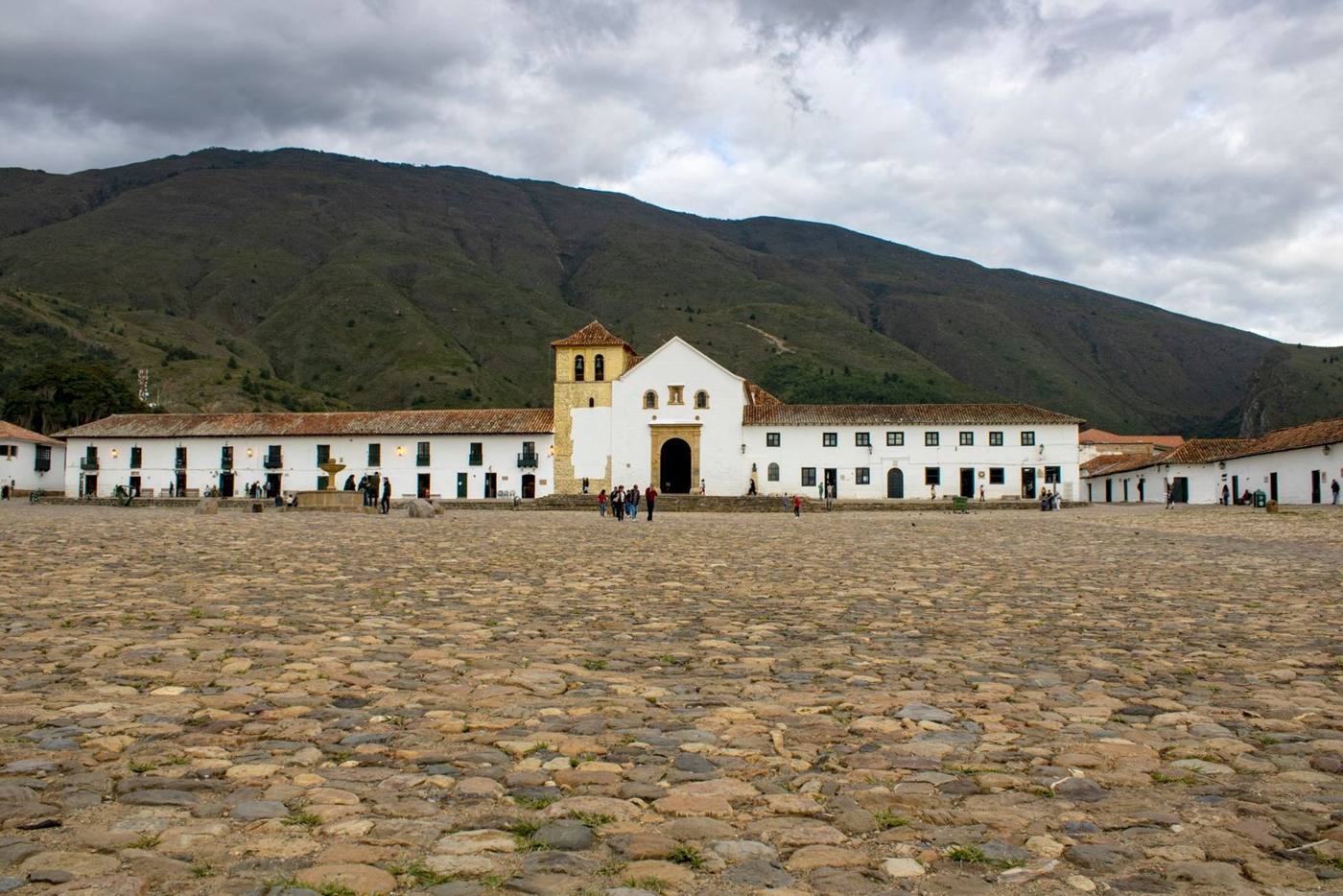
Villa de Leyva, founded in 1572, is one of Colombia's best-preserved colonial towns, declared a national monument in 1954. The houses are white with tiled roofs and green wooden balconies, the streets are of stone and the surrounding landscape is arid, with bare hills and clear skies.
In the morning, walk across the Plaza Mayor, one of the largest squares in South America, almost entirely paved with rough stones, with a fountain in the middle and the parish church on one side. Then visit the centre with its churches, convents and small museums in historic houses, such as the house of the painter Luis Alberto Acuña or that of Antonio Nariño, hero of independence.
In the afternoon, explore the area's fossils. Millions of years ago there was sea here, and the ground is full of shells and ammonites. A few kilometres from town, at the Fossil Museum, you see the almost complete fossil of a kronosaurus, a large marine reptile from about one hundred and twenty million years ago, found by a farmer in 1977 and left where it was discovered. Nearby is the El Infiernito archaeological park, with Muisca standing stones used as a solar observatory.
At sunset, return to the square, when the lights come on and people sit on the stones.
In the evening, sleep in Villa de Leyva.
Practical tip: at weekends and on public holidays Villa de Leyva fills up with visitors from Bogotá. If you can, come on a weekday.
- Day 5
Villa de Leyva: the Candelaria desert and the blue pools
In the morning, explore the surroundings of Villa de Leyva by bike, on horseback or by car. A few kilometres from town are the Pozos Azules, the blue pools, small artificial ponds formed in old quarries, with intensely turquoise water among dry, reddish hills. The contrast between water and desert landscape is very photogenic.
Then continue to the Candelaria desert, a dry area of eroded hills, gorges and cacti, and visit the Candelaria monastery, an Augustinian convent founded in the seventeenth century in the middle of the desert, with its cloister, church and monks' rooms, and the caves where the first hermits lived.
In the afternoon, stop at Ráquira, the potters' village, about half an hour from Villa de Leyva, with brightly painted houses and dozens of ceramic and terracotta workshops, where clay is worked as in Muisca times.
On the way back, if you have time, you can make a short walk to La Periquera waterfall, with several drops in a green valley, or climb to the Iguaque fauna and flora sanctuary, with the Muisca sacred lake, but that takes a full day.
In the evening, sleep in Villa de Leyva.
Practical tip: the sun at this altitude is strong, even when the air is cool. Bring sunscreen, a hat and water, especially in the Candelaria desert.
- Day 6
Back to Bogotá and departure
On your last morning, take a final walk in Villa de Leyva. If it is Saturday, visit the farmers' market near the square, with fruit, vegetables, cheeses and produce from the plateau. Taste the sweet arepas boyacenses and the local fresh cheese.
Then head back to Bogotá, about three or four hours depending on traffic. On the way you can stop in Tunja, the capital of Boyacá, with its colonial centre and the church of Santo Domingo, rich in gilded decoration, or at the Puente de Boyacá, the bridge where in 1819 Simón Bolívar won the decisive battle for Colombian independence.
Alternatively, if you have an extra night, you can stop at Lake Guatavita, north-east of Bogotá, the Muisca sacred lake where the El Dorado ceremony took place: the chief, covered in gold dust, plunged into the lake and offered gold objects to the gods. The visit is made with guides, along a trail above the lake.
In the afternoon you reach Bogotá and go to El Dorado airport for your flight home.
This trip combines well with the coffee region and the Cocora valley, with Medellín, or with Cartagena and the Caribbean coast.
Practical tip: Bogotá traffic can be very slow, especially in the afternoon and on Fridays. Allow plenty of time to get to the airport.
The natural start to a trip in Colombia, rich in culture. Bogotá sits at 2,600 metres and is cool and often rainy, so bring a jacket. The Gold Museum alone is worth the stop. Villa de Leyva is perfect for slowing down for two days. Traffic leaving Bogotá is heavy, so leave early.
Before you go
- Documents and visa
- Valid passport; no visa for tourism up to 90 days for EU citizens. Before the flight, between 72 hours and one hour before departure, you fill in the no-cost Check-MIG form online.
- Health and vaccines
- No compulsory vaccines arriving from Europe; yellow fever is recommended for forest areas and some parks. Protect yourself against mosquitoes because of dengue. In Bogotá, at 2,600 metres, the altitude is noticeable. Emergencies: 123.
- Money and payments
- Colombian peso. Cards work in cities; use cash machines inside banks or shopping centres, by day.
- Power sockets
- Types A and B, 110 volts: you need an adapter and devices must accept 110 volts.
- Time zone
- UTC-5 all year: Colombia does not use daylight saving time.
- Safety
- The United States rates Colombia level 3 for crime and terrorism, with level 4 for Arauca, Cauca except Popayán, Valle del Cauca except Cali, Norte de Santander and 10 km from the Venezuelan border. Use app taxis and never accept drinks from strangers. Official advice: GOV.UK.
Information checked in November 2026 for Italian and EU citizens. Rules change: always check before you travel.
Variations
In 4 days: two days in Bogotá, Zipaquirá and one night in Villa de Leyva.
In 10 days: add the coffee region and the Cocora valley.
Frequently asked questions
When is the best time to go?
From December to March and from July to August, the driest periods. Bogotá is cool all year, with mild days and cold evenings, and it often rains in April, May, October and November.
What documents do I need?
A passport and the Check-MIG form, to be filled in online before the flight.
Is Bogotá safe?
The United States has Colombia at level 3. In Bogotá, use taxis booked through an app, avoid showing phones and jewellery and do not walk in the old town in the evening.
Indicative itinerary written by World Atlas. Before booking, check timetables, seasonal openings, documents and safety.
 15 daysEasy
Classic Colombia
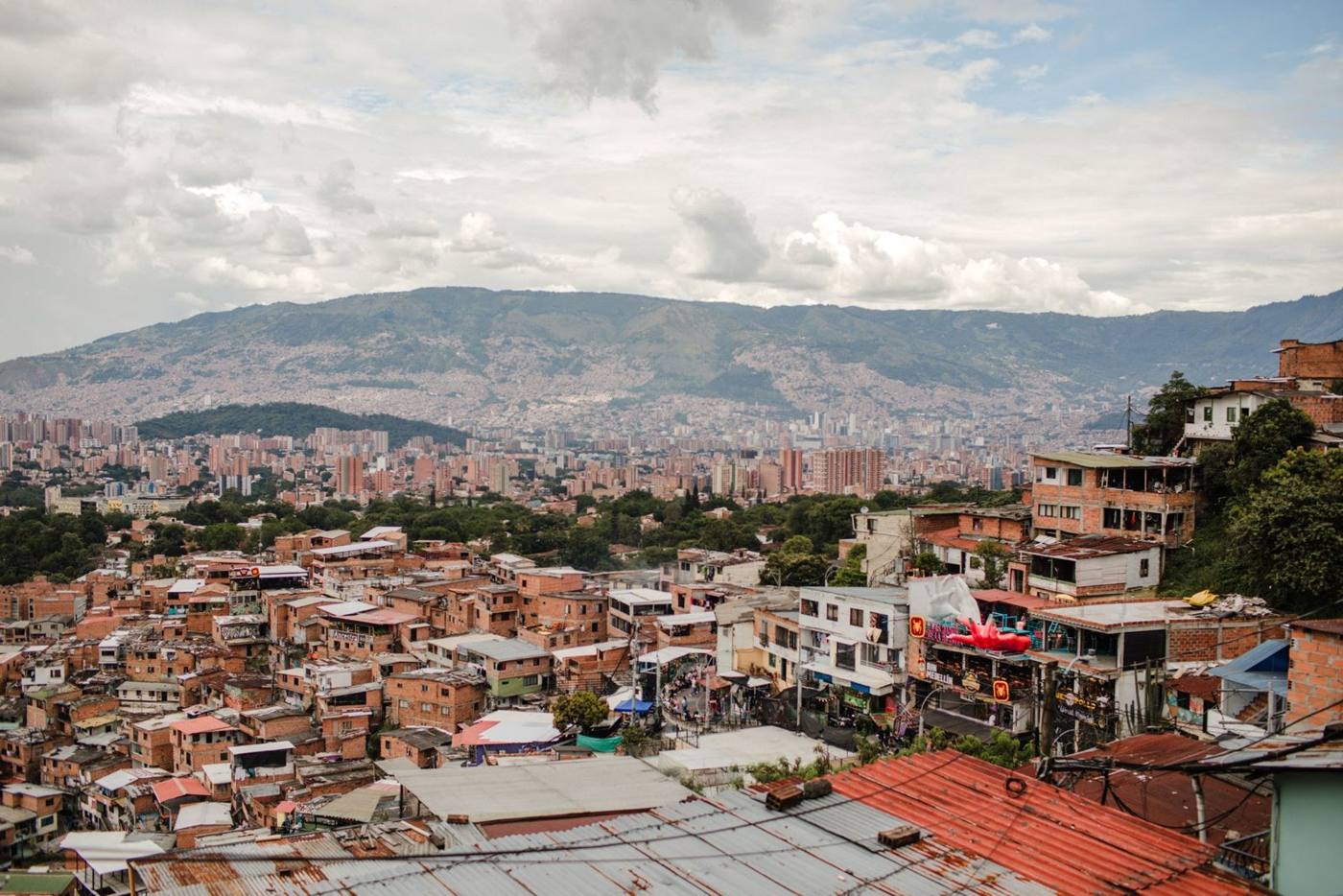
Bogotá, Medellín, the coffee region and the Caribbean between Cartagena and Tayrona park: the ideal first trip to the country.
 5 daysModerate
La Guajira and Punta Gallinas
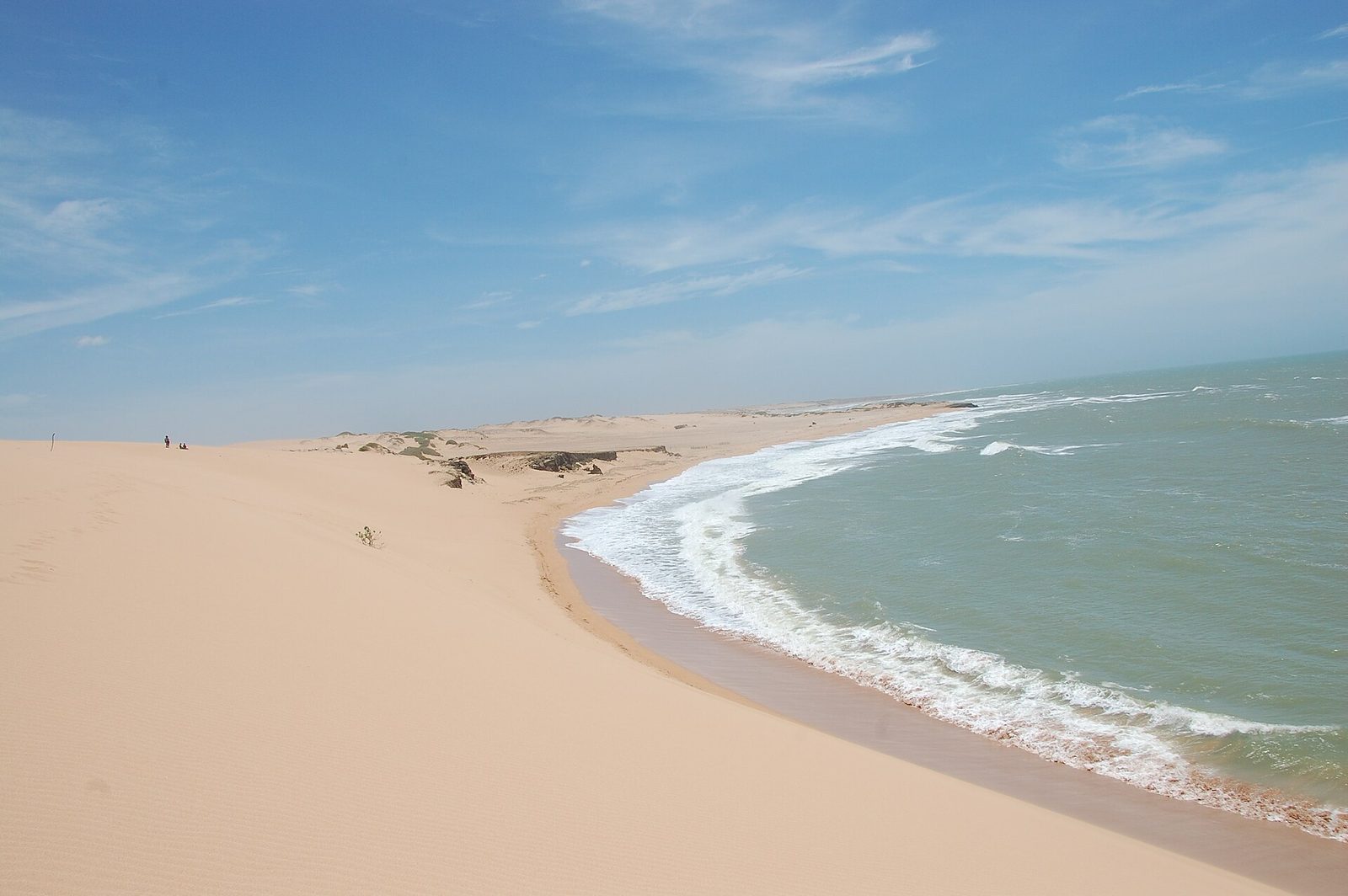
By 4x4 through the Wayuu desert to Cabo de la Vela and the dunes that drop into the sea at Punta Gallinas, the northernmost point of South America.
 8 daysModerate
San Agustín and the Tatacoa Desert
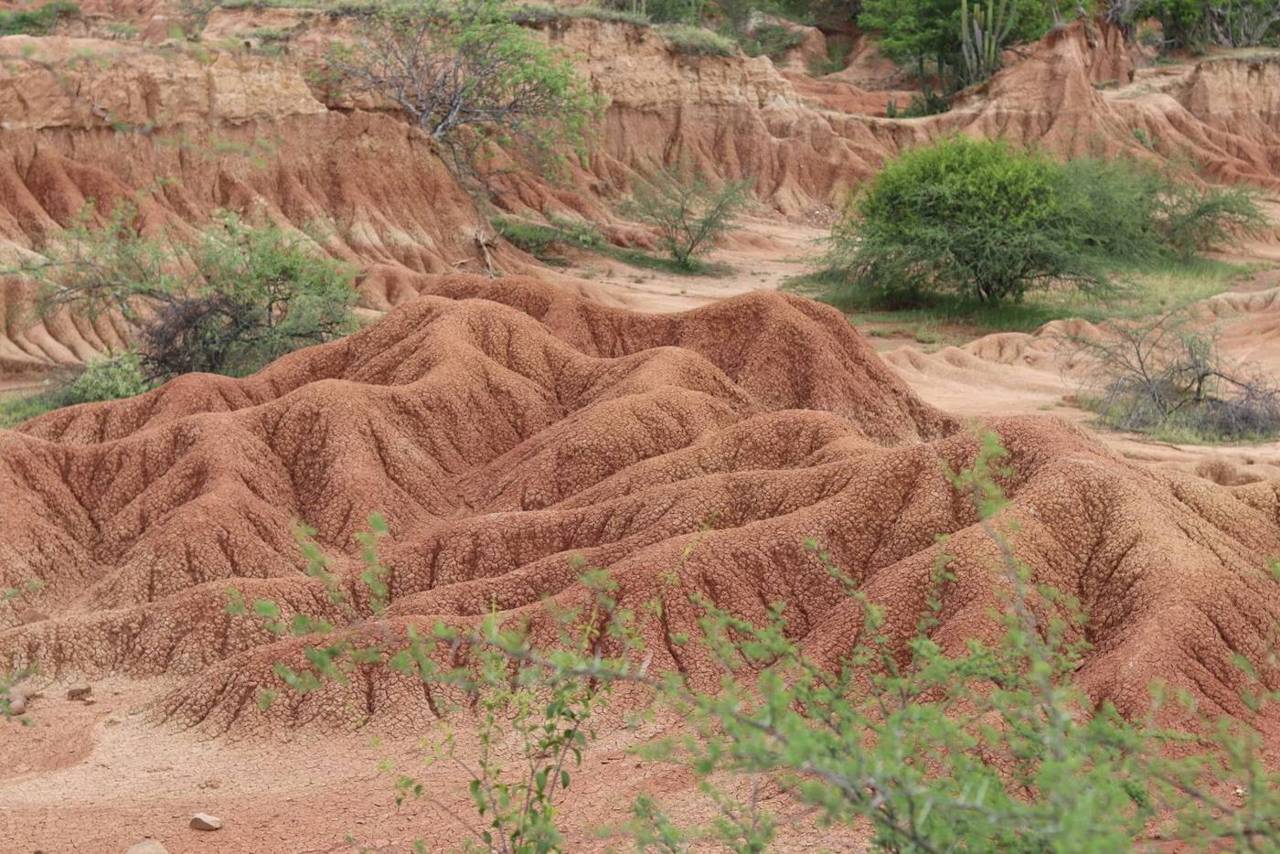
The pre-Columbian stone statues of San Agustín, the gorges of the Magdalena river and starry nights in the red and grey Tatacoa Desert.