Classic Colombia
Bogotá, Medellín, the coffee region and the Caribbean between Cartagena and Tayrona park: the ideal first trip to the country.
- Bogotá
- Medellín
- Guatapé
- Salento
- Cocora Valley
- Cartagena
- Santa Marta
- Tayrona
Day by day
- Day 1
Arrival in Bogotá
This trip crosses classic Colombia in two weeks: Bogotá, the capital in the Andes, Medellín, the city of eternal spring, the coffee region with the wax palms of Cocora, Cartagena on the Caribbean and Tayrona Park, where the forest reaches the sea. You travel by domestic flights and by car or coach.
Before you go: Italian citizens enter Colombia without a visa for tourism for up to ninety days. Before the flight, between seventy two hours and one hour before departure, you must fill in the Check-MIG form online on the official Migración Colombia website: beware of sites that charge for it. Other nationalities should check their own rules. The United States has a high advisory level for Colombia, with areas to avoid; the cities and areas on this trip are widely visited, but read the latest official travel advice before you go.
You arrive at El Dorado airport in Bogotá, at about 2,600 metres, on a plateau surrounded by mountains. The air is cool all year and you feel the altitude in the first few days.
In the afternoon rest and drink plenty of water. If you have energy, walk around the Zona G or Parque 93, modern, quiet areas with many restaurants.
In the evening try ajiaco, Bogotá's typical soup, with three kinds of potato, chicken, corn and an aromatic herb, served with cream, capers and avocado.
Sleep in Bogotá, for three nights.
Practical tip: in Bogotá use taxis booked through apps or called by your accommodation, not ones hailed in the street. Keep your phone in your pocket and do not show valuables.
- Day 2
La Candelaria and the Gold Museum
Today you discover Bogotá's historic centre.
In the morning go to La Candelaria, the colonial district, with sloping streets, low colourful houses with wooden balconies, churches and murals. Start at Plaza de Bolívar, the main square, with the cathedral, the national Capitol and the palace of justice. Then walk through the lanes to the Chorro de Quevedo, the small square where, according to tradition, the city was founded in 1538.
Visit the Botero museum, in a colonial palace, with the works of the Colombian painter and sculptor Fernando Botero, famous for his large, rounded figures, and his collection of European art, donated to the city. Check opening times and tickets.
In the afternoon visit the Gold Museum, one of the most important museums in South America, with tens of thousands of gold and metal objects from Colombia's pre Columbian cultures: jewellery, masks, offerings. The most famous room displays the Muisca raft, a small gold sculpture recalling the ceremony of the golden man on Lake Guatavita, which gave rise to the legend of El Dorado. Check opening times and tickets.
In the evening, in La Candelaria, try chicha, a traditional drink of fermented corn, and sweets of guava and cheese.
Sleep in Bogotá.
Practical tip: La Candelaria is safe by day, but in the evening some streets empty out. Go back by taxi after dark and ask at your accommodation which areas to avoid.
- Day 3
Monserrate and Zipaquirá
Today you see Bogotá from above and visit an underground cathedral.
Early in the morning go up Monserrate, at more than 3,100 metres, by funicular or cable car, or on foot on a steep path of about an hour and a half. At the top there is a white seventeenth century sanctuary, a place of pilgrimage, and from the terrace you see the whole city stretching for kilometres across the plateau. Go early, before the clouds. Check prices and times.
Then take a car or the tourist train north to Zipaquirá, about an hour and a half from the city, a colonial town with a large square and a cathedral.
In the afternoon visit the Salt Cathedral, built inside a salt mine that is still active, about 180 metres underground. You go down a tunnel with the Stations of the Cross carved in salt, to three great naves with a huge illuminated cross cut into the salt rock. It is one of the most visited places in Colombia. Check prices and times.
In the evening return to Bogotá and have dinner in the Usaquén district, with its colonial houses and, on Sundays, a craft market.
Sleep in Bogotá.
Practical tip: at Monserrate and Zipaquirá it is cold, especially in the morning and inside the mine. Bring a jumper and a jacket: in Bogotá temperatures change a lot during the day.
- Day 4
Flight to Medellín
Today you reach the city of eternal spring.
In the morning take the flight to Medellín, about an hour. Rionegro airport is in the mountains, about 45 minutes from the city, along a scenic road descending into the Aburrá valley.
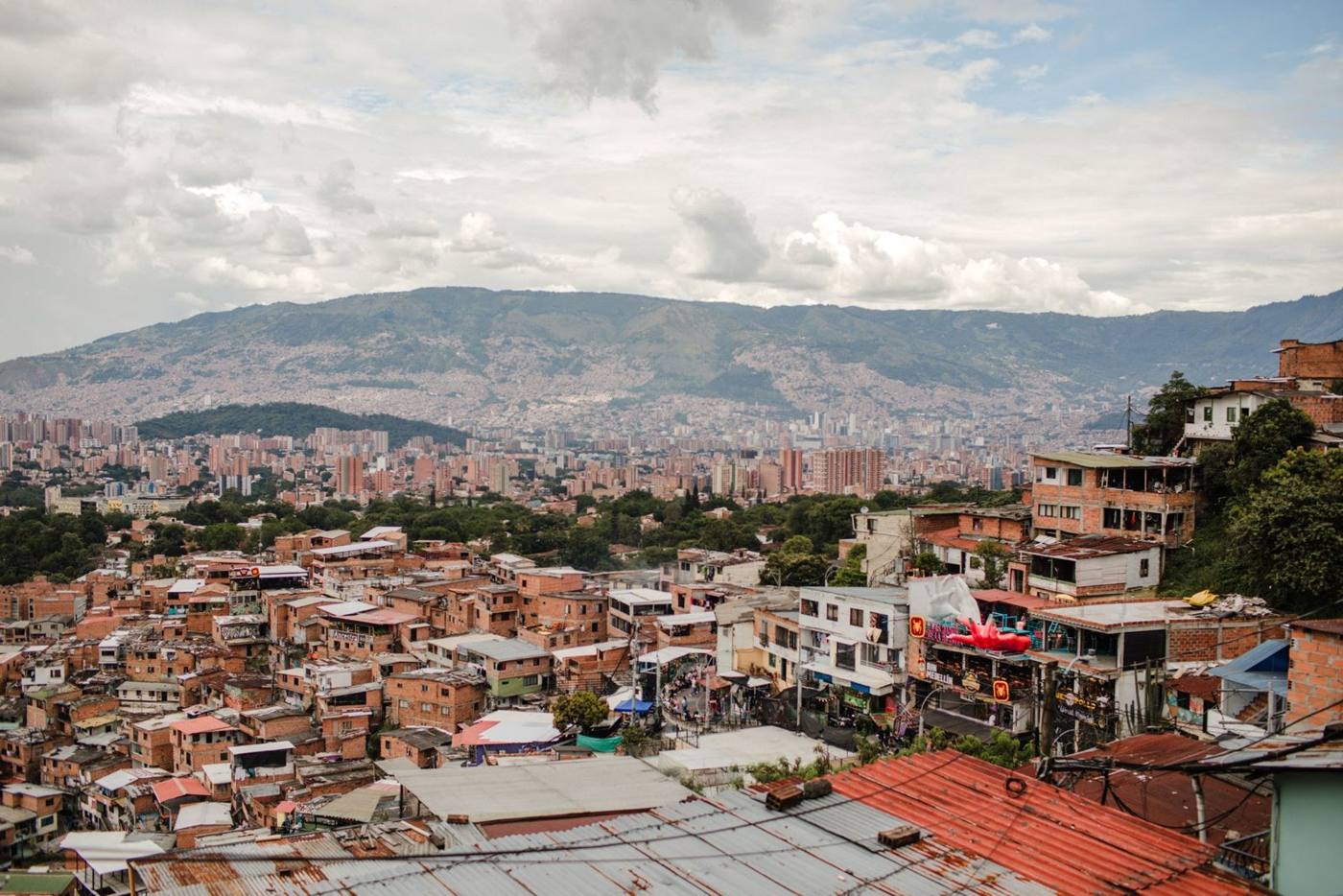
Medellín, Colombia's second city, is called the city of eternal spring for its mild climate all year, around 22 to 25 degrees. In the 1980s and 1990s it was one of the most violent cities in the world; today it is an example of urban transformation, with a metro, cable cars climbing to working class neighbourhoods, libraries and parks.
In the afternoon walk around the centre, in Plaza Botero, with 23 large bronze statues by the sculptor Fernando Botero, born in Medellín. Then visit the Museo de Antioquia, next to the square, with many works by Botero and the history of the region. Check opening times and tickets.
In the evening go to the El Poblado or Laureles district, with restaurants and bars, and try bandeja paisa, the region's typical dish: rice, beans, minced meat, fried pork rind, sausage, egg, fried plantain, avocado and arepa.
Sleep in Medellín, for three nights.
Practical tip: in Medellín's bars at night never leave your glass unattended and do not accept drinks from strangers. There have been cases of people being drugged and robbed.
- Day 5
Comuna 13 and the metro cable
Today you discover Medellín's transformation.
In the morning visit Comuna 13, called San Javier, one of the city's most famous neighbourhoods, built on the steep slopes of the west side of the valley. For years it was one of the most violent areas in the city, controlled by armed groups; today it is one of the symbols of its transformation. The open air escalators, built to help residents climb the hill, the colourful murals, the hip hop music and street dancers tell the story of the neighbourhood. Go with a local guide, who tells its story from the inside.
In the afternoon take the metro and then the metro cable, the urban cable car, to Santo Domingo, a neighbourhood on the north east hill. From the cabins you see the red brick houses on the slopes and the whole city in the valley. From here you can continue on another cable car to Parque Arví, a large reserve of woods and trails above the city. Check times and tickets.
In the evening return to El Poblado and have dinner at one of the modern Colombian restaurants.
Sleep in Medellín.
Practical tip: buy the rechargeable Cívica card for the metro and metro cable; the cable car to Parque Arví has a separate ticket. Medellín's metro is spotless and much respected by residents: do not eat or leave litter.
- Day 6
Guatapé and the Piedra del Peñol
Today you take a trip to the Guatapé lake.
In the morning set off for Guatapé, about two hours from Medellín by bus or car, through the green mountains of Antioquia.
The first stop is the Piedra del Peñol, a huge granite monolith about two hundred metres high, rising alone in the middle of the landscape. A staircase of 740 steps has been built on the side of the rock, zigzagging up a crack in the stone, to the top. From above you see the Guatapé reservoir, an artificial lake full of green islands and peninsulas, with blue water. Check prices and times.
In the afternoon visit the town of Guatapé, one of the most colourful in Colombia, with houses decorated with zócalos, bands of coloured reliefs on the lower part of the facades, showing animals, flowers, trades and scenes of town life. Walk around the square and along the lake, and take a boat trip among the islands.
In the evening return to Medellín.
Sleep in Medellín.
Practical tip: go to the Piedra del Peñol early in the morning, especially at weekends, when many visitors come from Medellín. Bring water and take the climb slowly: at 2,100 metres you feel the altitude.
- Day 7
To the coffee region
Today you reach the coffee region.
In the morning take the flight from Medellín to Pereira or Armenia, about forty minutes, or the coach, about six or seven hours through the mountains. From there continue by car to Salento, a small town in the hills of Quindío, about an hour.
The coffee region, called the Eje Cafetero, is a landscape of green hills covered in coffee plantations, bamboo and banana trees, with small colourful towns. Colombia's coffee cultural landscape is a UNESCO World Heritage site.
In the afternoon walk around Salento, with its low houses with colourful wooden balconies and doors and windows painted red, green and blue. The main street, calle Real, leads to a staircase climbing to the Alto de la Cruz viewpoint, with views over the Cocora valley and the mountains.
In the evening have local trout, cooked in many ways, and a patacón, a large fritter of flattened plantain.
Sleep in Salento or at a coffee finca, for three nights.
Practical tip: in the coffee region the days are warm, but the evenings are cool. Bring a jumper and a waterproof jacket: rain often comes in the afternoon, especially in April and May and in October and November.
- Day 8
The Cocora valley and the wax palms
Today you walk in Colombia's most famous valley.
Early in the morning take one of the jeeps called Willys, which leave from Salento's square, to the Cocora valley, about half an hour. Here grow the Quindío wax palms, Colombia's national tree, the tallest palms in the world, which can exceed sixty metres, slender and tall above green meadows and hills in the mist.
Walk the valley loop, about 12 kilometres, five or six hours. The trail climbs through cloud forest along the Quindío river, crosses several suspension bridges and reaches the hummingbird house, where you see dozens of hummingbirds of different species. Then it climbs to a farm higher up and descends through the meadows and the wax palms, the most spectacular stretch. An entrance fee is charged on some stretches, which are private land: check prices and rules.
If you prefer a shorter walk, go straight to the palm forest, about an hour return.
In the afternoon return to Salento by jeep and rest.
In the evening have dinner in town and stroll around the square.
Sleep in Salento or at a coffee finca.
Practical tip: the Cocora trail is often muddy and slippery. Wear hiking shoes, or hire the rubber boots available in Salento. Start early, as the clouds often cover the palms by midday.
- Day 9
A coffee finca
Today you discover how Colombian coffee is made.
In the morning visit a finca, a small farm growing coffee on the hills. With the owner or a guide, you walk among the coffee plants, small trees with shiny leaves and red berries when ripe. They explain how coffee is grown in the shade of banana trees and taller trees, how the ripe cherries are picked by hand, one by one, and how they are washed, dried in the sun and roasted.
At the end taste coffee prepared in various ways, and understand why Colombian coffee is famous worldwide. Check prices and visit times.
In the afternoon visit Filandia, another town in the area, less touristy than Salento, with colourful houses and a tall wooden viewpoint, from which you see the coffee hills all the way to the mountains. Or relax at the hot springs of Santa Rosa de Cabal, with a large waterfall, about an hour's drive away.
In the evening return to Salento or the finca, and have dinner with local dishes.
Sleep in Salento or at a coffee finca.
Practical tip: if you buy coffee to take home, choose beans from small farms, freshly roasted and whole. In Colombia the best coffee often goes abroad, and in cafés people often drink a lighter coffee, called tinto.
- Day 10
Flight to Cartagena
Today you fly to the Caribbean coast.
In the morning take the flight from Pereira or Armenia to Cartagena, often with a stop in Bogotá or Medellín. On arrival you immediately feel the Caribbean heat and humidity.
Cartagena de Indias, on the Caribbean coast, was founded by the Spanish in 1533 and became one of the empire's most important ports, from which gold and silver left for Spain. To defend it from pirates and enemies, it was surrounded by walls and fortresses, now a UNESCO World Heritage site.
In the afternoon walk through the walled city, with its narrow streets, colourful colonial houses with wooden balconies full of flowers, squares and churches. Pass the Clock Tower, the main gate, Santo Domingo square, with its Botero statue, and the cathedral.
At sunset climb onto the walls, on the sea side, to watch the sun go down over the sea.
In the evening, in the Getsemaní district, outside the walls, with its murals, squares and music in the streets, have fried fish, coconut rice and patacón.
Sleep in Cartagena, for three nights.
Practical tip: in Cartagena it is hot all year. Visit the city early in the morning and late in the afternoon, and rest in the middle of the day. Drink plenty of water and use sunscreen. A light hat and linen clothes make the heat much easier to bear.
- Day 11
Castillo San Felipe and the city
Today you discover Cartagena's fortresses and history.
Early in the morning visit the Castillo San Felipe de Barajas, the largest fortress built by the Spanish in the Americas, on a hill just outside the walled city. It was built from the seventeenth century and enlarged in the eighteenth, with sloping walls, bastions and a network of underground tunnels, designed to let defenders hear the footsteps of the enemy. In 1741 it withstood the attack of a large English fleet. Check prices and opening times.
Then visit the Palace of the Inquisition, on Plaza Bolívar, now a museum of the city's history, and the Zenú Gold Museum, small and with objects from the ancient cultures of the coast.
In the afternoon rest during the hot hours. Then walk through the San Diego district, quieter, with squares and cafés, and along the walls to the bastion of San Lorenzo.
In the evening watch a show of Caribbean coast music and dance, such as cumbia, or take a carriage ride through the illuminated city.
Sleep in Cartagena.
Practical tip: in the walled city many street vendors are insistent. Reply with a smile and a firm no thank you, and always agree the price before buying or taking a photo with the fruit sellers in colourful dresses, the palenqueras.
- Day 12
The Rosario Islands
Today you spend a day in the Caribbean Sea.
In the morning take a boat from Cartagena's tourist pier to the Rosario Islands, an archipelago of small coral islands about an hour away, in a national marine park. The sea is turquoise and transparent, with coral reefs close to shore.
The trips usually include a snorkelling stop on the corals, with colourful fish, starfish and, sometimes, turtles, and a stop on a beach for a swim and a fried fish lunch. Some islands have small lodgings for those who want to stay a night. Choose a reliable trip and check prices, what is included and the park entrance fee, paid at the pier.
In the afternoon you return to Cartagena.
In the evening take a last walk in the walled city and have dinner in one of the squares of Getsemaní.
Sleep in Cartagena.
Practical tip: many boats to the Rosario Islands travel very fast and the sea can be rough. If you have back problems or get seasick, sit at the back of the boat. Protect your phone in a waterproof bag.
On the islands do not buy objects made of coral or turtle shell: they are forbidden and harm the sea.
- Day 13
Santa Marta and Tayrona Park
Today you reach the north coast and the forest by the sea.
In the morning leave Cartagena heading east, by car or coach, to Santa Marta, about four or five hours along the coast, passing through Barranquilla, the city of carnival.
Santa Marta is the oldest still inhabited city in Colombia, founded in 1525, at the foot of the Sierra Nevada de Santa Marta, the highest coastal mountain range in the world, with peaks of over 5,700 metres just 40 kilometres from the coast.
In the afternoon continue to the entrance of Tayrona National Park, about an hour from Santa Marta. The park protects a coast of golden sand bays, great granite boulders and tropical forest running down to the sea. It is sacred land for the indigenous peoples of the Sierra Nevada, such as the Kogi and the Arhuaco. Check prices and entry rules.
In the evening stay at accommodation near the park, in the forest or on the coast.
Sleep near Tayrona Park, for two nights.
Practical tip: Tayrona Park closes several times a year, usually for a few weeks, to allow the indigenous peoples to carry out ceremonies to purify the land. Check the dates before planning your trip.
- Day 14
The beaches of Tayrona
Today you walk through the forest to the park's beaches.
Early in the morning enter the park and walk the trail through the forest, among huge trees, howler monkeys, iguanas and tropical birds. The trail, partly on wooden boardwalks and partly among rocks, leads to the most famous beaches: Arrecifes, Cabo San Juan del Guía, La Piscina. It takes about two hours on foot to reach Cabo San Juan, the most photographed beach, with a small rocky headland and a hut on top.
On many of the park's beaches the sea is dangerous, with very strong currents: they are marked with signs forbidding swimming. You can swim only on a few sheltered beaches, such as La Piscina and Cabo San Juan.
In the afternoon relax on the beach, snorkel in the calm waters of La Piscina, and head back to the entrance before the park closes, or return by boat if the sea allows.
In the evening, if you have time, have dinner in Taganga, a fishing village near Santa Marta, or at your accommodation near the park.
Sleep near Tayrona Park.
Practical tip: in the park bring water, sunscreen, repellent and a swimsuit. Disposable plastic bottles and alcohol are not allowed: check the rules at the entrance. Start walking early, before the heat and the day visitors.
- Day 15
Departure
Today you leave Colombia.
In the morning, if your flight leaves late, take a last walk in Santa Marta: the seafront, the white cathedral, one of the oldest on the continent, and the Quinta de San Pedro Alejandrino, the villa where Simón Bolívar died in 1830, with a large botanical garden. Check opening times and tickets.
Then go to Santa Marta airport, by the sea, or return to Cartagena for the international flight. Flights to Europe usually leave from Bogotá, with a domestic flight first.
In these fifteen days you have seen the Colombia of the Andes, with Bogotá and the Gold Museum; the Colombia of reborn cities, with Medellín and Comuna 13; the Colombia of coffee, with the wax palms of Cocora; and Caribbean Colombia, with Cartagena, the Rosario Islands and the forest of Tayrona by the sea.
When to go: Colombia is close to the equator and the temperature depends mainly on altitude. The driest months are from December to March and from July to August. In April and May and in October and November it rains more, especially in the mountains. On the Caribbean coast it is hot all year.
Practical tip: in Colombia people are very kind and welcoming. Learn a few words of Spanish: it helps a lot, because outside tourist areas few people speak English.
The most complete route for a first visit, with mountains, cities and sea. Overland distances are long and slow, so use the domestic flights, which are cheap. The climate varies a lot between stops, from cool Bogotá to the humid Caribbean heat. With 15 days the pace is brisk.
Before you go
- Documents and visa
- Valid passport; no visa for tourism up to 90 days for EU citizens. Before the flight, between 72 hours and one hour before departure, you fill in the no-cost Check-MIG form online.
- Health and vaccines
- No compulsory vaccines arriving from Europe; yellow fever is recommended for forest areas and some parks. Protect yourself against mosquitoes because of dengue. In Bogotá, at 2,600 metres, the altitude is noticeable. Emergencies: 123.
- Money and payments
- Colombian peso. Cards work in cities; use cash machines inside banks or shopping centres, by day.
- Power sockets
- Types A and B, 110 volts: you need an adapter and devices must accept 110 volts.
- Time zone
- UTC-5 all year: Colombia does not use daylight saving time.
- Safety
- The United States rates Colombia level 3 for crime and terrorism, with level 4 for Arauca, Cauca except Popayán, Valle del Cauca except Cali, Norte de Santander and 10 km from the Venezuelan border. Use app taxis and never accept drinks from strangers. Official advice: GOV.UK.
Information checked in November 2026 for Italian and EU citizens. Rules change: always check before you travel.
Variations
In 10 days: Bogotá, the coffee region with Cocora and Cartagena with the Rosario Islands, without Medellín and without Tayrona.
In 20 days: add the trek to the Ciudad Perdida, four or five days in the Sierra Nevada to the ancient city of the Tayrona, with a licensed guide.
Frequently asked questions
What document do I need for Colombia?
Italian citizens enter without a visa for tourism for up to ninety days. Between seventy two hours and one hour before the flight you must fill in the Check-MIG form online on the official Migración Colombia website. Other nationalities should check their own rules.
Is Colombia safe?
The cities and areas on this trip are widely visited, but crime exists. Use app taxis, do not show valuables, do not accept drinks from strangers and read the latest official travel advice.
Is Tayrona Park always open?
No. It closes several times a year, for a few weeks, for the ceremonies of the indigenous peoples of the Sierra Nevada. Check the closure dates before you go.
Indicative itinerary written by World Atlas. Before booking, check timetables, seasonal openings, documents and safety.
 5 daysModerate
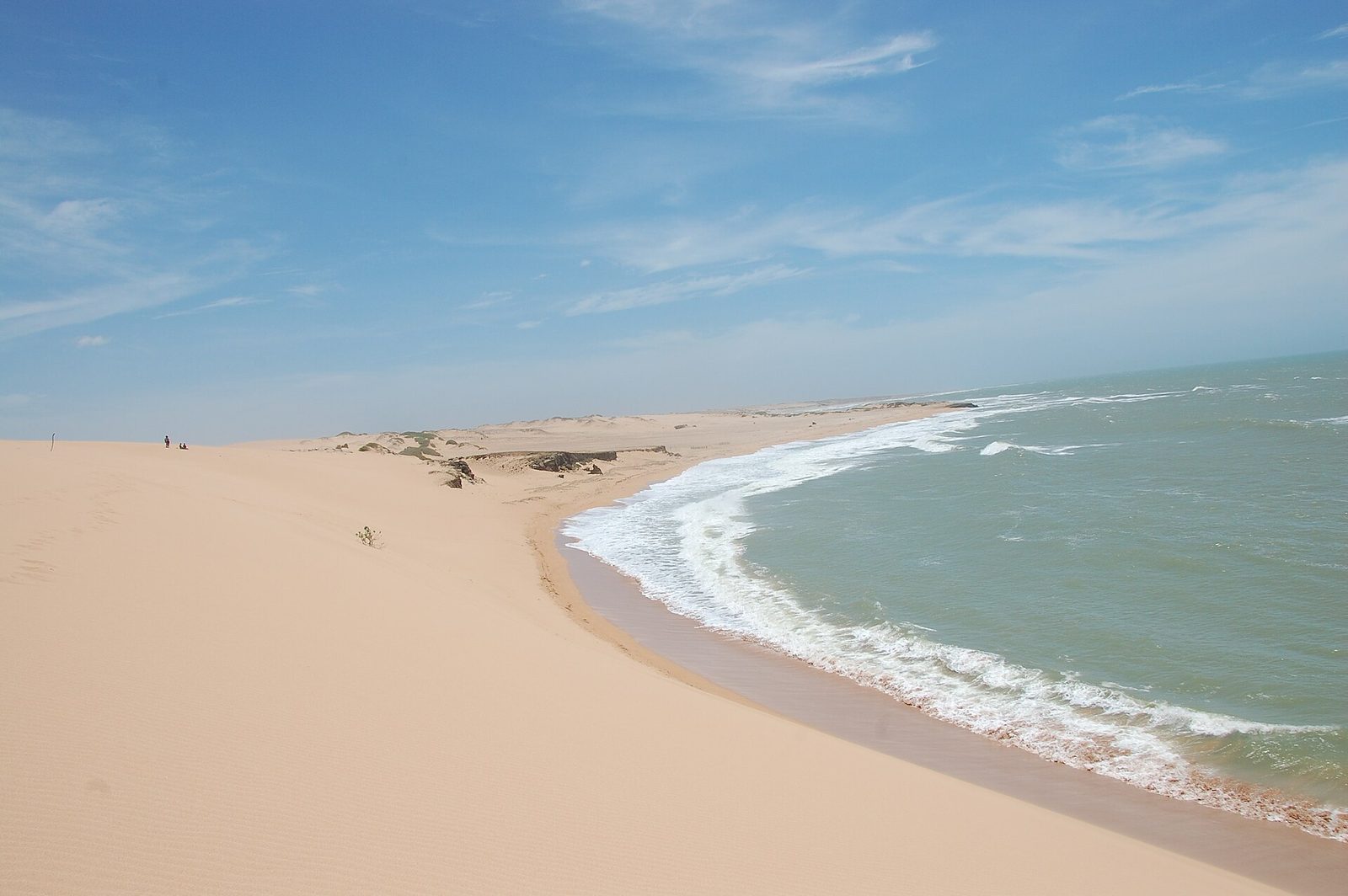
La Guajira and Punta Gallinas
By 4x4 through the Wayuu desert to Cabo de la Vela and the dunes that drop into the sea at Punta Gallinas, the northernmost point of South America.
 8 daysModerate
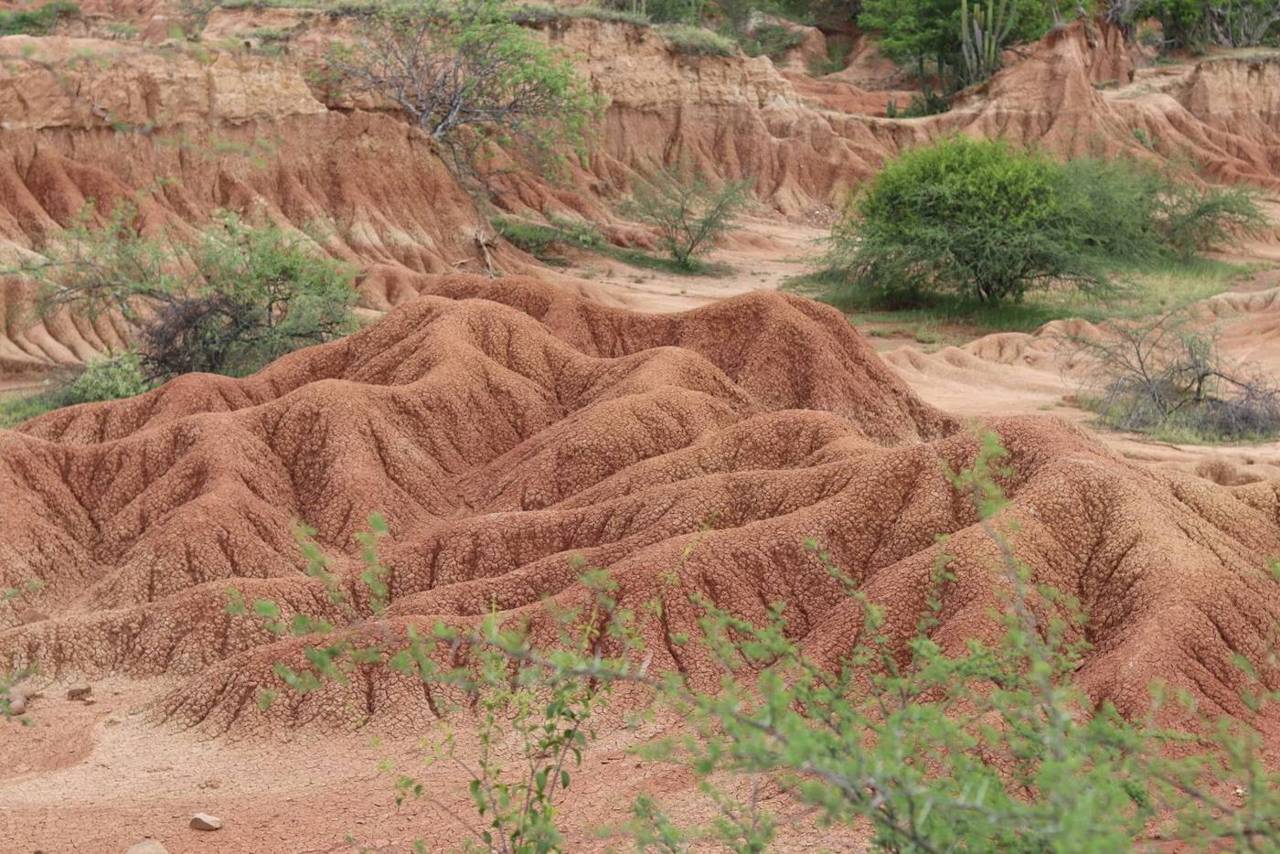
San Agustín and the Tatacoa Desert
The pre-Columbian stone statues of San Agustín, the gorges of the Magdalena river and starry nights in the red and grey Tatacoa Desert.
 6 daysModerate
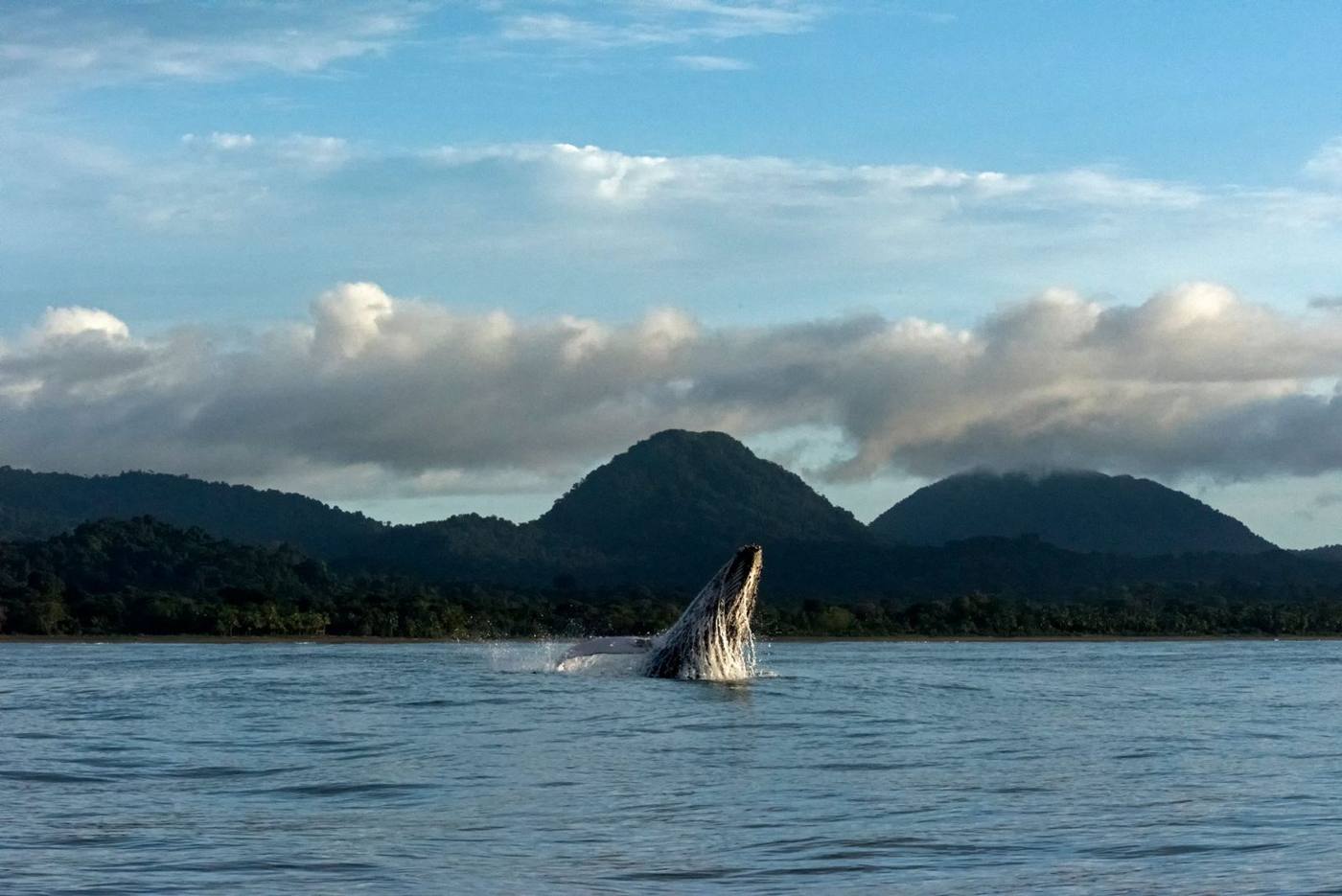
The Pacific: Nuquí and the whales
The Chocó coast, where jungle meets the beach: humpback whales with calves a few metres from the boat, waterfalls, hot springs and Afro-Colombian villages.