Shanghai, Hangzhou and the Yellow Mountains
Shanghai, the water town of Wuzhen, West Lake and Longjing tea in Hangzhou, the Hui villages and the peaks of Huangshan.
- Shanghai
- Wuzhen
- Hangzhou
- Hongcun
- Huangshan
- Shanghai
Day by day
- Day 1
Shanghai: the Bund and the old town
This trip crosses eastern China, from the great metropolis of Shanghai to the water towns on the canals, Hangzhou and its lake celebrated by poets, the ancient villages of the Huizhou region and the Yellow Mountains, Huangshan, the granite and pine peaks that inspired centuries of Chinese painting. You travel by high speed train.
For Italian citizens, until 31 December 2026 entry into China for tourism is visa no-cost for up to 30 days. For trips in 2027 check whether the rule has been extended.
You fly into Shanghai Pudong airport, linked to the centre by metro and by the Maglev, a magnetic levitation train running at more than three hundred kilometres an hour.
Shanghai is China's largest city, with more than twenty million inhabitants. On the first day walk along the Bund, the riverfront on the Huangpu River, lined with European style buildings put up in the early twentieth century by foreign banks and trading companies. Across the river rise the skyscrapers of Pudong, including the Shanghai Tower, one of the tallest buildings in the world, and the Oriental Pearl TV tower.
In the afternoon visit the old town, with Yu Garden, a classical sixteenth century garden with pavilions, ponds, rocks and zigzag bridges, and the surrounding market with shops and food stalls.
At sunset return to the Bund: when the skyscrapers light up, the view is spectacular.
Spend the night in Shanghai.
Practical tip: many Western online services do not work in China. Set up the phone payment apps used almost everywhere in China before you go, and bring some cash too.
- Day 2
Shanghai: the French Concession and the museum
On your second day in Shanghai discover another side of the city.
In the morning visit the Shanghai Museum on People's Square, one of China's best museums of ancient art, with collections of bronzes, ceramics, calligraphy, painting, seals, furniture and coins, from the earliest dynasties to imperial times. Beside the square is People's Park, where at weekends parents look for husbands or wives for their children, displaying sheets with their details.
In the afternoon stroll through the former French Concession, the district where the French lived in the early twentieth century, with plane tree lined avenues, European villas, art deco houses and small cafés. Among the lanes are lilong and shikumen, Shanghai's typical terraced houses with stone gateways. Tianzifang, a maze of alleys with small shops and studios, and Xintiandi, with restored old houses, are the best known areas.
Alternatively, visit the Jade Buddha Temple, with two Buddha statues carved from white jade brought from Burma.
In the evening go up one of Pudong's skyscrapers to see the city from above, or take a cruise on the Huangpu River among the lights of the Bund and Pudong.
In the evening try xiaolongbao, small steamed dumplings filled with meat and hot broth, Shanghai's speciality.
Spend the night in Shanghai.
Practical tip: major museums and observation towers often require online booking with your passport. Check opening times and closing days, often Monday.
- Day 3
Wuzhen, the water town
Today leave Shanghai for Wuzhen, one of the region's most famous water towns, about two hours south west by road, or by high speed train to Tongxiang and then taxi.
The water towns of the Yangtze delta are old towns built along canals, where for centuries people travelled by boat, with wood and white stone houses with black roofs overlooking the water, arched stone bridges and small landings. Wuzhen has more than a thousand years of history and is one of the best preserved.
The town is divided into two areas. Dongzha, to the east, is smaller, with traditional indigo dyeing workshops, rice wine distilleries and craft shops. Xizha, to the west, is larger, carefully rebuilt, with canals, bridges and houses where you sleep over the water.
In the afternoon walk along the canals and cross the stone bridges, then take a rowing boat ride along the canals with a boatman.
At sunset and in the evening Xizha lights up with red lanterns and lights reflected in the water, creating a dreamlike atmosphere. Evening is the best time, when day groups have gone.
Try local dishes: pork stewed in soy sauce, rice cakes and yellow rice wine.
Spend the night in Wuzhen.
Practical tip: there are tickets for the town's areas, and Xizha has evening hours. Check prices and times. Staying overnight lets you see it without crowds.
- Day 4
Hangzhou: West Lake by bicycle
Today go to Hangzhou, about an hour from Wuzhen. Hangzhou was China's capital under the Southern Song dynasty, in the twelfth and thirteenth centuries, and Marco Polo described it as the most beautiful and richest city in the world. A Chinese saying goes: in heaven there is paradise, on earth there are Suzhou and Hangzhou.
The heart of the city is West Lake, Xi Hu, a UNESCO World Heritage Site, a lake surrounded by green hills, pagodas, temples, gardens and tree lined causeways. For centuries the lake inspired poets, painters and garden designers across China, Japan and Korea.
The best way to discover it is by bicycle, hired from stations around the lake, or on foot. Ride along the Su causeway, about three kilometres long, built in the eleventh century by the poet Su Dongpo when he was governor of the city, with willows, bridges and flowers. Then the shorter Bai causeway, leading to Gushan island.
Stop at the lake's classic scenes, such as Autumn Moon on the Calm Lake and Viewing Fish at Flower Harbour, with ponds full of colourful carp.
In the afternoon take a boat on the lake to the island of Three Pools Mirroring the Moon, with three small stone pagodas in the water shown on the one yuan note.
At sunset climb Leifeng Pagoda on the south shore to watch the sun set over the lake.
Spend the night in Hangzhou.
Practical tip: at weekends and on holidays the lake is extremely crowded. Go early in the morning.
- Day 5
Longjing tea plantations and Lingyin Temple
In the morning go into the hills west of West Lake, where Longjing, Dragon Well, China's most famous green tea, is grown. The villages of Longjing and Meijiawu are surrounded by terraced tea plantations on the hillsides.
Walk among the rows of tea bushes, watch the leaves being picked by hand, mainly in spring, and processed: the leaves are tossed by hand in large hot pans, giving the tea its flat shape. Stop at a farmhouse for a tasting, served in glass tumblers where you watch the leaves unfurl in hot water. Nearby is the national tea museum.
In the afternoon visit Lingyin Temple, the Temple of the Soul's Retreat, one of China's largest and oldest Buddhist temples, founded in the fourth century. Before the temple you walk through the Feilai Feng valley, the Peak That Flew Here, a limestone hill with hundreds of Buddhist figures carved into the rock between the tenth and fourteenth centuries, including a large laughing Buddha.
The temple has great halls with gilded statues, including a seated Buddha more than twenty metres tall, carved from camphor wood.
In the evening try Hangzhou's delicate, slightly sweet cooking: West Lake fish in sweet and sour sauce and shrimps stir fried with Longjing tea leaves.
Spend the night in Hangzhou.
Practical tip: the Feilai Feng area ticket and the Lingyin Temple ticket are separate. Check prices and opening times.
- Day 6
Hongcun and Xidi, the Hui villages
Today leave Hangzhou for Anhui province, in the historic Huizhou region, taking the high speed train to Huangshan North station in about an hour and a half. From there, by car, in about an hour, you reach the villages of Hongcun and Xidi, a UNESCO World Heritage Site.
These villages were built between the fourteenth and nineteenth centuries by the merchants of Huizhou, one of the richest trading communities of imperial China, who traded salt, tea and timber across the country and returned home to build elegant houses for their families.
The houses have white walls, black tiled roofs and tall stepped firewalls called horse head walls. Inside are courtyards with small light wells and very elaborate carvings in wood, stone and brick, showing stories, flowers and animals.
Hongcun is laid out in the shape of an ox, with a system of channels carrying water to every house and two ponds: Moon Pond in the centre and South Lake, with an arched bridge, where the houses are reflected in the water. It was used as a setting for a famous martial arts film.
Xidi, nearby, has a large stone memorial archway at the entrance and narrow stone lanes with decorated houses.
In the afternoon, towards evening, the villages grow quieter.
Spend the night in Hongcun or Xidi.
Practical tip: there are entrance tickets for the villages. Check prices. Staying in a restored traditional house lets you see the village at dawn, without groups.
- Day 7
Huangshan: a night at the summit and dawn above the sea of clouds
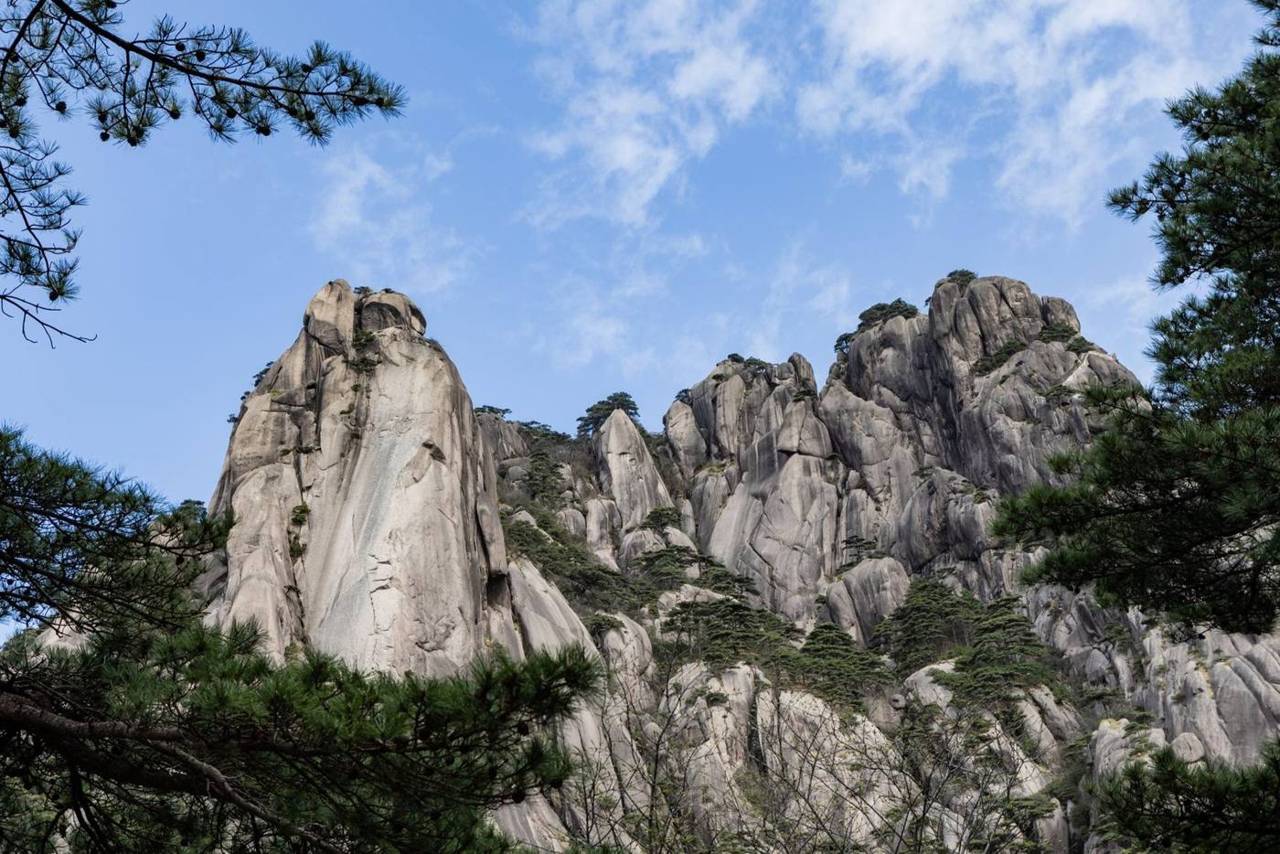
Today climb the Yellow Mountains, Huangshan, a UNESCO World Heritage Site, about an hour from the villages. Huangshan's peaks are among China's most famous images: sharp granite pinnacles, twisted pines growing from cracks in the rock, hot springs and above all the sea of clouds, which fills the valleys leaving only the summits showing.
From the town of Tangkou, at the foot of the mountain, a bus takes you to the cable car stations. You ride the cable car to the summit area, or climb on foot up thousands of very tiring stone steps.
At the top you walk on stone paths cut into the rock, with stairways, bridges and viewpoints over precipices. The best known spots are the Guest Greeting Pine, more than eight hundred years old with a branch stretched out like an arm, Bright Summit Peak, one of the highest at about 1,860 metres, and the West Sea Grand Canyon, a spectacular gorge with vertical peaks and suspended paths.
At sunset stop at one of the viewpoints, such as the Bright Summit terrace or Paiyun, to watch the sun set over the mountains.
Spend the night in one of the summit hotels, to see the sunrise next morning.
At dawn get up early and go to one of the eastern viewpoints, such as Shixin Peak, to watch the sun rise above the sea of clouds.
Practical tip: summit hotels are expensive and basic and must be booked well in advance. It is cold at the top even in summer. Check cable car tickets and times. Travel light: you can leave luggage in Tangkou.
- Day 8
High speed train to Shanghai and departure
On the last day, after sunrise, come down the mountain by cable car or on foot and return to Tangkou to collect your luggage.
Then take a bus or taxi to Huangshan North station, about an hour away, and the high speed train to Shanghai, about four to five hours depending on the train. Alternatively, Huangshan airport has flights to some Chinese cities.
If you have time before leaving the area, make a short visit to Tunxi, Huangshan's old town, with Laojie, the old street, a paved street of Ming and Qing buildings selling regional products: mountain tea, ink, brushes, paper and inkstones, the four treasures of the Chinese scholar's studio, made in Huizhou for centuries.
Once in Shanghai, if you have a few hours before your flight, take a last walk on the Bund or in the French Concession.
From Shanghai, Pudong airport is reached by metro or by the Maglev, in about eight minutes from Longyang Road station.
Before leaving buy some souvenirs: Longjing tea from Hangzhou or Huangshan tea, silk, painted fans or calligraphy items.
Practical tip: high speed train tickets are bought online with your passport and should be booked ahead, especially at weekends and holidays. Arrive at the station early, as there are security checks.
A harmonious trip between modern city, classical countryside and famous mountains. Huangshan has thousands of steps and the summit hotels are basic and expensive, but the sunrise is worth the effort. The water towns are lovely but crowded at weekends. A good second trip to China.
Before you go
- Documents and visa
- Passport with at least six months' validity. Until 31 December 2026 Italian and many other European citizens need no visa for tourism up to 30 days; check whether the scheme has been extended and covers you.
- Health and vaccines
- No compulsory vaccines arriving from Europe. In big cities check air quality. Emergencies: 110 police, 120 ambulance, 119 fire.
- Money and payments
- Renminbi yuan. Almost everything is paid with Alipay and WeChat QR codes, which can be linked to foreign cards; carry some cash.
- Power sockets
- Types A, C and I, 220 volts: a universal adapter is useful.
- Time zone
- UTC+8 all year: all of China uses Beijing time.
- Safety
- The United States rates China level 2 because of arbitrary enforcement of local laws. Always carry your passport. Many Western websites and apps are blocked. Official advice: GOV.UK.
Information checked in November 2026 for Italian and EU citizens. Rules change: always check before you travel.
Variations
In 4 days: Shanghai and Hangzhou, with West Lake and the tea plantations.
In 10 days: add Suzhou and its classical gardens, or the water town of Zhouzhuang.
Frequently asked questions
Do I need a visa?
Until 31 December 2026 Italian citizens can enter visa no-cost for tourism for up to 30 days. For 2027 check whether the rule has been extended.
When is the best time to go?
Spring and autumn. Summer is hot and humid; in winter Huangshan is beautiful with snow, but very cold.
How do I pay in China?
Almost everywhere with phone apps. Set them up before you go and bring some cash too.
Indicative itinerary written by World Atlas. Before booking, check timetables, seasonal openings, documents and safety.
 6 daysEasy
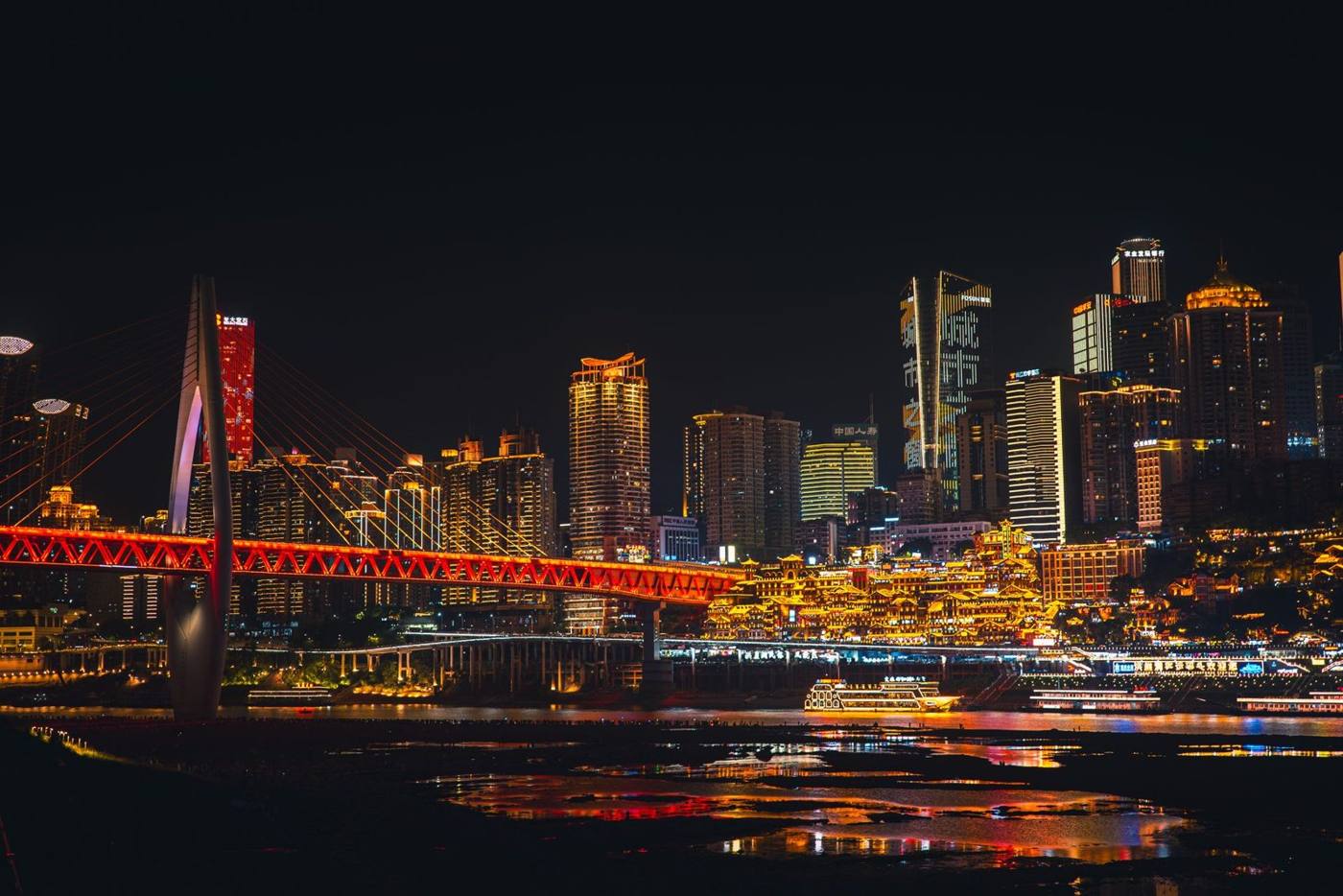
Chongqing and the Three Gorges
The vertical city of Chongqing, then three nights cruising the Yangtze through the Three Gorges to the great dam.
 5 daysEasy
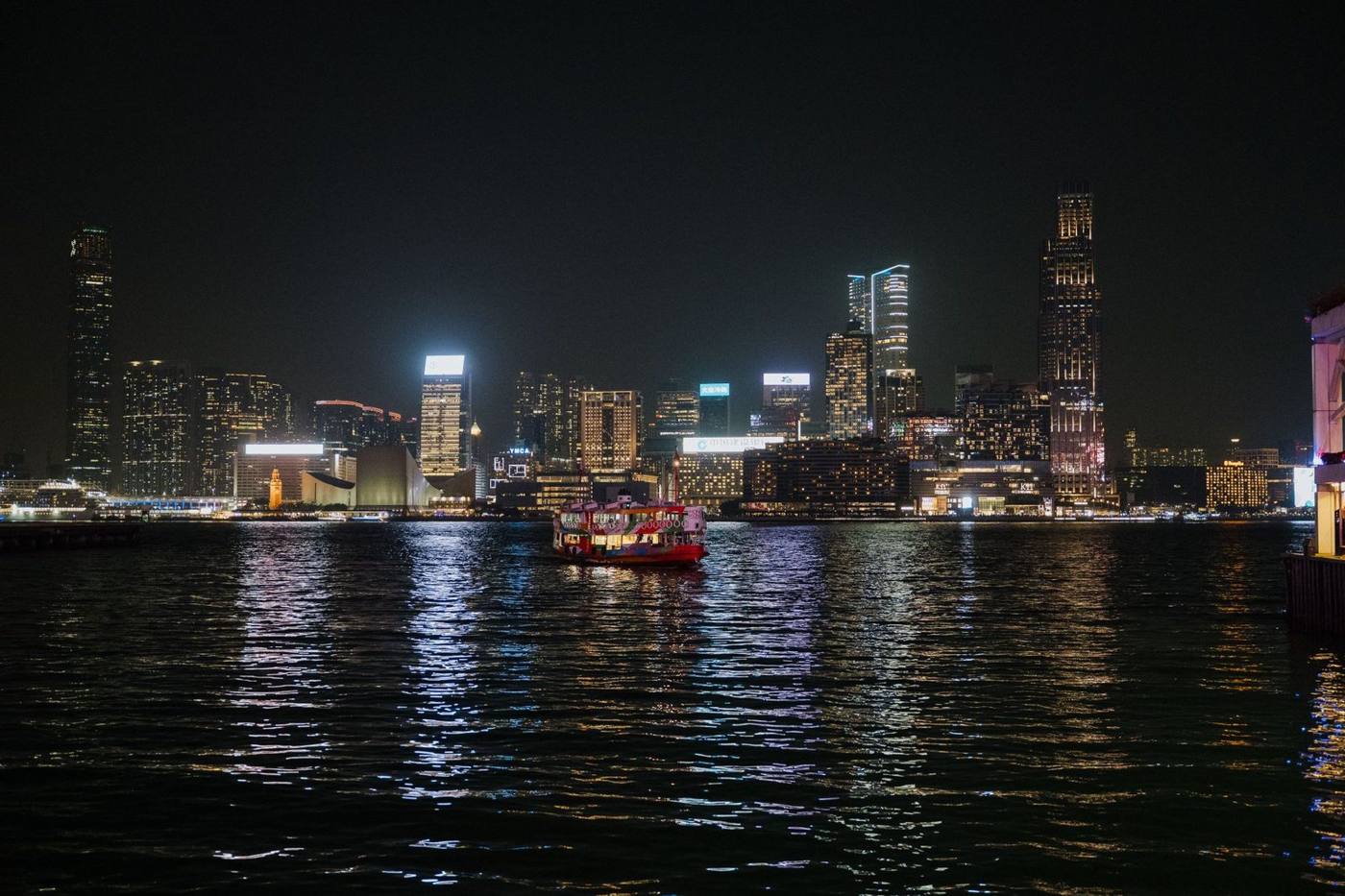
Hong Kong and Macau
The skyscrapers and hills of Hong Kong, the Star Ferry, the Kowloon markets, the Lantau Buddha and coastal trails, then Macau with its Portuguese historic centre (UNESCO World Heritage) and Macanese cooking.
 7 daysEasy
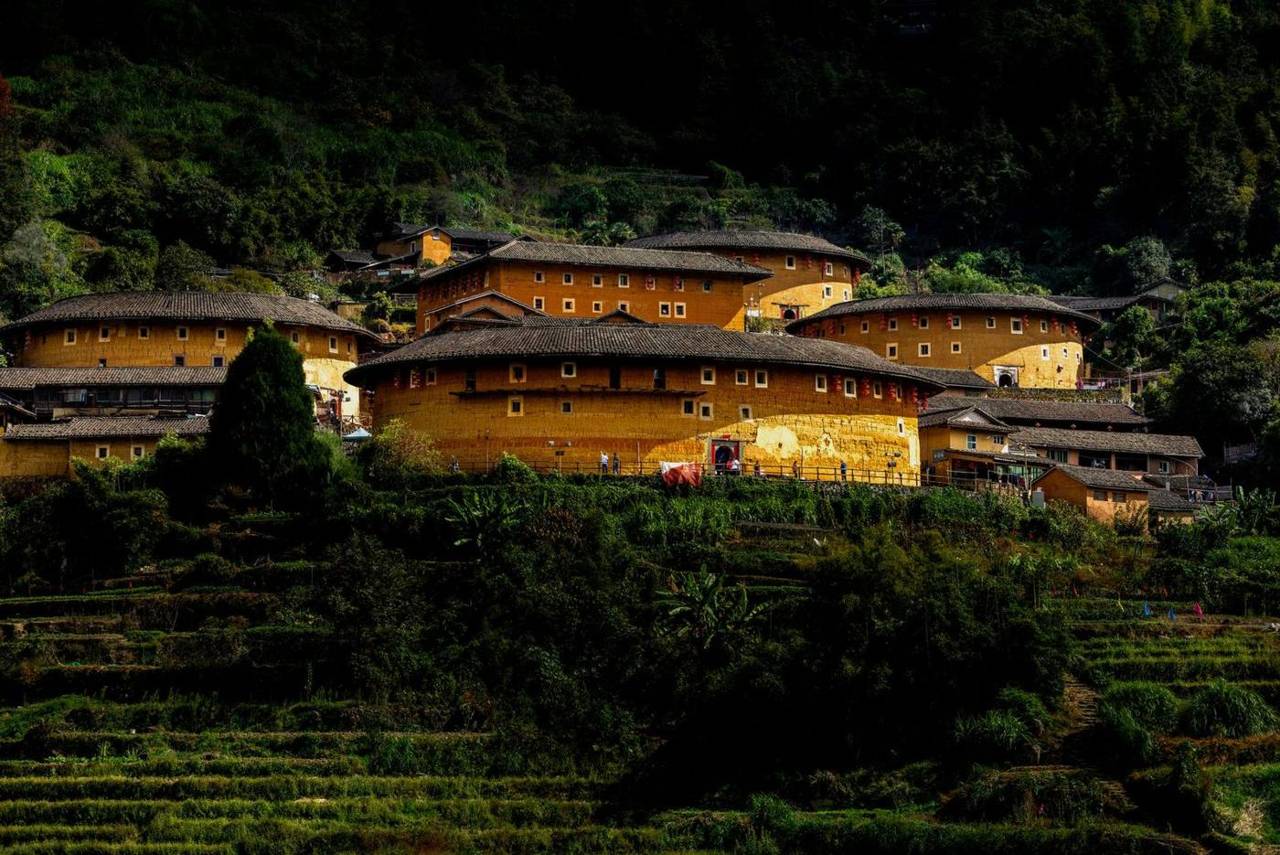
Fujian: Xiamen, the tulou and Wuyishan
The south-east coast: Xiamen and the island closed to cars of Gulangyu, the great round earthen houses of the Hakka (tulou), a UNESCO World Heritage site, and the Wuyi mountains, home of oolong tea, where you float down the Nine-Bend River on bamboo rafts.