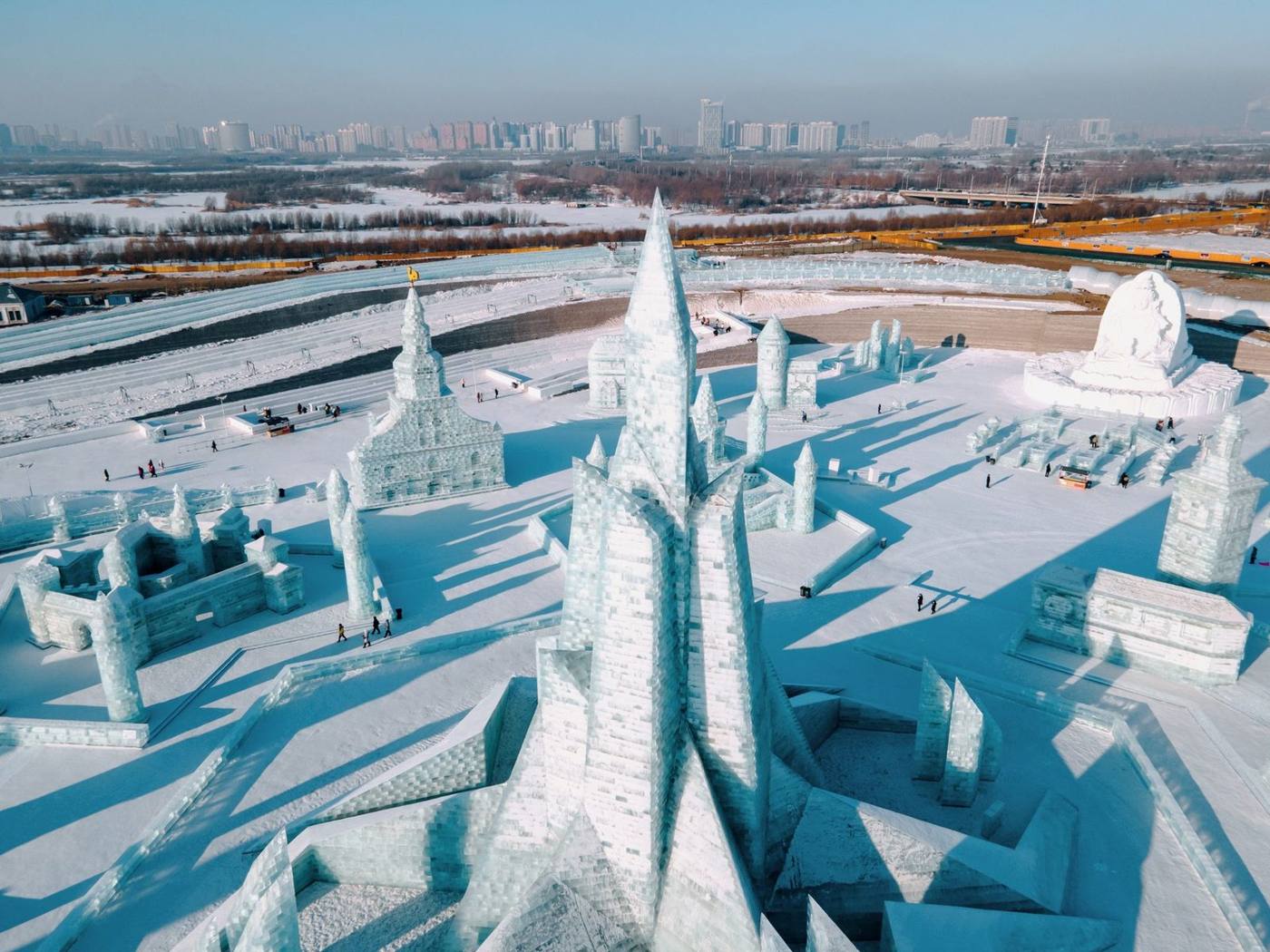
Harbin, the ice festival
China's coldest city at its most spectacular: the lit-up ice castles of Ice and Snow World, the snow sculptures of Sun Island, the central street with Russian architecture and St Sophia Cathedral, the Siberian tiger park.
- Harbin
- Sun Island
- Ice and Snow World
- Yabuli
Day by day
- Day 1
Zhongyang Street, St Sophia Cathedral and the frozen Songhua River
Harbin, in north-east China, capital of Heilongjiang province, is the city of ice: every winter it hosts the International Ice and Snow Festival, one of the largest in the world, with entire castles, temples and slides built from blocks of ice cut from the river and lit up at night. Temperatures often drop to between twenty and thirty degrees below zero. For Italian citizens, entry without a visa to China for up to 30 days for tourism is valid until 31 December 2026: for trips in 2027, check first whether the exemption has been extended.
In the morning stroll along Zhongyang Street, the central street, over a kilometre long and paved with stones, lined with European and Russian-style buildings from the early twentieth century, when Harbin grew up around the railway built by the Russians. Along the street you see ice sculptures, stalls selling sweets and Russian bread, and the ice lollies locals eat even at thirty below.
Then go to St Sophia Cathedral, a large red-brick Russian Orthodox church with a green onion dome, completed in 1932, now the city's architecture museum, beautiful at sunset and lit up at night.
In the afternoon go down to the Songhua River, completely frozen in winter: on the ice there are games, horse- and dog-drawn sleds, ice bikes and slides. On the bank stands the monument to the victory over the 1957 flood.
In the evening try north-eastern cooking: steamed dumplings, guobaorou, crispy pork in sweet and sour sauce, and Harbin red sausage.
Practical tip: dress in layers with thermal underwear, a snow jacket, a hat that covers your ears, double gloves and non-slip shoes.
- Day 2
Sun Island's snow sculptures and the Siberian Tiger Park
In the morning cross the river, on foot over the ice, by cable car or taxi, to Sun Island, a large park on the north bank of the Songhua. In winter it hosts the international snow sculpture exhibition: huge white works dozens of metres tall, figures, palaces, animals and scenes from Chinese and foreign stories, carved by hand from compacted snow by teams of artists from around the world. In daylight, under a blue sky, the white of the sculptures is dazzling: bring sunglasses.
In the park you can also slide down snow chutes, take sled rides and watch sculpture competitions.
In the afternoon visit the Siberian Tiger Park, also on the north bank, one of the world's largest breeding centres for this species, the largest tiger, endangered in the wild. You drive through the enclosures in a bus with grilles and see dozens of tigers moving through the snow. It is a breeding centre, not a natural area: the visit is impressive, but some practices, such as selling live animals to be fed to the tigers, are criticised by animal welfare advocates; it is up to you whether to go.
In the evening return to the centre and walk Zhongyang Street again, when the street's ice sculptures light up in colour.
Practical tip: phone batteries drain very fast in the cold; keep phones in an inside pocket and carry a power bank.
- Day 3
Ice and Snow World from sunset into the night
In the morning rest or visit the Heilongjiang Provincial Museum, or Zhaolin Park in the centre, where each winter there is an exhibition of ice lanterns, the tradition from which the festival grew, with small sculptures lit from within.
In the afternoon go to Harbin Ice and Snow World, the heart of the festival, on the north bank of the river. The park usually opens at the end of December and stays open until the end of February, depending on the cold; in 2027 the festival's official opening ceremony is scheduled for 5 January. Here workers and artists build a real city of ice from hundreds of thousands of cubic metres of blocks cut from the Songhua: castles, temples, pagodas, bridges, towers dozens of metres high, mazes and very long ice slides you ride down on a mat.
Arrive around sunset: in daylight the structures are a transparent blue, then, as darkness falls, coloured lights switch on inside the ice, red, blue, green and purple, and the city becomes a luminous dream. Stay a few hours, going into the heated pavilions to warm up when needed, with hot drinks.
In the evening, after the visit, return to the centre for a hot dinner: hot pot, the boiling pot in the middle of the table where meat, vegetables and tofu are cooked, is perfect after the cold.
Practical tip: it is very crowded, especially at weekends and holidays; go on a weekday and buy your ticket online in advance.
- Day 4
A trip to Yabuli for skiing, or heading home
In the morning, if you enjoy skiing, take the high-speed train to Yabuli, about an hour from Harbin, China's largest ski area, which has hosted Asian Winter Games events. The slopes run through birch woods with dry, powdery snow thanks to the continental cold, and there are also beginners' runs and snow activities such as snowshoeing and sledding. All equipment can be hired on site.
If you prefer to stay in the city, visit the old Russian Daoli quarter, with Art Nouveau and Baroque houses, or the railway museum, which tells how the Chinese Eastern Railway gave birth to Harbin in the late nineteenth century. You can also visit the Unit 731 museum, on the site where the Japanese army carried out experiments on prisoners during the war: a very hard visit, but important for understanding the region's history.
In the afternoon fly out from Harbin airport, with flights to Beijing, Shanghai and other cities, or take the high-speed train to Beijing, about six to eight hours.
Things to take home: Harbin red sausage, Russian dalieba bread, Russian-style chocolate and sweets, and north-eastern crafts.
Practical tip: in China many Western online services do not work without a VPN, and payments are almost always made with phone apps; sort this out before you go.
For those who can bear extreme cold: in the evening it often drops below -20 degrees, so you need boots, gloves and thermal layers, and phones drain quickly. Ice and Snow World usually opens around late December and closes in late February with the thaw; the 2027 festival ceremony is planned for 5 January. Around Chinese New Year it is extremely crowded. For Italian and many other European citizens, entry without a visa for up to 30 days applies until 31 December 2026: for trips after that date, check whether it has been extended.
Before you go
- Documents and visa
- Passport with at least six months' validity. Until 31 December 2026 Italian and many other European citizens need no visa for tourism up to 30 days; check whether the scheme has been extended and covers you.
- Health and vaccines
- No compulsory vaccines arriving from Europe. In big cities check air quality. Emergencies: 110 police, 120 ambulance, 119 fire.
- Money and payments
- Renminbi yuan. Almost everything is paid with Alipay and WeChat QR codes, which can be linked to foreign cards; carry some cash.
- Power sockets
- Types A, C and I, 220 volts: a universal adapter is useful.
- Time zone
- UTC+8 all year: all of China uses Beijing time.
- Safety
- The United States rates China level 2 because of arbitrary enforcement of local laws. Always carry your passport. Many Western websites and apps are blocked. Official advice: GOV.UK.
Information checked in November 2026 for Italian and EU citizens. Rules change: always check before you travel.
Variations
In 3 days: the centre and the river on day one, Sun Island on day two, Ice and Snow World on the evening of day three.
In 7 days: combine Harbin with Beijing, with the Forbidden City and the Great Wall in the snow.
Frequently asked questions
When is the festival?
Ice and Snow World usually opens in late December and closes in late February; in 2027 the opening ceremony is scheduled for 5 January.
What documents do I need?
A passport; entry without a visa for Italians for up to 30 days is valid until 31 December 2026, so for trips in 2027 check whether it has been extended.
How cold is it?
Often between twenty and thirty degrees below zero: you need snow clothing, thermal underwear, double gloves and non-slip shoes.
Indicative itinerary written by World Atlas. Before booking, check timetables, seasonal openings, documents and safety.
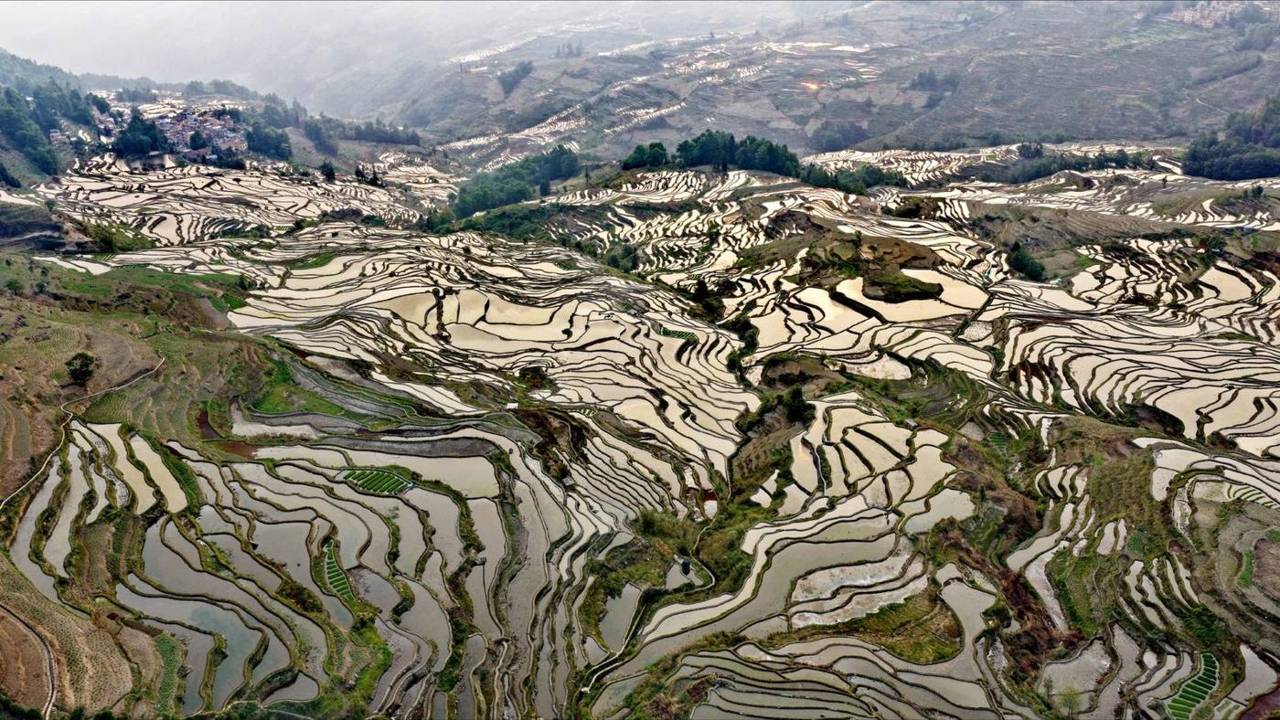 8 daysEasy
Southern Yunnan: Yuanyang and Xishuangbanna
The other Yunnan: the Hani rice terraces of Yuanyang, a UNESCO World Heritage site, mirroring the sky at dawn, the old town of Jianshui and tropical Xishuangbanna, with Dai villages, Theravada Buddhist temples and forests.
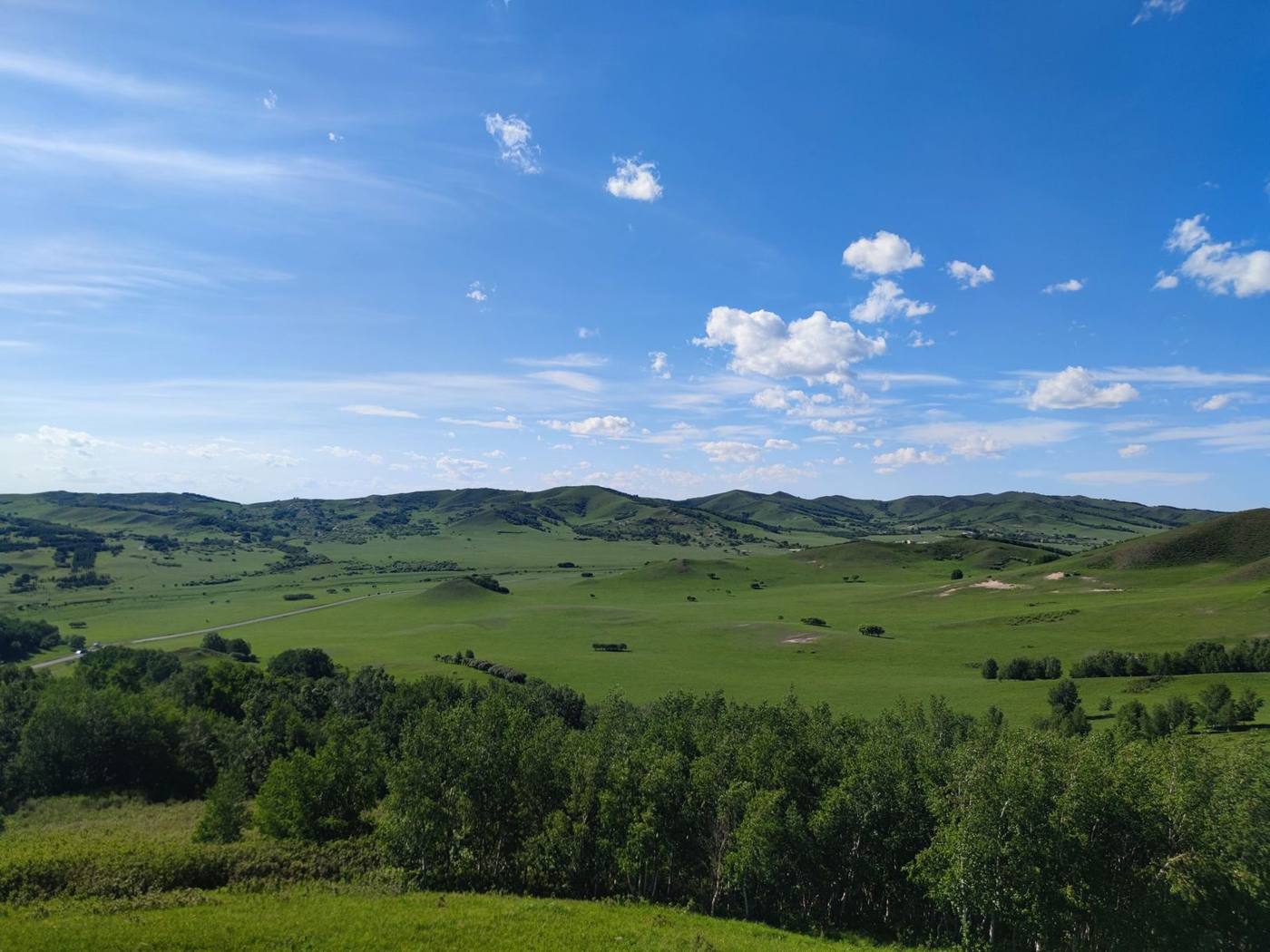 6 daysEasy
Inner Mongolia: the Hulunbuir grasslands
China's largest grasslands: Hailar, rivers winding through the green, Mongolian herders' tents, Hulun lake, the birch forests of the Greater Khingan and the Russian village of Shiwei on the Argun river.
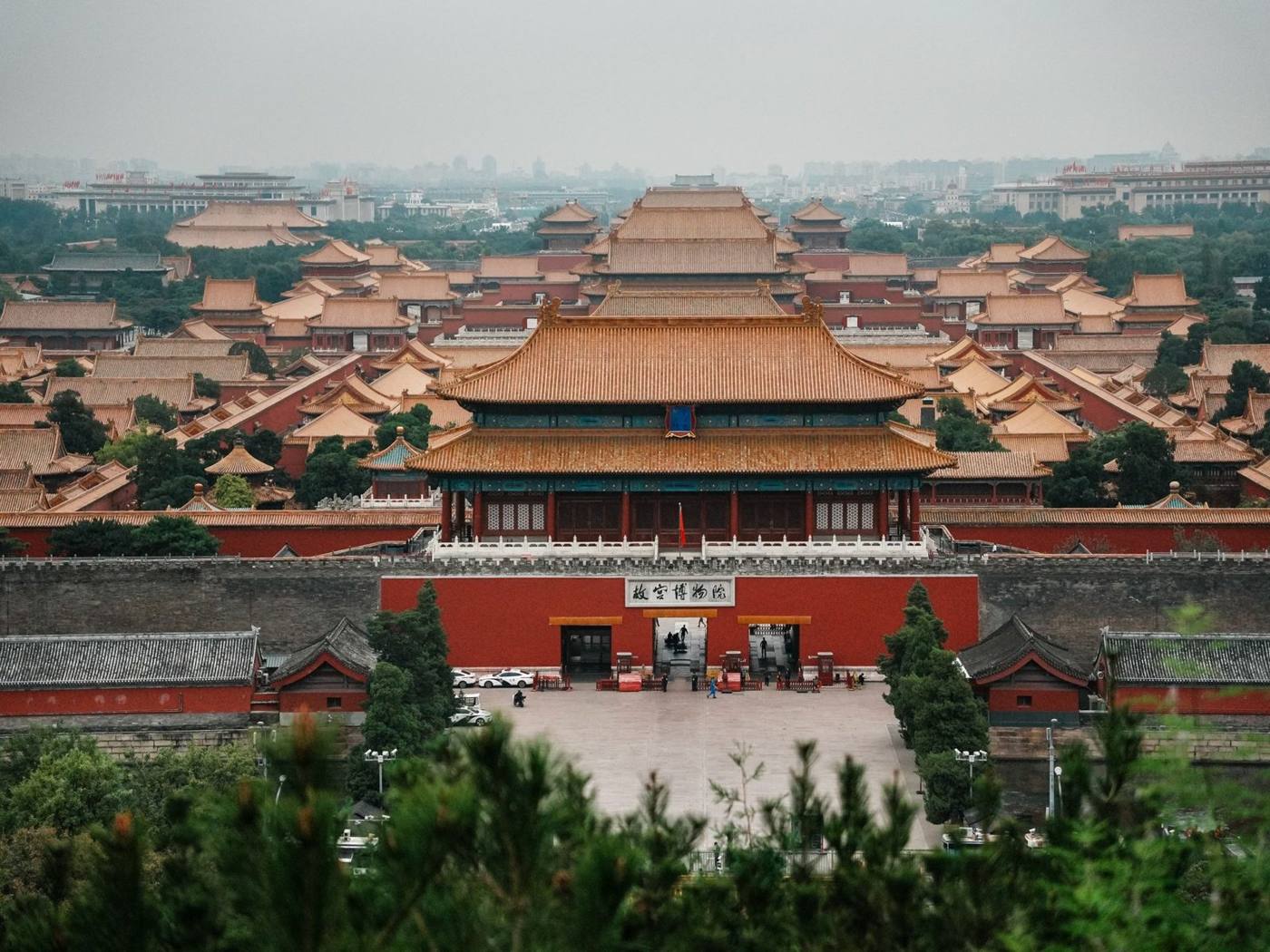 12 daysEasy
Beijing, Xi'an and Shanghai
A first trip to China: the Forbidden City and the Great Wall, the Terracotta Army of Xi'an, the gardens of Suzhou and the Shanghai skyline, linked by high-speed train.