Lakes and volcanoes: Pucón and Chiloé
Chile's green south: Villarrica volcano, hot springs in the forest, Lake Todos los Santos and the wooden churches of Chiloé.
- Temuco
- Pucón
- Huerquehue
- Puerto Varas
- Petrohué
- Chiloé
- Puerto Montt
Day by day
- Day 1
Arrival in Pucón
This trip takes you to the lakes and volcanoes region of southern Chile: Pucón at the foot of the Villarrica volcano, Huerquehue park with its monkey puzzle forests, hot springs in the forest, Puerto Varas on Lake Llanquihue with the Osorno volcano, the Petrohué falls and finally Chiloé island, with its stilt houses, UNESCO wooden churches and penguins.
Before you leave: Italian citizens can enter Chile without a visa for up to ninety days; other nationalities should check their own rules. The United States government rates Chile at level 2 of 4. In the Araucanía region there have been protests and tensions in some rural areas: check the latest advice.
You fly into Santiago, then take a domestic flight to Temuco, about an hour and a half. From Temuco to Pucón is about two hours by road. It is worth renting a car at the airport: the region is best explored by car.
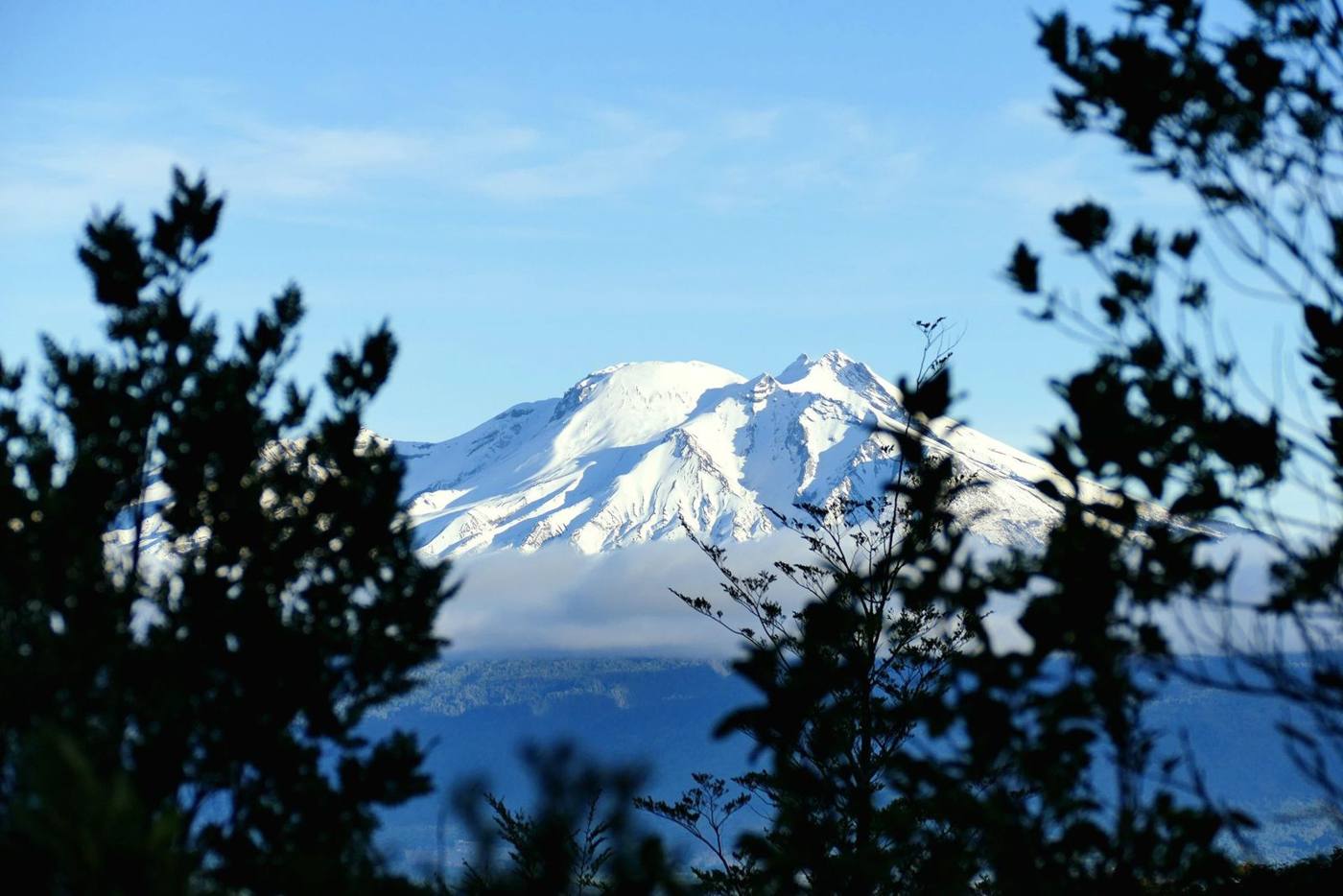
In the afternoon reach Pucón, a small town on the shore of Lake Villarrica, with wooden houses, outdoor gear shops and, above it all, the snowy cone of the Villarrica volcano, one of the most active volcanoes in South America. At night, when it is active, a red glow is sometimes visible from the summit.
In the evening walk on the lake's black sand beach and have dinner with southern food: grilled meat, salmon, empanadas and pebre, a sauce of tomato, onion and coriander.
Sleep in Pucón.
Practical tip: the best time is December to March, the southern summer. The rest of the year it rains a lot.
- Day 2
Climbing the Villarrica volcano
Today, if the volcano allows, climb the Villarrica, at about two thousand eight hundred metres. It is one of the most powerful experiences in southern Chile: you reach the rim of an active crater, with sulphur fumes and, sometimes, bubbling lava visible below.
The climb is done only with an authorised guide, with helmet, crampons and ice axe, usually supplied by the agency. You start very early, at six or before, drive up to the ski centre, then walk on snow and ice for five or six hours. When there is enough snow, the descent is done sliding on a small plastic sled down channels in the snow: fast and fun.
Access to the crater depends on the volcanic alert level and the weather: sometimes the climb is closed or allowed only up to a certain height. Check the current rules and book with an agency that respects the permits. You need to be fit.
From the top, on clear days, you see other snowy volcanoes lined up to the north and south, the lakes and the forest.
If the volcano is closed or you prefer not to climb, take a kayak trip on the lake or go to Lake Caburgua, with white sand beaches.
In the evening rest in Pucón.
Sleep in Pucón.
Practical tip: bring dark sunglasses and strong sunscreen. On snow at that altitude the sun burns within hours.
- Day 3
Huerquehue park and its lagoons
Today you walk in Huerquehue National Park, about thirty five kilometres from Pucón, one of the finest walks in the region. The park protects mountain forests with monkey puzzle trees, very ancient trees with candelabra shaped branches, the symbol of southern Chile and sacred to the Mapuche people.
The most famous trail is the lakes trail, the Sendero Los Lagos, about fourteen kilometres return with about six hundred metres of climbing. You climb through southern beech forest, pass two waterfalls and reach a plateau with several small mountain lagoons surrounded by monkey puzzle trees, with dark water reflecting the trees. On the way up you see Lake Tinquilco and, on clear days, the Villarrica volcano.
The walk takes five or six hours. Start early and bring water and lunch. The park ticket is paid at the entrance or online: check the current price and hours. Some Chilean parks require booking in high season.
In the late afternoon relax in one of the hot springs around Pucón. The most beautiful are in a narrow gorge in the forest, with stone pools linked by red wooden walkways along the stream, among giant ferns. Book your entry and check the hours.
Sleep in Pucón.
Practical tip: in the forest hot springs the water is very hot. Take breaks out of the pools and drink plenty of water.
- Day 4
A day of lakes and Mapuche villages
Today is a quieter day around Pucón.
In the morning drive around Lake Villarrica, stopping in the town of Villarrica on the opposite shore and at viewpoints with the volcano reflected in the water.
Then visit a Mapuche community in the area, if possible on a visit organised by the community itself. The Mapuche are the largest indigenous people in Chile and have lived on these lands since before the Spanish arrived. You can learn about the ruka, the traditional wood and straw house, cooking with monkey puzzle nuts, muday, a cereal drink, and crafts in textiles and silver. Always ask before photographing people and sacred places.
In the afternoon walk to the Salto del Claro or the Ojos del Caburgua falls, where water gushes from beneath the rocks into turquoise pools in the forest.
If you like adventure, Pucón offers rafting on the Trancura river, canyoning, horse riding and paragliding. Choose a serious agency and check the equipment.
In the evening have dinner in Pucón and get ready to head south.
Sleep in Pucón.
Practical tip: in Mapuche villages a respectful, calm greeting is customary. Ask your guide how to introduce yourself. If you are offered food or drink, accept at least a taste: it is a sign of respect.
- Day 5
To Puerto Varas and Lake Llanquihue
In the morning leave Pucón and drive south, about four hours on the Pan American Highway, through green fields, woods and farms. If you like, stop at Valdivia, a university town on navigable rivers, with a fish market where sea lions wait for scraps on the bank.
In the afternoon you reach Puerto Varas, a small town on the shore of Lake Llanquihue, Chile's second largest lake, founded in the mid nineteenth century by German settlers. The wooden houses with steep roofs, the churches and rose gardens recall central Europe. Across the lake rises the Osorno volcano, an almost perfect snow covered cone, and next to it Calbuco, its summit shattered by an eruption in 2015.
Walk along the lakefront at sunset, when the volcanoes turn pink, and visit the Sacred Heart church, of wood painted red and white, built at the start of the twentieth century.
In the evening try kuchen, the fruit cake of German tradition, and southern fish such as salmon or conger eel.
Sleep in Puerto Varas.
Practical tip: even in summer the weather in Puerto Varas changes quickly. Always carry a waterproof jacket. On the Puerto Varas lakefront the afternoon wind can be strong and cold, even in sunshine.
- Day 6
The Petrohué falls and Lake Todos los Santos
Today you visit Vicente Pérez Rosales National Park, the oldest in Chile, founded in 1926, about an hour from Puerto Varas along the shore of Lake Llanquihue.
The first stop is the Petrohué falls, where the emerald green river rushes over black lava rocks, forming rapids and cascades, with the Osorno volcano behind. A short trail with boardwalks leads to the viewpoints. Check the ticket and opening hours.
Then continue to Petrohué, on the shore of Lake Todos los Santos, a lake of emerald water surrounded by forested mountains and volcanoes. You can take a boat trip on the lake or walk on the black volcanic sand beach.
In the afternoon, if the weather is good, drive up the slopes of the Osorno volcano to the ski centre area, at about one thousand two hundred metres, for a wide view over Lake Llanquihue and the other volcanoes. In summer you can take short walks on the secondary craters and lava fields.
In the evening return to Puerto Varas.
Sleep in Puerto Varas.
Practical tip: the road up the Osorno volcano is steep and winding. Check conditions before going up, especially out of season, and keep the fuel tank well filled.
- Day 7
Frutillar and a day on the lake
Today you stay around Lake Llanquihue for a calmer day, after several long days on the road and on the trails.
In the morning visit Frutillar, about half an hour from Puerto Varas, a small town of German houses facing the lake, with neat gardens and a jetty. On the shore stands a large wood and glass theatre built on stilts over the water, where a classical music festival is held each year between January and February. Also visit the open air German colonial museum, with a mill, a farm, a forge and the houses of the first settlers. Check opening hours and prices.
In the afternoon go kayaking on the lake or cycling along the shore on the bike path linking the towns.
Alternatively, take a trip to the Petrohué river for easy rafting, or a walk in the Alerce Andino reserve, south of Puerto Montt, with alerce trees, giant conifers that can live for thousands of years.
In the evening have dinner in Puerto Varas and prepare for Chiloé.
Sleep in Puerto Varas.
Practical tip: during the Frutillar music festival accommodation fills up. If you travel then, book early. Also check the concert programme: some events take place outdoors on the lakeshore and are at no cost.
- Day 8
Chiloé: Castro and the palafitos
In the morning drive south to Pargua, about an hour, and take the ferry to Chiloé island, a crossing of about half an hour over the Chacao channel, where you sometimes see dolphins and sea lions. The ferry runs often and no booking is needed.
Chiloé is a large green island, with hills, forests, bays and small fishing villages, and a culture of its own, made of legends, wooden houses with scalloped wooden shingles, food and churches.
Drive to Castro, the main town, about two hours. Castro is famous for its palafitos, colourful houses built on wooden stilts above the water along the shores of the inlet. At high tide they seem to float; at low tide you see the stilts and the mud. The best way to see them is from the opposite shore or a small viewpoint.
Visit the church of San Francisco, on Castro's square, a large wooden church painted yellow and purple, a UNESCO site together with other churches on the island. Inside everything is wood, from the columns to the vaults.
In the evening try curanto, Chiloé's typical dish: seafood, meat, potatoes and potato bread cooked together in a pit in the ground covered with hot stones and leaves.
Sleep in Castro.
Practical tip: it rains often on Chiloé, even in summer. Bring waterproof shoes.
- Day 9
The churches of Chiloé and the Puñihuil penguins
Today you explore Chiloé. The sixteen UNESCO wooden churches were built between the eighteenth and nineteenth centuries by the islanders, guided by Jesuit and later Franciscan missionaries, using boatbuilders' techniques: beams joined without nails, roofs like upturned hulls, façades with porches and multi storey towers.
In the morning visit some of the churches near Castro, such as those of Nercón and Dalcahue, by the sea, where on Sundays there is a craft market with wool sweaters, baskets and island produce. From Dalcahue a short ferry goes to Quinchao island, with the church of Achao, the oldest.
In the afternoon drive to the north west coast, to Puñihuil, a beach facing three islets, a natural monument, where both Humboldt and Magellanic penguins nest, the only place in Chile where they live together. Boats leave from the beach and approach the islets without landing. The season runs roughly from September to March: check dates and times, which depend on the tides. Sometimes you also see marine otters.
In the evening head to Ancud, the town in the north of the island.
Sleep in Ancud.
Practical tip: opening hours of Chiloé's churches are irregular. Ask locally or check before you go. Sunday morning, during mass, the churches are usually open, but visitors should stay quiet at the back.
- Day 10
Puerto Montt and departure
On the last day leave Chiloé on the ferry from Chacao to Pargua and drive to Puerto Montt, about an hour and a half from Ancud.
If you have time before your flight, visit the Angelmó market in Puerto Montt's harbour, with dozens of stalls selling fish, seafood, dried seaweed, smoked mussels and Chiloé crafts, such as rough wool sweaters and baskets. The market kitchens serve fish soups and curanto in a pot.
Puerto Montt airport is about twenty minutes from the centre. Return the car with a full tank and arrive early. Flights leave from here for Santiago, the hub for intercontinental flights.
If you have more days, Puerto Montt is the starting point of the Carretera Austral, the road heading south into Patagonia, or of ferries to the southern fjords.
Before leaving buy something to take home: a Chiloé wool sweater, jams of southern fruit, ulmo honey, or wooden objects.
This trip shows a green Chile, very different from the northern desert: snowy volcanoes, lakes, ancient forests, Mapuche culture and the unique culture of Chiloé.
Practical tip: domestic flights between Santiago and the south are frequent. Book them early in high season for better prices, and leave a day's margin before an international flight in case of fog or delays.
Chile's gentlest side, with Alpine-style scenery and a milder climate than Patagonia. The Villarrica climb is demanding and depends on the volcano's activity. It rains often even in summer, so bring a waterproof jacket and patience.
Before you go
- Documents and visa
- Valid passport; no visa for tourism up to 90 days for EU citizens. On arrival you receive the PDI electronic slip, to be kept until you leave.
- Health and vaccines
- No compulsory vaccines arriving from Europe. In the Atacama Desert and the Andes beware of altitude sickness. Emergencies: 131 ambulance, 132 fire, 133 police.
- Money and payments
- Chilean peso. Cards are accepted almost everywhere; carry some cash in parks and villages.
- Power sockets
- Types C and L, 220 volts: European two-pin plugs almost always fit.
- Time zone
- UTC-4 in the southern winter and UTC-3 from September to April. The Magallanes region stays on UTC-3 all year.
- Safety
- The United States rates Chile level 2 for crime and civil unrest, with protests in the Araucanía region. In Santiago and Valparaíso watch out for pickpockets. Official advice: GOV.UK.
Information checked in November 2026 for Italian and EU citizens. Rules change: always check before you travel.
Variations
In 7 days: Pucón, Huerquehue, Puerto Varas and Petrohué, without Chiloé.
In 14 days: add Valdivia, Alerce Andino park and the start of the Carretera Austral.
Frequently asked questions
Do I need a visa?
Italian citizens can enter Chile without a visa for up to ninety days. Other nationalities should check their own rules. The United States government rates Chile at level 2 of 4.
Can you climb the Villarrica volcano?
Only with an authorised guide and only if the volcanic alert level allows it. Sometimes the climb is closed or limited: check the current rules.
When is the best time to go?
December to March, the southern summer. The Puñihuil penguins can be seen roughly from September to March. The rest of the year it rains a lot.
Indicative itinerary written by World Atlas. Before booking, check timetables, seasonal openings, documents and safety.
 18 daysModerate
Chile in full, from the Atacama to Patagonia
The world's longest country in one trip: desert, Santiago, the southern lakes and volcanoes and a grand finale in Torres del Paine.
 8 daysModerate
Tierra del Fuego and king penguins
The Strait of Magellan, the penguin colony of Isla Magdalena, the king penguins of Bahía Inútil and the steppes of Tierra del Fuego.
 6 daysEasy
The Elqui Valley and the stars
A valley of vineyards and pisco distilleries, the clearest skies in South America and the coast of the Humboldt penguins.