Quebec, Montreal and the whales of Tadoussac
French Canada: Montreal, Old Quebec City, the Charlevoix region and the whales of the Saguenay fjord.
- Montréal
- Mont-Tremblant
- Québec
- Charlevoix
- Tadoussac
- Montréal
Day by day
- Day 1
Arrival in Montreal and Old Montreal
To fly to Canada EU citizens must apply for an eTA, the electronic travel authorisation, on the official Canadian government website: it costs 7 Canadian dollars. Your passport must be valid for the whole stay. Quebec is Canada's French-speaking province: French is the official language, although in Montreal almost everyone speaks English.
From Trudeau airport the direct 747 bus reaches the centre in about forty-five minutes, day and night. To stay, choose Old Montreal, the historic centre, the Plateau, a lively residential district, or downtown, convenient for the metro.
In the afternoon walk around Old Montreal, the oldest part of the city, founded by the French in 1642: cobbled streets, grey stone buildings from the eighteenth and nineteenth centuries, and Place Jacques-Cartier with painters and street artists. Step into Notre-Dame Basilica, with its blue and gold neo-Gothic interior, starry ceiling and great organ; in the evening there are light shows.
At sunset stroll through the Old Port along the St Lawrence River, with its Ferris wheel and piers turned into public spaces. In the evening try poutine, fries with fresh cheese curds and hot gravy, Quebec's signature dish.
Practical tip: the rechargeable OPUS card works on Montreal's metro and buses; the metro is the fastest way to get around, especially in winter.
- Day 2
Mount Royal and Jean-Talon Market
In the morning climb Mount Royal, the hill that gives the city its name, turned into a great park by Frederick Law Olmsted, the same architect who designed New York's Central Park. From downtown a path and a staircase lead in about half an hour to the Kondiaronk lookout, with views of the skyscrapers, the St Lawrence and, on clear days, the mountains of the United States. At the top stands a large cross lit up at night.
Coming down the other side of the hill you can visit St Joseph's Oratory, one of the largest churches in the world, with its green dome, a place of pilgrimage.
In the afternoon take the metro to Jean-Talon Market in Little Italy, one of the largest open-air markets in North America, with stalls of Quebec producers: fruit, vegetables, cheeses, maple syrup, charcuterie and seasonal produce. In summer it is full of colour; in winter part of it stays open and covered.
In the evening stroll through Mile End and the Plateau, districts of houses with wrought-iron outdoor staircases, murals, bookshops and small cafés. Mile End is famous for Montreal bagels, smaller and sweeter than New York's, baked in wood-fired ovens, and for smoked meat, cured beef served in sandwiches.
Practical tip: in winter the underground city, called RÉSO, links metro stations, shopping centres and offices for dozens of kilometres, sheltered from the cold.
- Day 3
Montreal: museums, Parc Jean-Drapeau and festivals
In the morning visit the Museum of Fine Arts, one of Canada's most important, with collections of Canadian, Inuit and First Nations art as well as European and contemporary works. Alternatively Pointe-à-Callière in Old Montreal, built over the city's founding site, shows archaeological remains beneath the streets and tells Montreal's story from the Indigenous communities to today.
In the afternoon take the metro to Parc Jean-Drapeau, on islands in the St Lawrence, site of Expo 67. Here is the Biosphere, the great geodesic dome designed by Buckminster Fuller for the United States pavilion, now an environment museum, and the Gilles Villeneuve Formula 1 circuit, where you can walk or cycle when there are no races.
Montreal is famous for its festivals: in summer the International Jazz Festival, with many no-cost outdoor concerts in the Quartier des spectacles, and the Just for Laughs comedy festival; in winter Montréal en lumière, with light shows and food.
In the evening return downtown and have dinner in the Quartier des spectacles or Little Italy.
Practical tip: Montreal is a city to enjoy on foot and by bike; in summer the BIXI bike-share has stations throughout downtown and along the Lachine Canal, and a day pass is easy to buy at any station.
- Day 4
Mont-Tremblant National Park among lakes and forests
Today is a trip into the Laurentians, the mountains north of Montreal, to Mont-Tremblant National Park, Quebec's oldest provincial park, about two hours by car. It is a territory of more than four hundred lakes, rivers, waterfalls and forests of maple, birch and conifers, home to moose, beavers, wolves and black bears.
In the park you can walk marked trails such as the Chute du Diable, canoe on the lakes and along calm rivers, or simply picnic on lake beaches. The La Roche trail, overlooking Lac Monroe, is among the finest. Canoes and kayaks can be rented inside the park.
In autumn, at the end of September and early October, the maple forests turn red, orange and yellow: it is Quebec's most famous spectacle. It is the busiest period and booking is advisable.
In the afternoon visit Mont-Tremblant village, a ski resort with colourful houses at the foot of the mountain, and ride the gondola to the summit for views over the Laurentian lakes.
In the evening return to Montreal or stay in the area. Practical tip: in Quebec's national parks, run by SÉPAQ, you pay a daily entry fee; check the rates on the official website, as they change every year.
- Day 5
To Quebec City and the walled old town
In the morning leave for Quebec City, the provincial capital, about three hours by car or train from Montreal. The train follows the St Lawrence and is comfortable; in the city you get around on foot.
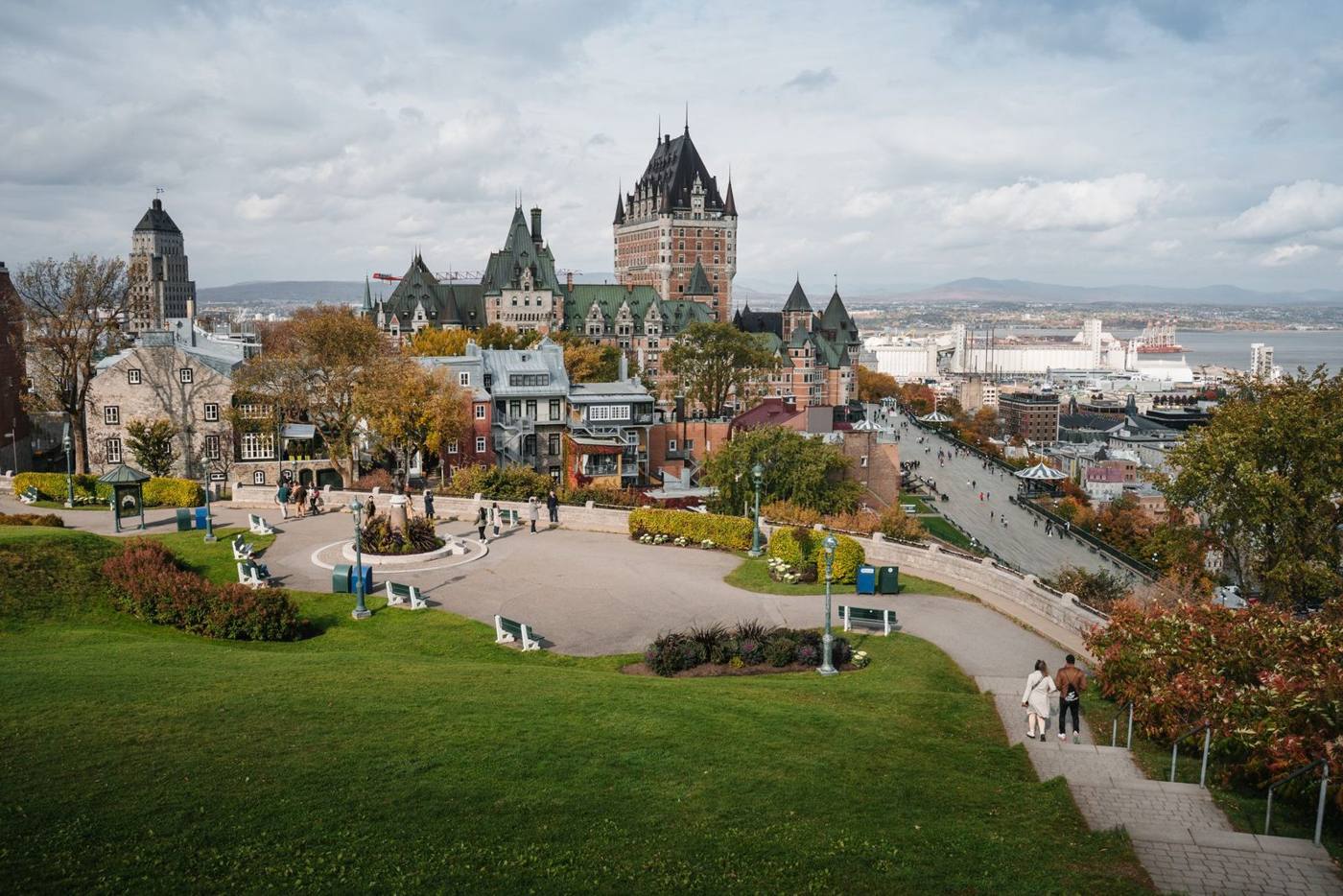
Quebec City, founded by Samuel de Champlain in 1608, is the only city in North America north of Mexico still to have fortified walls around its historic centre, a UNESCO World Heritage site. The old town is divided in two: the Upper Town on the Cap Diamant promontory, with walls, palaces and churches, and the Lower Town along the river, with the lanes of the Petit-Champlain quarter.
In the afternoon walk along Dufferin Terrace, a long wooden promenade above the St Lawrence in front of the Château Frontenac, the great historic castle-style hotel that is the city's symbol. Go down by funicular or by the staircase called Breakneck Stairs to Petit-Champlain, with stone houses, shops and murals telling the city's history, and Place Royale, where Quebec was born.
At sunset walk along the walls to the Citadel, the star-shaped fortress built by the British and still home to a regiment.
To stay, choose the old town inside the walls. Practical tip: Quebec City is hilly; you need comfortable shoes, and in winter ice grips or non-slip shoes.
- Day 6
Quebec City and Montmorency Falls
In the morning visit the Citadel, with the changing of the guard in summer, and the Museum of Civilization in the Lower Town, with exhibitions on the history of Quebec and the cultures of the First Nations and Inuit. The Plains of Abraham, now a great park above the river, were the scene in 1759 of the battle in which the British conquered New France.
In the afternoon go to Montmorency Falls, about fifteen minutes from the city: eighty-three metres high, thirty more than Niagara Falls, they drop in a single leap to the St Lawrence. You go up by cable car or by a long panoramic staircase of almost five hundred steps; a suspension bridge passes right over the falls. In winter the frozen spray forms an ice cone at the base, called the sugarloaf.
Opposite lies Île d'Orléans, linked by a bridge, a countryside of farms, orchards, vineyards and wooden houses, considered the cradle of New France, with producers of cider, cheese, chocolate and jams. A tour of the island by car or bike takes a few hours.
In the evening return to the old town and dine on Quebec cooking: tourtière, the meat pie, pea soup and tarte au sucre.
Practical tip: in winter, between late January and February, Quebec City hosts its Carnival, one of the largest winter carnivals in the world, with an ice palace and canoe races on the frozen river.
- Day 7
Charlevoix along the St Lawrence
In the morning head north-east along the St Lawrence to the Charlevoix region, a UNESCO biosphere reserve, about an hour from Quebec City. Charlevoix lies in a great crater formed by a meteorite impact hundreds of millions of years ago, and its landscape of hills sloping down to the river, as wide as a sea, is one of the most beautiful in Quebec.
The first stop is Baie-Saint-Paul, an artists' town with many galleries, where Cirque du Soleil was born in the 1980s. Its central streets have colourful houses and shops selling local produce.
Charlevoix is famous for its route des saveurs, the flavour trail: producers of cheese, charcuterie, lamb, craft beer, cider and chocolate. Stop at a fromagerie to taste the local cheeses, some made with milk from an old Canadian cattle breed.
In the afternoon continue along the coast to La Malbaie, a historic resort with its great castle-style hotel. Route 362 between Baie-Saint-Paul and La Malbaie offers spectacular views over the river. Inland, Hautes-Gorges-de-la-Rivière-Malbaie National Park has some of the highest rock walls in eastern Canada.
Stay around La Malbaie. Practical tip: to cross the Saguenay River towards Tadoussac there is a no-cost ferry that runs all day.
- Day 8
Tadoussac and the whales
In the morning reach Tadoussac, about an hour from La Malbaie, crossing the mouth of the Saguenay on the no-cost ferry. Tadoussac is a small village at the confluence of the Saguenay and the St Lawrence, one of the best places in the world to see whales from the shore and from the sea. Here the deep, cold waters of the fjord meet those of the river, creating an abundance of food that attracts many species. The area is protected by the Saguenay-St Lawrence Marine Park.
The whale season runs from May to October: you see minke and fin whales, humpbacks and sometimes the blue whale, the largest animal ever to have lived, as well as belugas, the white whales that live year-round in the estuary. Boat trips last two to three hours, on large boats or faster inflatables; reputable operators respect the distances from the animals set by the park rules.
In the afternoon walk the trails above the village, such as Pointe-de-l'Islet, from which you can sometimes see belugas and minke whales straight from the rocks. The marine mammal interpretation centre explains the life of the St Lawrence whales.
The evening in the village is quiet. Practical tip: even in summer it is cold on the water; bring a jacket, hat and gloves for boat trips.
- Day 9
The Saguenay Fjord
Today is a day on the Saguenay Fjord, one of the longest fjords in the world, with rock walls up to three hundred and fifty metres high plunging into the dark water. Saguenay Fjord National Park protects the shores, with trails, lookouts and villages.
In the morning you can take a fjord cruise, leaving from Tadoussac or other villages, to see the rock walls from the water; belugas sometimes swim up the fjord. Alternatively, keen walkers can follow the Tadoussac bay trail to the fjord lookout.
In the afternoon drive up the north shore of the fjord to Sainte-Rose-du-Nord, a small village among the mountains, considered one of the most beautiful in Quebec, or to Baie-Sainte-Marguerite, where belugas come in summer to rest and feed their young: a lookout lets you see them from the shore without disturbing them.
The fjord is also a place for sea kayaking, with guides along the rock walls, sometimes close to seals.
In the evening return to Tadoussac or stay near the fjord. Practical tip: the water of the fjord and the St Lawrence is very cold all year; for kayaking you need a wetsuit and an experienced guide, because tides and currents are strong.
- Day 10
Back to Montreal and departure
The last day is for the drive back to Montreal, about five and a half hours from Tadoussac, along the north shore of the St Lawrence to Quebec City and then the motorway. Alternatively you can return to Quebec City and take a flight from there, with a connection.
If you have a few hours in Montreal before your flight, stroll along the Lachine Canal, an old industrial waterway turned into a linear park with cycle paths, and visit Atwater Market on the canal bank, with its producers' stalls and art deco clock tower.
Things to take home: maple syrup, maple butter and maple sweets, ice cider, a sweet wine made from frozen apples, aged Quebec cheeses, well packed, and First Nations and Inuit crafts bought from shops that guarantee fair payment to artists, with a certificate of authenticity.
Practical tip: flights back to Europe leave from Trudeau airport; arrive at least three hours before international flights. Return the car with a full tank and check it with the rental company. If your flight leaves in the evening, leave your luggage in storage and enjoy your last hours in the city without rushing. Remember that maple syrup and other liquids must go in checked luggage, tightly sealed.
A Canada with a European soul, good food and whales as a bonus: an excellent first trip. In Tadoussac whales are seen almost every day from July to September. Winter is a different trip, with the Quebec Winter Carnival and temperatures below -20°C. Some French helps a lot.
Before you go
- Documents and visa
- Passport valid for the whole stay. Anyone flying in needs an eTA, applied for online on the official Canadian government website: it costs 7 Canadian dollars.
- Health and vaccines
- No compulsory vaccines. Medical care is very expensive for visitors: health insurance is essential. Emergencies: 911.
- Money and payments
- Canadian dollar. Cards are accepted almost everywhere; tips of 15 to 20% are customary in restaurants.
- Power sockets
- Types A and B, 120 volts: you need an adapter and devices must accept 120 volts.
- Time zone
- Montreal and Quebec City are UTC-5, Calgary and Banff UTC-7, Vancouver UTC-8, all with daylight saving time in summer.
- Safety
- A very safe country. In summer wildfires can close roads and parks and bring smoke: check local alerts. Official advice: GOV.UK.
Information checked in November 2026 for Italian and EU citizens. Rules change: always check before you travel.
Variations
In 6 days: two days in Montreal, two in Quebec City with Montmorency Falls and two in Tadoussac for the whales, skipping Mont-Tremblant and the fjord.
In 14 days: after Tadoussac continue along the north shore or cross the river towards the Gaspé Peninsula and Percé Rock.
Frequently asked questions
Do I need a document to enter Canada?
Yes: EU citizens flying in need an eTA, applied for online on the official Canadian government website. It costs 7 Canadian dollars.
When can you see whales at Tadoussac?
From May to October: minke and fin whales, humpbacks and sometimes the blue whale. Belugas live year-round in the St Lawrence estuary.
When is the best time for Quebec?
June to September for warmth and whales, late September and early October for autumn colours. Winter is very cold, but the snow and the Quebec Winter Carnival are spectacular.
Indicative itinerary written by World Atlas. Before booking, check timetables, seasonal openings, documents and safety.
 10 daysEasy
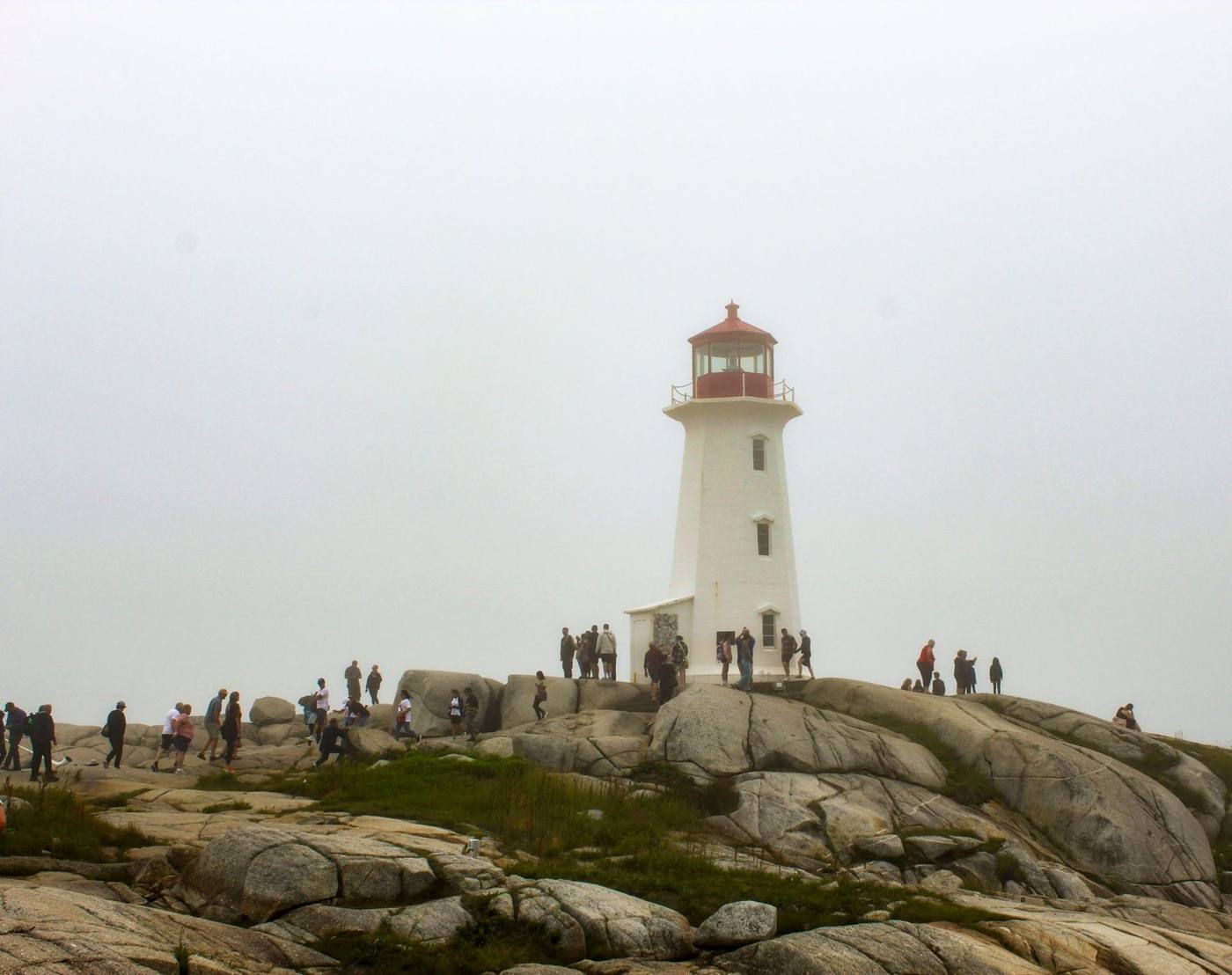
Nova Scotia and the Cabot Trail
Halifax, Peggy's Cove lighthouse, Lunenburg, the tides of the Bay of Fundy and the Cabot Trail on Cape Breton.
 6 daysEasy
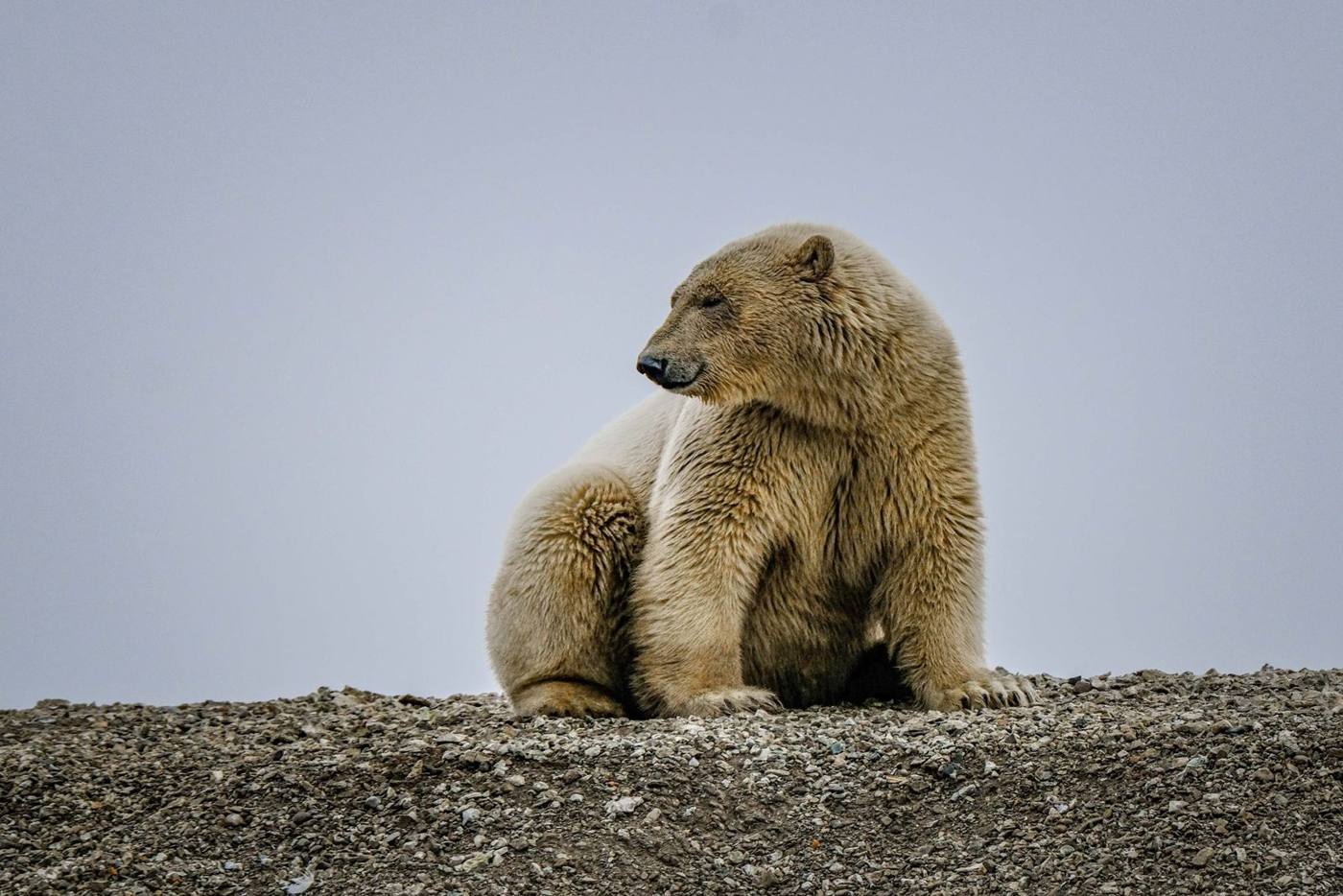
The polar bears of Churchill
On Hudson Bay, where polar bears wait for the sea to freeze: tundra buggy outings and, with some luck, the northern lights.
 7 daysEasy
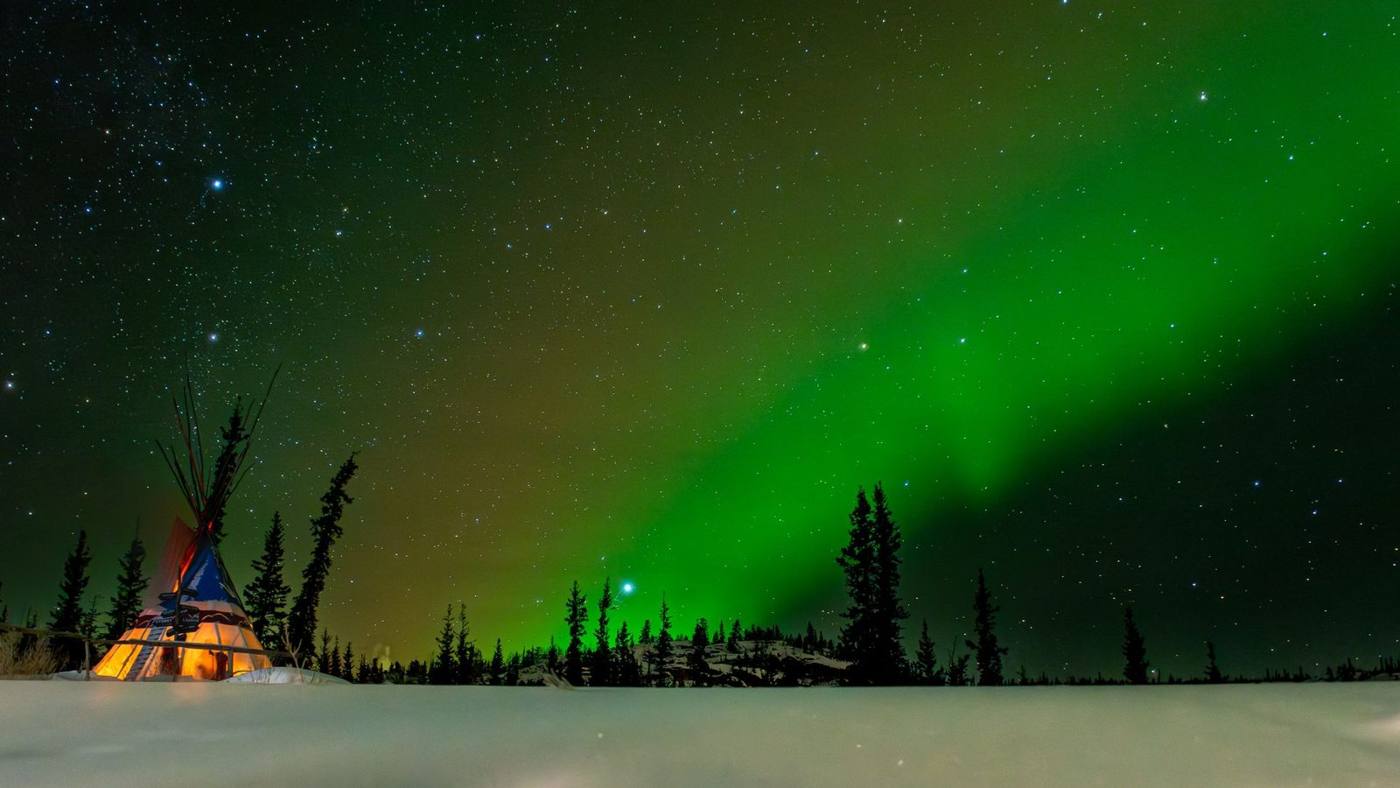
Yukon: northern lights in Whitehorse
Nights in a cabin far from the lights, days of dog sledding and snowshoeing and a soak in the Takhini hot springs.