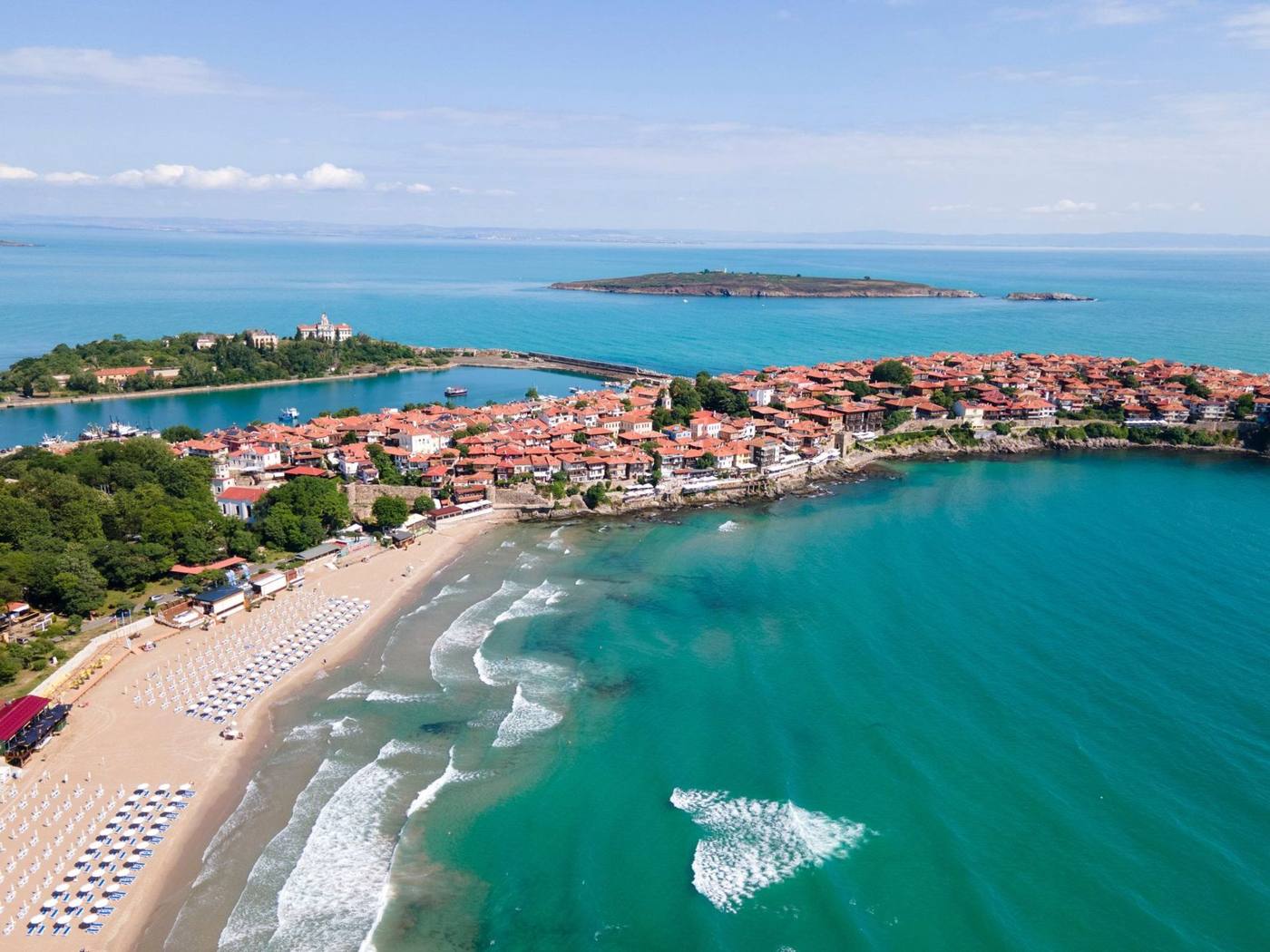
Sozopol and the south coast
Sozopol's old town of wooden houses, the beaches of Sinemorets and the Veleka river mouth, Strandzha park and quiet Ahtopol village.
- Burgas
- Sozopol
- Primorsko
- Sinemorets
- Ahtopol
Day by day
- Day 1
Arrival in Burgas and the old town of Sozopol
This trip takes you to the southern Black Sea coast of Bulgaria, its most natural and least built-up stretch: the old town of Sozopol with its wooden houses, the mouth of the Veleka river at Sinemorets, the wild beaches near the Turkish border and the fishing village of Ahtopol. You travel by rental car from Burgas.
Before you go: Italian citizens can enter Bulgaria with an electronic identity card or a passport; Bulgaria has been in the Schengen area since 2025. Other nationalities should check their own rules. The currency has been the euro since 1 January 2026. In summer there are pickpockets and thefts on the beaches. The Turkish border is close: in the Strandzha park stay on marked trails and do not enter border areas. Helping migrants who entered illegally in any way is a crime.
You land at Burgas airport and drive south for about forty minutes to Sozopol.
The old town covers a small rocky peninsula. Greeks from Miletus founded the colony of Apollonia here in the seventh century BC. Today its cobbled lanes are lined with nineteenth-century houses with stone ground floors and upper floors of dark wood jutting out over the street. Visit the small Church of the Holy Virgin, built below street level, with a carved wooden iconostasis, and the stretch of ancient walls on the south side. Check prices and times.
At sunset, walk along the sea walls and watch the fishing boats come back into the harbour.
Overnight in Sozopol, for two nights.
Practical tip: in July and August the old town is packed; stay on the peninsula or nearby, so you can explore it early in the morning and late in the evening.
- Day 2
Sozopol, the beaches and the Ropotamo river
Today you mix sea, history and nature around Sozopol.
In the morning, visit the town's Archaeological Museum, with painted Greek vases, amphorae and anchors found on the seabed, which tell the story of trade in ancient Apollonia. Check prices and times. Then go into the Church of St George, which holds relics attributed to St John the Baptist, found in 2010 on Sveti Ivan, the islet you see in front of the harbour.
Swim at one of the town's sandy beaches, such as the one below the old town or the longer one towards the new part. The Black Sea here is not very salty, with warm water from June.
In the afternoon, drive about twenty minutes south to the Ropotamo river reserve. The river flows slowly through ash and oak woods, its banks covered in water lilies and creepers, before reaching the sea. Boats leave from the bridge on the main road and go upriver for about an hour. Look out for herons, terrapins and the rocks shaped like a lion's head. Check prices and times.
On the way back, stop at Arkutino beach, with protected dunes and fine sand. Return to Sozopol for dinner and try Black Sea fish, such as turbot or horse mackerel, with a salad of tomatoes and white cheese.
Overnight in Sozopol.
Practical tip: do not walk on the dunes off the boardwalks; respect the signs, as rare protected plants grow here, such as the sea daffodil.
- Day 3
Heading south: Primorsko and the mouth of the Veleka
Today you head south, where the coast becomes wilder.
On the way, stop near Primorsko at the Thracian sanctuary of Beglik Tash, in the woods: huge boulders arranged by the Thracians thousands of years ago for their rituals, with an altar, a throne and a passage between the stones. Check prices and times.
Then continue to Sinemorets, a small village on a hill, about an hour from Sozopol. This is where the Strandzha Nature Park begins, the largest protected area in Bulgaria, with oak and beech forests that reach right down to the sea.
Walk down to the mouth of the Veleka river. The river comes out of the forest in slow bends and stops in front of a tongue of sand: on one side the calm green fresh water, on the other the waves of the sea. It is one of the most beautiful landscapes on the Bulgarian coast. Swim in the sea or in the river, or hire a kayak to paddle up the Veleka among the trees.
At sunset, climb the headland above the river mouth: from there you see the curve of the river, the beach and the forested hills.
In the evening, have dinner in the village, which stays quiet even in summer compared with the bigger resorts.
Overnight in Sinemorets, for two nights.
Practical tip: at the river mouth currents can be strong when the river is high or the sea is rough; swim only where there are lifeguards and follow the flags.
- Day 4
The beaches of Silistar and the Strandzha park
Today you explore the wildest beaches on the coast, near the Turkish border.
In the morning, go to Butamyata beach, just south of Sinemorets, a sandy bay between rocks and woods. Then drive a few kilometres to Silistar beach, inside a protected area: a wide green bay with clear water, rocks on both sides and forest behind. It is considered one of the most beautiful beaches in Bulgaria.
On calm days the water at Silistar is crystal clear: with a mask and snorkel you see fish, crabs and seaweed among the rocks at the sides of the bay. The rocks are lovely to explore on foot, but they are sharp and slippery: bring water shoes.
Silistar is a few kilometres from the Turkish border, which runs along the Rezovska river. Stay in the areas open to visitors: the beach, the car park and the marked trails. Do not wander into the woods towards the border and do not photograph border police installations.
In the afternoon, if you want to walk, follow one of the marked trails of the Strandzha park inland, among ancient oaks and small villages of wooden and stone houses. Strandzha is famous for its ancient rituals, such as the fire dance on glowing embers held in some villages in early June. Ask at the park visitor centre about the best routes.
Return to Sinemorets for sunset and a quiet dinner.
Overnight in Sinemorets.
Practical tip: Silistar and Butamyata have few services; bring water, a sunshade and some food, and take all your rubbish away.
- Day 5
Ahtopol and back to Burgas
Today you see the last village on the southern coast and return to Burgas.
In the morning, drive a few minutes north to Ahtopol, a quiet fishing village on a headland. It was the Greek town of Agathopolis and still keeps some stretches of ancient walls above the sea. Walk to the lighthouse and along the clifftop promenade, then stop at the little harbour, where fishermen mend their nets. Tourism here is far calmer than in Sozopol.
Then set off north. Allow about an hour and a half to Burgas. If you have time before your flight, stroll through the Sea Garden, the large city park on the seafront, or look at the salt pans of Lake Atanasovsko, near the airport, with pink water and many waterbirds.
In these five days you have seen the most natural coast of the Bulgarian Black Sea: the old town of Sozopol with its wooden houses and the story of Apollonia, the Ropotamo river with its water lilies, the Thracian sanctuary of Beglik Tash, the mouth of the Veleka at Sinemorets, the bay of Silistar and the village of Ahtopol.
When to go: June and September are the best months, with a warm sea and fewer people. In July and August the beaches are crowded and prices higher. From October to May many services are closed and the water is cold.
Practical tip: before you leave, buy Strandzha honey and rose jam, and return the car with time to spare, because Burgas airport is very busy in summer.
The most natural part of the Bulgarian Black Sea, far from the big resorts. July and August are crowded. The Turkish border is close: no unmarked hikes in Strandzha park.
Before you go
- Documents and visa
- EU citizens need a valid identity card or passport: Bulgaria is in the EU and, since 1 January 2025, in the Schengen area. Damaged or worn identity cards have been refused at the border, so check yours is intact and readable. Other nationalities should check the Schengen rules.
- Health and vaccines
- No vaccines required. EU citizens should bring their EHIC; take insurance covering medical costs, repatriation and, for hiking, mountain rescue. Emergencies: 112, answered in English too.
- Money and payments
- Euro, since 1 January 2026; until the end of 2026 prices are also shown in lev. Cards work almost everywhere in towns, but carry cash in villages and mountain huts. Avoid street money changers. Roads outside towns and motorways need an electronic vignette: buy it on the official BG TOLL website, at the border or at petrol stations, and check current prices.
- Power sockets
- Types C and F, 230 volts.
- Time zone
- Eastern European Time (UTC+2, summer UTC+3).
- Safety
- A generally safe country. Watch for pickpockets and bag theft in tourist areas, on public transport and at airports, especially in Sofia and on the coast in summer. Use only licensed taxis, particularly at Sofia airport and in Sunny Beach. Drug penalties are severe. In summer and early autumn there is a risk of fast-spreading wildfires. Official advice: GOV.UK.
Information checked in November 2026 for Italian and EU citizens. Rules change: always check before you travel.
Variations
In 3 days: Sozopol and the Ropotamo, then Sinemorets with the Veleka river mouth, and back to Burgas.
In 8 days: add Nesebar and travel up the coast to Varna and Cape Kaliakra.
Frequently asked questions
What document do I need for Bulgaria?
Italian citizens can enter with an electronic identity card or a passport. Other nationalities should check their own rules.
Is it safe to go near the Turkish border?
The beaches of Silistar and Sinemorets are open to tourists. Stay on marked trails, do not enter border areas and do not photograph police installations.
When is the sea at its best?
In June and September, with warm water and few people. In July and August the beaches are full.
Indicative itinerary written by World Atlas. Before booking, check timetables, seasonal openings, documents and safety.
 4 daysEasy
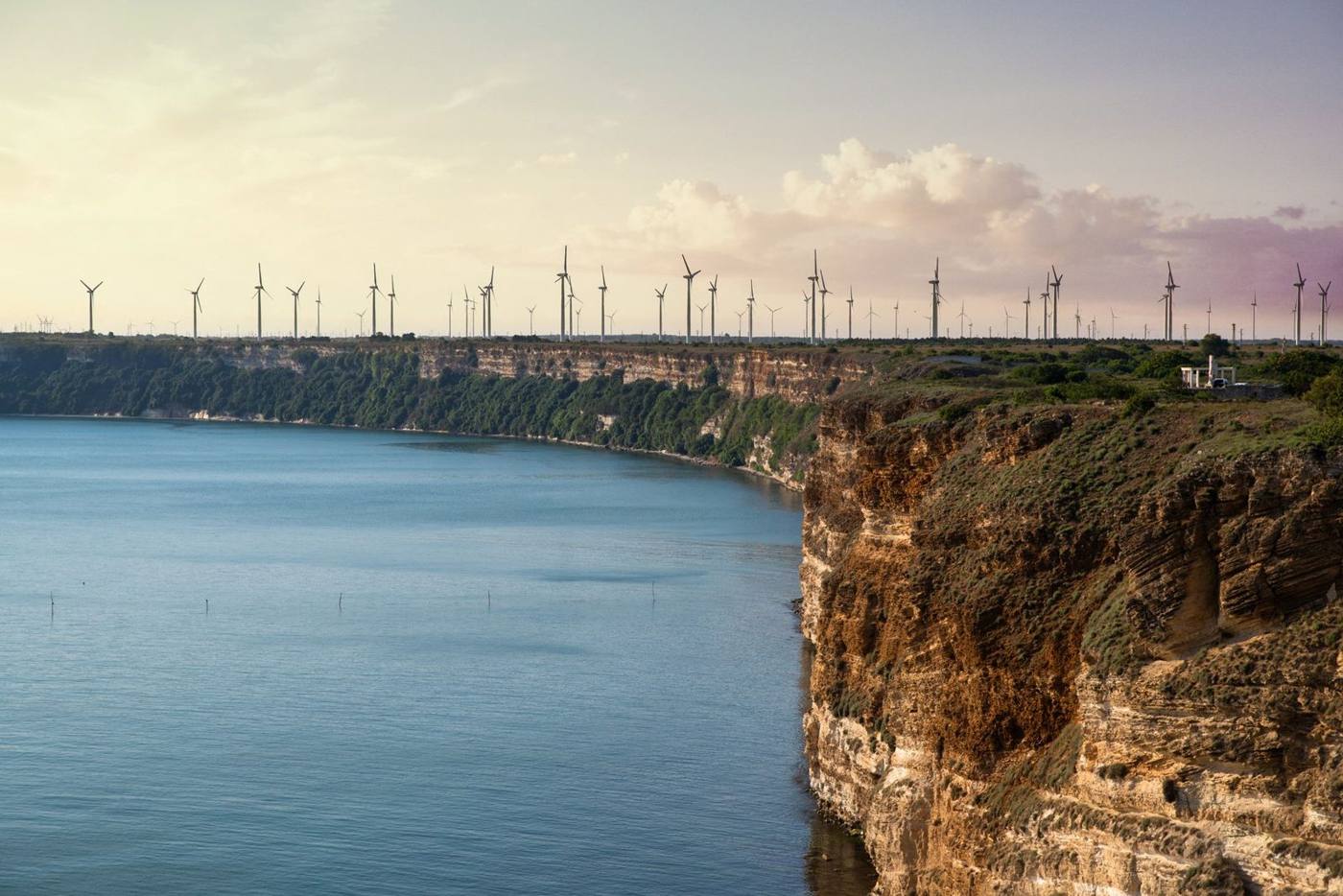
Varna and Cape Kaliakra
Varna with the world's oldest gold in its museum, the rock monastery of Aladzha, the red cliffs of Cape Kaliakra with dolphins and the town of Balchik with Queen Marie's palace.
 4 daysEasy
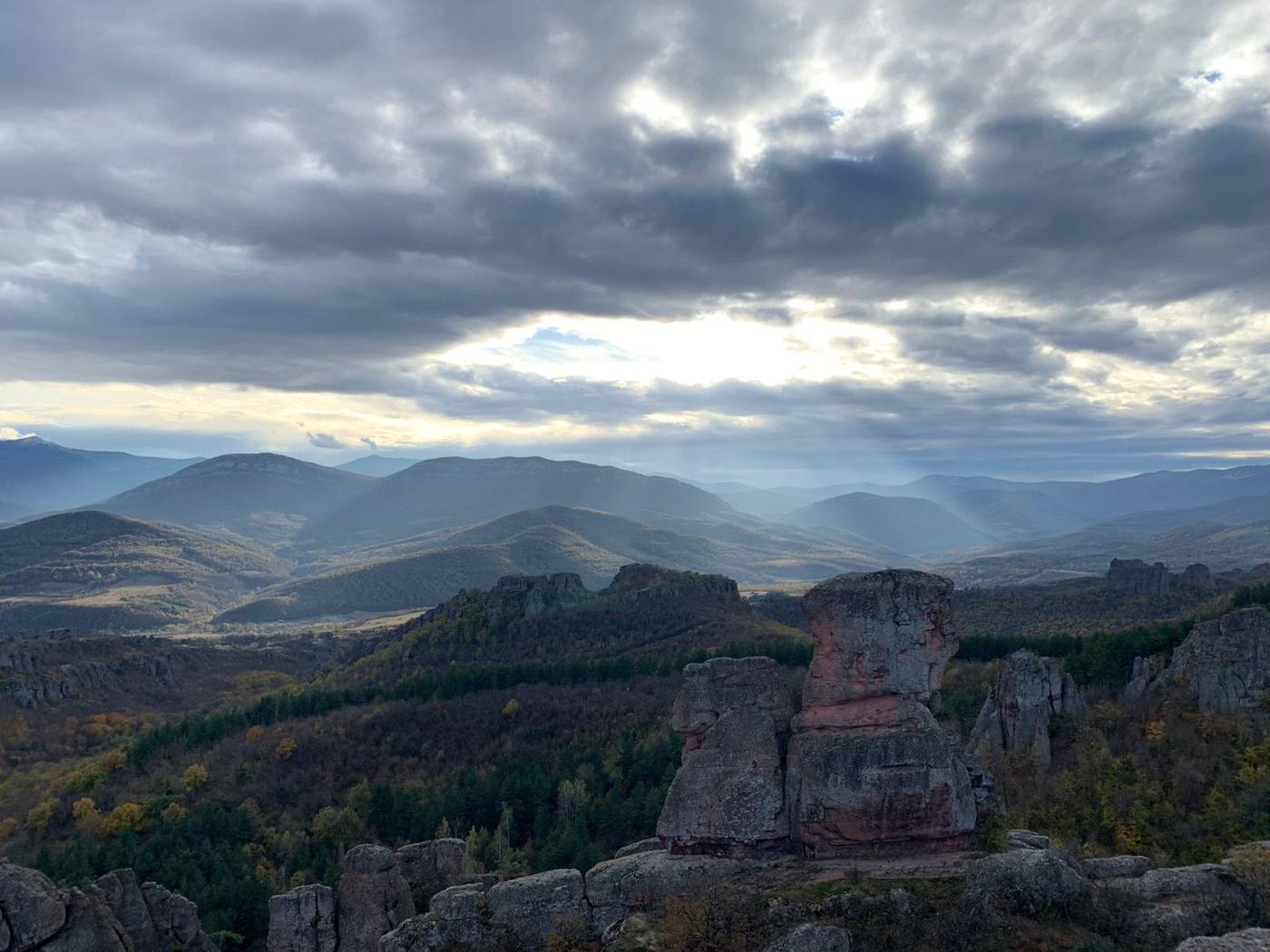
Belogradchik and the north-west
The red rocks of Belogradchik with a fortress built among the pinnacles, Magura cave with its prehistoric paintings, Vidin on the Danube and Baba Vida fortress.
 7 daysEasy
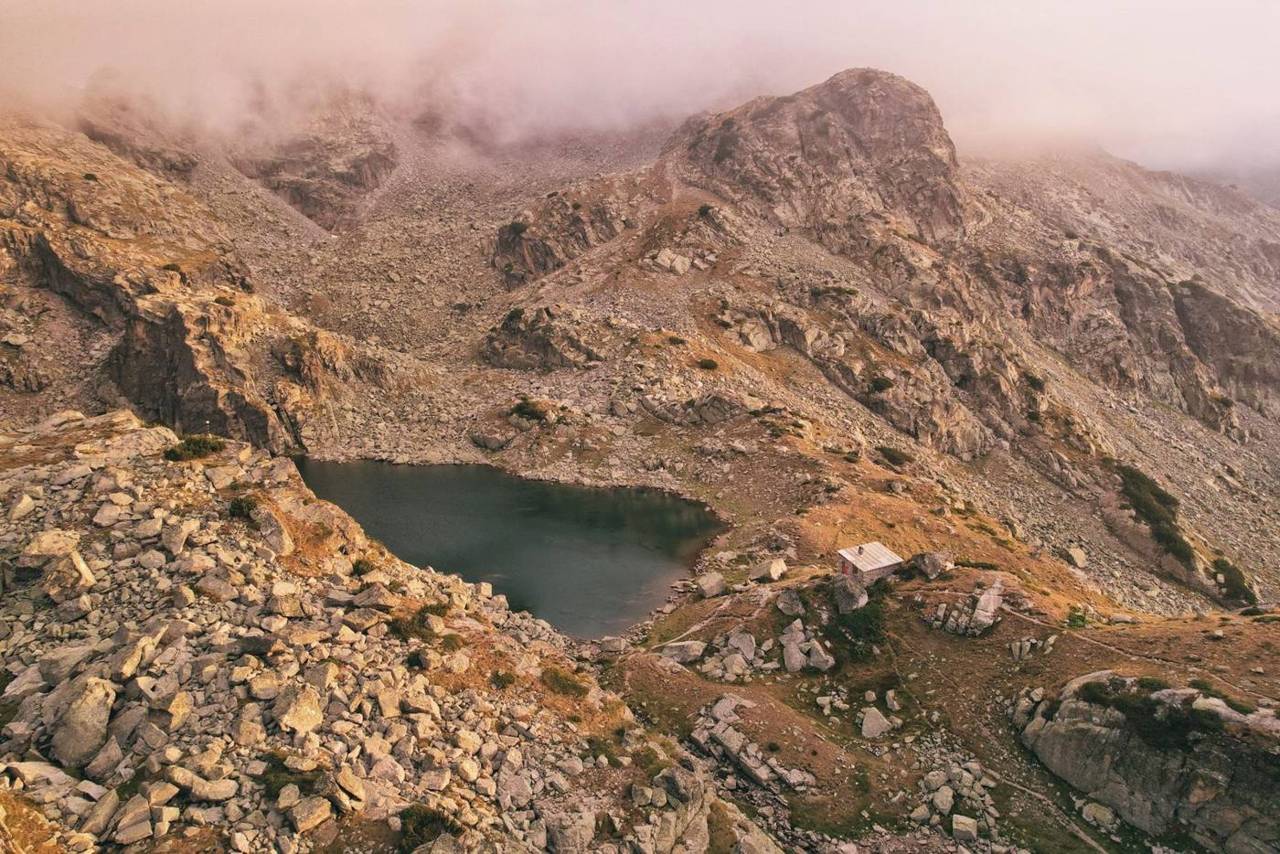
Sofia, Rila and Plovdiv
The capital with Alexander Nevsky Cathedral, Rila Monastery, the Seven Lakes and Plovdiv's old town with its Roman theatre.